
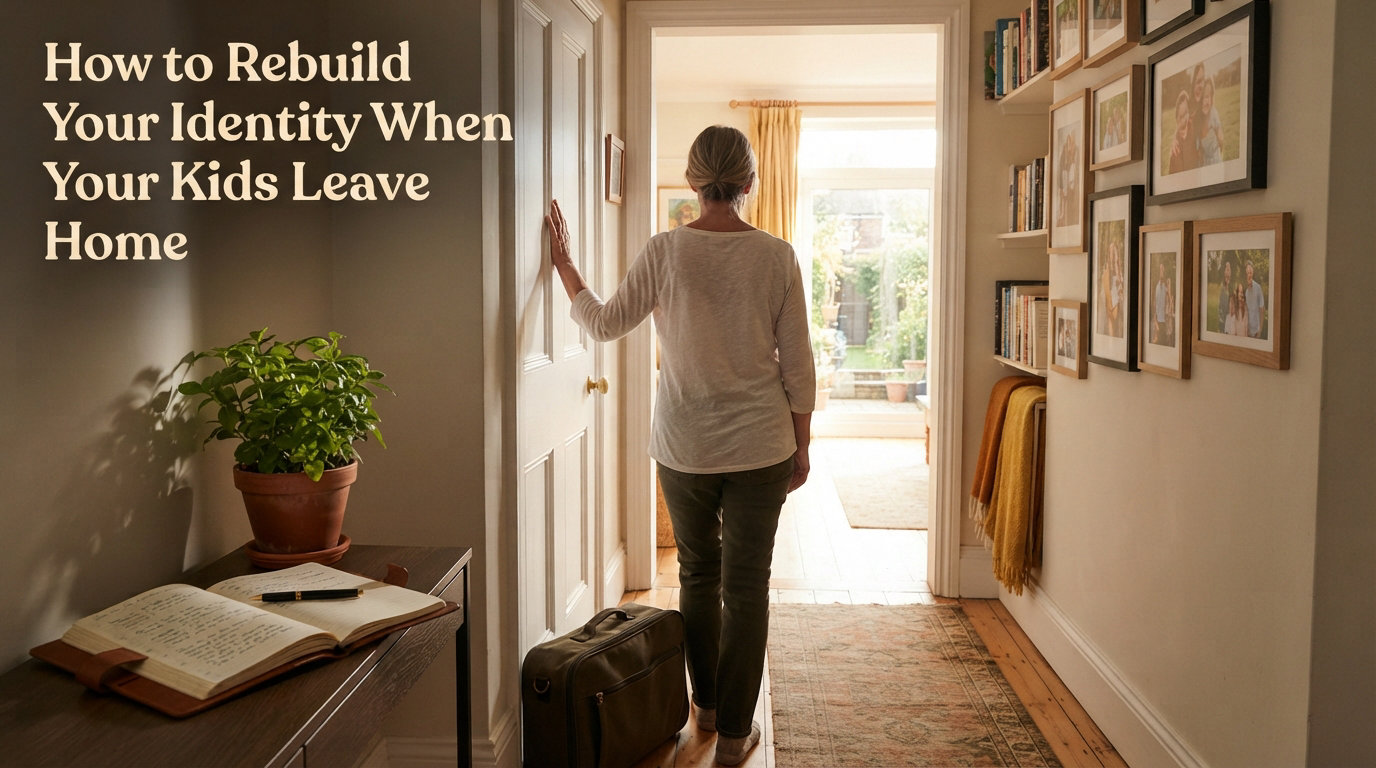
I remember the moment my youngest handed me back the house key and drove away. The door clicked shut, and the silence hit me like a wave. I stood in the kitchen, holding that key, and thought, “Who am I now?”
If you have ever asked yourself that question, I want you to know you are not alone. Rebuilding your identity when your kids leave home is one of the most disorienting transitions a parent can face. The routines, the titles, the daily purpose you carried for years suddenly shifts, and you feel the ground move beneath your feet.
After 18-plus years of pouring yourself into raising children, you are left with a quieter house and a louder question: What now?
This is not a midlife crisis. It is not ungratefulness. It is called empty nest identity crisis, and it is a real, recognized form of transitional grief that affects millions of parents every year. My goal in this guide is to walk you through what is happening inside you, why your sense of self feels shaken, and how to rebuild identity when kids leave home with a clear, faith-grounded coaching framework.
By the end, you will have practical steps, a printable exercise, and a fresh perspective on this next chapter. Let’s begin.
Table of Contents
What Is Empty Nest Identity Crisis and Why It Happens
Empty nest identity crisis is the emotional and psychological shift that happens when your primary role as a hands-on parent suddenly changes. Most parents describe it as a wave of sadness, confusion, and loss mixed with pride and relief.
Psychologists often call this transitional grief. You are not losing a child. You are losing the daily version of motherhood or fatherhood that defined your mornings, your calendar, and your sense of purpose for nearly two decades.
Here is what is actually happening beneath the surface. Your brain built a strong identity around the parenting role. When that role changes overnight, your nervous system struggles to catch up. You may feel restless, anxious, lonely, or even guilty for feeling sad when your kids are thriving.
I often explain it to my clients this way. Imagine you wore a coat every single day for 20 years. One morning you take it off, and the air feels strange on your skin. That is exactly what losing the parenting role feels like. Your body is adjusting to a new shape of life.
Research from the National Library of Medicine describes this as a psychosocial adjustment that affects mood, identity, and relationships. It is not weakness. It is your system catching up to a massive life change.
The surprising truth about identity at this stage
Many parents tell me they feel guilty for struggling. They say things like “I should be happy” or “Other people have it worse.” Here is the truth. You can be proud of your child’s independence and still grieve the role you just lost. Those two feelings coexisting is normal, and it is the heart of the empty nest identity crisis.
When you understand that grief and celebration can live in the same moment, you stop fighting your feelings. That is when real healing begins.
The 5 Stages of Empty Nest Grief You Might Not Expect
Most parents expect to feel sad. Few expect the full emotional rollercoaster that follows. Over the years, I have seen these five stages show up repeatedly in the clients I coach.
1. Shock and denial
The first few weeks often feel surreal. You may keep cooking portions for four, then catch yourself and feel embarrassed. You might text your child six times a day before realizing they are leading their own life. This is your nervous system buffering the change.
2. Anxiety and worry
Once the shock fades, worry often rushes in. Are they eating well? Are they safe? Why did they not call back? This is role transition grief. Your parenting instinct still fires, but the daily outlet no longer exists.
3. Sadness and loneliness
This is the stage most people associate with empty nest feelings. The quiet house becomes loud. You might cry in the grocery store when you see a teenager’s backpack. You may feel a heaviness in your chest that has no clear cause.
4. Anger and frustration
You may catch yourself feeling angry at your child for leaving, even though you raised them to be independent. You may resent your spouse for not feeling the same way. This anger is a form of grief in motion, and it deserves compassion, not judgment.
5. Reflection and renewal
This is where the real work of rebuilding identity when kids leave home begins. You start asking bigger questions. What do I want now? Who am I becoming? What dreams did I put on hold? This stage is uncomfortable, but it is also where new life is born.
You may not move through these stages in order. You may bounce between them for months. That is normal. The point is not to rush yourself. The point is to recognize where you are so you can move forward with intention.
How to Rebuild Your Identity When Kids Leave Home: A 7-Step Coaching Framework
This is the heart of what I teach as a life coach. You do not need to find yourself all at once. You need to build a new identity one brick at a time. Here is the framework I walk my clients through, and it works whether you are weeks into the transition or years into feeling lost.
Step 1: Name what you are feeling without judgment
Start by giving your emotions permission to exist. Sit down for ten minutes each morning and write down what you feel. No filtering, no fixing. Just honesty. Naming the feeling lessens its grip on you. This is the foundation of every life coaching journey I lead.
Step 2: Identify the role versus the identity
You were a parent in role. You are not parenting in identity. Those are different things. The role has changed. Your identity is still yours to shape. Separate what you did from who you are. This single shift can change everything about how you move through this transition.
Step 3: Rediscover the interests you set aside
What did you love before your kids came along? Painting, hiking, writing, dancing, traveling, fixing cars? Pull that list out and try one activity this week. Treat it like a first date with the old you. You will be surprised how much muscle memory is waiting for you.
Step 4: Build a new weekly rhythm
Your old rhythm was built around school pickups, sports practices, and bedtime routines. You need a new rhythm that anchors your week. Choose three anchor activities, like a Tuesday class, a Thursday coffee with a friend, and a Saturday morning walk. Rhythm creates stability when everything feels new.
Step 5: Anchor your worth in something bigger than productivity
For many parents, especially mothers, worth got tied to doing. You were the one who packed the lunches, drove the carpools, checked the homework. When those tasks disappear, you may feel invisible. This is where faith becomes a stabilizer for me and for many of my clients. You are not what you accomplish. You are loved because of who you are, not what you do.
Step 6: Set one new goal that excites you
Choose one goal that has nothing to do with your children. Learn a language. Start a small business. Run a 5K. Write a book. The goal should scare you a little and excite you a lot. This is how you rebuild identity when kids leave home. You pick a direction and walk toward it.
Step 7: Give yourself permission to feel joy again
Grief and joy can coexist. You can miss your child’s bedtime story and feel excited about your upcoming trip. You can be sad in the morning and laugh at dinner. Permission to feel joy is not betrayal of your child. It is the fruit of the good work you did raising them.
Rediscovery Exercise: The 100 Things I Love About Me Worksheet
One of the most powerful exercises I share with my coaching clients is what I call the 100 Things I Love About Me worksheet. You can do this on paper, in a journal, or in a notes app. Give yourself 30 minutes and write down 100 things you love about yourself.
They can be small. “I make a great cup of coffee.” “I am a good listener.” “I love how I sing in the car.” They can be big. “I raised kind humans.” “I am brave.” “I am still growing.”
If you get stuck, ask yourself these prompts. What did my friends used to love about me? What did I love about myself at age 25? What would my younger self be proud of today?
This exercise works because identity is built on truth spoken out loud. When you say 100 true things about yourself, the empty feeling starts to fill. You start to remember that you existed before your children and you will continue to exist after they leave.
I have watched clients cry through the first 20 items and laugh through the last 20. The middle is where the magic happens. That is where you meet yourself again.
Reconnecting With Your Spouse After the Kids Move Out
One of the most common surprises I hear from empty nesters is this. “I thought we would love the quiet, but now we have nothing to talk about.” If that sounds familiar, you are not alone. Years of focusing on children can push a marriage into the background, and when the kids leave, the silence feels awkward.
Here is the good news. This is also a chance to rediscover your partner. Start small. Plan a weekly date night. Ask questions you have not asked in years. What are you dreaming about? What do you want the next chapter to look like? Where do you want to travel?
You may need to renegotiate roles, expectations, and routines. You may even need a marriage coach or counselor to help you navigate this. That is not failure. That is wisdom. Remember, learning how to rebuild your identity when kids leave home often includes letting your marriage be rebuilt too.
Maintaining Connection With Your Adult Children
Just because your children moved out does not mean your relationship ends. It changes shape. You are moving from manager to mentor, from caregiver to confidant. That shift takes practice.
Start with regular touchpoints. A weekly Sunday call, a shared family text thread, or a monthly meal together builds connection without smothering. Respect their boundaries. They are building their own identity now, just like you are building yours.
When they invite you into their world, say yes. Visit their apartment. Try their favorite restaurant. Listen to their music. The healthiest post-empty-nest relationships are the ones where both generations stay curious about each other.
When to Seek Additional Support During This Transition
Some grief is normal. Some grief needs extra support. If you notice any of the following signs for more than two months, please reach out to a therapist or counselor. Persistent depression that affects sleep and appetite. Loss of interest in activities you once loved. Withdrawal from friends and family. Hopelessness or thoughts that life is not worth living.
There is no shame in asking for help. Life coaching, therapy, support groups, and even faith-based counseling can all be part of your healing journey. The strongest people I know are the ones who know when to ask for support.
Building Community and Finding Purpose in the Next Chapter
One thing I have noticed in my years of life coaching is this. Identity is rarely rebuilt in isolation. You need people. You need a community that sees who you are becoming and cheers you on.
Consider joining a women’s group, a hiking club, a faith community, a book club, or a volunteer organization. The activity matters less than the connection. You are looking for a tribe that reminds you that you are more than a parent. You are a whole person with gifts, stories, and purpose.
Many of my clients find that mentoring other parents, leading a small group, or serving at their church gives them a new sense of purpose that feels deeply meaningful. You have decades of wisdom. The world needs it.
Finding purpose after children leave is not a sprint. It is a slow, beautiful unfolding. Trust the process. Show up. Keep choosing yourself.
Frequently Asked Questions
Is it normal to feel detached from your child after they leave home?
Yes, feeling detached is a common part of the empty nest identity crisis. It happens because your daily connection suddenly shifts, and your brain needs time to adjust to the new rhythm. Detachment is not a sign of broken love. It is a sign of transition.
What age are most empty nesters?
Most empty nesters are between 45 and 64 years old, with the average age falling around 50. The transition typically begins when the last child leaves for college, work, or their own home, though it can happen earlier or later depending on the family.
How long does empty nest syndrome last?
Empty nest feelings can last anywhere from a few months to several years. The intensity usually fades as parents build new routines, relationships, and purpose. Actively working through the transition with coaching, community, or a creative practice can shorten the adjustment period.
How can I cope when my children leave home?
Start by naming your feelings without judgment, then build a new weekly rhythm that includes activities you love. Reconnect with your spouse, nurture friendships, set a personal goal, and consider joining a community. The goal is not to replace your kids but to rebuild identity when kids leave home through connection, purpose, and self-discovery.
How common is divorce after kids leave home?
Research suggests divorce rates can rise during the empty nest years, especially when couples have relied on parenting as their primary connection. However, many couples use this time to rediscover each other and grow closer. Honest communication and intentional time together are key.
What is the stay at home mom syndrome during empty nest?
Stay-at-home mom syndrome during the empty nest years refers to the deep identity loss many mothers feel when their full-time parenting role ends. Years of structuring daily life around children can leave moms feeling invisible, purposeless, or lost. Recognizing this experience and rebuilding identity step by step is essential to healing.
A New Chapter, Not an Ending
Learning how to rebuild your identity when kids leave home is not about forgetting your parenting years. It is about honoring them and letting them become the foundation for what comes next.
You raised humans. You shaped lives. You sacrificed sleep, hobbies, and time. Now you get to take that same dedication and pour it into yourself. That is not selfish. That is stewardship of the life you still have to live.
If today feels heavy, take one small step. Write three things you love about yourself. Call one friend. Choose one new rhythm. Rebuild identity when kids leave home does not happen in a single moment. It happens in dozens of small, brave choices.
You are not lost. You are becoming. And I would be honored to walk this journey with you.