
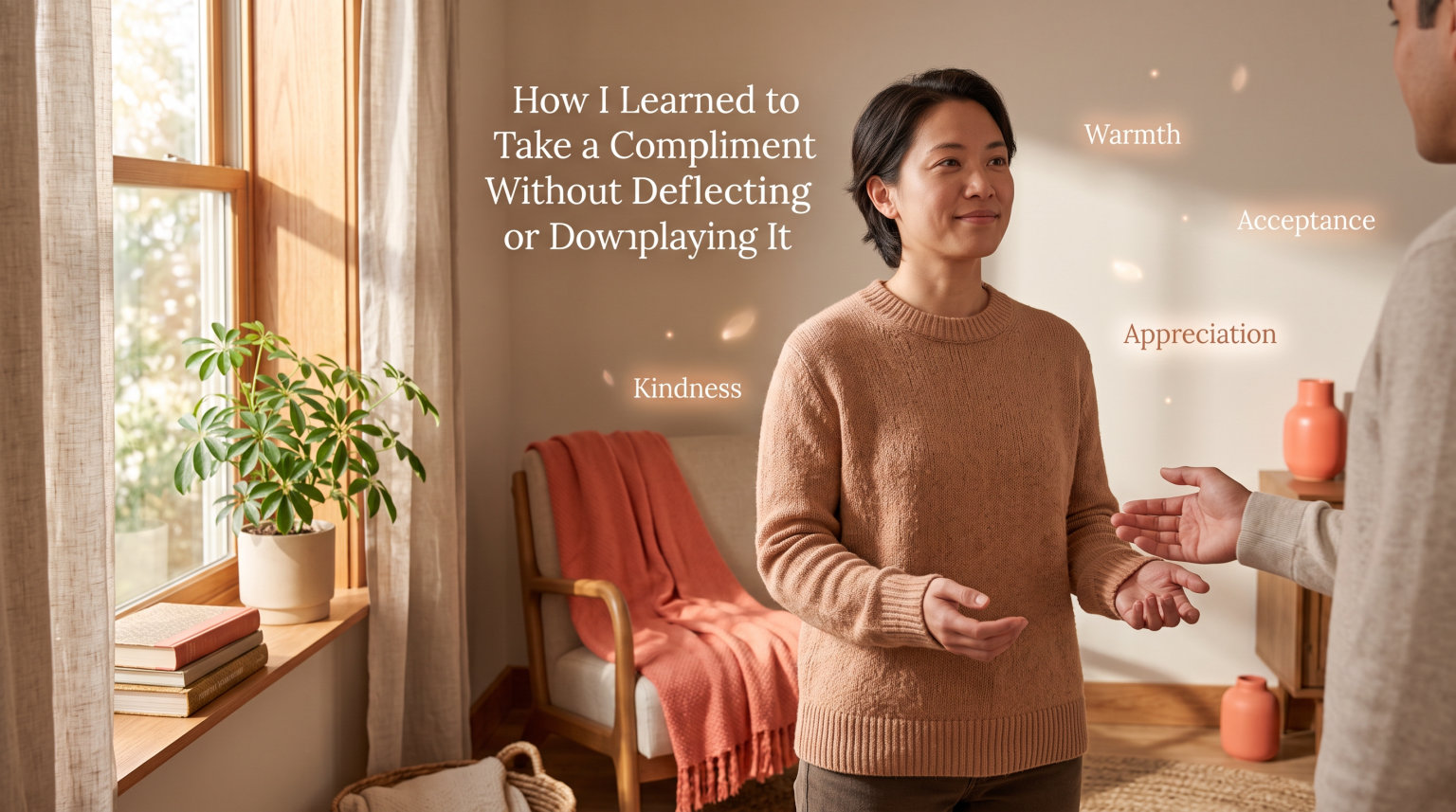
For most of my twenties, I could not take a compliment. When a coworker said my presentation was clear, I laughed it off and pointed to a slide I thought was messy. When a friend told me my writing was moving, I shrugged and blamed the deadline.
I thought I was being humble. In reality, I was rejecting every kind word before it had a chance to land. After years of practice, I finally learned how to take a compliment without deflecting or downplaying it. Here is the personal story behind that shift, plus the practical techniques that actually worked for me.
Table of Contents
Why I Could Not Accept a Compliment for Years
Three years ago, my manager pulled me aside after a client call. She said I handled a difficult question better than anyone on the team. My immediate response was to list three things I had gotten wrong during the same call.
She looked confused. I felt sick. Even as the words came out of my mouth, I knew I was doing it again. Pushing praise away like it was a hand offering something I did not deserve to touch.
I spent that whole evening replaying the conversation. Why could I not just say thank you? The answer, I would later learn from a therapist, was buried in patterns I had carried since childhood. Patterns around praise, attention, and the quiet belief that I was not quite enough.
That was the moment I decided to actually work on learning to accept compliments. Not just smile politely, but genuinely receive them.
The Psychology Behind Deflecting Compliments
Deflecting compliments is one of the most common defense mechanisms therapists see in their offices. When someone praises us, the brain often treats it as a threat rather than a gift.
There are three main reasons this happens. First, low self-esteem creates a mismatch between what we hear and what we believe. Someone says your work was excellent, but your inner voice insists you are faking it. The compliment feels like a lie, so you reject it.
Second, imposter syndrome makes praise feel dangerous. If everyone thinks you are talented, the pressure to keep performing at that level becomes crushing. Downplaying the compliment is a way to lower expectations before you can disappoint anyone.
Third, the inner critic uses compliments as evidence of something wrong. If someone says you look great, the inner voice whispers that they are just being polite, or that they have low standards. Deflecting protects you from the vulnerability of being seen.
All three of these patterns played out in my own life. Understanding them was the first step toward changing them.
The Cultural Baggage We All Carry
Beyond our personal psychology, there is a layer of cultural programming that makes accepting compliments feel wrong. Researchers call it tall poppy syndrome, the tendency to cut down people who stand out too much.
Many of us grew up hearing that pride comes before a fall. That confident people are arrogant. That accepting praise is bragging. So we learned to deflect compliments early, long before we had the words to question it.
There is also a scarcity mindset at work. When you believe there is only so much recognition to go around, taking a compliment feels like stealing from someone else. The abundance mindset flips this. There is enough praise for everyone, and letting it in does not take anything away from the giver.
I had to consciously untangle these cultural messages from my own beliefs. It took time, but it made accepting compliments feel less like showing off and more like basic human decency.
The Two Words That Changed Everything
Here is the technique that finally broke the cycle for me. When someone pays you a compliment, you say two words. Just thank you. Nothing more.
That is it. No qualifiers, no deflecting, no redirecting the praise back to someone else. Just thank you, delivered with eye contact and a small pause.
The first time I tried this at a dinner party, I wanted to crawl out of my skin. The silence after I said thank you felt enormous. My old habits screamed at me to add something, anything, to break the tension.
But I held the pause. And something interesting happened. The other person smiled, looked pleased, and the conversation moved on. I had allowed their kind words to land without swatting them away. The world did not end.
According to therapists, this simple response works because it honors both people in the exchange. The giver feels heard. The receiver practices sitting with positive attention instead of fleeing from it.
What Happens in Your Body When Someone Praises You
Somatic therapists often point out that accepting compliments is as much a physical practice as a mental one. The body has its own reactions to praise.
Many people notice their chest tighten, their face flush, or a sudden urge to look away when complimented. These are nervous system responses, similar to what happens when we feel exposed or vulnerable.
The fix is to slow down and bring awareness to the body before you respond. Try this three-step sequence the next time someone praises you.
Step one, notice the sensation in your chest or stomach. Step two, take one slow breath. Step three, say thank you while letting your shoulders drop and your eyes stay soft.
This tiny ritual gives your nervous system a chance to catch up with the moment. It turns taking a compliment into a grounded choice instead of a panicked reflex.
Practical Phrases Beyond Just ‘Thank You’
Sometimes thank you alone does not feel like enough. Especially in professional settings or with people you do not know well. Here are a few phrases that work in different situations.
For casual settings, try thank you, that is really kind of you to say or thank you, I appreciate that. For workplace compliments, thank you, I am glad it landed well or thank you, that means a lot coming from you. For appearance compliments, thank you, you just made my day works well.
The common thread is that you acknowledge the compliment without offering a correction. You are not explaining it away. You are simply receiving it.
If a longer response feels more natural to your personality, you can add one sentence about how the compliment made you feel. For example, thank you, that actually made my morning. Keep it short and let it breathe.
ADHD and the Compliment Struggle
One thing I rarely see addressed is how ADHD shapes the experience of receiving compliments. Many people with ADHD experience rejection sensitive dysphoria, a heightened emotional reaction to perceived criticism or praise.
When someone praises an ADHD brain, the response can feel almost physically painful. The praise is processed as pressure to maintain the standard, and the impulse is to immediately minimize it.
For ADHD adults specifically, accepting compliments gracefully often requires extra time to process. Do not expect yourself to respond instantly. A short pause before saying thank you is not rude. It is giving your brain room to catch up.
Some people with ADHD also find it helpful to write down compliments they receive. Reading them back later, in a calm moment, lets the positive words sink in without the overwhelm of in-the-moment processing.
What Mark Twain Understood About Compliments
Mark Twain once wrote that he could live for two months on a good compliment. That line has stuck with me since I first read it.
It reframes compliments as something valuable. Not a social formality, not a setup for disappointment, but a small gift. When you reject a compliment, you are refusing a gift someone genuinely wanted to give you.
I think about Twain now whenever I catch myself deflecting. Someone wanted to give me two months of good feeling, and I tossed it back in their face. That realization alone has changed how I respond.
Modeling This for the People Around You
One of the most overlooked reasons to learn how to take a compliment is the people watching you. Kids, partners, friends, and coworkers all learn how to receive praise by watching how you do it.
When you deflect constantly, you teach the people around you that compliments are uncomfortable or unwelcome. When you accept them with grace, you give them permission to do the same.
I noticed this shift in my own family. My daughter used to wave off every kind word with I know or whatever. After I started practicing real acceptance, she began doing the same. Watching her say thank you and actually smile after a compliment is worth all the awkward pauses I sat through to get here.
Frequently Asked Questions
How do you accept compliments without deflecting?
The simplest way to accept a compliment without deflecting is to pause, take a breath, and say ‘thank you’ with eye contact. No qualifiers, no redirecting, no putting yourself down. Let the kind words land before moving on.
What did Mark Twain say about compliments?
Mark Twain wrote that he could live for two months on a good compliment. The quote reframes compliments as small gifts rather than social formalities, which can help you receive them with more openness.
Do people with ADHD struggle with compliments?
Yes, many people with ADHD struggle with compliments due to rejection sensitive dysphoria. Praise can feel like pressure, leading to immediate deflection. Giving yourself a pause before responding and writing compliments down can help.
How to accept a compliment without sounding conceited?
Accepting a compliment gracefully is not arrogance. A simple ‘thank you, I appreciate that’ honors both you and the giver. Conceit comes from constant self-praise, not from accepting a kind word when it is offered.
The Takeaway on Learning to Take a Compliment
Learning how to take a compliment without deflecting or downplaying it is one of the most underrated skills I have ever worked on. It changed how I see myself and how I show up for the people I love.
Start small this week. The next time someone praises you, pause, breathe, and say thank you. Notice what happens. Notice how it feels. With time, it gets easier. I promise.