
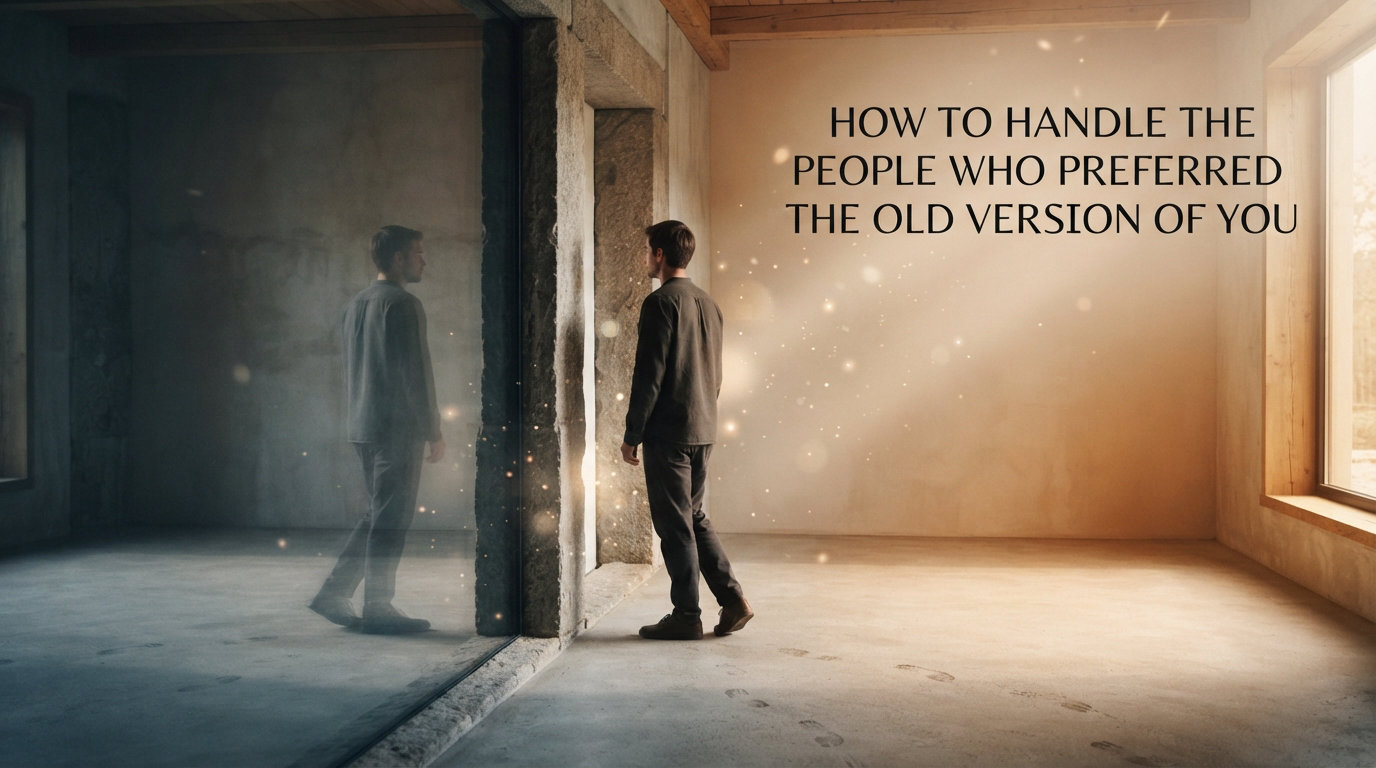
You quit the habit. You started speaking up. You finally stopped bending yourself into shapes that made other people comfortable. And somehow, instead of applause, you got pushback.
If you are wondering how to handle the people who preferred the old version of you, you are in the right place. This is one of the most disorienting parts of personal growth, and almost no one warns you about it. The people who knew you “before” can react to your changes with confusion, resistance, or even quiet grief, and that response can make you question whether the growth was worth it.
As a life coach, I have sat with dozens of clients who described the exact same experience. They changed, and the people around them did not celebrate. This guide breaks down why that happens, what the emotional fallout really feels like, and practical strategies you can use today to navigate these relationships without abandoning yourself.
Table of Contents
Why People Prefer the Old Version of You
People prefer the old version of you because it felt safer, more predictable, and easier to manage. This has almost nothing to do with you and everything to do with how human beings form attachments to a fixed picture of who someone is.
When you change, you disrupt that picture. Here is what is actually happening underneath their resistance.
The Old You Made Them Comfortable
The version of you they knew was predictable. They knew what to expect from you, how you would react, and where you fit in their life. Your growth removed that predictability, and for many people, unpredictability feels like a threat rather than an invitation.
This is especially common if the old you was a people pleaser. The old you said yes when you meant no, swallowed your opinions, and made yourself smaller to keep the peace. When you stop doing that, the people who benefited from your compliance experience your boundaries as a loss.
Their Identity Is Tied to Your Old Identity
Relationships are built on shared roles. If someone defined themselves as the one who took care of you, the one you leaned on, or the one who was always a step ahead, your growth can feel like a challenge to their sense of self.
I have seen this play out in families where a parent cannot accept that their adult child no longer needs the same level of guidance. The parent is not being cruel. They are grieving a role they played for years, and they do not know who they are without it.
Change Forces Them to Confront Their Own Stagnation
There is a quieter reason that people rarely admit out loud. When you start growing, it holds up a mirror. Your changes can make the people around you aware of the things they have been avoiding in their own lives.
That discomfort is hard to sit with. It is easier to push back on your growth than to look at what your growth is reflecting back at them. This is why some friends become distant or critical right when you are doing the work to improve your life.
What Is Cognitive Dissonance Got to Do With It
There is a psychological term for what happens when someone’s mental image of you clashes with the reality of who you have become. It is called cognitive dissonance, and it is the mental discomfort people feel when they hold two conflicting beliefs at the same time.
Their brain says “this is who they are” based on years of evidence. Your new behavior says “no, this is who I am now.” That conflict creates genuine tension. Some people resolve it by updating their picture of you. Others resolve it by trying to push you back into the old shape, because that feels easier than updating their worldview.
Understanding this does not excuse the behavior. But it does help you stop taking it so personally. Their resistance is a reflection of their own psychological process, not a verdict on your worth.
The Grief No One Talks About
Here is what almost every guide on this topic skips. Changing and growing involves real grief, and that grief deserves space.
You are not just losing the comfort of old relationships. In many cases, you are saying goodbye to an older version of yourself. That old self may have been exhausted, anxious, or people-pleasing past the point of health. But it was still you. It got you through hard seasons. And letting it go can feel like a kind of mourning.
Loneliness Is Part of the Process
It is completely normal to feel lonely when you change and grow. The relationships that were built on the old you may not have room for the new you. Some of them will stretch to fit. Others will not.
In the gap between the old life and the new one, you might feel like you do not fully belong anywhere yet. The people from your past do not recognize you, and you have not yet built the community that reflects who you are becoming. That middle space is uncomfortable, but it is temporary.
I want you to hear this clearly. Feeling lonely during a growth season does not mean you made the wrong choice. It means you are in a transition, and transitions are inherently disorienting.
Be Kind to Both Versions of Yourself
One trap I see clients fall into is turning against their old self. They feel embarrassed by who they used to be, the choices they made, or the way they let people treat them.
Please do not do that. The old version of you did the best they could with the tools, knowledge, and emotional resources they had at the time. They survived everything that came before this moment so that you could arrive here. You can hold compassion for who you were while still choosing to be different now.
Self-acceptance is not about freezing yourself in place. It is about making peace with every version of yourself, including the ones you have outgrown.
How to Handle the People Who Preferred the Old Version of You
The most effective way to handle people who preferred the old version of you is to combine self-awareness, clear communication, and firm boundaries. You cannot control how they respond to your growth, but you can control how you show up.
These strategies are built around something I call the next honest step approach. Instead of trying to overhaul every relationship at once or make dramatic declarations about how you have changed, you take small, consistent actions that reflect who you are now.
The Next Honest Step Approach
The next honest step approach is about doing one true thing at a time rather than forcing people to accept a completely new version of you all at once. It works because it is sustainable and because it lets people adjust gradually.
Here is how the four stages of change break down in practice.
1. Precognition. You start to sense that something in your life needs to shift. You may not have the words for it yet, but you feel the discomfort of living out of alignment.
2. Cognition. You become consciously aware of what needs to change. You can name it. This is where most internal work happens.
3. Action. You start making different choices. This is where other people start to notice, and this is where resistance often shows up.
4. Resolve. Your new behaviors become integrated. They feel natural rather than forced, and the people who matter have either adjusted or stepped back.
In each stage, your job is simply to take the next honest step. Say the true thing. Make the choice that aligns with your values. Let the ripples spread on their own.
Boundary Scripts You Can Actually Use
One of the biggest content gaps I found when researching this topic was the lack of specific phrases. People know they need boundaries, but they do not know what to say in the moment. So here are scripts you can adapt for real conversations.
When someone comments that you have changed (with judgment):
“I know I’ve grown a lot lately, and I’m grateful for it. I’m not looking to go back to how things were.”
When a family member says they miss the old you:
“I understand that this version of me feels different. I’m healthier and happier now, and I hope you can get to know this version of me too.”
When someone pushes you into an old pattern:
“I’ve realized that doesn’t work for me anymore. I’m going to do things differently now.”
When a friend makes a joke at your expense about your growth:
“I know you’re joking, but this is actually important to me. I’d appreciate it if you didn’t make fun of it.”
When you need to decline something you would have said yes to before:
“That’s not something I can take on right now. Thank you for thinking of me.”
Notice what these scripts have in common. They are calm, clear, and do not over-explain. You do not owe anyone a detailed justification for your growth.
Surviving Family Gatherings and Holidays
If there is one setting where the identity struggle gets amplified, it is family gatherings and holidays. These are the spaces where people hold onto the oldest, most entrenched version of you. A parent might still see the anxious teenager. A sibling might still relate to you through a dynamic that ended a decade ago.
The first strategy is to go in prepared. Before the gathering, remind yourself of who you are now and how you want to show up. Decide in advance which topics you will engage with and which ones you will redirect.
The second strategy is to accept that you can have one foot in each world. Not every old behavior is something you need to reject. Some parts of your old self, like humor, warmth, or shared memories, might still be authentic to who you are. You do not have to erase everything about your past to prove you have grown.
The third strategy is to manage your energy. You do not have to correct every outdated comment or prove your growth to every relative. Choose your moments. Protect your peace. Leave early if you need to.
Permission to Outgrow Relationships
Not every relationship is built to survive your growth, and that is okay. Some people are meant for specific seasons of your life, not for the whole journey.
You are allowed to let relationships fade without drama or confrontation. You are allowed to create distance from people who consistently make you feel small. You are allowed to grieve the loss of a friendship that no longer fits without feeling guilty about walking away.
Letting go does not require anger. Sometimes it just means investing your time and energy where it is reciprocated and where you can show up as your full self.
FAQs
How do you deal with people who only see the old version of you?
Deal with people who only see the old version of you by staying consistent with your new behaviors, setting calm boundaries, and accepting that you cannot force them to update their image of you. Focus on living as your current self rather than trying to convince them you have changed. Over time, the people who are willing to know the real you will adjust.
Why do people cling to outdated versions of you?
People cling to outdated versions of you because the old version felt safer, more predictable, and easier to relate to. Their identity may be tied to who you used to be, and your growth forces them to confront change they are not ready for. Their resistance is about their own comfort and psychology, not a reflection of your worth.
How do I set boundaries with family who miss the old me?
Set boundaries with family who miss the old you by using clear, calm language that does not over-explain. Try phrases like, I know this feels different, but I am happier and healthier now. Hold your boundary consistently, and remember that you are not responsible for managing their emotional reaction to your growth.
Is it normal to feel lonely when you change and grow?
Yes, it is completely normal to feel lonely when you change and grow. The relationships built on your old self may not fit the new you, and it takes time to build a community that reflects who you are becoming. That loneliness is a sign of transition, not a sign that you made a mistake.
How do I tell someone I have changed?
You do not necessarily need to announce that you have changed. The most effective approach is to simply live as your current self and let your actions communicate the shift. If a direct conversation feels necessary, keep it brief and focused on your own growth rather than on what the other person did wrong.
What does it mean when people prefer the old version of you?
When people prefer the old version of you, it usually means the old you was more convenient, compliant, or predictable for them. It can signal that the relationship was built on a dynamic that served them more than it served you. It does not mean the old you was better, only that it was more comfortable for the other person.
You Do Not Need Permission to Grow
Learning how to handle the people who preferred the old version of you is really about learning to trust your own growth even when others do not mirror it back to you. The resistance you are feeling is not a sign that you did something wrong. It is the natural friction that comes when you stop performing a role and start living as yourself.
Be patient with the people around you, but do not shrink to make them comfortable. Be kind to the old version of yourself, but do not go back. Take the next honest step, and let your actions do the talking.
The right people will catch up. And the ones who do not were never holding space for the real you anyway.