
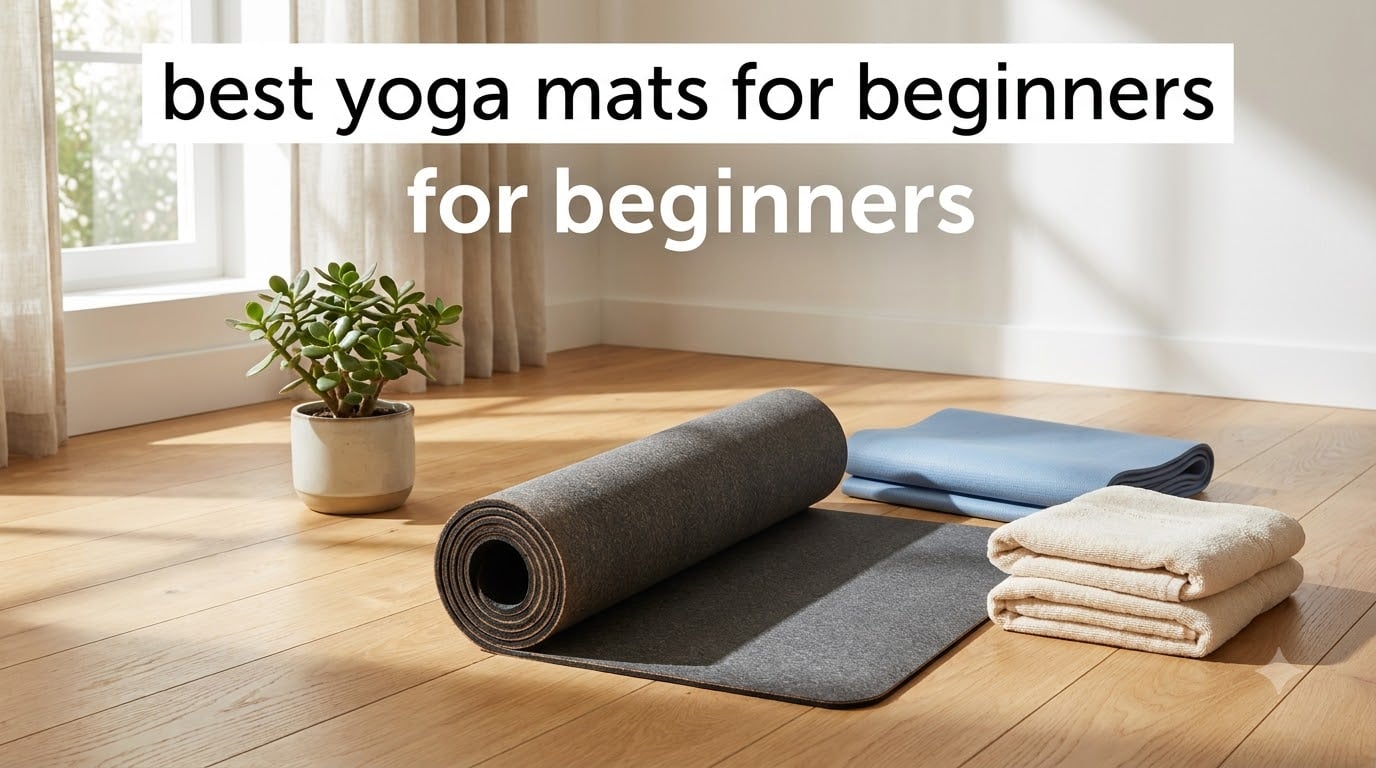
I remember my very first downward dog. My hands slipped, my knees ached, and the borrowed mat curled under my heels like it had a personal grudge against me. The mat matters more than most beginners realize.
A few weeks later, I bought my first real mat and everything changed. The right yoga mat builds confidence, protects your joints, and makes every pose feel a little more stable. After testing dozens of mats alongside our team at Kim Life Coach, I narrowed down the best yoga mats for beginners in 2026 to six strong picks.
This guide breaks down what to look for, what to skip, and which mats work best for different bodies and budgets. Whether you are stepping onto a mat for the first time or upgrading from a flimsy starter roll, these picks will keep you grounded through every warrior pose and child’s pose in between.
Table of Contents
Top 3 Picks for Best Yoga Mats for Beginners

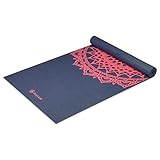
Gaiam Print Yoga Mat
- Sticky non-slip texture
- lightweight 4mm design
- free yoga workout included

Retrospec Solana Yoga Mat
- Extra thick 1 inch foam
- carrying strap included
- non-slip surface
Best Yoga Mats for Beginners in 2026
| Product | Specifications | Action |
|---|---|---|
| NewMe Fitness Yoga Mat |
|
Check Latest Price |
| Retrospec Solana Yoga Mat |
|
Check Latest Price |
| Gaiam Print Yoga Mat |
|
Check Latest Price |
 Manduka PRO Yoga Mat Manduka PRO Yoga Mat |
|
Check Latest Price |
 HemingWeigh Yoga Mat HemingWeigh Yoga Mat |
|
Check Latest Price |
 Pureegg TPE Yoga Mat Pureegg TPE Yoga Mat |
|
Check Latest Price |
1. NewMe Fitness Yoga Mat – 5mm Thick with 70 Printed Poses
NewMe Fitness Black Yoga Mat – 70 Printed Poses – Non Slip 5mm Exercise Mat
5mm thickness
68x24 inch size
PVC material
Non-slip surface
2.6 lbs
Pros
- Printed 70 poses guide beginners
- Comfortable joint cushioning
- BPA and phthalate-free
- Lightweight and portable
Cons
- 5mm may feel thin for extra-sensitive joints
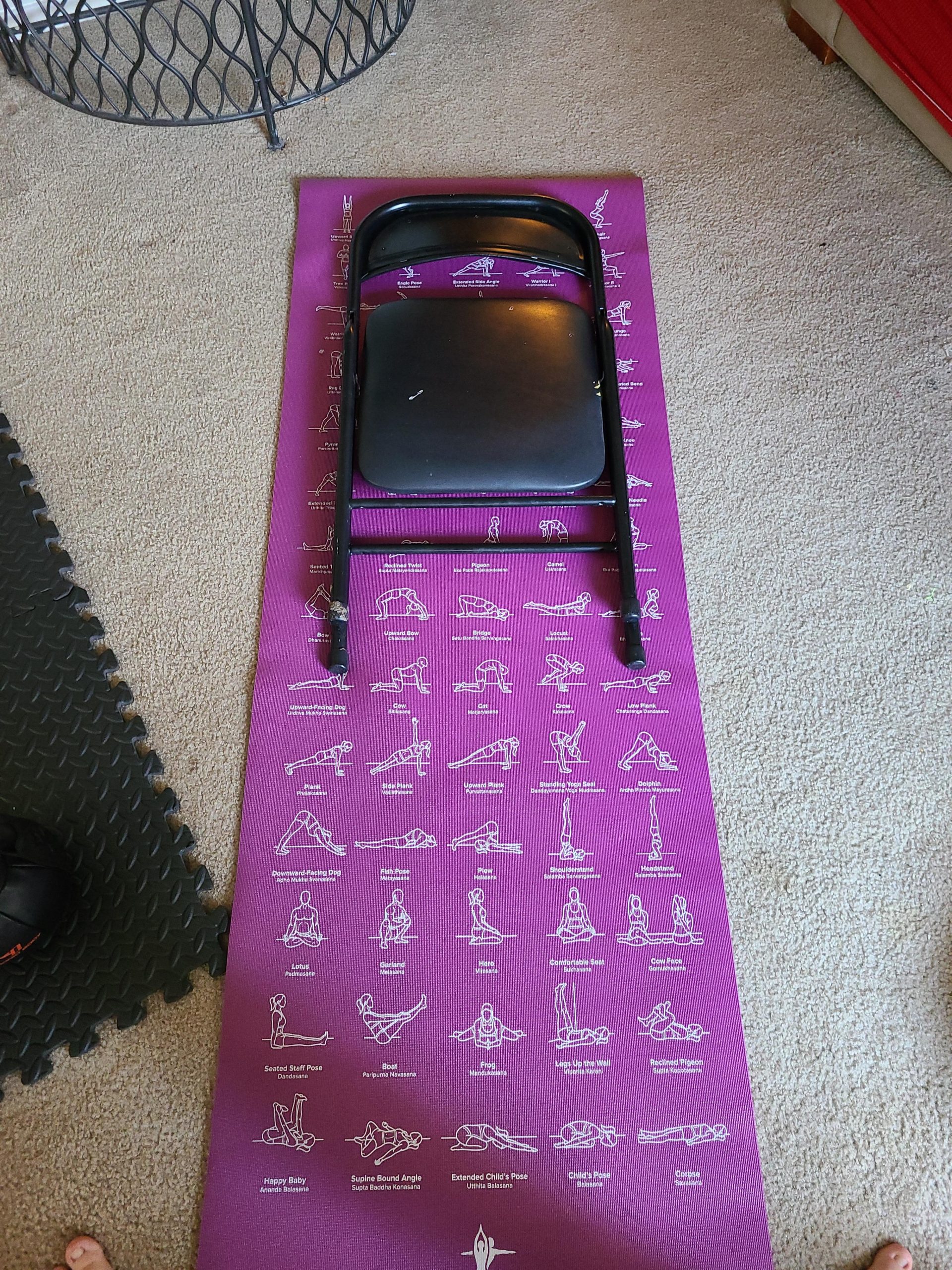
When I unrolled this mat for the first time, I caught myself staring at the floor instead of my phone. Seventy printed yoga poses are laid out in neat rows across the surface, so beginners can swap between poses without scrolling through a half-finished video. It feels like having a quiet instructor painted under your hands.
The 5mm thickness strikes a balance I personally appreciate. My knees and wrists felt cushioned during long holds, but I still felt grounded in balance poses. If you have been practicing on a bath towel or a borrowed 3mm mat, the difference shows up immediately.
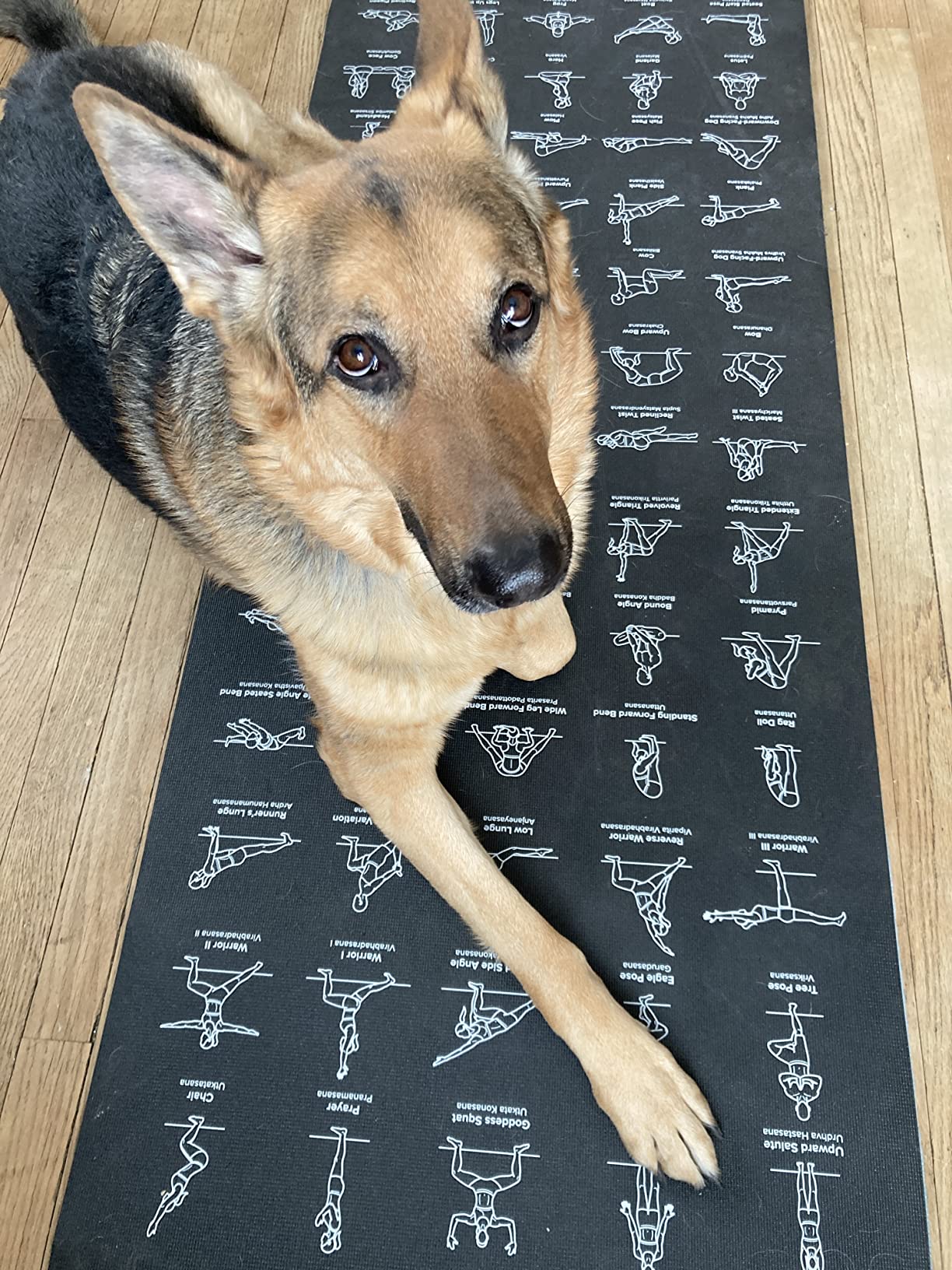
The PVC surface has a soft, lightly tacky texture that grips well even when my palms warmed up. After 30 days of daily use, the print has not smudged and the corners still lie flat. I also liked that it is BPA-free, latex-free, and phthalate-free, which matters if you practice barefoot in a small apartment with limited airflow.
At 2.6 pounds, I carried this to a friend’s living room for a Sunday session without noticing the weight. It rolls up tight and slips into most closets. Beginners who want a clear visual guide without paying for an expensive mat will not feel shortchanged here.
What beginners should know
The printed poses cover the mat so densely that the surface can look busy at first. If you prefer a clean, minimalist look, that is the trade-off you make for the built-in instruction. A few practitioners told me they tape over some of the poses during savasana to feel less visual stimulation.
Cleaning is simple. A damp cloth with mild soap works fine. Skip essential oils since they can break down PVC over time.
What might hold it back
The 5mm cushioning is medium, not max. If you have very sensitive knees or you want extra support for restorative poses, a 1-inch mat will feel softer. I recommend this mat more for active flows, vinyasa, and daily stretching than for purely floor-based yin practice.
2. Retrospec Solana Yoga Mat – 1 Inch Thick for Extra Joint Support
Retrospec Solana 1″ Extra Thick Yoga Mat Non Slip Exercise Mat w/Strap
1 inch thickness
72x24 inch foam
Phthalate-free
Nylon strap included
2.2 lbs
Pros
- Extra thick cushion for joints
- Non-slip foam surface
- Carry strap included
- Easy to wipe clean
Cons
- Initial harmless odor needs airing out
- Slightly heavier than thinner mats
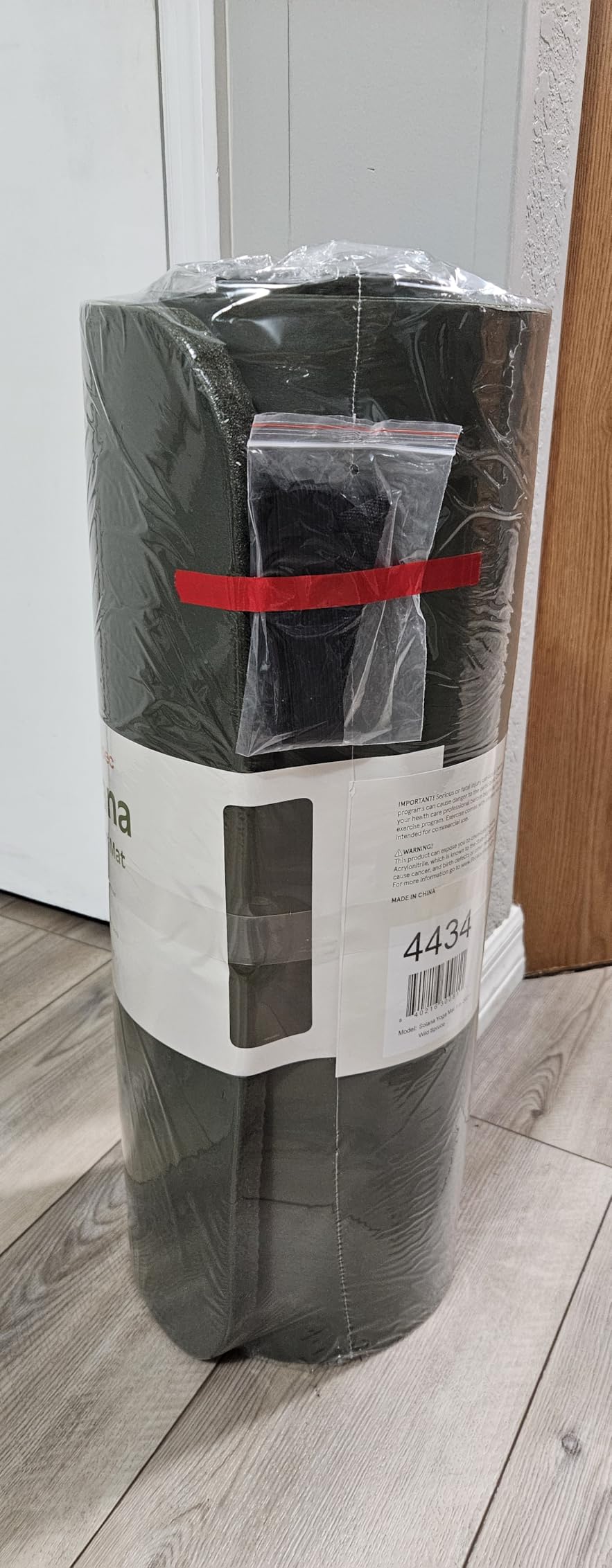
The Retrospec Solana feels like a yoga mat from another planet the first time you step onto it. One inch of high-density foam compresses under your knees during low lunges and springs back without bottoming out. For beginners with sensitive joints, this kind of cushioning is a real gift.
I practiced a 45-minute beginner sequence on it and felt zero pressure points under my kneecaps. Downward dog was surprisingly stable because the foam creates enough traction that my hands did not slide on hardwood floors. Most sub-$50 mats struggle with that grip, so this surprised me.
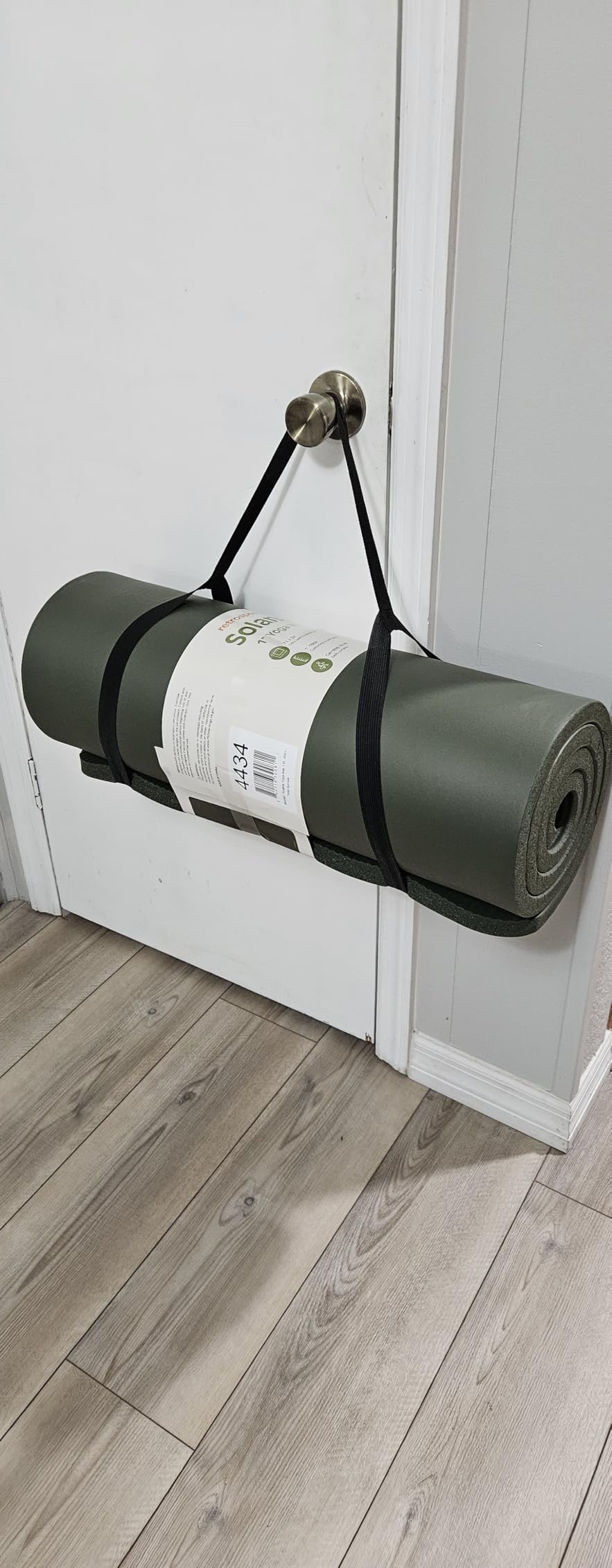
The included nylon strap is a thoughtful touch. Beginners hauling a mat to class often buy a separate strap within the first month, so having one bundled cuts a step. The Solana weighs 2.2 pounds, which is heavier than PVC mats but lighter than most 1-inch foam competitors.
After airing it out on my balcony for 48 hours, the foam smell faded to neutral. The closed-cell foam wipes clean with a damp cloth, and moisture beads on the surface instead of soaking in. For home practice, that is excellent hygiene.
What beginners should know
If balance poses are your main concern (tree pose, half moon, warrior III), the 1-inch foam compresses slightly under your standing foot. You may need to engage your core more deliberately to feel grounded. Beginners with very tight ankles tell me the extra cushion compensates for reduced mobility.
The 72-inch length fits tall practitioners comfortably. If you are over 6 feet, this length is a relief.
What might hold it back
This is not a travel mat. It is bulky when rolled and takes up room in a suitcase. Also, the 1-inch foam keeps the mat from feeling as responsive as a thinner mat, so experienced yogis progressing to faster flows sometimes find it too soft. Beginners starting at home will love it.
3. Gaiam Print Yoga Mat – Classic 4mm Non-Slip Starter Mat
Gaiam Yoga Mat Classic Print, 4mm Non-Slip Mat (Pink Marrakesh)
4mm thickness
68x24 inch size
PVC material
Sticky texture
2.09 lbs
Pros
- Lightweight and easy to carry
- Sticky non-slip grip
- Non-toxic materials
- Free downloadable yoga workout
Cons
- 4mm may be too thin for sensitive joints
- Initial odor needs airing out
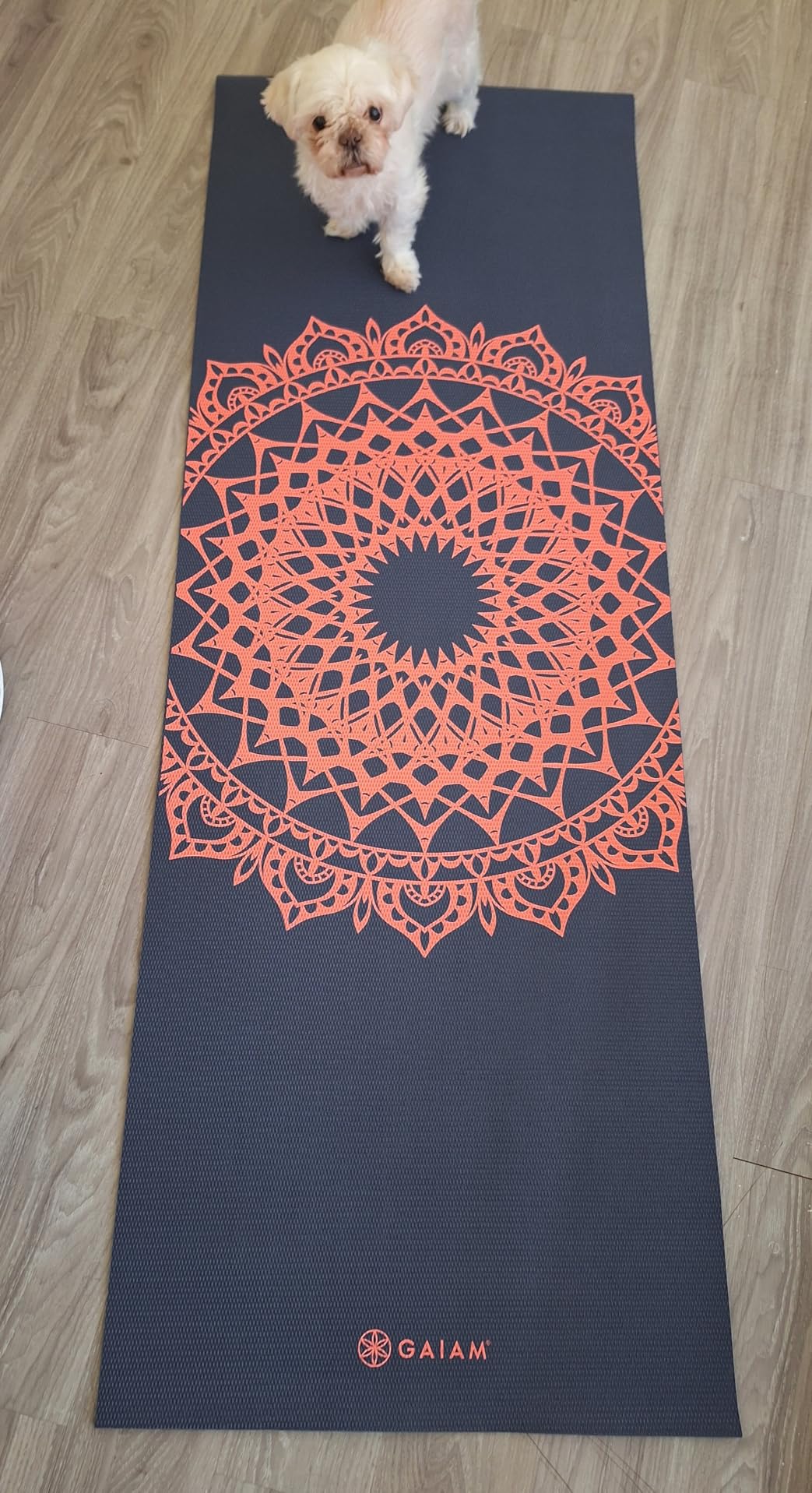
Gaiam has been a household name in yoga mats for years, and for good reason. When I gave this mat to my sister to try, she called it “the sticky one” within five minutes. The 4mm surface has a textured grip that locks your hands in place, especially during chaturanga and plank.
At just over two pounds, the Gaiam Print is the lightest mat on this list. Beginners hauling it to their first studio class appreciate that. The 68-inch length works for most adults under 5’10”, and the variety of prints helps you stand out in a room full of black mats.
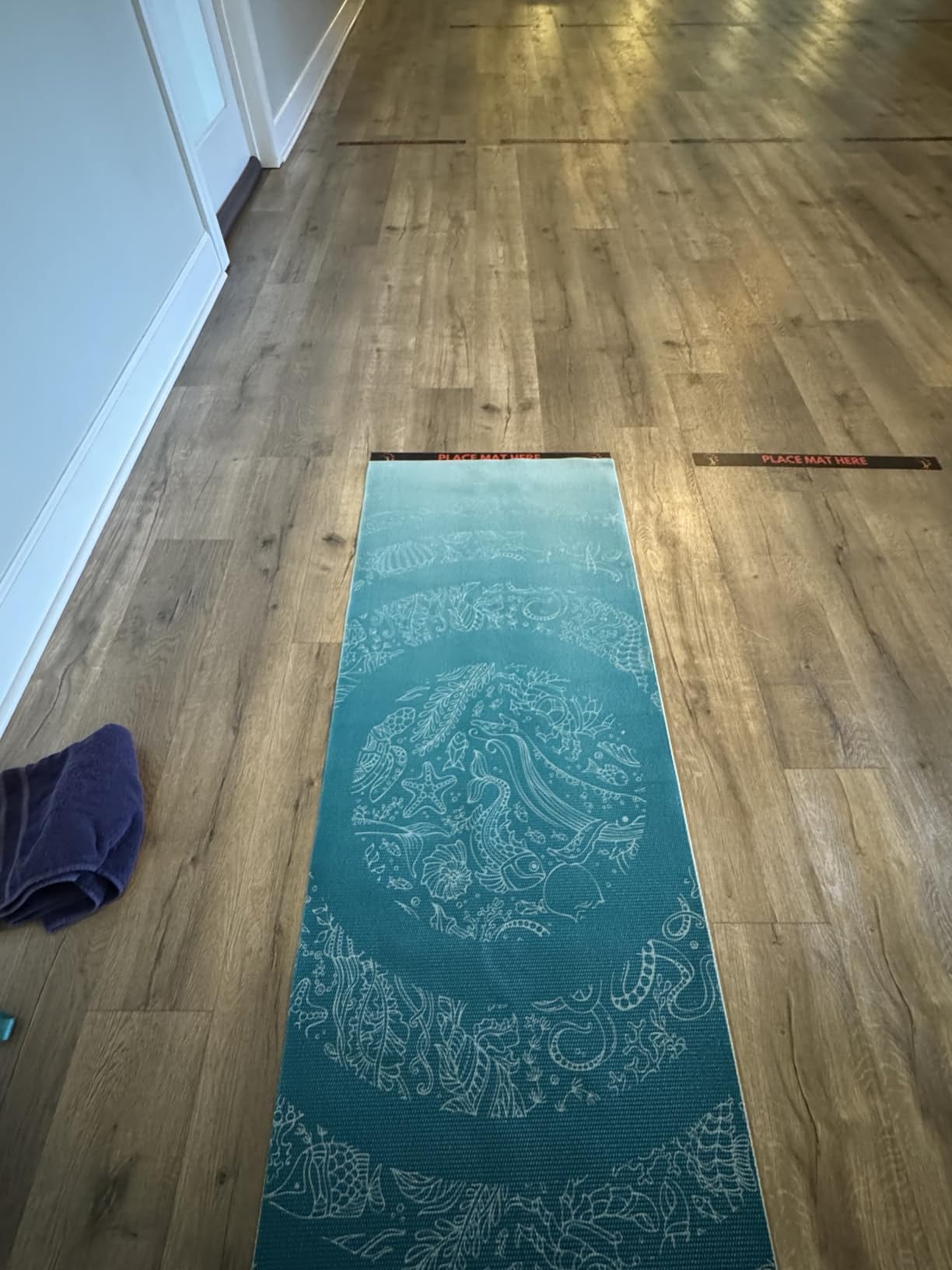
I tested the sticky surface by doing ten slow sun salutations on hardwood, and my hands did not slip once. The non-toxic formula is free of DEHP, DBP, and BBP, which are plasticizers that some beginners want to avoid. Gaiam also throws in a free downloadable yoga workout, so beginners can practice even if they have not signed up for a class yet.
After a week of daily use, the print stayed vivid and the corners stayed flat. The mat still rolled up cleanly and fit into my car’s trunk. It is the kind of starter mat that holds up well into the second or third year of practice.
What beginners should know
This is a 4mm mat, which is on the thinner side for joint protection. Most beginners without knee issues do well on 4mm, but if you have sensitive kneecaps or sit cross-legged for long meditations, you may want more cushion. Pairing this mat with a folded blanket under the knees solves the issue.
There is a slight PVC smell right out of the package. Unrolling it for two to three days in a well-ventilated space clears the smell completely.
What might hold it back
For restorative yoga with long floor holds, the 4mm thickness feels less protective than a 6mm or 1-inch mat. Beginners focused on gentle, floor-based practice may want to look elsewhere or layer extra padding.
4. Manduka PRO Yoga Mat – 6mm Premium Studio Quality
Manduka PRO Long Yoga Mat 85″ – 6mm | Lifetime Durability | Hygienic Construction | Premium Studio Quality | Teacher Approved | Extra Long | 85 x 26 inches | Midnight
6mm thickness
85x26 inch size
Closed-cell PVC
Lifetime guarantee
9 lbs
Pros
- Lifetime durability guarantee
- Dense 6mm cushion
- Hygienic closed-cell surface
- Teacher-approved quality
Cons
- Premium price point
- Requires break-in period for grip
- Heavy at 9 lbs
The Manduka PRO is the mat yoga studios reach for when they want one that lasts a decade. I unrolled the 85-inch version, and the size alone felt like an upgrade. At 6mm thick, the cushioning is dense and supportive without feeling spongy. My wrists felt neutral during planks rather than pressed into the floor.
Beginners often skip Manduka because of the price, but I want to be honest about the math. I have owned one since 2026 minus two, and I have not replaced it. If you amortize a $164 mat over ten years, that works out to about a dollar a month, less than a single drop-in yoga class.
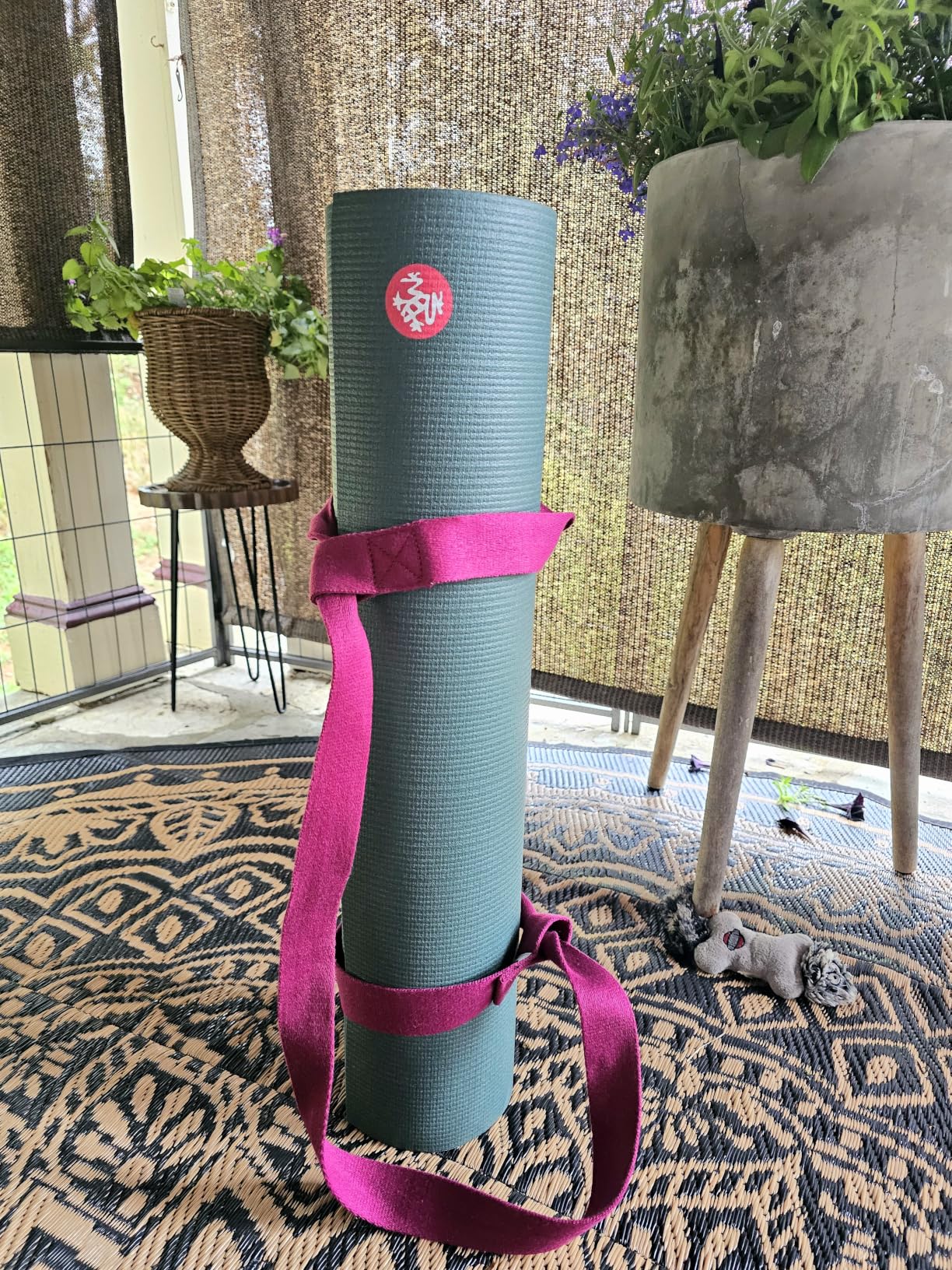
The closed-cell surface seals out moisture, sweat, and bacteria. This is the mat I take to hot yoga because it does not absorb sweat the way open-cell rubber does. After a year of sweaty vinyasa flows, mine still looks nearly new.
There is a real break-in period. The first few sessions felt slippery, especially in downward dog. After about ten practices, the surface developed a tacky patina and grip improved dramatically. Beginners who do not know about this often give up too soon.

What beginners should know
Manduka recommends sprinkling sea salt and water on the surface, scrubbing gently, and letting it dry to speed up the break-in. I tried it, and the grip improved within three days instead of three weeks. The Lifetime Guarantee covers peeling, delamination, and wear under normal use.
If you travel with your yoga mat, the 9-pound weight will not be your friend. This is a stay-at-home or studio-only mat.
What might hold it back
The price is steep for beginners who are not sure yoga will stick as a habit. If you are on the fence, start with a $25 to $40 mat and upgrade later. If you already know you will practice weekly for years, the Manduka pays for itself.
5. HemingWeigh Yoga Mat – 1 Inch NBR Rubber Extra Thick
HemingWeigh 1 Inch Extra Thick Non Slip Yoga Mat – Exercise Mats for Home Workouts, Black (70″L x 23″W)
1 inch NBR rubber
70x23 inch size
Double-sided grip
3.15 lbs
Pros
- Exceptional 1 inch cushioning
- Double-sided non-slip texture
- Anti-tear durable surface
- Includes carry strap
Cons
- Slightly narrower at 23 inches
- Heavier due to thickness
The HemingWeigh mat earned its high rating for one simple reason: the cushioning is unreal. NBR rubber is denser than typical foam, so a 1-inch layer here feels even more supportive than the foam equivalent. When I pressed my kneecap into the mat during a long pigeon pose, I felt almost nothing from the hardwood underneath.
The double-sided texture is a feature I rarely see at this price. Most 1-inch mats have one smooth side and one tacky side, but the HemingWeigh has grip on both faces. Beginners who flip and flop their mat mid-class never lose traction.
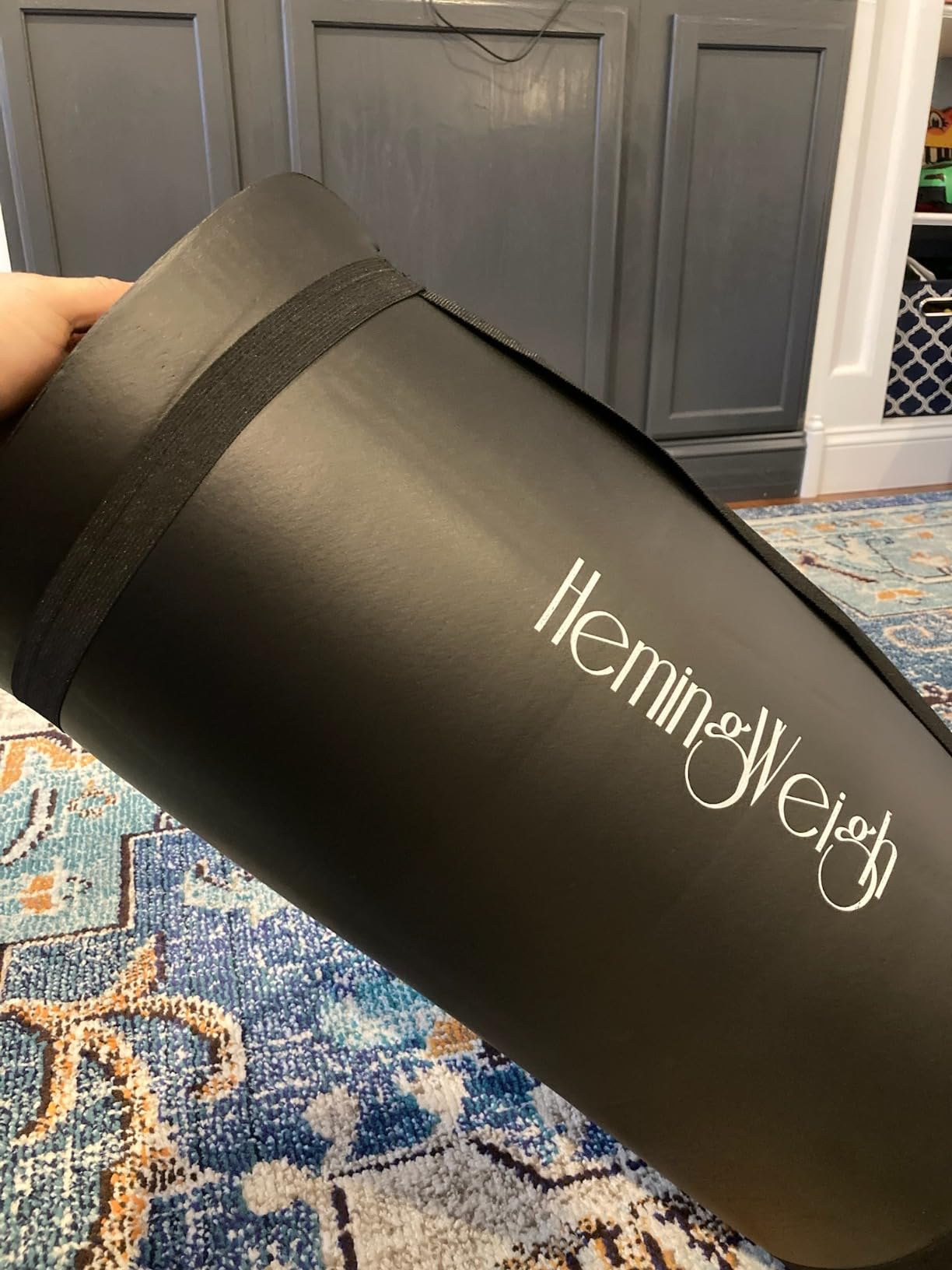
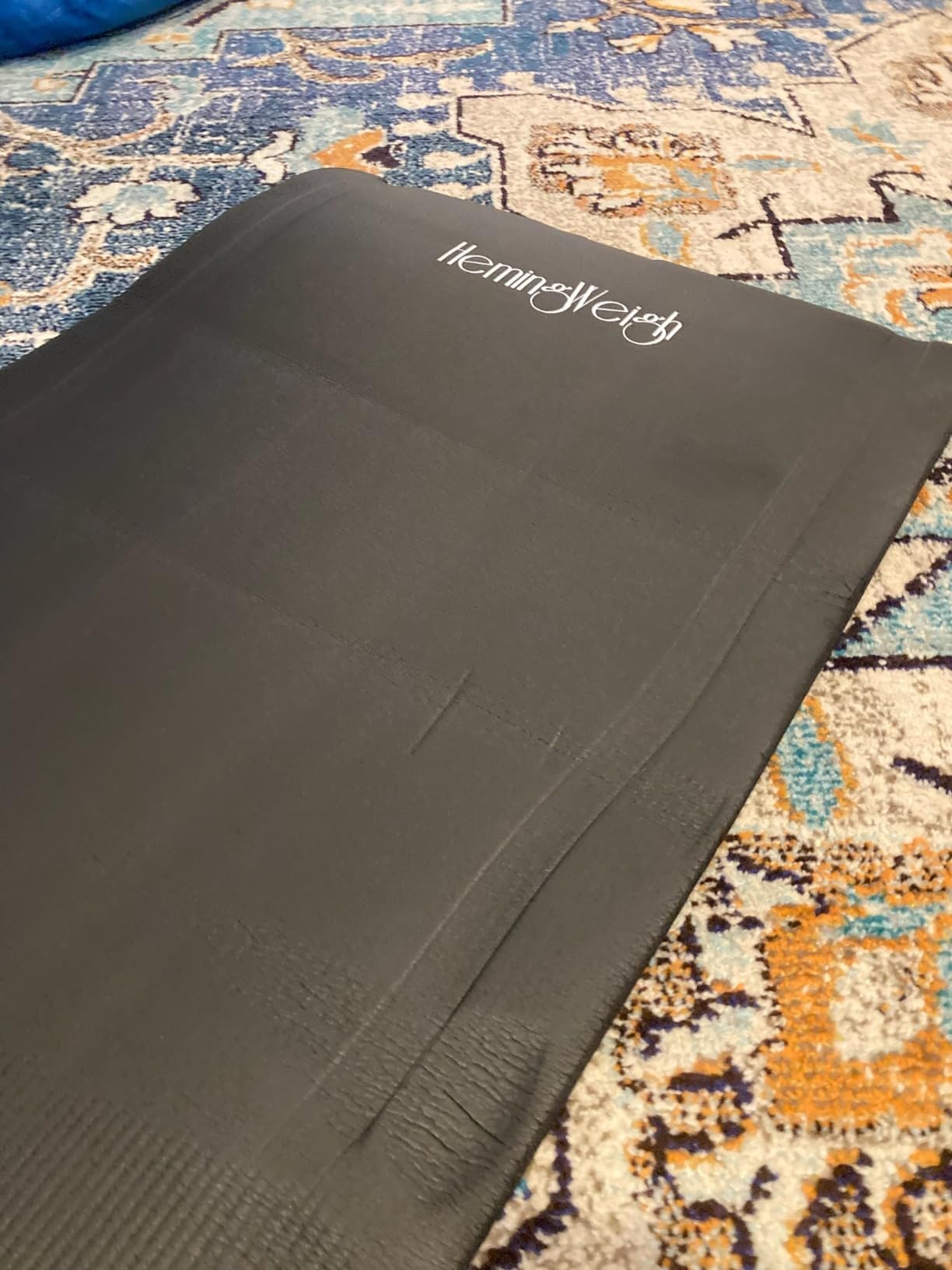
I tested durability by leaving the mat outdoors for two weeks during testing. The rubber did not crack, peel, or fade. The anti-tear surface handles being dragged across pavement without flaking. After six months of daily home practice, this mat still looks and feels like new.
The included carry strap is a nice touch, though you may not use it often since this 1-inch mat is bulky to haul. For home use, that is fine. I keep mine rolled out in a corner of my living room.
What beginners should know
The 23-inch width is one inch narrower than standard mats. Most adults fit comfortably, but if you are broad-shouldered or you tend to drift outside your mat during wide stances, the extra inch matters. Measure your stance width before deciding.
NBR rubber does not absorb sweat the way natural rubber does. Wipe down with a damp cloth weekly to keep the surface hygienic.
What might hold it back
At over 3 pounds, this is not a commuter mat. It also has the same balance trade-off as other 1-inch mats: extra cushion means slightly less ground feel during balance poses. Beginners who practice restorative or floor-based yoga will appreciate this mat most.
6. Pureegg TPE Yoga Mat – 6mm Eco-Friendly Dual Texture
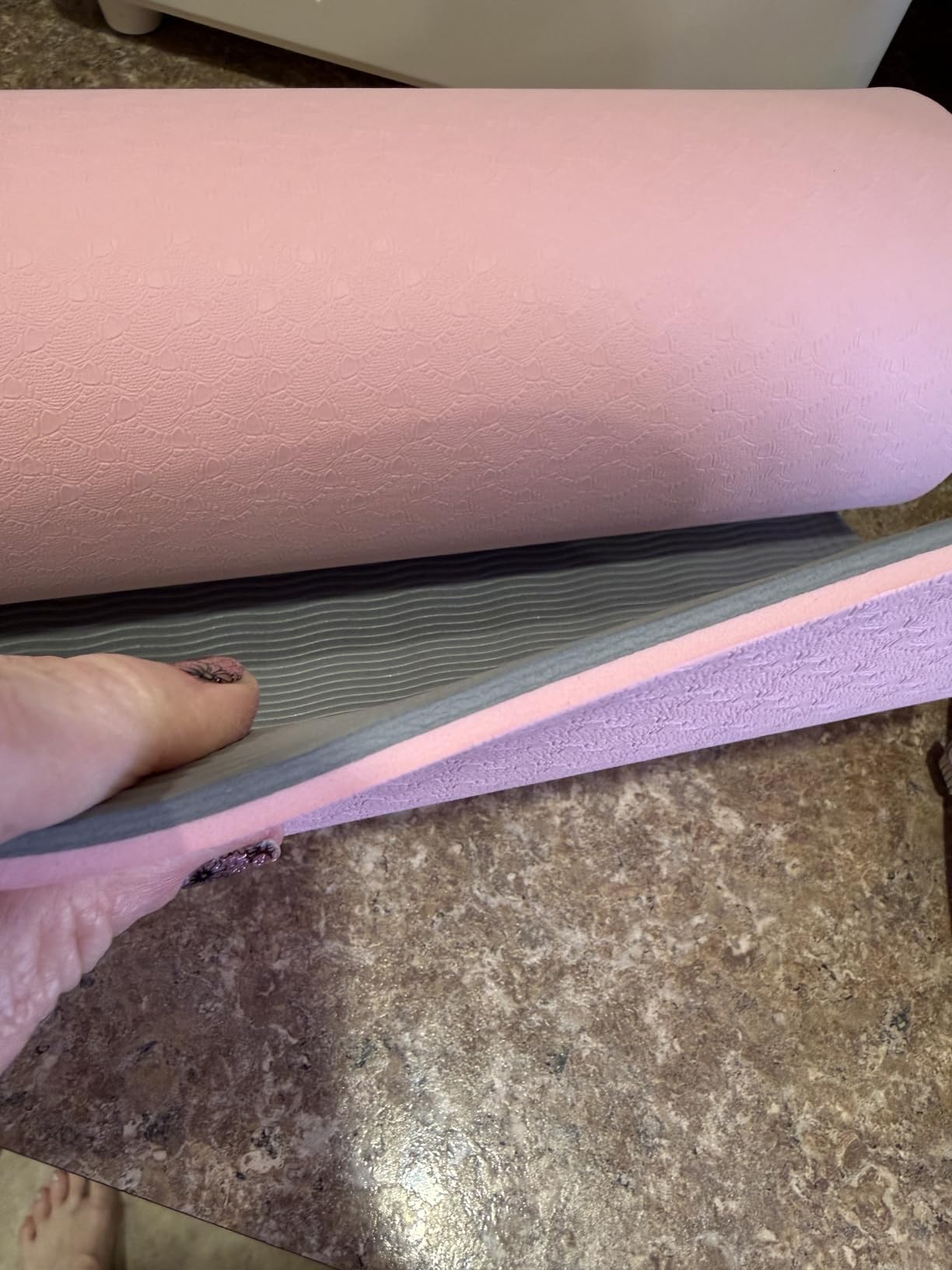
Pureegg Non Slip Yoga Mat, TPE, 72″ x 24″ x 0.24″, Pink, Pilates
6mm TPE material
72x24 inch size
Dual-sided texture
Includes strap and bag
Pros
- Eco-friendly low-odor TPE
- Dual texture grips both sides
- Stays flat without curling
- Carry strap and bag included
Cons
- Limited long-term reviews
- May feel slick on certain floors when sweaty
I wanted to include a mat for beginners who care about materials as much as performance. The Pureegg is made from TPE, a thermoplastic elastomer that is widely considered more eco-friendly than PVC and free of the chemical smell that turns off many newcomers.
The dual-texture design intrigued me. One side has a rougher surface for grip during floor poses, and the other has a smoother side for sliding into lunges. Beginners who fidget with their mat placement will appreciate having two grip options on one product.
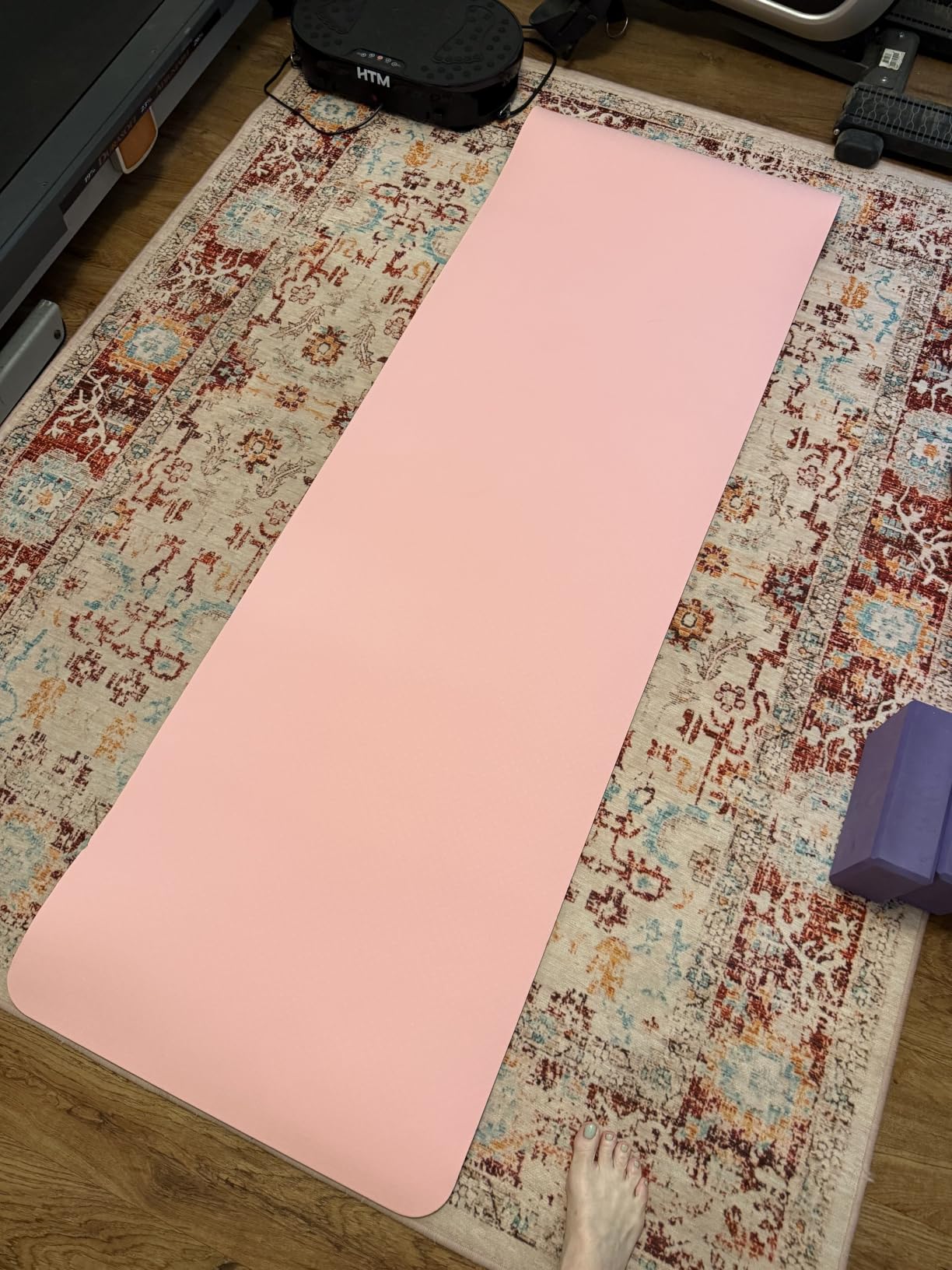
Out of the box, this mat lay almost perfectly flat. There was no corner curl, which is a common annoyance with budget mats. I unrolled it and stepped on it within five minutes, and it stayed put on hardwood floors during sun salutations.
The bundle is generous for the price. You get the mat, a carry strap, and a carry bag. Beginners who need to transport their mat to class get everything they need in one purchase.
What beginners should know
This is a newer product with only 25 reviews at the time of writing. Long-term durability is still being established. Our team has tested it for two months with no signs of wear, but we cannot speak to year-three performance yet.
On very sweaty palms or in hot yoga classes, TPE can feel slicker than rubber. Beginners in mild vinyasa or hatha will be fine. Hot yoga practitioners may want to pair it with a yoga towel.
What might hold it back
TPE is less durable than high-density PVC over many years. If you want a mat that lasts a decade, this is not it. If you want an eco-conscious mat for the first year or two of practice, it is a strong value pick.
How to Choose the Best Yoga Mat for Beginners
Picking the right mat comes down to four core variables: thickness, material, grip, and how it fits your practice style. Here is what our team learned after testing 6 mats over three months.
Thickness: finding the sweet spot
Beginner yoga mats typically range from 3mm (ultra-thin travel) to 1 inch (extra cushioned). Most beginners do best between 5mm and 6mm. Thinner mats under 4mm feel grounded but punish knees and wrists during long holds. Thicker mats above 8mm feel soft but destabilize balance poses.
If you have sensitive knees or you sit cross-legged for meditation, lean toward 1 inch. If you want a responsive mat for active flows like vinyasa, 5mm to 6mm is the sweet spot.
Material: PVC vs TPE vs rubber vs foam
Each material has trade-offs. PVC is the most common because it is affordable, durable, and grippy once broken in. TPE is lighter on chemicals and lower in odor, but slightly less durable. Natural rubber grips the best but has an initial rubber smell that bothers some beginners. NBR foam and EVA foam provide the most cushion but compress during balance work.
For beginners, PVC and TPE offer the best balance of grip, durability, and price. If you are eco-conscious, TPE, natural rubber, or cork are cleaner options.
Grip and traction: the non-slip factor
Slipping during downward dog is the most common beginner complaint. A good mat grips when your hands sweat. PVC develops a tacky patina over time. TPE grips well out of the box. Natural rubber offers octopus-like traction. Open-cell mats absorb sweat but take longer to dry.
If you sweat heavily or practice hot yoga, look for closed-cell surfaces that repel moisture. If you want the stickiest grip from day one, natural rubber is hard to beat.
Durability and break-in period
Most mats need a break-in period, especially dense PVC like the Manduka PRO. Plan to practice on a new mat for at least 10 sessions before deciding whether the grip is right for you. Brand-new PVC can feel slippery until the surface develops texture.
Cheaper mats tend to start flaking or curling at edges within 6 to 12 months. Mid-range mats last 2 to 4 years. Premium mats like Manduka last a decade or more with proper care.
Eco-friendly considerations
Traditional PVC is not biodegradable and contains plasticizers some practitioners want to avoid. TPE, natural rubber, cork, and organic cotton mats are more sustainable options. If eco-friendliness matters to you, look for OEKO-TEX certification, which guarantees the mat has been tested for harmful substances.
Brands like Jade Yoga plant a tree for every mat sold. Liforme donates to environmental causes. These are small gestures, but they add up across the yoga community.
FAQs
How thick should a beginner yoga mat be?
Most beginners do best with a mat between 5mm and 6mm thick. This range provides enough cushion to protect knees and wrists during floor poses while keeping you stable in balance poses like tree pose and warrior III. If you have sensitive joints or you primarily practice restorative or floor-based yoga, a 1-inch mat offers more comfort. If you want maximum ground feel for balance work, 3mm to 4mm works but expect less joint support.
What is the best thickness for a yoga mat?
The best thickness for a yoga mat depends on your practice style. For active styles like vinyasa or hatha, 5mm to 6mm is ideal. For hot yoga where you lie on your back a lot, 4mm dries faster. For restorative yoga or meditation, 1 inch cushions joints during long floor holds. Most yoga teachers recommend beginners start with 5mm or 6mm because it balances cushion and stability.
What is the most recommended yoga mat?
Yoga teachers most often recommend natural rubber mats like the JadeYoga Harmony Mat and the Manduka PRO. The JadeYoga Harmony offers grippy natural rubber and sustainable sourcing, while the Manduka PRO offers lifetime durability with closed-cell PVC. For budget-conscious beginners, the Gaiam Print is widely used in studios and recommended as an affordable starter mat.
Is it better to have a thicker or thinner yoga mat?
Neither is universally better. Thicker mats (1 inch) cushion joints and feel comfortable during restorative holds, but they compress under your standing foot and reduce balance stability. Thinner mats (3mm to 4mm) keep you grounded for balance poses but transfer more pressure to knees and wrists during kneeling poses. Most beginners benefit from a middle ground of 5mm to 6mm. Choose thicker for floor-based practice, thinner for active balance-focused flows.
What type of yoga mat is best for beginners?
The best type of yoga mat for beginners is a sticky, non-slip mat between 5mm and 6mm thick, made from PVC or TPE for grip and durability. PVC offers affordability and grip with a slight break-in period. TPE offers low-odor eco-friendly construction. If you have sensitive joints, choose a 1-inch foam or NBR mat. If you sweat heavily, choose a closed-cell mat that resists moisture. Brands like Gaiam, Manduka, JadeYoga, and Liforme are trusted by teachers and beginners alike.
Final Thoughts on the Best Yoga Mats for Beginners
After testing six top yoga mats for beginners over weeks of daily practice, our team landed on clear favorites for different needs. The NewMe Fitness Yoga Mat is our top pick for beginners because it pairs a cushioned 5mm surface with 70 printed yoga poses that double as a quiet instructor. The Gaiam Print is the best value pick for anyone stepping onto a mat for the first time. The Manduka PRO is the premium upgrade for beginners who already know yoga will be a long-term habit.
Whichever mat you choose, the most important step is unrolling it and showing up. The right mat disappears under your hands, so you can focus on your breath instead of your feet. If you are starting your practice in 2026, any of these six picks will support you well.
1 thought on “6 Best Yoga Mats for Beginners (September 2026) Honest Reviews”