
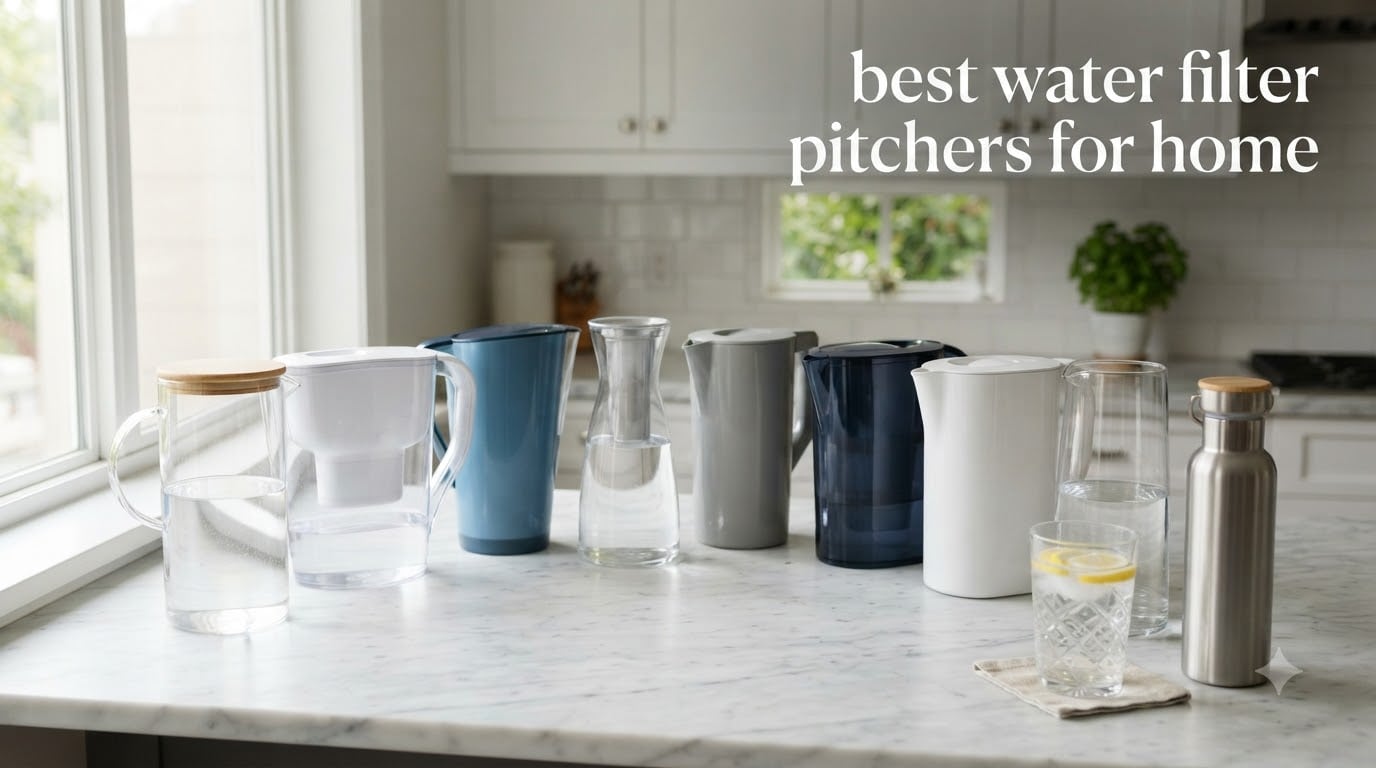
If your tap water tastes fine but you still wonder what may be hidden in it, you are not alone. Chlorine, lead, PFAS, fluoride, dissolved minerals, and microplastics are common reasons shoppers look for the best water filter pitchers for home use, yet no single pitcher handles every concern equally.
I compared eight current pitchers across price, capacity, filter life, certification, and the contaminants each product actually claims to reduce. I also considered long-term ownership issues forum users repeatedly mention: recurring filter expense, slow flow, plastic taste, lid mold, and filters that expire much sooner than expected.
A pitcher is the easiest entry into home water filtration because it needs no installation and takes up only refrigerator space. The catch is that “filtered” does not mean complete purification, so my recommendations below match the pitcher to the result you care about rather than declaring one universal winner.
My quick answer: ZeroWater is the pick for measurable TDS reduction, Clearly Filtered is the strongest broad-contaminant choice, and Brita’s standard 10-cup model is the practical everyday value pick. Here is how I reached those conclusions.
Table of Contents
Top 3 Picks for the Best Water Filter Pitchers

Brita Large 10-Cup Water Filter Pitcher
- 10-cup capacity
- 40-gallon filter
- WQA NSF certified
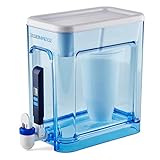
ZeroWater 22-Cup 5-Stage Dispenser
- Integrated TDS meter
- 22-cup capacity
- 5-stage ion exchange

Clearly Filtered 80-Ounce Pitcher
- Targets 365+ contaminants
- 100-gallon filter
- NSF certified
Best Water Filter Pitchers for Home in 2026
| Product | Specifications | Action |
|---|---|---|
| Brita 10-Cup Water Filter Pitcher |
|
Check Latest Price |
 Waterdrop PT-07B Waterdrop PT-07B |
|
Check Latest Price |
 Waterdrop WFD-40L Dispenser Waterdrop WFD-40L Dispenser |
|
Check Latest Price |
| ZeroWater 22-Cup Dispenser |
|
Check Latest Price |
| Clearly Filtered 80-Ounce Pitcher |
|
Check Latest Price |
 Brita 10-Cup Elite Brita 10-Cup Elite |
|
Check Latest Price |
 Brita 27-Cup Dispenser Brita 27-Cup Dispenser |
|
Check Latest Price |
 Waterdrop ED01W Electric Pitcher Waterdrop ED01W Electric Pitcher |
|
Check Latest Price |
1. Brita 10-Cup Water Filter Pitcher: Best Everyday Value
Brita Large 10 Cup Water Filter Pitcher, Includes 1 Filter, Bright White
10-cup capacity
40-gallon filter
Reduces chlorine and metals
Pros
- BPA-free
- Compact 10.7 by 5.4 inch footprint
- Compatible with standard and Longlast filters
- Easy-fill locking lid
Cons
- Standard filter lasts only 2 months
The standard Brita pitcher is the model I would recommend to someone who mainly dislikes chlorine taste and wants a dependable, uncomplicated refrigerator pitcher. Its 10.6 by 5.4 by 10.1 inch body is narrow enough for a crowded shelf, while the locking lid helps keep the pour area covered when the fridge door is bumped.
Granular activated carbon is the primary purification method. Brita says the standard filter reduces chlorine taste and odor, copper, zinc, mercury, and cadmium, and the included filter is rated for 40 gallons or about two months.
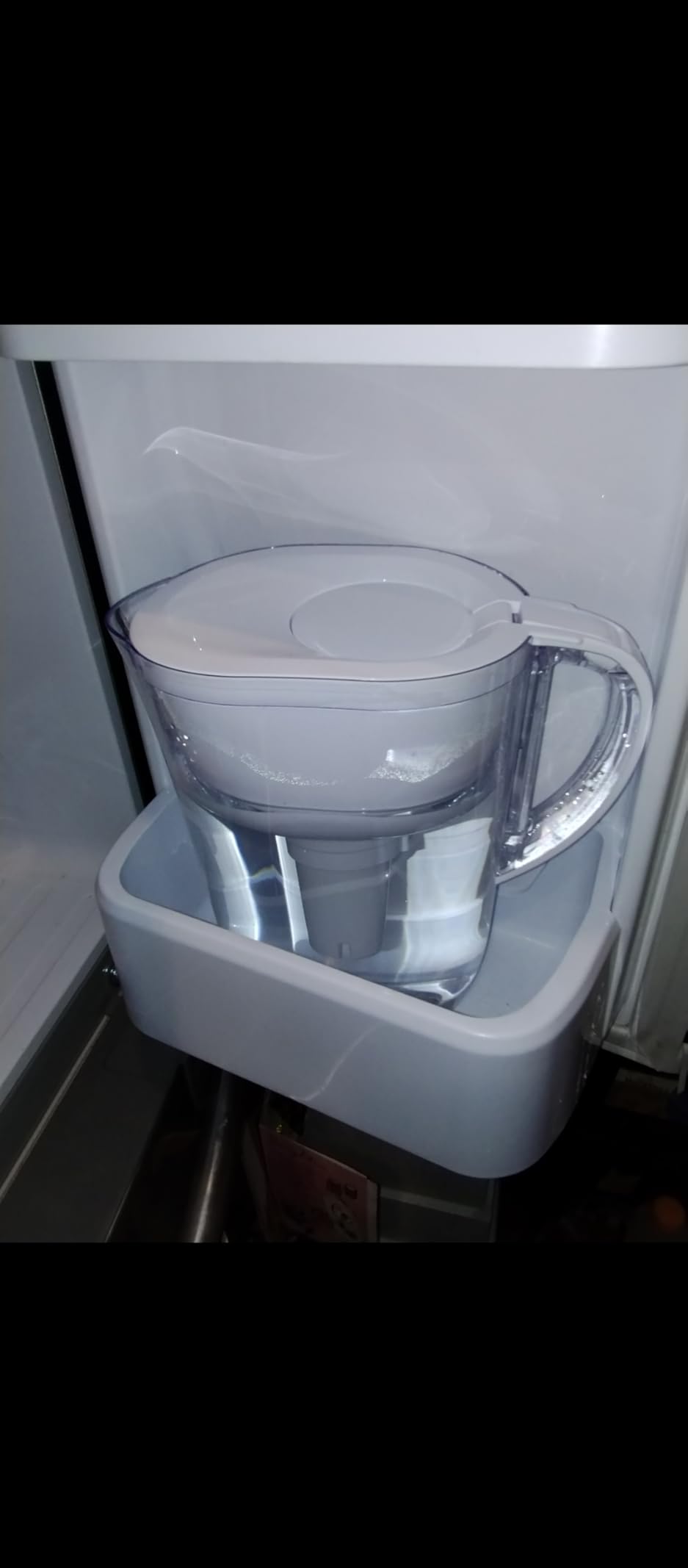
That broad replacement interval sounds convenient, but the included standard cartridge is the weak point. I would buy a multi-pack at setup, mark the replacement date on the calendar, and pay extra attention to the lid channels during cleaning because forum users report moisture can collect there.
The product data also says it can replace as many as 1,800 single-use bottles per year with consistent use. I treat that as an ownership scenario rather than a guarantee, but it makes sense for households that regularly buy bottled water.
For whom it’s good
This Brita fits people who want simple daily filtration, familiar replacements, and a pitcher small enough for one or two household drinkers. It is also a sensible starter model if chlorine and dissolved metals are your main concerns rather than fluoride or total dissolved solids.
For whom it’s bad
It is not the right choice for someone who needs a measured TDS result or broad PFAS and fluoride coverage. Buyers in high-mineral water may also find themselves replacing a standard filter sooner than the stated two-month schedule.
2. Waterdrop PT-07B: Best Budget Pitcher With Long Filter Life
Waterdrop PT-07B Water Filter Pitcher, 10-Cup, NSF Certified, Blue
10 cups
200-gallon filter
Hands-free dispensing
Pros
- NSF/ANSI 42 and 372 certified
- Filter indicator
- 200-gallon life
- Automatic dispensing lid
Cons
- Does not lower TDS
The Waterdrop PT-07B earned my budget value spot because it keeps the familiar 10-cup format while stretching filter life to 200 gallons or three months. Its lead-free, food-grade body uses activated carbon and ACF, and the hands-free lid dispenses water as the container is positioned under it.
That is a helpful feature when both hands are carrying a meal prep container. I also like the intelligent replacement indicator, although I still treat the indicator as a reminder rather than proof that every contaminant remains below its target level.
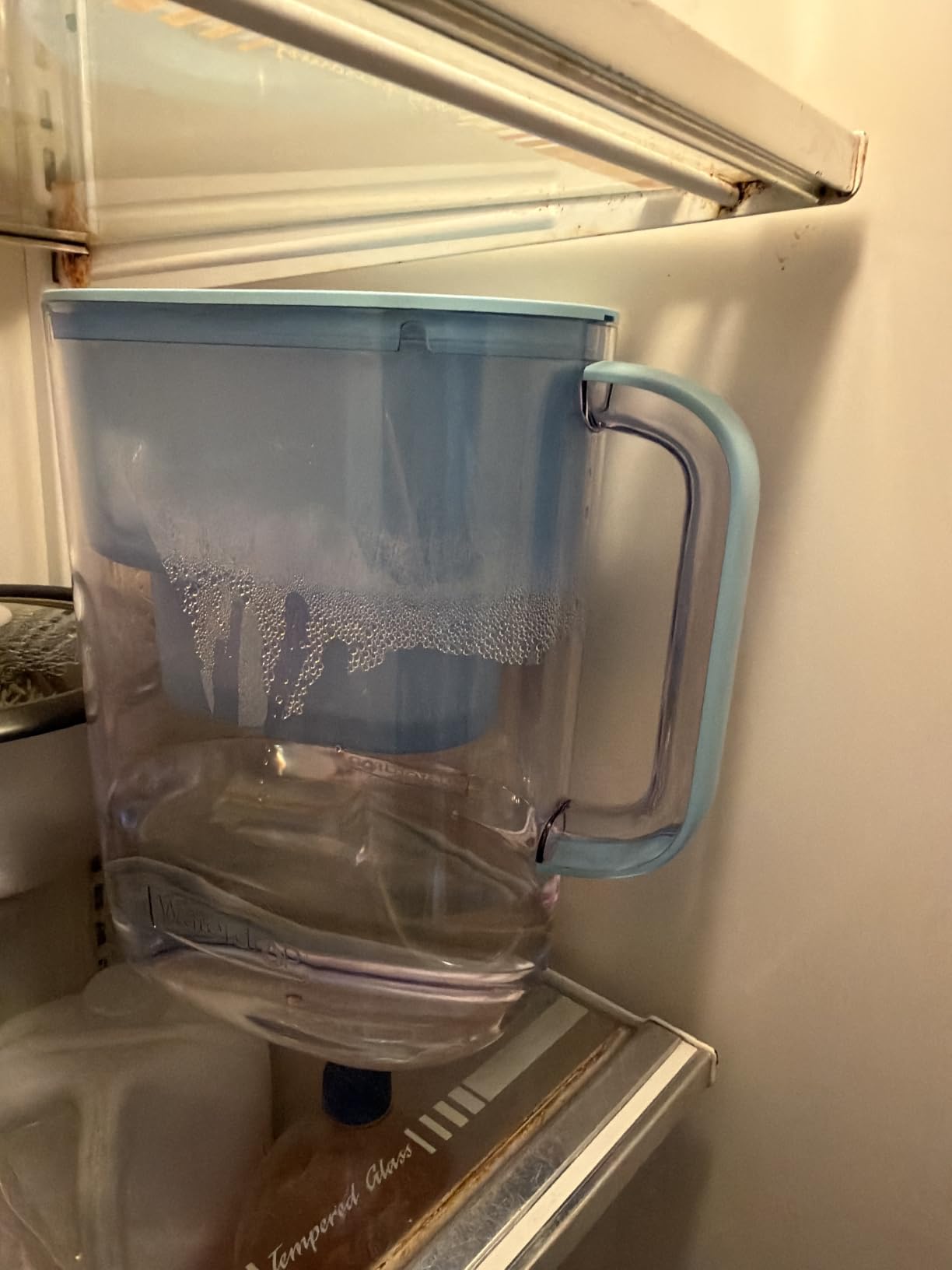
Waterdrop says the cartridge reduces PFOA and PFOS, chlorine odor, iron, mercury, copper, and other metal ions. It is NSF/ANSI 42 and 372 certified, but it does not lower total dissolved solids, so do not expect a ZeroWater-style 0 ppm reading.
At 10 by 5 by 10.1 inches, this Waterdrop takes about the same refrigerator footprint as the standard Brita. The tradeoff for its long filter life is ongoing cost per gallon, so I compare replacement cartridge pricing rather than looking only at the pitcher itself.
For whom it’s good
I would choose the PT-07B for a family that values fewer filter changes and certified reduction of chlorine and certain metals. It is especially practical for people who want a no-fuss fill-and-pour routine at a relatively accessible initial cost.
For whom it’s bad
This model is a poor match for shoppers who define filtration success by a TDS meter. It is also not designed to strip every dissolved mineral from hard water.
3. Waterdrop WFD-40L: Best for Large Households
Waterdrop WFD-40L Water Filter Dispenser, 35-Cup Capacity, Black
35-cup total capacity
200-gallon filter
97.4% chlorine reduction
Pros
- Large 35-cup capacity
- Slim profile
- 200-gallon life
- Sliding cover
Cons
- Only 19 cups fit in the body
The WFD-40L is really a countertop dispenser that fits a refrigerator. Its 35-cup total sounds enormous, but only 19 cups fit in the body while the upper section feeds the filter and holding area; I would not plan around the headline number alone.
It measures 14.37 by 5.55 by 9.95 inches, which is a useful compromise when a household needs more water than a 10-cup pitcher but does not have room for a 27-cup Brita dispenser. The sliding cover also isolates the filtered water from refrigerator odors.
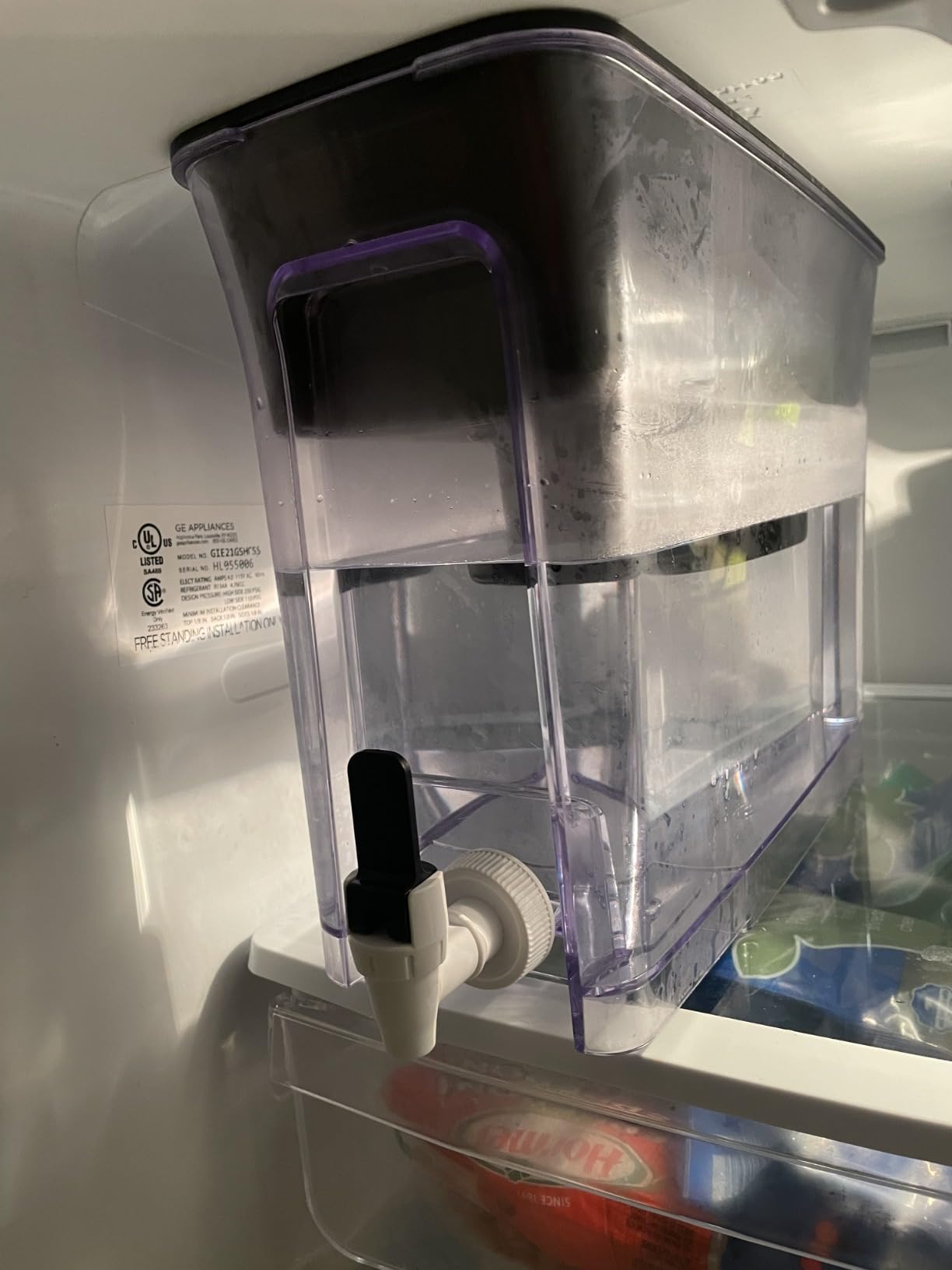
Waterdrop reports a 97.4% residual chlorine reduction rate and uses lead-free, BPA-free materials. NSF 42 and 372 certification supports its structural and filtration claims, while the 200-gallon cartridge is rated for two months in the supplied data.
I would keep the dispenser away from a back wall because a full unit is 4.2 pounds and the wide handle helps when carrying it. It also does not lower TDS, so the large capacity is about convenience and volume, not dissolved-solids removal.
For whom it’s good
This Waterdrop is best for families, shared offices, and people who refill glasses throughout the day. Its slim shape also works well under a refrigerator shelf where a full 14.4 inch width is available.
For whom it’s bad
Small households may not use 19 cups before the water sits around, and a conventional 10-cup pitcher is easier to wash. Anyone targeting fluoride or needing a TDS readout should look elsewhere.
4. ZeroWater 22-Cup Dispenser: Best for Measurable TDS Reduction
Culligan ZeroWater 22-Cup Ready-Read 5-Stage Water Filter Dispenser with 5-Stage 0 TDS Water Filter – IAPMO Certified to Reduce Lead, Chromium, and PFOA/PFOS
22-cup capacity
5-stage ion exchange
Integrated TDS meter
Pros
- Instant TDS readout
- IAPMO certified
- 5-stage filtration
- BPA-free body
Cons
- Corded electric power
- Filters can clog sooner in hard water
ZeroWater is the pitcher I would test when the question is not merely “Does this taste better?” but “How much dissolved material is left?” Its five-stage ion-exchange system is IAPMO certified to reduce PFOA/PFOS, lead, chromium, and mercury, and the built-in meter gives an instant TDS result.
A 0 ppm reading is satisfying when the incoming water starts with a much higher number, but I would not compare that number with the contaminant claims of a carbon pitcher without understanding the test. TDS is a measurement of dissolved solids, not a complete list of everything in water.
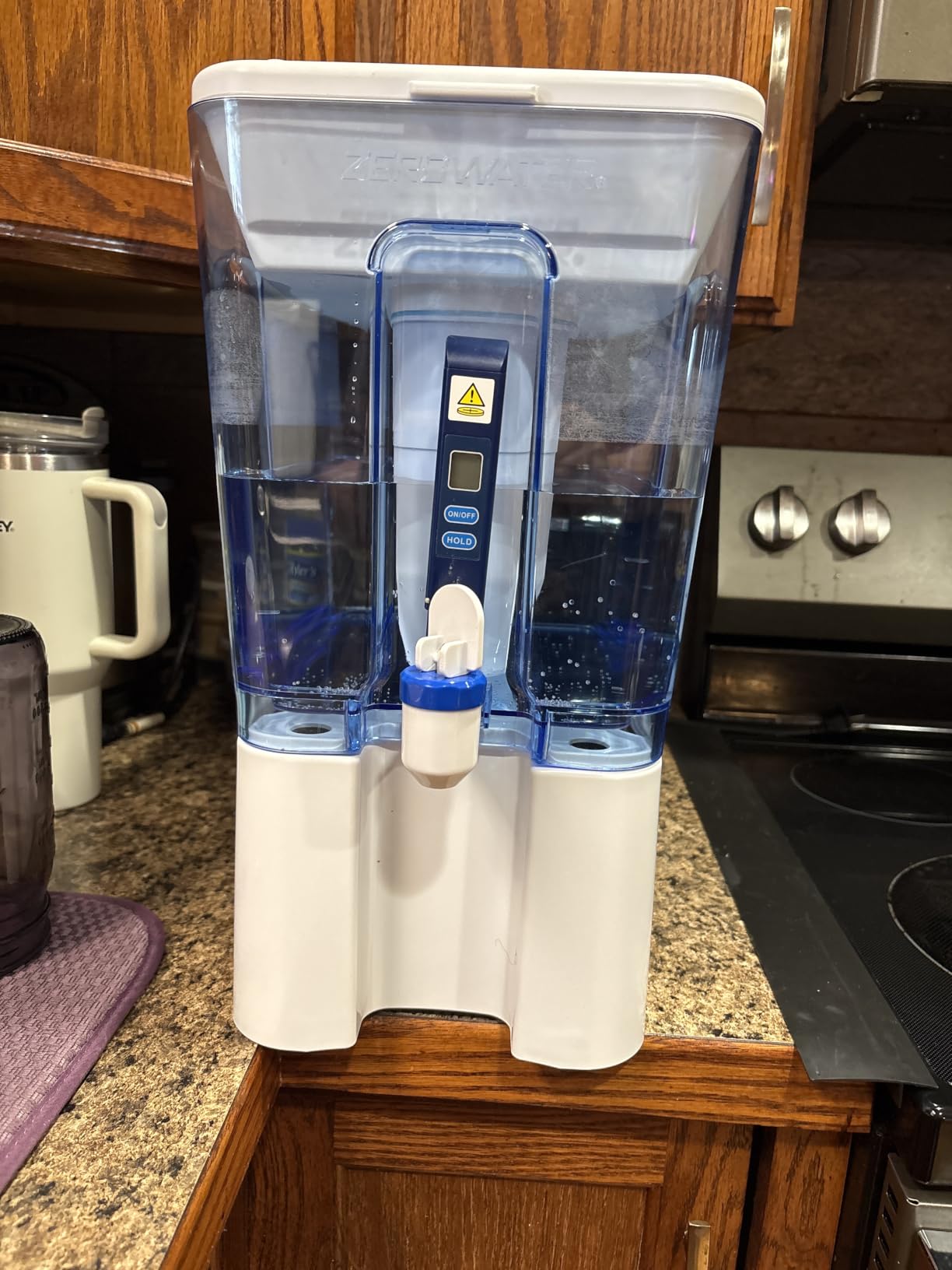
The 22-cup, 5.2-liter dispenser is larger than a normal pitcher and weighs 2.3 pounds. It is corded electric, so the meter and dispenser setup require a nearby outlet; that is an important difference from a manual gravity filter.
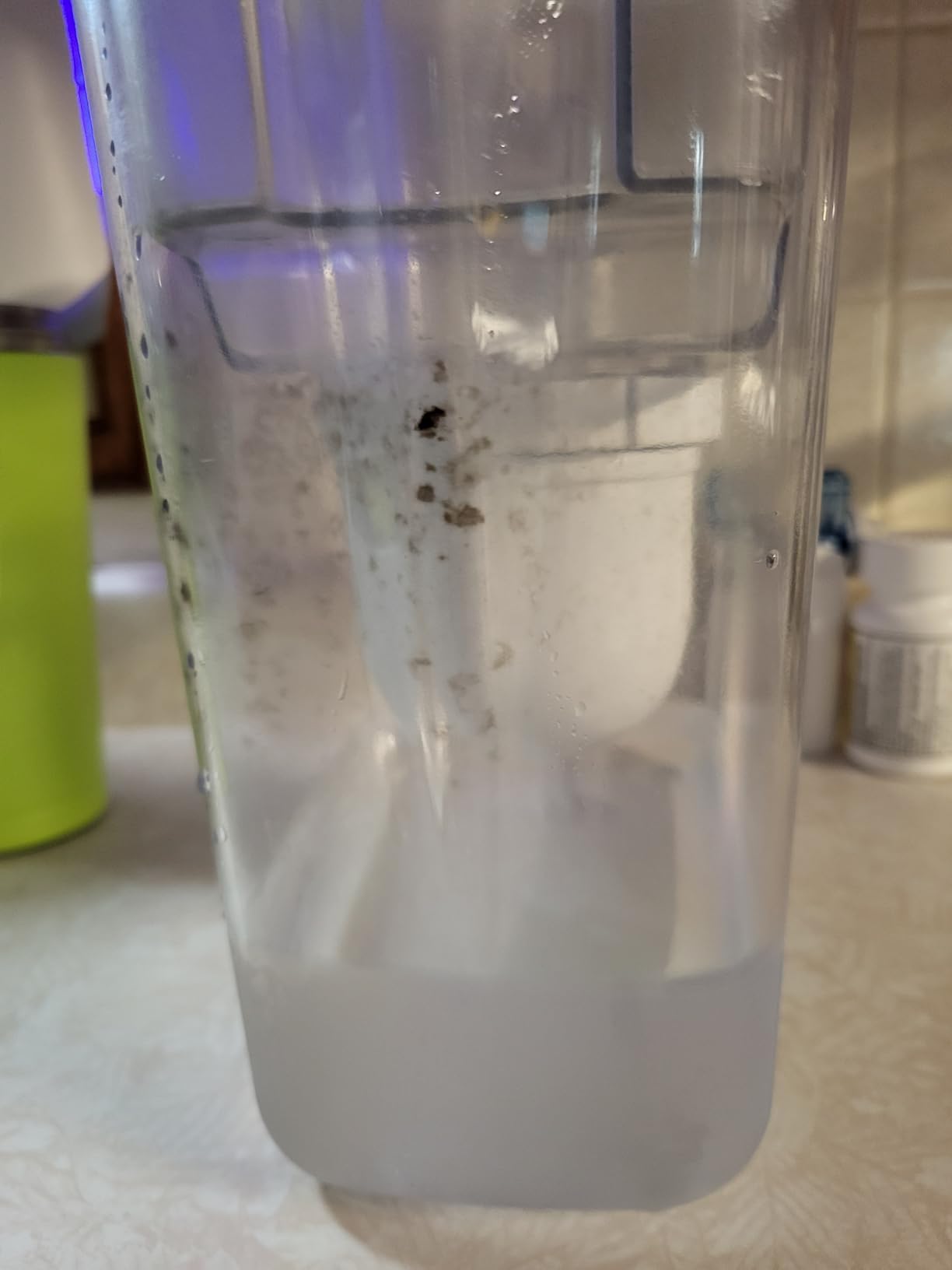
Forum users commonly report that ZeroWater cartridges clog quickly in high-TDS areas, sometimes after one or two weeks. That real-world complaint matches the tradeoff of fine ion-exchange media: more thorough dissolved-solid reduction can mean more frequent replacements.
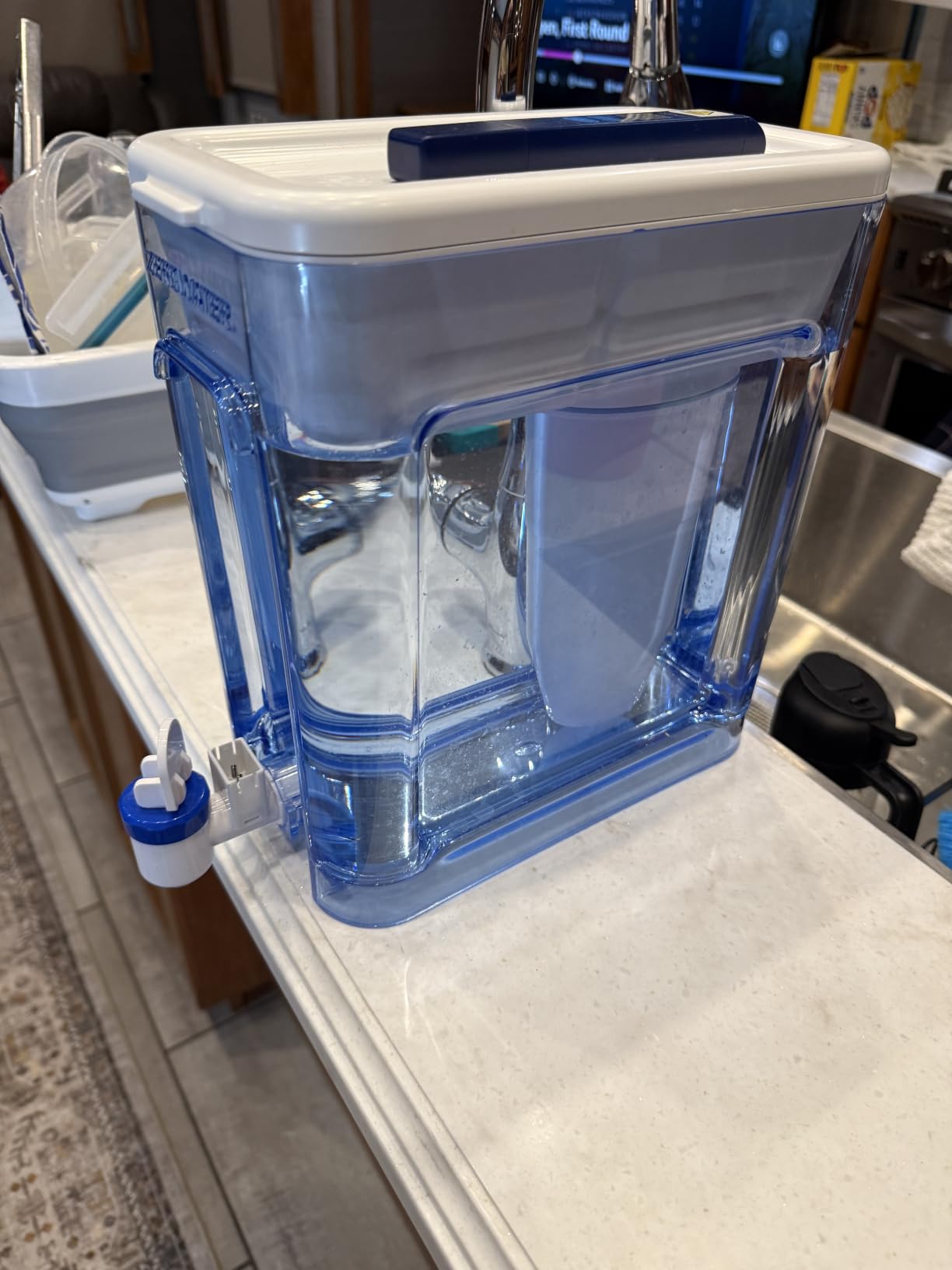
I would keep a spare cartridge on hand if this is your everyday pitcher, and I would change it when the meter rises or flow slows even if the calendar does not say the filter is due.
For whom it’s good
ZeroWater suits people who want objective feedback and are willing to accept the cost and replacement cadence. It is a strong choice for households that care about dissolved solids, taste, and the ability to verify a filter’s progress.
For whom it’s bad
It is less convenient for a small household or a kitchen without an outlet. In very hard water, the cartridge can become a recurring expense, which undercuts the otherwise attractive initial price.
5. Clearly Filtered 80-Ounce Pitcher: Best Broad-Contaminant Coverage
Clearly Filtered Water Filter Pitcher, 10 Cup BPA Free Water Filtration
Targets 365+ contaminants
100-gallon filter
NFS 42 and 372
Pros
- Targets fluoride
- PFAS
- lead
- chlorine
- microplastics
- Third-party lab testing
- Medical-grade Tritan
Cons
- Premium price
- Manual pitcher
Clearly Filtered is the most coverage-focused pitcher in this group. The 80-fluid-ounce, 10-cup model targets 365-plus contaminants, including fluoride, lead, PFAS, arsenic, chlorine, and microplastics, using affinity filtration technology with ionic binding.
The brand publishes third-party removal data, and this model is NSF/ANSI 42 and 372 certified. That combination matters when you are choosing a home water filtration product for a specific concern rather than buying on the strength of a TDS number alone.
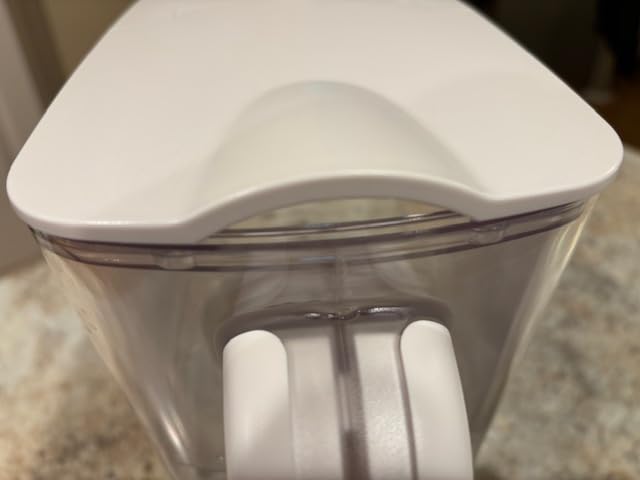
It is a manual, non-electric pitcher made from medical-grade Tritan that is BPA and BPS free. At 10.87 by 5.25 by 11.4 inches, it is taller than many 10-cup models, so measure the refrigerator shelf before ordering.
The included filter is rated for 100 gallons, approximately 200 refills, or around four months. That is a respectable life, but the product data also identifies a 120-day shelf life, so I would avoid buying a large stash and let cartridges sit past their labeled use-by window.
Its high initial cost is the obvious tradeoff, but it may be justified when the alternative is paying for contaminant-specific filters or drinking bottled water. I would still use the published test data to confirm that the contaminant you care about is covered.
For whom it’s good
Choose this pitcher if your priority is broad reduction of hard-to-address substances such as fluoride, PFAS, and microplastics. It is also appealing to buyers who want independently documented performance and BPA/BPS-free Tritan.
For whom it’s bad
Budget-focused shoppers may find the premium price hard to justify for ordinary chlorine taste improvement. It is also not a TDS-reduction system, so a low mineral reading should not be expected.
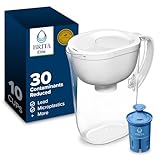
6. Brita 10-Cup Elite: Best Lead-Focused Manual Pick
Brita Large 10-Cup Elite Water Filter Pitcher, WQA NSF/ANSI Certified, Reduces 99% of Lead, Microplastics, & 30 Contaminants, BPA-Free, Removes Chlorine Taste & Odor, 1 Filter Included, White
10 cups
6-month filter
99% lead reduction
Pros
- 99% lead reduction
- Electronic change indicator
- BPA-free body
- Easy-fill design
Cons
- Manual flow can be slow
- Brita Elite replacements
The Brita Elite keeps the familiar 10-cup format but raises the filtration target. Brita says the Elite filter reduces 99% of lead, chlorine taste and odor, cadmium, mercury, benzene, asbestos, and more than 30 contaminants.
Its electronic indicator removes some guesswork from the six-month replacement schedule, and the body is BPA-free. I would still replace the cartridge at the stated interval because a green light cannot measure every contaminant in your tap water.
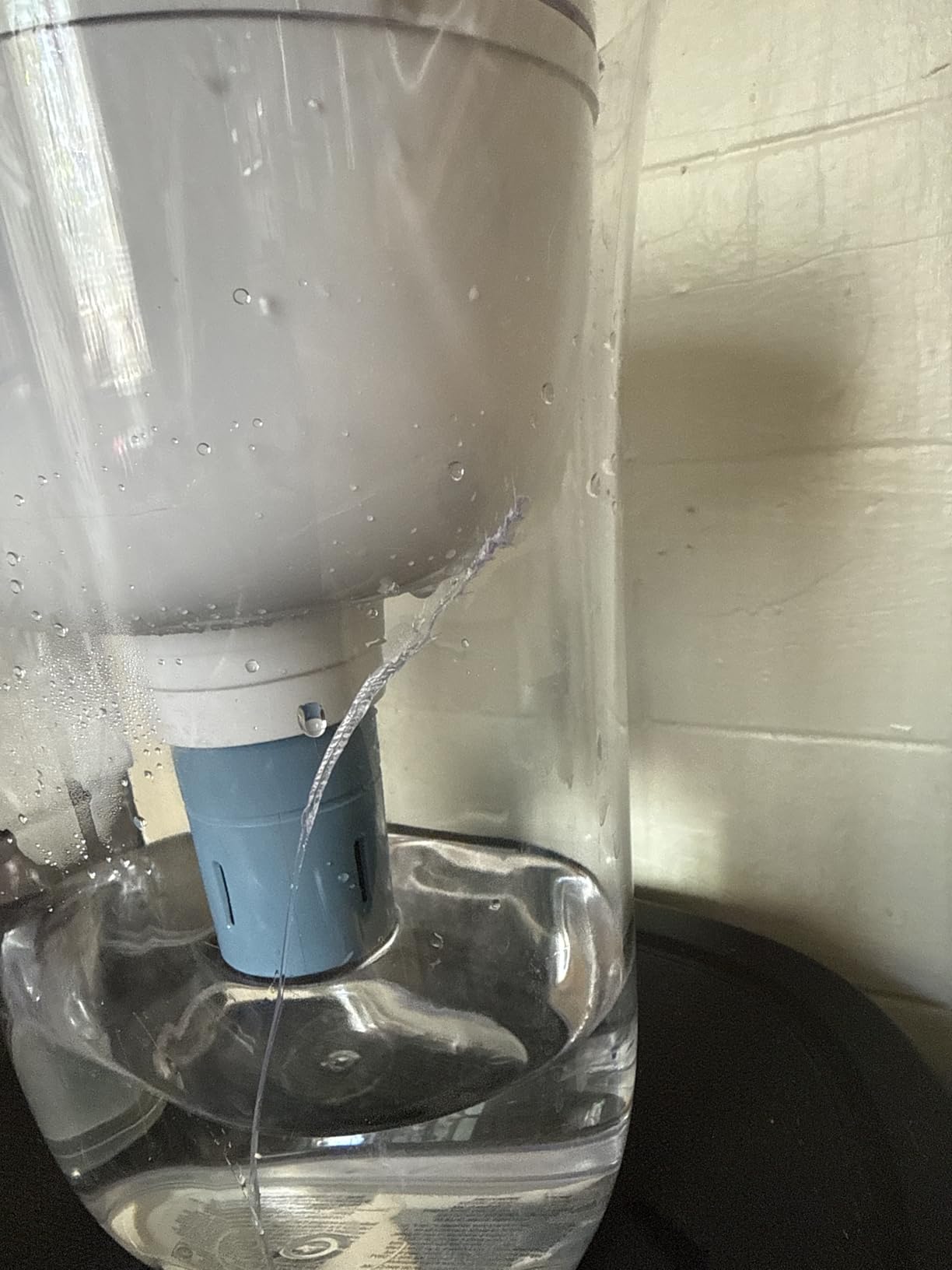
The manual pitcher has a 0.05-gallon-per-minute maximum flow rate, so this is not the fastest-filling option in the group. I would fill the upper chamber in one pour and let gravity do the work rather than expecting a rapid stream.
The model is WQA NSF/ANSI certified and compatible with Brita Elite filters. Its lower review rating than the standard Brita reflects the Elite’s higher ownership expectations, but it is the better fit when lead reduction is the reason you are filtering.
For whom it’s good
This is a sensible choice for households that want a manual pitcher with a clear lead claim and a six-month schedule. It also suits Brita owners who already have an Elite replacement system.
For whom it’s bad
It is not the first model I would buy for a high-volume family or anyone who dislikes slow gravity filtration. If TDS reduction is the goal, the ZeroWater is a better match.
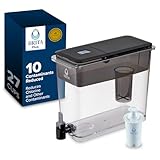
7. Brita 27-Cup Dispenser: Best for High-Volume Serving
Brita XL 27 Cup Water Filter Pitcher, 1 Brita Plus Filter, Ultramax, Black
27-cup dispenser
40-gallon filter
Front spigot
Pros
- Large capacity
- Front spigot
- WQA NSF/ANSI certified
- Retains minerals
Cons
- Large countertop footprint
- Filter every 2 months
The 27-cup Brita is the serving-station option in this comparison. Its 11.18 by 14.57 by 5.63 inch body takes a wide slice of refrigerator or counter space, but the front spigot means nobody needs to lift and tilt a full vessel.
The BritaPlus filter is stated to reduce twice as many contaminants as a standard Brita filter. It is WQA NSF/ANSI certified, uses carbon-block filtration, and retains beneficial minerals and electrolytes.
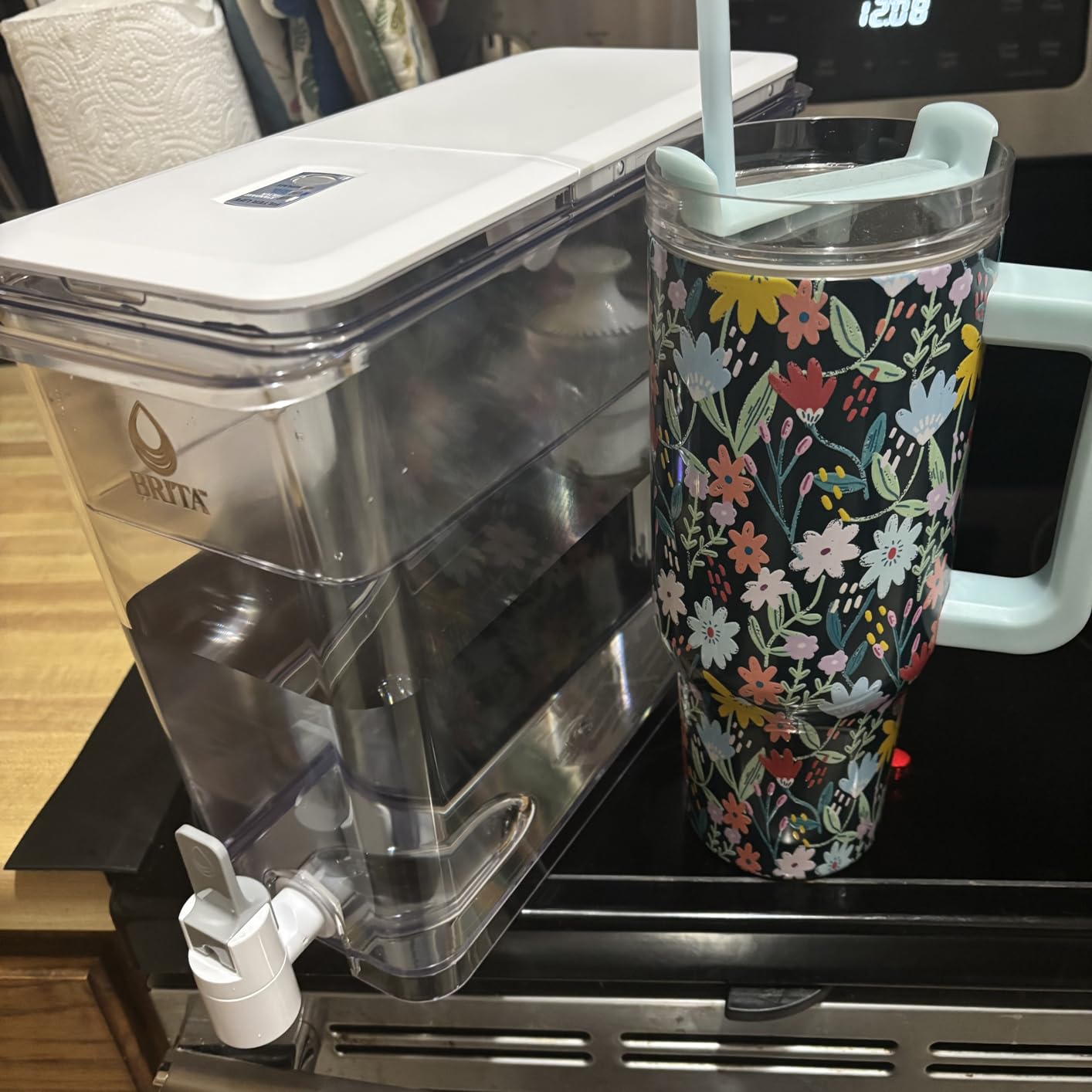
The included filter is rated for 40 gallons or approximately 60 days. That schedule is easy to remember, but the unit’s 27-cup capacity makes a missed replacement expensive because a busy family can consume the full rated volume quickly.
I like this format for entertaining, a shared office, or a family that wants a glassful without opening the refrigerator door. It is less attractive for one person because keeping 27 cups of water cold can create waste rather than convenience.
For whom it’s good
Choose the 27-cup Brita when capacity and easy dispensing matter more than compact storage. The spigot is especially useful for children, guests, and anyone who should not lift a heavy dispenser.
For whom it’s bad
It is too large for many refrigerator doors and cramped counters. It also does not provide a TDS reading or the same broad contaminant coverage as Clearly Filtered.
8. Waterdrop ED01W: Best Electric One-Touch Dispenser
Waterdrop ED01W Electric Water Filter Pitcher, NSF/ANSI 42&53&401&372,White
15 cups
200-gallon filter
One-touch electric dispensing
Pros
- 1-second dispensing
- 99.6% lead reduction
- NSF 42
- 53
- 401
- 372
- 30-day battery
Cons
- Does not lower TDS
- Replacement filters cost more
The Waterdrop ED01W is the unusual electric option in this list. Instead of waiting for gravity, one touch delivers water in about one second, and the rechargeable battery is rated for up to 30 days between USB Type-C charges.
Its 0.5-micron premium carbon block is NSF/ANSI 42, 53, 401, and 372 certified. Waterdrop states that it reduces 99.6% of lead and 45-plus impurities, making it the most formally certified manual-flow alternative in this group.
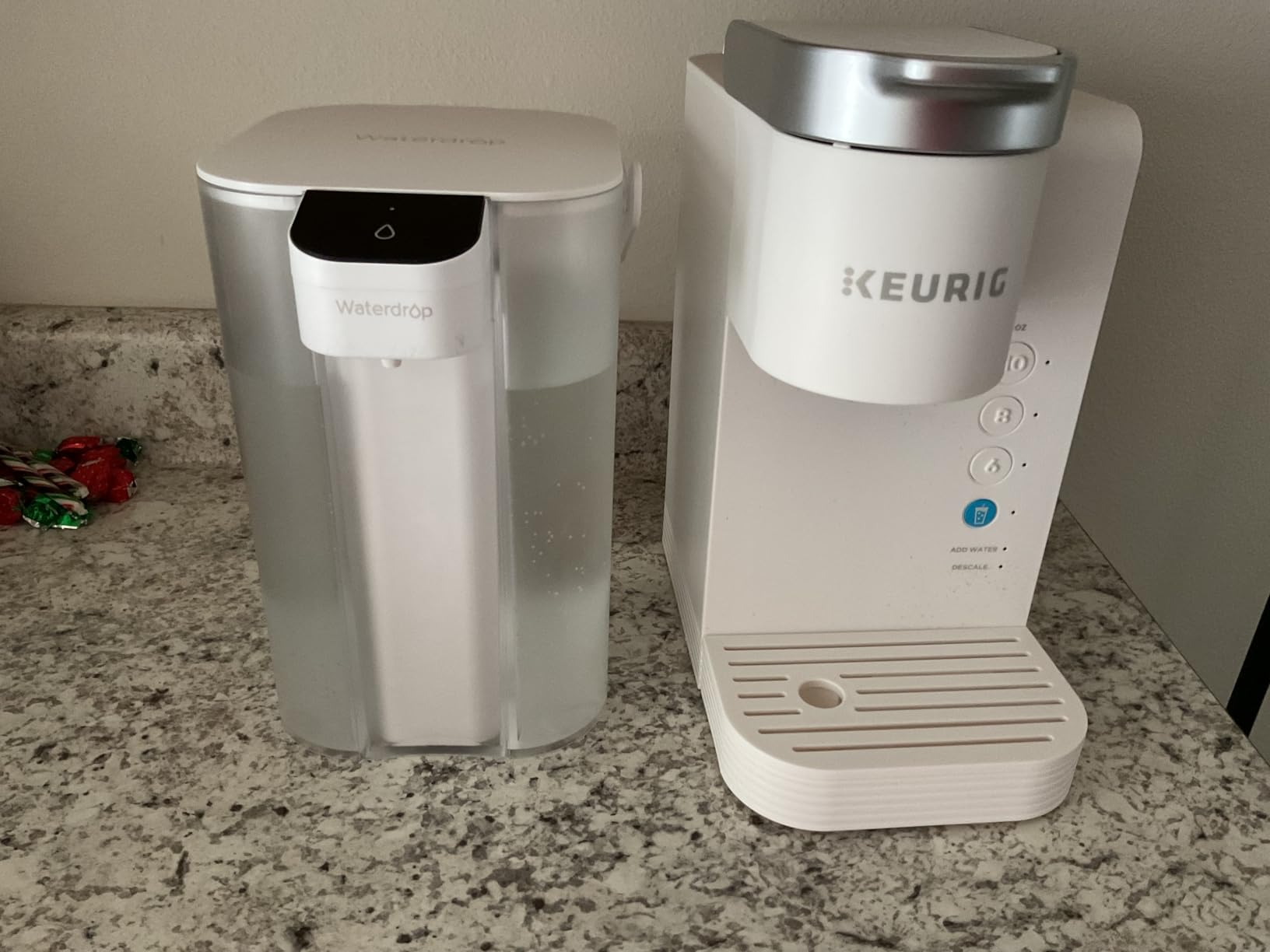
The 15-cup pitcher holds a 200-gallon filter rated for three months, and the body weighs 2.41 kilograms. I would account for the depth of the 12.52 by 12.17 by 7.76 inch design, since the wide base may not fit a narrow refrigerator shelf.
Like the other Waterdrop pitchers here, it does not lower TDS. Its replacement filters are also described as more expensive than basic-brand cartridges, so the electric convenience needs to be worth the ongoing cost for your household.
For whom it’s good
This model is for someone who wants a faster, more controlled pour for cooking, coffee, tea, or daily glasses. It is also a good fit for people who appreciate an indicator and USB-C charging rather than a corded meter or fully manual flow.
For whom it’s bad
A household that already has a normal pitcher and no need for electric dispensing may not gain enough to justify the extra bulk and battery. It is not a substitute for a TDS-reduction system.
How to Choose the Right Water Filter Pitcher
The right water filter pitcher depends on the contaminant, your water’s starting quality, and how much maintenance you will actually do. I would choose by measurable need first, then capacity, and only then appearance or a brand name.
Match filtration to your water concern
Activated-carbon pitchers are the everyday answer for chlorine taste and odor, with some products adding lead, PFAS, or metal reduction. Ion-exchange systems such as ZeroWater are designed to address dissolved solids more aggressively, while Clearly Filtered advertises the broadest named-contaminant coverage in this group.
Do not confuse contaminant reduction with a TDS number. A TDS meter measures total dissolved solids, so a 0 ppm result does not prove that every possible contaminant is absent; review the product’s stated test standards and certifications instead.
Check the certification and claim scope
NSF/ANSI 42, 53, 401, and 372 cover different categories and material-safety aspects. The Waterdrop ED01W lists all four in the supplied specifications, the Brita models list WQA NSF/ANSI certification, and Clearly Filtered lists NSF/ANSI 42 and 372 plus independent third-party testing.
Certification is not a promise that every tap-water problem is solved. I would look for the specific contaminant and the certified reduction standard, especially if your concern is lead, PFAS, fluoride, or microplastics.
Calculate filter cost per gallon
A pitcher with a cheap initial cost can become the expensive choice if its filter needs frequent replacement. I use three figures: cartridge cost, rated gallon life, and the amount of water your household actually consumes each month.
For example, a filter rated for 40 gallons every two months is straightforward, while a 200-gallon cartridge rated for three months may cost more per cartridge but require fewer changes. A ZeroWater cartridge that clogs after one or two weeks in hard water is a different ownership case from its headline rating, so I keep that real-world possibility in the calculation.
Choose capacity for the household
A 10-cup pitcher is enough for one or two people and is easier to fit in a refrigerator door. A 19-cup usable Waterdrop dispenser or 27-cup Brita makes sense when several people drink water throughout the day or a spigot matters.
Capacity is not just a convenience number. If a household cannot finish the reservoir before the water becomes old, a smaller pitcher is often the more efficient purchase.
Plan cleaning and storage
Every lid and cartridge well should be washed and dried on a schedule, not only when the filter light appears. I also leave room around the pitcher for the lid to open and check that the spout is protected from refrigerator odors and dust.
Long-term durability is part of the value decision. Forum users care about replacement expense, mold-prone lid mechanisms, plastic taste, and whether a filter lasts beyond its first few weeks, so I would favor a body that is easy to disassemble and a replacement system that is easy to obtain.
Consider bottles and maintenance
Using a refillable pitcher can reduce reliance on single-use bottles, with the product data ranging from 110 to 1,800 bottles saved depending on the model and usage pattern. The real benefit depends on how often you would otherwise buy bottled water and whether you keep the pitcher in regular rotation.
For well water, a pitcher is not automatically the right whole-house solution. I would start with a certified water test and local health guidance, because changing taste or TDS does not replace treatment for microbial contamination or other site-specific risks.
Frequently Asked Questions
Do water filter pitchers really work?
Yes. A water filter pitcher can reduce selected contaminants as water passes through its cartridge, especially chlorine taste and odor, and some models are certified for lead, PFAS, fluoride, or other substances. Results depend on the filter media, starting water, certification, and replacement schedule; a pitcher is not a complete treatment system for every well-water or microbial concern.
Is there a better water filter pitcher than Brita?
It depends on your goal. ZeroWater is better for users who want an integrated TDS meter, Clearly Filtered targets a broader list of contaminants, and Waterdrop offers long-life 200-gallon filters. Brita remains a strong practical choice for chlorine taste, compact storage, familiar replacements, and straightforward daily use.
Which water filter pitcher removes the most contaminants?
Clearly Filtered states that its 80-ounce pitcher targets more than 365 contaminants, including fluoride, lead, PFAS, chlorine, and microplastics, and lists third-party testing. ZeroWater is the stronger choice when you specifically want measurable TDS reduction, while certification scope and independent test data should guide any contaminant-specific decision.
How often should I change my water filter pitcher?
Follow the cartridge label or the indicator, whichever comes first. The products reviewed use schedules ranging from 40 gallons or about two months to 200 gallons or about three months and 100 gallons or about four months. High-TDS water can clog a fine filter sooner, so slow flow or a rising meter reading is also a reason to replace it.
Are glass water filter pitchers better than plastic?
Not automatically. Glass can reduce concerns about plastic taste and may feel more substantial, but the filter media, seal, capacity, replacement cost, and certified performance matter more than the container material alone. BPA-free Tritan and food-grade plastic models can be practical, and they are often lighter and less fragile for refrigerator use.
Final Verdict
The best water filter pitcher for most homes is the standard Brita 10-cup because it is compact, easy to understand, certified, and backed by a huge pool of owner experience. Choose Clearly Filtered when broad contaminant coverage matters more than budget, and choose ZeroWater when TDS feedback is the feature that will change your daily routine.
For a large household, the Waterdrop WFD-40L or Brita 27-cup dispenser reduces refill trips. For one-touch pouring, the Waterdrop ED01W is worth considering, but no pitcher replaces a water test, proper filter changes, and guidance when a household uses untreated well water.
1 thought on “8 Best Water Filter Pitchers for Home (October 2026) Tested Picks”