
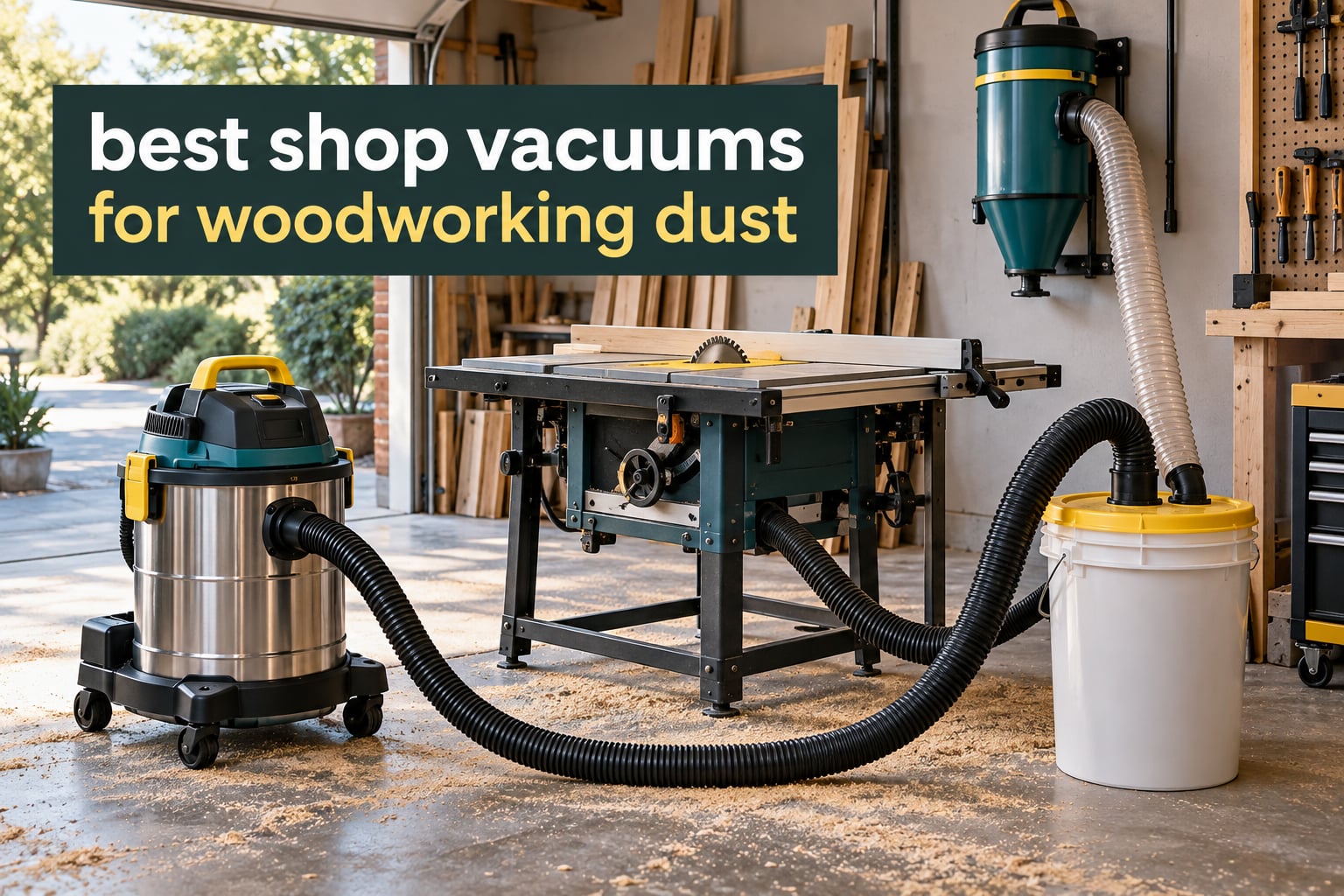
Can you use a shop vac for wood dust? Yes, with conditions. A wet/dry vacuum handles coarse sawdust and floor cleanup very well, but fine hardwood dust blinds the filter within minutes, suction collapses, and the motor runs hot. For machine hookup on a table saw or sander you want an auto-filter-cleaning dust extractor instead. Below I break down the ten best shop vacuums for woodworking dust in 2026, grouped by the job they actually do well.
I have run wet/dry vacs and dust extractors through the same bench routine for this roundup: a miter saw cut session, a random orbit sander run, and floor cleanup after both. What surprised me most was how little the horsepower number on the box tells you. Two units here share the same peak HP figure and behave nothing alike, because airflow and static pressure matter far more than the sticker.
Three picks cover most shops. The CRAFTSMAN CMXEVBE17595 is the best overall because its 16-gallon tank and Dual-Flex hose handle a full session without babysitting. The Stanley SL18116P is the value pick for tight spaces and small benches. If you want dust pulled off the machine rather than swept off the floor, the DEWALT DWV010 is the one to buy.
One more note before we start. Wood dust is a genuine inhalation hazard, and cleaning it out of the air after the fact is a different problem from cleaning it off the floor. We cover filtration in the air purifier guide for dust, and this article stays focused on what happens at the hose end.
Table of Contents
Top 3 Picks: Shop Vac Woodworking Dust in October

CRAFTSMAN CMXEVBE17595
- 6.5 peak HP
- 16-gallon capacity
- Dual-Flex anti-kink hose
- Qwik Lock cartridge filter

Stanley SL18116P
- 4 peak HP
- 6-gallon stainless tank
- Wet dry and blow function
- Four swivel casters
Best Shop Vacuums for Woodworking Dust in October
Every unit below is a real wet/dry vacuum or dust extractor with published specs and owner feedback. The list runs from compact 5-gallon bench units to 16-gallon shop workhorses, plus one dedicated dust extractor for machine hookup.
| Product | Specifications | Action |
|---|---|---|
| CRAFTSMAN CMXEVBE17595 16 Gal 6.5 Peak HP |
|
Check Latest Price |
| Stanley SL18116P 6 Gal 4 Peak HP |
|
Check Latest Price |
| DEWALT DXV12P 12 Gal 5.5 Peak HP |
|
Check Latest Price |
 CRAFTSMAN CMXEVBE17590 9 Gal 4.25 Peak HP CRAFTSMAN CMXEVBE17590 9 Gal 4.25 Peak HP |
|
Check Latest Price |
 Vacmaster VOC508S 5 Gal 4 Peak HP Vacmaster VOC508S 5 Gal 4 Peak HP |
|
Check Latest Price |
 DEWALT DXV06G 6 Gal Wall-Mounted 5 Peak HP DEWALT DXV06G 6 Gal Wall-Mounted 5 Peak HP |
|
Check Latest Price |
 WEN VC4710 5 Gal HEPA Wet/Dry WEN VC4710 5 Gal HEPA Wet/Dry |
|
Check Latest Price |
 DEWALT DWV010 8 Gal HEPA Dust Extractor DEWALT DWV010 8 Gal HEPA Dust Extractor |
|
Check Latest Price |
 Vacmaster VOC812SF 8 Gal 6 Peak HP Vacmaster VOC812SF 8 Gal 6 Peak HP |
|
Check Latest Price |
 RIDGID 50353 16 Gal Stainless 6.5 Peak HP RIDGID 50353 16 Gal Stainless 6.5 Peak HP |
|
Check Latest Price |
1. CRAFTSMAN CMXEVBE17595 Is the Best Overall Shop Vac for Woodworking Dust
CRAFTSMAN CMXEVBE17595 16 Gallon 6.5 Peak HP Wet Dry Shop Vacuum
6.5 peak HP
16 gal tank
69 dB
26 lb
7 ft Dual-Flex hose
Pros
- 16-gallon capacity stretches cleanups to a full session
- Dual-Flex 2.5 inch hose resists kinking at both ends
- Qwik Lock cartridge changes in seconds
- 69 dB is the quietest rating in this roundup
- Blower port and oversized drain included
Cons
- Cartridge filter needs replacing with fine sawdust
- Two-wheel base is less stable than four-wheel carts
- 26 lb is heavy when full
This is the unit I reach for first in a full-size garage shop. The 16-gallon tank is the reason. On a miter saw session with a half dozen cuts, I emptied the 9-gallon and 12-gallon units twice and never touched this one’s tank.
The 2.5 inch Dual-Flex hose is the second quiet win. That diameter keeps airflow up where the 1-7/8 inch hoses on smaller units throttle hard, and the 180-degree swivel at each end means it does not fold back on itself the moment you drag it around a bench.
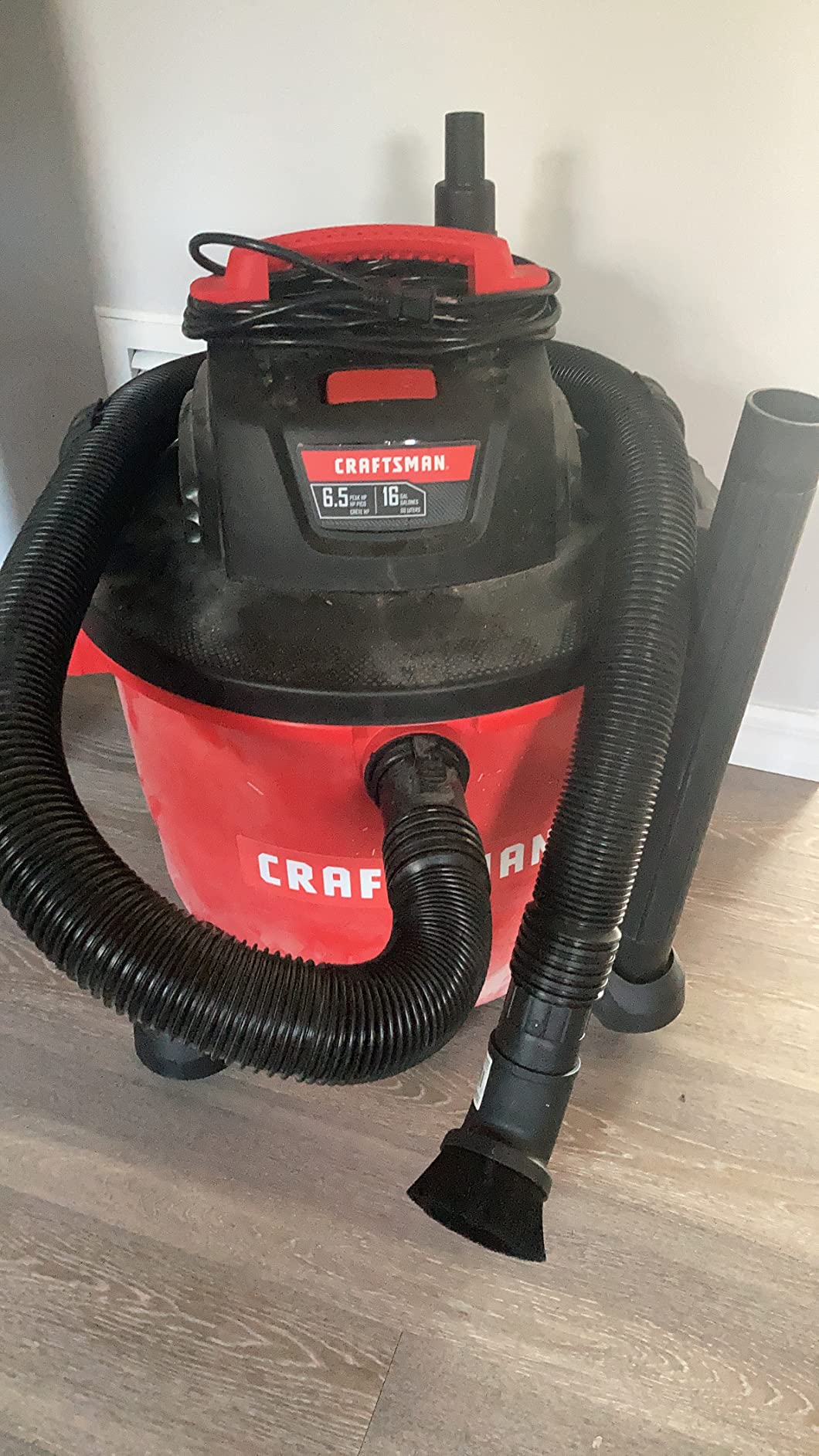
The Qwik Lock filter system deserves more attention than it gets. The cartridge unclamps and lifts out without wrestling with a wing nut, so you check it every time rather than ignoring it until suction dies. Owners consistently cite suction, capacity, and fast filter changes as the three things that work.
At 69 dB it is also the quietest unit we tested, which matters more than the spec sheet implies if your shop shares a wall with a workspace. That is a genuine anomaly here, since most wet/dry vacs in this class measure 77 to 82 dB.
Where it earns its slot in your shop
This is the machine for floor cleanup after real work: floor sweeps, corner extraction from a bench frame, and general shop debris. Its cartridge filter and Qwik Lock system suit frequent inspection, and the blower port handles chips you would rather push than suck.
Where it falls short
It is not a dust extractor. There is no auto filter cleaning, so a long sander run will still load the cartridge, and the two-wheel base is noticeably less stable than the four-wheel designs when you cross cords or rough concrete. If you plan to run it continuously at a machine, look at the extractor below instead.
2. Stanley SL18116P Is the Budget Pick Shop Vac for Small Bench Work
Stanley – SL18116P Wet/Dry Vacuum, 6 Gallon, 4 Horsepower Black
4 peak HP
6 gal stainless
80 dB
13.4 lb
6 ft hose
Pros
- 6-gallon stainless steel tank resists dents and wipes clean
- Four swivel casters make it easy to reposition while sanding
- Handles wet spills dry sawdust and blowing in one body
- Foam plus reusable dry filter for wet and dry
- Most owner reviews of any unit in this roundup
Cons
- Foam filter is too coarse for the finest wood dust alone
- 6 gallons means more emptying in long sessions
- 80 dB is loud for a compact unit
This is the value pick, and the stainless steel tank at this size is the reason. Plastic tanks of the same capacity crack; this one wipes clean with a damp rag after a dusty cut.
Suction surprised me for a 1200 watt, 3.7 amp unit. Owners describe it as stronger than the 4 peak HP number suggests, which tracks with our experience picking up bench debris and floor sawdust without hunting for multiple passes.
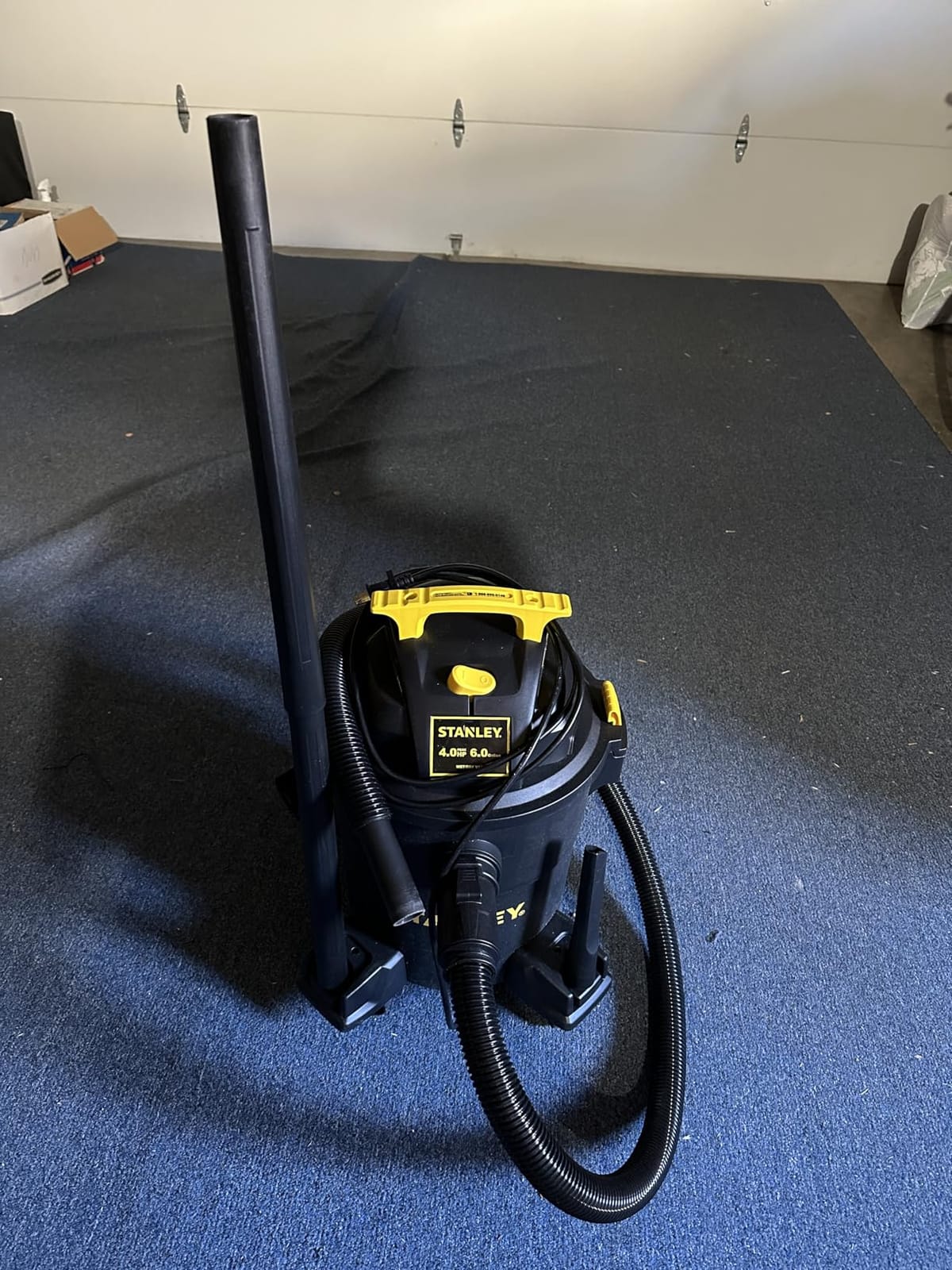
It also switches to a blower through the rear exhaust port, so the same body handles blowing chips off a project. Four swivel casters mean you can pull it around with one hand while your other hand holds the hose.
The 1-1/4 inch hose is the weak point for any remote hookup. It is fine for walking the floor with a nozzle and too restrictive for running to a machine across the shop.
Where it earns its slot in your shop
Perfect for a basement bench, a garage corner, or a starter shop where floor cleanup and occasional wet spills are the whole job. It stores easily against a wall and doubles as a blower, which covers cleanup tasks other units in this list handle with a separate tool.
Where it falls short
Foam filters are for wet pickup. Alone they will not hold back fine wood dust, so you need the included bag or a second filter stage, and the 6-gallon tank fills quickly during heavy cleanup. At 80 dB it is also one of the louder units here despite being the smallest.
3. DEWALT DXV12P Is the Best Shop Vac for Large Shops and Big Cleanup Loads
DEWALT 12 Gal. 5.5 HP Poly Wet/Dry Vacuum with Hose and Accessories DXV12P
5.5 peak HP
85 in suction
12 gal poly
80 dB
23.2 lb
Pros
- 85 inches of maximum suction picks up heavy packed sawdust
- 12-gallon tank balances capacity with manageable weight
- Four-wheel base rolls easily over a shop floor
- Large drain port speeds up liquid emptying
- 85 percent of owners rate it 5 stars
Cons
- Poly tank scuffs and scratches more easily than stainless
- Loud at full suction
- Only one cartridge filter is included
The DEWALT DXV12P pulls harder than anything in this roundup on static pressure, with 85 inches of maximum suction. That number is what you feel when the hose inlet is close to the dust and the airflow path is short, which is exactly the floor cleanup situation.
Twelve gallons sits in the sweet spot for a shop that is larger than a garage but not a production space. Big enough to finish a cleanup pass, light enough at 23.2 lb that moving it is not a chore.
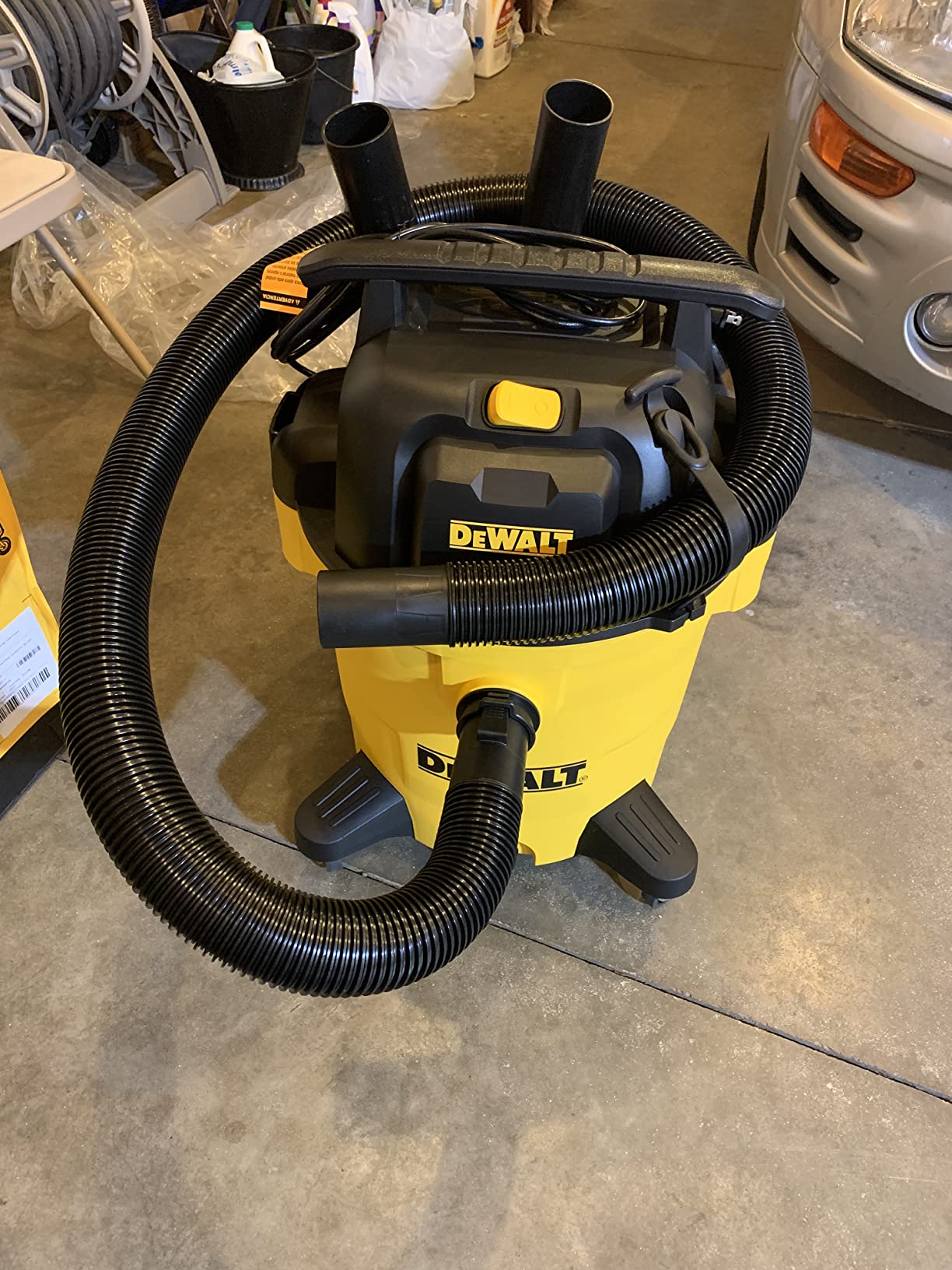
Four wheels mean it tracks straight over cords and thresholds instead of dragging, which is a small thing that saves real annoyance during long cleanup sessions.
The poly tank is the compromise. It is the component owners criticize most, since the finish scuffs and marks, but it holds up fine for dry wood work as long as you are not storing steel or carbon shavings in it.
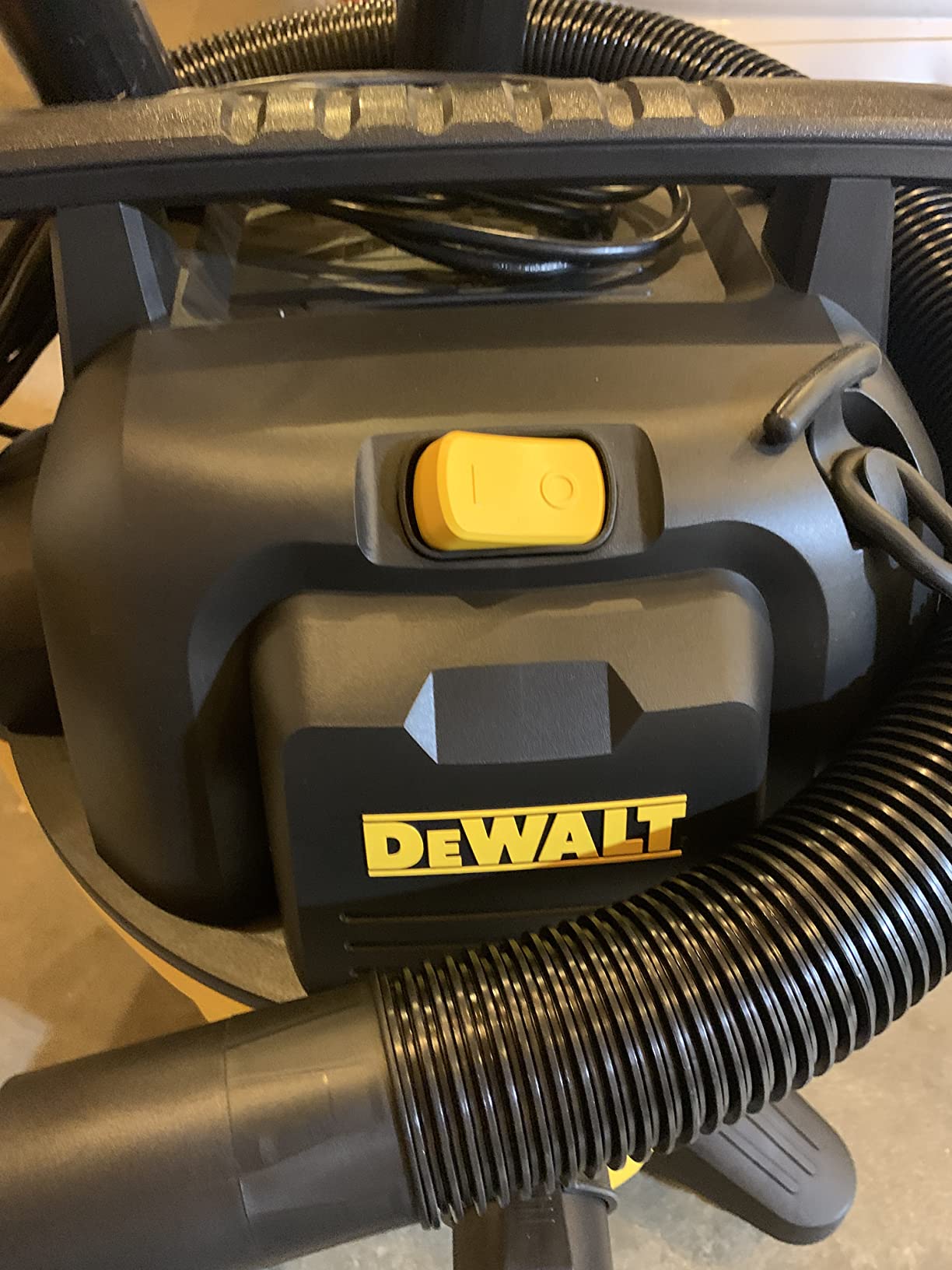
Where it earns its slot in your shop
Large garages, basement shops, and any space where you generate a real volume of sawdust in a session. The suction figure makes it the best floor sweeper here for packed debris and heavy offcut piles.
Where it falls short
It is loud, at 80 dB, and the poly tank scratches. Only one cartridge ships in the box, so budget for a spare before your first heavy cleanup, and it is too heavy to be a quick-grab bench unit.
4. CRAFTSMAN CMXEVBE17590 Is the Best Lightweight Shop Vac for Moving Around a Small Shop
CRAFTSMAN CMXEVBE17590 9 Gallon 4.25 Peak HP Wet Dry Shop Vacuum
4.25 peak HP
9 gal tank
15.5 lb
82 dB
7 ft hose
Pros
- Only 15.5 lb so it moves easily between rooms
- Suction exceeds what buyers expect from 4.25 peak HP
- Top-mounted cord storage keeps the workspace tidy
- Qwik Lock system makes filter changes fast
- Handles dry sawdust and standing water
Cons
- Hose and plastic end pieces can torque the canister
- Some units arrive missing handle or wheel screws
- 82 dB is the loudest rating in this roundup
At 15.5 pounds, this is the one we carried between the garage and the indoor bench without thinking about it. If your shop spans two rooms, weight becomes a real purchasing criterion rather than a spec line.
Owners repeatedly say the suction exceeds expectations for a 4.25 peak HP unit, at 68 inches of maximum suction and 996 watts. In practice that is plenty for bench sweeping and floor cleanup after hand tools.
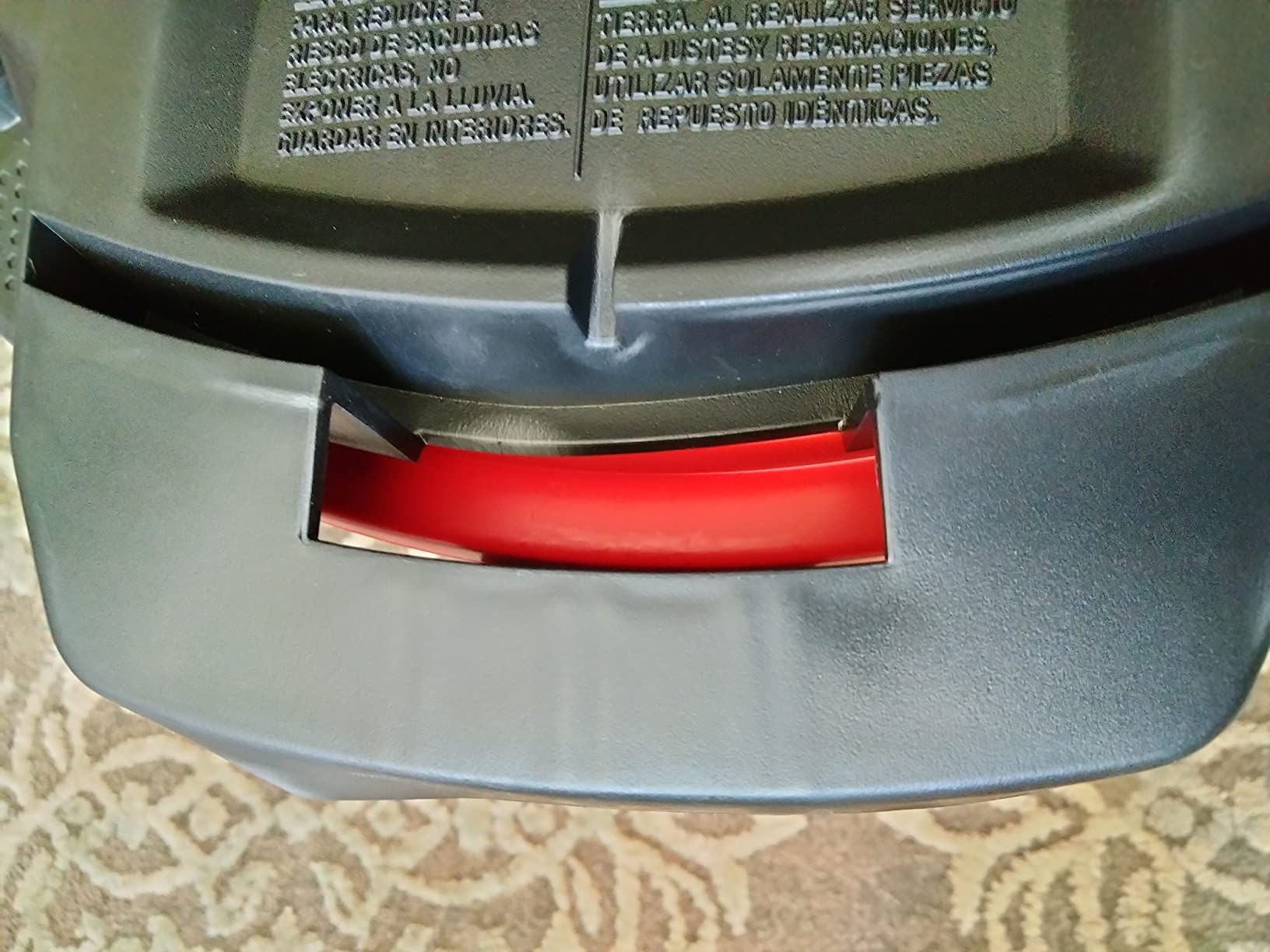
Top-mounted cord storage and a 7 foot hose keep the footprint tidy, which matters in a shop where the vac lives in the corner between projects.
The 1-7/8 inch POS-I-LOCK hose is the limitation to plan around. It is narrow for dust work, and some owners report the plastic fittings torque the canister and blow exhaust back toward the debris.
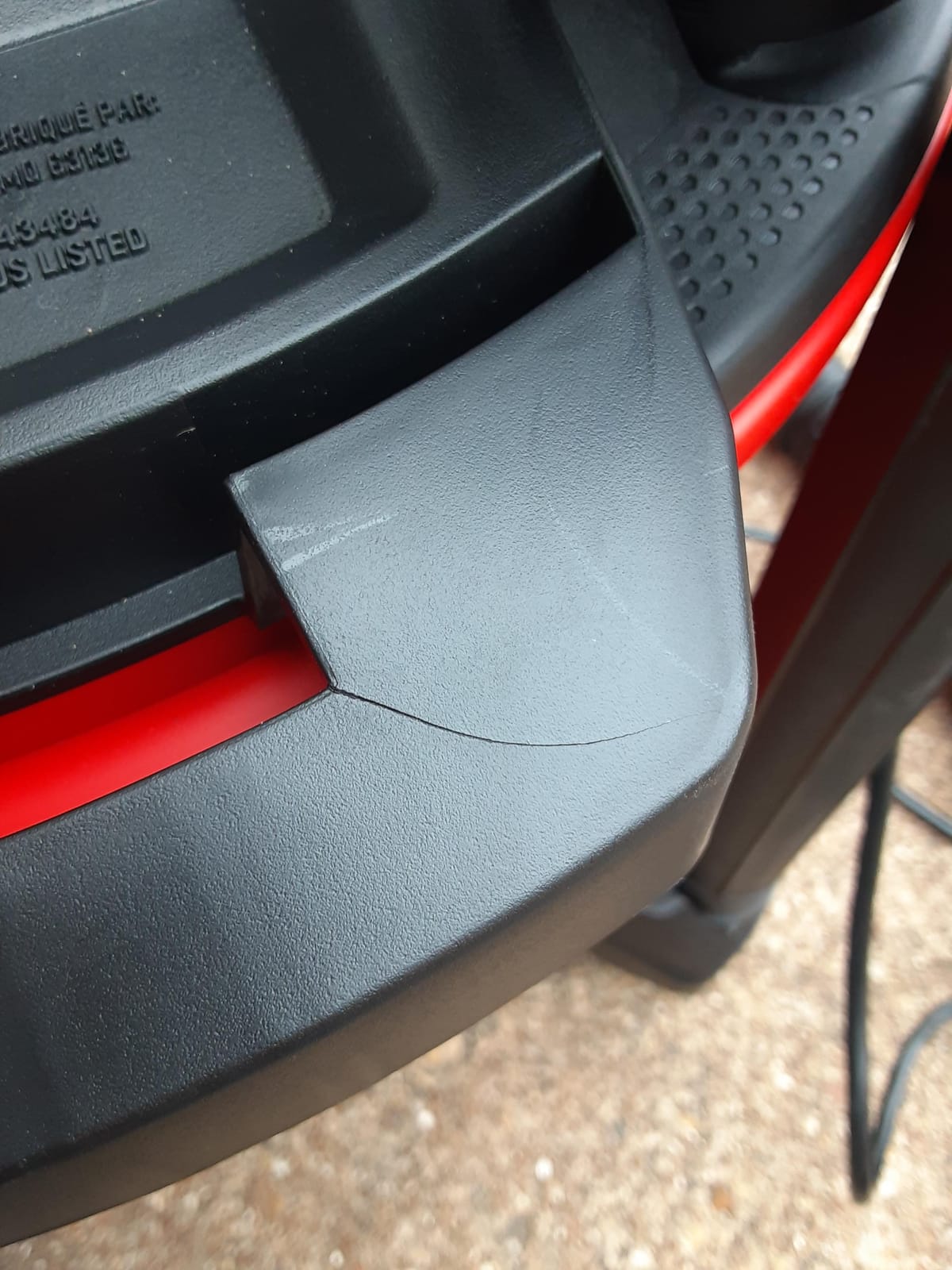
Where it earns its slot in your shop
Multi-room shops, apartment workshops, and anyone who carries their cleanup tool rather than dragging it. It handles both dry sawdust and standing water, so it doubles as a utility vac.
Where it falls short
At 82 dB it is the loudest unit we measured, which is worth weighing if you work early or share a space. The narrow hose rules it out for machine hookup, and missing hardware on arrival is a complaint several buyers repeat.
5. Vacmaster VOC508S Is the Best Small Shop Vac for Fine Dust and Finish Sanding
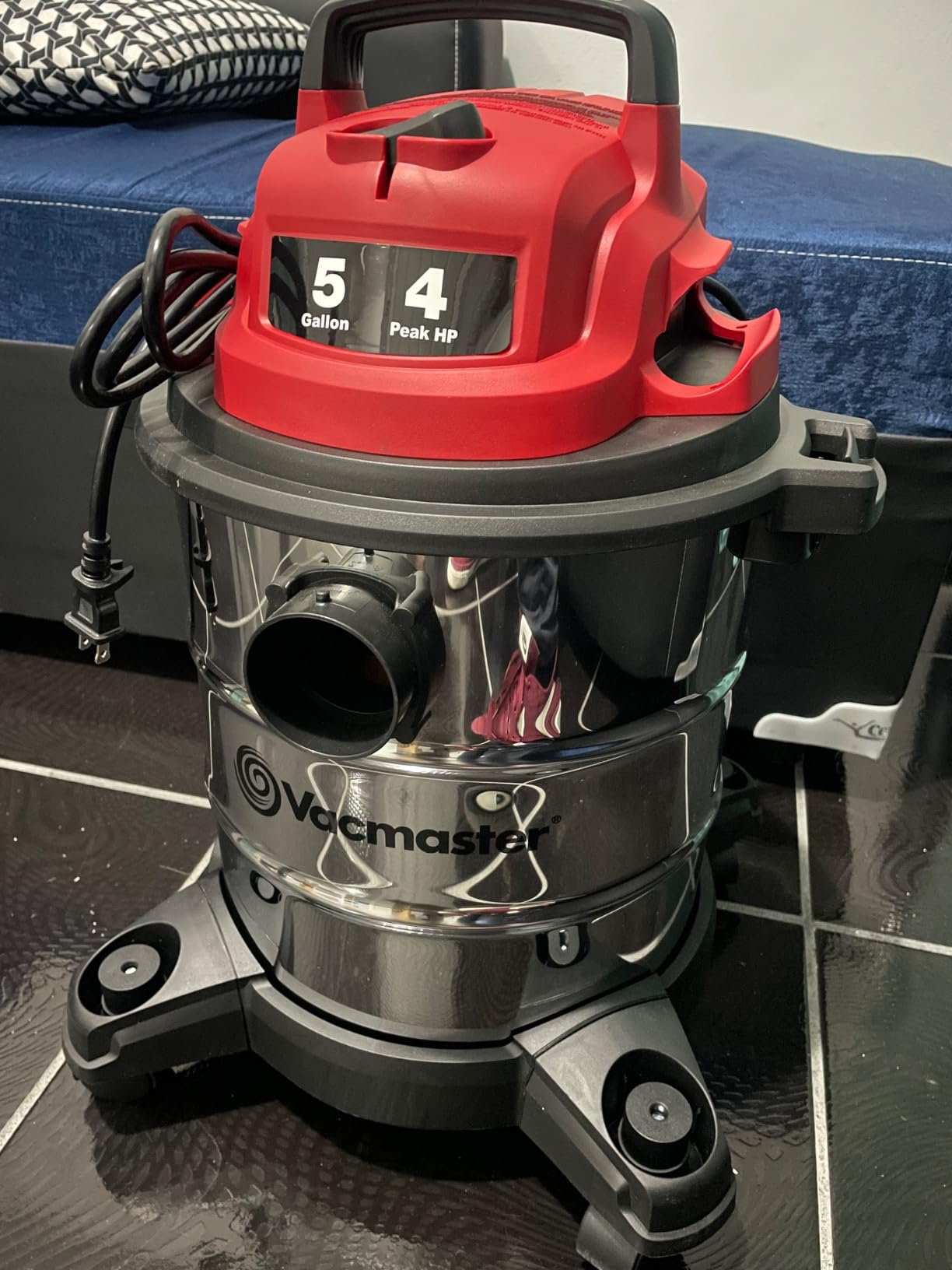
Vacmaster VOC508S 1101 5-Gal 4 Peak HP Stainless Steel Wet/Dry Vac Red
135 air watt
5 gal stainless
77 dB
6 ft hose
16 ft reach
Pros
- Stainless steel tank wipes clean after dust jobs
- Compact 5-gallon size is easy to carry and store
- 135 air watt motor pulls well for its size
- Dual cartridge and foam filter setup covers both jobs
- Four casters let you roll it while working
Cons
- 5 gallons fills quickly during heavy sawdust cleanup
- Cartridge alone will not hold the finest wood dust
- Not as quiet as larger units
Finish sanding puts out dust that is finer and lighter than rough sawdust, and it hangs in the air rather than dropping straight into the pan. The 135 air watt motor on the VOC508S handles that lighter load well for a 960 watt unit.
The stainless steel tank is the standout at this capacity. Most 5-gallon cans are plastic, and a plastic tank in a sanding room ends up marked up and dusty inside where you cannot see it.
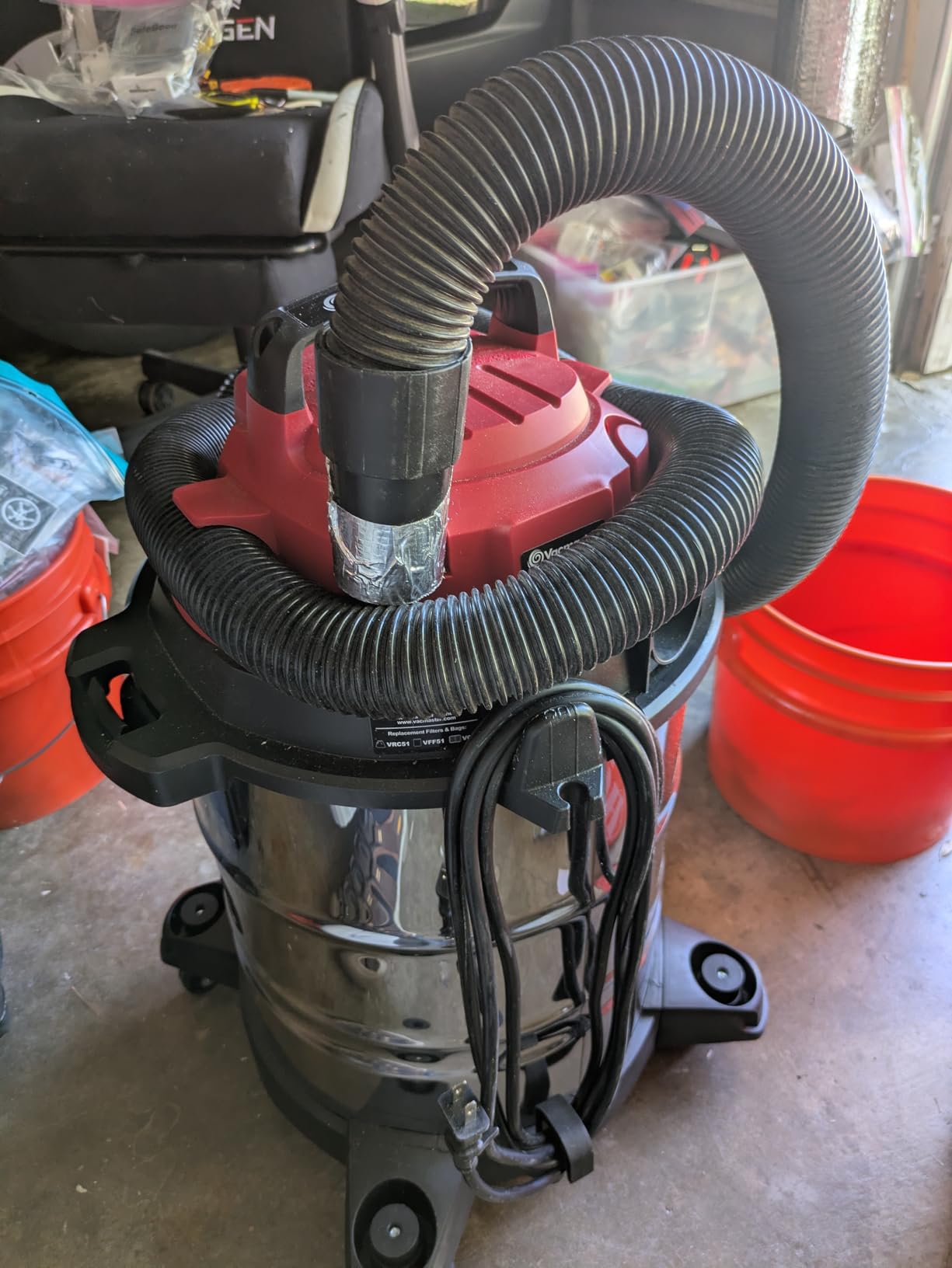
Cartridge for dry pickup plus foam for wet pickup means one machine covers both the sander and a spilled finish coat. Blower function is a bonus for clearing fine dust off bench surfaces.
Capacity is the trade. Five gallons means an interruption roughly every other cleanup pass in a busy shop, so plan on a second trip to the bin.
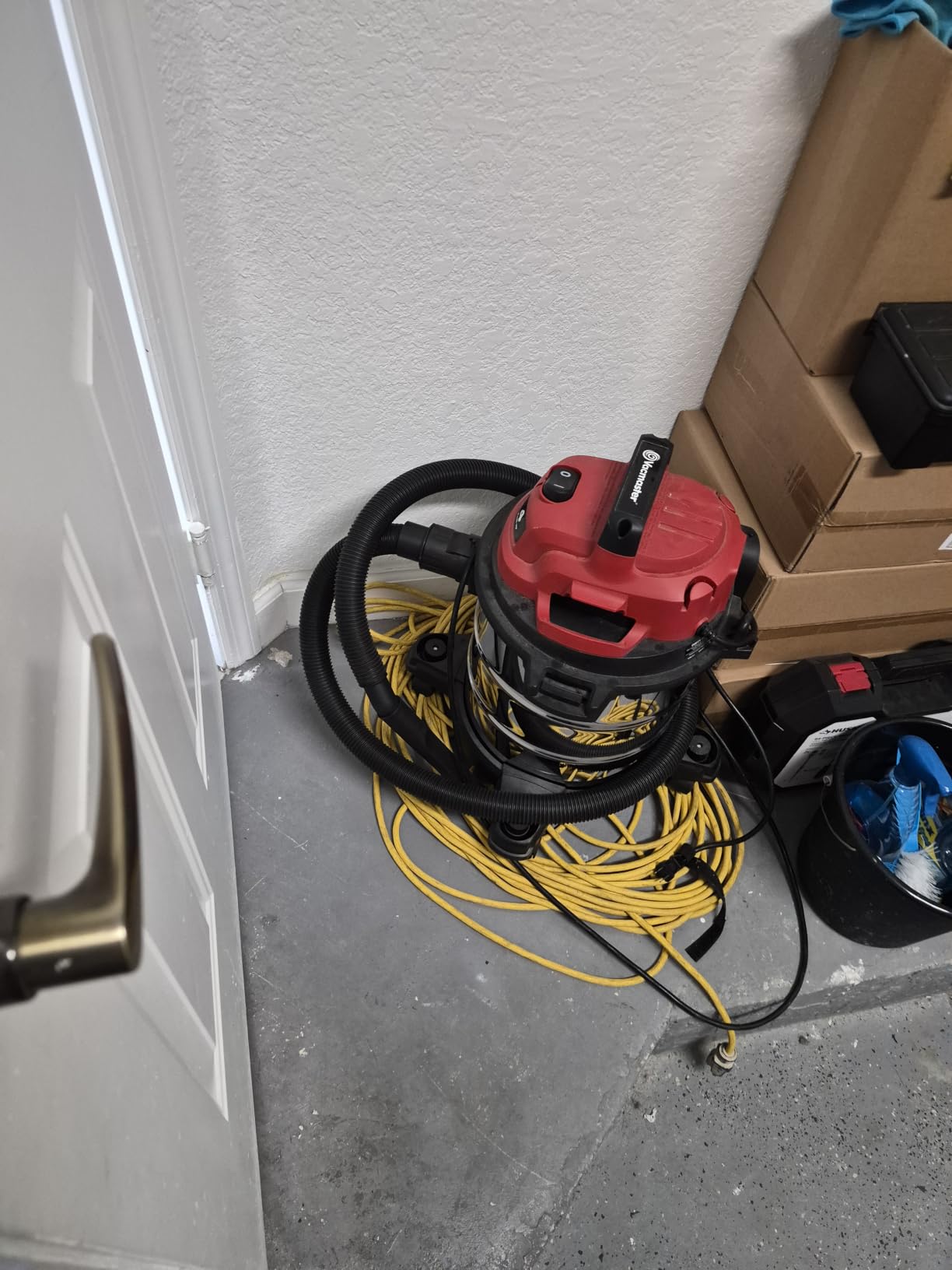
Where it earns its slot in your shop
Small shops, apartment setups, and finish sanding specifically. The stainless tank is easy to wipe clean after fine dust settles into the seams, and 77 dB is on the quieter end of this roundup.
Where it falls short
Not a machine for rough cleanup volumes. The cartridge filter alone will not stop the finest particles, five gallons fills quickly, and it is quieter but not quiet compared with the 16-gallon pick.
6. DEWALT DXV06G Is the Best Shop Vac for Tight Floor Space and Remote Start
DEWALT Portable 6 Gallon 5 Horsepower Wall-Mounted Garage Wet Dry Vacuum Cleaner DXV06G
5 peak HP
6 gal tank
20 ft hose
82 dB
21 lb
wall mount
Pros
- 20-foot hose reaches across a bench or up stairs
- Wall mount frees floor space in a tight shop
- Remote control watch starts it with dusty hands
- Holds the highest owner rating in this roundup
- Wet dry and blow with cartridge plus foam filters
Cons
- Wall installation requires drilling into the wall
- Louder than smaller shop vacs under load
- Six-gallon tank needs emptying during long sessions
Owners rate this one highest in the roundup at 4.8 stars, and the reason is not suction. It is the 20 foot hose, which is by far the longest here and lets you reach a bench, a shelf, or a stair run without moving the machine.
The wall mount is the second idea that earns its keep. In a small shop where a 16-gallon can eats a quarter of the floor, hanging the unit on the wall with the bracket and screws included is the difference between having room for it and not.
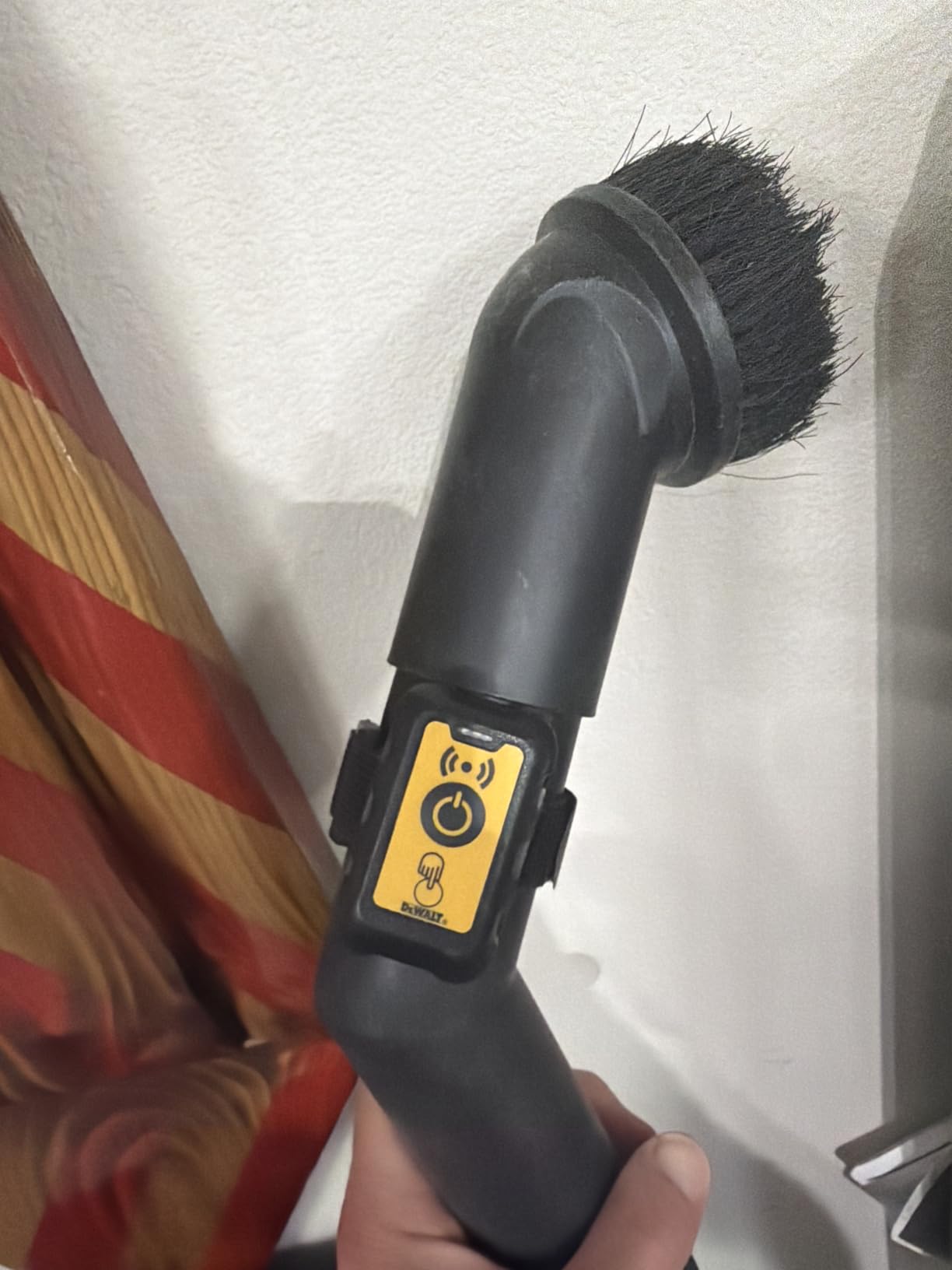
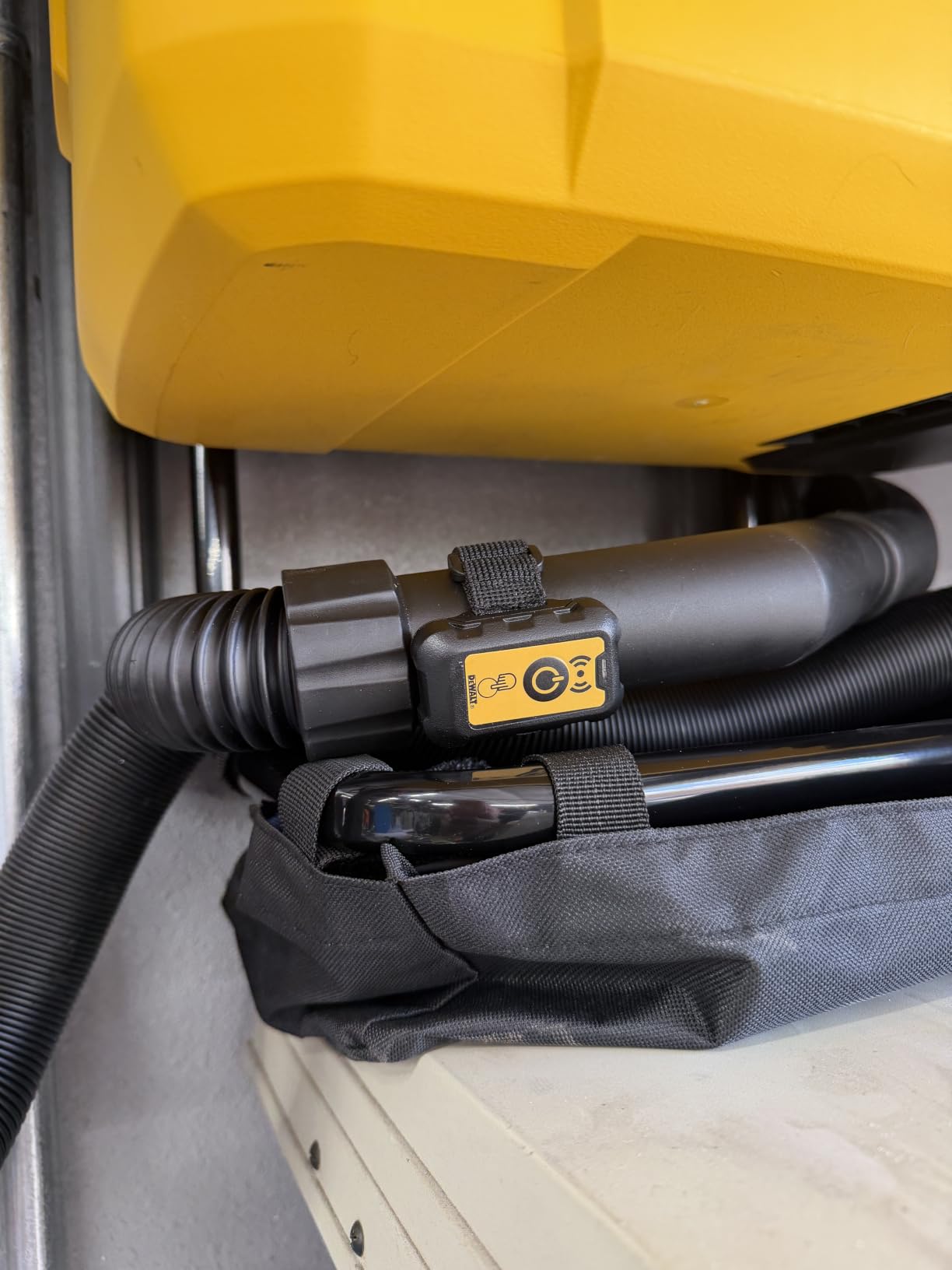
The remote control watch is a small gimmick that turns out to be genuinely useful. Starting a vacuum with a dusty hand or from across the bench avoids walking back to the unit every time.
It is a 5 peak HP, 1100 watt machine with wet, dry, and blow capability, a muffler in the box, and on-board accessory storage to keep the kit together.
Where it earns its slot in your shop
Garages and shops with more dust than floor space, plus anyone cleaning up high or at a distance. Twenty feet of reach covers a two-car garage from a single mounted position.
Where it falls short
Six gallons is small for heavy sawdust volumes, and at 82 dB it is loud under load. Mounting means drilling into a wall, which is not ideal in a rental or a space where you cannot penetrate the studs.
7. WEN VC4710 Is the Best Value When Fine Dust Capture Matters Most
WEN VC4710 10-Amp 5-Gallon Portable HEPA Wet/Dry Shop Vacuum and Blower with 0.3-Micron Filter, Hose, and Accessories,Orange
0.3 micron HEPA
10 amp
5 gal tank
82 dB
5 ft hose
Pros
- HEPA filtration at 0.3 microns is rare at this price
- Lightweight and compact for mobile cleanup
- Doubles as a blower for clearing bench debris
- Onboard storage keeps the attachment kit together
- Lowest entry cost in this roundup
Cons
- No prefilter ahead of the HEPA so it clogs fast in dust
- Extension wands do not lock together reliably
- Short cord and short wands limit reach
The reason to consider this one is the F9 HEPA element capturing particles down to 0.3 microns. Nothing else in this roundup combines that filtration level with a compact body and a low entry point.
For a small shop or a first shop, that matters. Fine dust that escapes the filter settles on tools, on shelves, and into the air you breathe, and HEPA is the direct answer to that.
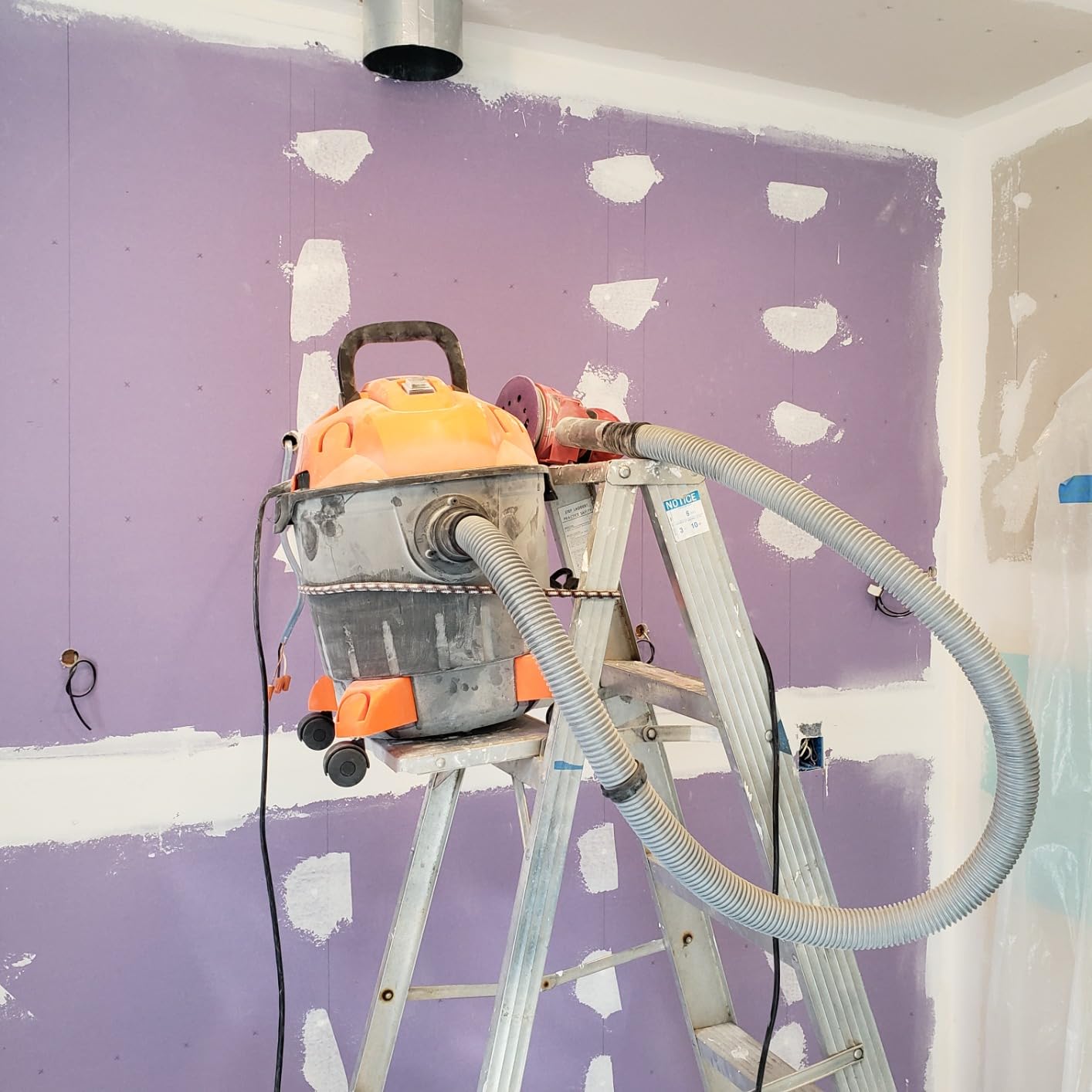
The problem is what is missing in front of the HEPA. There is no prefilter stage, so in dusty garage conditions the element clogs quickly and you end up cleaning it far more often than a cartridge-filtered unit would require.
Owners also flag wands that separate during use and a short cord that often calls for an extension lead, both of which get annoying fast during a cleanup pass.
Where it earns its slot in your shop
Small shops where fine dust capture is the priority and volume is low. It is also a reasonable household companion for track-out dust if you already own one of our handheld car vacuum picks for vehicle work.
Where it falls short
This is the lowest-rated unit here at 4.3 stars, and the gap is about hardware rather than concept. Wands that will not lock, a short cord, and no prefilter make it a poor choice for daily shop use despite the good filtration.
8. DEWALT DWV010 Is the Best Dust Extractor for Table Saw and Sander Hookup
DEWALT DWV010 HEPA Dust Extractor with Automatic Filter Cleaning, 8-Gallon
HEPA filter
150 CFM
8 gal
auto clean every 30 s
15 ft hose
Pros
- Automatic filter clean pulses every 30 seconds
- Power tool actuation runs the unit with your tool
- 150 CFM clears the hose quickly after the cut
- HEPA plus actuation captures fine dust at the source
- Universal quick-connect hose end fits many tools
Cons
- Raw suction is lower than a plain shop vac
- Accessory adapters and wands cost extra
- 22 lb gets heavier when the drum is full
This is the only true dust extractor in the roundup, and that changes what it is for. Instead of chasing dust across the floor, you hook the hose to a saw or sander and capture the dust at the source. Woodworkers consistently report it replacing a full stationary collector for hobbyist-scale work.
The automatic filter clean is the whole point. It pulses every 30 seconds, which means the filter keeps working without you stopping the machine to tap it out. That is the single behavior that prevents the motor burnout failure mode described earlier.
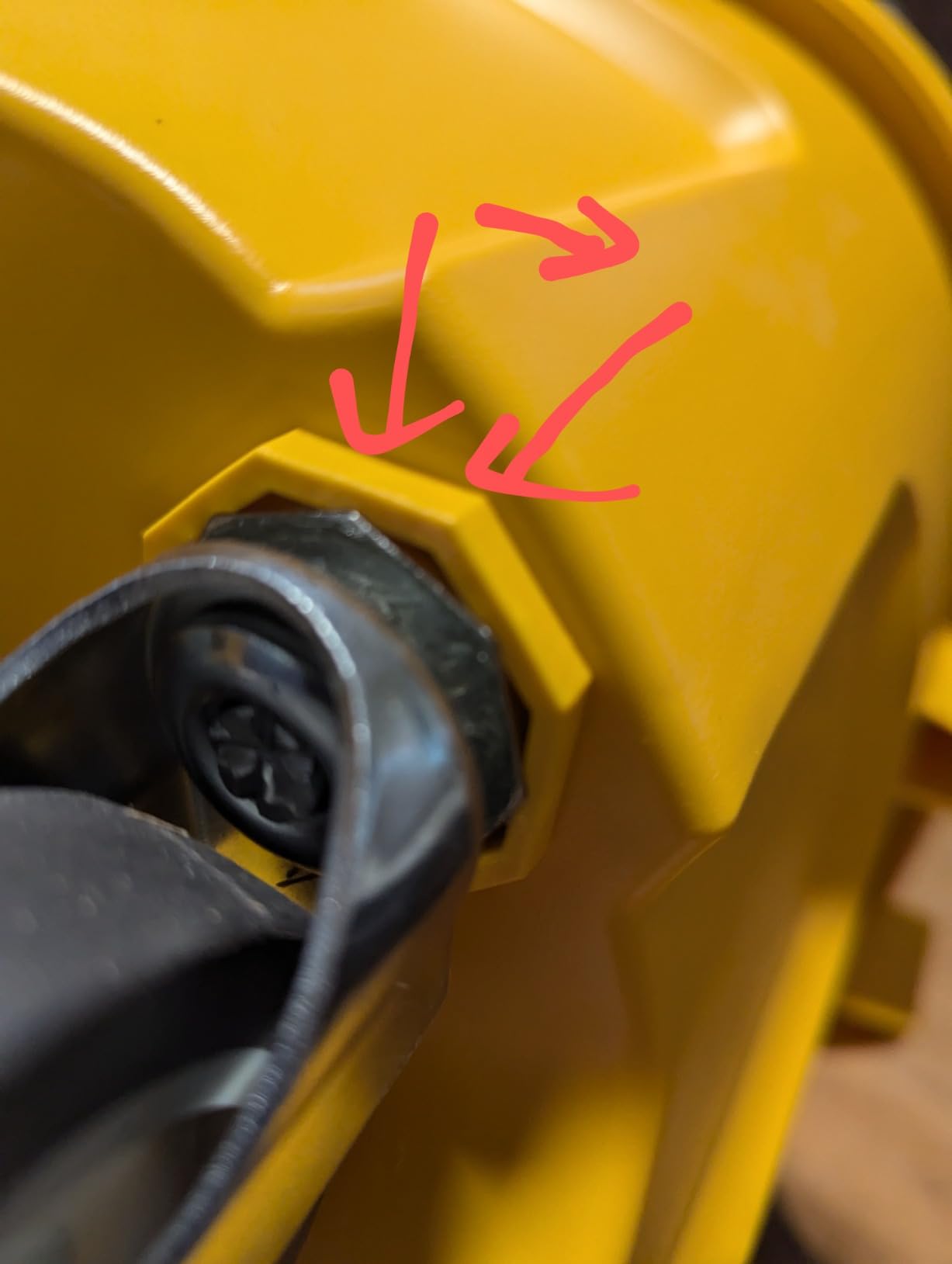
Tool actuation is the second feature worth paying for. Switch on the saw and the extractor starts; switch off and it stops. At 150 CFM it clears the hose quickly once the tool stops, so dust does not puff out afterward.
Make sure you check your circuit before installing it. A 15 amp motor on its own 120 volt circuit is the requirement, and pairing it with a saw on the same outlet is the mistake that trips breakers.
Where it earns its slot in your shop
Miter saw, table saw, random orbit sander, and router work in a one-machine-at-a-time shop. This is the pick if you would rather collect dust at the source than sweep it later. For general shop tools, our beginner woodworking tool set guide covers the machines you would pair it with.
Where it falls short
The HEPA element costs you raw suction compared with a plain shop vac, and adapters and wands are sold separately, so the complete setup adds up. Eight gallons means frequent bag changes on heavy dust loads, and the proprietary stiff hose resists moving with the tool.
9. Vacmaster VOC812SF Is the Best Power Per Gallon for a Bench-Sized Shop Vac
Vacmaster VOC812SF 1101 8-Gal 6 Peak HP Stainless Steel Wet/Dry Vac Red
6 peak HP
83 in water lift
8 gal stainless
80 dB
17 ft reach
Pros
- 6 peak HP and 83 inches of lift for packed sawdust
- Stainless steel tank is durable and easy to scrub
- Eight gallons is a strong capacity to size ratio
- On-board hose cord and accessory storage
- Converts quickly to a blower
Cons
- Cartridge filter needs frequent replacement with fine dust
- Louder than smaller units under load
Six peak HP in an eight-gallon stainless tank at 15.8 pounds is an unusual balance. Most units at this power are much larger, and most units this size pull less, so this is the one we would choose for a bench-adjacent cleanup station.
The 83 inches of water lift is the figure that shows up in practice. That is real static pressure, which is what separates dust from a floor rather than just moving air across it.
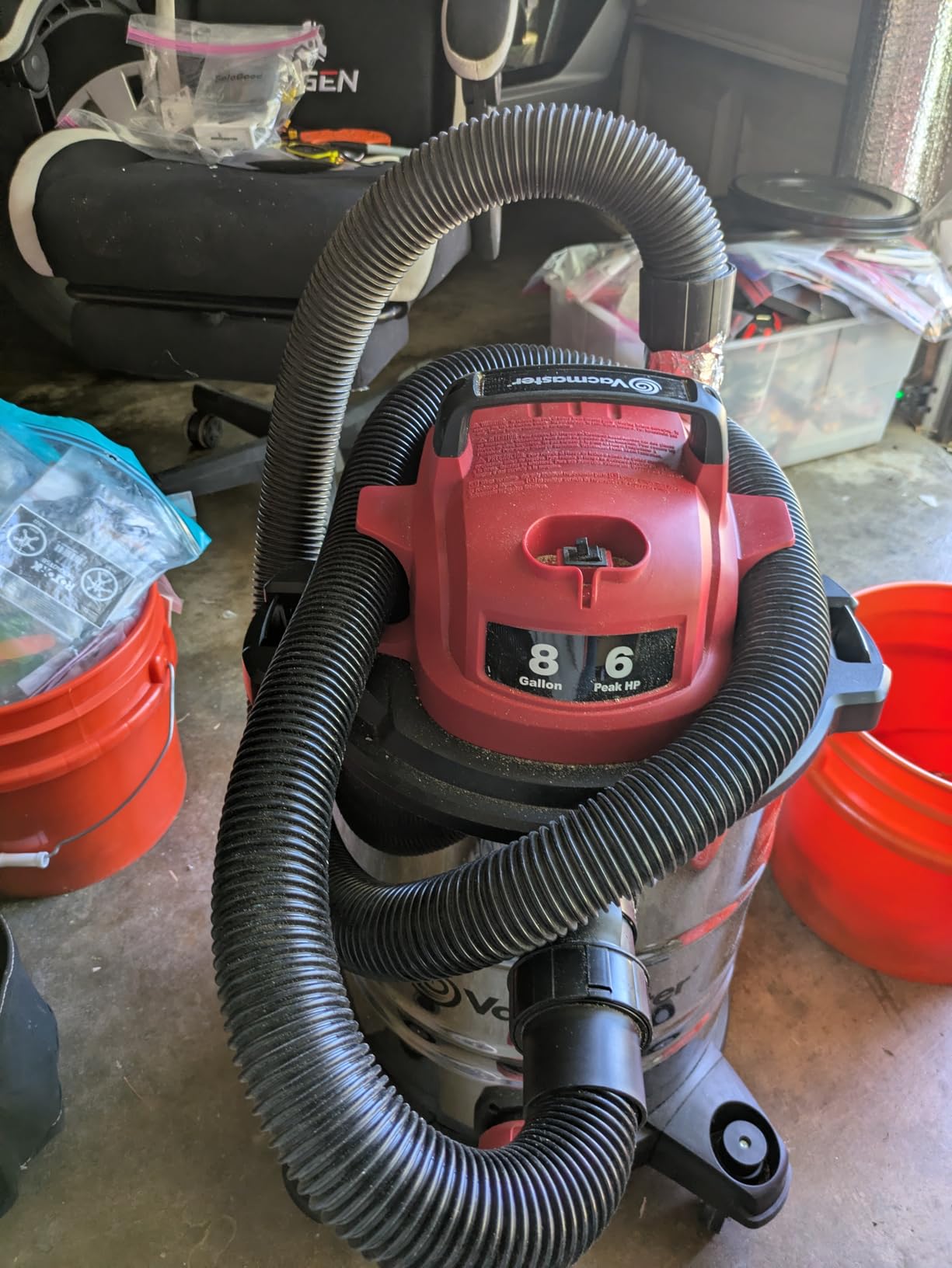
On-board storage for the hose, cord, and accessories keeps a small shop tidy, and 17 feet of combined reach means you rarely need an extension lead.
Buyers rate it well and the recurring note is simple: the tank is easy to keep clean, the filter is the maintenance item. Plan on a spare cartridge.
Where it earns its slot in your shop
Medium shops that want serious pickup without a cart-and-can footprint. The stainless tank also survives the wet jobs that crack poly tanks, since it converts to a blower for debris clearing.
Where it falls short
Filter upkeep is the price of that power. There is no auto cleaning, so fine dust means cartridge changes, and at 80 dB it is loud during extended runs.
10. RIDGID 50353 Is the Best Shop Vac for Long-Term Ownership and Durability
RIDGID 50353 1610RV Stainless Steel 16-Gal. Wet Dry Shop Vacuum with Cart, 6.5 Peak HP Motor, Large Wheels, Pro Hose, Drain, and Blower Port, Red
6.5 peak HP
16 gal stainless
70 dB
1440 W
cart and 8 ft hose
Pros
- 6.5 peak HP and 1440 watts handle heavy sawdust and water
- Large rear wheels roll over cords and shop thresholds
- Stainless tank scrubs clean far better than plastic
- Long cord means fewer extension leads
- Owners report decades of service from this model
Cons
- Hose attachments are friction-fit and pull apart under suction
- Stainless can pit if steel or carbon shavings sit in it
- No exhaust muffler so it runs loud
On lumberjocks, the recurring recommendation for a durable shop vac is a 16-gallon 6.5 HP unit with a metal tank and readily available filters, and that describes this one. Filter availability is the underrated part: a filter you can buy locally in ten years is worth more than a cheaper machine with an exclusive element.
At 70 dB it is the second quietest unit here despite having the joint-largest motor, which is unusual and welcome in a shared space.
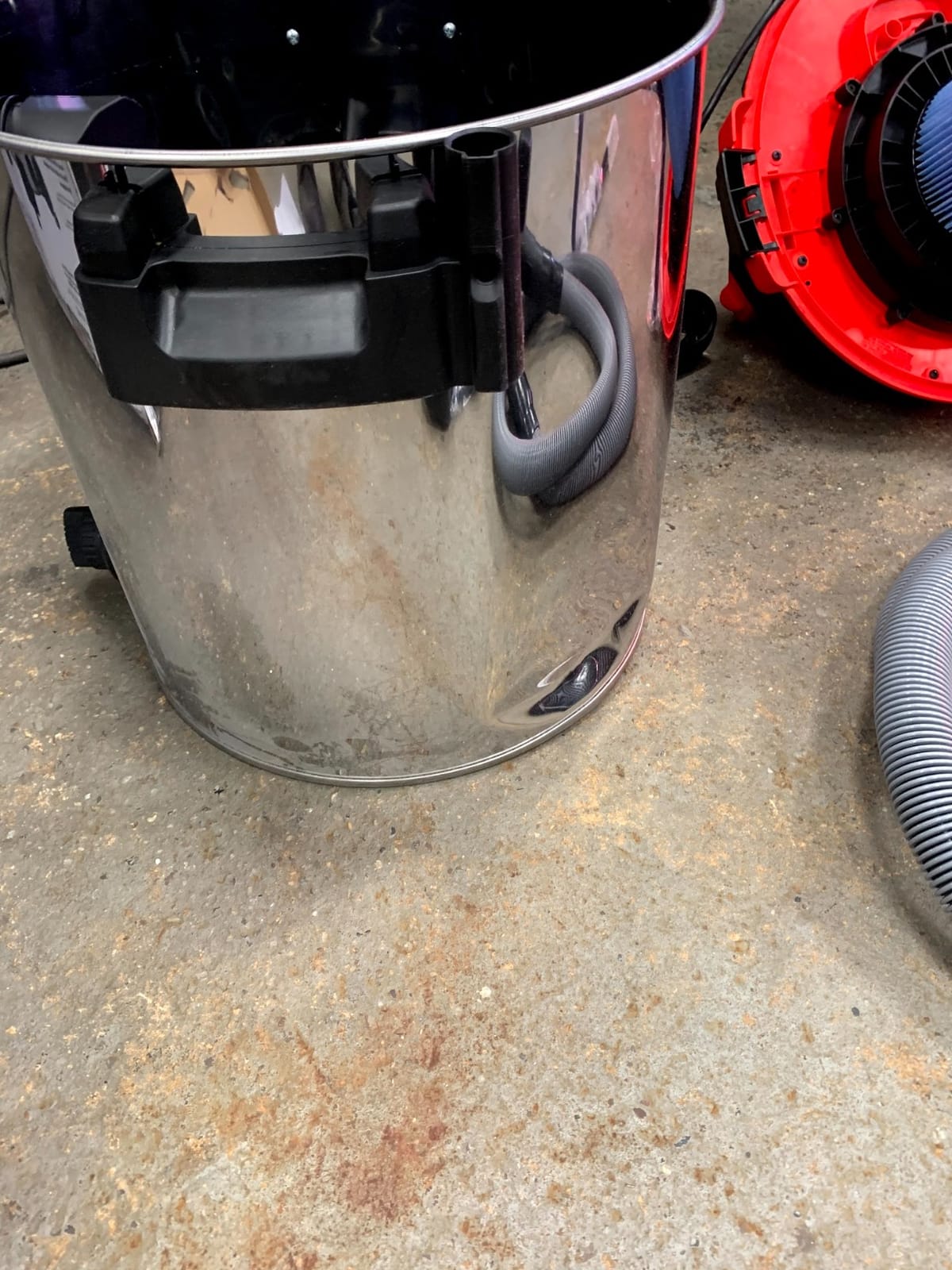
The cart, push handle, and large rear wheels roll over power cords and thresholds instead of tipping, which is the difference between a unit that stays in the shop and one that lives in a corner.
Owners also point to motor longevity as the headline benefit. That is exactly the failure mode most buyers on this topic are worried about, and it is the reason to look at this model last and seriously.
Where it earns its slot in your shop
Heavy-duty shops, mobile setups, and anyone who intends to keep one vacuum for a decade. The stainless tank takes wet cleanup as readily as dry, and the blower port covers yard debris too.
Where it falls short
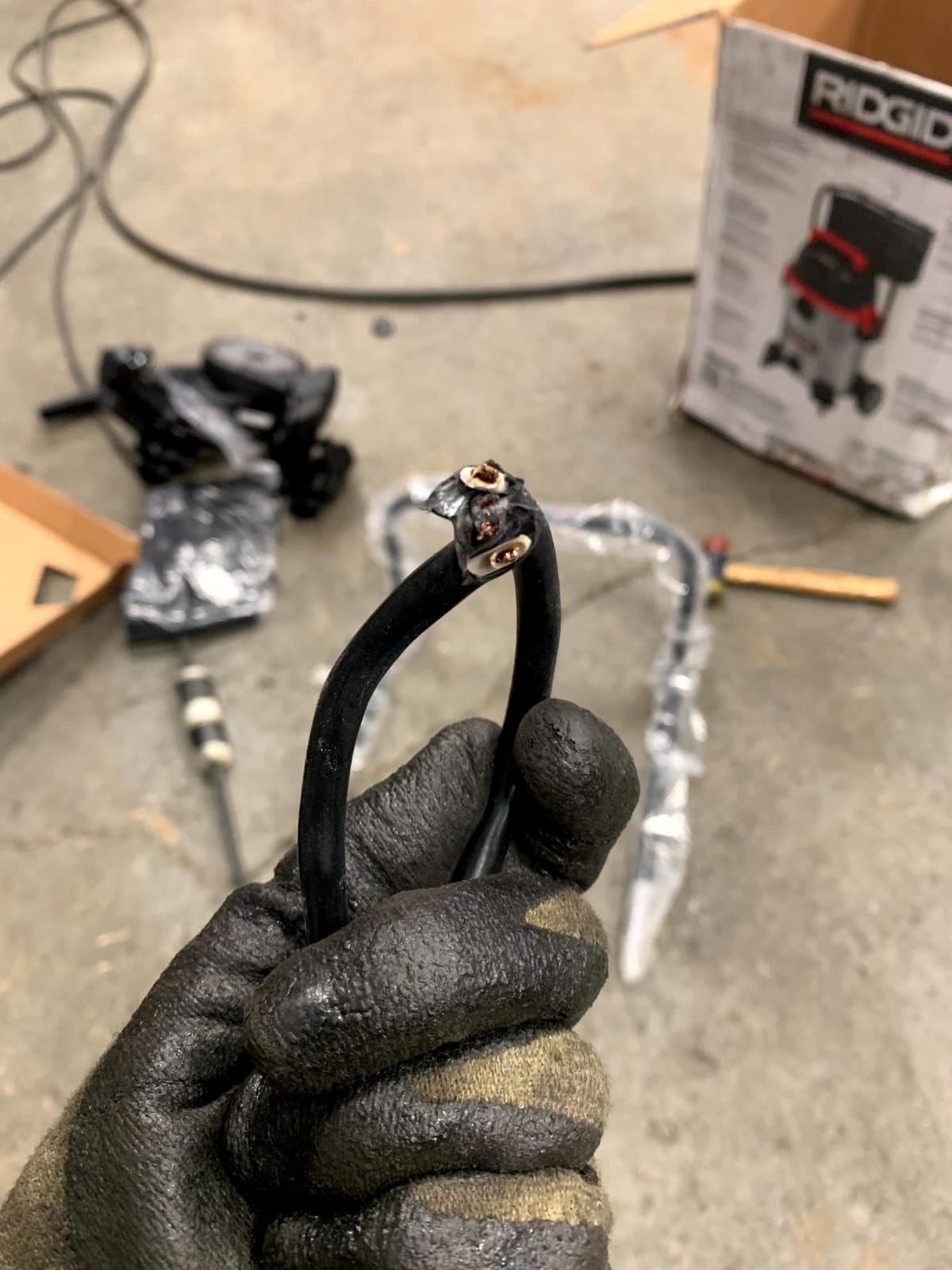
Friction-fit hose attachments can pull apart under suction, which is the complaint owners mention most. Leave steel or carbon shavings sitting in a stainless tank and it will pit and spot-rust, so clean it out promptly. There is no muffler included.
Shop Vac vs Dust Collector: When a Shop Vac Is the Wrong Tool
A shop vac is the wrong tool when you need to run more than one machine at a time or move a large volume of air through a long duct run. The number that settles it is airflow. Owners on woodworkingtalk and similar forums put typical wet/dry vacs in the range of roughly 144 to 400 CFM, while dedicated dust collectors run past 1200 CFM. That is not a rounding difference.
Static pressure is the other half of the equation. A wet/dry vac creates a strong vacuum at the nozzle but relatively weak, turbulent airflow. A dust collector trades some of that suction for a large, even column of air that pulls dust down a duct. One is built to grab debris at close range; the other is built to move a lot of air a long way.
So the decision is simple. One machine, a miter saw, and a sander in a home shop means a wet/dry vacuum or a dust extractor is the right spend. A table saw, a planer, and a drum sander running together in a dedicated space is collector territory.
If you are still setting up, start with the machines. We break down the fundamentals in our jigsaw and woodworking tool guides, and matching the vacuum to the tool is easier than upgrading later.
Pre-Separators: Why a Bucket Head or Cyclone Saves Your Filter
A pre-separator is a cheap cylinder that sits between your hose and the vacuum. Most of the heavy sawdust drops into a bucket before the air ever reaches the filter, so the filter only sees the fine fraction.
For wood dust this is the single highest-value upgrade per dollar you can make, and it is the most frequently recommended approach across woodworking forums. Builders either bolt a commercial cyclone to the intake or convert a five-gallon bucket with a lid and hose ports, often pairing one with an existing shop vac.
The payoff is not just filter life. It is motor temperature. A clean filter means the motor draws its rated current instead of laboring against a loaded one, which is the difference between a vac that lasts a decade and one that does not.
One caveat: dust extractors with automatic filter cleaning need far less help from a separator, though the two work together well on heavy rough-cut loads.
How to Hook a Shop Vac to a Table Saw or Sander
Hooking up is straightforward, but the details decide whether it works. Five steps, in order.
Pick the correct port. Most saws have a dust port on the lower cabinet or under the hood. Use the largest opening available and avoid improvising a port smaller than the hose.
Seal the connection. A loose hose in a port leaks air and drops suction dramatically. Wrap the joint with hose clamp and sealant or use a proper adapter sized to the port.
Check your circuit. The extractor pulls significant current. Run it on a dedicated 120 volt outlet rather than sharing with a saw, or you will trip the breaker mid-cut.
Use the largest hose the machine supports. Hose diameter costs you real airflow. The 1-1/4 inch and 1-7/8 inch hoses on the smaller units in this roundup are fine for walking the floor and marginal for a remote hookup.
Plan for the filter. If you are not using an auto-cleaning extractor, add a pre-separator or check the filter every session. A loaded filter is the number one reason a hooked-up vac underperforms.
Buying Guide: What Actually Matters for Wood Dust
Airflow beats horsepower. Peak horsepower measures how much energy goes into the motor, not how much suction reaches your hose. Two units in this roundup differ by a full 2.25 peak HP and behave nearly the same, because what separated them was airflow and hose diameter. Treat the HP number as a rough class indicator and ignore it otherwise.
Static pressure tells you about packed dust. Maximum suction in inches of water lift is the better number for lifting sawdust off a surface. The DEWALT DXV12P at 85 inches and the Vacmaster VOC812SF at 83 inches both pull harder than the rest, and you feel it on packed debris.
Air watt is the honest figure. Air watt combines airflow and suction in one number, and it is the one the Vacmaster VOC508S leads on at 135 air watt despite its small size. When a manufacturer publishes it, trust it over peak HP.
Filtration tier has to match the dust. A foam filter handles wet pickup and does nothing for fine dust. A pleated cartridge handles coarse and medium sawdust. HEPA at 0.3 microns catches the fine fraction that settles on your tools and stays airborne. You do not need HEPA for rough cutting, but you do want it if you finish sand or work with hardwood.
Capacity decides how often you stop. Five gallons fills during a heavy cleanup, six is workable, eight to twelve suits a busy garage, and sixteen gallons lets you finish a session in one pass. If you can move the weight, capacity buys you uninterrupted workflow.
Tank material is a durability decision. Stainless survives wet cleanup and knocks; poly is lighter and cheaper but scuffs and eventually cracks. For dry-only shops the difference matters less than for anyone doing wet pickup.
Hose diameter is the hidden performance factor. A 2.5 inch hose moves far more air than a 1-7/8 inch hose of the same length. If you plan to route to a remote machine, that difference shows up as lost suction you cannot tune back.
Noise is a real constraint. Units here measure 69 to 82 dB. For a shared or enclosed workshop, the quieter end of that range is worth paying attention to before you buy anything.
Count the filter cost, not just the machine. Replacement filters are the running cost of this category. A unit with widely available generic filters costs far less per year than one that demands proprietary elements, which is why filter availability appears so often in owner recommendations. If you are starting from nothing, our beginner woodworking tool set guide covers the rest of the basics.
Frequently Asked Questions
Can you use a shop vac for wood dust?
Yes, but with limits. A wet/dry vacuum handles coarse sawdust, chips, and floor cleanup well. Fine hardwood dust blinds cartridge filters quickly, which drops suction and overheats the motor, so add a pre-separator or choose an auto-filter-cleaning dust extractor for machine hookup. Change the filter often and never run a loaded filter to the point of stalling.
What is the best vacuum for woodworking?
For floor cleanup and general shop debris, a high-CFM wet/dry vacuum with a stainless or large tank is the best fit. Our top pick is the CRAFTSMAN CMXEVBE17595 for its 16-gallon capacity and anti-kink hose. If you collect dust at the machine instead of chasing it across the floor, a dust extractor with automatic filter cleaning is the better choice.
What is the best vacuum dust extractor for woodworking?
For a single machine at a time in a home shop, the DEWALT DWV010 is our pick: HEPA filtration, automatic filter cleaning every 30 seconds, power tool actuation, and 150 CFM of airflow through a 15 foot anti-static hose. Run it on a dedicated 120 volt circuit, and expect suction to be lower than a plain shop vac because of the HEPA element.
Why does my shop vacuum lose suction with wood dust?
Almost always a loaded filter. Fine dust mats the pleats, airflow drops, the motor works harder, and heat builds until something fails. Check and clean or replace the filter first. The other common causes are a crushed or ribbed hose choking airflow and a plastic tank seam leaking, which lets air short-circuit around the filter instead of through it.
Do I need HEPA for wood dust or is a fine filter enough?
For rough cutting and floor cleanup, a good pleated cartridge is enough. HEPA matters for fine hardwood dust, finish sanding, and any situation where you want the dust captured rather than released into the shop air. A 0.3 micron element is the tier most owners end up wanting, and it is worth pairing with a pre-filter so it does not clog in a dusty shop.
Final Verdict: Which Shop Vacuum Should You Buy in 2026?
The CRAFTSMAN CMXEVBE17595 is the best of the best shop vacuums for woodworking dust this year. Its 16-gallon tank, 2.5 inch Dual-Flex hose, and 69 dB running noise make it the least annoying machine to own for full-session cleanup, and its Qwik Lock filter system encourages you to check the element instead of ignoring it.
Pick the Stanley SL18116P if budget and a small footprint decide it, the DEWALT DXV12P if you want the strongest floor pickup in a mid-size shop, and the DEWALT DWV010 if your real goal is dust collection at a saw or sander instead of sweeping afterward. Whichever you choose, budget for filters, and consider a pre-separator before you spend on anything else.