
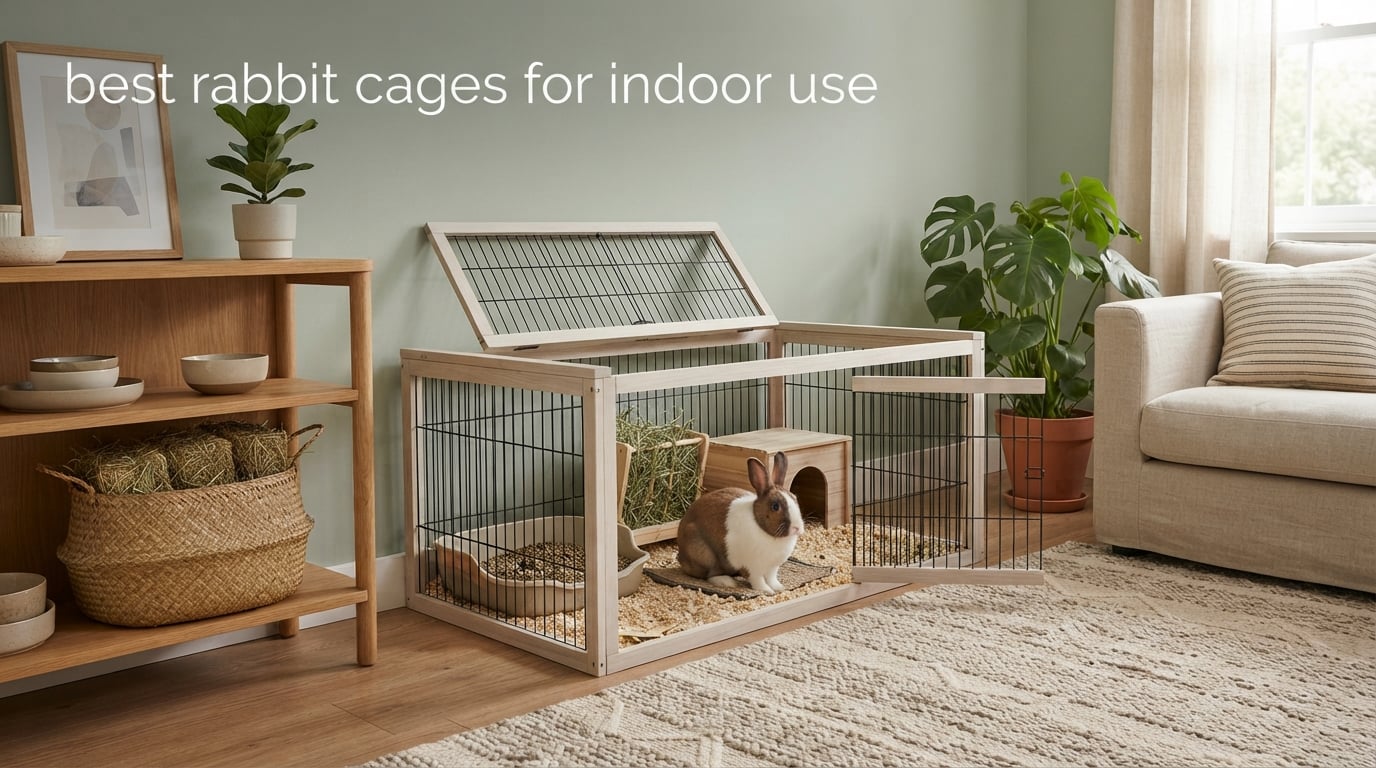
The best rabbit cages for indoor use are enclosures that give a house rabbit enough continuous floor space to lie fully stretched out, a solid non-wire surface underfoot, room for a litter box, hay, water and a hideout, and a secure door. Most of what gets sold as a rabbit cage falls short of that on at least one count, which is why the search for a good one is so confusing.
Here is the honest framing first: a cage is a base camp, not a home. It is the secure, predictable spot where your rabbit sleeps, eats and does litter training while the rest of the home is rabbit-proofed for supervised free-roam time. Buy the biggest one your floor space allows, treat it as the anchor of that arrangement, and you will avoid most of the problems owners write about in rabbit forums.
We spent weeks going through specifications, warranty terms, dimension drawings and owner feedback on ten enclosures that come up again and again for indoor housing. The set covers every format we could find: traditional plastic-and-wire habitats, wheeled wooden hutches, a two-story model, and two playpen-style pens that the rabbit community actually recommends over traditional cages. If you want a fast answer, jump to the indoor pet camera picks later on this site to watch your rabbit while you are at work, and come back here for the enclosure itself.
Every pick below states its dimensions, its floor type and a named best-for scenario. Where a product has a real welfare drawback, we say so plainly rather than selling it as a feature.
Table of Contents
The 3-3-3 Rule and Minimum Indoor Rabbit Cage Size
The 3-3-3 rule is a welfare guideline that sets three minimums for a house rabbit: about 3 hours of daily exercise, 3 square feet of continuous floor space available at any one time, and 3 hours a day of rabbit-centric interaction with you. It is a starting point, not a ceiling, and it is the entry ticket any housing recommendation has to clear.
3 hours of exercise – roughly the length of a school recess block, ideally in a rabbit-proofed room rather than inside the enclosure.
3 square feet of continuous floor space – one unbroken level, measured without counting ramps, shelves or a second story as extra space.
3 hours of rabbit time – daily handling, grooming, foraging games and quiet companionship, not just food refills.
For absolute minimums, the House Rabbit Society, the authority most often cited in rabbit communities, recommends an enclosure of at least 60 cm wide by 65 cm deep by 35 cm high, with a smaller setup of 45 cm wide by 60 cm long workable for constrained situations. Convert that to inches and you are looking for roughly 24 inches wide, 26 inches deep and 14 inches high as the floor, not the ceiling.
Two details in that standard catch people out. First, it is a floor space standard, so a tall two-story hutch does not automatically beat a low wide habitat. Second, depth matters more than height, because a rabbit needs room to stand fully upright on its hind legs and to take a proper run, and a tall narrow cage denies both.
Bonded pairs need meaningfully more. A pair that must be separated sometimes still needs a secondary space big enough for one rabbit to live comfortably in, which in practice means doubling your usable area and providing two litter boxes, because a bonded pair will not share one cleanly.
One category we are deliberately excluding is breeder and livestock equipment. Metal stacking hutches sized in the 24 by 24 and 30 by 36 inch range are built for production animals on wire floors, and they show up often in short-form video recommendations. They are not companion rabbit housing, and no pick on our list uses a wire mesh floor as its primary living surface.
Top 3 Picks for the Best Rabbit Cages for Indoor Use (October 2026)
The three enclosures below are the ones we would choose first, based on the combination of owner satisfaction, build quality and how well each one holds up to daily indoor use.
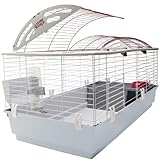
Living World Deluxe Hybrid X-Large
- 46.9 x 22.8 x 24 inches
- Hybrid wire and plastic base
- Tool-free clip assembly
- Balcony with hideaway below
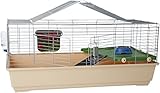
Amazon Basics Jumbo Habitat
- 48.6 x 26.6 x 20.6 inches
- Iron wire over PP plastic base
- Top and front openings
- Accessory bundle included
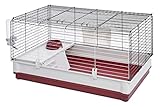
MidWest Wabbitat Deluxe
- 39.5 x 23.75 x 19.75 inches
- Deep 5.5 inch solid-floor base
- Tool-free assembly
- Extension-compatible
Best Rabbit Cages for Indoor Use (October 2026)
All ten enclosures in one place, with the specifications that actually change daily life: footprint, floor surface, tray design and how the enclosure is meant to be used.
| Product | Specifications | Action |
|---|---|---|
| Living World Deluxe Hybrid Habitat X-Large |
|
Check Latest Price |
| Amazon Basics Jumbo Small Animal Habitat |
|
Check Latest Price |
| MidWest Wabbitat Deluxe Rabbit Home |
|
Check Latest Price |
 Pawaboo Playpen With Zippered Cover Pawaboo Playpen With Zippered Cover |
|
Check Latest Price |
 Aivituvin Extension Playpen Aivituvin Extension Playpen |
|
Check Latest Price |
 Ferplast Krolik XXL Rabbit Cage Ferplast Krolik XXL Rabbit Cage |
|
Check Latest Price |
 DINMO 28-Panel Bunny Playpen DINMO 28-Panel Bunny Playpen |
|
Check Latest Price |
 GUTINNEEN Wooden Hutch With Casters GUTINNEEN Wooden Hutch With Casters |
|
Check Latest Price |
 Aivituvin Indoor Hutch With Wire Floor Aivituvin Indoor Hutch With Wire Floor |
|
Check Latest Price |
 GUTINNEEN 2-Story Rabbit Hutch GUTINNEEN 2-Story Rabbit Hutch |
|
Check Latest Price |
A note on reading that table: the dimensions are manufacturer-stated exterior dimensions, which is the number almost every retailer lists. The number that matters for your rabbit is the interior floor space, and for the habitats with balconies you should discount the platform area entirely when checking against the 3 square feet minimum.
1. Living World Deluxe Hybrid Habitat – Best Overall Indoor Rabbit Cage
Living World – Deluxe Hybrid Habitat, X-Large
Measures 46.9 L x 22.8 W x 24 H inches and weighs 19 pounds
Hybrid wire frame over a solid plastic base
Balcony platform with a hideaway underneath
Tool-free assembly on eight plastic clips
Pros
- Sturdy wire and plastic construction that survives chewing and daily handling
- Large interior with balcony
- under-balcony hideaway and full-perimeter room for extra feeding stations
- Top lifts off completely on eight clips so the base is easy to wipe down
- Textured floor helps prevent slipping and cleans easily
- Water bottle
- hay feeder
- hideaway and tip-proof dish all included
Cons
- Assembly instructions are diagram-only and often criticized as unclear
- The ramp up to the balcony is steep for small or older rabbits
- The included water bottle tends to drip and many owners replace it
- The arched top removes flat storage surface
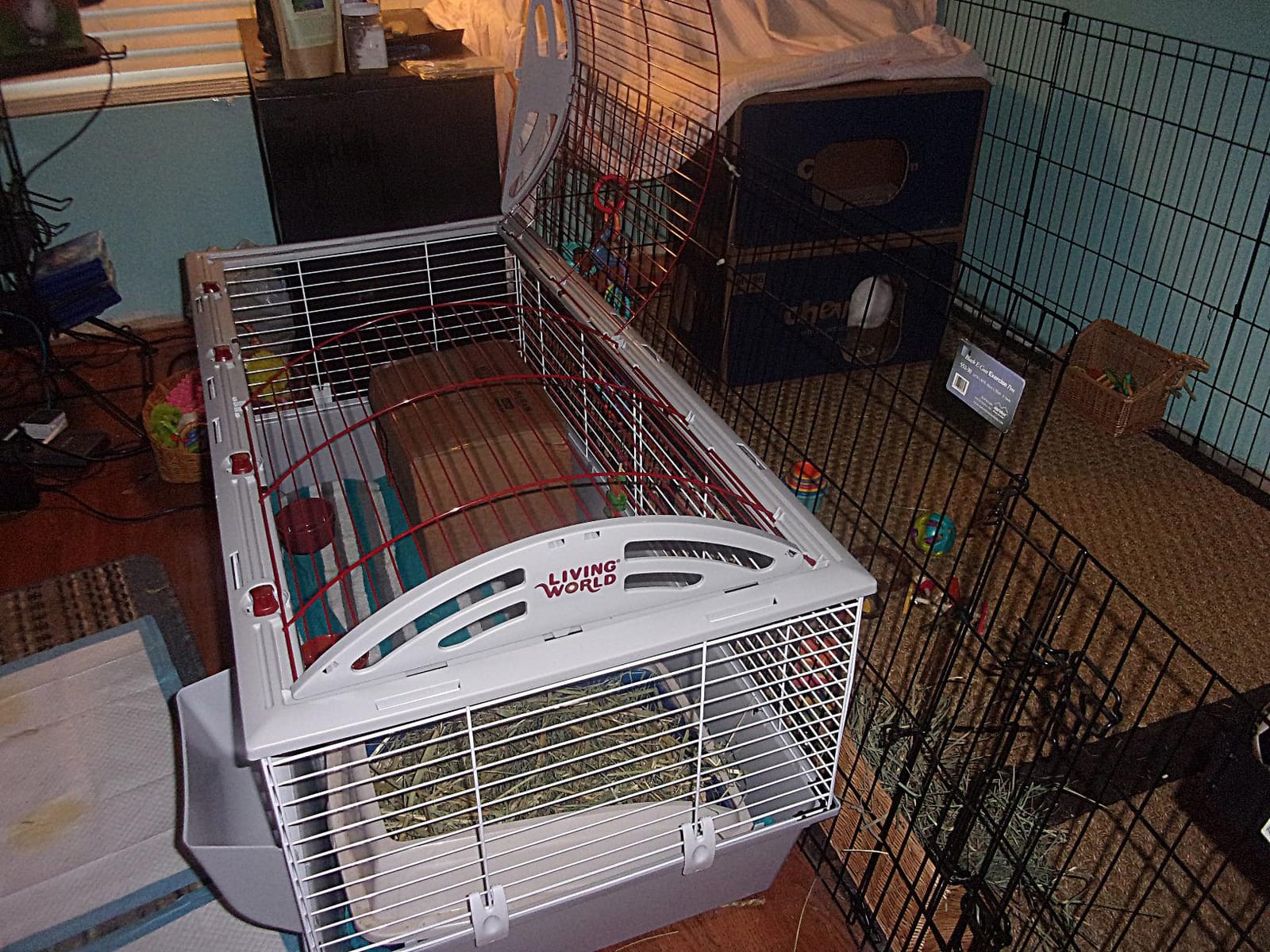
This is the enclosure that came up most often in our research and it earned the top slot on the strength of owner satisfaction and build quality rather than on any single specification. The hybrid design – plastic base, wire upper frame with an arcing red top and white wire sides – is a design that has survived a decade of use, and the X-Large version is the one to get rather than the smaller variants.
What we like most is the top. It opens in two separate parts and lifts off entirely on eight plastic clips, so cleaning the base takes seconds rather than a fight with fasteners. That single feature does more for daily quality of life than most of the accessories that ship in the box, and it is why this cage stays at the top of the list for owners who spot clean obsessively.
The interior is genuinely useful. There is a balcony platform, a hideaway space underneath it, and a full perimeter of usable wire where you can add a second water station or hay rack without the rabbit having to fight a neighbour for access. The textured plastic base helps prevent splay injuries and wipes clean without absorbing urine the way fleece does in the short term.
We do want to be direct about the limits. Even the X-Large is a supplementary space for an adult rabbit rather than a full-time habitat, which experienced small-animal owners point out repeatedly. Experienced rabbit keepers recommend pairing it with an exercise pen or using it for litter-trained house rabbits that spend the bulk of the day free-roaming.
What to check before you buy it
Measure the interior floor after removing the balcony platform, because that platform is included in the quoted footprint but does not count as continuous floor space. Owners who have measured report being pleasantly surprised at how much usable area remains in a 46.9 inch length once the ramp and platform are accounted for.
Check the ramp angle against your rabbit. The rise to the balcony is a known complaint, and for a senior rabbit, a Netherland Dwarf or a young kit you may want to remove the ramp entirely and let the balcony become a shelf rather than a climb.
Where it falls short
Assembly is genuinely fiddly. The instructions are diagram-only with minimal text, and a few owners report spending more time on the clip connections than the whole setup. Budget twenty minutes with no rabbit in the room and you will avoid most of that friction.
The included water bottle drips, and the external hay feeder scatters hay across the room every time it is removed for refilling. Both are five-minute upgrades that solve themselves once you know they are coming, but they are worth budgeting for as add-on costs rather than assuming the bundle is complete.
2. Amazon Basics Jumbo Small Animal Habitat – Best Value Wire Habitat
Amazon Basics Top Access Small Animal Habitat for Rabbit, Guinea Pig, Ferret & Chinchilla with Accessories, Jumbo, 48.6″L x 26.6″W x 20.6″H, Multicolor
Measures 48.6 L x 26.6 W x 20.6 H inches and weighs 18.7 pounds
Iron wire upper frame over a PP plastic base
Large top and front openings for handling
Accessory bundle and one-year warranty included
Pros
- Spacious 48.6 x 26.6 inch footprint gives room to stretch
- hop and stand fully upright
- Durable iron wire upper frame with a solid PP plastic base
- Large top and front openings make handling
- feeding and spot cleaning simple
- Non-drip water bottle
- hay guard
- balcony
- ramp and tip-proof dish all included
- Hide-away space under the balcony for a private resting spot
Cons
- The manufacturer does not recommend it for long-term outdoor use at low temperatures
- The bulkier footprint occupies more floor space than smaller wire cages
This is the widest enclosure in the group by interior width, at 26.6 inches, and width is the dimension people consistently under-budget for. A rabbit that can turn around, stretch out flat and hop a straight line without clipping a corner is a rabbit whose 3 square feet requirement is actually being met, and the 48.6 by 26.6 footprint is the one on this list that most comfortably clears it.
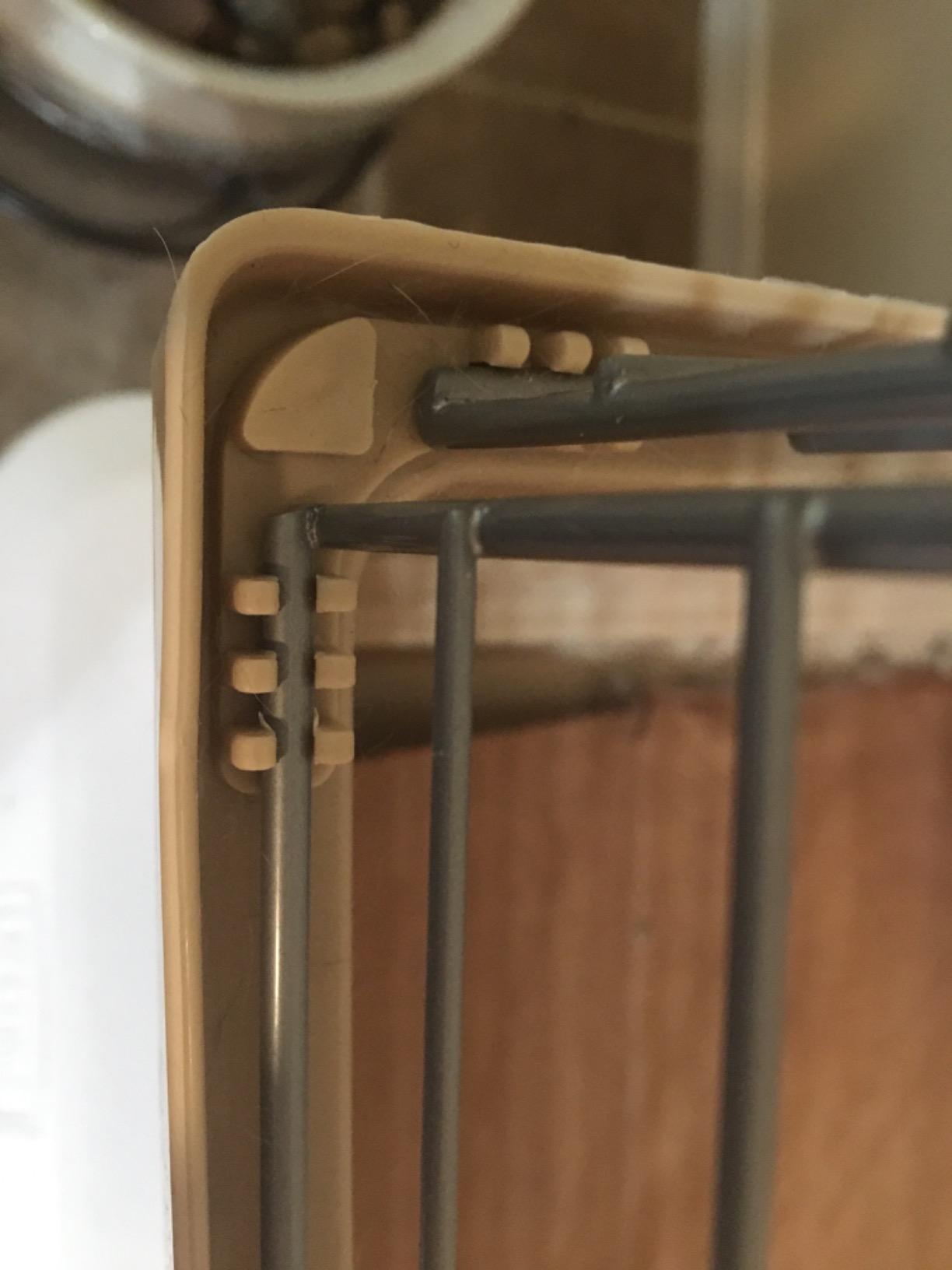
Access is the other reason it ranks so high. The top and front openings are both large, so you can reach every corner without contorting a spray bottle over a rabbit who is hiding, which matters enormously when a small animal is unwell and needs spot cleaning twice a day.
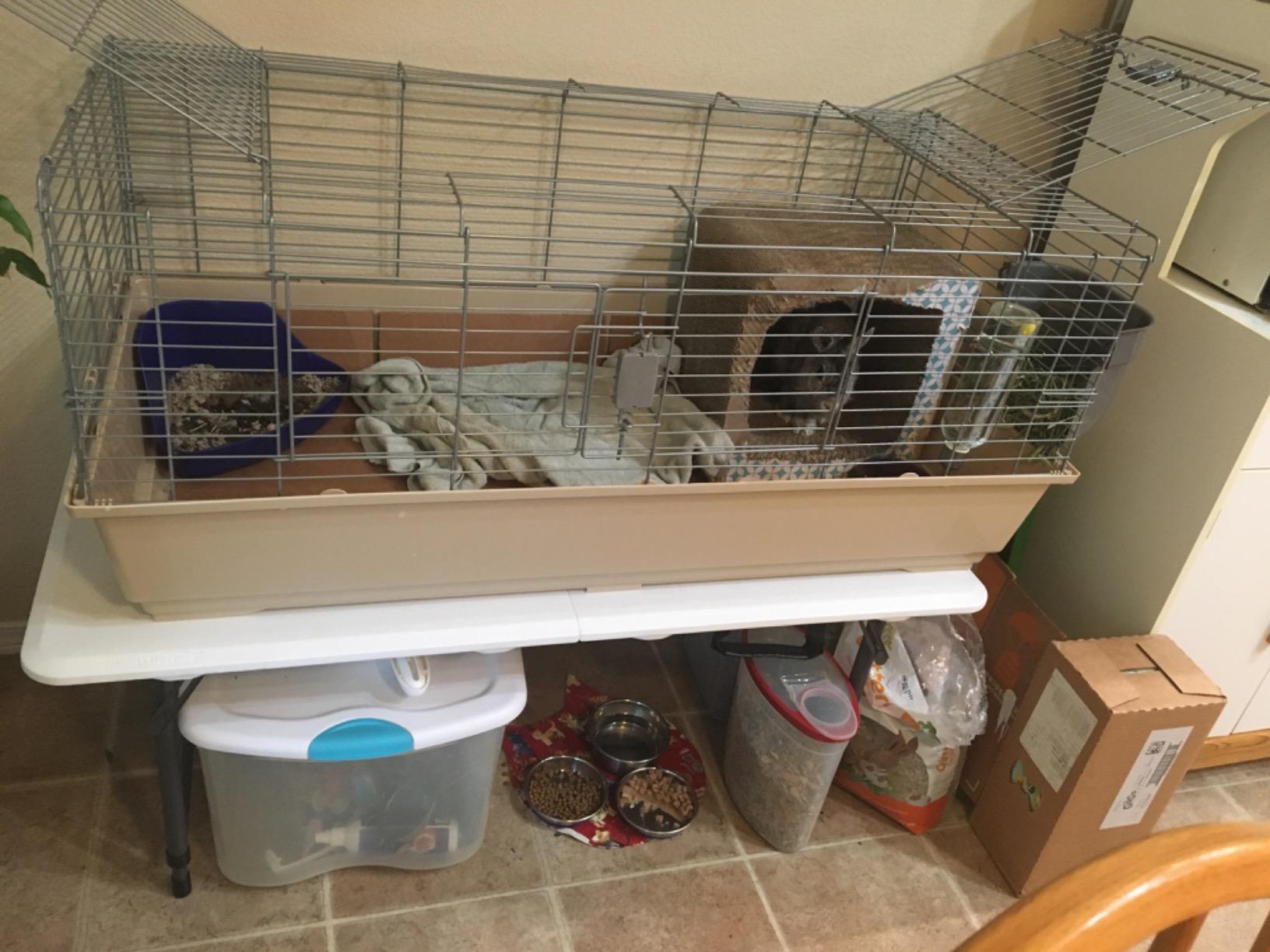
The build is a straightforward iron wire frame over a polypropylene plastic base, the same hybrid approach as the Living World but in a simpler, boxier package. Assembly is tool-free and the parts are labelled clearly enough that most owners finish in a single sitting, which is not something we can say about every cage here.
Owners typically pair the extra width with a proper litter box and a supplemental exercise pen, and the 20.6 inch height means an adult rabbit can sit fully upright on the balcony, though not hop up onto it with dramatic leaps. The hide-away space underneath the balcony gives a timid rabbit somewhere to disappear, which is a real benefit in a busy household.
What to check before you buy it
Confirm it will fit where you plan to put it. At 48.6 by 26.6 inches this is a wide footprint, and in a small apartment you may need to measure the wall run and the door swing before ordering. The balcony eats into usable floor space, so measure the base interior rather than trusting the listing figure.
It is an indoor habitat by design. The manufacturer explicitly does not recommend long-term outdoor use at low temperatures, so plan for a life indoors and use a proper outdoor shelter for any rabbit that spends time in the garden.
Where it falls short
Its bulk is the main limitation. It is one of the two or three largest footprints in the roundup, and in a tight space that footprint becomes the deciding factor rather than the specifications. If you are working with a side-table-sized area, the MidWest Wabbitat below is a more realistic starting point.
It is also a wire-framed habitat, so the vertical space above the base is bounded by the balcony. For a large breed such as a Flemish Giant or a Rex, the 20.6 inch height is workable for standing but not generous for a full vertical stretch.
3. MidWest Wabbitat Deluxe – Best for Travel With a Solid Floor
MidWest Homes for Pets 158 Wabbitat Deluxe Rabbit Home, Rabbit Cage, 39.5 L x 23.75 W x 19.75 H Inch, Maroon/White
Measures 39.5 L x 23.75 W x 19.75 H inches and weighs 14.85 pounds
5.5 inch deep solid plastic base for litter containment
Top access plus a full side door
Compatible with wire and wood extensions
Pros
- Deep 5.5 inch base keeps bedding and hay on the floor rather than scattered around the room
- Solid non-wire floor is far more comfortable for senior rabbits and small pets
- Front panel lifts fully for easy floor access
- cleaning and handling
- Holds up to chewing with no reported warping after extended use
- Attractive maroon and white colorway that suits indoor rooms
- Extends with 158WEX wire or 158HEX wood add-ons
Cons
- Plastic side panels can be tricky to align with the base and some owners needed force to complete assembly
- The wire top can feel slightly flexible over the large span
- Included water bottle and hay rack are small enough that many owners replace them
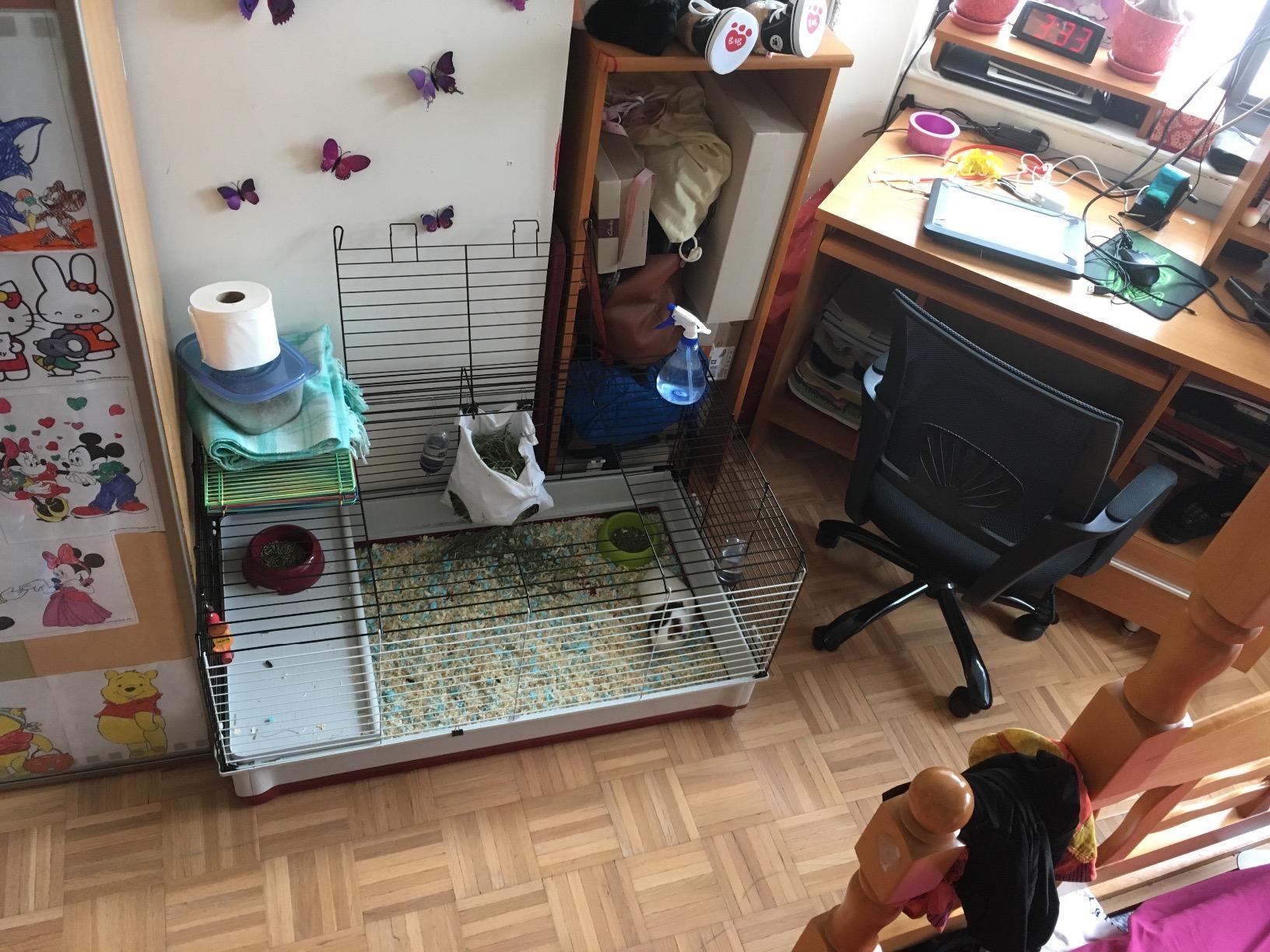
For owners who have been told a wire floor is the problem, this is the answer that fits a normal budget. The base is solid plastic, not mesh, and the 5.5 inch depth is unusually generous for a habitat at this price, which is why it shows up so often in senior-rabbit and guinea-pig setups. A deeper base means fewer hay droppings and droppings land in the tray instead of on your floor.
The extension compatibility is the part most buyers underrate. This unit links to both a wire extension and a wooden hutch extension, so a single purchase can be scaled up later as your rabbit grows or as you bring home a second rabbit. Very few habitats in this roundup offer a genuine expansion path.
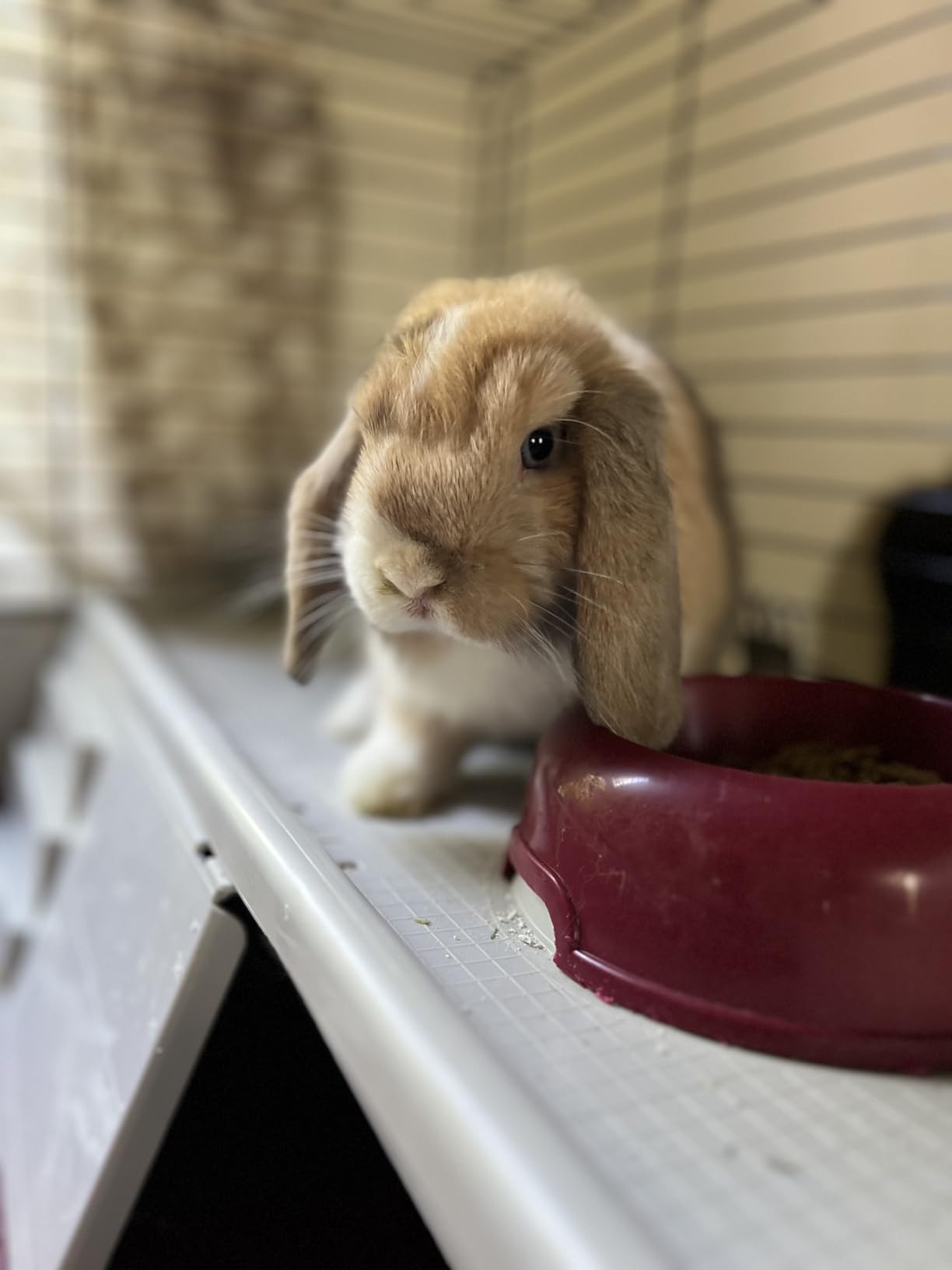
It is also the most decor-friendly of the plastic-and-wire options, and that is not a trivial consideration. The maroon and white colorway is a genuine aesthetic upgrade over the bright primary colours most wire habitats come in, and for an indoor rabbit living in a living room rather than a shed, that difference is real.
Owners report the frame holding its shape well under chewing, with no warping after extended daily use. For a solid-floor habitat in the mid-size range, the durability feedback is consistently better than price point would suggest.
What to check before you buy it
Measure for the extension if you might want it. The 158WEX wire extension and 158HEX wooden hutch extension both add meaningful length, so find a wall with room to grow rather than tucking the base into a gap. Retrofitting into a tight corner rules out the main reason to buy this cage.
If your rabbit is elderly or has sore hocks, the solid floor is a genuine win, but pair it with a mat or fleece liner. Solid plastic is still hard, and a washable mat makes a meaningful difference for an older animal or one recovering from surgery.
Where it falls short
Assembly is the recurring negative. Aligning the plastic side panels with the base is fiddly, and some owners report needing force or even trimming to get the panels to snap together properly. Read the reviews for the assembly order before you start, because a two-minute video walkthrough saves a lot of frustration.
The included water bottle and hay rack are small, and many owners replace both within the first month. Add that to your running cost, along with the litter and fleece liners a solid floor requires on a longer cleaning interval.
4. Pawaboo Playpen With Zippered Cover – Budget Pick and Supervised Play
Pawaboo Small Animal Playpen with Zippered Cover,Green
Opens to about 52 x 15 inches and folds to 11 x 11 inches
Weighs just 1.32 pounds
190T polyester water-resistant base
Dual-zippered mesh top for access without opening the base
Pros
- Sets up instantly with no tools and folds to a compact carry bag for travel and storage
- Very light at 1.32 pounds so it moves between rooms easily
- Breathable mesh on all sides gives airflow and a clear 360 degree view
- Dual-zippered top lets you feed
- pet and clean without opening the base
- Three ground stakes included for short outdoor sessions
Cons
- The water-resistant base only reduces urine reaching the floor and must be wiped dry before folding
- Not intended as a full-time or unattended enclosure and unsuited to aggressive chewers or high jumpers
- The spring-loaded frame opens forcefully and should be kept away from faces and small children
This is not a full-time habitat and we want to be upfront about that, because the marketing on this format often blurs the line. It is a supervised play and exercise pen that pops open in a second, and that is genuinely valuable for the specific situations where you cannot safely let a rabbit loose in the room: a home with a cat that has not been introduced, a quarantine period after a vet visit, or a rabbit who is not yet litter trained.
The travel case is the standout. At 1.32 pounds and folding to 11 by 11 inches into an included bag, it is the only enclosure in this roundup you can put in a car boot or under a seat. Owners use it as a vet boarding substitute, which solves a problem most people do not think about until the day they need it.
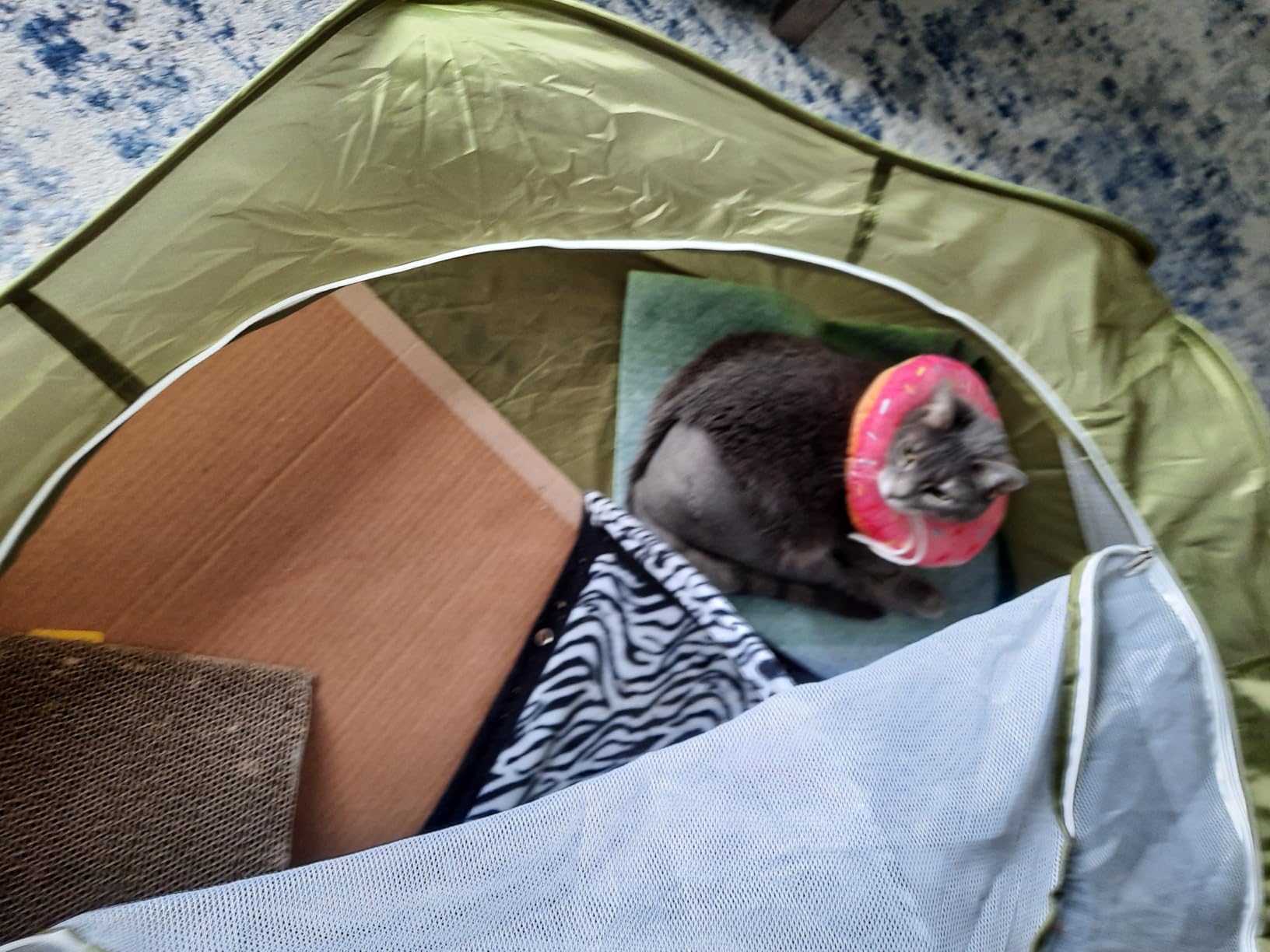
The 360-degree breathable mesh is better than it sounds. You can see your rabbit from every angle, which is what you want with a timid animal in a shared room, and the mesh gives far better ventilation than the solid-sided hutches later in this list. Rabbits are sensitive to heat, and airflow matters more indoors than most product pages suggest.
The dual-zippered top is the detail we would highlight. It means you can refill water, add hay and reach in to pet without dismantling the pen base, and the zip closure helps contain an animal who has not yet learned where the edge is.

What to check before you buy it
Check the open size against your purpose. It opens to roughly 52 by 15 inches, and a 15 inch width is narrow enough that a full-grown rabbit cannot turn around freely in it. It is excellent for supervised exercise on a rug or a section of floor you have blocked off, and it is not a substitute for a proper habitat.
Think about your rabbit’s chewing and jumping behaviour. The listing is explicit that it is not for aggressive chewers, escape artists or high jumpers, and those exclusions exist for good reason. A determined Dutch rabbit will find the seam, and an upright ear that catches on the top edge is a genuine injury risk.
Where it falls short
The water-resistant base is the honest weakness. It reduces urine reaching your floor, it does not prevent it, and reviewers are consistent that the pen must be wiped dry before you fold it away or it will smell for the rest of its life. Line it with fleece or a washable pad and this becomes a non-issue.
It is also the least chew-resistant option here. Fabric pens and spring frames lose to determined rabbits, so treat this as a short-term and portable solution rather than a home base. If you need something that will survive a rabbit who chews everything, read on to the DINMO panel pen.
5. Aivituvin Extension Playpen – Best for Expanding a Bonded Pair’s Space
Aivituvin Rabbit Playpen Pet Pen Small Animal Cage with Waterproof Liner – Extension Playpen
48 x 48 x 24 inch enclosure adding about 16 square feet
1.3 inch mesh spacing that will not trap small animals
Leakproof liner with 5.9 inch raised sides
Extension unit that also works standalone
Pros
- Large 48 by 48 inch footprint adds roughly 16 square feet of usable floor space
- Leakproof liner with 5.9 inch raised sides contains droppings
- hay and bedding and protects floors and walls
- 1.3 inch mesh spacing is safe for small animals without trapping heads or limbs
- Cable ties reinforce the panels so the enclosure stays taut
- Movable bottom panel lets you reposition the liner or clean underneath
Cons
- The listing is for the extension playpen only and is not a complete housing set on its own
- Mesh panels are not a solid surface so it works best paired with bedding or a litter box
This is the pick that solves bonded pair housing, and it is the one most owners of two rabbits end up buying second. A 48 by 48 inch pen adds roughly 16 square feet of continuous floor, which is the single biggest jump in usable space available from any product in this roundup, and floor space is exactly what the 3-3-3 rule measures.
It is a pen-style enclosure rather than a cage, which is the format rabbit communities have recommended for years. A Rabbits United thread that still ranks on this topic calls pens great and very roomy and names specific pen models, and that advice has aged well. Panels give you floor space without a wire ceiling, which changes how a rabbit moves through the space.
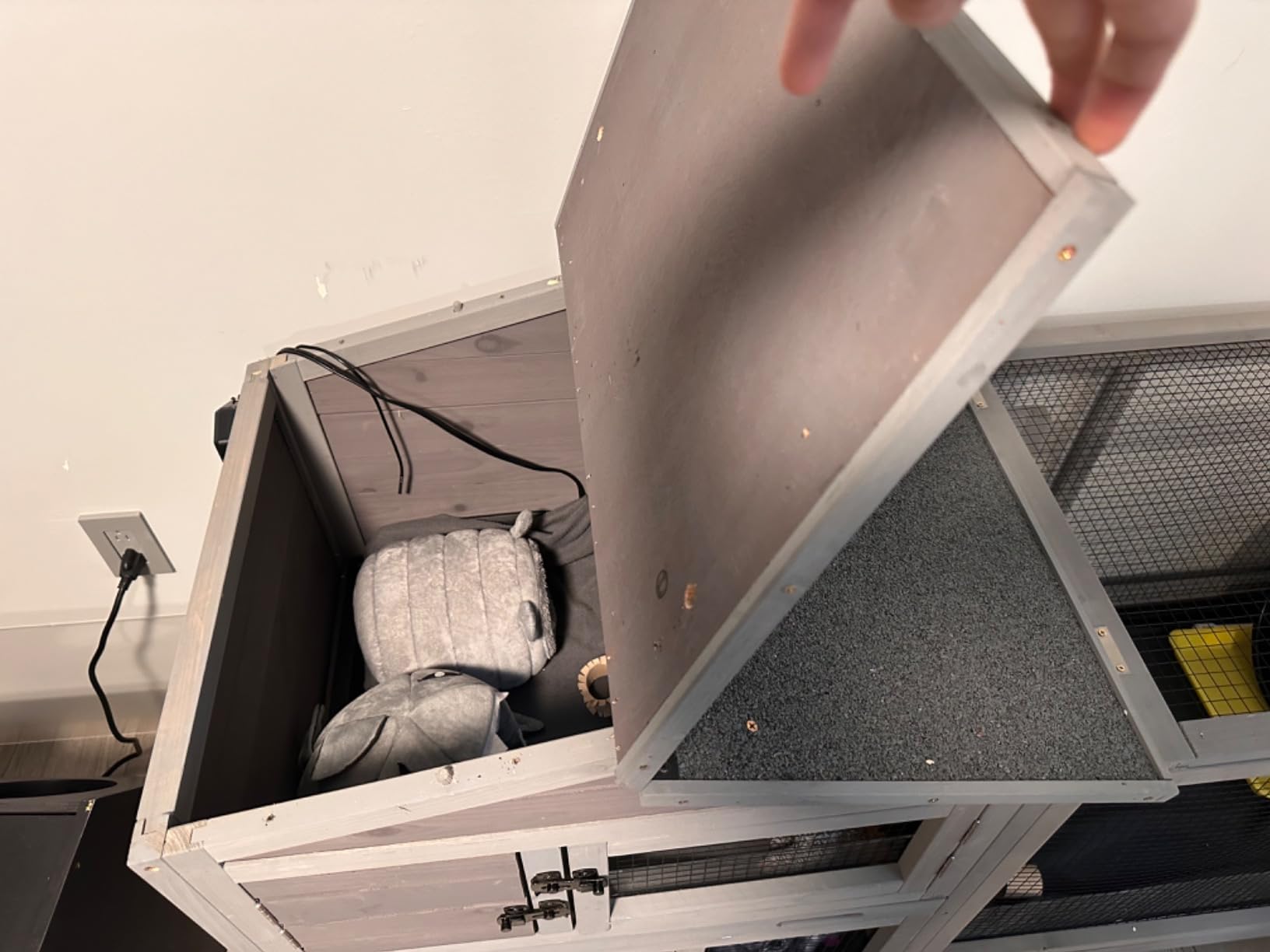
The leakproof liner with 5.9 inch raised sides is the feature that makes it work as a real housing addition. Unlined mesh pens leak, urine soaks into your floor and the smell lingers, and a raised-edge liner solves that without you having to place a separate litter tray in every panel.
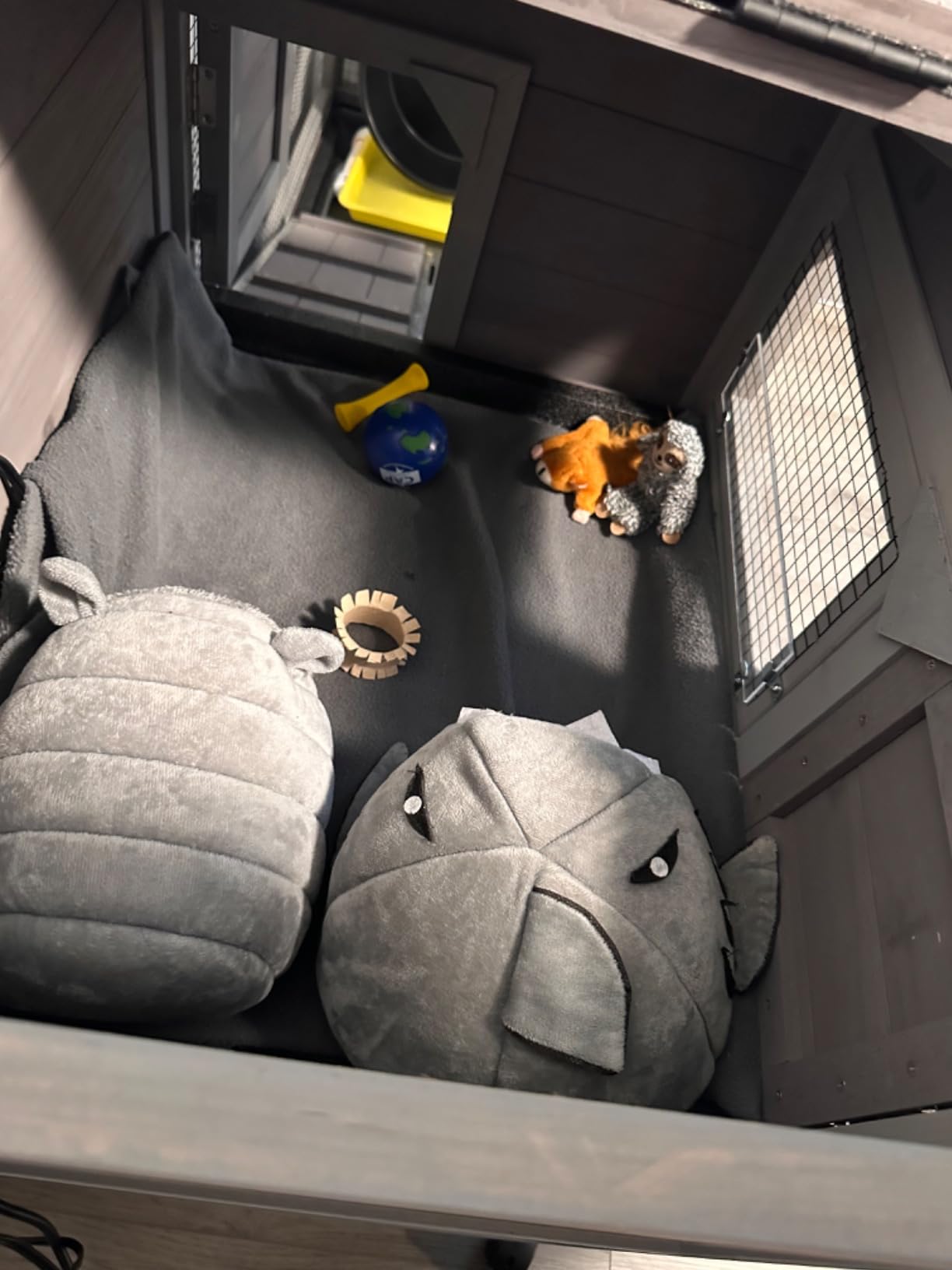
Owners frequently pair this pen with a wooden hutch to create a combined setup, which is the most versatile arrangement in this list: a solid-floor covered area for sleeping and a mesh-floor exercise area alongside it. Add a second litter box at the far end and you have a bonded pair setup that meets the space requirement comfortably.
What to check before you buy it
Understand what is in the box before you order. This listing is the extension playpen only, and it is not a complete housing set. That is the single most common point of confusion in the reviews, so if you are starting from nothing you will still need a base habitat, and this pen is the addition rather than the foundation.
Check your floor space honestly. At 48 by 48 inches this is a square footprint, not a rectangle, so it fits a room corner far better than a long narrow spot. In a small apartment, the corner placement is usually the only realistic option.
Where it falls short
Mesh panels are not a solid floor. A rabbit on wire or mesh for long stretches is a welfare concern we flag consistently, so put down a fleece liner, a rubber mat or a deep bedding layer before you put a rabbit in it. The liner helps with urine too, but it is the floor surface that matters for hock health.
It does not stand alone as overnight housing for an unsupervised rabbit. As an extension to a covered hutch with a litter box inside, it is excellent. As the only enclosure, it is short a roof and a den.
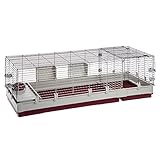
6. Ferplast Krolik XXL – Best for the Longest Single Run
Ferplast Krolik XXL Rabbit Cage w/Wire Extension | Rabbit Cage Includes All Accessories & Measures 63.8L x 23.62W x 19.68H Inches | 1-Year Warranty
Measures 63.8 L x 23.62 W x 19.68 H inches and weighs 26.43 pounds
5.5 inch deep base that detaches entirely for cleaning
Detachable wire extension for a dedicated nesting area
Includes two water bottles,two hay feeders,a feeding bowl and an elevated feeding area
Pros
- Very long 63.8 inch run gives rabbits genuine room to hop and stretch
- Detachable wire extension separates off as a dedicated nesting or sleeping area
- Complete starter kit with two water bottles
- two hay feeders
- a feeding bowl and an elevated feeding area
- 5.5 inch deep base contains litter and detaches completely for fast cleaning
- Multiple doors give convenient access for handling and spot cleaning
Cons
- The wide 63.8 inch footprint requires a large room and a long base to carry when moving
- At 26.43 pounds it is heavy and awkward to reposition alone
Length is the dimension this cage wins on, and length matters more than almost any other factor for a rabbit who needs to run. At 63.8 inches inside, this is the longest single run in the roundup, and a rabbit who can take a full-speed sprint in a straight line is a rabbit who is not pacing in a confined space. It is the closest thing here to a traditional habitat with pen-like proportions.
The dual water bottle and dual hay feeder setup is a detail that matters if you are housing two rabbits. Double the feeding stations reduces the resource guarding that turns a bonded pair into a fighting pair, and the manufacturer sizes the whole kit as a starter set for one or two rabbits.
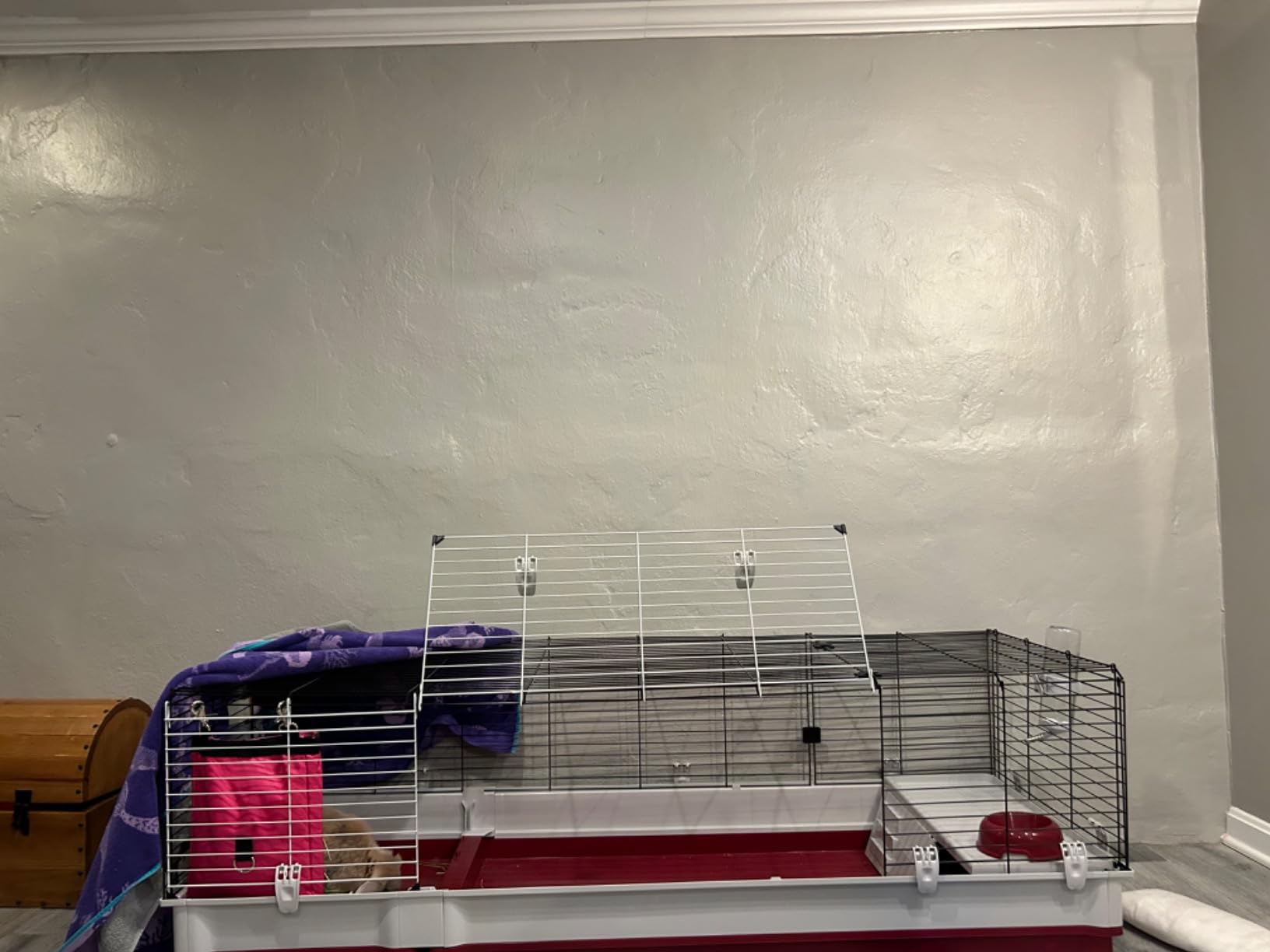
The detachable base is the cleaning feature to note. At 5.5 inches deep and fully removable, you can lift it out, dump the contents into a bin and wipe the underside, which is a meaningfully faster routine than pulling bedding out of a fixed plastic floor with a scoop.
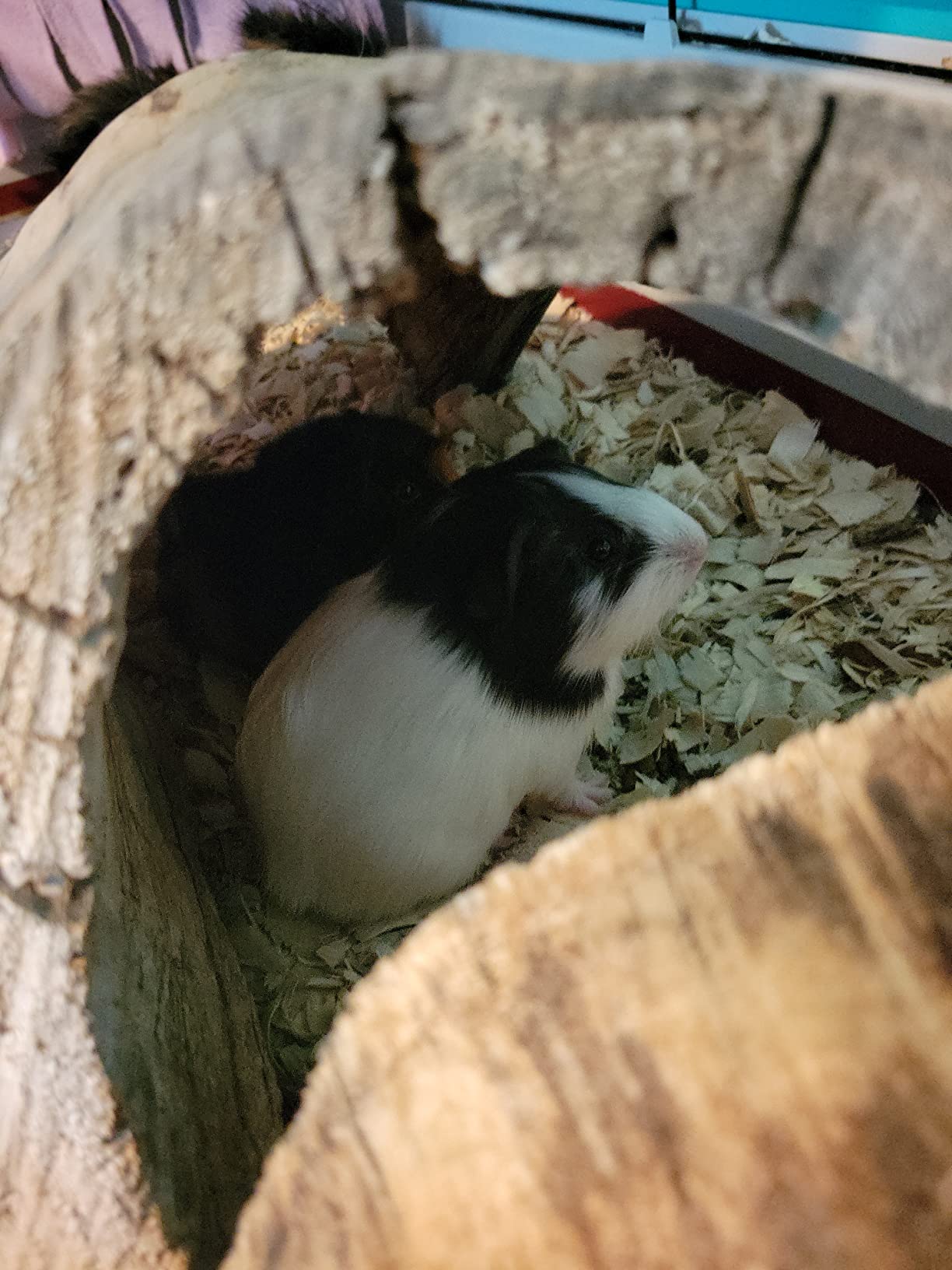
The separate detachable wire extension adds value in a specific way: you can split it off as a private nesting and sleeping area, which is what a rabbit who is being introduced to a bonded partner actually needs. Same footprint, two functions.
What to check before you buy it
Measure the wall and the route to it. At 63.8 inches long, this is a one-wall proposition, and the doorways in your home have to accommodate it. If you are assembling it in a living room, check that you can get it through the door before you start rather than after.
Plan for two people. At 26.43 pounds with a long base, moving it alone is awkward and owners consistently flag it. If your rabbit is not yet bonded with another rabbit, the dual water setup is still useful as a redundancy measure.
Where it falls short
It is the heaviest and least portable conventional habitat in this list. There are no casters, and a 63.8 inch rigid base is not something you slide across a floor, which is a genuine drawback if you want to move the enclosure for cleaning or to protect a carpet.
Its 23.62 inch width is narrower than the Amazon Basics habitat despite the greater length. If your priority is turning around and stretching wide rather than running long, the wider option suits a rabbit better.
7. DINMO 28-Panel Bunny Playpen – Best for Aggressive Chewers
DINMO 28 Panels Bunny Playpen, Iron Net Bottom, 61.4″ L x 25.4″ W x 22.3″ H
28 panels measuring 61.4 x 25.4 x 22.3 inches
Weighs 10.32 pounds
Iron net bottom with 0.7 inch spacing
Includes a rubber hammer,cable ties and a non-slip mat
Pros
- Metal and plastic panel construction resists chewing better than all-fabric playpens
- Iron net bottom is firm
- stable
- ventilated and helps reduce dampness and odor
- Transparent panels let you watch the pet from any angle
- Panels can be arranged into many shapes and multiple sets stack to expand the area
- Includes a rubber hammer
- cable ties and a non-slip mat that protects the floor
Cons
- Panels must be clipped together and aligned carefully
- which takes some assembly time
- The 0.7 inch bottom spacing is tighter than most fabric pens so panels are not interchangeable with them
- Not a complete housing solution without bedding
- a litter tray or hide areas
Fabric playpens lose to rabbits. That is the reason this panel pen exists, and if your rabbit chews through everything, it is the only enclosure here built to survive that behaviour. Metal and plastic panels hold their shape where a fabric seam gives way in a weekend, and a rabbit that has already destroyed a soft pen will not destroy this one.
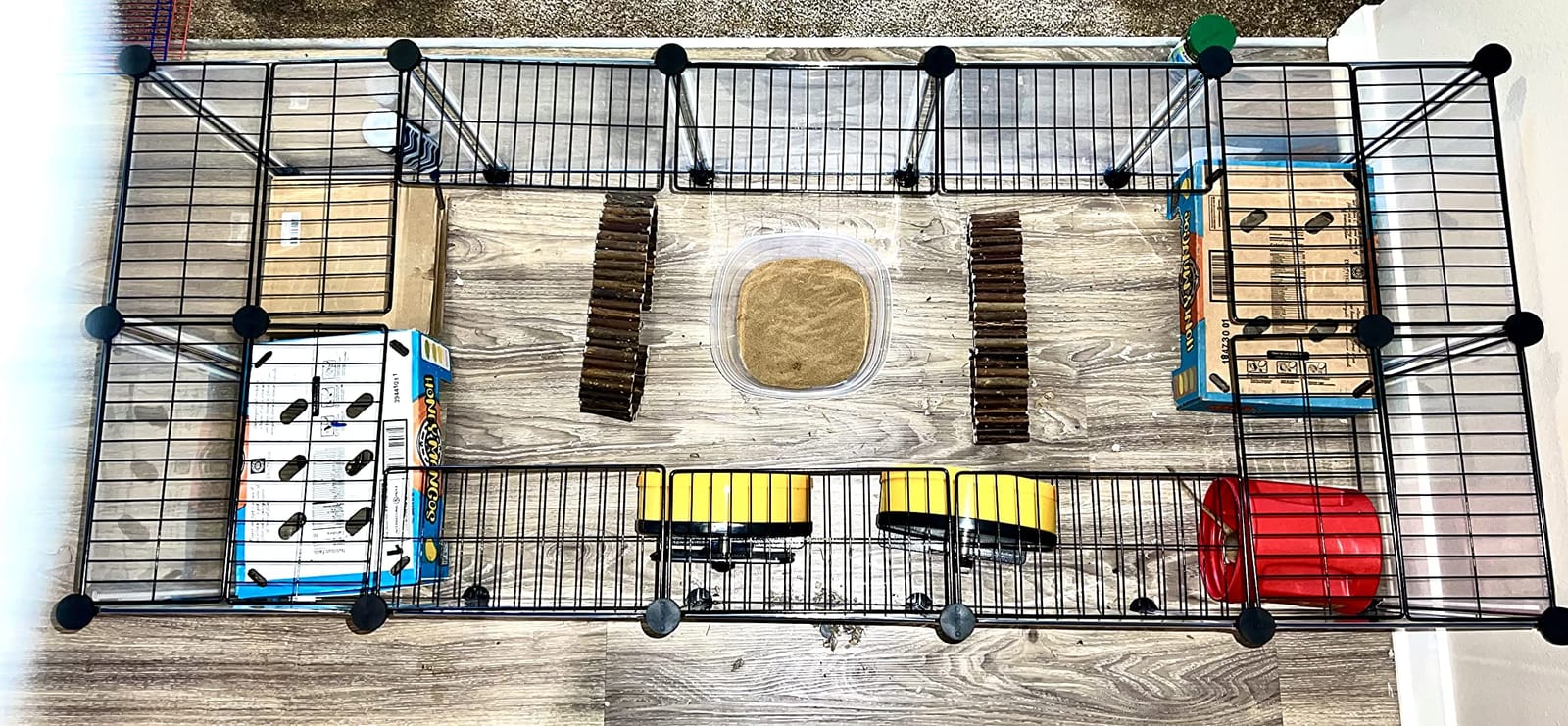
At 61.4 by 25.4 inches across 28 panels, the footprint is generous, and the panels rearrange into rectangles, L-shapes and runs rather than locking you into one footprint. Multiple sets stack, so this scales in a way that fabric pens do not.
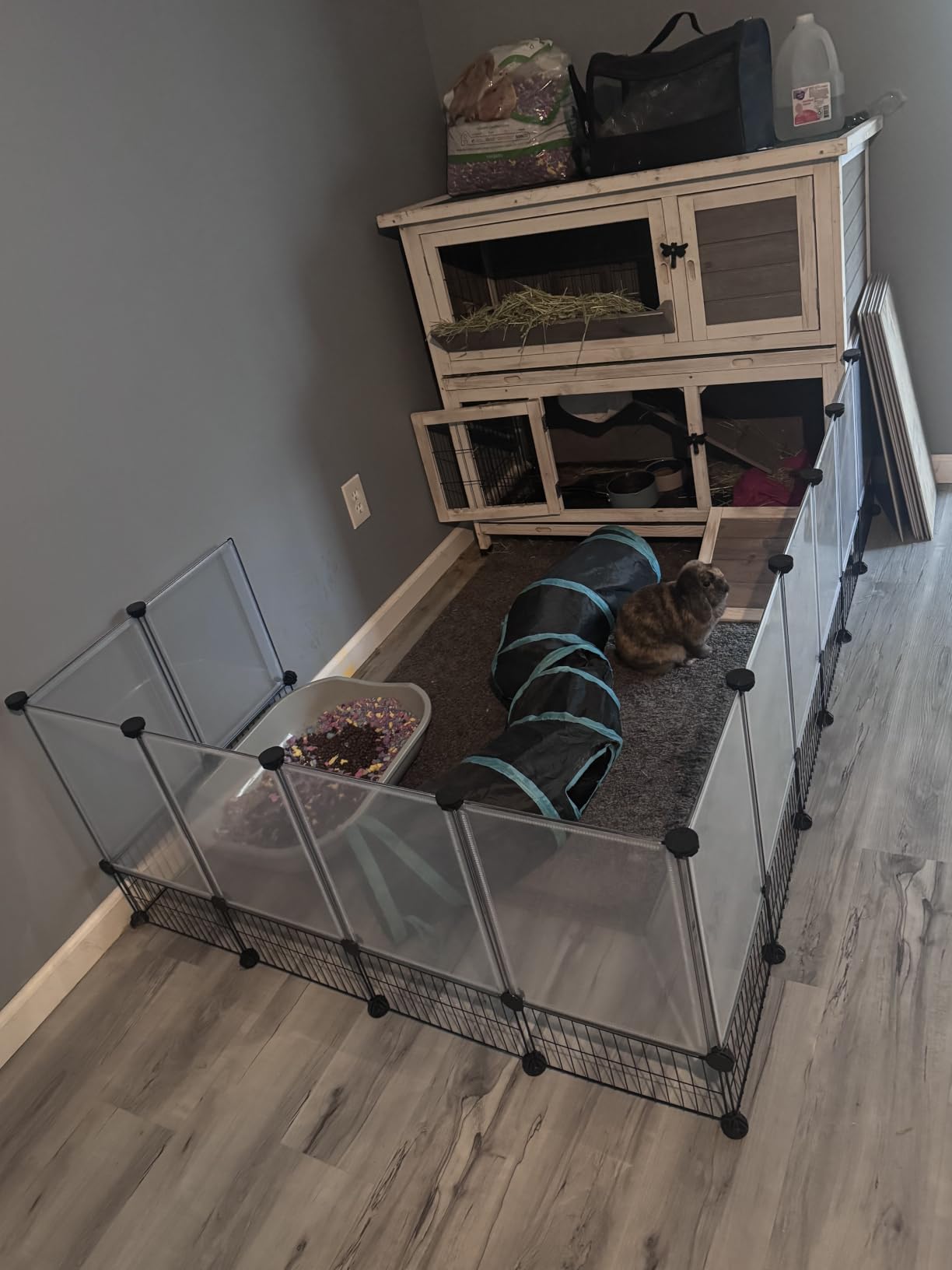
The transparent PP outer panels are a genuinely useful design decision. Rabbits like corners and privacy, and transparent walls mean you can check on a hiding animal from any position in the room without having to get on the floor and look in. That matters most with a newly adopted rabbit still learning that people are not a threat.
Included accessories are better than most at this tier: a rubber hammer for assembly, cable ties for reinforcing the joins and a non-slip mat that protects your floor. Most owners would otherwise be buying all three separately.
What to check before you buy it
Allow time for assembly. The panels must be clipped together and aligned, and unlike a pop-up fabric pen this is not a one-motion setup. Set out the shape you want on the floor first, then connect the panels working around the perimeter rather than joining them one at a time in sequence.
Note the 0.7 inch bottom spacing before you plan an expansion. It is tighter than most fabric pen panels, which means these panels do not clip into a fabric pen you already own. If you were hoping to combine them, check the connector style first.
Where it falls short
The iron net bottom is a genuine welfare drawback, not a feature. It is firm and ventilated and it does not flex, which is better for a short-term exercise area than a fabric base, but a rabbit standing on any metal grid long term risks sore hocks. Cover it with fleece, a rubber mat or deep bedding, and treat it as an exercise space rather than a sleeping surface.
It is also not a housing solution on its own. There is no roof, no litter tray and no den. It needs bedding, a litter box and somewhere to hide before you move a rabbit in, and it is best paired with one of the hutches further down this list.
8. GUTINNEEN Wooden Hutch With Casters – Best Wheeled Hutch With Three Trays
Bunny Cage Indoor and Outdoor Rabbit Hutch with Casters Waterproof Roof, Pull Out Tray from Back and Front 61.2″ L x 22.6″ W x 33.5″ H
Measures 61.2 x 22.6 x 33.5 inches and weighs 49.5 pounds
Three deep removable trays pull out from the back or front
Six casters for one-person movement
Waterproof asphalt shingle roof rated for indoor use
Pros
- Large 61.2 inch length gives the rabbit real room to hop and stretch unlike a typical small wire cage
- Three deep removable trays pull out from the back or front so cleaning and litter changes are quick
- Six casters let one person move the whole hutch between rooms
- Large open run roof
- hinged roof openings and multiple doors make the pet easy to reach from any side
- Sturdy wood construction with a heavy waterproof roof that resists chewing better than mesh
Cons
- Wood panels are chewed over time so chew toys and hiding places help protect the frame
- Assembly takes around an hour and a half and is best done with two people
- Light-coloured wood can arrive with blemishes
- chipped edges or uneven paint
- Not built for harsh weather and best suited to indoor use or a sheltered spot
The three pull-out trays are the story here. A 61.2 inch wooden hutch with a fixed floor would be a chore to clean, but with three deep trays that slide out from either the back or the front, cleaning is a two-minute job. Owners repeatedly single this out as the reason cleaning time dropped after switching from a conventional cage, and that is a welfare benefit as much as a convenience one, because clean trays mean fewer parasites and less ammonia.
Six casters on a unit weighing 49.5 pounds is an impressive engineering choice and it delivers. You can roll the whole hutch to a different wall or into a different room by yourself, which no other heavy wooden hutch in this roundup offers. Wheels on an indoor enclosure also let you shift it easily for floor cleaning underneath.
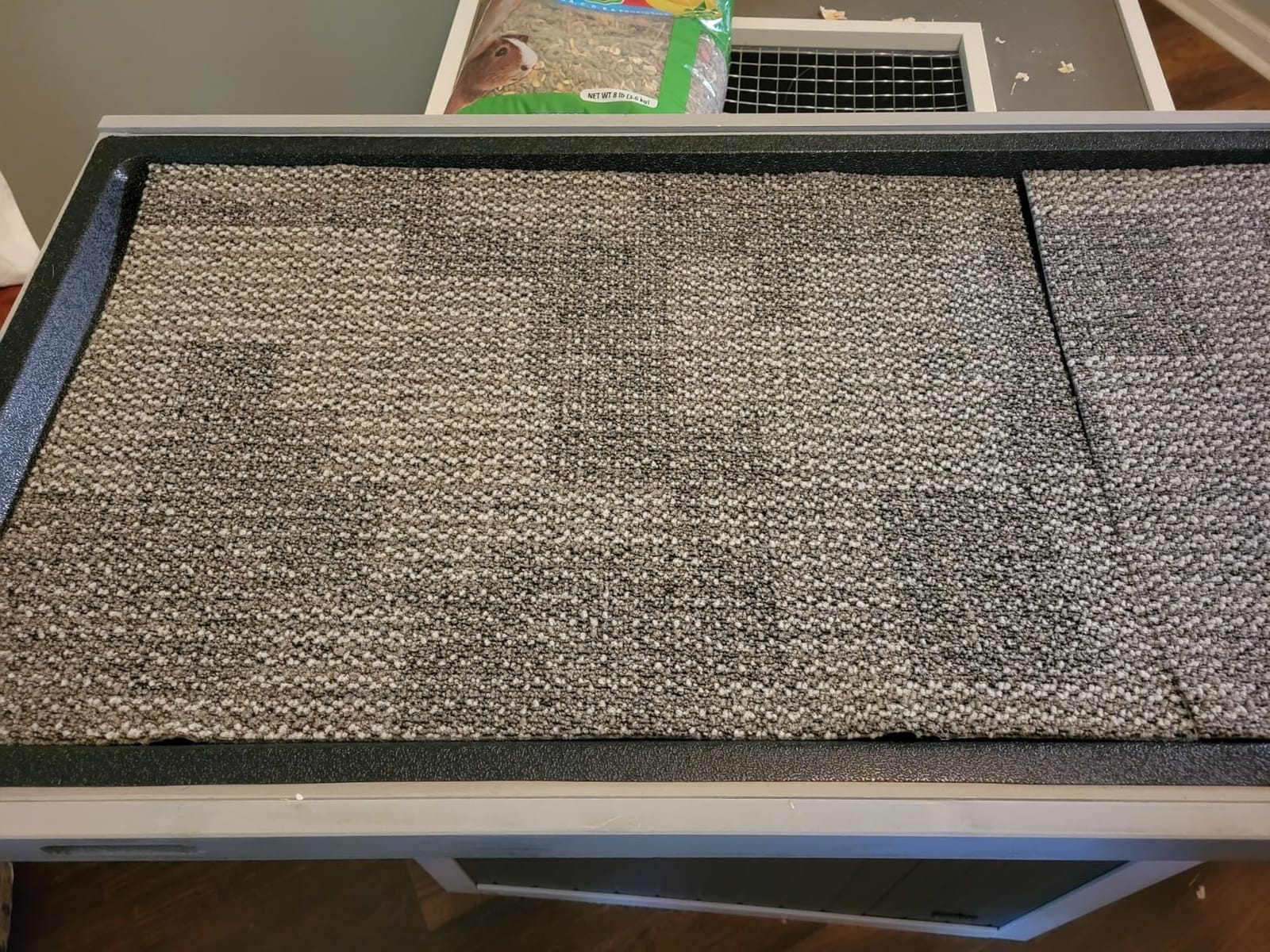
For decor, a wooden hutch in natural tones looks like furniture in a way no wire habitat can. If your rabbit lives in a living room and you are trying not to bolt a bright plastic box into the middle of it, this solves that problem.
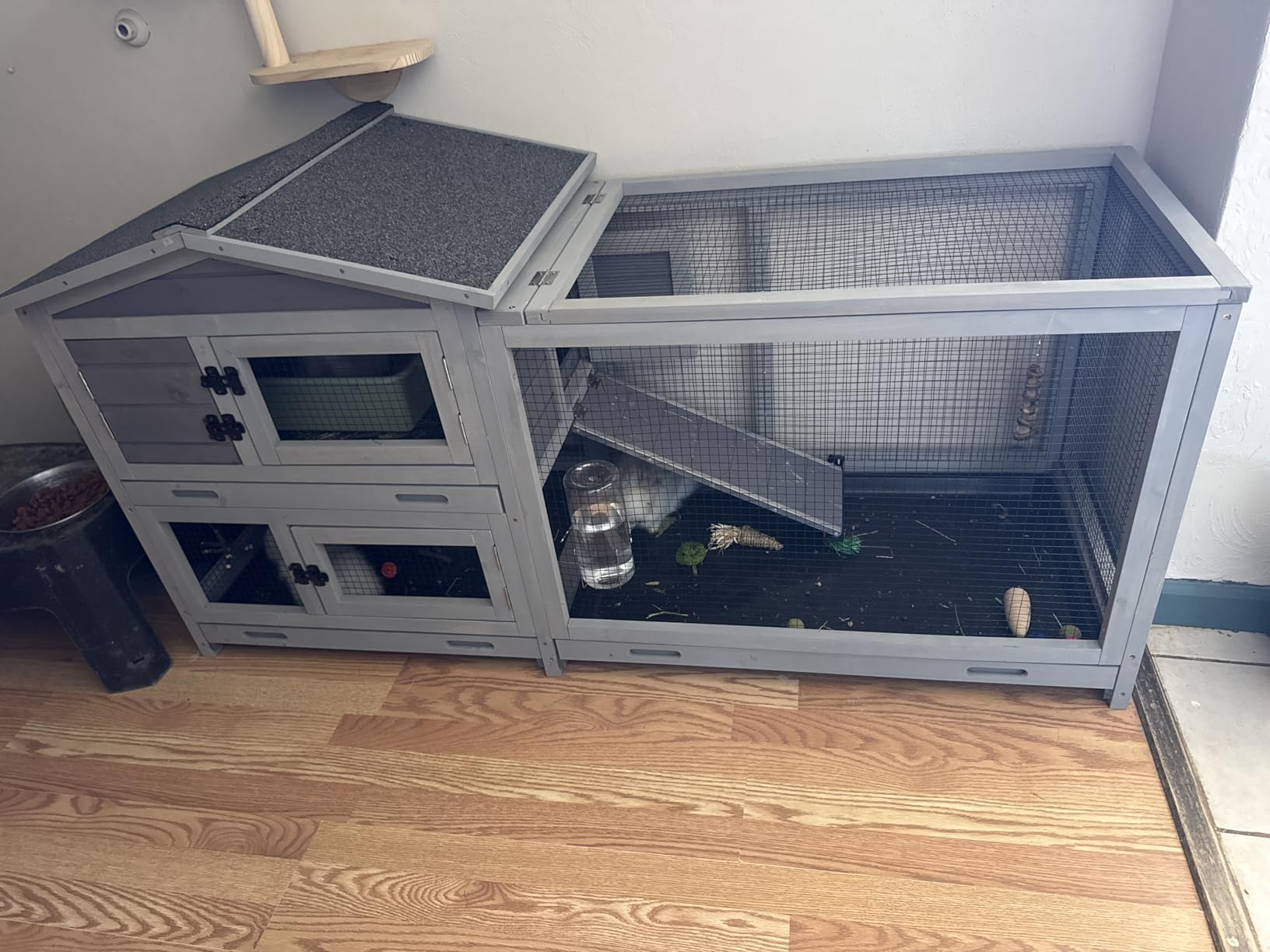
Access is thorough. A large open run roof, hinged roof openings and big front doors mean you can reach every part of the interior for feeding, handling and cleaning, which matters when a rabbit is hiding at the back and you need to catch it for a vet appointment.
What to check before you buy it
Budget the assembly time honestly: around an hour and a half, and realistically a two-person job. The panels are large and awkward to hold alone. Assemble it where it will live, because at 49.5 pounds and 61.2 inches long you do not want to be carrying it through a doorway afterwards.
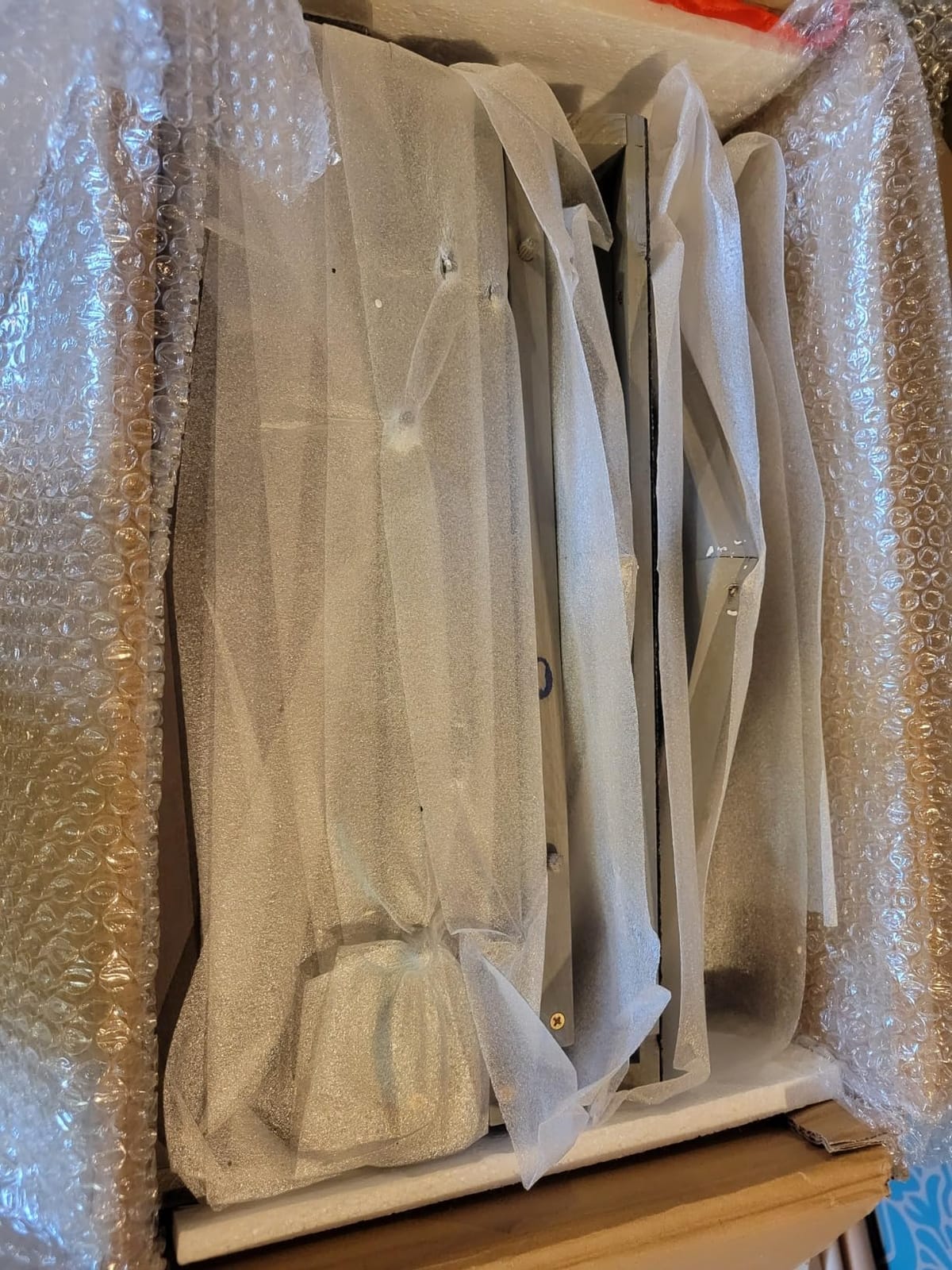
Inspect on arrival. Reviews mention blemishes, chipped edges and uneven paint on light-coloured wood, and units with a strong chemical smell out of the packaging. A pen, a cardboard box and a couple of hours of air will take care of the odour before your rabbit goes near it.
Where it falls short
It is an indoor or sheltered hutch, not an outdoor one, despite the waterproof roof. There is little protection from wind and rain, and the plastic tray under the run can collect standing water. If you want year-round outdoor housing, this is the wrong category of product entirely.
Wood gets chewed. That is what wood is, and no amount of reinforcement changes it. Plan for replacement trim and keep chew toys stocked, particularly around the door frames where teeth concentrate.
9. Aivituvin Indoor Hutch With Wire Floor – Best for Shallow Rooms
Aivituvin Rabbit Hutch Indoor Bunny Cage Outdoor Bunny House with Wire Floor Leakproof Plastic Tray, Brown
Shallow profile at 39.76 x 21.33 x 7.55 inches, weighing 37.55 pounds
Removable wire floor over a leak-resistant pull-out tray
Four casters including two locking brakes
Expandable with the Aivituvin AIR71 playpen
Pros
- Deep pull-out plastic tray resists urine leakage and rust so floors stay dry
- Removable wire floor keeps the rabbit off soiled bedding and lifts out for quick cleaning
- Four casters including two locking brakes make the hutch easy to reposition and keep stationary
- Two open roofs
- side windows and two front doors give access from every direction
- Shallow profile suits tight indoor rooms and looks more like furniture than a utilitarian cage
- Real wood panels rather than particle board with no sharp wire edges
Cons
- Soft
- thin wood splits during assembly especially where screws go near edges or into undrilled holes
- Assembly diagrams contain errors and parts are not always clearly labelled
- Wood is not sealed for outdoor use so rain and urine discolour and degrade it
- Chewing rabbits damage the frame
- door latches and removable wood panels over time
The shallow profile is the whole reason to consider this one. At just over 7.5 inches deep, it is a low, wide hutch that sits against a wall without blocking a window or a walkway, and in a narrow room or a hallway-adjacent space that dimensional discipline is worth more than another tier of height. The 33.5 inch tall sibling dimension gives a covered den with two usable zones stacked vertically.
Four casters, two of them locking brakes, is a thoughtful detail. Most wheeled hutches give you mobility with no way to keep the unit stationary, and a rolling hutch on carpet that drifts a few inches every time a rabbit leans on it is genuinely irritating. The locking brakes solve that.
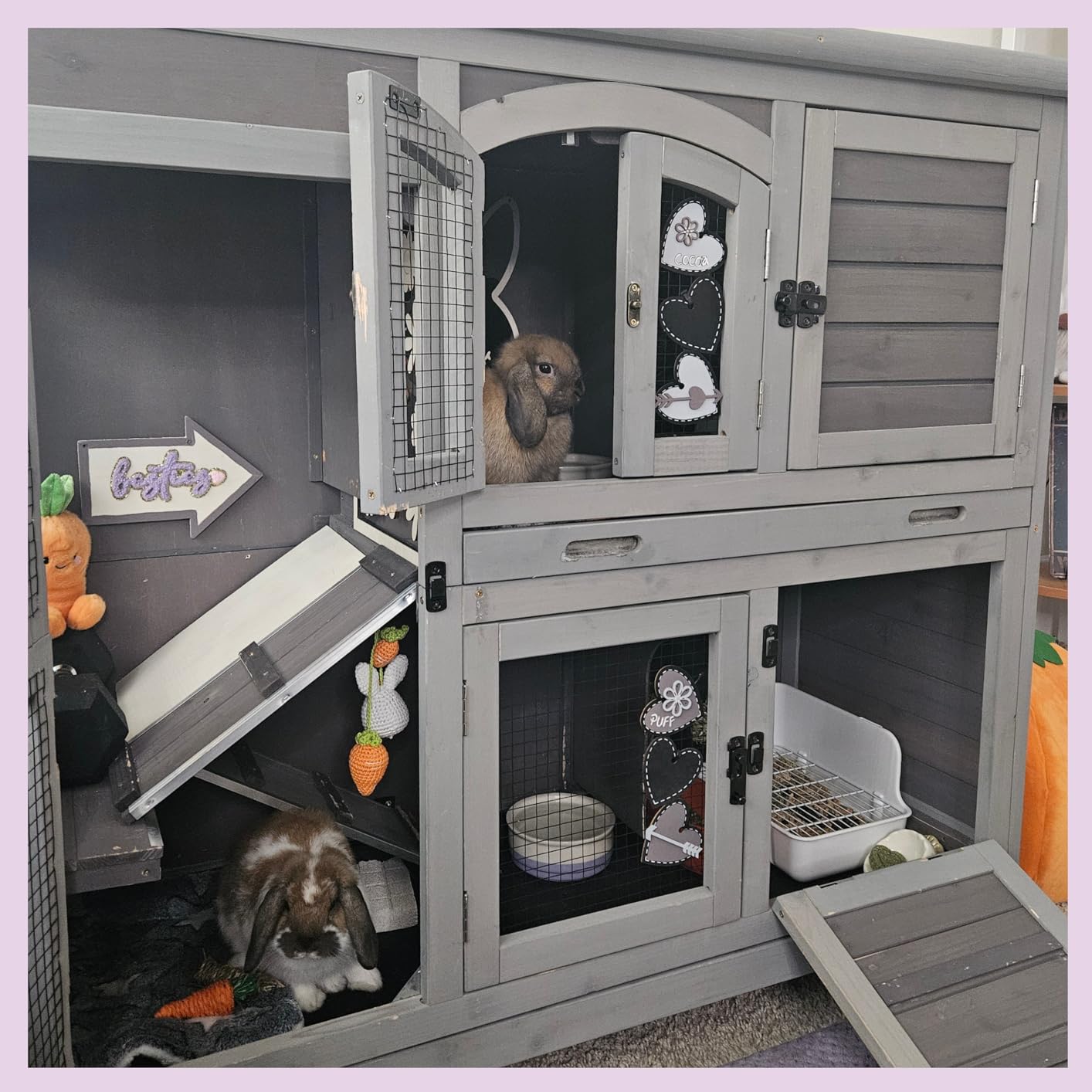
The leak-resistant deep pull-out tray is well regarded, and the removable wire floor above it lifts out entirely for cleaning. Buyers like the overall look too, and reviewers note real wood panels rather than particle board, along with clean paint and no sharp wire edges, which matters for a rabbit that noses into every corner.
Feedback on this one is genuinely split, and the split is worth understanding. Many owners describe a good-looking, easy-to-clean indoor hutch. The critical reviews concentrate almost entirely on manufacturing and assembly quality rather than on the design.
What to check before you buy it
Expect to spend extra time on assembly. The soft, thin wood splits, particularly where screws are driven near panel edges or into holes that were not predrilled. Assemble on a carpeted floor so a splitting screw does not end up in a bare foot, and have a spare set of screws within reach.
If you plan any outdoor use at all, seal the wood first. It is not sealed for outdoor exposure, and both rain and repeated urine contact will discolour and degrade it. Indoors with a washable mat, the material holds up far better.
Where it falls short
The removable wire floor is our main reservation, and we will not pretend otherwise. A metal grid over a tray keeps the rabbit out of soiled bedding, but it is a wire surface, and long-term standing on wire is associated with sore hocks. Cover it with a solid mat or fleece liner and the problem goes away, but as supplied it needs that extra step.
Build quality is the other honest limitation. Several buyers report bowed or warped panels and gaps in the back that defeat the leak-proof claim, so inspect the whole unit on arrival and keep the packaging until you have confirmed everything is square and sealed.
10. GUTINNEEN 2-Story Rabbit Hutch – Best for Two-Story Setups
Gutinneen 2-Story Rabbit Hutch Bunny cage with Chew-Proof Ramp, Locking Leak-Proof Trays – Indoor/Outdoor 39.3″ Wooden Rabbit Cage with Wheels for Rabbits, Guinea Pigs, Small Animal (Black and White)
Two-story layout measuring 39.3 x 22 x 36.8 inches
Two deep removable locking leak-proof trays
Reinforced aluminum alloy framing over solid wood
Wheels and multi-entry sliding doors included
Pros
- Two-story layout gives distinct upstairs sleeping and downstairs play and feeding areas without extra dividers
- Multiple sliding doors plus a roof opening make cleaning and feeding straightforward
- Wheels let the hutch glide easily across floors and carpet for cleaning or repositioning
- Reinforced aluminum alloy framing and heavy wire reduce chewing damage compared with all-wood builds
- Good value for the size and feature set against similar two-story wooden hutches
Cons
- A drill is effectively required despite the no-extra-tools claim and many owners report needing an impact driver
- Soft wood splits around screw holes during assembly and the ramp to the lower level is steep for small rabbits
- Strong chemical or fresh-paint odour on arrival and some units arrive scuffed or with damaged pieces
- Screens or mesh can tear away from the frame over time
- Trays are shallower than advertised and without a litter box droppings collect in the tray tracks
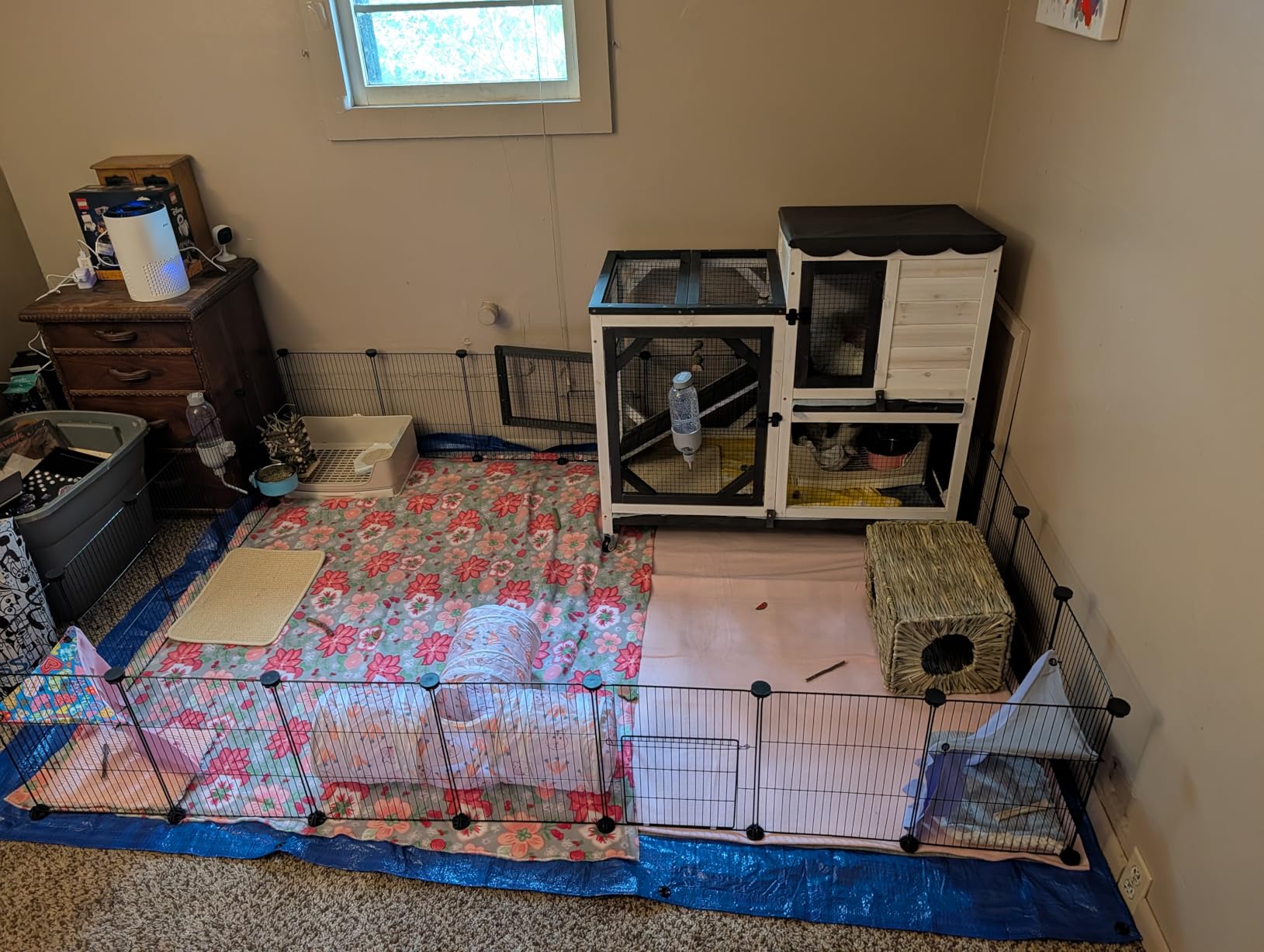
Two stories is the feature that makes this distinct, and it is genuinely useful for separating functions. An upstairs sleeping area and a downstairs play and feeding area means a rabbit can choose its own temperature and company, and for a bonded pair that is not fully bonded, it gives you a way to separate without using a completely different room.
But the honest answer to the question of whether two-story hutches are worth it is that extra levels do not increase continuous floor space, and continuous floor space is what the 3-3-3 rule measures. This footprint is 39.3 by 22 inches, which is smaller than several single-story habitats in this roundup. Judge it on the floor area of one level, and treat the second level as a bonus.
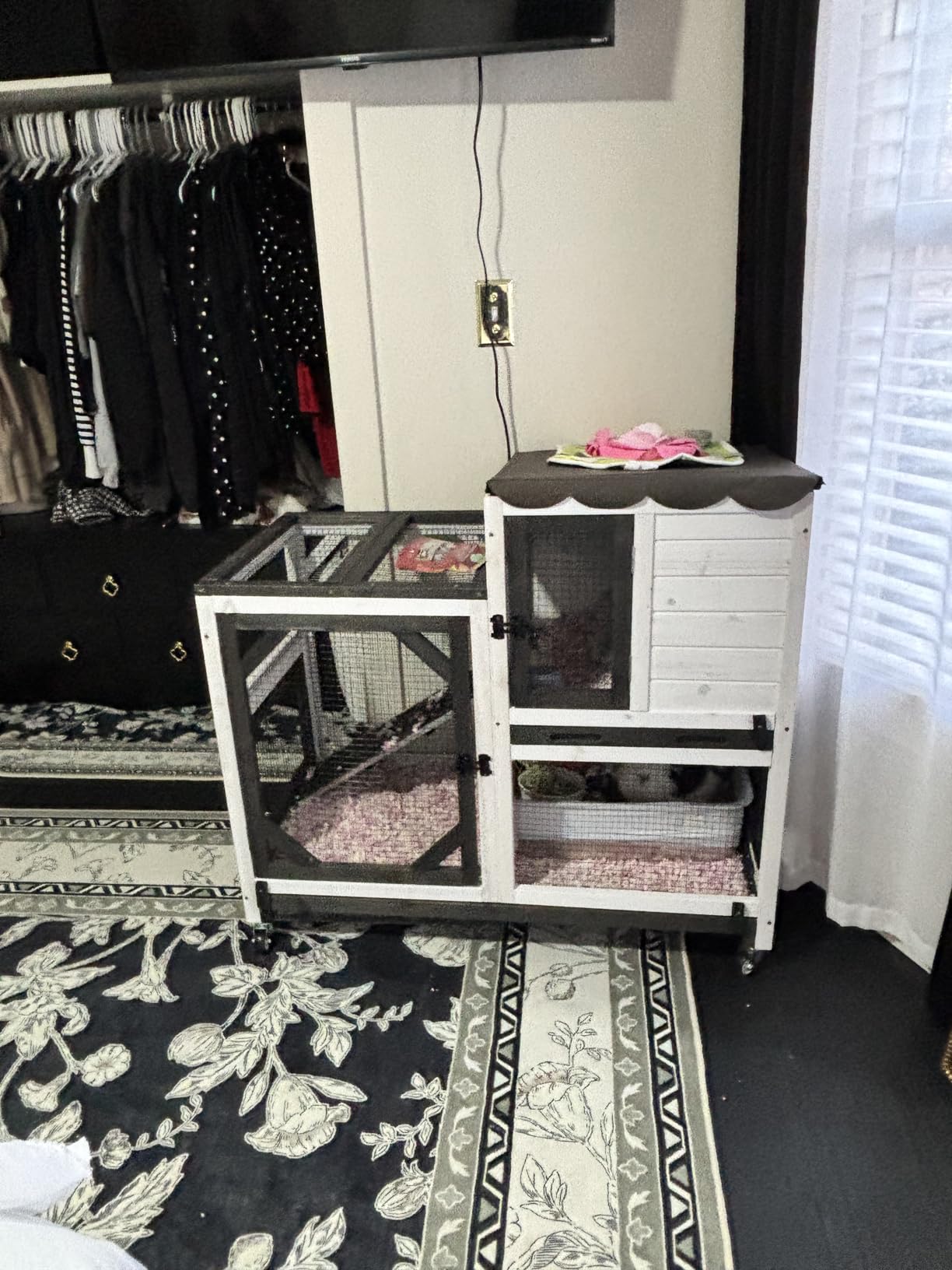
The reinforced aluminum alloy framing is a real improvement over all-wood builds, and the heavy wire resists chewing damage noticeably better. Combined with the wheels, this is an enclosure you can reposition across carpet and hard flooring for cleaning without dragging a heavy frame.
The two deep removable locking trays that clean without disassembly are the feature owners praise most. A tray you slide out, empty and slide back beats reassembling a fixed floor every single day, and the locking action stops the shifting you get with loose trays.
What to check before you buy it
Have a drill ready. Despite the pre-drilled holes and included hardware claim, owners consistently report needing a drill or even an impact driver, and the soft wood splits around screw holes if you force it. If you do not own a drill, budget for one or choose a different hutch.
Air the unit out thoroughly before use. A strong chemical or fresh-paint odour on arrival is a recurring report, and rabbits have sensitive respiratory systems. Leave it in a ventilated room for a few days with the doors open.
Where it falls short
The ramp to the lower level is steep, and that is a real problem for a small, young or senior rabbit. We have listed several steep ramps in this roundup, and the pattern is consistent: check the ramp angle against your individual rabbit before committing.
There is a safety note worth repeating. Owners report screens and mesh tearing away from the frame within months, which matters most for a small rabbit who could squeeze through a gap. Inspect the screening periodically and repair or replace it rather than assuming it is still sound.
How to Choose an Indoor Rabbit Cage Without Guessing
Choosing among these ten comes down to four questions, and you can answer them in about ten minutes. Start with floor space, because it is the only criterion that cannot be negotiated later.
How much continuous floor space do I have? Measure the area you are willing to give up, then subtract roughly 20 percent for a litter box, hay feeders and water. The 3 square feet figure is a floor on one unbroken level, and ramps, balconies, shelves and upper stories do not count toward it.
Cage, pen or free roam? Free roam across a rabbit-proofed home is the welfare gold standard, and we will not pretend otherwise. A traditional cage earns its place as a sleeping den, a litter-training zone and a safe spot when you cannot supervise. An x-pen or playpen is the format rabbit communities recommend most and gives you floor space at a fraction of the cost of a habitat. A large dog crate with a plastic base is a known community adaptation that works, and it is worth considering if you already own one.
Solid floor or not? This is the most important welfare line in the whole roundup. Wire mesh floors and iron net bottoms are not acceptable as a primary living surface. They cause sore hocks, they are uncomfortable for a rabbit that spends hours sitting, and no amount of cage size fixes it. Solid plastic, solid wood or a properly covered floor with a mat or fleece liner are the answer. Where a product in this list ships a wire floor, we have said so in the review.
How many rabbits? One rabbit is fine in a single habitat. A bonded pair needs roughly double the floor space plus two litter boxes, and a setup you can divide if a relationship breaks down. The two pens in this roundup, the Aivituvin extension and the DINMO panel pen, are the pieces people add when a second rabbit arrives.
Cleaning is the factor that decides whether a setup actually works day to day. Count the steps: how many things must be moved, removed and wiped to get a clean surface. A tray that lifts out and drops into a bin is a two-minute job. A habitat with a fixed plastic floor and a deep bedding layer is a twenty-minute job you will do daily, and daily twenty-minute jobs are how people end up cleaning a cage every other day.
One more calculation people skip: total running cost. Beyond the enclosure you are buying fleece liners or washable pads, wood shavings or paper bedding, hay, a litter box, replacement water bottles and, for wooden hutches, replacement trim as the frame gets chewed. A solid-floor habitat needs a liner and a litter box; a wire or mesh pen needs a liner as well. If a product does not leave room for a litter box inside, you will be managing the problem differently.
If you are still working out how to monitor your rabbit while you are out for long stretches, our guide to indoor pet cameras covers the setup that pairs with a base camp enclosure.
Indoor Safety Checklist for Any Rabbit Enclosure
Most indoor rabbit injuries come from the room, not the cage. A checklist is more useful than a product, so here is what we check before signing off on any setup.
Wire floors and metal grids – cover every one of them with a solid mat, fleece liner or deep bedding. This is the single most important item on the list.
Electrical cords – rabbits chew, and a chewed cord is a fire and electrocution risk. Cord covers along baseboards are cheap and effective.
Baseboards and door gaps – a rabbit will work at a gap for weeks. Block lower gaps and cover exposed baseboards with a rabbit-proofing strip.
Toxic plants – lilies, philodendrons and dieffenbachia are all dangerous if a free-roaming rabbit reaches them. Check what is in the room before you let them out.
Door latches – a rabbit can open a simple latch. Use a clip or a carabiner on every door that leads out of the enclosure.
Escape height – rabbits jump higher than owners expect, and a 15 inch pen wall is a boundary to a determined animal. Supervise, do not rely.
Cats in the home – if you have a cat, the enclosure has to be a place your rabbit can disappear into and the door has to close properly. A pen without a covered den is not cat-proof.
Sudden noise – construct a covered area, because a rabbit needs a spot where nothing can reach it. Free roam is a choice to make from a secure base camp, not from an open pen.
For cleaning, most owners do a full change of bedding every few days and spot clean daily. Fleece liners and washable pads make that routine much faster than loose bedding, and they are the single best upgrade for a solid-floor habitat. Keep a spare water bottle on hand, because bottles fail and finding a replacement at short notice is the kind of small emergency nobody plans for.
While you are working through the setup, our picks for indoor bike trainers and batting cages cover other corners of small-space living, in case the room is shared.
Frequently Asked Questions
What is the 3-3-3 rule for rabbits?
The 3-3-3 rule is a welfare guideline for house rabbits: about 3 hours of daily exercise, 3 square feet of continuous floor space available at any one time, and 3 hours a day of rabbit-centric interaction with their owner. It is a starting point rather than a ceiling, and it is the minimum most rabbit communities use to judge whether a housing setup is adequate.
What is the best way to keep a rabbit indoors?
Free roam in a fully rabbit-proofed home is the welfare gold standard. In practice that means a secure base camp enclosure for sleep, litter training and eating, combined with several hours of supervised exercise outside it each day. A traditional cage works as the base camp; an x-pen or playpen gives more floor space for the money; a large dog crate with a plastic base is a workable community-suggested alternative.
What is the best material to use for the floor of a rabbit cage?
A solid, non-slip, non-wire surface is best. Solid plastic bases and solid wood floors avoid the sore hocks associated with long-term standing on metal. Add a washable mat or a fleece liner on top for grip and comfort. Wire mesh and iron net floors should always be covered and are best limited to short supervised exercise areas rather than primary living surfaces.
Do rabbits like multi-level cages?
Rabbits do use and often enjoy a second level, and it can be useful for separating a bonded pair into a sleeping area and a play area. The important caveat is that extra levels do not increase continuous floor space, which is what the 3-3-3 rule measures. Check the ramp angle too, because a steep ramp is a problem for young, small or senior rabbits.
How big should an indoor rabbit cage be?
The House Rabbit Society recommends at least 60 cm wide by 65 cm deep by 35 cm high, with 45 cm wide by 60 cm long workable in constrained situations. That is roughly 24 by 26 inches at the floor as a minimum. Wider and deeper is better, and any platform, ramp or second story should not be counted as floor space.
Is a wire cage bad for rabbits?
Wire mesh floors are bad for rabbits when used as the primary living surface, because long-term standing on metal is associated with sore hocks and discomfort. Wire walls and a plastic base are a different matter and remain common in well-made habitats. If a product ships with a metal grid floor, cover it with a solid mat, fleece liner or deep bedding.
What size enclosure do two bonded rabbits need?
Roughly double the floor space of a single rabbit’s setup, plus a second litter box. Bonded pairs should not be made to share one litter tray, since resource guarding over a shared toilet is a common trigger for fighting. Ideally build in a way that lets you divide the space with a pen, so you can separate the pair temporarily without using a separate room.
Can rabbits live in a cage full time?
A fully enclosed cage is generally not appropriate as a rabbit’s only living space. The community standard is a secure base camp for sleeping, eating and litter training combined with substantial daily exercise time in a rabbit-proofed space. A large cage or pen works well as that base camp, but it should not replace the free-roam or supervised exercise time.
How do I stop my rabbit escaping the enclosure indoors?
Use a clip or carabiner on every door latch, because rabbits can open simple latches. Block gaps below doors and cover exposed baseboards. Keep a covered den inside the enclosure so the rabbit has somewhere to retreat, and supervise rather than relying on pen height alone, since rabbits jump higher than most owners expect. Inspect door frames regularly for chewing, especially on wooden hutches.
How often do I need to clean an indoor rabbit cage?
Spot clean daily and do a full bedding change every few days. An enclosure with a pull-out tray, such as the wheeled wooden hutches, cuts cleaning down to a couple of minutes because you can slide the tray out and empty it. A solid-floor habitat with loose bedding takes considerably longer, so washable fleece liners and pads are the upgrade that makes the difference.
Conclusion
The best rabbit cages for indoor use are not the ones with the longest feature list. They are the ones that give your rabbit enough continuous floor space, a solid surface to stand on, a covered place to hide, and a cleaning routine you will actually keep up with. The Living World Deluxe Hybrid earns our top spot because it combines a durable hybrid build, a base that lifts off completely for cleaning and the highest owner satisfaction of anything in the set, but the right choice for you depends on your floor space and how many rabbits you are housing.
If your space is genuinely tight, the MidWest Wabbitat Deluxe with its deep solid base and extension path is the most realistic starting point, and the Aivituvin extension pen is the cheapest large jump in floor space you can make later. If you have a home with cats, build the covered den first and treat everything else as secondary. And whichever you choose in 2026, measure the interior floor after removing platforms and ramps, because that is the number the 3-3-3 rule actually cares about.