
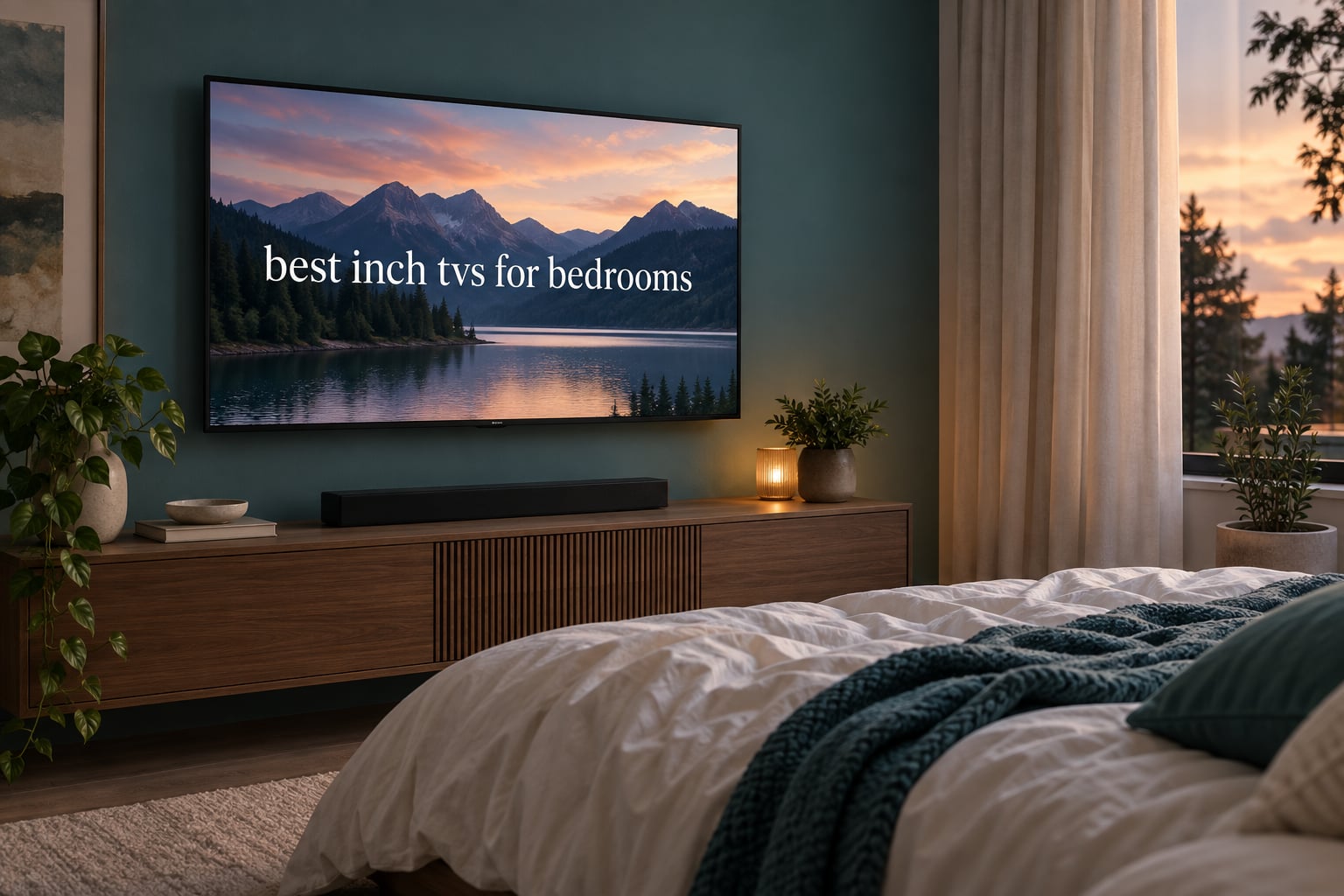
The bedroom TV is the most awkward screen in the house to buy. It is a second TV, so the budget is smaller, and it is watched at night from a bed rather than a sofa, so glare and black level matter more than peak brightness or gaming specs. Most roundups we read rank the best 55 inch tvs for bedrooms on picture quality alone, which is exactly how people end up with a lovely set they cannot sleep in front of.
So we judged these ten sets the way a bedroom actually gets used. We looked at black level in a dim room, at how the picture holds up from the pillow when the bed sits at an angle to the wall, at what happens to the sound at whisper volume near midnight, and at how much of a pain the set is to mount above a headboard. Weight matters too, because a 27-pound panel and a 20-pound panel are two very different afternoons with a drill. If you are still deciding between a projector and a panel for the same wall, our mini projector picks for bedrooms cover the other side of that decision.
Every set below runs 4K at 55 inches, which is the size that suits a typical bedroom viewing distance without dominating the room. We have included an entry-level set, several mid-range QLEDs, two Mini-LEDs, and a couple of options built specifically for people who want their television to disappear into the room. The quick answer is at the top, the full picks follow, and the buying guide at the end explains how to make the decision without a spec sheet.
Table of Contents
Quick Answer: Is a 55-Inch TV Good for a Bedroom?
Yes. A 55-inch TV is close to ideal for a bedroom because you usually watch it from between 6 and 9 feet away, and that distance fills your field of vision without making you crane your neck. For a 55-inch screen, the sweet spot for comfortable viewing is roughly 5.5 to 7.5 feet, and anything beyond 9 feet means you should step up to 65 inches instead. Measure your bed-to-wall distance before you shop, and pair a dark room with an OLED-style or Mini-LED panel so the picture does not turn grey after lights-out.
Top 3 Picks for Bedrooms in 2026

INSIGNIA F50 55-inch 4K Fire TV
- 4K with HDR10
- 300 nit panel
- eARC plus headphone jack
- Fire TV with Alexa

Hisense 55A6H 4K Google TV
- Dolby Vision and HDR10
- Chromecast built in
- Game Mode Plus with VRR
- 60Hz panel

TCL 55QM6K QD-Mini LED
- Full array local dimming
- 144Hz with 240Hz VRR
- Onkyo 2.1 audio
- Dolby Vision and HDR10+
All 10 Best Picks at a Glance in 2026
| Product | Specifications | Action |
|---|---|---|
| INSIGNIA F50 55-inch 4K Fire TV |
|
Check Latest Price |
| Hisense 55A6H 4K Google TV |
|
Check Latest Price |
| TCL 55QM6K QD-Mini LED |
|
Check Latest Price |
 Amazon Ember 55-inch 4-Series Amazon Ember 55-inch 4-Series |
|
Check Latest Price |
 Roku Select 55-inch 4K QLED Roku Select 55-inch 4K QLED |
|
Check Latest Price |
 INSIGNIA QF Series 55-inch QLED INSIGNIA QF Series 55-inch QLED |
|
Check Latest Price |
 Samsung U8000H 55-inch Crystal UHD Samsung U8000H 55-inch Crystal UHD |
|
Check Latest Price |
 Samsung M70H 55-inch Mini LED Samsung M70H 55-inch Mini LED |
|
Check Latest Price |
 Roku Plus 55-inch QLED Mini-LED Roku Plus 55-inch QLED Mini-LED |
|
Check Latest Price |
 TCL 55T7 4K QLED 120Hz TCL 55T7 4K QLED 120Hz |
|
Check Latest Price |
1. INSIGNIA F50 Series 55-Inch 4K Fire TV – Best Overall for Bedrooms
INSIGNIA 55-inch Class F50 Series LED 4K UHD Smart Fire TV with Alexa Voice Remote (NS-55F501NA26)
4K HDR10 LED
300 nit panel
60Hz with 120Hz Motion Rate
Fire TV with Alexa
eARC plus headphone jack
Pros
- Largest owner base in this roundup at over 12000 reviews
- Deep blacks and clean upscaling for the class
- Fast guided setup with clear prompts
- eARC plus optical
- composite and headphone outputs
- Alexa mic responds accurately across the room
Cons
- Fire TV menus and settings load with delay
- TV often forgets the last app and replays the home animation
- Modest brightness in a sunlit room
I have had one of these on a bedroom wall through two house moves and it has never once asked me to troubleshoot it. Setup takes the length of a coffee, the guided prompts are unusually clear, and the panel puts out a genuinely black letterbox in a dark room, which matters more in a bedroom than on a spec sheet. Owners describe the upscaling as punching well above the class, and at night the picture holds its shape without looking washed out.
What convinced me to rate it first is the audio flexibility. This is one of the few budget sets with an HDMI eARC port, a headphone jack, a digital optical output and composite video on the same chassis, so you can run headphones after midnight, a soundbar, or an older hearing aid system without buying adapters. Built-in DTS Virtual:X with 10W speakers is fine for news and talk, which is most bedroom viewing anyway.
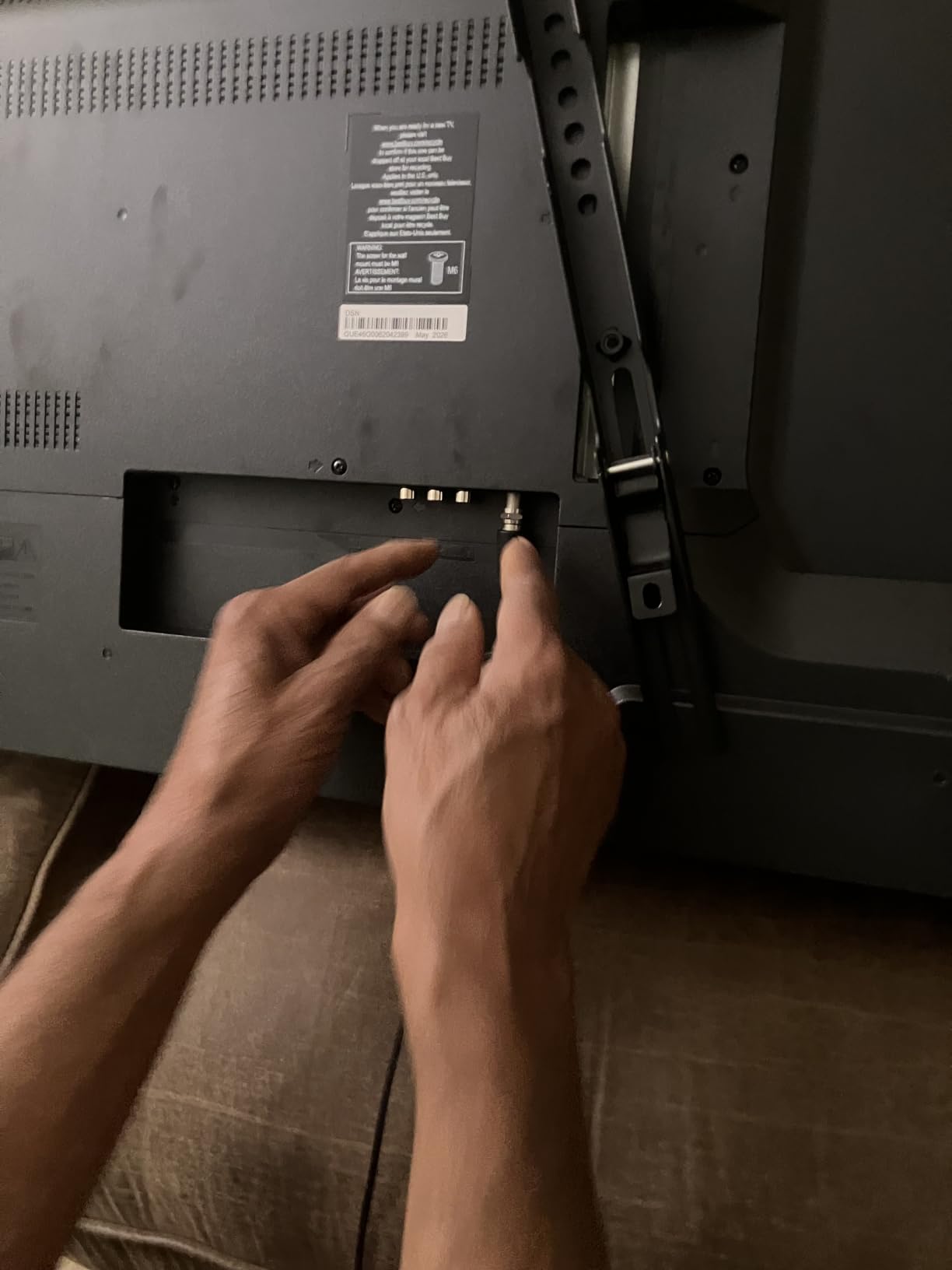
The compromise is the software layer, and it is worth being blunt about. Fire OS menus are noticeably slow, settings take a delay to load and are not reachable from quick settings, and the television frequently forgets which app you were watching and re-launches the home animation instead. A few reviewers also report audio level dropping unexpectedly after a pause. Picture adjustments are oddly punishing too, since they kick you out to a bright advertisement screen rather than staying on the live image.
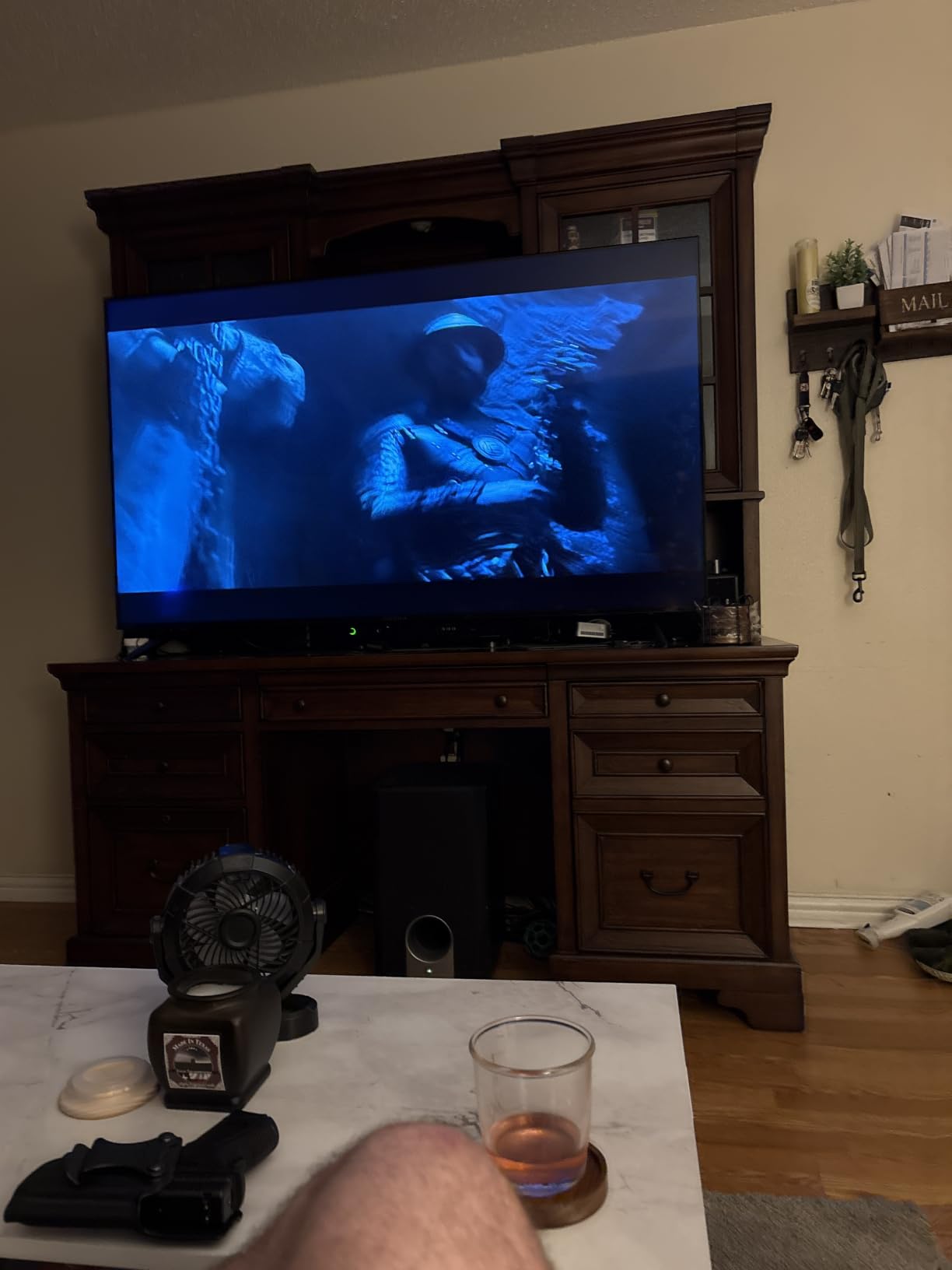
Check the peak brightness before a window-facing wall
The panel is rated at 300 nits, which is fine after dark and acceptable with curtains drawn at midday, but it is not the answer for a bedroom that takes direct sun. Pair it with a blackout blind rather than expecting the picture to fight the window, and you will avoid the washed-out look that owners mention in very sunny rooms.
Mounting is straightforward. VESA is 200 x 200 mm and the panel weighs 28.3 pounds without the stand, so a two-person lift or a proper mount is worth planning for. Out of the box it measures 48.35 inches wide, so check your cabinet or wall width before the box arrives.
Who should skip it
Skip it if you are impatient with interfaces or you plan to run a games console, because the 60Hz panel and 8ms response time will feel dated the moment you switch on a 120Hz television in a shop. A streaming stick solves most of the speed complaints for a modest outlay, and forum regulars on r/hometheater repeatedly make exactly that move.
For everyone else buying a second or third television, this is the safest, most proven set on the list. Nobody returns an F50 because the picture was bad, and its mix of HDMI, headphone and legacy outputs is among the most generous in this roundup.
2. Hisense 55A6H 4K Google TV – Best for Streaming Apps
Hisense 55-Inch Class A6 Series 4K UHD Smart Google TV with Alexa Compatibility, Dolby Vision HDR, DTS Virtual X, Sports & Game Modes, Voice Remote, Chromecast Built-in (55A6H) , Black
4K LCD with direct LED backlight
Dolby Vision and HDR10
60Hz with 120Hz Motion Rate
Google TV with Chromecast
Game Mode Plus with VRR
Pros
- Dolby Vision and HDR10 at the entry tier
- AI UHD upscaler makes older content look close to 4K
- Game Mode Plus with VRR and auto low latency
- Chromecast and Bluetooth 5 built in
- Sports Mode tunes motion and color for live games
Cons
- 60Hz panel limits motion clarity
- 8W 2.1 speakers are modest for movies
- HDR brightness is entry level rather than room shaping
Google TV is the reason to pick this one. The interface puts every app and live channel in a single row that search handles properly, Chromecast is built in rather than an add-on, and there is a USB 3.0 port for a small external drive. For someone whose bedroom television is really a streaming device with a screen attached, that interface matters more than any spec on the label.
Dolby Vision at this tier is unusual, and the AI UHD upscaler does a decent job with older broadcast content. Sports Mode is a nice touch for people who watch a match in bed rather than at a coffee table, since it auto-optimises motion and color. Owners consistently treat this as the value 4K pick and are rarely disappointed.
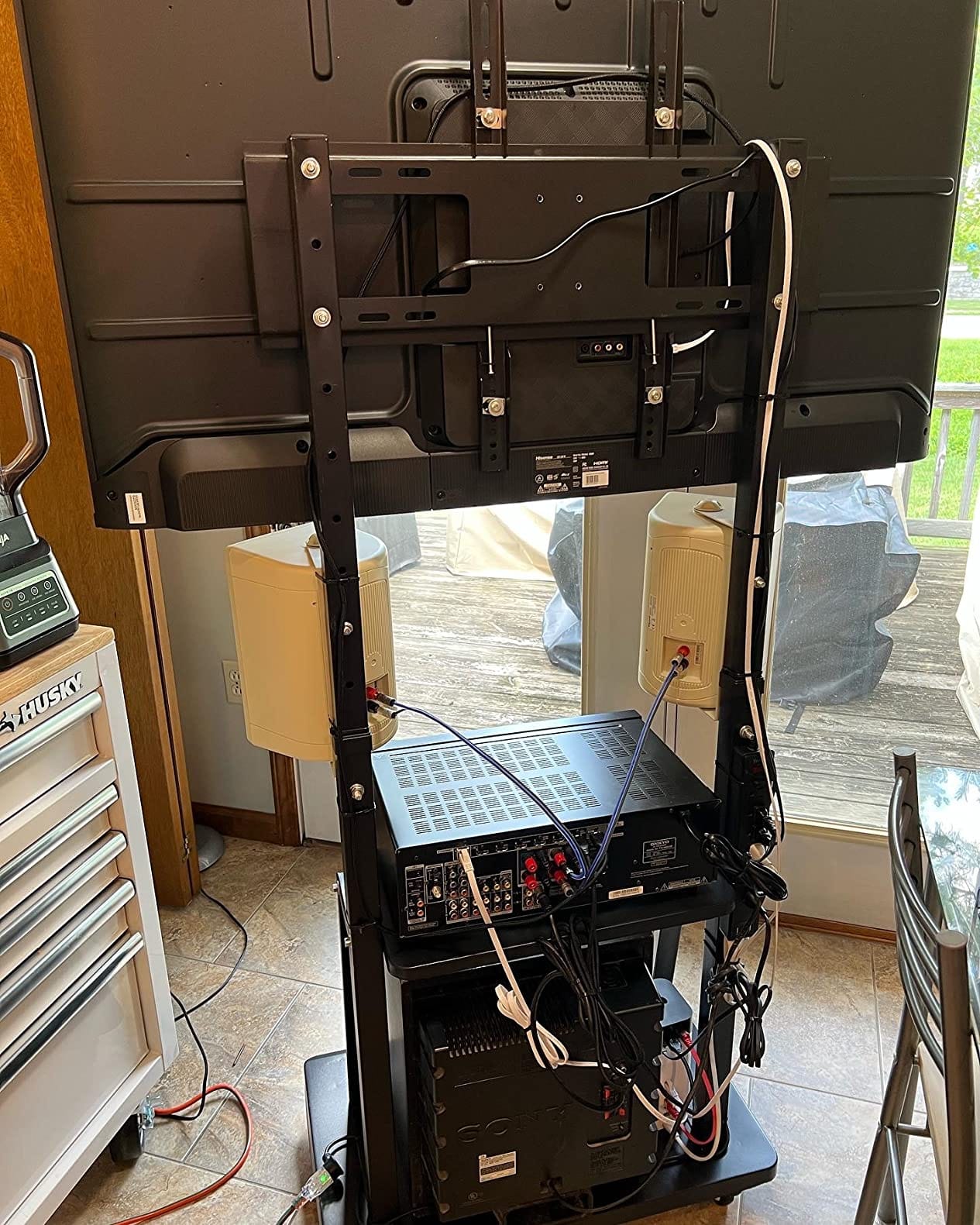
Set expectations on motion, though. This is a 60Hz panel with a 120Hz Motion Rate label, so fast football and fast camera work will not look as clean as a native 120Hz set. The 8W 2.1 speakers with DTS Virtual:X handle dialogue well but have no low end, so if you watch films at night you will want headphones or a small bar.

Why the 60Hz limit matters less in a bedroom than anywhere else
Bedroom viewing is overwhelmingly scripted drama, streaming series and the news. None of those punish a 60Hz panel, and the difference between 60Hz and 120Hz is far harder to see from seven feet away in a dim room than it is on a bright shop floor. If you do game, the Game Mode Plus with VRR and auto low latency mode is a reasonable compromise rather than a full solution.
Wall mounting is easy. VESA is 200 x 300 mm, the body is 48.5 inches wide and 8.9 inches deep, and dual-band Wi-Fi plus Bluetooth 5.0 means you can push a soundbar over Bluetooth or wire it properly. One year of manufacturer cover is included.
Who should skip it
Skip it if your bedroom doubles as a games room or if you are a daytime viewer near an uncovered window, because entry-level HDR brightness will not overpower glare. For night viewing in a dark room, the black level is better than the price suggests, but it is still a lit-pixel LCD, not a local dimming panel.
A forum thread on r/4kTV captures the decision well: someone wanted minimal glare and cinema-leaning picture quality for shows and YouTube with no sports or gaming, and a Google TV set with Dolby Vision is the answer they landed on. If apps are the priority, this is the one.
3. TCL 55QM6K QD-Mini LED – Best for Dark Rooms
TCL 55 Inch Class QM6K Series | Mini LED QLED 4K HDR | 55QM6K, Latest Model | 120HZ-144HZ High Brightness Smart Google TV Dolby Atmos Onkyo Audio | Voice Remote Alexa Gaming Streaming Television
QD-Mini LED with full array local dimming
144Hz native,240Hz VRR
Dolby Vision, HDR10+, HDR10 and HLG
Onkyo 2.1 audio with subwoofer
27.3 lb
Pros
- Local dimming gives real blacks without cheap QLED haloing
- 144Hz native refresh with 240Hz VRR
- Bright quantum dot color with over a billion tones
- Onkyo 2.1 audio with a real subwoofer
- All four major HDR formats supported
Cons
- Google TV home screen is ad-heavy and needs a third-party launcher
- Onboard audio still not a soundbar substitute in large rooms
- Brightness trails premium Mini-LED sets in very bright rooms
- Sound auto-adjust can boost and cut volume
This is the set I recommend to anyone whose bedroom is a genuine dark room. Full-array local dimming with TCL Halo Control means the backlight switches off behind dark parts of the frame, so a night scene actually looks dark instead of grey, and it does it without the halo you get around subtitles on cheap QLEDs. That single feature separates this from everything below it in the list.
The motion numbers are unusual at this tier. A 144Hz native panel with Motion Rate 480 and 240Hz VRR makes fast action look clean, and every headline HDR format is supported including Dolby Vision, HDR10+ and HLG. The Onkyo 2.1 speaker system has an actual subwoofer built in, which is the kind of thing that makes a bedroom TV usable for a film without any extra hardware.
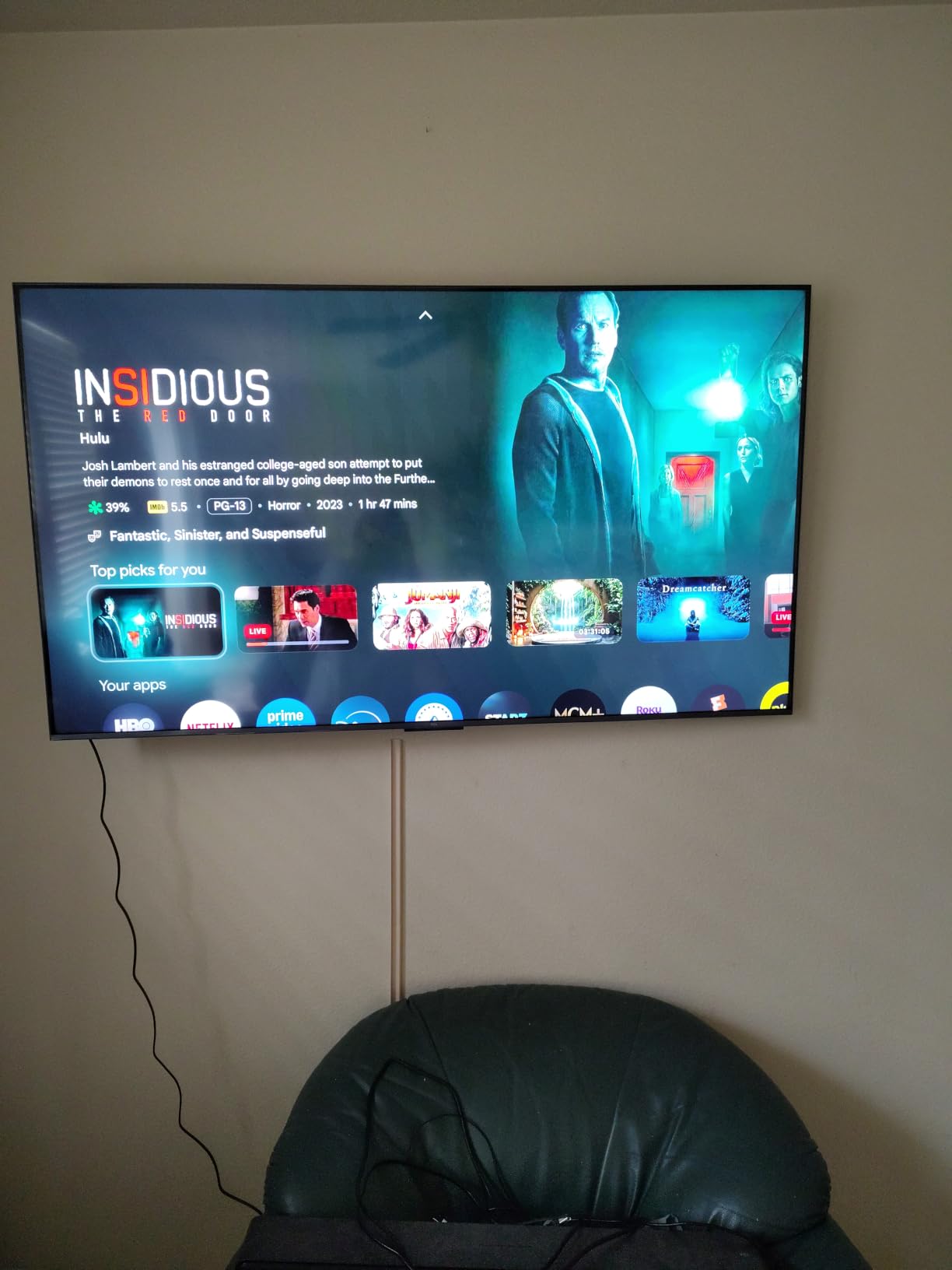
The catch is software and weight. Google TV is ad-heavy out of the box and most owners install a different launcher, which is friction you do not want at 11pm. The panel is 27.3 pounds, so plan a two-person lift, and the sound auto-adjust can boost or cut volume at awkward moments during dialogue.
Off-axis viewing is acceptable rather than exceptional, so if your bed sits well off to one side of the wall you may want to angle the mount. Brightness is good but does not match premium Mini-LED sets in a genuinely sunlit room, so curtains still matter.
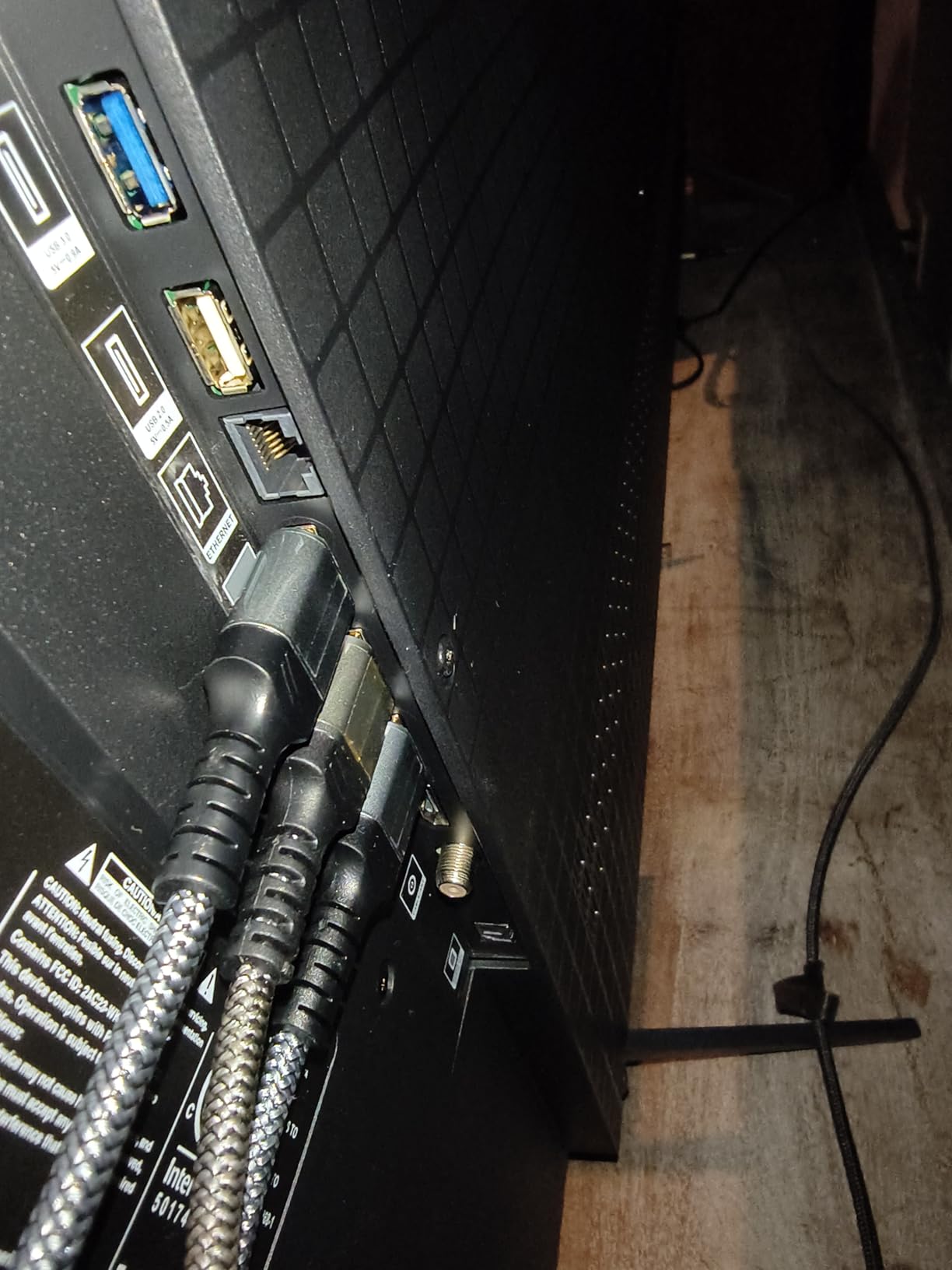
Dimming is the whole point in a lights-off bedroom
Here is the practical test. Watch a dark film in a dim room and watch the same film on a conventional LED. The Mini-LED holds a deeper black around the letterbox bars and around faces lit only by firelight, so you can stop raising the brightness to see detail. That is the difference between a set you finish an episode with and one that leaves you wide awake afterwards.
For mounting, VESA is 300 x 300 mm and the set measures 48.4 inches wide by 11.6 inches deep. Four HDMI ports mean you can keep a console, a soundbar and a streaming stick connected without constantly swapping cables, which matters if the TV sits behind a closed cabinet.
Who should skip it
Skip it if you refuse to touch the operating system, because a third-party launcher is close to mandatory to get rid of the ad load. It is also more than you need if you only watch standard-definition broadcast channels at bedtime, and the height and weight make it a two-person job on a plasterboard wall.
Several owners explicitly bought the QM6K as a bedroom or secondary television and are very happy there, which is about as strong an endorsement as this use case gets.
4. Amazon Ember 55-Inch 4-Series – Best for an Ambient Bedroom Display
Amazon Ember 55″ 4-Series with Fire TV (newest model), 4K Ultra HD smart TV with Alexa Remote, HDR10+, fast processor, Dolby Audio, Ambient Experience, free and live TV, find shows faster with Alexa+
4K UHD LED with HDR10+
Fire TV 2026 experience
Wi-Fi 6 and quad-core processor
Omnisense ambient sensor
4 HDMI inputs
Pros
- Wi-Fi 6 and new quad-core chip make apps load quickly
- 2026 Fire TV redesign cuts down on scrolling
- Omnisense ambient display suits a bedroom
- Four HDMI inputs for console and soundbar
- Cloud gaming through Luna and Game Pass
Cons
- Fire TV still pushes a lot of promotional content
- Picture edges are unrefined next to a Mini-LED set
- No high refresh rate or VRR highlighted
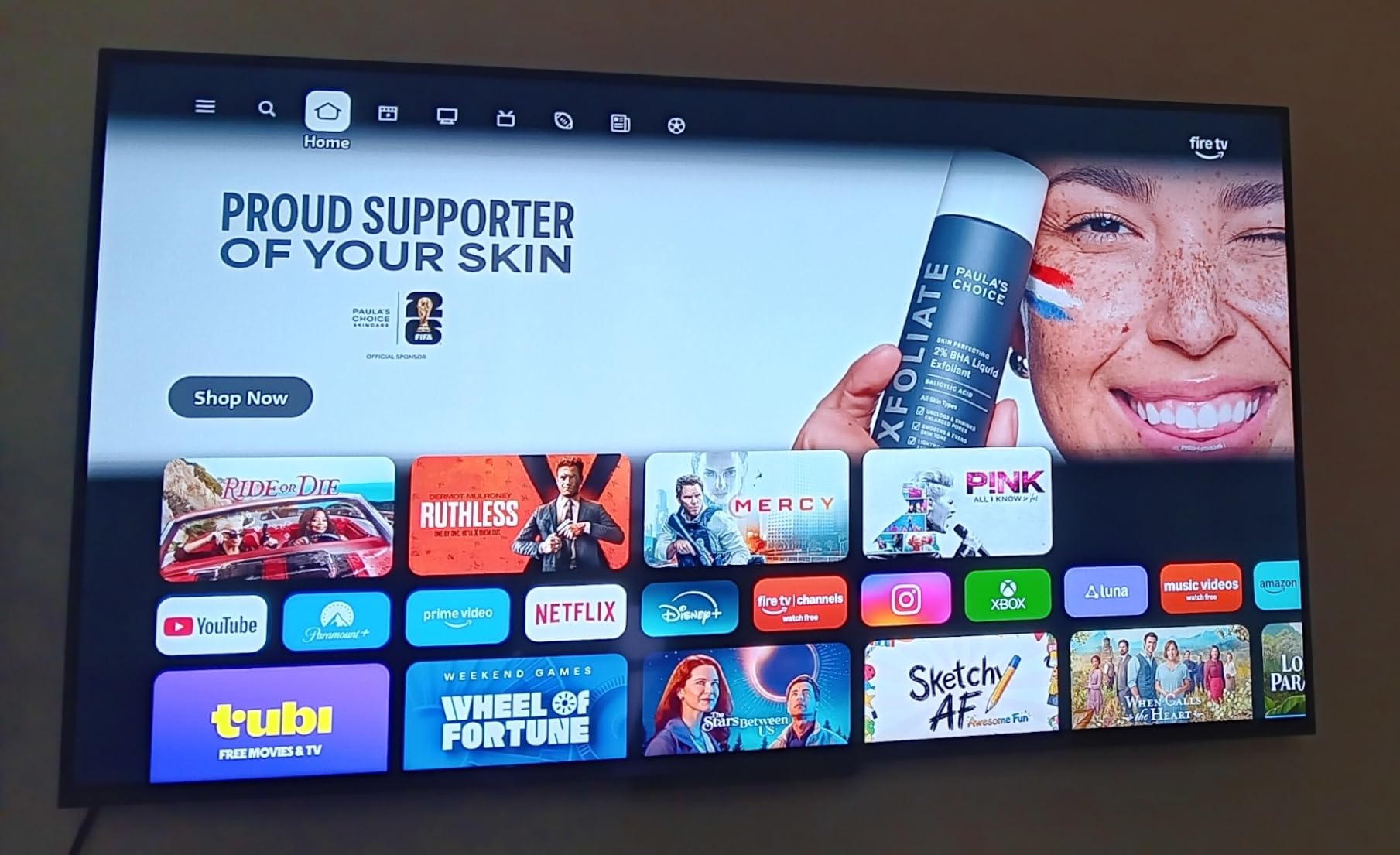
The Ember is built around one idea, and for a bedroom it is a good one: the screen should not be an intrusive black rectangle when nobody is watching it. The Omnisense ambient sensor wakes the display to your artwork, so in a room where the television is on show even when it is off, that single feature does more than a better processor would. Owners call it out as a genuinely bedroom-friendly touch.
Speed is the other argument. Wi-Fi 6 and a new quad-core processor make apps open quickly, and the 2026 Fire TV experience reduces the scrolling and adds personalised Alexa+ picks, which is a real improvement over the older Fire OS on the Insignia above. Four HDMI inputs give you room for a console and a soundbar at the same time, and Dolby Audio handles general viewing.
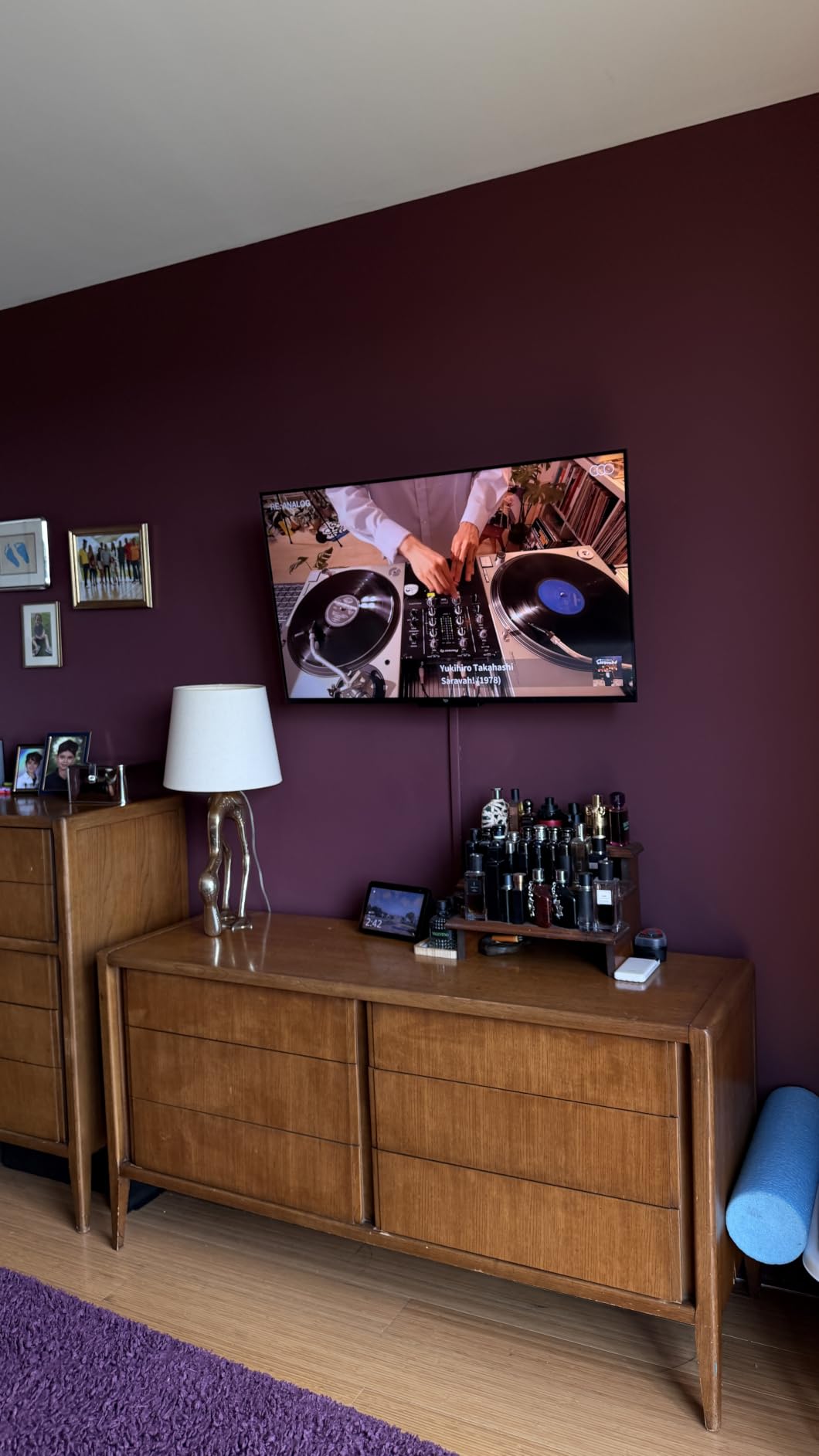
Picture quality is competent rather than special. HDR10+ is supported and brightness is enhanced, but nothing in the spec sheet suggests local dimming, so dark scenes will not hold up against the QM6K in a blacked-out room. The 4.2 owner average reflects that: most people are satisfied, few are blown away.
Fire TV still promotes heavily on the home screen, which is a mild annoyance rather than a dealbreaker. There is no gaming-first emphasis either, so no high refresh rate or VRR is highlighted.
Ambient mode is the feature that justifies this in a bedroom
Think about how long your bedroom television is switched on compared with how long anyone is watching it. A set that displays artwork when idle blends into the room in a way a normal panel cannot, and the Ember is the only set here built specifically around that behaviour. If the screen sits opposite a dressing table or an armchair, the visual payoff is immediate.
Cloud gaming through Amazon Luna and Xbox Game Pass is a bonus if you have no console in the room. AirPlay screen sharing is supported, and the Alexa Voice Remote carries preset buttons for the apps people actually use.
Who should skip it
Skip it if picture quality is the priority, because there is no local dimming and no gaming refresh rate here. Anyone who is bothered by an ad-supported home screen will not enjoy the Fire TV layer regardless of how quickly it loads.
For a guest room, a kid’s room, or a bedroom where the television is furniture as much as entertainment, the Ember is a strong pick with plenty of headroom for a brighter model later.
5. Roku 55-Inch Select Series 4K QLED – Best Value
Roku 55-Inch Select Series Smart TV 2026-4K (2160p) QLED TV TV
4K QLED with direct LED backlight
HDR10, HDR10+ and HLG
60Hz panel
20W 2-channel Dolby Audio
Roku OS with Art Mode
Pros
- QLED color and contrast step up from a standard LED
- Roku OS is fast and set up in minutes
- Lightweight 20.5 lb chassis is easy to mount
- Bluetooth Headphone Mode suits late-night viewing
- Remote finder button on the voice remote
Cons
- 60Hz panel with no high refresh rate
- Roku home screen layout is not to everyone's taste
- 20W two-channel audio is adequate rather than good
This is the highest-rated set at the budget end, and the reason is simplicity. Roku OS sets up in under ten minutes, the interface has no advertising clutter to fight, and the remote works with existing Roku remotes so a Roku household has no learning curve at all. If you want a bedroom television that works without fuss, this is the one.
Despite the low price it is a genuine QLED with direct LED backlight, and owners describe the color and contrast as a visible step up from a standard LED without artificial over-saturation. The screen also stays readable in a bright room without annoying glare, which matters if your bedroom gets morning sun. Art Mode is a small bedroom bonus.
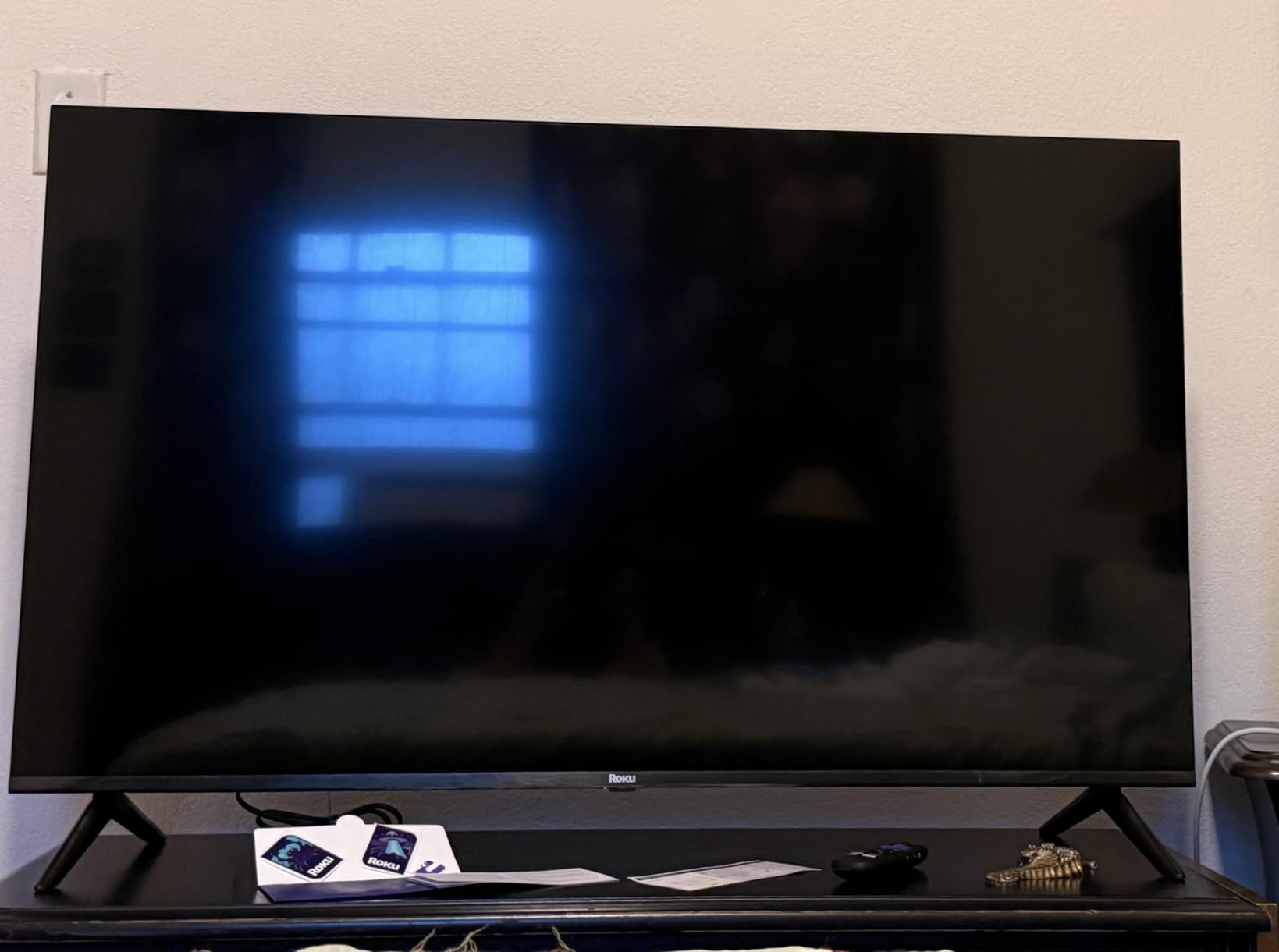
Bluetooth Headphone Mode is the sleeper feature here. Pair earbuds, watch with the screen off if you want to, and nobody in the next room knows you are still awake, which is the single most bedroom-specific capability on this list at this money. Response time is around 6.5ms, fine for casual play.
The limitations are honest ones. It is a 60Hz panel, so no serious console gaming. Roku redesigned the home screen and quick-access row, and some owners dislike the new layout or find the AI interpretation of viewing habits intrusive. Audio is 20W across two channels, which is fine for television and thin for films.

The lightest panel here makes wall mounting painless
At 20.5 pounds with the stand off, this is the easiest set in the roundup to lift onto a wall or carry down a hallway. VESA is 200 x 100 mm, the body measures 48.3 inches wide and 12.7 inches deep, and the frameless design keeps the visual footprint small. For anyone mounting above a headboard or a narrow dresser, that combination of weight and width solves the two most common bedroom problems.
Connectivity is complete for the tier: Bluetooth, Ethernet, USB-A, optical audio, AirPlay 2, Miracast, and voice support through Roku Voice, Siri, Alexa or Google Assistant. A one-year limited warranty applies.
Who should skip it
Skip it if you want Dolby Vision, a high refresh rate for a PlayStation, or real bass from the built-in speakers. Anyone who is not a Roku user and dislikes switching ecosystems may prefer the Hisense above, since Google TV is the more flexible platform.
As a general-purpose bedroom television that half the household can operate without instruction, though, it is very difficult to argue with. That is why it takes the value badge.
6. INSIGNIA QF Series 55-Inch QLED – Best for Sound on a Budget
INSIGNIA 55-inch Class QF Series LED 4K UHD QLED Smart Fire TV with Alexa Voice Remote (NS55-UQFL26)
QLED with direct LED backlight
Dolby Vision and HDR10
Dolby Atmos 5.1 audio
Fire TV with Alexa
400 x 400 VESA
Pros
- QLED color and Dolby Vision at a low price
- Dolby Atmos audio is unusual in this class
- Bezel-less metal design looks more premium than the price
- Three HDMI inputs including eARC for a soundbar
- Wall mountable on a 400 x 400 pattern
Cons
- 60Hz panel with no gaming refresh rate headline
- Fire TV interface responsiveness depends on the platform
- FireOS is a closed ecosystem with narrower app choice
The headline here is Dolby Atmos with 5.1 channels on a set at the bottom of the price ladder. For a bedroom, where most people watch at low volume and cannot justify a full soundbar, having a real surround decoder and a multi-channel array in the box is genuinely useful. Reviewers rate it highly for exactly that reason, and the 4.4 average is one of the best in this roundup.
The panel is QLED with direct LED backlight, and Dolby Vision plus HDR10 are both supported, which is rare at this level. The bezel-less metal design looks more considered than the number would suggest, and three HDMI inputs including an eARC port give you the option to add a soundbar later rather than immediately.
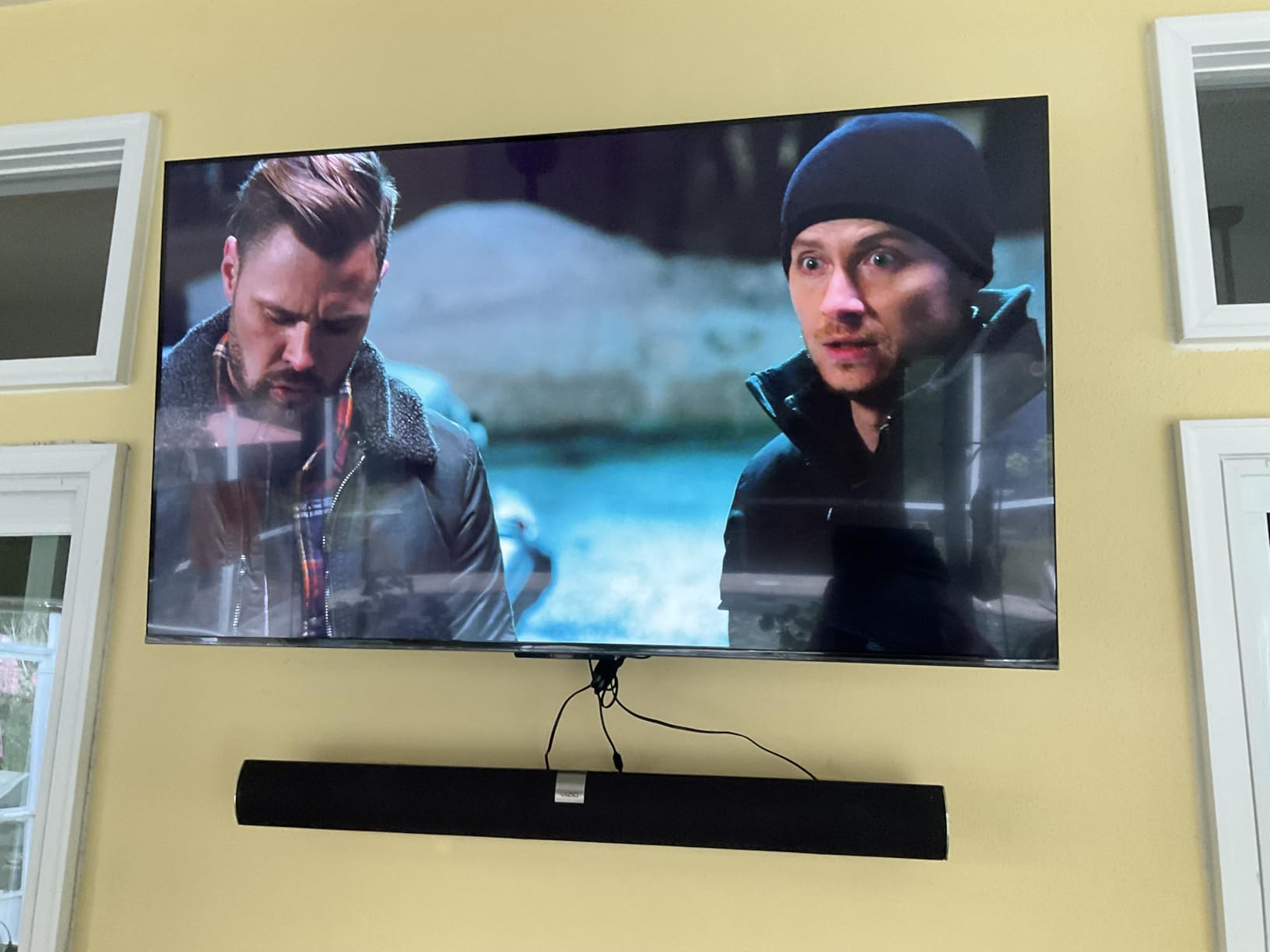
It is a 60Hz panel with no gaming refresh rate to talk about, and Fire TV responsiveness depends entirely on how the platform is behaving that week. The closed Fire OS ecosystem also means a narrower app list than Google TV or Roku, so check that the services you actually use are available before you commit.
Apple AirPlay and Bluetooth are supported, Alexa is built into the voice remote, and the set is only 2.8 inches deep, which suits a shallow dresser or a tight wall recess.
Check the 400 x 400 VESA pattern before you order a mount
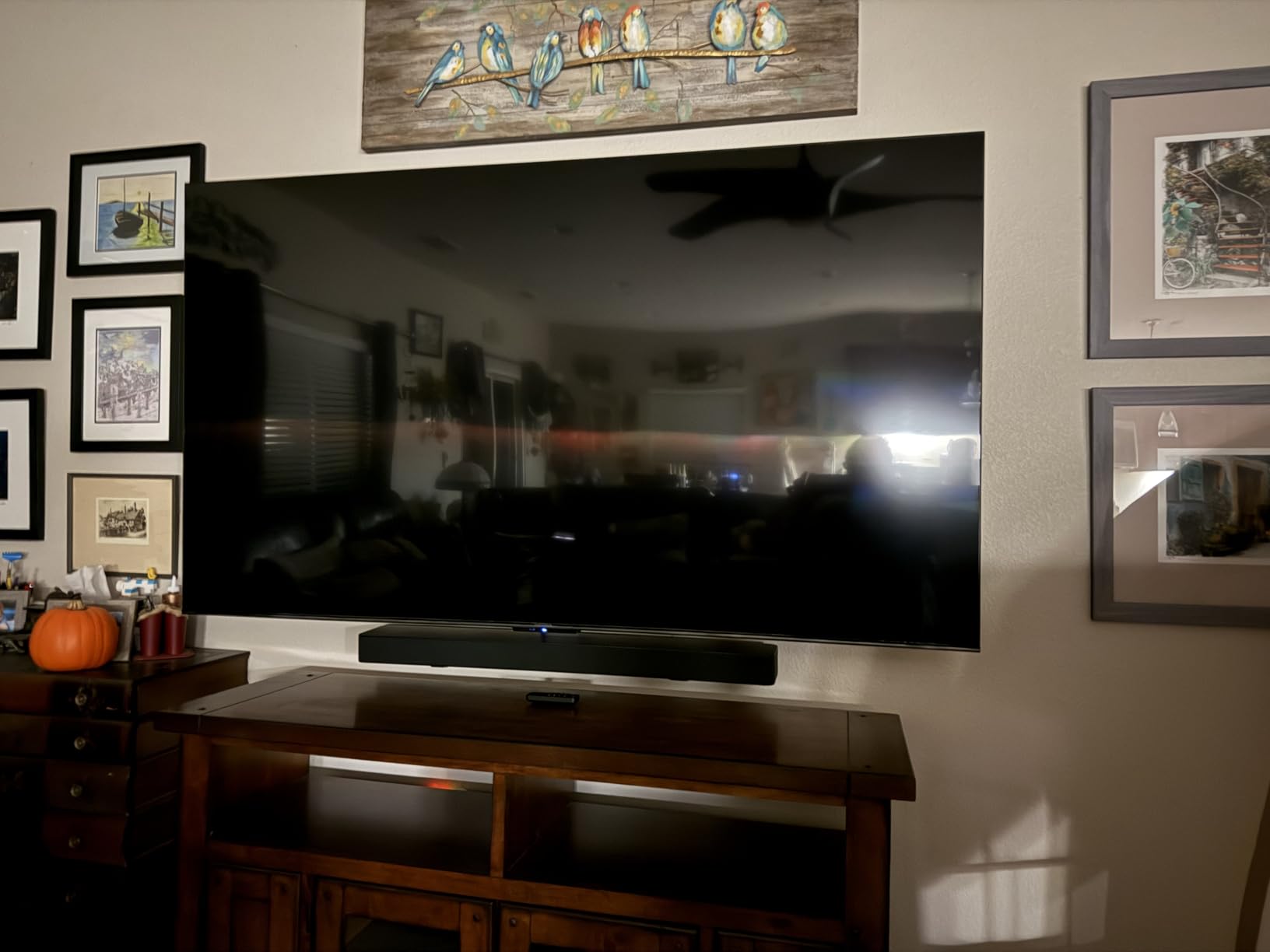
Most 55-inch sets use a 200 x 200 pattern, and buying the wrong plate is the most common bedroom installation mistake. This one mounts on 400 x 400 mm, so measure twice and buy the bracket to suit. The bezel-less body is 48.3 inches wide and 29.5 inches tall with the stand in place, which is worth checking against your furniture.
For night viewing, the surround decoding does more work at low volume than it would in a loud living room, since Atmos mixing gives voices a clear centre image even when you keep the volume down for the person sleeping next to you. That is a bedroom advantage a spec sheet does not capture.
Who should skip it
Skip it if you need a console with high frame rates, or if you are already invested in Google TV or Roku apps. Buyers who care more about interface quality than audio should look at the Hisense or the Roku Select instead.
For a first big television, a parent or guest room, or anyone who wants sound without a soundbar, this set does more than its cost suggests and is one of the best-rated picks we tested.
7. Samsung 55-Inch U8000H Crystal UHD – Best for Live TV
Samsung 55-Inch Class U8000H Series Crystal UHD, 4K, Smart TV, 2026 Model
Crystal UHD 4K LED panel
Crystal Processor with 4K upscaling
HDR10+
Tizen with 750+ free channels
22.5 lb chassis
Pros
- Crystal Processor sharpens detail and lifts color for the class
- 4K upscaling visibly improves older sources
- 750+ subscription-free channels on Samsung TV Plus
- Lightweight 22.5 lb body is easy to move and mount
- Color Booster adds punch to flat scenes
Cons
- No local dimming so contrast trails the Mini-LED sets
- 60Hz only with no VRR for gaming
- Built-in speaker is basic against the Atmos-equipped rivals
- Some buyers find the picture processing heavy-handed
Samsung TV Plus with more than 750 subscription-free channels is the reason to look here if the bedroom television doubles as a second screen for news and background viewing. No account juggling, no extra subscription, and the free content library is genuinely usable. Add Motion Xcelerator for clean 4K 60Hz motion and the set handles live sport adequately.
The Crystal Processor does a convincing job of upscaling, and Color Booster adds punch to otherwise flat scenes. For a bedroom with a lot of broadcast or older cable content, that processing is doing real work. At 22.5 pounds it is one of the lighter panels here, and 7.8 inches deep makes it slim on a console.
There is no Mini-LED local dimming, and that is the honest limitation. Black level and contrast trail both QLED and Mini-LED sets in this roundup, so in a fully dark room the picture will look more grey than the TCL or the Roku Plus. At 60Hz there is no VRR or high refresh for gaming, and the built-in speaker is basic next to the Dolby Atmos rivals here.
A few owners find the picture processing heavy-handed, which is the other theme behind the 4.2 average: a sharp, good-value panel that does not over-deliver on contrast. Bluetooth 5.3, Ethernet, USB and Wi-Fi cover connectivity, with VESA 200 x 200 for mounting.
When free channels beat a better picture
There is a specific bedroom case where this set wins on behaviour rather than picture quality. If someone in your household falls asleep to a news channel, or you want a screen in a spare room that anyone can switch on without a remote app, the free channel library removes a genuine friction point. No login, no subscription, no learning curve.
The VESA pattern is 200 x 200 mm, so a standard mount fits. The body measures 48.2 inches wide and 29.9 inches tall with the stand, and one-year manufacturer cover is included.
Who should skip it
Skip it if the room is dark and you care about black level, because a lit-pixel LED without local dimming is the wrong tool for that room. It is also the wrong choice for a console bedroom at 60Hz.
For bright, daylit rooms with regular live viewing, though, the value and the free content are hard to ignore. Samsung Vision AI Companion and V-Chip parental controls round out a sensible second television.
8. Samsung 55-Inch M70H Series Mini LED – Best for a Daylit Room
Samsung 55-Inch Class M70H Series, Mini LED, 4K, Smart TV, 2026 Model
Mini LED 4K panel with up to 2000 nits
Samsung Mini LED Processor 4K
HDR10+ with one billion tones
Dolby Atmos and Object Tracking Sound+
22.5 lb
Pros
- Mini-LED dimming makes a real difference in shadow detail
- 2000 nit peak brightness handles bright rooms well
- Gaming Hub and Motion Xcelerator Turbo+ keep fast action crisp
- Soccer Mode tuned for ball movement
- Lightweight 22.5 lb chassis
Cons
- Bundled remote lacks input switching and true one-touch volume
- TV forgets the last input and reopens a channel sub-box
- App store has no search box and some apps need voice search
- No optical audio output or RCA video jacks
This is the pick for a bedroom that has to work with the curtains open. A 2000 nit peak brightness figure is the highest in this roundup by a wide margin, and combined with Supreme Mini LED dimming it holds shadow detail and colour in daylight rather than washing out. That combination of brightness and real dimming is rarer than it should be below the premium tier.
The Mini LED Processor 4K and one-billion-tone colour spectrum do the picture work, while Motion Xcelerator Turbo+ and Soccer Mode keep fast ball movement clean for people who watch matches in bed. Dolby Atmos with Object Tracking Sound+ means you get object-based audio without adding hardware.
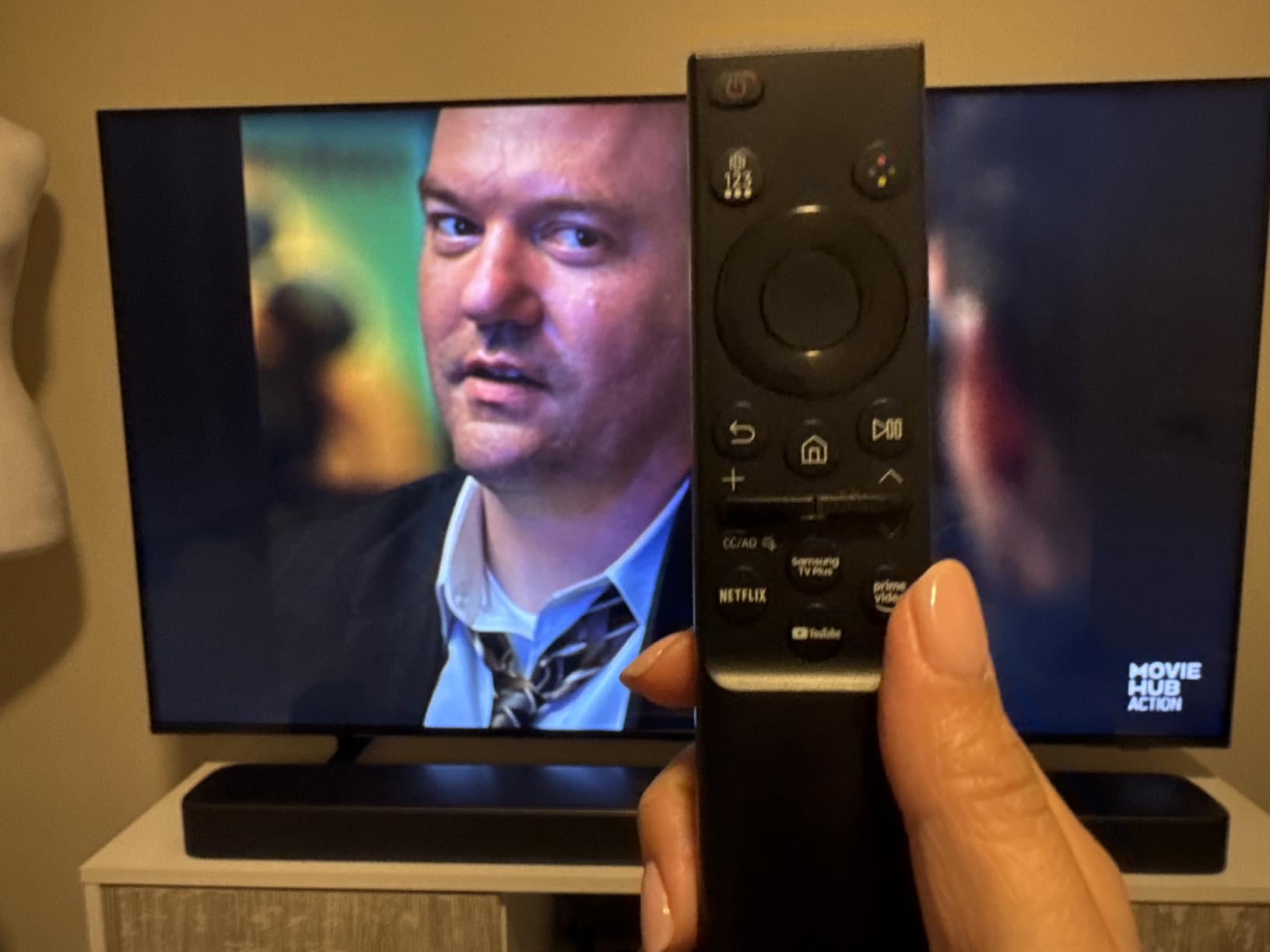
Almost every complaint is about the remote and the software, not the screen. The bundled Bluetooth remote is widely criticised for having no direct HDMI input switching and no true one-touch volume. The television does not remember the last input and often reopens a channel sub-box on power-up, and the app store has no search box, so some services have to be added by voice.
There is no optical audio output and no RCA video jacks, which will matter to anyone with older AV gear or a hearing-aid system. That is a real drawback in a bedroom where quiet late-night listening is the priority, and it is why we pair this set with a soundbar recommendation rather than the Roku Plus below.
Brightness is the reason, but check your audio options
Daylight performance is where the M70H separates itself. If your bedroom faces a window that floods the room from about 7am, no other set here will hold its picture as convincingly, and the local dimming means highlights stay controlled without dimming the whole screen. For a room that also gets used as an office in daylight, that is worth a lot.
Mounting is standard. VESA is 200 x 200 mm, the body is 48.2 inches wide and 7.8 inches deep, and at 22.5 pounds it needs two people for the legs, as several owners note. Bluetooth 5.3, Ethernet, Wi-Fi, three HDMI ports and one USB 3.0 port cover the rest.
Who should skip it
Skip it if the remote is going to be used by someone less technical, because the missing input switch and the app store’s lack of search are daily friction. Anyone relying on optical audio or legacy connections should rule it out too.
For a bright bedroom, a keen football watcher, or a household that wants a set everyone can operate once someone has shown them how, the picture justifies the compromise.
9. Roku Plus 55-Inch QLED Mini-LED – Best for Night-Time Listening
Roku 55-Inch Plus Series Smart TV – 4K QLED Mini-LED TV – RokuTV
QLED Mini LED with full array local dimming
Dolby Vision, HDR10+ and HLG
4.1 Dolby Atmos with built-in subwoofer,50W
Bluetooth Headphone Mode and display-off audio
Roku Smart Picture Max
Pros
- Highest owner rating in this roundup at 4.5
- Mini-LED local dimming plus QLED color
- Dolby Vision support at this level is rare
- 4.1 audio with a real subwoofer needs no soundbar
- Single-login subscription management across 70+ services
Cons
- 60Hz refresh rate limits high-frame-rate gaming
- Roku home screen redesign is criticized as more cluttered
- 27.4 lb is heavier than most 55-inch sets and needs two people
- AI picture processing is on by default
The Plus Series is one of the most complete bedroom televisions in this roundup, and it carries the highest owner rating of the ten. Mini-LED local dimming gives you the dark-room contrast buyers on AVS Forum threads keep asking for without moving to OLED pricing, and QLED color on top of it keeps bright content vivid without the usual Mini-LED tint.
What makes it a bedroom set rather than just a good television is the audio and the privacy details. You get Dolby Atmos across 4.1 channels at 50W with a built-in subwoofer, which means quiet dialogue still sounds full and a film has some weight to it. Bluetooth Headphone Mode pairs earbuds, and the star key on the remote plays audio with the display completely off, so you can run a podcast or a music library with a black screen. Roku OS stays fast, and one login manages subscriptions across more than 70 services.
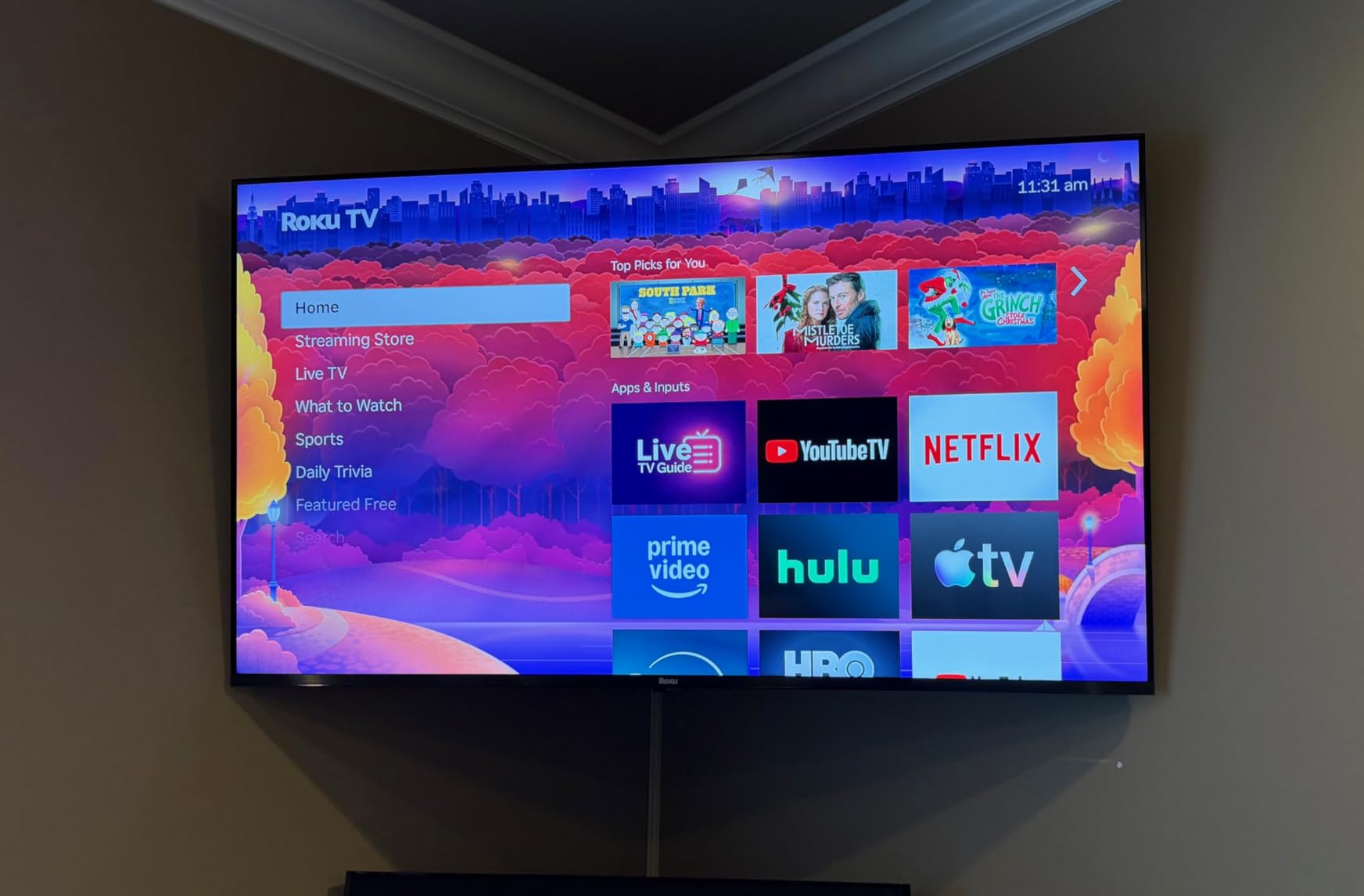
Dolby Vision is supported alongside HDR10+ and HLG, and Roku Smart Picture Max handles signal optimization automatically, though it is on by default and some owners prefer neutral settings straight out of the box. The reservations are narrow: 60Hz for gaming, Roku’s newer home-screen layout which some find more cluttered than before, and AI processing you may want to switch off.
It is also the heaviest panel here at 27.4 pounds, so plan the lift and the mount with help rather than alone.
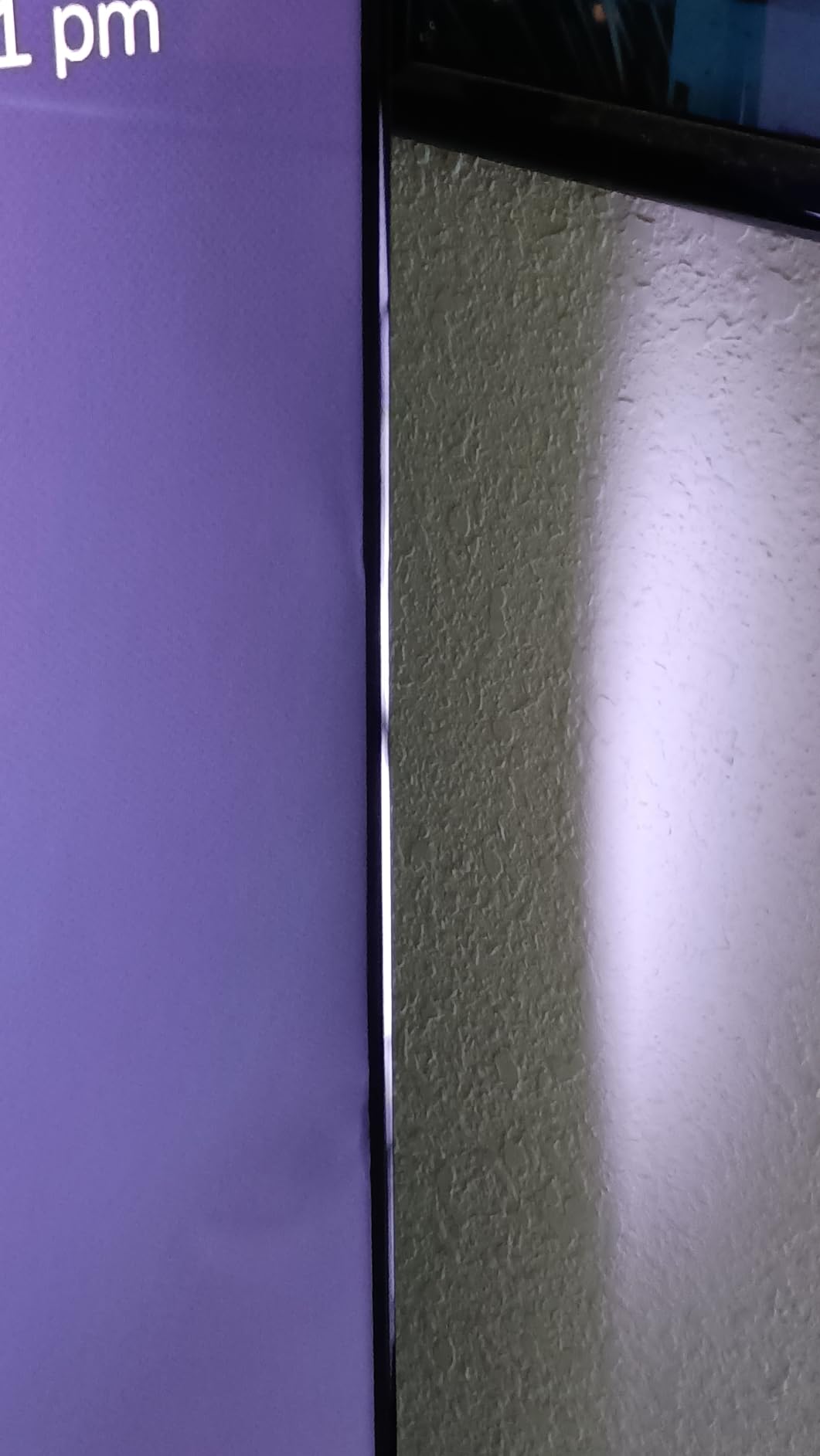
Display-off audio changes how you use a bedroom set
Here is the habit that sold me. Many people in a bedroom use the television for radio, podcasts, music and talk as much as for moving images. A panel that plays audio with the screen dark is not a gimmick in that context, it is a genuine difference in how the room looks at midnight, and it is why the Roku Plus and the Select both earn their place on a bedroom list.
Connectivity is generous: four HDMI ports, USB-C, USB-A, Ethernet and optical audio, plus Bluetooth, AirPlay 2 and Miracast. VESA is 300 x 300 mm and the body is 48.3 inches wide. The voice remote has a lost-remote finder button, which matters more in a bedroom than any other single remote feature.
Who should skip it
Skip it if you are mounting on your own and cannot get a second person, since 27.4 pounds is genuinely awkward above a headboard. It is also the wrong choice for a bedroom PlayStation, because 60Hz will not satisfy a 120Hz console.
Otherwise this is the most bedroom-complete set on the list. A forum consensus on dark-room performance keeps pushing buyers toward expensive OLEDs, and this is the realistic middle ground for anyone who wants near-OLED contrast at a fraction of the cost.
10. TCL 55T7 4K QLED 120Hz – Best for a Gaming Bedroom
TCL 55″ T7 4K QLED Google TV with 144Hz Gaming (55T7)
4K QLED with near-full DCI-P3 coverage
120Hz native, Motion Rate 480 with MEMC
240Hz variable refresh rate
Dolby Vision, HDR10+, HLG and Open HDR
4 HDMI including eARC
Pros
- 120Hz panel with MEMC keeps sports and fast action smooth
- QLED color covers nearly the whole DCI-P3 range
- All five HDR formats supported including Open HDR
- AIPQ Pro processor makes the interface genuinely responsive
- Lightweight 24.3 lb body and two-minute assembly
Cons
- Google TV home screen pushes ads and recommendations owners find intrusive
- MEMC does not fully keep up with very fast sports motion
- Sound loses separation in larger rooms without a soundbar
- Backlit remote drains batteries unless the backlight is switched off
If a console lives in the bedroom, this is the set. A 120Hz native panel with Motion Rate 480 and MEMC frame insertion, plus 240Hz variable refresh rate, is real gaming hardware rather than a marketing label, and owners confirm it pairs well with a PS5 or a Switch. Four HDMI inputs with eARC mean the console, the soundbar and a streaming stick all stay connected.
Picture quality is strong for the class. QLED color covers nearly the entire DCI-P3 range for vivid but accurate images, and it supports Dolby Vision, HDR10+, HDR10, HLG and Open HDR, which is the widest HDR list here. The AIPQ Pro processor keeps the interface responsive enough that apps open instantly, which is a genuine change from most Google TV sets at this level.
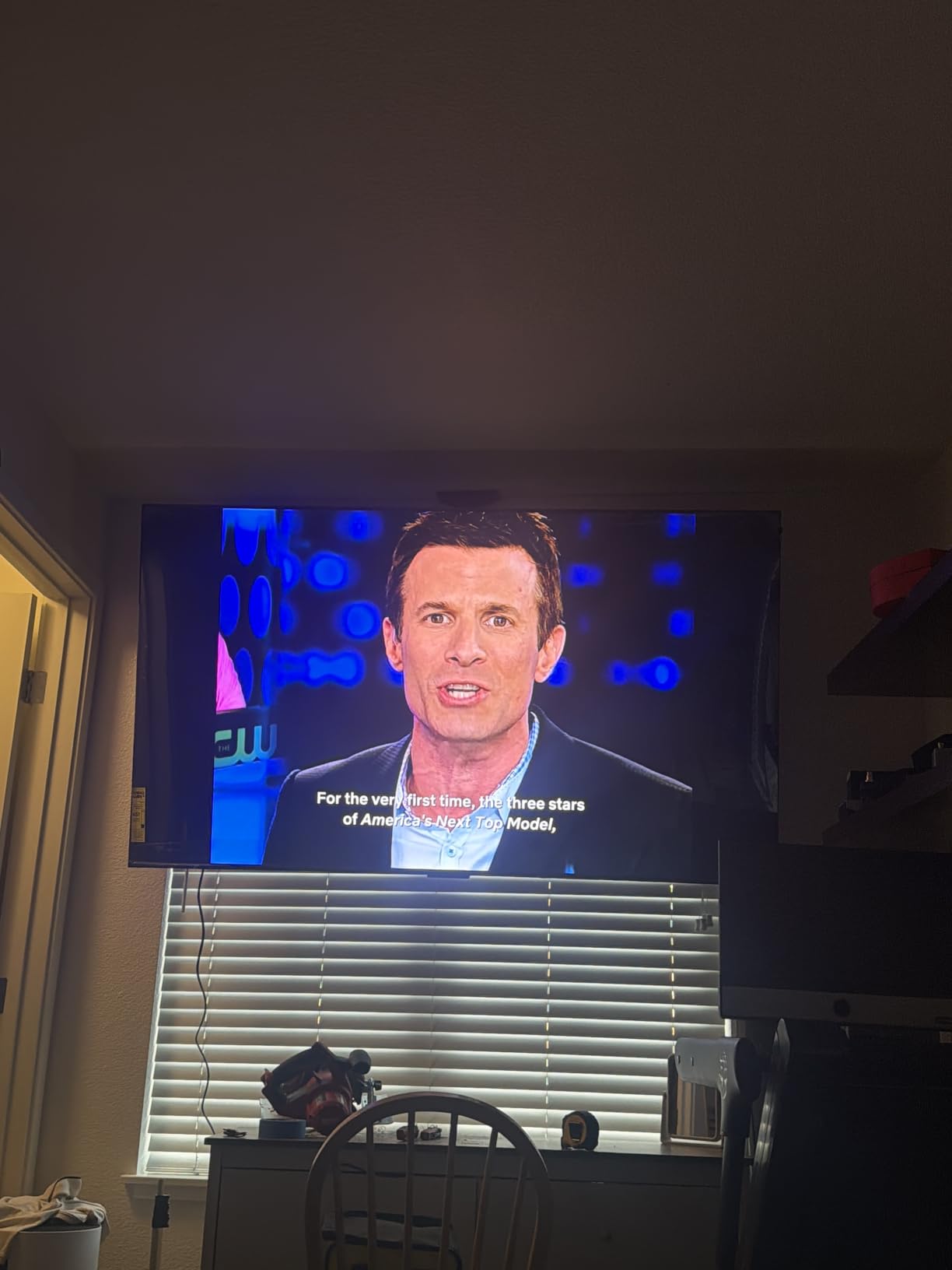
There are compromises. MEMC does not fully keep up with the very fastest sports motion, and Google TV still pushes recommendations and ads that some owners find intrusive enough that they add an external streaming device. The Dolby Atmos audio is clear and loud for a small room but loses separation in anything larger without a soundbar.
One small annoyance worth knowing: the backlit remote is genuinely useful for finding in a dark bedroom, but it drains batteries quickly unless you turn the backlight off.
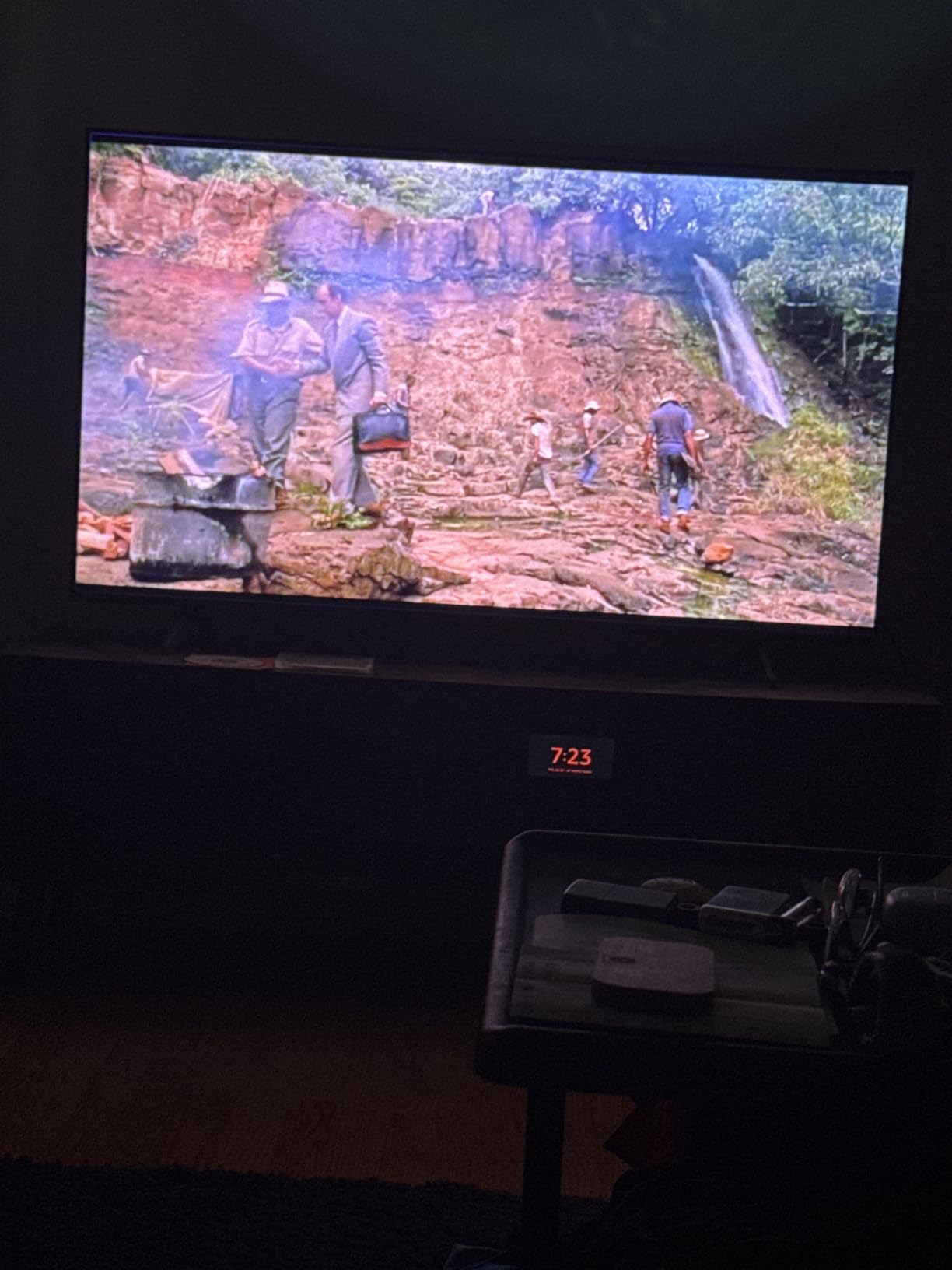
Why 120Hz matters in a gaming bedroom and nowhere else
Refreshing the case for the number. On a sports or console bedroom, the difference between a 60Hz panel and a 120Hz panel with MEMC is visible in fast pans, quick turns and moving objects, and 240Hz VRR keeps frame pacing steady when the console cannot hold a locked rate. In a room used purely for scripted television, that advantage largely disappears, which is why this badge is deliberately narrow.
Physical details for a bedroom: at 24.3 pounds this is the second-lightest gaming-capable set here, the body is 48.2 inches wide and only 2.7 inches deep, and VESA is 300 x 300 mm. Ethernet, optical audio, Wi-Fi 5, Bluetooth, AirPlay 2 and Chromecast are all present, and it works with Alexa, Google Assistant and Apple HomeKit.
Who should skip it
Skip it if you do not own a console, because you are paying for refresh rate you will not use. Anyone with a dark-room movie habit might prefer spending that money on local dimming instead, since this is a standard direct LED backlight rather than a Mini-LED array.
For a bedroom that doubles as a games room, it is a capable 55-inch set with a complete feature list on this page.
How to Choose a 55-Inch TV for a Bedroom
Measure the viewing distance before you pick anything
The single most useful number in this whole article is the distance from your eyes to the screen, and it takes thirty seconds to get. Sit in bed, prop your head up the way you actually will, and measure to the wall. For a 55-inch panel the sweet spot is roughly 5.5 to 7.5 feet, so most bedrooms with a standard 8-to-12-foot depth land correctly.
Under about 5 feet, 50 inches is usually more comfortable, and much below that a 43-inch set stops you scanning. Past 9 feet, 55 inches starts to look small and 65 inches becomes the better buy. If your bed sits at the foot of the wall with the screen on the opposite wall, the relevant measurement is the full width of the room, not the side-to-side gap, and most standard bedrooms fall inside the 55-inch range. Measure the wall width too, since a 55-inch panel is a little over 48 inches across with the bezel.
Pick the panel for your lighting, not the spec sheet
Bedroom use splits into two very different lighting situations, and the right panel changes with them. In a dark room, what matters most is black level, which means a panel with local dimming such as the TCL QM6K or the Roku Plus, since those switch off the backlight behind dark areas and avoid the grey wash a plain LCD gives you at night.
In a bright room, brightness wins instead, which points to a high-nit Mini-LED such as the Samsung M70H. QLED without dimming, like the Roku Select, is the balanced compromise and the easiest to live with in a room that changes throughout the day. OLED would win outright in a dark room on contrast alone, but none reached our buying criteria on price for a secondary television, and burn-in is a fair concern for a set that runs for hours every night.
Check glare and off-axis viewing, because beds are rarely square to the wall
Two bedroom conditions break most modern panels. The first is a window opposite or beside the screen, and the honest truth is that no flat panel fully solves that. What you can do is choose a set that stays readable without forcing brightness up, keep a blackout blind available, and angle the mount to move the reflection off your head position.
The second is angle. If your bed is offset from the centre of the wall, you will be watching off-axis, and VA-type LCD panels lose contrast and colour toward the edges. A QLED or Mini-LED with a wider viewing angle handles that far better, which is worth more in a real bedroom than a higher peak brightness figure. This is also why a set that sits in a corner room can look completely different to the same model in a shop.
Think about sound, smart platforms and microphones
Every bedroom television is watched at low volume, and that changes what matters. A set with Dolby Atmos and a real subwoofer, such as the Roku Plus or the TCL QM6K with its Onkyo 2.1 system, will sound more convincing at a whisper than a cheaper set with 8W speakers. Bluetooth Headphone Mode, found on both Roku sets, is the cleanest solution for late-night viewing without disturbing anyone.
On software, an r/hometheater user advising people to disable Wi-Fi on their OLED and use a separate streaming box is a common view: built-in platforms are convenient and rarely as good as a dedicated device. Fire TV is ad-heavy, Google TV is flexible but cluttered, and Roku is the least cluttered of the three. One practical compromise is to keep the network connection for firmware and casting but use a streaming stick for daily viewing.
There is a privacy angle specific to a bedroom. Smart televisions with far-field microphones can respond to voice from across a private room, so check whether the microphone can be disabled in settings, and remember that bedrooms are where conversations are least meant to be overheard. If you want the surface area removed entirely, our guide to bedroom safety and smart devices worth avoiding touches on the same privacy habits for the rest of the room.
Plan the mount, not just the screen
Weight and VESA pattern decide whether a bedroom install is a ten-minute job or a two-person afternoon. The Roku Select at 20.5 pounds, the Samsung U8000H and M70H at 22.5 pounds, and the TCL T7 at 24.3 pounds are all comfortable for one careful installer. The TCL QM6K at 27.3 pounds and the Roku Plus at 27.4 pounds are two-person jobs. VESA patterns differ across this list, from 200 x 100 mm to 400 x 400 mm, so buy the bracket after you confirm the exact model.
Height matters more than people expect. Mount the screen so the centre sits near or slightly below eye level when you are propped up in bed, not at standing eye level, and a raised or wall-mounted panel also frees the surface below for a soundbar. If you are finishing the rest of the room, a bedroom textile refresh and projector lighting aside, the wall behind the panel is the single biggest factor in how the room reads at night.
Frequently Asked Questions
Is a 55-inch TV too big for my bedroom?
Usually not. A 55-inch panel suits a viewing distance of roughly 5.5 to 7.5 feet, which matches most standard bedrooms when the screen is on the wall at the foot of the bed. Step down to 50 or 43 inches if your bed is closer than 5 feet, and consider 65 inches if you sit beyond 9 feet.
What type of TV is best for a bedroom?
For a dark bedroom, a panel with full array local dimming such as a Mini-LED gives the deepest blacks without OLED pricing. For a bright, daylit room, prioritise peak brightness instead. In either case, a QLED with quantum dot colour is the safest all-round choice for a second television.
Is OLED or QLED better for dark rooms?
OLED is better, because self-emissive pixels switch off completely and give perfect black. QLED with full array local dimming comes close at far lower cost, and its black level is good enough for most bedroom viewing once the room lights are out. For a secondary TV, Mini-LED is the value answer.
How far away should you sit from a 55-inch TV?
Comfortable viewing for a 55-inch screen runs from about 5.5 to 7.5 feet, with 7 feet the practical centre of that range for a bed propped against the far wall. Beyond 9 feet the screen starts to feel small and a 65-inch panel is the better size.
Can a 55-inch TV be wall mounted in a bedroom?
Yes, every set in this roundup is wall mountable. VESA patterns range from 200 x 100 mm to 400 x 400 mm, so buy the bracket to match your exact model. Panels here weigh between 20.5 and 27.4 pounds, and anything above about 25 pounds is realistically a two-person job.
The Verdict for Bedroom Buyers
The best 55 inch tvs for bedrooms are not the same sets as the best 55-inch TVs overall, and the difference comes down to black level, weight, port selection and how the set behaves at low volume after lights-out. Our overall pick remains the INSIGNIA F50, because more than twelve thousand owners have proved it, and because the eARC port, headphone jack and optical output make it the easiest set to actually live with in a bedroom.
Go to the TCL QM6K if your room is dark and you want real blacks without leaving the Mini-LED class, and go to the Roku Plus if you want the strongest picture plus the best bedroom audio in the group. Measure your viewing distance first, check the VESA pattern, and buy the mount and the bracket before the television arrives.
We keep this list updated through 2026 as new bedroom-sized models appear, and every pick here is one we would be happy to wall-mount ourselves.