

The best benchtop planer for a small shop is the DeWalt DW735X. Two feed speeds, a three-knife head and an automatic carriage lock give repeatable thickness on rough lumber, and the bundled infeed and outfeed tables plus a spare knife set remove two extra purchases. We pair it with the WEN PL1326 when finish quality rules and the Makita 2012NB when noise and moving the machine decide the job.
Two feed speeds at 96 or 179 cuts per inch, so rough lumber and figured lumber get different finishes from one machine
An automatic carriage lock cuts snipe down without manual engagement, which matters when a small shop cannot afford to re-run boards
Infeed and outfeed tables plus an extra knife set are in the box, cutting accessory spend on day one
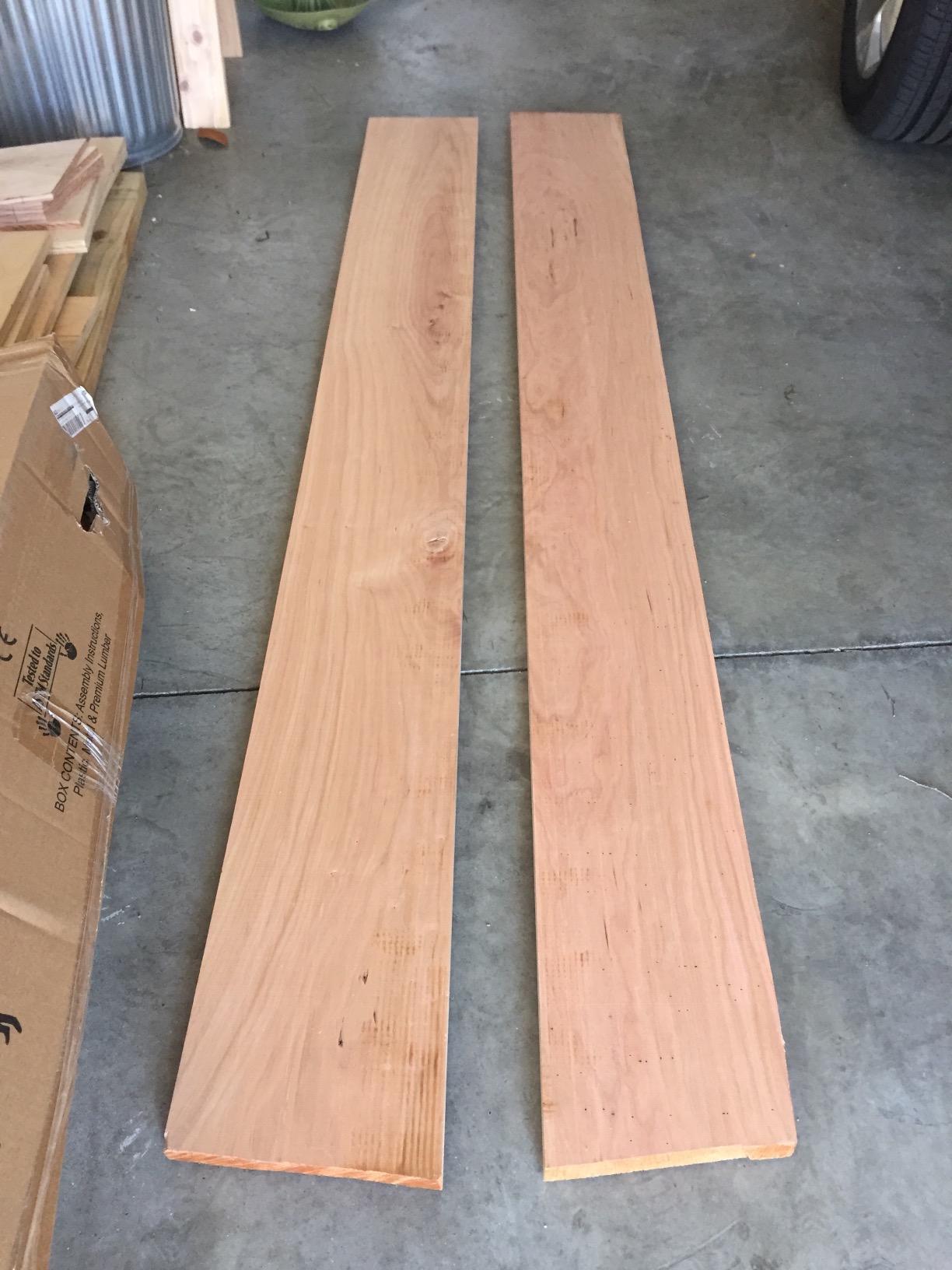
A benchtop planer earns its floor space in a small shop in one specific way: it lets you buy cheap rough lumber instead of pre-surfaced boards, and it rescues reclaimed and pallet wood that would otherwise be firewood. Feed rollers pull the board across a spinning cutterhead, the head shaves a thin even slice, and you lower the table a hair and repeat until you hit your target thickness.
What it does not do matters just as much. A planer makes faces parallel but will not flatten a cupped or twisted board, so rough faces still need a jointer or a planing sled first. You also still sand after planing, usually starting around 120 to 150 grit.
For this roundup we read the spec sheets and the owner reports behind all eight machines below, then judged them on the things a small shop actually lives with: how heavy the machine is to move, how loud it is against a shared wall, how much chip volume your collector has to swallow, whether it fits a 15 amp circuit you are already sharing with a dust collector, and whether there is a service shop close enough to matter when something breaks. Our methodology notes are at the end of the buying guide.
Table of Contents
Top 3 Picks: Benchtop Planers for Small Shops in 2026
These three cover the widest range of small-shop situations. The DeWalt DW735X is the machine most shops end up with, the DeWalt DW734 gives you the same three-knife finish in a narrower body, and the WEN PL1326 is the fastest route to a spiral-head surface without paying helical-head money.

DeWalt DW735X
- 13 inch three-knife head
- 96 or 179 cuts per inch
- automatic carriage lock
- 102 pounds

DeWalt DW734
- 12.5 inch three-knife head
- 96 cuts per inch
- four-column carriage lock
- three year warranty

Best Benchtop Planers for Small Shops in October
Read this table as a shortlist filter first, then read the individual reviews. Width, cutterhead type and feed speed decide most of the shortlist; weight and chip volume decide whether a machine physically fits your shop.
| Product | Specifications | Action |
|---|---|---|
| DeWalt DW735X 13-Inch Three-Knife Planer |
|
Check Latest Price |
| DeWalt DW734 12-1/2-Inch Three-Knife Planer |
|
Check Latest Price |
 Craftsman CMEW320 12-1/4-Inch Two-Knife Planer Craftsman CMEW320 12-1/4-Inch Two-Knife Planer |
|
Check Latest Price |
| WEN PL1326 13-Inch Spiral Benchtop Planer |
|
Check Latest Price |
 VEVOR 13-Inch Three-Blade Two-Speed Planer VEVOR 13-Inch Three-Blade Two-Speed Planer |
|
Check Latest Price |
 Makita 2012NB 12-Inch Portable Planer Makita 2012NB 12-Inch Portable Planer |
|
Check Latest Price |
 JET JWP-13BT 13-Inch Helical-Style Planer JET JWP-13BT 13-Inch Helical-Style Planer |
|
Check Latest Price |
 RIKON 25-135H 13-Inch Helical-Style Planer RIKON 25-135H 13-Inch Helical-Style Planer |
|
Check Latest Price |
1. DeWalt DW735X Review – The All-Rounder Small Shops Land On
DEWALT Thickness Planer, 13-inch Wood Planer, Three Knife Two Speed, 15 Amp, 20,000 RPM Motor (DW735X)
Width: 13 in
Head: three-knife
Feed: 96 or 179 CPI
Weight: 102 lb
Pros
- Three-knife head delivers 30% longer knife life
- Two-speed gearbox at 96 or 179 cuts per inch
- Automatic carriage lock reduces snipe out of the box
- Infeed and outfeed tables plus an extra knife set included
- 15 amp 20000 rpm motor with 10000 rpm cutterhead
Cons
- Very loud under load on par with a table saw
- Disposable knives dull faster than replaceable setups
- Roughly 102 pounds so it needs a stand or cart
- High current draw can trip a shared 15 amp circuit
This is the machine most small shops end up owning, and after reading thousands of owner reports the reason is not mysterious. It is the only one in this group that pairs 13 inch width with two feed speeds and ships with the tables already in the box. That combination means you can rip a 2×6 down to 3/4 inch quickly at 96 cuts per inch, then switch to 179 cuts per inch for a cabinet door panel without changing machines.
Owner reports are unusually consistent on two points. The finish is described as close to glass on both softwood and hardwood after a second pass, and the machine stays put on the bench because of its weight. On the other side, the same owners describe noise under load as comparable to a table saw or miter saw, which matters if your shop shares a wall with a house.
The automatic carriage lock is the quiet hero. Long-time DeWalt owners credit it with low snipe straight out of the box, and that matters more in a small shop than in a large one because a stepped dip at the end of a board means a second pass, a second cleanup, and a shop that has already committed its dust collector to the job.
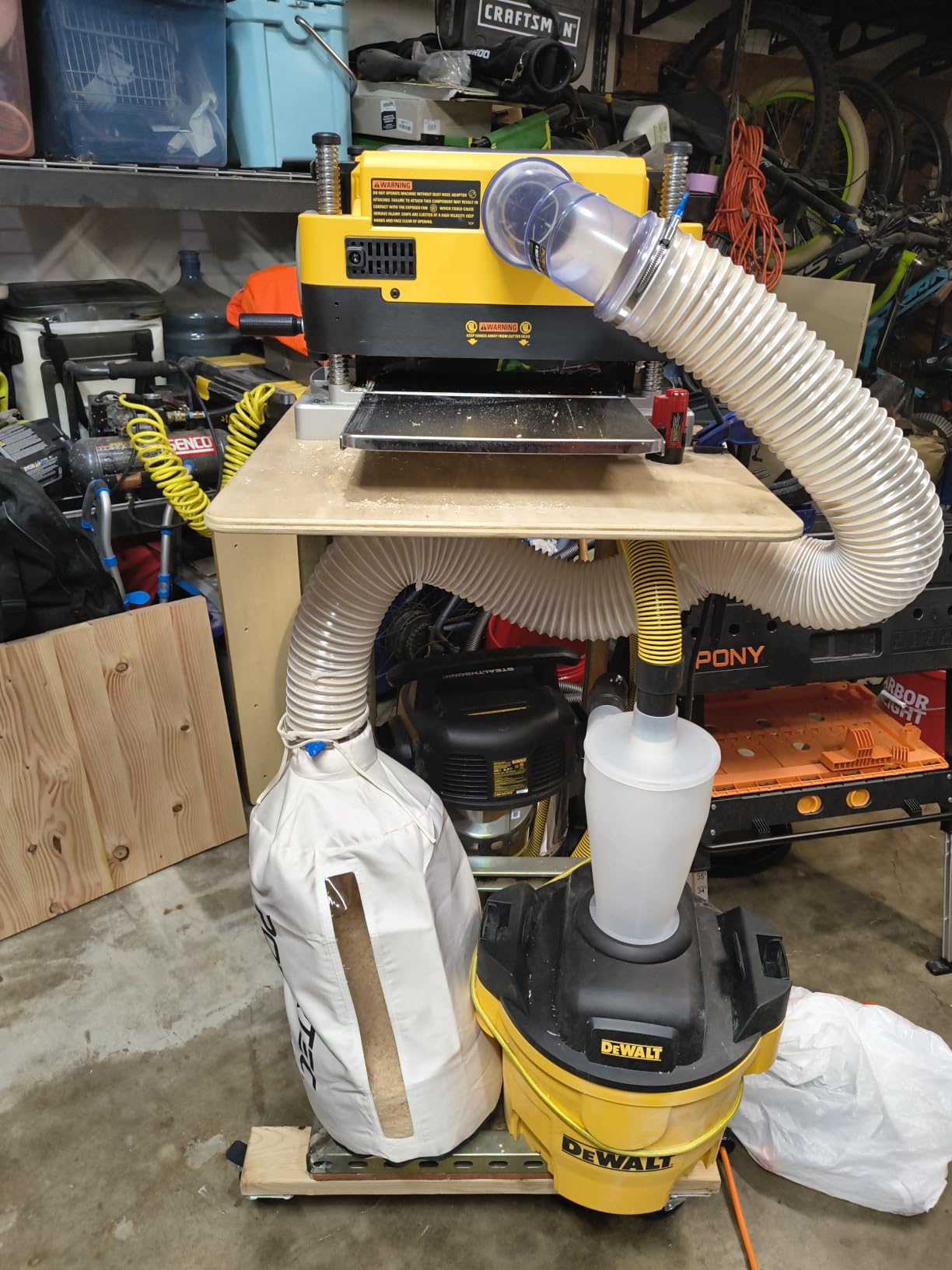
Two practical cautions. The knives are disposable, so treat them as a consumable line item rather than a tool asset, and expect to rotate the set on a schedule tied to board feet rather than calendar time. Also note the 15 amp draw: this machine and a dust collector on the same circuit is the single most common trip-breaker complaint in owner reports, and one dedicated circuit is the cheapest fix available.
Where the DW735X earns its floor space
For a shop that runs rough lumber, reclaimed boards, or cabinet parts to exact thickness several times a week, this is the right default. The width handles full 12 inch stock, the two speeds cover rough dimensioning and finish passes, and the included tables remove the most annoying first-day accessory hunt. Owner reports of 15 to 20 years of service before a knife flip are common.
The cost of owning it honestly includes a stand or a flip cart. At 102 pounds it is not a machine you shuffle across the shop floor casually, and owners who resent the weight all solve it the same way. Budget for a stand and a dedicated circuit together, not the machine on its own.
Where the DW735X disappoints
It disappoints in an attached garage or a basement where the noise ceiling is a neighbour rather than a machine. Straight knives in a three-knife head are the loudest cutterhead type in this roundup, and the motor adds to it. If sound is a hard constraint, look at the Makita further down before you commit.
It also disappoints on figured and interlocked hardwoods. Three straight knives can tear out on curly maple and white oak, and the fix is more sanding rather than a different feed speed. Owners working that material constantly usually end up wanting a helical head eventually.
2. DeWalt DW734 Review – Fine Finish With a Smaller Footprint
DEWALT Benchtop Planer, 15-Amp, 12-1/2-Inch, 3-Knife Cutter, 20,000 RPM, Corded (DW734)
Width: 12.5 in
Head: three-knife
Feed: 96 CPI
Weight: 80 lb
Pros
- Three-knife head at 96 cuts per inch for a very fine finish
- Four-column carriage lock reduces snipe
- 33.5 inches of infeed and outfeed support
- Reversible knives give 30% more knife life
- Three year limited warranty
Cons
- Single feed speed only
- Disposable reversible knives still need periodic replacement
- Chip volume demands a real dust extraction setup
- At 80 pounds it is still a two-person lift for some
The DW734 is the same three-knife idea as the machine above with a narrower body and one feed speed, and for a lot of small shops that is the better trade. It lists 12.5 inches of cutting width and 33-1/2 inches of total infeed and outfeed support, which is generous table length for a machine with this footprint.
Owner reports emphasise the same two strengths as the DW735X: a very fine finish at 96 cuts per inch, and enough motor to take a real cut in hardwood rather than skimming the surface. The four-column carriage lock is the older snipe-control design and it works, though owners with the newer automatic lock report a small edge on figured material.
The honest trade-off is the single gear. There is no second speed to dial in, so rough dimensioning and finish passes both happen at 96 cuts per inch. That is fine for most shops because the motor has the power to hold the feed, but it means you take one pass instead of two when removing heavy stock from warped boards, and that pass is where snipe shows up.
Long-term owners report this machine still going after close to two decades of regular service. For a business buying a planer as a long-lived shop asset, that durability record carries more weight than any spec line.
Where the DW734 fits best
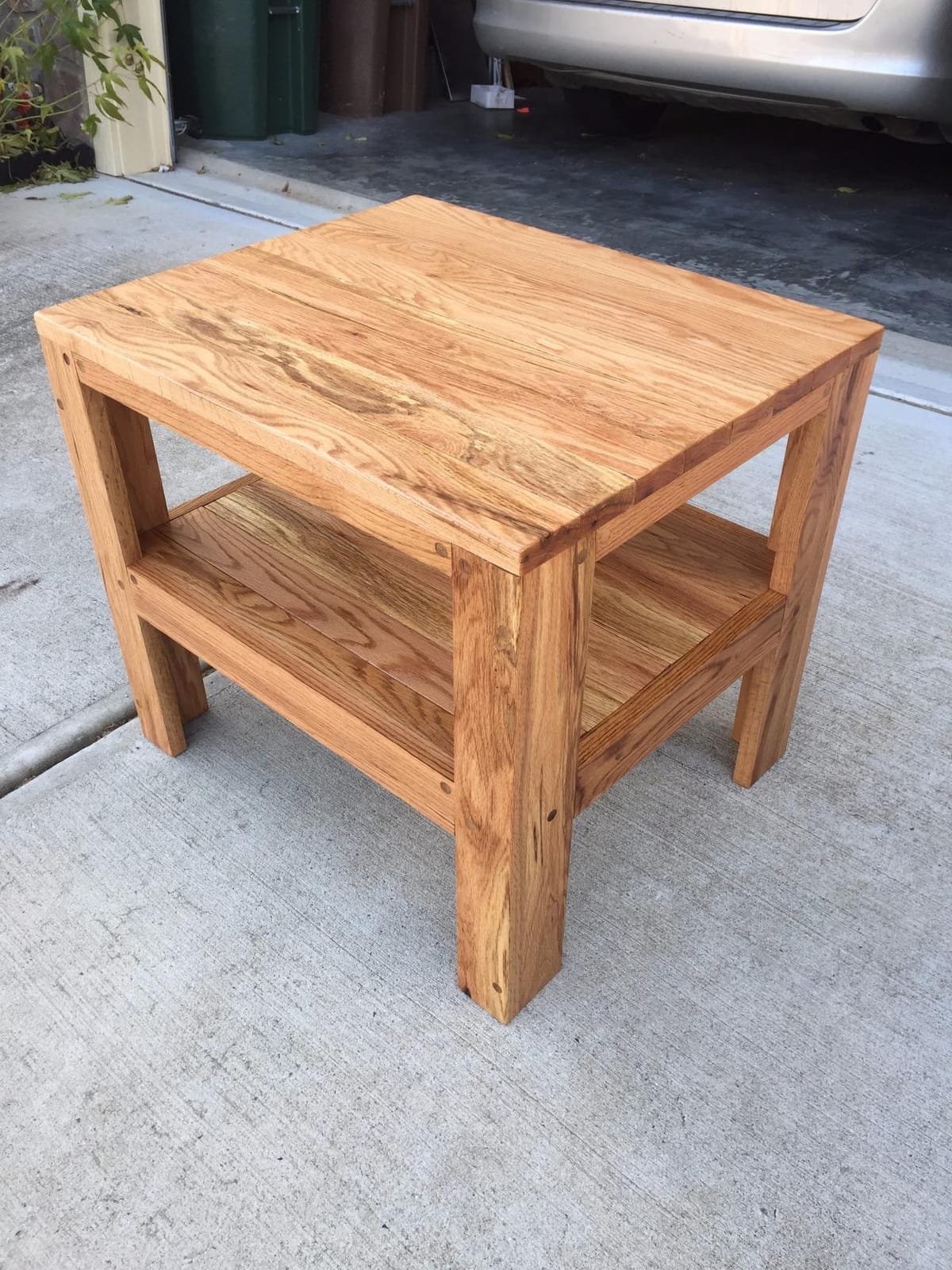
This is the pick when your shop works 1x material more than anything else and the machine has to live in a tight corner. Most trim, shelving, and small furniture parts come in under 12.5 inches wide, so you give up very little by leaving the extra half inch behind and gain shop space and a lower moving weight.
It is also a strong second machine for a shop that already has a helical-head planer and wants a fine-finish straight-knife companion, because 96 cuts per inch leaves a surface that needs very little sanding before finish coats.
Where the DW734 falls short
It falls short on wide stock and on production volume. If you regularly dimension 2x8s or wider boards, or you run a lot of reclaimed pallet wood, the missing half inch of width and the single speed will slow you down more than the fine finish compensates.
Knife economics are the other limit. Disposable reversible knives still need periodic replacement, and on a straight-knife head the tear-out on figured wood still means extra finish sanding no matter how fine the cut is.
3. Craftsman CMEW320 Review – Two Knives and a Lower Entry Point
CRAFTSMAN Planer, 15 Amp, For Benchtops, Two Knife Solid Steel Cutter Head (CMEW320)
Width: 12.25 in
Head: two-knife steel
Feed: single speed
Weight: 61 lb
Pros
- Two-knife quick-change solid steel head on ball bearings
- High carbon steel double-edged reversible knives
- Sturdy enough that it will not walk on a bench
- Base holes let you bolt it to a stand
- Vacuum port for dust collection
Cons
- Two knives means more finish sanding than a three-knife head
- Mild snipe until the tables are tuned
- Loud and dusty so extraction and hearing protection matter
- Cord exits on the infeed side which crowds the operator
The CMEW320 is the value entry in this roundup, and its appeal to a small shop is simple: it is a solid two-knife machine that does not walk across the bench while it is running. Owners describe high carbon steel double-edged reversible knives on a ball-bearing cutterhead, and multiple owners report hundreds to over a thousand board feet before blade degradation.
That durability line matters because the machine is not built to a thin specification. Poly-v cutterhead drive, a quick-change head, and base holes that let you bolt it down to a stand or bench give you options that pricier machines often do not.
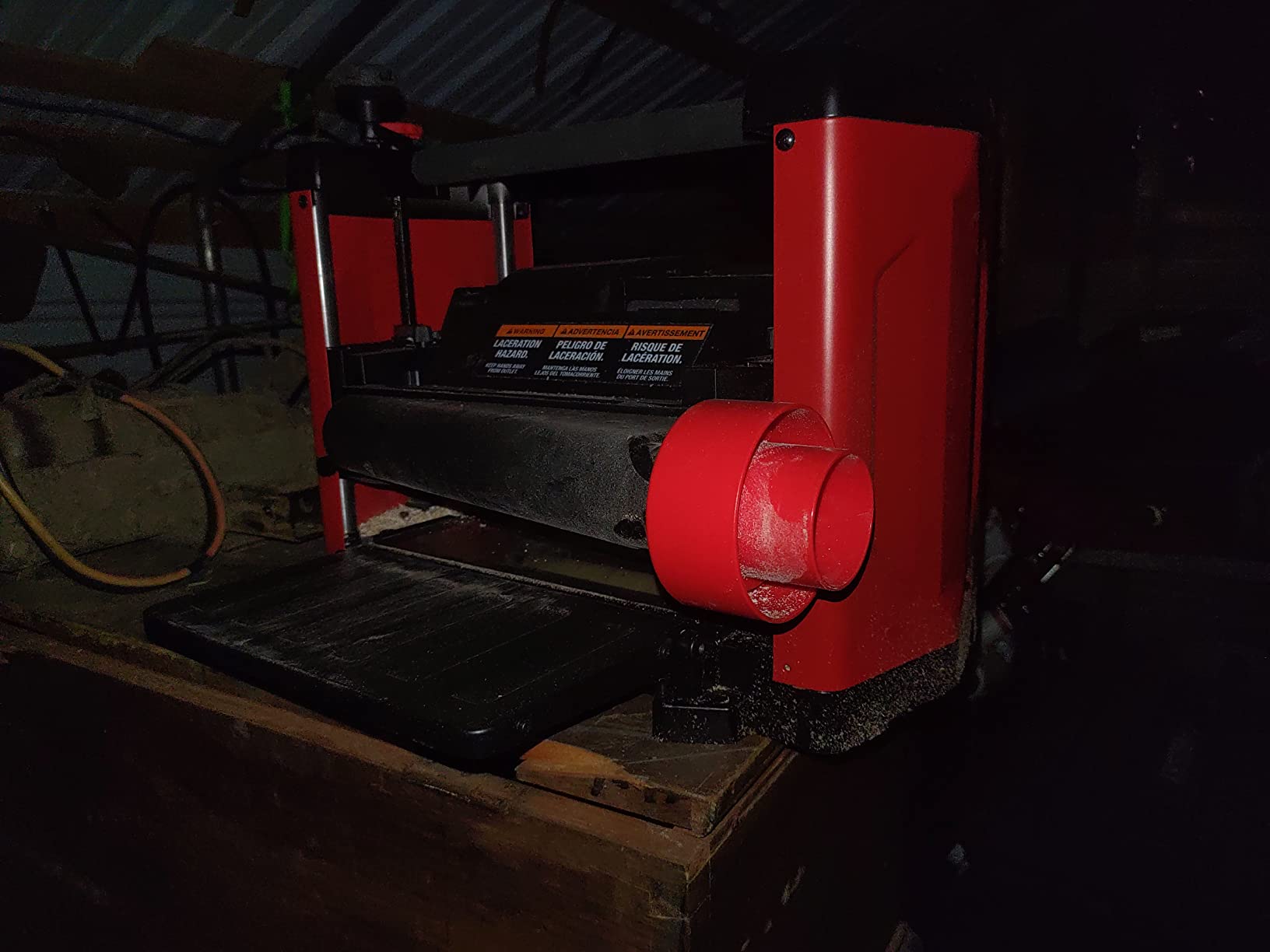
The core limitation is arithmetic, not build quality. Two knives mean two cutting edges per revolution instead of three, so the surface is coarser and needs more finish sanding to reach the same smoothness. Forum users describe it as a perfectly usable surface that simply demands more sanding afterward, and that is the accurate read.
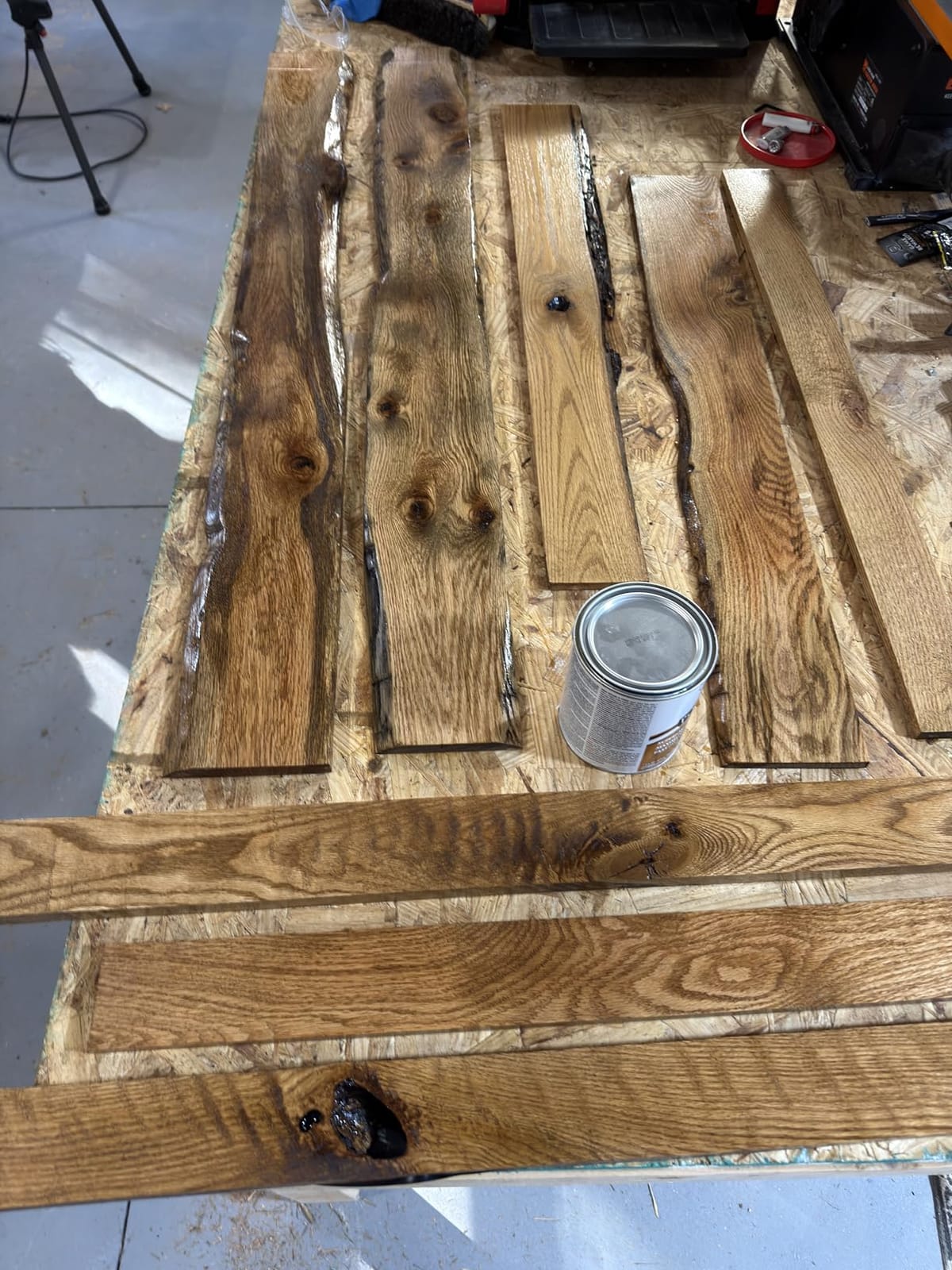
Two other practical notes from owner reports. Snipe is present until you tune the tables, which is the setup issue described later in this guide rather than a defect. And the cord exits on the infeed side, which crowds the operator when you are feeding long boards from the front of the machine.
Where the CMEW320 makes sense
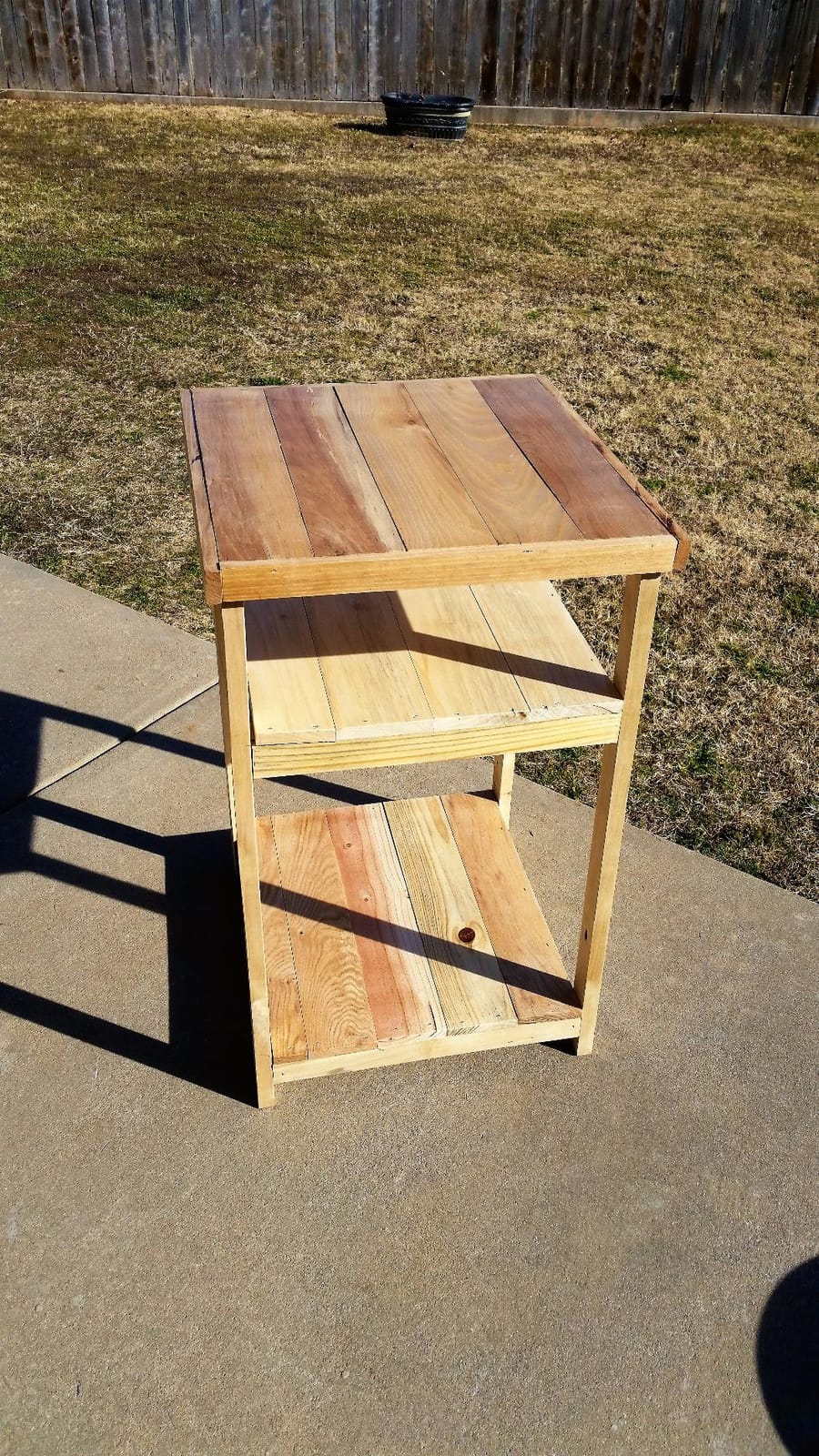
It makes sense for a shop that is processing rough and reclaimed lumber for utility projects, where the goal is consistent thickness for glue-ups and not a furniture finish. Turning pallet wood and demolition lumber into usable material is exactly the use owners praise, and at this price point the machine pays for itself on that work alone.
It also makes sense as a first planer for someone who is undecided about the category. You learn depth-of-cut control and snipe troubleshooting on a machine where a mistake is cheap.
Where the CMEW320 falls short
It falls short the moment your work moves into furniture-grade hardwood. Fewer knives and straight cutting action mean more tear-out on figured and interlocked grain, and you absorb that in finish sanding time that a shop doing billable work cannot ignore.
It also falls short on noise and dust management. Straight knives in a two-knife head still throw a large chip volume, so a shop with a shared wall or a small room should treat dust collection as part of the purchase decision rather than an accessory.
4. WEN PL1326 Review – Spiral Head Finish Without Helical Pricing
WEN PL1326 15-Amp 13-Inch Spiral Benchtop Thickness Planer
Width: 13 in
Head: 26-blade spiral
Feed: 26 FPM
Weight: 81 lb
Pros
- 26 staggered rotatable HSS spiral blades give a glass-like finish
- Blades rotate before replacement to roughly double usable life
- Handles softwood and hardwood at a single feed speed
- Cast iron base at 81 pounds stays stable
- Adjustable tables can be set to kill snipe
Cons
- Motor noise is high despite the spiral head
- Makes very large chips that need a real dust collector
- End snipe appears when the outfeed is unsupported
- Dust port is small and awkward for the outflow path
If your small shop works figured or interlocked hardwood, the spiral head is the whole argument. Twenty-six staggered and rotatable HSS blades mean each insert takes a much smaller bite than a full straight knife, which leaves fibres intact instead of levering them up ahead of the edge. Owners describe the result as a glass-like surface with far less finish sanding.
The rotating tip design has a second practical benefit: you flip a blade instead of replacing it, which roughly doubles the usable life of a set before you are buying carbide. That is a real running-cost advantage over the disposable straight knives used by the DeWalt and Craftsman machines in this roundup.
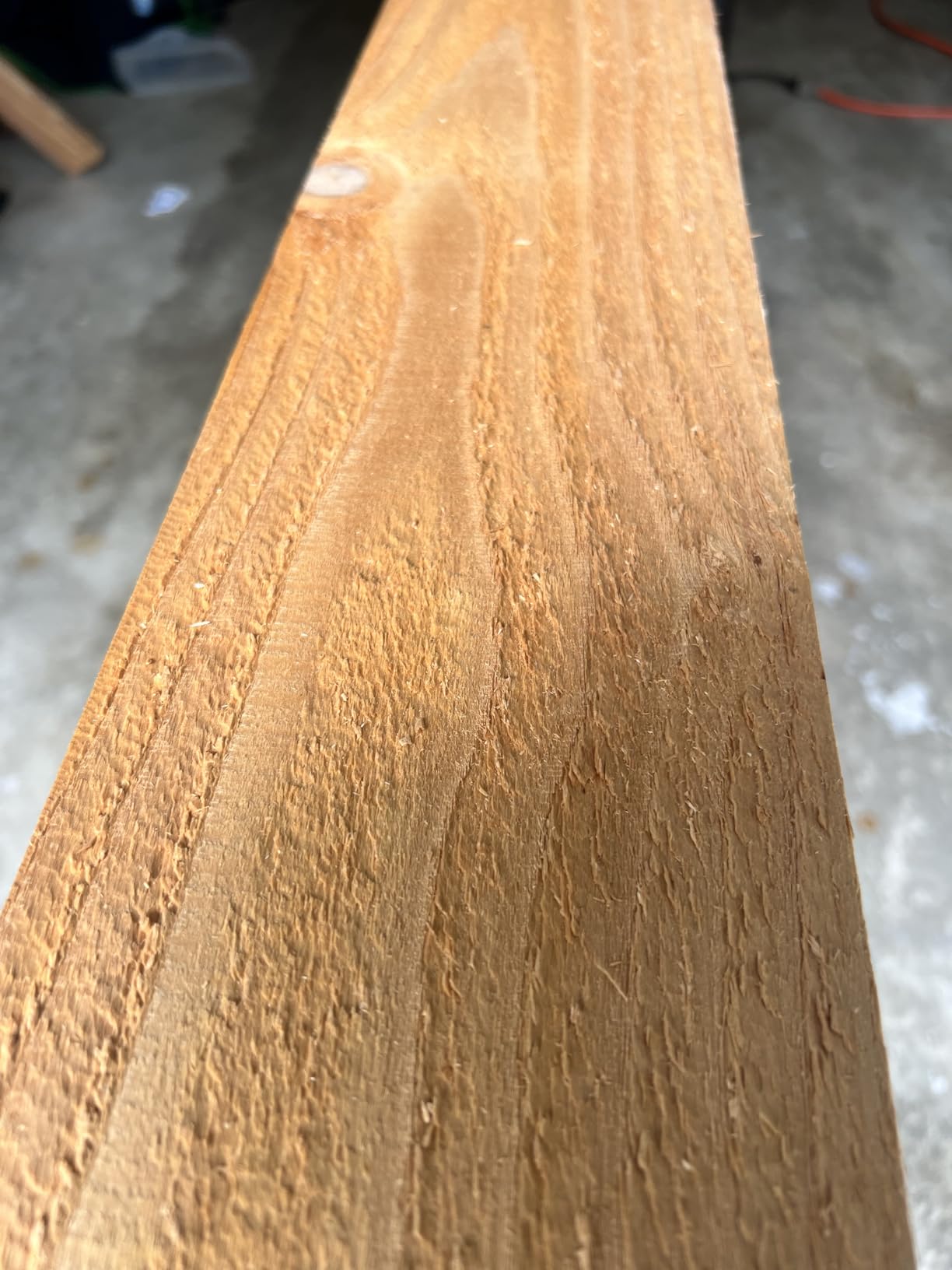
Two things surprise owners who expected less from the class. The cast iron base at 81 pounds keeps the machine stable, which matters more than the spec sheet suggests because a walking machine snipes. And the adjustable infeed and outfeed tables can be set correctly enough to remove end snipe once you know the setup rule later in this guide.
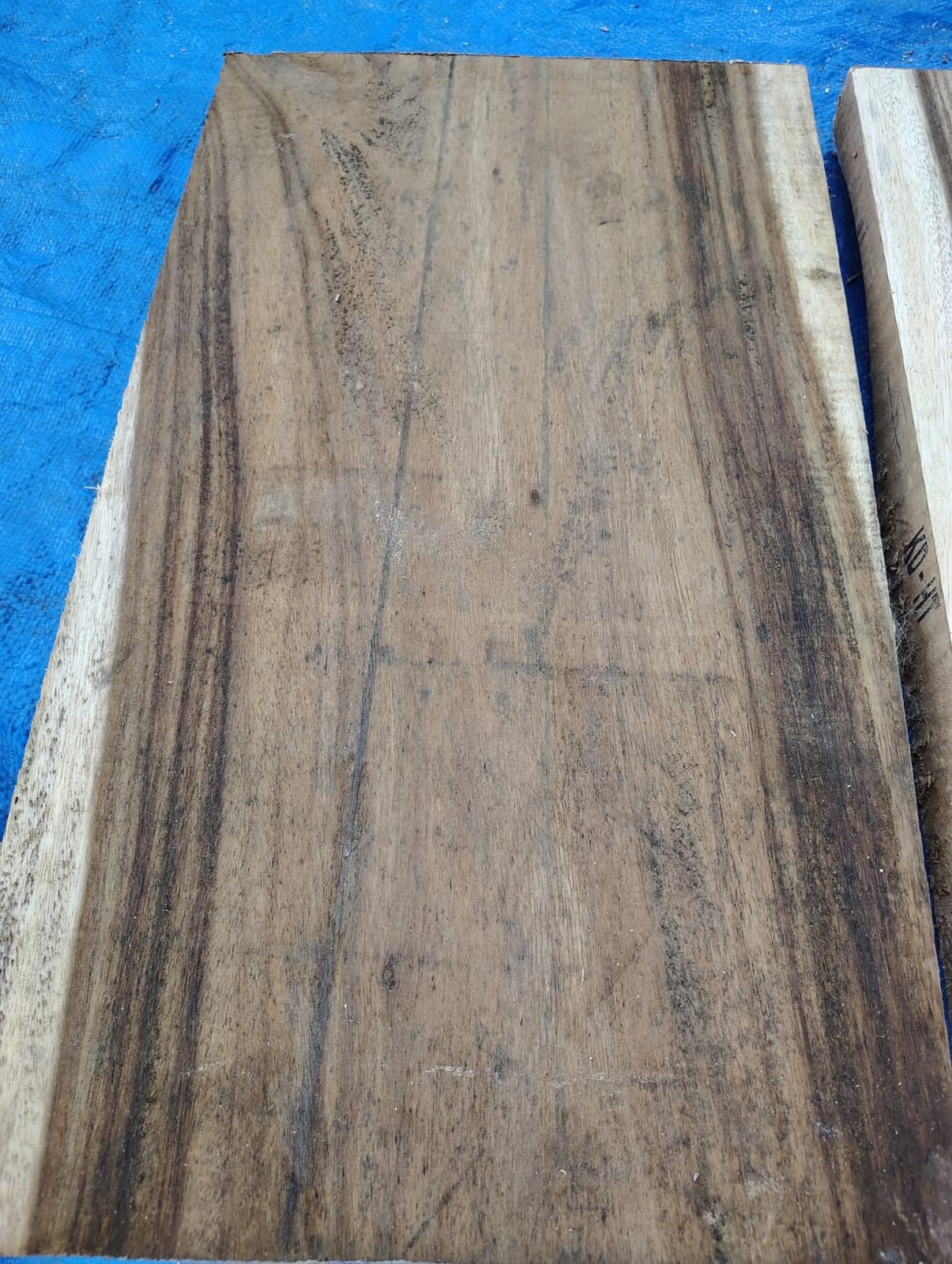
The counterweight is noise. Despite the spiral head, owner reports call out high motor noise, comparable to straight-knife machines, so this is not the answer for a shared-wall shop. Chip size is the other issue: the blades produce very large chips, and owners are clear that a shop vacuum is not adequate. A proper collector is effectively part of this purchase.
Where the WEN PL1326 earns its place
This is the sweet spot for a small furniture shop that wants a surface it can finish straight off the planer. It handles boards up to 6 inches thick and 13 inches wide, covers both softwood and hardwood at one feed speed of 26 feet per minute, and the onboard material removal gauge keeps depth calls consistent.
It is also a good match for a shop that has already learned snipe troubleshooting. With adjustable tables and a stable base, this machine rewards correct setup in a way that a lighter machine with folding table extensions does not.
Where the WEN PL1326 compromises show
The single feed speed means rough dimensioning happens at the same rate as finish passes, so heavy stock removal takes more passes than a two-speed machine would. If you mostly run rough lumber, the two-speed DeWalt is the faster tool even though it is not the finer one.
And for a basement or attached-garage shop, the noise profile is the deciding argument against it. Choose the spiral head for the surface, not for the volume.
5. VEVOR 13-Inch Three-Blade Review – Entry Tier With Two Feed Speeds
VEVOR Power Benchtop Planer Three-Blade Two Speed 13″ Thickness Planer
Width: 13 in
Head: three-knife HRC55-60
Feed: 24 and 15 FPM
Weight: 62 lb
Pros
- 13 inch three-knife capacity at the entry tier of this group
- Two feed speeds at 24 and 15 feet per minute
- Cutter head hardened to HRC55-60
- 35 inches of total table length from pull-out extensions
- Runs quieter under load than some costlier units
Cons
- Factory knives reported dull or blunt out of the box
- Outboard table extensions are hard to level flat
- Rear extension will not lock in the raised storage position
- 50 mm vacuum port clogs and the hood can dimple work
- Thin post-sale parts support
On paper this is the most specification-dense entry machine here: 13 inch width, a three-knife head hardened to HRC55-60, two feed speeds at 24 and 15 feet per minute, and a 2000 watt motor running at 23,500 rpm. For a shop that wants width and two speeds without stepping up a tier, the specification is genuinely attractive.
Owner reports confirm it can rival costlier machines on rough and moderate work. The quiet-ish running, the long height adjustment range, and the accuracy once set up come up repeatedly in positive reviews.
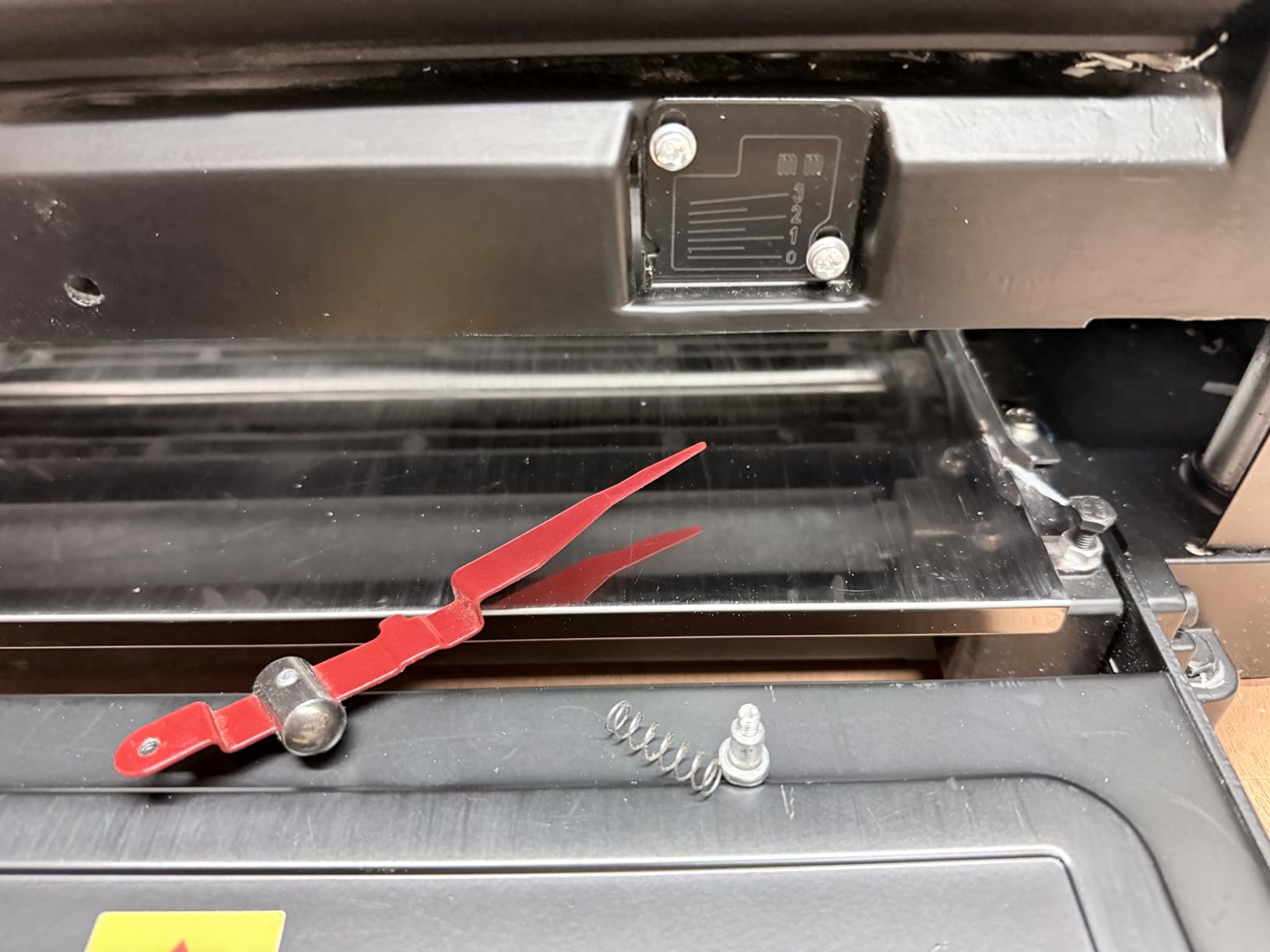
The 4.1 average rating is not noise in the data, though. The recurring complaints are quality control on the factory knives arriving dull or blunt, outboard table extensions that are difficult to level for genuinely flat cuts, and a rear extension that will not lock in the raised position for storage.
The dust path is the other weak point. The 50 mm vacuum port clogs easily with the large shavings this head produces, and owners report the hood itself can dimple the workpiece. That combination means more chip cleanup between passes, which eats into the throughput the two speeds promise.
Where the VEVOR works
It works for a small shop with light to moderate duty: occasional rough lumber, project work, and boards that do not demand a furniture finish. If your throughput needs are modest and you keep a decent dust extraction setup, the machine does the job.
The 35 inches of total table length from pull-out extensions is genuinely useful on long stock, and the lower moving weight than several rivals makes it easier to reposition in a tight shop.
Where the VEVOR does not work
It does not work as the main machine of a working shop. Table leveling limits and factory knife quality are the two failures that generate rework, and rework is the most expensive thing a small shop can buy. Business buyers should also weigh thin post-sale parts support before committing, since a parts problem months later is harder to solve than a warranty claim in week one.
Check the knives the moment it arrives, and plan to tune the extension tables before the first real board.
6. Makita 2012NB Review – The Quiet One for Shared Walls
Makita 2012NB 12″ Portable Planer
Width: 11.86 in
Head: two-knife
Feed: single speed
Noise: 83 dB
Pros
- 83 dB operation makes it the quietest machine in this roundup
- Four-post design with diagonal cross supports for stability
- Fastest blade change system with tools included
- Long owner histories of continuous hardwood work
- Compact enough to carry between shops
Cons
- Dust hood and port sold separately
- Disposable knives need periodic changes
- Feed rollers slip if pitch and sap build up
- Highest cost in this group and only a one-year warranty
The 2012NB is the only machine here with a published noise figure, and at 83 dB it changes the conversation for anyone whose shop shares a wall with a house. Long-time owners describe near two-decade service histories on hardwood work, which makes it the durability benchmark in this roundup alongside the DeWalt.
The accuracy reports are specific and consistent: taking roughly 1/16 inch off a 10 inch wide board and holding that depth over time. The four-post design with diagonal cross supports is the structural reason, because the head does not shift as the carriage moves.
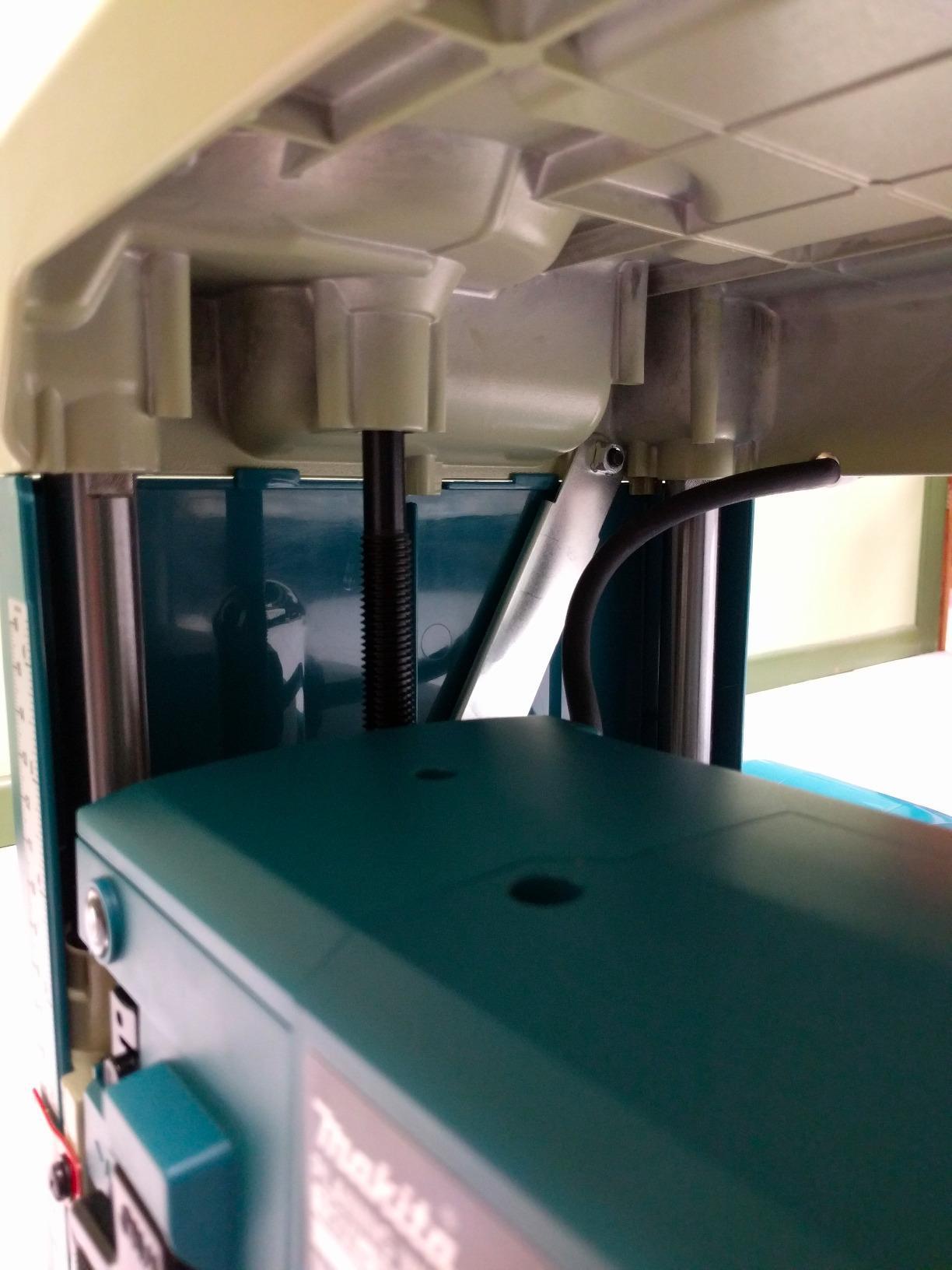
Two design details deserve attention before you buy. The blade change system is the fastest in this class, with double-edge disposable blades and the required tools included, which matters if you change knives often. And the machine works out of the box with minimal snipe, which owners consistently praise.
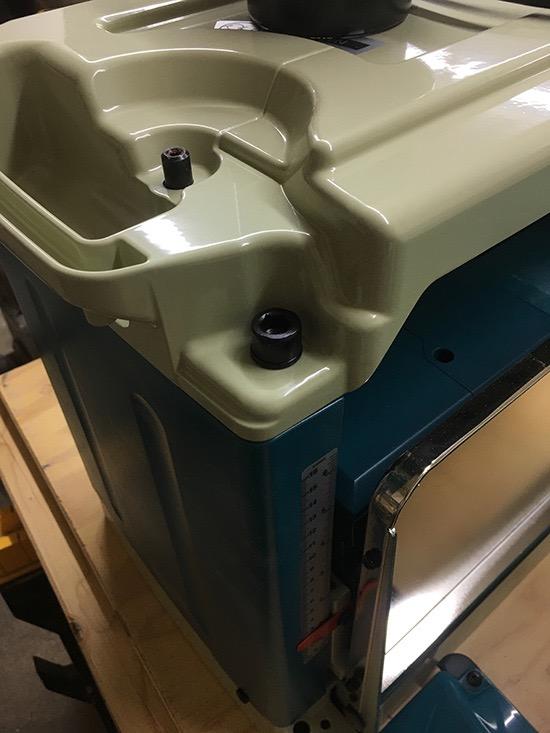
The catch is the table architecture. The head raises rather than the tables, which makes custom infeed and outfeed support difficult to build. Forum owners describe this as the reason some people keep the Makita and others trade it for a DeWalt within a year, and it is a genuine differentiator that roundups rarely explain. The dust hood and port are also a separate purchase.
Where the Makita 2012NB belongs
It belongs in an attached garage, a basement, or any shop where you cannot run a loud machine without upsetting somebody. If noise is the binding constraint rather than surface quality, this is the machine that solves it, and 12 inch nominal width covers most trim and furniture work.
It also belongs in a shop that occasionally needs to work on a different site, because the compact body and lower moving weight make it the most genuinely portable planer here.
Where the Makita 2012NB falls short
It falls short on surface quality per cut. Two knives and a single feed speed means more finish sanding than a three-knife or spiral head machine, and tear-out on figured hardwood remains an issue.
It falls short commercially too. The one-year warranty is the shortest listed here, and for a business buying a shop asset that is a real consideration. Confirm the feed rollers are kept free of pitch and sap, because roller slippage on this machine is the most common cause of a disappointing pass.
7. JET JWP-13BT Review – Helical Head With a Cast Iron Bed
JET 13-Inch Benchtop Thickness Planer for Woodworking, Helical Style Cutterhead with 2-Speed (18 FPM / 26 FPM) Feed Rate, 2 HP, 120V 1Ph (JWP-13BT)
Width: 13 in
Head: 26 helical HSS inserts
Feed: 18 and 26 FPM
Weight: 75 lb
Pros
- Helical-style head with 26 quick-change HSS inserts in six rows
- Precision-machined cast iron bed reduces snipe
- Four-post head support with a 2 hp motor at 10000 rpm
- Two feed speeds at 18 and 26 feet per minute
- Folding infeed and outfeed tables plus a dust hood in the box
Cons
- HSS inserts wear faster than carbide heads in hardwoods
- Warranty drops to two years for commercial or industrial use
- Tables must be leveled manually before use
- Highest cost among the 13 inch machines here
This is the premium build in the roundup: a precision-machined cast iron bed, a four-post cutterhead design, and a helical-style head carrying 26 quick-change high-speed steel inserts in six rows. Owners describe the cut as smoother and quieter than straight-knife machines and the flatness as noticeably better on figured material.
Two feed speeds at 18 and 26 feet per minute let you set up the machine the same way you would a two-speed DeWalt, and the 2 hp motor at 10,000 rpm has real chip-clearing capacity on wide boards. The folding infeed and outfeed tables are a genuine small-shop feature because they save floor space when stored.
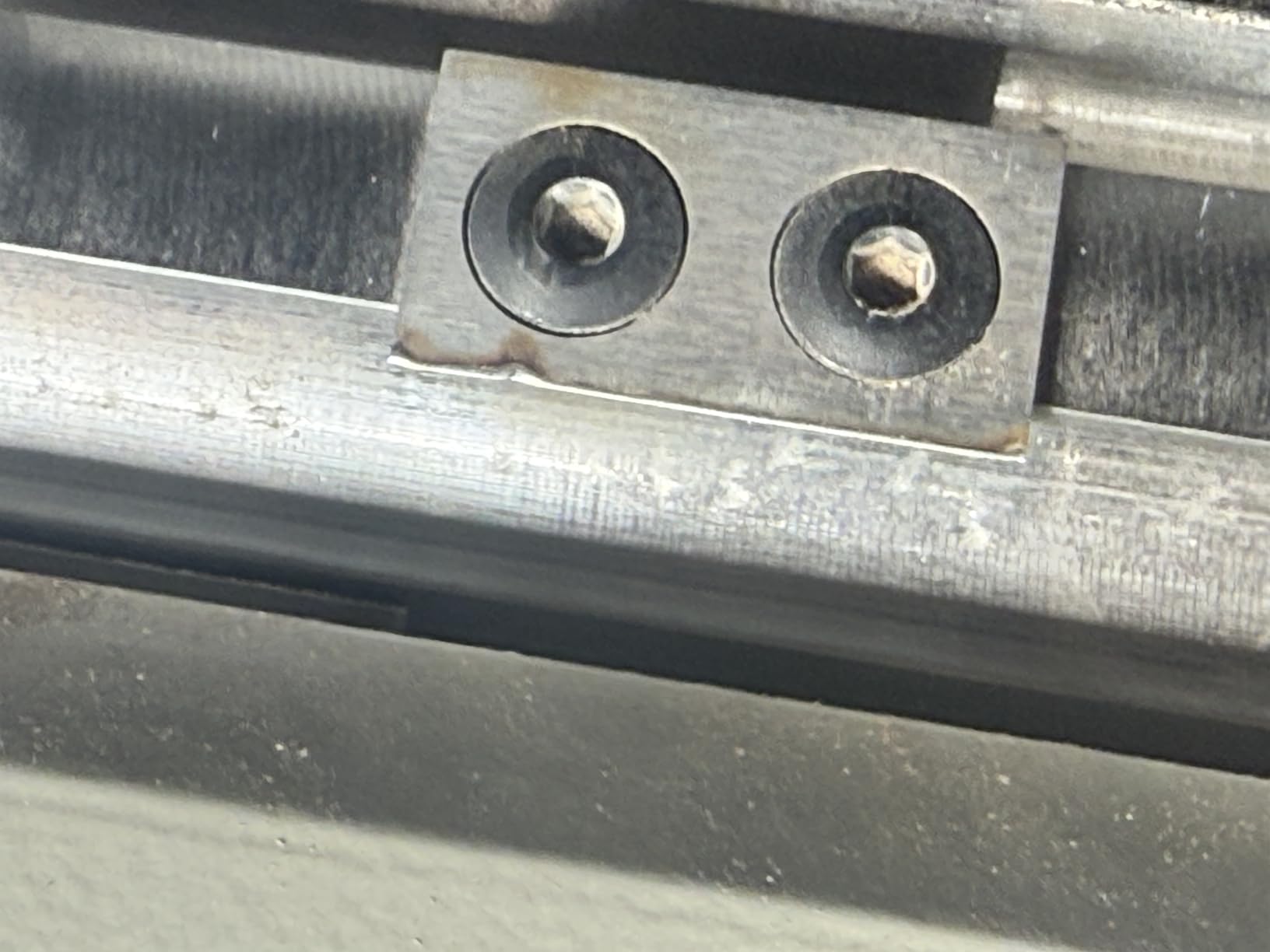
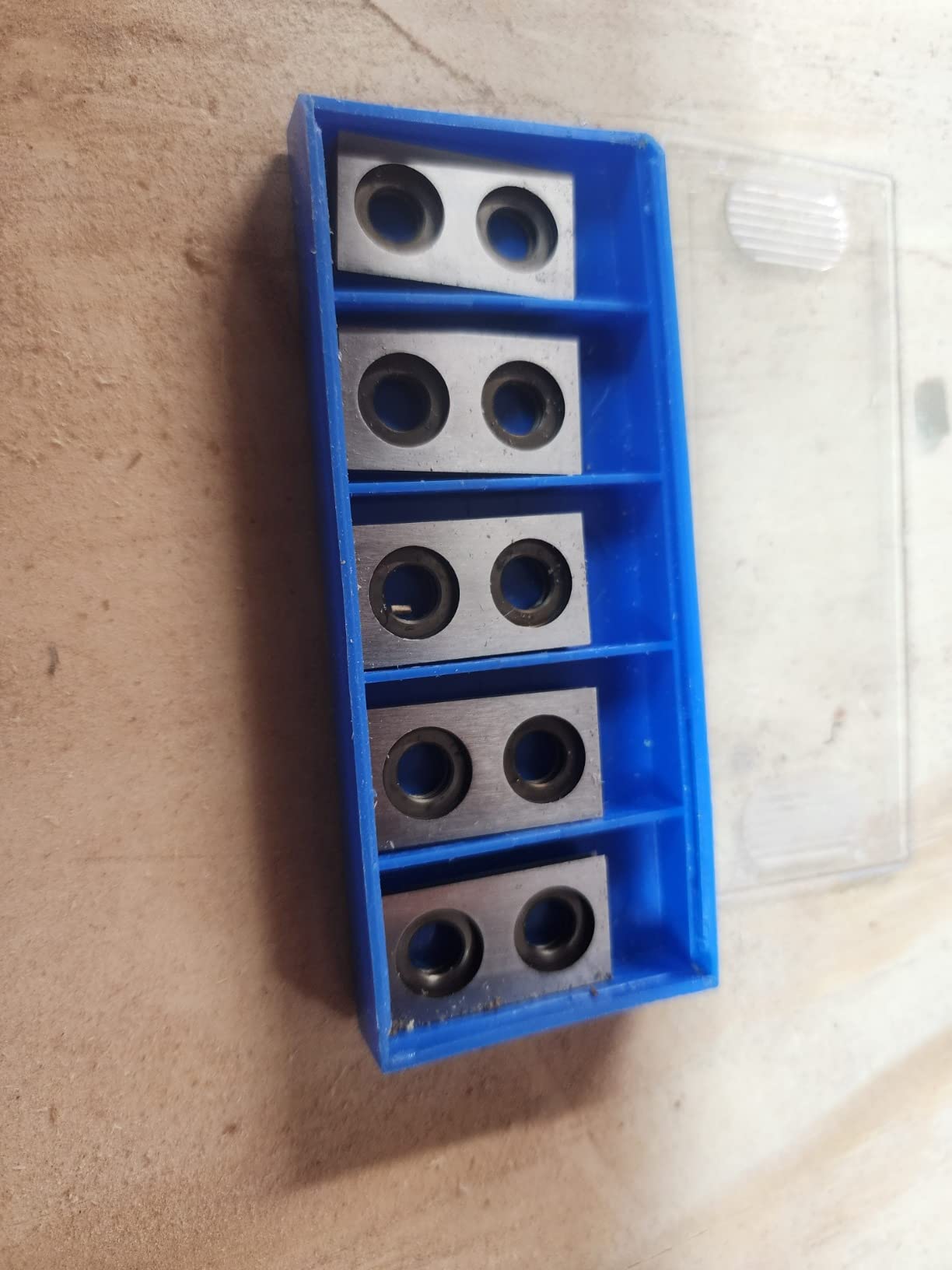
Read the inserts carefully. These are high-speed steel, not carbide, so they wear faster in hardwoods than a carbide helical head would. Owners still rate the surface highly, but anyone planning heavy hardwood volume should price the insert consumption before buying.
The warranty is the other line to read twice. It lists five years, but drops to two years for commercial or industrial use. If you are buying this as a business tool, the machine you actually receive is the two-year version, and that changes the value calculation against the mid-tier machines.
Where the JET JWP-13BT works
It works for a shop that produces visible furniture and cabinet faces where tear-out would cost you a sand-and-refinish cycle. The helical cutting action plus a cast iron bed is the combination that gets a figured board close to finished in one pass.
The folding tables and included dust hood also make it the tidiest premium option for a small room, where every inch of floor matters.
Where the JET JWP-13BT falls short
It falls short when the budget is medium and the workload is light. The build quality is not in question, but you are paying a cast iron bed and helical head for work that a spiral head already does well.
It also requires manual table leveling before use, which is fine once but is a real difference from machines that arrive closer to ready. Weigh that against the shorter commercial warranty before committing.
8. RIKON 25-135H Review – Compact Helical Setup With Two Speeds
RIKON 25-135H 13-Inch Portable Planer with Helical-Style Cutterhead
Width: 13 in
Head: 26 helical HSS inserts
Feed: 16 and 26 FPM
Weight: 68 lb
Pros
- Six-row helical-style head with 26 rotatable two-edge HSS inserts
- Two feed speeds at 16 and 26 feet per minute
- Threaded four-post support with depth gauge and thickness scale
- Handles lumber up to 13 inches wide and 6 inches thick
- Dust hood and 4 inch to 2.5 inch adapter included
Cons
- HSS inserts wear faster than carbide alternatives
- Small installed base makes parts support less predictable
- Aluminum base is less rigid than a cast iron bed on very flat work
- Small review pool limits long-term owner evidence
The RIKON 25-135H is the middle path through the helical tier. It handles 13 inch wide lumber up to 6 inches thick with up to 1/8 inch of depth of cut on boards 6 inches wide or less, and it does that at 68 pounds, which makes it the lightest helical-style machine in this group.
The threaded four-post head support is the detail worth noting. Combined with a depth gauge, thickness scale and repeat-cut control, it is what makes thickness settings repeatable between passes, and repeatable thickness is the entire point of owning a planer.
Two-edge inserts that rotate when worn extend the life of a set without a full replacement, which softens the running cost of a helical head. The included dust hood and the 4 inch to 2-1/2 inch adapter mean you are not hunting for a separate collection accessory on day one, and that matters more in a small shop than the specification suggests.
The honest limits are the same ones that apply to most helical-style machines with HSS rather than carbide inserts: faster wear in hardwoods, and less rigid behaviour than a cast iron bed when you want perfectly flat reference surfaces.
Where the RIKON 25-135H works
It works for a shop moving between helical-quality surfaces and manageable weight, particularly one that wants two feed speeds and included dust collection hardware without stepping up to the cast iron premium tier.
For shops that plan frequently and change thickness setups between jobs, the repeat-cut control and threaded support make it less fussy than entry machines with pull-out table extensions.
Where the RIKON 25-135H falls short
It falls short for very flat reference work. The aluminum base is less rigid than a cast iron bed, so if your standard is furniture-grade flatness across wide stock you will be happier with a cast iron machine.
It also falls short as a long-horizon business purchase. The review pool here is small, which means less long-term owner evidence, and a smaller installed base can make parts and service harder to source. For a shop that plans to keep a planer for a decade, weigh that against the machines with deeper owner histories.
How to Choose a Benchtop Planer for a Small Shop
How we narrowed this list to eight machines
We covered the spec tiers that actually appear in small shops: entry two-knife machines, mid straight-knife machines, spiral heads, helical-style heads, and the premium cast iron options. We skipped near-duplicate models from the same line, because a second variant of a machine you already considered adds nothing to a decision.
Each machine was judged on published specifications and on the themes owners repeat over long ownership, not on short impressions. Where a figure exists in the manufacturer data we use it. Where owners describe a behaviour, we say so as owner reports.
Straight, spiral or helical cutterhead – the decision that matters most
This is the highest-value choice on the page, so it is worth being precise. A straight-knife head uses two or three full-width knives. It cuts by chopping action: the edge hits the board, the fibre is pushed straight down, and the part of the edge trailing behind lifts material. That is why straight knives tear out on figured and interlocked grain, and it is also why they are the loudest, because a full-width edge flapping at 10,000 rpm compresses a lot of air.
A spiral head uses many small staggered blades, and a helical head arranges those blades in rows at an angle. Both take small bites instead of full-width ones, so the cut shears rather than chops. That single change is responsible for quieter running, far less tear-out, and blades that rotate instead of being replaced. It is why a helical machine costs multiples of a straight-knife machine: you are not paying for brand, you are paying for surface quality and for time you no longer spend sanding a board you ruined.
Width and thickness capacity: 12 inch versus 13 inch
Most 1x lumber is nominally 12 inches wide, so a 12 inch machine covers the majority of work and 13 inch machines give you margin for ripped stock and edge-glued panels. The machines here range from 11.86 inches of actual cutting width up to 13 inches.
Maximum thickness matters less in a small shop. Almost everything in this roundup planes 6 inch thick capacity, which is well past anything you would buy for a hobby. Check the width against your worst-case stock instead.
Feed speed and cuts per inch, and what two speeds actually buy
Cuts per inch is how many times the cutterhead strikes each inch of board. A higher number means smaller bites and a finer surface. Most straight-knife machines here run at 96 cuts per inch; the DeWalt DW735X adds 179, and the two-speed machines in this group express the same idea as feet per minute.
What two speeds actually buy you is patience management. Rough dimensioning on warped or reclaimed boards wants the fast setting so you do not spend five minutes removing half an inch. Finish passes on cabinet parts want the slow setting for a surface that needs less sanding. One speed forces you to make that compromise on every board.
Snipe and the table setup that fixes it
Snipe is the stepped dip at one end of a planed board. It happens because for the last few inches of travel only one feed roller is gripping the board, so the head weight pushes it down. Nearly every first-time owner meets it and nearly every first-time owner assumes it is a defect. It is usually a setup issue.
The widely recommended rule from experienced users is counterintuitive: do not level the tables to the bed. Set the leading and trailing edges of the infeed and outfeed tables about 1/8 inch higher than the bed. The board then enters and leaves on a slight downward step that keeps pressure on the rollers for the full length of the pass. In practice:
Set both tables so their leading and trailing edges sit roughly 1/8 inch above the bed rather than flush with it
Check the table height at the front and the rear separately, not just in the middle, because most factory errors are a fore-to-aft slope
Run a scrap board and look at both ends; a dip at one end means that roller is not gripping
Clean pitch and sap off the feed rollers, because slippage reads exactly like a depth problem
Rub a coat of paste wax or Johnson’s-style wax on the beds so boards feed smoothly instead of sticking and lifting
Knife and insert cost of ownership
Forum buyers ask this question constantly and almost no roundup answers it. The honest framing is that a benchtop planer is a consumables machine, and the running cost is the more important number than the purchase cost.
For a straight-knife machine, budget a knife set as a scheduled line item tied to board feet rather than calendar time. DeWalt owners treat a disposable knife set as a modest consumable rather than a major expense, and long-term owners commonly report 15 to 20 years of service before needing to flip a set, so a busy small shop amortises that comfortably.
For a spiral or helical-style machine, the running cost shifts from replacement sets to rotating inserts. Two-edge HSS inserts are rotated rather than thrown away, and a carbide head will outlast them many times over. The trade is the initial insert cost, which is why the helical tier prices the way it does.
Shop fit: footprint, dust, circuit and service access
Weight is the number that decides where the machine goes. The heaviest machine in this group is the DW735X at 102 pounds, and the lightest helical-style option is the RIKON at 68 pounds. Neither is a casual lift, so plan a stand or a flip cart as part of the purchase rather than as an afterthought. Machines with folding infeed and outfeed tables give back floor space when the machine is not being used.
Circuit sharing is the second shop-fit filter. A 15 amp planer running at the same time as a dust collector on the same 15 amp circuit is the most common trip-breaker scenario in owner reports. One dedicated circuit for the planer costs less than a day of lost work.
Chip volume is the third. Straight knives and spiral heads throw large chips that a shop vacuum cannot keep up with, and a helical head throws finer airborne dust instead. If your shop is small enough that you have to open a door or run the machine outdoors to cope, that is a reason to buy a dust collector in the same decision cycle rather than later.
Service proximity is the filter almost no roundup mentions, and small-shop owners raise it repeatedly. Warranty repairs still require drop-off or shipping, so measure the distance to a service centre before choosing an obscure brand. That is why we have weighted machines with deep owner histories and widely available parts higher than a machine that merely has better written specifications. Machines with a serviceable head casting, common fasteners, and a large installed base are worth paying for.
If your shop has room for one more benchtop machine rather than one more planer, our best benchtop drill presses guide covers the other machine that earns its place in a sub-200-square-foot workspace.
Who should not buy a benchtop planer yet
If you build a project or two a year from pre-surfaced boards at the lumberyard, do not buy one. A random orbital sander and a belt sander will serve you better for the money, and the planer will sit under a cover collecting dust. This is the most common question in woodworking forums and the honest answer is frequently no.
A planer starts to pay for itself when one of three things is true: you regularly work rough or reclaimed lumber, you produce parts that need exact matching thickness, or you are sawing your own lumber and the boards arrive at uneven sizes. If none of those apply, save the money.
A second honest note: a planer does not replace a jointer. It makes faces parallel but will not flatten a cupped or twisted board. Shops under about 150 square feet that need both functions are usually better served buying one good jointer first.
Frequently Asked Questions
What is the best budget benchtop planer?
The WEN PL1326 is the best budget benchtop planer for most small shops. Its 26 rotatable HSS spiral blades produce a much finer surface than a straight-knife machine at a similar tier, and the blades rotate before replacement to roughly double their life. The Craftsman CMEW320 is cheaper still if your work is rough lumber only.
Is a Craftsman planer worth it?
Yes, for rough and reclaimed lumber it is worth it. The Craftsman CMEW320 has a two-knife quick-change solid steel head on ball bearings, reversible high carbon steel knives, and base holes for bolting it down, and owners report very heavy board footage before blade degradation. The honest trade-off is that two knives leave a coarser surface, so it needs more finish sanding than a three-knife or spiral head.
What are the differences between the DeWalt DW735 and DW735X?
The machine itself is the same. The DW735X adds a second set of knives and the folding infeed and outfeed tables, so a small shop does not have to buy them separately. Motor, three-knife cutterhead, 13 inch width and the two feed speeds at 96 or 179 cuts per inch are identical. If you already own the tables and a spare knife set, the DW735 is the better purchase.
Is a benchtop planer worth it for a small shop?
It is worth it if you regularly work rough, reclaimed, or rough-sawn lumber, or if you need parts at matching thickness. It is not worth it if you build a project or two a year from pre-surfaced boards, because a random orbital sander serves you better for the money. Budget for a stand and dust collection at the same time, since the machine is heavy and noisy.
What is the best benchtop planer with a helical cutterhead?
The JET JWP-13BT is the strongest helical-style option for a small shop, with a cast iron bed, four-post head support and 26 quick-change HSS inserts in six rows, plus two feed speeds at 18 or 26 feet per minute. The RIKON 25-135H is lighter at 68 pounds and includes a dust hood and adapter. Both use high-speed steel rather than carbide inserts.
The Verdict for Small Shops in 2026
The best benchtop planers for small shops in 2026 come down to one question: what is hardest in your space. If it is noise, buy the Makita 2012NB at 83 dB. If it is surface quality on figured hardwood, buy the WEN PL1326 for the spiral head or the JET JWP-13BT for the cast iron bed. If it is general production on rough lumber, buy the DeWalt DW735X, which is the machine most shops land on and the only one that arrives with tables and a spare knife set already in the box.
Whichever you choose, buy the stand, the dust collection and the dedicated circuit in the same order. A planer is not a single-machine purchase in a small shop, and the shops that get the most out of theirs treat it that way from day one.
If you are still building out the space, our multiprocess welders for home shops guide covers the other common next purchase once the woodworking side is sorted. For the metal side of a small shop, our security cameras for small businesses roundup is worth a look once expensive machines are in the building.