
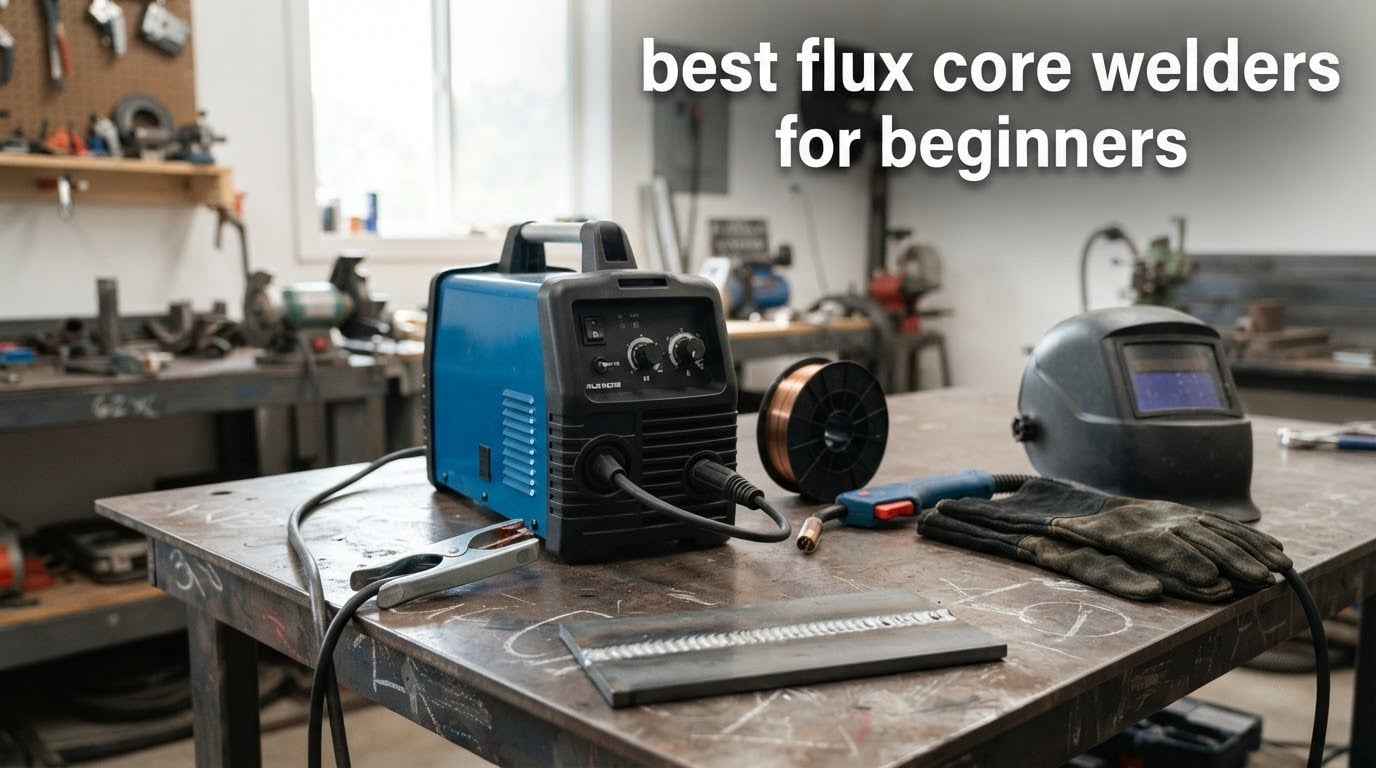
A first welder is one of those purchases where the gap between a machine that frustrates you and a machine that teaches you is about thirty dollars. That is the whole reason the best flux core welders for beginners get so much attention in 2026: the process is the most forgiving entry point into real welding, and the machines have gotten genuinely capable at a fraction of what professional equipment costs.
Flux core welding, also called FCAW, uses a tubular wire that carries its own flux inside it. When you pull the trigger, the flux vaporizes and shields the molten bead from the air, which means no shielding gas cylinder, no gas regulator, and no rental deposit sitting in your garage corner. It is why the same machine works in a windy driveway and in a cluttered workshop, and why a beginner can plug it into a household circuit and start making beads the same afternoon.
We spent weeks going through owner reviews, spec sheets, and forum threads for eight machines to build this list, and we kept the trade-offs in plain view rather than burying them. Flux core is messy. It spatters, it leaves slag, and cleanup takes a chipping hammer and a grinder. If your goal is a clean, cosmetically perfect bead on stainless or aluminum, gas-shielded MIG is the better process. If your goal is learning to move hot metal on mild steel, outdoor repairs, hangers, brackets, gates, trailer work, and floor pans, flux core is the faster and cheaper road in.
Before you read further, tell yourself three things: what you want to weld, what you can budget beyond the machine, and whether you have access to a 120V outlet only or a 240V circuit. Those three answers eliminate half the list before you start.
Table of Contents
Top 3 Picks for the Best Flux Core Welders for Beginners (October 2026)
The three machines below cover the widest spread of beginner needs. The Forney leads on raw output and a real warranty from an established welding brand, the YesWelder is the strongest value because it ships with wire and does three processes, and the ARCCAPTAIN is the cheapest credible way to get a working gasless machine on the bench.
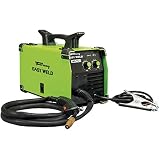
FORNEY Easy Weld 140 FC-i
- 140A output welds 1/4 inch mild steel
- Handles 2 lb and 10 lb wire rolls
- 19 lb all-metal case
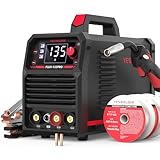
YESWELDER 135A 3-in-1
- 135A on 110V with synergic control
- Includes .030 and .035 flux wire
- Flux core
- stick and lift TIG
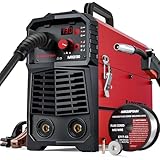
ARCCAPTAIN 130A Flux Core Welder
- 130A on 110V in an 11.79 lb body
- Accepts .030
- .035 and .040 wire
- Two year manufacturer warranty
Best Flux Core Welders at a Glance in 2026
Every machine below runs on 120V household power except where noted, and every one of them uses self-shielded flux-cored wire so you never need a gas bottle. Read the table first, then jump to the full review for the one that matches your project list.
| Product | Specifications | Action |
|---|---|---|
| FORNEY Easy Weld 140 FC-i |
|
Check Latest Price |
| YESWELDER 135A 3-in-1 |
|
Check Latest Price |
| ARCCAPTAIN 130A |
|
Check Latest Price |
 AZZUNO MIG 130F AZZUNO MIG 130F |
|
Check Latest Price |
 GZ GUOZHI 140A GZ GUOZHI 140A |
|
Check Latest Price |
 HITBOX 200A HITBOX 200A |
|
Check Latest Price |
 bestarc 145A 4-in-1 bestarc 145A 4-in-1 |
|
Check Latest Price |
 Lincoln Electric 90i FC Weld-Pak Lincoln Electric 90i FC Weld-Pak |
|
Check Latest Price |
Is Flux Core Actually the Right First Welder for You?
The honest answer is that MIG is easier to learn, and the r/Welding consensus says so repeatedly: a MIG welder is usually the best machine for learning because the arc is quieter, the bead is cleaner, and cleanup is a thirty-second job instead of a ten-minute one. If your goal is visible stainless grates, aluminum, or any part where appearance matters, start there.
But that advice assumes you already have a gas cylinder, a regulator, and a ventilated indoor workspace. For outdoor work, farm and ranch repairs, trailer hitches, gate hardware, and anything involving rust, paint, or dirty steel, flux core wins on the fundamentals. It does not care about wind, it does not need shielding, and it tolerates the kind of sloppy surface prep that a beginner struggles to avoid.
There is also a practical argument for buying one of these machines first. The forums are full of owners who welded an entire auger housing, patched a floor pan, or built a trailer frame with almost no training. A beginner who gets a real project finished is a beginner who keeps welding. Getting a clean-but-frustrating machine put in a garage corner is how people decide welding is not for them.
1. FORNEY Easy Weld 140 FC-i – Most Power in a Beginner Box
FORNEY Easy Weld 140 Amp 120-Volt Flux-Cored Wire Feed Welder (No Gas Needed)
140A output
Welds 1/4 in mild steel
0.030 flux core wire
2 lb and 10 lb rolls
19 lb
12 month warranty
Pros
- Highest output in a straightforward single-process box
- Handles 1/4 inch mild steel
- 140A of real headroom
- Accepts both 2 lb and 10 lb spools so you stop buying small wire
- All-metal case rated for daily work
- Infinite voltage and wire feed speed control
- 8 ft gun and 8 ft ground clamp included
Cons
- Flux core only with no MIG
- stick
- or TIG mode
- Heavier than the multi-process budget machines
- Flux core wire not included in the package
This is the machine we keep coming back to. At 140 amps it welds up to 1/4 inch mild steel, which is the real ceiling for what a 120V plug-in flux core welder can do well, and it gets there without the machine fighting you. Forney is also the one brand on this list with a name that welders already recognize, and 3387 owner reviews is the deepest pool of long-term feedback in the group.
The wire handling is the detail that separates it from cheaper boxes. It takes both 2 lb and 10 lb rolls of 0.030 flux-cored wire, so you can start with the small spool and move to 10 lb spools once you burn through your first one. That alone removes a recurring annoyance, because the tiny spools are where cheap machines struggle most.
Control is manual and honest: infinite voltage and infinite wire feed speed, no hidden menus, no synergic guessing. Beginners sometimes assume automatic is better, but on a machine this size, two knobs you can actually feel is often faster than a display trying to decide for you. Owners report that once the settings land, the arc stays consistent through the whole bead.
The included 8 ft MIG gun and 8 ft ground clamp are longer than the short leads that come with cheaper machines, and reviewers call that out as a real quality-of-life difference on a workbench or a trailer. A 20A to 15A adapter is in the box too, which matters if your outlet is on an older 15A circuit.
Is the 140 amps worth the extra bulk?
Yes, if you plan to weld anything heavier than 16 gauge. The jump from a 130A machine to 140A is not dramatic, but the 1/4 inch rating is the difference between a machine that can handle structural brackets and one that struggles and spatters. At 19 pounds it is still a one-hand carry, and the all-metal case is the kind of build detail that decides whether the machine survives a decade of knocks.
What you are giving up with a single-process machine
There is no gas MIG, no stick, and no TIG mode. If your project list includes aluminum, stainless that needs a cosmetic finish, or 6011 stick electrodes for bodywork, you will need a second machine eventually. The 12 month warranty is also the shortest of the multi-process options here, so treat the Forney as a capable single tool rather than a lifetime investment.
2. YESWELDER 135A 3-in-1 – Best Value for the Money
YESWELDER 135A MIG Welder, 110V Flux Core Gasless MIG/Lift TIG/Stick 3-in-1
135A on 110V
Mild steel to 3/32 in
Gasless flux core, stick, lift TIG
Includes .030 and .035 wire
11.4 lb
Pros
- Synergic control matches voltage to wire feed speed automatically
- Comes with a pound of .030 and .035 E71T-GS wire so you can weld immediately
- Three processes in one 11.4 lb body
- Oversized LED display readable outdoors
- 135A handles 3/32 inch mild steel on a 20A circuit
Cons
- Lift TIG torch sold separately
- DC output only so aluminum TIG is out
- Spool holder and tensioner are cheap and easy to overtighten
The thing that makes this machine hard to argue against is the box contents. You get a pound of .030 wire and a pound of .035 E71T-GS flux core wire, the MIG torch, the electrode holder, and the ground clamp. On most machines in this price range you buy wire before your first weld, and that first purchase is where a lot of beginners stall.
Synergic control is the second reason. Once you turn the wire feed speed knob, the machine sets a recommended voltage for you, and a plus or minus 3V trim lets you nudge it. Owners describe it as close to foolproof, which is exactly the right word for a first machine. The oversized LED display showing live current is unusually legible in daylight, which matters for outdoor work.
Long-term hobbyist reviews report a consistent arc and steady wire feed on a 20A 110V circuit, and the 76% five-star share reflects a machine that simply works for its stated job. The stated job is 3/32 inch mild steel, and at 135 amps that is a meaningful limit to know about before you buy.
Will synergic control stunt your growth as a welder?
It can hide the relationship between amperage and wire speed, which is the concept that makes real troubleshooting possible later. The plus or minus 3V trim exists for exactly that reason, and once you can feel the difference between a hot arc and a cold one you will start overriding it anyway. For the first fifty hours, the automation is a genuine advantage rather than a crutch.
Where the cost cutting shows up
The spool holder and tensioner are the weak point, and reviewers specifically warn that overtightening the tensioner crushes the flux wire. Treat it gently and change wire diameters often, because switching between .030 and .035 on the same machine is a common beginner move. Lift TIG needs a separate torch, and the DC-only output rules out aluminum TIG entirely, so treat that third process as a carbon steel bonus.
3. ARCCAPTAIN 130A – Best Budget Starter With Three Processes
ARCCAPTAIN 130A Flux Core Welder MIG Welder 110V Gasless MIG Stick Lift TIG
130A on 110V
Gasless flux core, lift TIG, stick
.030, .035 and .040 wire
11.79 lb
2 year warranty
Pros
- Synergic setup after you select the wire diameter
- Three processes in a compact body
- Includes torch
- ground clamp
- electrode holder
- tips and a 2 lb spool of .030 wire
- Lightest 130A machine here at 11.79 lb
- Two year manufacturer warranty is long for the price
Cons
- Lift TIG torch sold separately
- No gas MIG mode so aluminum and stainless MIG are unsupported
- 130A is limited to thin gauge mild steel
This is the most honest budget pick on the list. It is not the cheapest machine here, but the two-year manufacturer warranty and the fact that it arrives with a 2 lb spool of .030 wire, a torch, tips, a ground clamp, and an electrode holder make it the one most likely to produce a finished project rather than a dusty shelf item.
The wire compatibility is broader than most competitors at this output level. It takes .030, .035, and .040 flux core wire, which means you are not locked into one diameter when you outgrow the starter spool. The 10-speed variable feed control gives you discrete, repeatable positions instead of a vague continuous knob, and the synergic system matches current and feed speed once you tell it the wire diameter.
Reviewers consistently describe the automatic wire-size setup as the reason the machine is easy to learn on, and the 80% five-star share backs that up. At 11.79 pounds with a carrying handle and shoulder strap, it moves from the bench to a driveway without a second thought.
Is the 130A limit going to bother you?
If your first project is a workbench frame, a set of gate hinges, a trailer jack mount, or a patch panel, 130 amps is genuinely enough. It is not enough for structural steel, and pushing a 130A machine toward its limit is where spatter and wire feed trouble start. Know your thickest planned material before you commit, and if that number is above 3/16 inch, step up a size.
Why there is no gas MIG mode
Because the machine is built around the gasless process, and adding a shielded MIG path plus a gas outlet would have raised the cost. That means aluminum and stainless MIG are off the table here. For a beginner working on mild steel in an unheated space, that limitation costs nothing, and it is the trade that makes the two-year warranty affordable.
4. AZZUNO MIG 130F – Lightest Machine That Runs a Clean Bead
AZZUNO MIG Welder,Flux Core Welder Machine 110V 130Amp, Gasless MIG Welding Machine IGBT Inverter Welder Portable Wire Feed Welder (110V)
130A DC output
110V
Mild steel to 3.0mm plate
8.6 lb
2.2 lb wire roll
Pros
- Lightest machine in the group at 8.6 lb
- DC power source for a focused
- steady arc
- Separate voltage and wire speed knobs plus synergic auto control
- Package includes torch
- ground clamp
- chipping brush and hammer
- a pound of .030 wire
- and two contact tips
Cons
- Rated only to 3.0mm mild steel plate
- Flux core only with no stick or TIG mode
- One year warranty and basic accessories
Weight matters more than most spec sheets admit. A machine you can carry from the garage to the truck bed in one hand is a machine you will actually use on a fence post or a bumper repair, and at 8.6 pounds this is the one to carry. The compact body and comfortable hand grip were clearly designed with that in mind.
The control layout is the surprise here. You get a dedicated voltage knob, a dedicated wire feed speed knob, and synergic control that adjusts both automatically when you change wire size. Having the manual overrides available from day one means you can follow a starting recipe in the manual and then learn why it worked, which is a better learning path than being forced to guess.
DC power source means the output is a fixed polarity rather than alternating, and users report a steadier, more focused arc than they expected from a machine this compact. It handles 2.2 lb wire rolls, which is larger than the 2 lb limit on some machines here and means fewer wire changes during a project.
Is 3.0mm plate enough for real work?
Three millimeters is a little over 1/8 inch, and that covers a large share of a beginner’s first year: shelf brackets, gate hardware, trailer frame rails up to 1/8 inch, repair patches, and hangers. It does not cover 1/4 inch structural work. If you already know your projects need heavier material, spend the extra money on a 140A machine instead of discovering this limit on a Saturday.
What you give up at this weight
Only the numbers. There is no stick mode and no TIG mode on this configuration, so the machine does one job, and 3.0mm is the ceiling. The one-year warranty is the shortest here. Reviewers also treat the consumables as basic, so plan on ordering contact tips and nozzles sooner than you would with a Forney or a Lincoln.
5. GZ GUOZHI 140A – Best for Cold-Weather Outdoor Work
GZ GUOZHI 140A MIG Welder,3-in-1 MIG Welder with FLUX MIG/ARC/Lift TIG Multi-Process,110V Welding Machine,110V Flux Core Welder with Welding Gun(black)
140A 3-in-1
90V-140V wide input design
Operates to -15C
14.1 lb
2 lb spools
Pros
- Wide 90V-140V input design tolerates voltage swings
- Digital flux MIG
- stick and lift TIG with a stable low-spatter arc
- Synergic control with a manual override for fine tuning
- Includes 500A electrode holder
- 500A ground clamp and a pre-installed MIG torch
Cons
- Cannot burn 7018 electrodes larger than 3/8 inch
- Included contact tips wear quickly
- Short power cord
If your welding happens outside, the input voltage range is the number that matters here. A 90V to 140V wide voltage design means the machine keeps working when the input sags, whether that is a long extension cord, an old circuit, or a generator running slightly under load. Owners doing winter work in unheated spaces consistently call out stable arc behavior as the reason the machine holds up.
The arc itself is the other selling point. Digital flux MIG with a dynamic cycle control delivers what reviewers describe as good .035 beads with less spatter than they expected at this output, and the synergistic control links current, voltage, and wire feed together while still allowing a manual mode for free adjustment.
It takes 2 lb spools of .030 and .035 flux core wire and rods under 1/8 inch for stick, and it comes with a pre-installed MIG torch plus 500A electrode holder and ground clamp. At 14.1 pounds it is portable without being fragile-feeling.
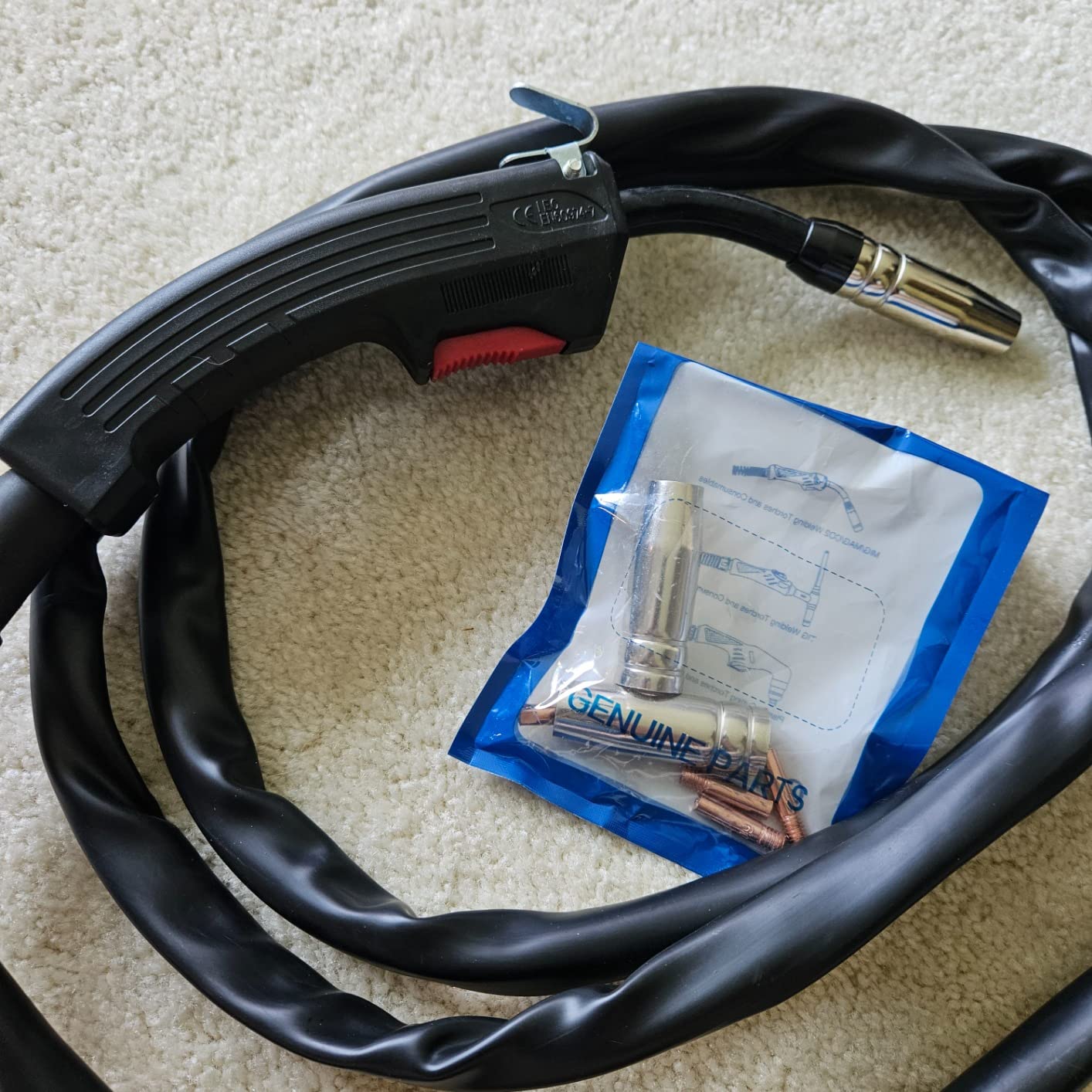
Two caveats worth knowing before checkout. The stick side cannot handle 7018 electrodes larger than 3/8 inch, which caps that process for heavy structural work. And the included contact tips wear quickly, so buy a spare set with the machine rather than discovering it mid-project.
The short power cord is the most common complaint, and the second most common is cosmetic damage from handling in transit, with bent ground clamps and dented handles showing up on some units. Inspect the package the moment it arrives and check the ground clamp before you start.
Does the cold-weather rating actually help?
It helps in the way you would hope. A machine that keeps a stable arc on a sagging input is far more pleasant to learn on, because the arc changes less while you are trying to control travel speed and stickout. Beginners who get a machine that wanders blame themselves, when the real cause is power delivery.
What about the 2 lb spool limit?
A 2 lb spool runs out quickly once you are laying consistent beads, and swapping spools mid-session is the sort of interruption that discourages beginners from welding another day. If you can live with it, the 2 lb format keeps the machine compact. If you expect to burn through wire fast, budget for a spool gun setup or choose a machine that takes larger rolls.
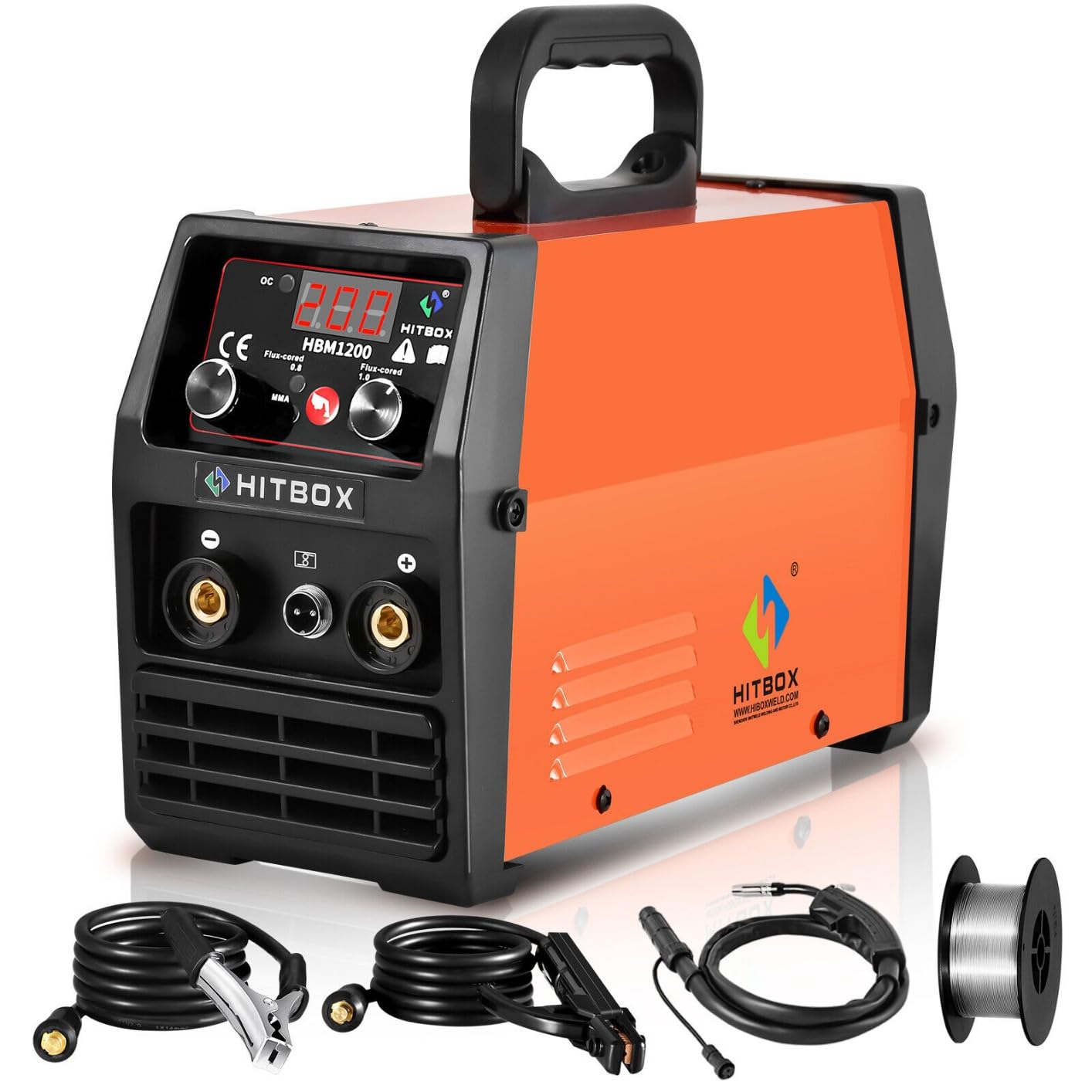
6. HITBOX 200A – Most Output From a 120V Socket
HITBOX 200A MIG Welder, 110V/220V Flux Core MIG/Lift TIG/Stick 3-in-1
Up to 200A output
110V and 220V dual voltage
IGBT inverter
Mild steel to 4.0mm
6.6 lb
Pros
- Dual 110V and 220V IGBT inverter output in a tiny body
- Heaviest output available from a household circuit
- Clean low-spatter flux core welds on light gauge material
- Metal housing with over-current
- overload
- over-voltage and overheat protection
- Includes torch
- ground clamp
- electrode holder
- .035 wire and nozzles
Cons
- Actual output runs 20 to 30 percent below the displayed value
- Only holds a 2 lb wire spool
- No hot start and stick mode struggles with 6010
- 6011 and 1/8 inch 7018
- Instructions are minimal
The headline number is up to 200 amps, and this is the only machine here that also runs on 220V when you have a dedicated circuit. That combination is unusual at this size and weight. If you already have a 240V outlet in your shop, this machine uses it; if not, it still performs on 120V, which is a genuinely flexible arrangement for a first purchase.
Owners report clean, low-spatter flux core welds on light gauge material and quieter operation than several more expensive hobby machines, and at 6.6 pounds it is the easiest machine here to carry. The IGBT inverter platform handles voltage fluctuations better than a simple transformer design, which is why the arc stays steady in less-than-ideal conditions.

Now the honest part, because this machine needs a caveat and you should hear it before buying. The most detailed long-term review flags that actual output runs 20 to 30 percent below the displayed amperage, which means your dial settings do not map to the numbers on the faceplate. You will calibrate by feel, and that is an extra step a beginner has to discover alone.
Stick performance is also limited: there is no hot start, and the machine struggles with 6010, 6011, and 1/8 inch 7018 rods. It holds a 2 lb spool only, the included ground clamp warps quickly, and the wire can jam in the cable assembly if it touches the contact tip. Budget for replacement consumables and a better ground clamp early on.
Should a beginner calibrate amperage by feel?
Only if you have a mentor or a good reason. Real-world calibration is a skill, and spending your first month learning it on a machine with no hot start is not ideal. It is manageable if you read reviews from buyers who already did the work, but budget for that research time.
Is dual voltage worth it if you only have 120V?
It is worth it as insurance. Plenty of people buy a 120V-only machine and later move to a shop with a 240V circuit, and a dual-voltage unit grows with the move. If you already have the 240V circuit, the higher output ceiling makes this the strongest option here for thicker mild steel than 4.0mm.
7. bestarc 145A 4-in-1 – Most Processes Per Machine
Bestarc 145A MIG Welder, Flux Core/Gas MIG Stick Lift TIG Welding, 110/220V
Gas MIG, gasless flux core, lift TIG and stick
110/220V dual voltage
Mild steel with solid or flux wire
13.7 lb with shoulder strap
Pros
- Only machine here combining dual voltage with gas MIG and gasless flux core
- Synergic IGBT control with minus 3V to plus 3V fine tuning
- Strong clean penetration on 1/8 inch steel
- Solid ground clamp and a good 60 percent duty cycle for the class
- LED display shows the detected input voltage
Cons
- Torch
- power and ground cables are shorter than advertised
- Spool tension spring is not adjustable
- Included foil nozzle shield burns through quickly
- Manual does not explain the wire feed versus voltage knob
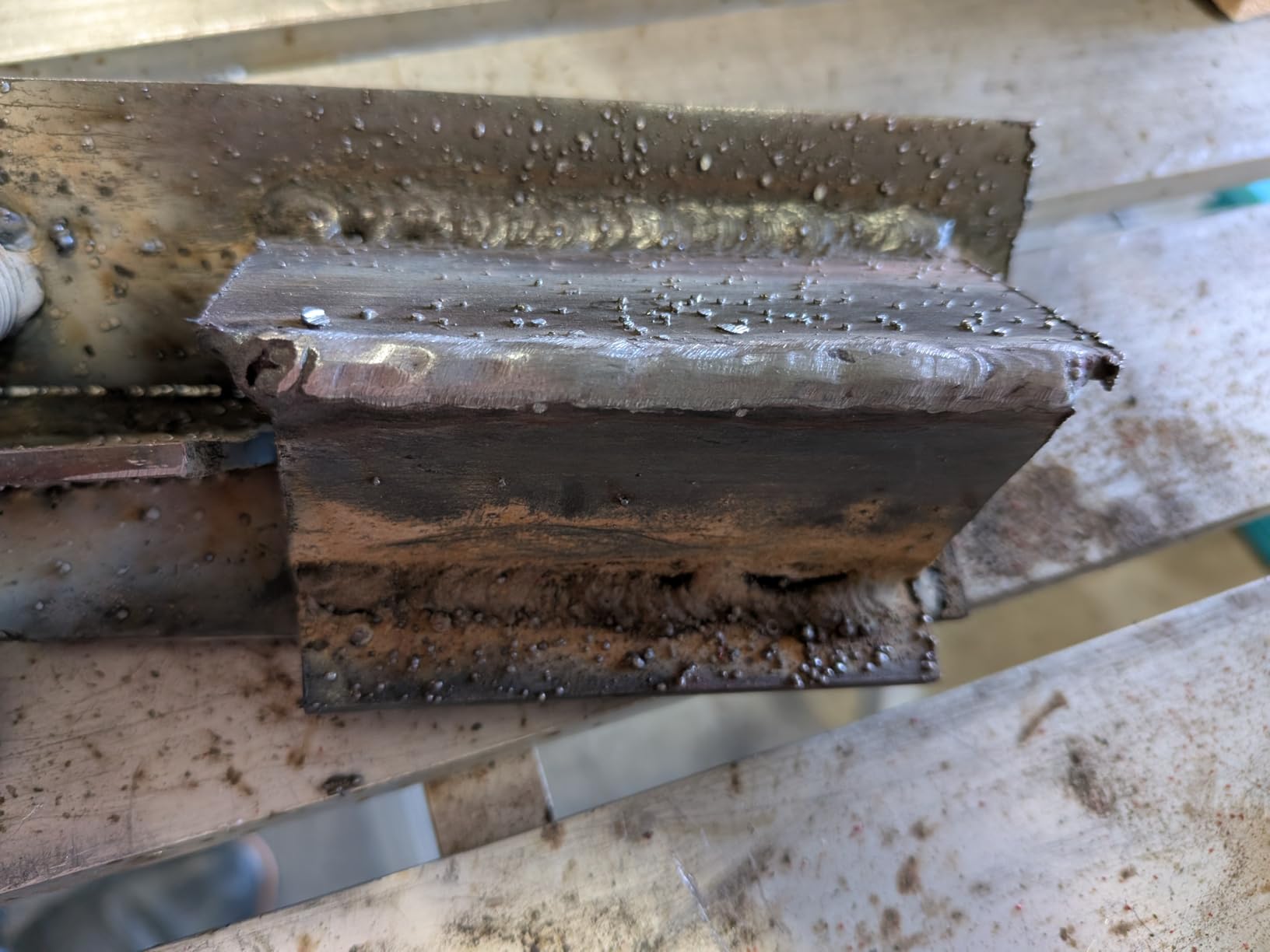
This is the machine that removes the biggest objection to flux core. It runs gasless flux core for outdoor work and gas-shielded MIG for clean indoor beads on the same unit, plus lift TIG and stick. If your project list crosses those lines, the conversation about whether MIG is the better first process becomes a lot less important.
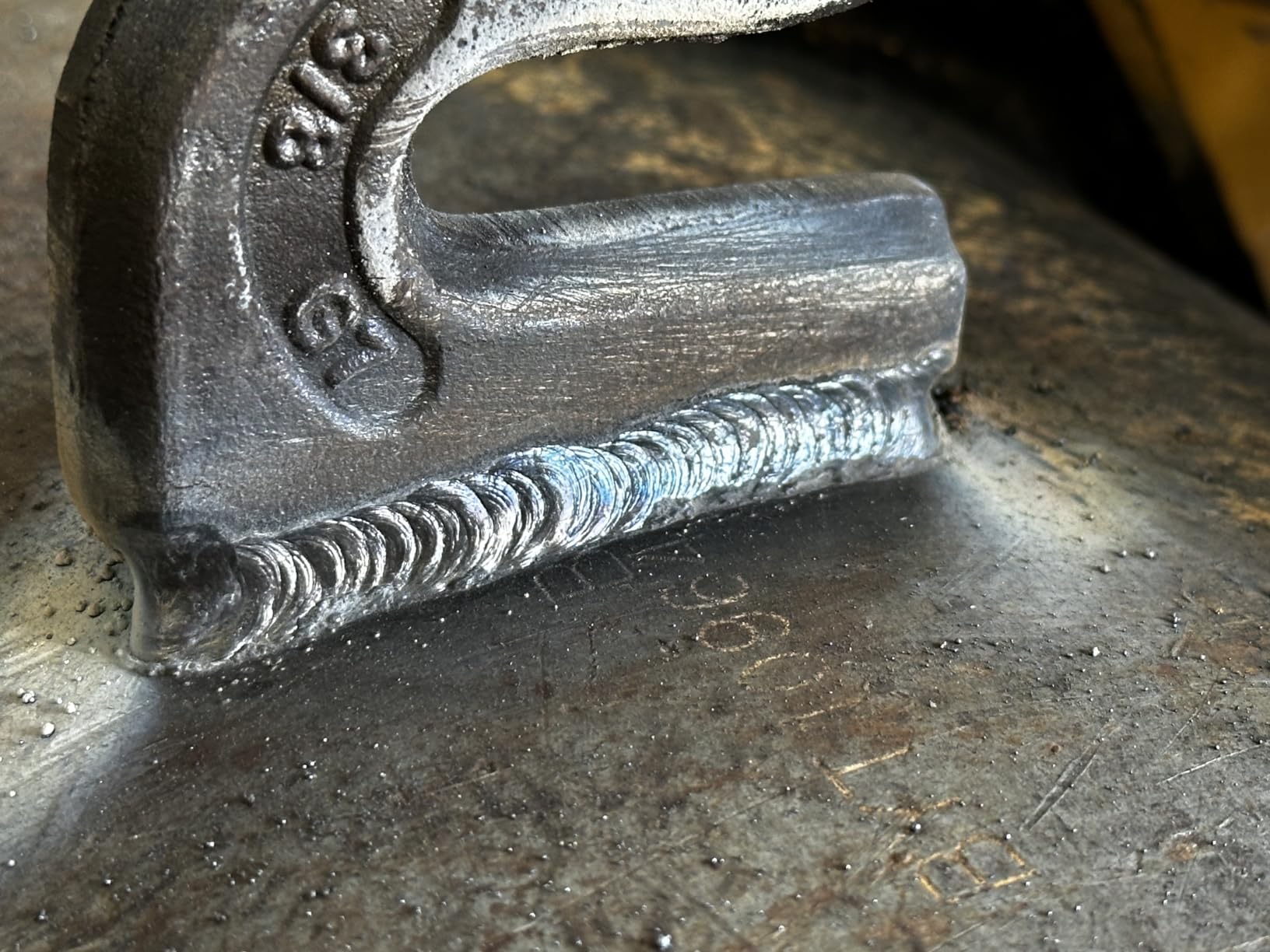
Weld quality relative to cost is where it earns its reputation. Owners report strong, clean penetration on 1/8 inch steel and better-looking welds than from several higher-priced hobby machines, and the 60% duty cycle is the strongest rating in this group. Duty cycle is on/off minutes in a ten-minute cycle, so 60% means roughly six minutes of welding followed by four minutes of cooldown.
Auto-detect 110V and 220V is genuinely useful. Plug it in anywhere, and the front panel tells you which voltage it settled on. It accepts .030, .035, and .040 flux core wire plus .030 solid wire, and the shoulder strap makes the 13.7 lb body easy to take outside.
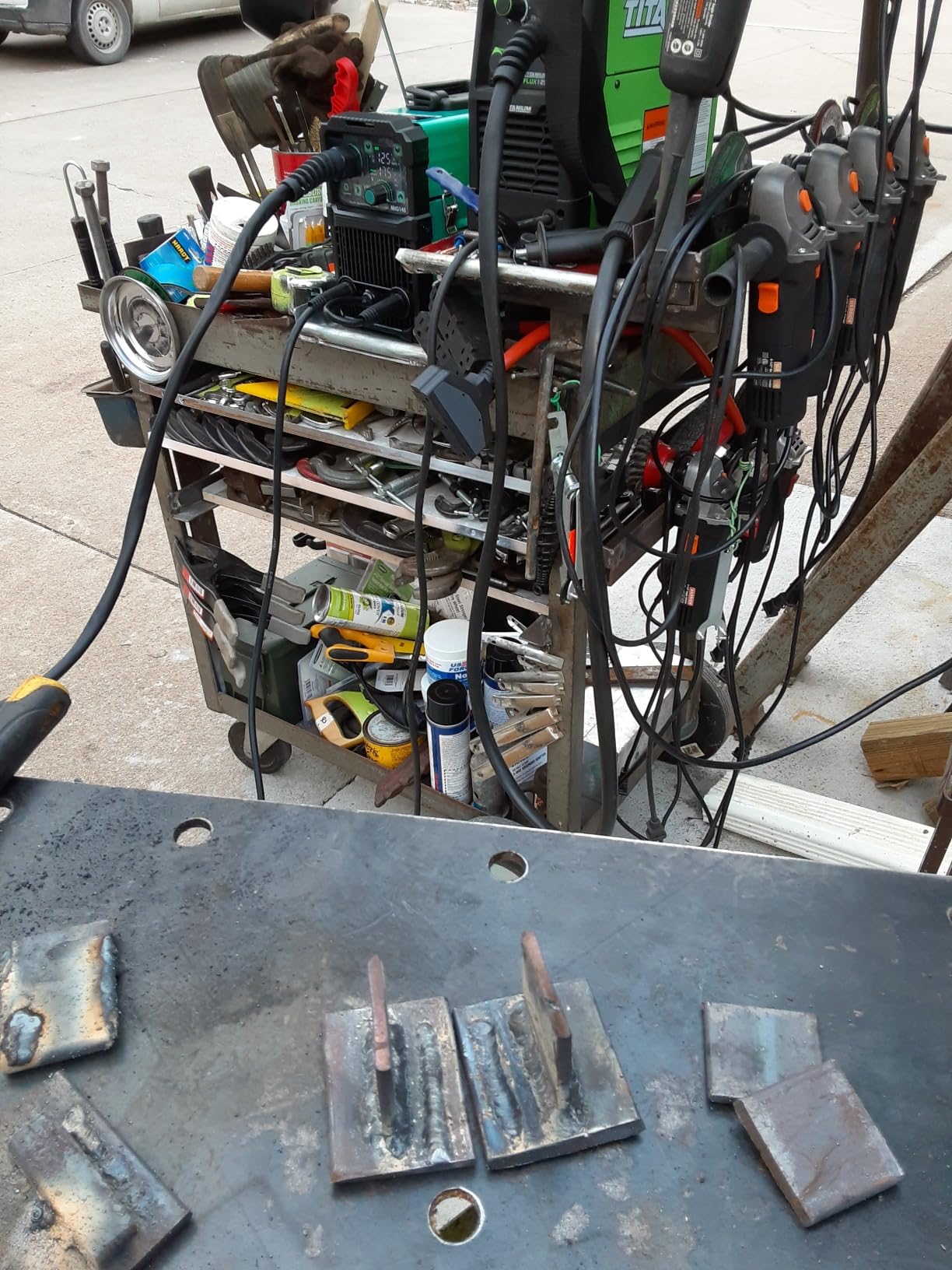
The complaints are consistent and worth weighing. Torch, power, and ground cables are shorter than advertised, which matters more than it sounds on a project that needs reach. The spool tension spring is not adjustable, and the included foil nozzle shield burns through quickly, so replace that early. The manual also does not explain the push-in rotary knob that adjusts the wire feed versus voltage ratio, and that knob is the control you will use most.
One more detail: early production machines shipped with a straight V-groove drive roll that hurt arc stability on flux core wire, while later machines include knurled rolls. The manufacturer has addressed this, so check the packaging when the machine arrives and make sure you have the knurled rollers before your first bead.
Does the fourth process really earn its place?
For a beginner, yes, because it removes a future purchase. Solid MIG is how you learn to weld cleanly indoors, flux core is how you weld outside, lift TIG gives you control on thin material and aluminum cleanup, and stick is your fallback on dirty or rusted steel. One machine covers all four, and each process reinforces skills the others teach.
What is the learning cost of four processes?
More than a single-process machine, if you let it. Beginners get a mode selector and ten buttons, and the fastest way to get intimidated is to try all four in week one. Pick flux core for outdoor projects and solid MIG for indoor ones, ignore the other two until you have fifty beads behind you, and the complexity becomes an asset instead of a barrier.
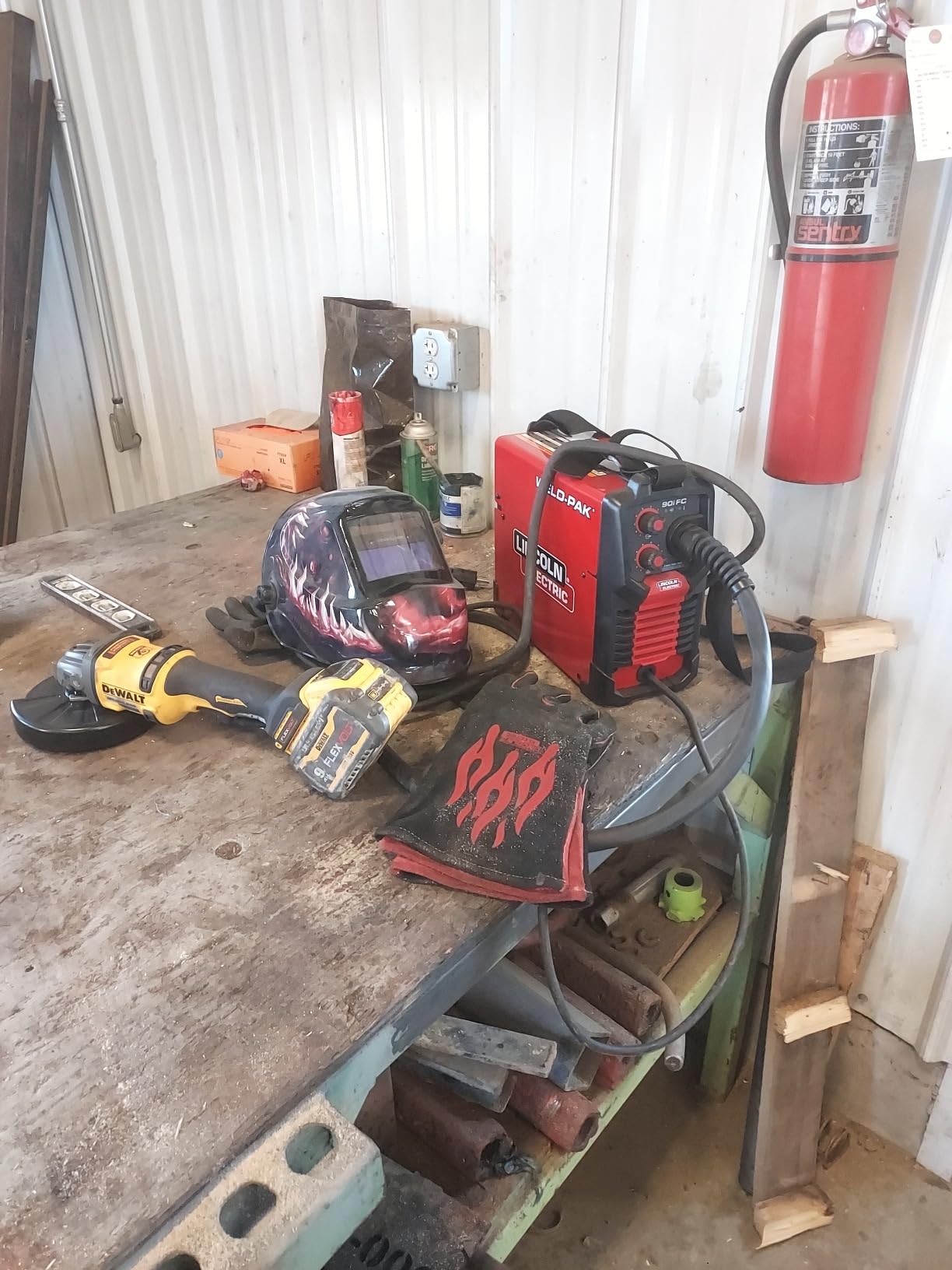
8. Lincoln Electric 90i FC Weld-Pak – Best Brand Support and Resale
Lincoln Electric 90i FC Flux Core Wire Feed Weld-PAK Welder, 120V Welding Machine, Portable w/Shoulder Strap, Protective Metal Case, Best for Small Jobs, K5255-1
Welds up to 1/4 in on 120V
15 lb inverter
Shoulder strap and metal case
Infinite voltage adjustment
12 month warranty
Pros
- Highest average rating of any machine on this list
- Handles 1/4 inch steel and moves easily through 3/16 inch work
- Light 15 lb inverter design with a shoulder strap
- Protective metal case for storage in a vehicle or garage
- Consumables and parts are widely available
- Two knobs with infinite voltage adjustment
- stable once set
Cons
- Flux core wire is not included and must be purchased separately
- Ground clamp bonding braid is short and works loose
- Can trip a 20A household breaker on heavier settings
- Single-process with no MIG
- stick
- or TIG
Lincoln Electric carries a reputation in welding that the other brands on this list do not, and it shows up in the two things owners care about most long after the purchase. Consumables for this model are available almost anywhere, and the brand holds its resale value in a way most hobby machines do not. If you are worried about a first welder becoming an expensive experiment, that matters.
The machine itself is refreshingly simple. Two knobs, one for wire speed and one for voltage, with infinite adjustment on the welding voltage. Owners with no training report becoming confident within a day of practice, and the arc stays stable once you set it. At 15 pounds with a shoulder strap and a protective metal case, it is built for small jobs away from a bench.
It welds up to 1/4 inch material on 120V input, and the 84% five-star share is the highest proportion of top ratings in this group. The included package covers the gun, nozzle, contact tip, work cable and clamp, plus the metal case, so the only thing missing is wire.
That missing wire spool is the most common buyer frustration, and it is worth planning for. You need at least a 2 lb spool of .030 self-shielded flux core wire before the first pull of the trigger, and experienced users strongly recommend buying from Lincoln, Miller, or Hobart rather than the cheapest generic spool on the shelf. Cheap wire is a leading cause of erratic feeding and bad welds, and it will make a good machine look broken.
Two other realities: the ground clamp bonding braid is short and can work loose after a few welds, so keep it tight and clean, and on heavier settings the machine can trip a 20A household breaker. If your circuit is shared with anything else, you will want a dedicated outlet.
Is a name brand worth more than a better spec sheet?
For a first machine, frequently yes. Parts availability, consumable sourcing, and resale all favour the brand, and beginner forums repeatedly warn about quality control and parts access on generic machines. The Lincoln’s two-knob simplicity also means fewer ways to set the machine wrong, which matters when you have no reference point for what right looks like.
What are the limits of a single-process Lincoln?
It is flux core only, so no gas MIG, no stick, and no TIG. That is a fair trade for a machine focused on doing one job cleanly, but plan on a second machine later if your projects grow. The 12 month warranty is also the shortest here, which is a little surprising given the brand, though owners rate the company’s service positively.
Flux Core Welder Buying Guide for Beginners
Specifications only matter when they change what you can build. Here is how each spec number maps to a real decision, and the five things that trip up first-time buyers.
Match amperage to material thickness
Amps control how much heat goes into the metal, and heat is what melts the base material and gives you penetration. Too few amps and the wire melts but the steel does not, producing a cold bead sitting on top of the surface. Too many and you blow through thin material and burn a hole in thick plate.
A rough map: 30 to 90 amps handles material up to 1/8 inch, 70 to 140 amps covers up to 1/4 inch, and 125 to 200 amps reaches roughly 1/2 inch. Every machine on this list falls in the 130A to 200A band, which is the correct range for a beginner working on mild steel. Anything heavier than 1/4 inch and you are looking at a different class of machine.
Check the input voltage before you shop
Most homes have 120V 20A circuits, and every 120V machine here will run on one. Some also accept 240V, which raises the output ceiling and lets you weld thicker material in shorter passes. If you have no 240V circuit and no plan to install one, pay close attention to what a machine delivers at 120V, not its headline number.
That headline number is not always honest either. The HITBOX reviews specifically flag actual output running 20 to 30 percent below what the display shows, so a 200A label may not mean 200A. Read owner reviews for calibration complaints on any machine where the claim looks ambitious.
Read duty cycle as on and off minutes
Duty cycle is the percentage of a ten-minute cycle during which you can weld continuously at the rated amperage. A machine rated 30% at 90 amps gives you three minutes of welding and seven minutes of cooling at that output. This is where beginners get shocked: a machine marketed at 140 amps may only manage 20% duty cycle at 90 amps, which is a real limit on how long your beads can be.
The bestarc is the standout here at 60% for the class, which means six minutes on and four minutes off, close to continuous welding for most hobby work. On the smaller machines, plan to step away and let them cool rather than fighting an overheat indicator.
Use .030 wire on a 120V beginner machine
This is the single most useful rule in the guide. Smaller 120V machines do not have the amperage to push .035 wire cleanly through the throat, which causes feeding problems, erratic arcs, and a frustrating first hour. Start on .030, learn the machine, and step up to .035 when you move to a higher output machine. The .035 preference shows up constantly in beginner forums and it is right for small machines.
Wire brand matters as much as diameter. Forums consistently warn that cheap generic flux core wire causes erratic feeding and poor welds, and buyers regularly report that a good spool from an established brand transformed their machine. Buy a reputable spool first, judge the machine on that, and treat bad welds as a wire problem before you blame the welder.
Make sure you can actually adjust wire feed speed
A machine with fixed wire feed speed removes the one control a beginner most needs, and budget units that do this draw heavy complaints. You want independent control of wire feed speed and voltage, ideally with a synergic mode that sets sensible values and a manual mode that lets you override them. That pairing teaches you the relationship between heat input and wire speed faster than any manual.
Check the output type and what is in the box
Output type matters more than most listings admit. Several budget machines list AC as their power source, and AC output produces an arc that is much harder to control and produces a rougher bead. DC output, which the AZZUNO uses, gives a focused, steady arc. Where a listing does not state the output type clearly, treat that as a question to ask before you buy rather than after.
On box contents, assume you need to buy wire, a decent ground clamp, contact tips, and nozzles. Several machines here include a chipping brush and hammer, which is a nice touch. The Lincoln includes no wire at all. Most machines here take 2 lb spools; only the Forney takes 10 lb rolls, which is a real convenience once you are welding regularly.
Budget for safety gear and fume extraction
A welding helmet with an appropriate shade, welding gloves, a leather jacket or sleeves, and a respirator or fume extractor are not optional extras. Flux core produces more fume than MIG because the flux is vaporizing, and outdoor welding does not solve it if you are welding in a garage with the door open. Add a spark arrestor if you are near anything combustible, and never weld galvanised or unknown-coated steel without understanding the fume risk.
Budget roughly the machine cost again for a decent helmet and gear on day one, then add wire and a spare spool. Owners who buy a bargain helmet usually replace it within a year, and a real auto-darkening helmet makes practice sessions far more pleasant than struggling through a dark shade.
Your First Weld: Starter Settings and Practice Plan
No competitor roundup we studied actually explains how to run the machine you just bought, so here is the short version. Load a reputable .030 self-shielded flux core spool, set the polarity for flux core rather than MIG, and start around 18 volts with wire feed speed somewhere in the 280 to 320 inches per minute range, then adjust from there. That range comes up repeatedly in owner reports on budget 120V machines and is a solid starting point rather than a rule.
Keep the stickout short, roughly three quarters of an inch of wire beyond the contact tip, and hold a consistent travel angle with light push. The single most common beginner mistake is holding the wire too far out, which makes the arc wander and the spatter worse. Work on a piece of scrap mild steel about 1/8 inch thick before you touch a real project.
Practice chip-and-grind technique, not long beads. With flux core, you make a short pass, stop, chip the slag off, grind or wire-brush the bead, and start again. Long slow beads on self-shielded wire collect slag underneath and you will just weld it into the next pass. Several short passes with cleanup between them produce a better result and teach you more about heat control.
Your first month should be about three short sessions a week rather than one long one. Ten minutes of consistent practice on scrap steel teaches arc control faster than two hours of grinding.
Frequently Asked Questions
Can a beginner learn flux core welding?
Yes. Flux core is easier to learn than MIG in one way that matters because it needs no shielding gas and a self-shielded machine is forgiving of small errors in wire and voltage matching. The tradeoff is heavier spatter and more cleanup work per bead. Most beginners can lay a usable bead within a few practice sessions on 1/8 inch mild steel.
What is the easiest welder for a beginner?
A gas-shielded MIG welder is generally considered the easiest process to learn because the arc is quieter and the finished bead is cleaner. If you do not have a gas cylinder, a ventilated workspace, or you plan to weld outdoors, a self-shielded flux core machine is the most practical first welder and is what most beginners actually buy.
What are the downsides of flux-cored welding?
The three real downsides are spatter, slag, and cleanup. Self-shielded flux core beads come out rough and covered with a slag layer that needs a chipping hammer and grinder, wire brush marks stay visible, and the finished weld is not as clean as gas-shielded MIG. For cosmetic work or visible stainless, MIG is the better process.
Is .030 or .035 flux core wire better for beginners?
Use .030 inch on a 120V beginner machine. Smaller 120V units lack the amperage to push .035 cleanly through the throat, which causes feeding problems and erratic arcs. Step up to .035 only when you move to a higher output machine. Wire brand also matters: a reputable spool makes a noticeable difference in feeding and bead quality.
Are Harbor Freight flux core welders any good?
The Harbor Freight Titanium Easy-Flux 125 comes up constantly in beginner forums as a first machine, and owners report finishing real projects with almost no training. The general consensus is that the machines work fine for learning and outdoor jobs, while the weakness is support and consumables sourcing rather than the machine itself. We did not include one on this list, so our honest take is to check parts availability before choosing an off-brand machine.
Why is my flux core welder splattering so badly?
The most common causes are wire feed speed set too high for the voltage, too much stickout with the wire held more than about three quarters of an inch past the contact tip, and low-quality wire. Also check polarity is set for flux core rather than MIG, and that the gasless mode is selected. A reputable .030 spool and a stickout of roughly three quarters of an inch will fix most beginner spatter problems.
Why is my flux core welder not feeding wire?
Usually the spool tensioner is too tight, which crushes the flux wire, or the feed rollers are dirty and glazed. Check that the correct drive rollers for your wire diameter are fitted, loosen the tension knob slightly, and brush the rollers clean with a wire wheel. Also confirm the torch liner is not kinked or blocked with slag, which is the other frequent cause on machines with long leads.
Do I need gas to do flux core welding?
No. Self-shielded flux core wire carries its own flux, which vaporizes to protect the bead, so no shielding gas cylinder or regulator is required. This is the main reason flux core is so popular for beginners and outdoor work. Some machines also support gas-shielded flux core and solid MIG, which do need gas, so check the process list before you buy.
Conclusion: Which Flux Core Welder Should You Buy?
Our pick is the FORNEY Easy Weld 140 FC-i. It welds 1/4 inch mild steel, takes both 2 lb and 10 lb spools of .030 wire, comes with long leads, and carries a recognized brand name with 3387 owner reviews behind it. That is the most capability per complication of anything on this list, which is exactly what a first machine should be.
Buy the YESWELDER 135A if you want the shortest path to your first bead. Wire in the box, synergic setup, three processes, and an 11.4 lb body is the best value here. Choose the ARCCAPTAIN 130A if budget is the deciding factor, because the two-year warranty and included accessories are hard to match at that level.
Two more worth knowing: the bestarc 145A if you want one machine that also does gas-shielded MIG, lift TIG, and stick, and the Lincoln 90i FC if parts availability and resale value matter more to you than price. Whichever you pick, buy a reputable spool of .030 wire, set aside money for safety gear, and expect spatter. Flux core welders for beginners are genuinely approachable, and the machine is the easy part compared with the practice that follows.