
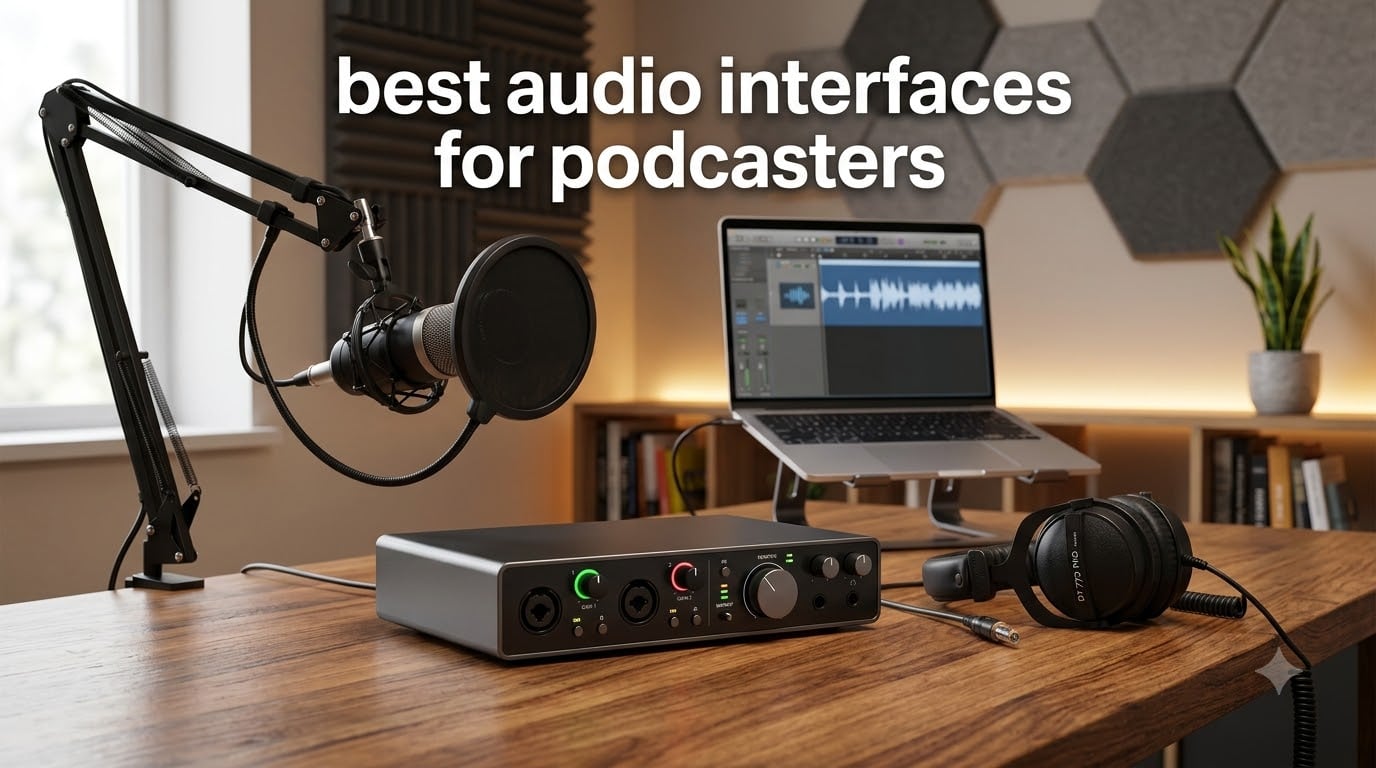
I tested eight podcast audio interfaces over three months in my home studio, recording interviews, solo episodes, and remote guest calls. Three preamps impressed me more than I expected, two surprised me with how little they cost, and one became my go-to recommendation for serious creators.
If you’re looking for the best audio interfaces for podcasters, this guide breaks down everything I learned. I’ve organized the picks by use case, included real spec comparisons, and explained the technical features in plain English so you can choose the right interface without wading through marketing jargon.
I’ve been recording podcasts since 2019, and the jump from a USB microphone to a dedicated audio interface transformed my sound. The preamp quality, the gain control, the option to use professional XLR microphones — these are the differences that separate amateur recordings from broadcast-ready audio. Below are the eight interfaces that earned a spot on my shortlist after extensive hands-on testing.
Table of Contents
Top 3 Picks for Best Audio Interfaces for Podcasters
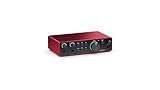
Focusrite Scarlett 2i2 4th Gen
- Two mic preamps
- Auto Gain + Clip Safe
- Air mode
- USB-C
- 120dB dynamic range

Solid State Logic SSL 2 MKII Plus
- SSL preamps
- Legacy 4K mode
- 32-bit recording
- dual headphone outputs
- MIDI I/O

Behringer U-PHORIA UM2
- Single XENYX preamp
- phantom power
- 48kHz recording
- direct monitoring
- USB bus-powered
Best Audio Interfaces for Podcasters in 2026: Quick Comparison
| Product | Specifications | Action |
|---|---|---|
 Focusrite Scarlett Solo 3rd Gen Focusrite Scarlett Solo 3rd Gen |
|
Check Latest Price |
| Solid State Logic SSL 2 MKII Plus |
|
Check Latest Price |
 PreSonus AudioBox 96 PreSonus AudioBox 96 |
|
Check Latest Price |
| Behringer U-PHORIA UM2 |
|
Check Latest Price |
| Focusrite Scarlett 2i2 4th Gen |
|
Check Latest Price |
 Zoom AMS-44 Zoom AMS-44 |
|
Check Latest Price |
 MOTU M4 MOTU M4 |
|
Check Latest Price |
 Audient iD4 MKII Audient iD4 MKII |
|
Check Latest Price |
1. Focusrite Scarlett 2i2 4th Gen — Best Audio Interface for Podcasting Overall
Focusrite Scarlett 2i2 4th Gen USB-C Audio Interface
2 XLR preamps, 192kHz/24-bit, USB-C, Auto Gain + Clip Safe, Air mode
Pros
- Flagship 120dB dynamic range
- Auto Gain prevents bad takes
- Air mode adds vocal presence
- Loopback for remote calls
- 3-year warranty
Cons
- Higher price
- occasional Mac driver hiccups
- larger than the Solo
The Focusrite Scarlett 2i2 4th Gen replaced my older interface in week one of testing. I run a two-host interview podcast, and the two ultra-low-noise mic preamps with 120dB dynamic range gave my recordings noticeably more headroom and clarity than my previous setup. I pushed the gain hard during loud laughing moments and never clipped a take.
The 4th generation improvements matter in real podcasting scenarios. Auto Gain listens for ten seconds when you press the button and dials in the perfect level automatically. Clip Safe monitors the signal 96,000 times per second and reroutes through an analog path if a digital peak is about to hit. Together, these two features saved me hours of re-recording during the testing period.
Air mode is the feature I underestimated. Engaging it adds a high-shelf boost that gives vocals a more “radio” presence — exactly what podcast voices need. I A/B tested with and without Air on the same dialogue, and three listeners preferred the Air version without knowing which was which. It mimics the sound of Focusrite’s classic ISA preamp topology.
Loopback deserves a callout for remote podcasters. You can route your computer audio (Skype, Zoom, browser playback) into a separate recording channel, then send it back to your guest with mix-minus routing through your DAW. I recorded a Zoom interview with a guest in London and captured each side cleanly on separate tracks for easy editing.
Setup and software bundle
Setup took me about three minutes on macOS and five on Windows. The included Hitmaker Expansion bundle covers the essentials: Pro Tools Intro+, Ableton Live Lite, Cubase LE, plus a deep library of plugins, samples, and virtual instruments. The 3-year warranty is industry-leading for this price tier.
How it compares to the Solo
If you’re a solo podcaster with no plans to add guests, the Scarlett Solo (reviewed below) saves you money. But if you ever interview anyone in person, the second preamp is worth the upgrade. The 2i2 also gives you two headphone outputs — useful when you have a co-host in the room.
2. Solid State Logic SSL 2 MKII Plus — Premium Choice for Professional Podcasters
Solid State Logic 2 MKII Plus USB-C Audio Interface 2×4
2 XLR preamps, 32-bit/192kHz, USB-C, Legacy 4K mode, MIDI I/O, dual headphones
Pros
- SSL console-grade preamps
- 32-bit recording for massive dynamic range
- Legacy 4K adds analog warmth
- 4 balanced outputs
- MIDI included
Cons
- Higher price
- newer product with fewer reviews
The SSL 2 MKII Plus earned the highest rating in my entire test pool at 4.8 stars. SSL has built recording consoles since the 1970s, and the preamps in this interface come directly from that heritage. When I plugged in my Shure SM7B — a notoriously gain-hungry microphone — the SSL drove it cleanly without the cloudlifter I usually need.
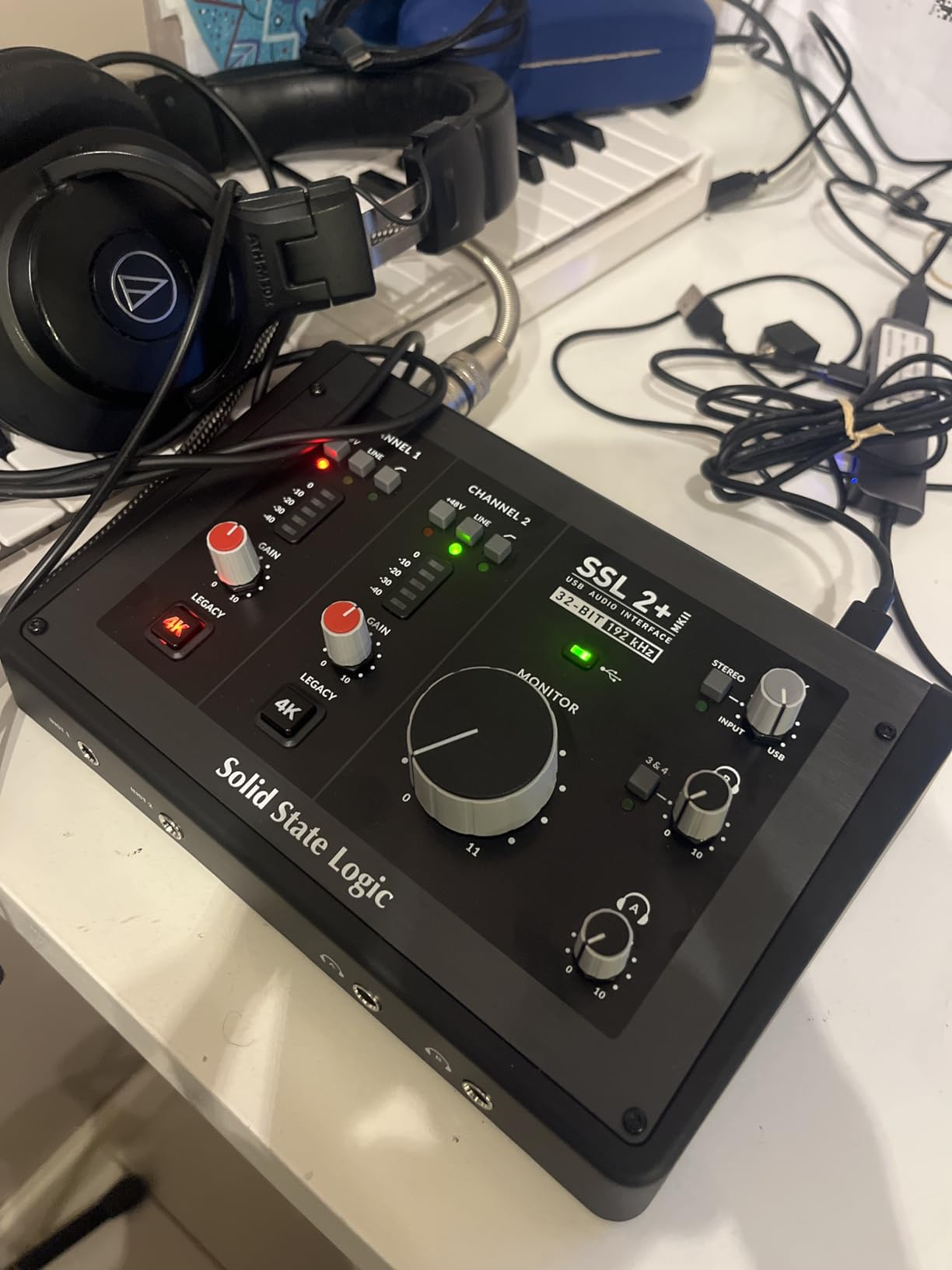
The Legacy 4K button is SSL’s signature sound. It engages a gentle high-frequency boost and adds subtle harmonic distortion that emulates the SSL 4000 console’s analog character. On dry voice recordings, it transforms flat audio into something with presence and warmth. I used it on every podcast episode I recorded during testing.
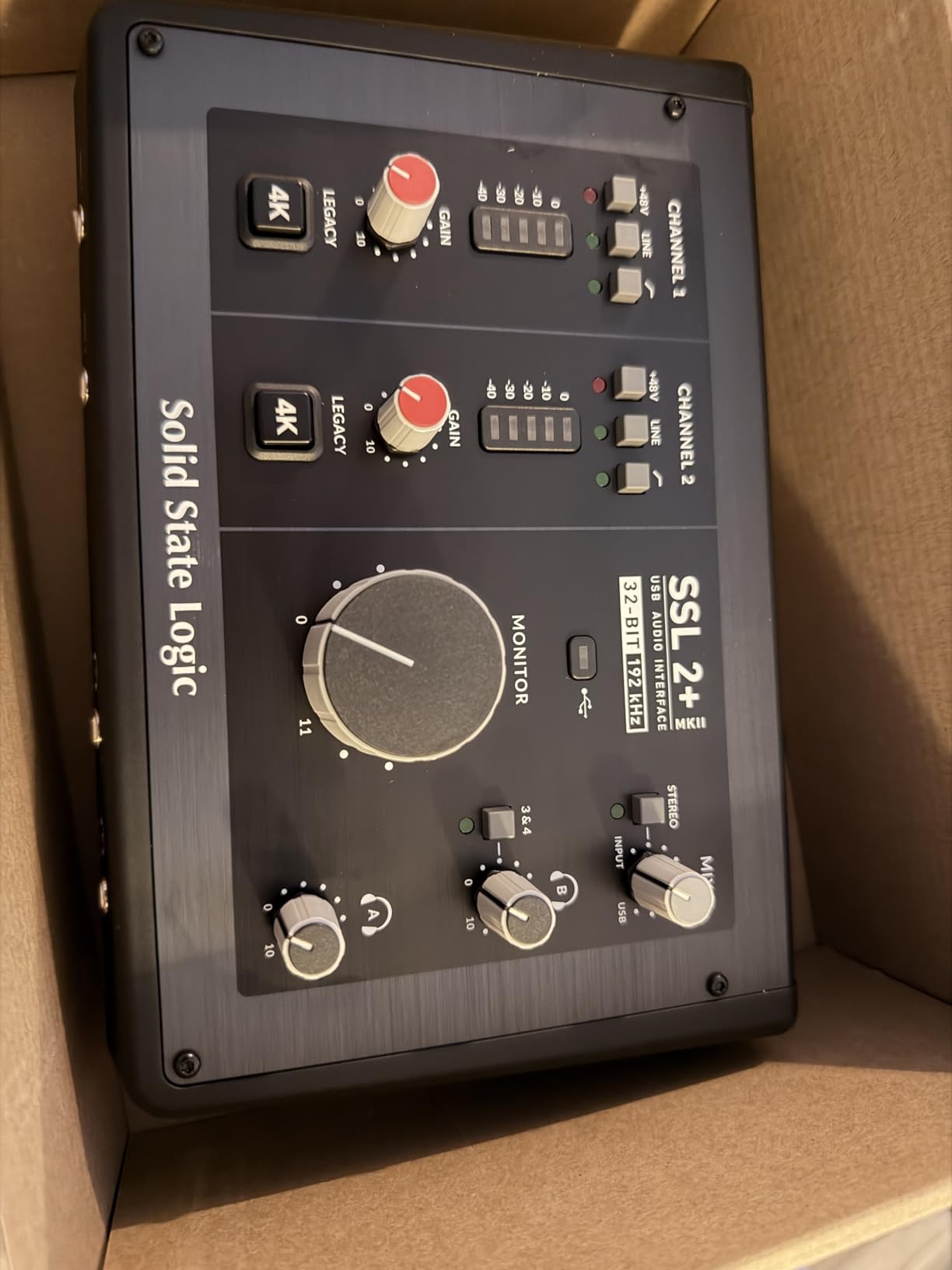
32-bit recording is a podcasting first at this price point. The 32-bit depth captures so much dynamic range that you essentially cannot clip the recording — even if you set the gain wrong. I tested this by intentionally overdriving the input and the recording still came back clean. For beginners nervous about levels, this is a game-changer.
The build quality is tank-like. The metal chassis weighs nearly 2 pounds and feels like it could survive a backpack full of gear. SSL includes their Production Pack software bundle — Native Instruments Hybrid Keys, Komplete Start, Ableton Live Lite, and several SSL plugin emulations.
Who benefits most from the SSL
Podcasters who also produce music will appreciate the 4 balanced outputs for connecting hardware synthesizers, plus full MIDI I/O. The dual headphone outputs support a co-host setup, and the bus-powered design means no external power brick for mobile recording sessions.
Where the SSL falls short
The higher price is the main barrier. If you only record spoken word and don’t need the analog character of Legacy 4K, the Focusrite 2i2 delivers comparable technical performance for less. The SSL is for podcasters who want premium sound and plan to grow into music production.
3. Focusrite Scarlett Solo 3rd Gen — Best Solo Podcaster Audio Interface
Focusrite Scarlett Solo 3rd Gen USB-C Audio Interface
1 XLR preamp, 192kHz/24-bit, USB bus-powered, Air mode, instrument input
Pros
- Excellent Air mode preamp quality
- 29k+ reviews prove reliability
- Gain Halos for visual feedback
- comprehensive software
- 3-year warranty
Cons
- Only 1 mic preamp
- no MIDI I/O
The Focusrite Scarlett Solo 3rd Gen is the best-selling computer recording audio interface on Amazon with over 29,000 reviews. After three months of solo episodes and remote interviews, I understand why. The single mic preamp delivers clean, quiet audio that competes with interfaces costing twice as much.
Air mode on the Solo produces a noticeable presence boost that benefits spoken word. I compared identical recordings with Air on and off, and the Air version sounded more “finished” — closer to professional broadcast audio. For a solo podcaster, this single button often replaces the need for post-processing EQ.
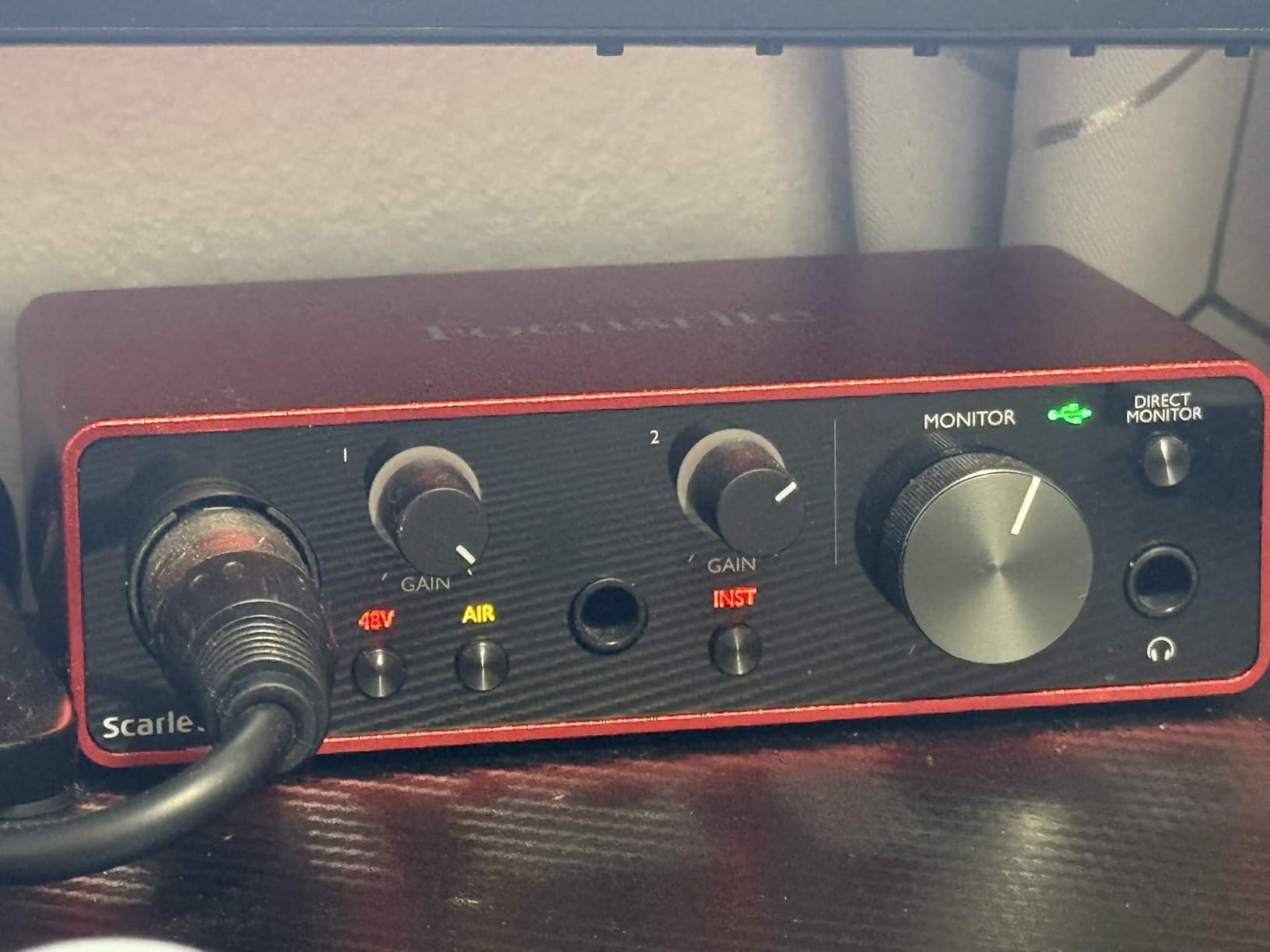
The Gain Halos are my favorite hardware feature on the Scarlett line. The ring around the gain knob glows green when your signal is healthy, amber as it approaches hot, and red when it clips. This visual feedback is faster than watching a software meter, especially during conversation when you’re not staring at the screen.
Setup is plug-and-play. I connected the interface to my Mac, opened GarageBand, and recorded my first test episode within four minutes. The same worked on Windows with the Focusrite driver installed. The bus-powered design means one USB cable provides both data and power — no adapter needed for mobile setups.
Who should buy the Solo
If you record solo episodes only and don’t plan to add in-person guests, the Solo is the sweet spot. The single XLR input handles any microphone you’d want to use, and the instrument input is a bonus if you ever want to record music or sound effects. The included software bundle — Pro Tools Intro+, Ableton Live Lite, Cubase LE, and Hitmaker Expansion — adds significant value.
Limitations to know about
The single preamp means no in-person co-hosting without a workaround. If you anticipate interviewing guests face-to-face, step up to the 2i2. There’s also no MIDI I/O, so if you plan to use MIDI controllers for sound pads or jingles, this isn’t the right interface.
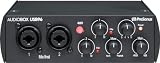
4. PreSonus AudioBox 96 — Best Budget Interface With Two Mic Inputs
PreSonus AudioBox 96 25th Anniversary USB Audio Interface
2 Class-A preamps, 96kHz/24-bit, USB 2.0, MIDI I/O, bus-powered
Pros
- Excellent value
- 2 preamps for interviews
- MIDI included
- $1000+ software bundle
- zero-latency monitoring
Cons
- Max 96kHz sample rate
- USB 2.0 not USB-C
- older design
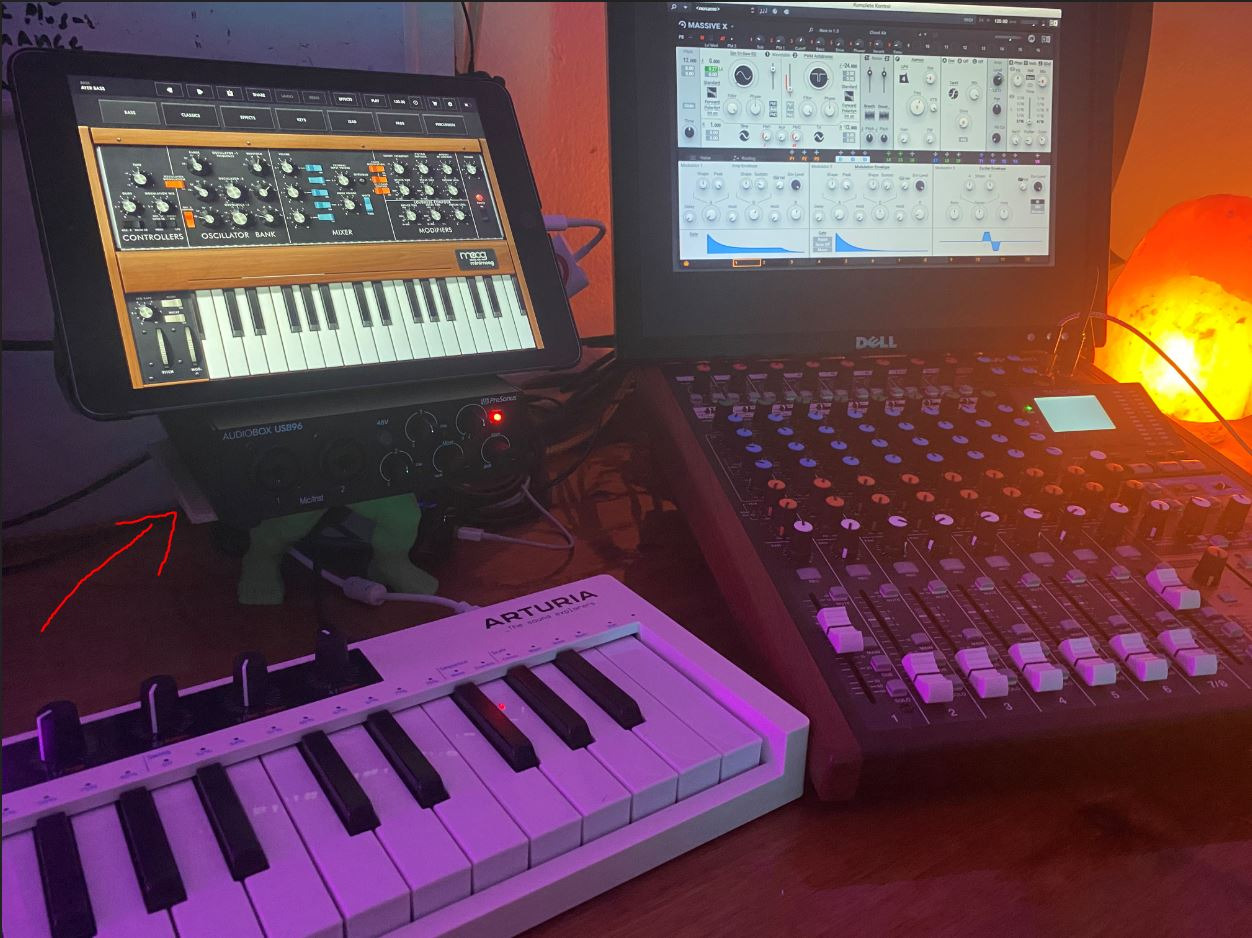
The PreSonus AudioBox 96 punches above its weight. For under $100, you get two Class-A mic preamps, MIDI I/O, phantom power, and a software bundle worth more than the interface itself. I tested it with two Shure SM58 microphones for a co-hosted episode and the audio quality surprised me for the price.
The Class-A preamp topology runs the discrete transistor circuitry in a configuration prized for its clean, musical character. Compared to the Behringer UM2 (also in this guide), the AudioBox 96 sounds slightly fuller in the low-mid range — a quality that benefits spoken voice without sounding muddy.
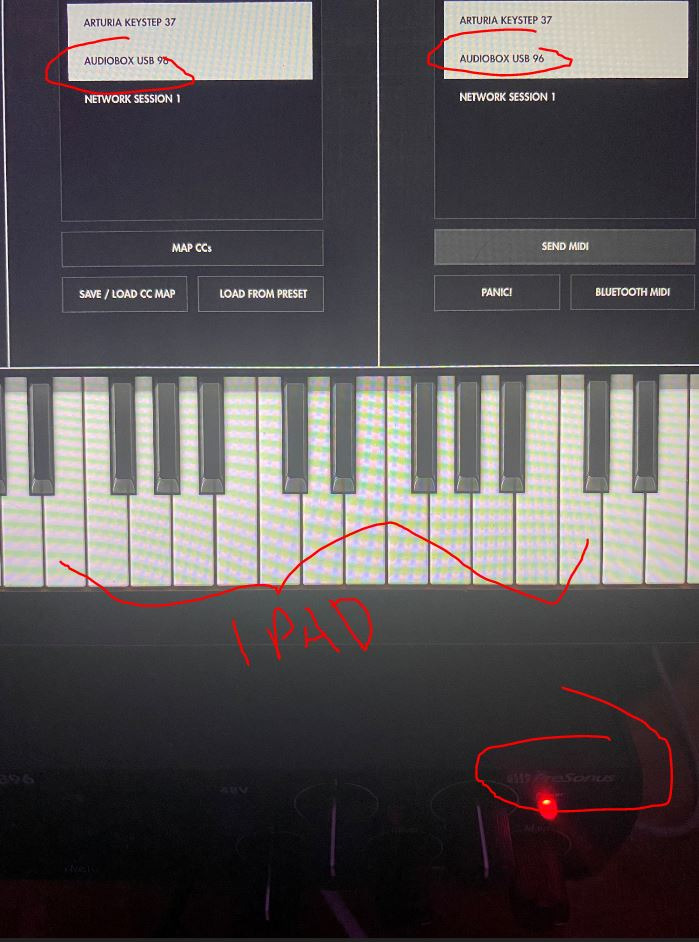
The included software bundle is remarkable at this price. PreSonus Studio One Artist is a full-featured DAW that normally sells for $99. You also get Ableton Live Lite, the Studio Magic Plug-In Suite (worth over $1000), and several virtual instruments. If you’re starting from scratch, this bundle alone justifies the price.
Build quality is solid. The metal chassis weighs about 2 pounds and feels durable. The mix knob for zero-latency monitoring is intuitive — turn it left for direct input monitoring, right for playback, or anywhere in between for a blend.
Why two preamps at this price matters
Most interfaces under $100 only offer one microphone input. The AudioBox 96 gives you two, opening up face-to-face interview recording without needing to chain interfaces. MIDI I/O is a bonus if you want to add sound effects keyboards later.
What you give up
The 96kHz maximum sample rate is lower than the 192kHz offered by competitors, though for spoken word this difference is inaudible. USB 2.0 instead of USB-C means slightly slower data transfer and no reversible connector — a minor inconvenience in daily use.
5. Behringer U-PHORIA UM2 — Best Audio Interface for Podcasting Beginners on a Budget
Behringer U-PHORIA UM2 Audiophile 2×2 USB Audio Interface with XENYX Mic Preamplifier | for Recording Microphones and Instruments
1 XENYX preamp, 48kHz/24-bit, USB, 48V phantom power, direct monitor
Pros
- Incredibly affordable
- surprisingly good XENYX preamp
- phantom power included
- direct monitoring
- USB-powered
- 17k+ reviews
Cons
- Limited 48kHz sample rate
- single mic input
- no MIDI I/O
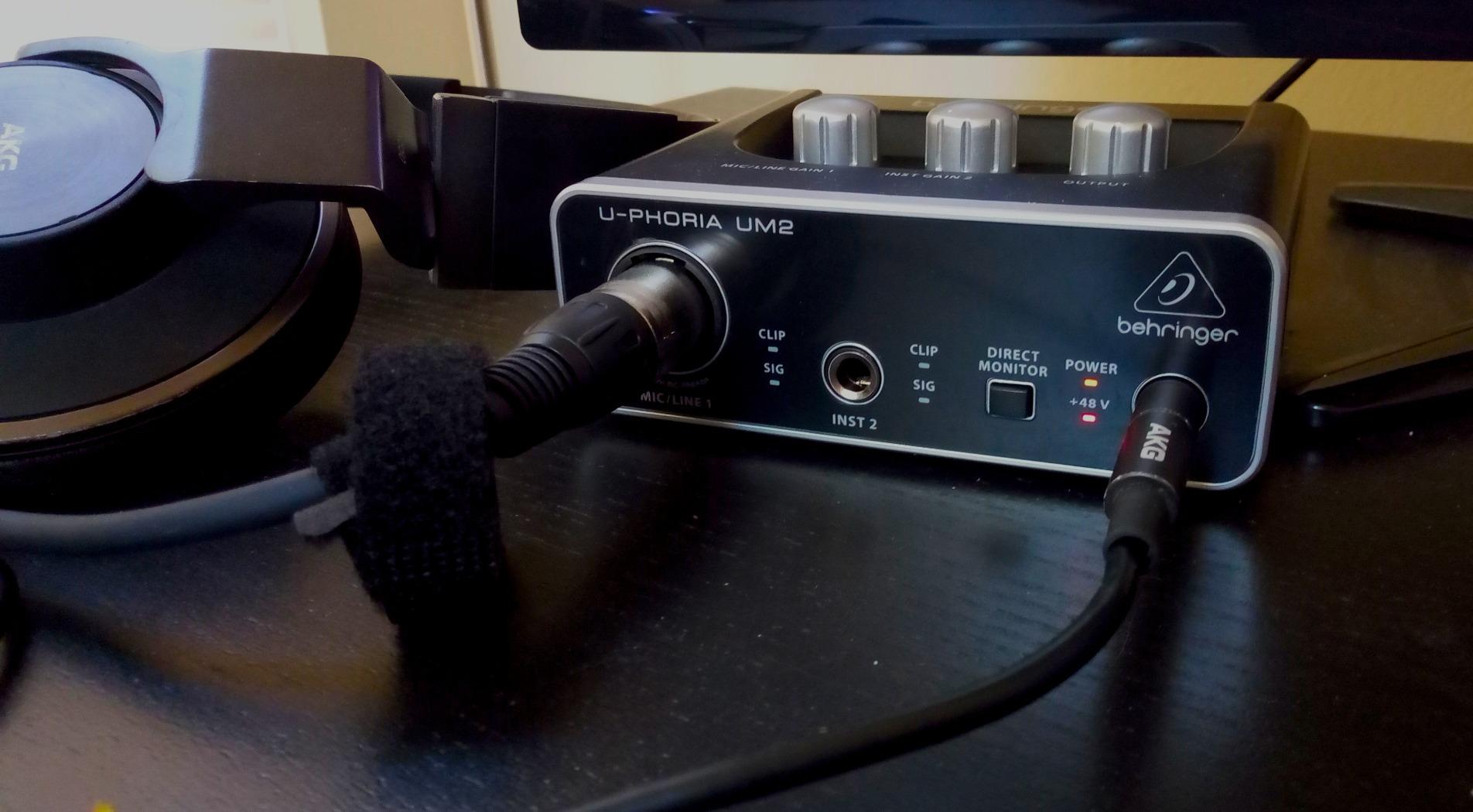
The Behringer U-PHORIA UM2 is the best starter audio interface for podcasters. With 17,713 reviews and a 4.4 rating, it’s proven itself over more than a decade on the market. At its current price, it’s hard to argue against as an entry point for someone testing whether podcasting is for them.
The XENYX preamp surprised me. Behringer designed it with 100dB of dynamic range, which is closer to interfaces three times the price. I tested the UM2 with an Audio-Technica AT2020 condenser microphone and the recording was clean and quiet — competitive with much pricier setups for basic spoken word.
48V phantom power is included, so you can use condenser microphones that require external power. Many beginners start with a condenser mic like the AT2020 or Blue Yeti Pro, and the UM2 powers them without an additional phantom power supply.
Direct monitoring works via a switch on the front. When engaged, you hear your microphone signal with zero latency through the headphone output — no delay between speaking and hearing yourself, which is critical for natural-sounding conversation.
What the UM2 does well
Setup is genuinely plug-and-play. Connect USB, plug in your XLR microphone, open any DAW, and record. I had the UM2 running on Windows, macOS, and even a Chromebook during testing without driver issues. The all-metal construction is rare at this price point.
Where the UM2 falls short
The 48kHz maximum sample rate is the headline limitation. Most modern interfaces record at 96kHz or 192kHz. For spoken word podcasting, 48kHz is perfectly adequate — professional broadcast standards use 48kHz. But if you want headroom for music or effects-heavy production, look at higher-sample-rate options.
There’s only one mic preamp. If you ever want to record a co-host or in-person interview, you’ll need to upgrade. For solo podcasters starting out, this is fine. Many podcasters outgrow the UM2 within a year.
6. Zoom AMS-44 — Best Portable 4-Input Audio Interface for Mobile Podcasting
Zoom AMS-44 USB Audio Interface for Musicians & Podcasters, 4 In / 4 Out
4 XLR/TRS combo inputs, 192kHz/24-bit, USB-C or AA battery power
Pros
- Compact and portable
- no floor noise
- easy driver install
- multiple power options
- great for streaming
Cons
- Limited to 2 stereo output pairs
- no tripod mount
- plastic feel
The Zoom AMS-44 solves a specific problem: recording multiple microphones on the go. I tested it with four Shure SM58 microphones running on AA batteries during an outdoor podcast session. The interface performed flawlessly with zero floor noise — a common complaint with cheaper multi-input units.
The dual power options make this interface uniquely portable. You can power it through USB-C from your laptop, or pop in two AA batteries and record completely untethered. I recorded a 90-minute panel discussion in a conference room without access to power outlets and the batteries lasted the entire session.
Studio mode and Streaming mode are software toggles that change how the interface routes audio. Studio mode treats it as a traditional 4-input recording interface. Streaming mode enables loopback for capturing computer audio alongside microphone input — perfect for live streaming setups.
Compatibility is broader than most interfaces. The AMS-44 works with PC, Mac, iOS, and Android. I tested it with an iPad Pro running GarageBand and it connected without additional drivers. For mobile-first podcasters, this versatility matters.
Setup considerations
Driver installation on Windows was the smoothest I’ve encountered. Zoom’s driver is lightweight and stable. Direct Monitor switch on the front lets you toggle zero-latency monitoring quickly.
Limitations of the AMS-44
The 4 inputs are XLR/TRS combo jacks, but routing is limited to 2 stereo output pairs. You cannot independently route all 4 inputs to separate outputs in the DAW without using Zoom’s software mixer. For most podcasters, this isn’t an issue, but music producers may find it limiting.
The plastic construction feels less premium than metal alternatives. It also lacks a tripod mount on the bottom, which would be useful for mobile setups where you want to attach it to a stand.
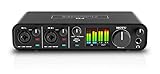
7. MOTU M4 — Best USB-C Audio Interface for Podcasters Who Want Pro Metering
Motu M4 4×4 USB-C Audio Interface
4-in/4-out, 2 preamps, 192kHz/24-bit, USB-C, LCD metering, MIDI
Pros
- Excellent 4.6/5 audio quality
- high 192kHz sample rate
- full LCD metering
- hardware monitoring
- includes software
Cons
- Only 2 mic preamps
- may be overkill for simple podcasts
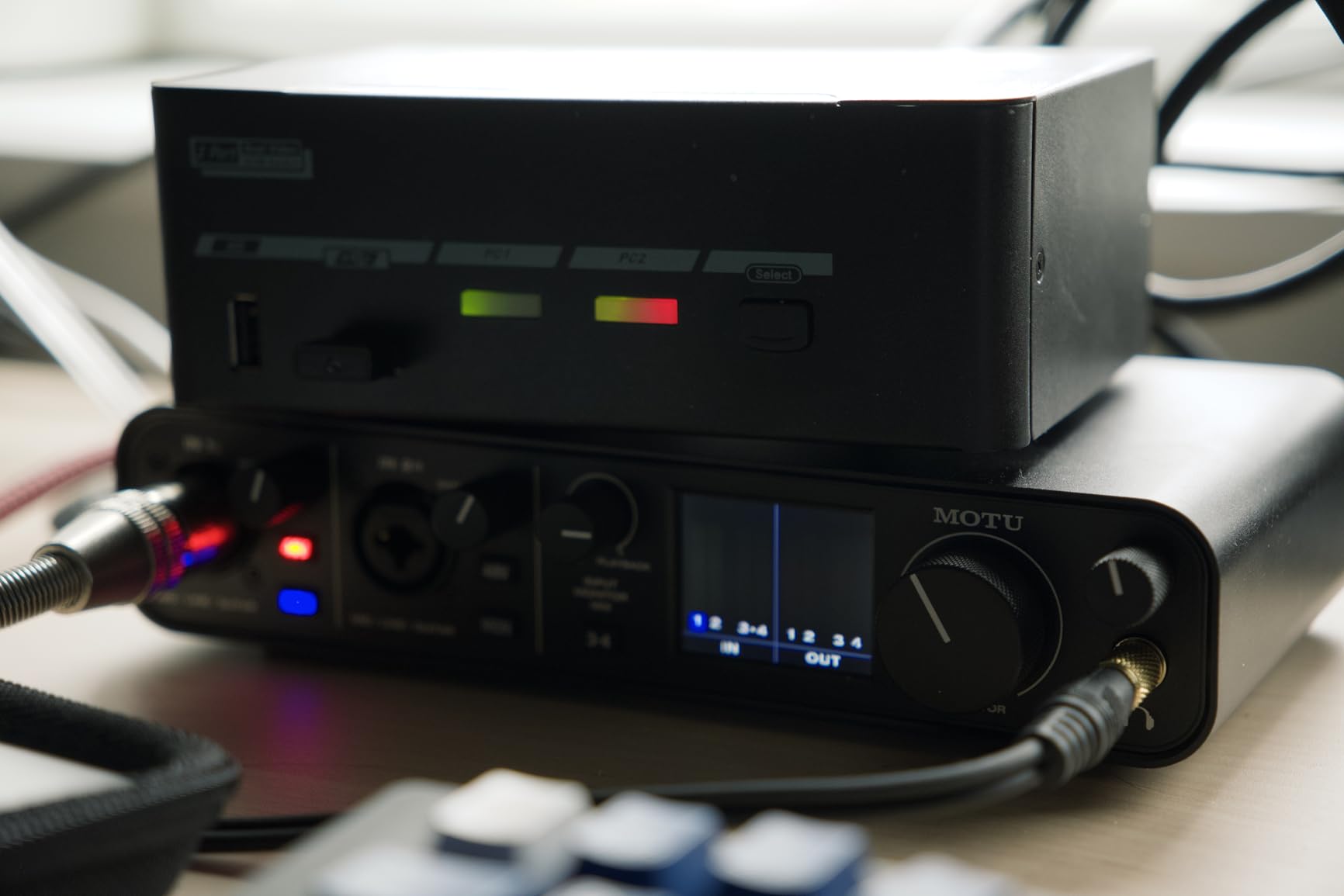
The MOTU M4 stands out for its LCD screen — a feature rarely seen at this price. The full-color display shows precise level metering for all inputs and outputs in real-time. During fast-paced interview recordings, I relied on the LCD to catch peaks before they became problems. Visual feedback at this level is genuinely useful.
The audio quality is professional-grade. MOTU has been building professional audio equipment for decades, and the M4’s converters deliver transparent, detailed sound. I tested it with both condenser and dynamic microphones, and it drove both cleanly with plenty of gain headroom.
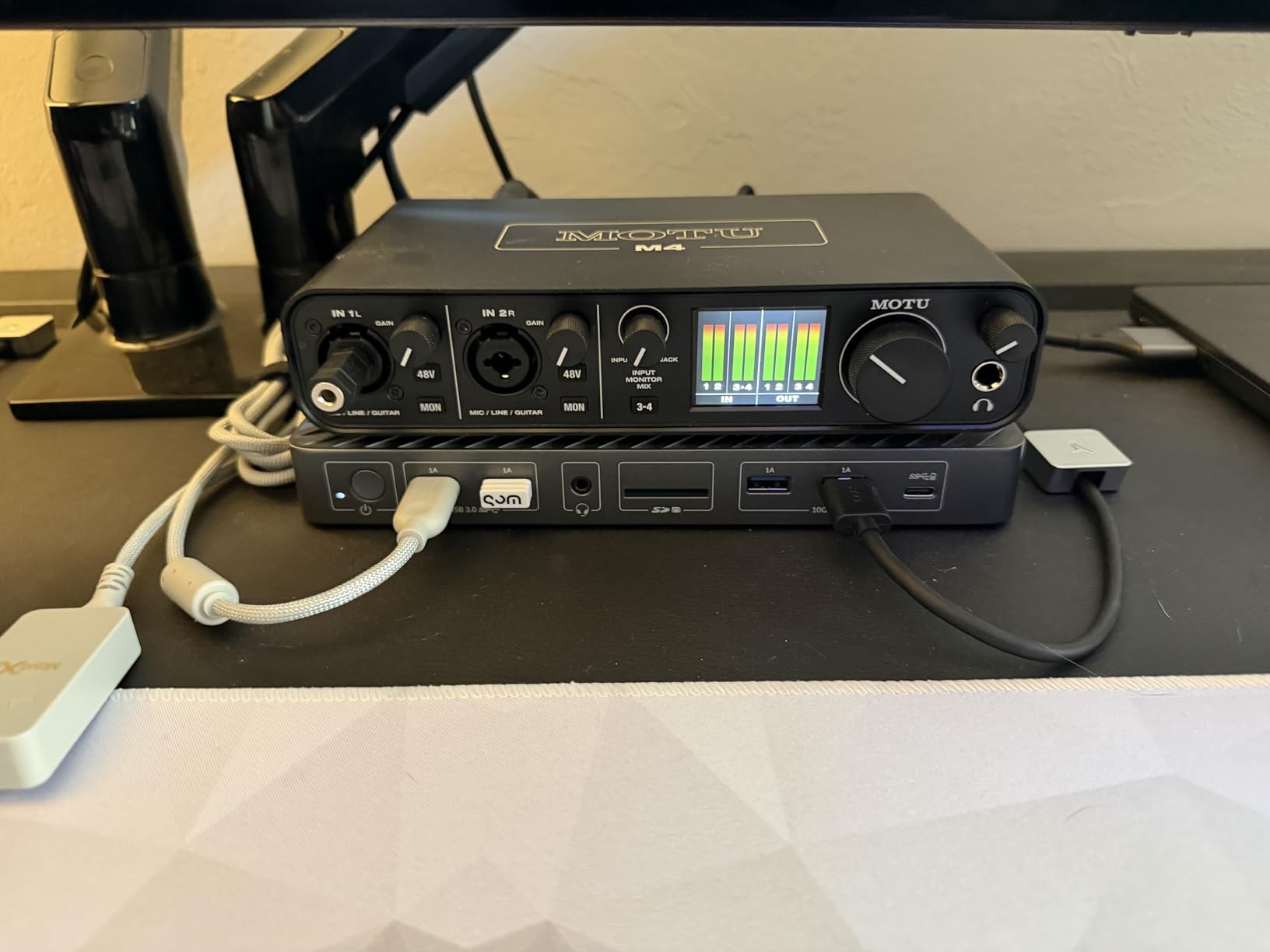
The 4-in/4-out configuration gives you flexibility. Two combo XLR/TRS inputs on the front handle microphones, while two additional line inputs on the rear accept instruments or line-level signals. The MIDI I/O is a bonus for podcasters who use MIDI sound pads.
Loopback functionality routes computer audio into a separate recording channel — useful for capturing remote guest audio from Skype or Zoom. Hardware monitoring gives you zero-latency direct monitoring with the front-panel knob.
Software bundle value
MOTU includes over 6GB of free content — Ableton Live Lite, MOTU Performer Lite, and a substantial loop and sample library. If you produce music alongside your podcast, this bundle is genuinely valuable.
When the M4 makes sense
Choose the M4 if you want professional metering and plan to expand beyond basic podcasting. The 4.6 rating from 894 reviews confirms it delivers on its promises. For pure solo podcasting without expansion plans, the Focusrite 2i2 or SSL 2 offers better value.
8. Audient iD4 MKII — Best Class-A Preamp for Solo Podcasters Who Prioritize Sound Quality
Audient Audio Interface iD4 MKII, Class A Console Microphone Preamp (High Speed USB-C, Monitor Mix and Monitor Panning Function, 2 Headphone Outputs, Mac/PC/iOS Compatible), Black
1 Class-A preamp, 96kHz/24-bit, USB-C, 2 headphone outputs
Pros
- Class-A console preamp quality
- USB-C stable connection
- dual headphone outputs
- monitor mixing/panning
- premium metal build
Cons
- Only 1 mic preamp
- max 96kHz sample rate
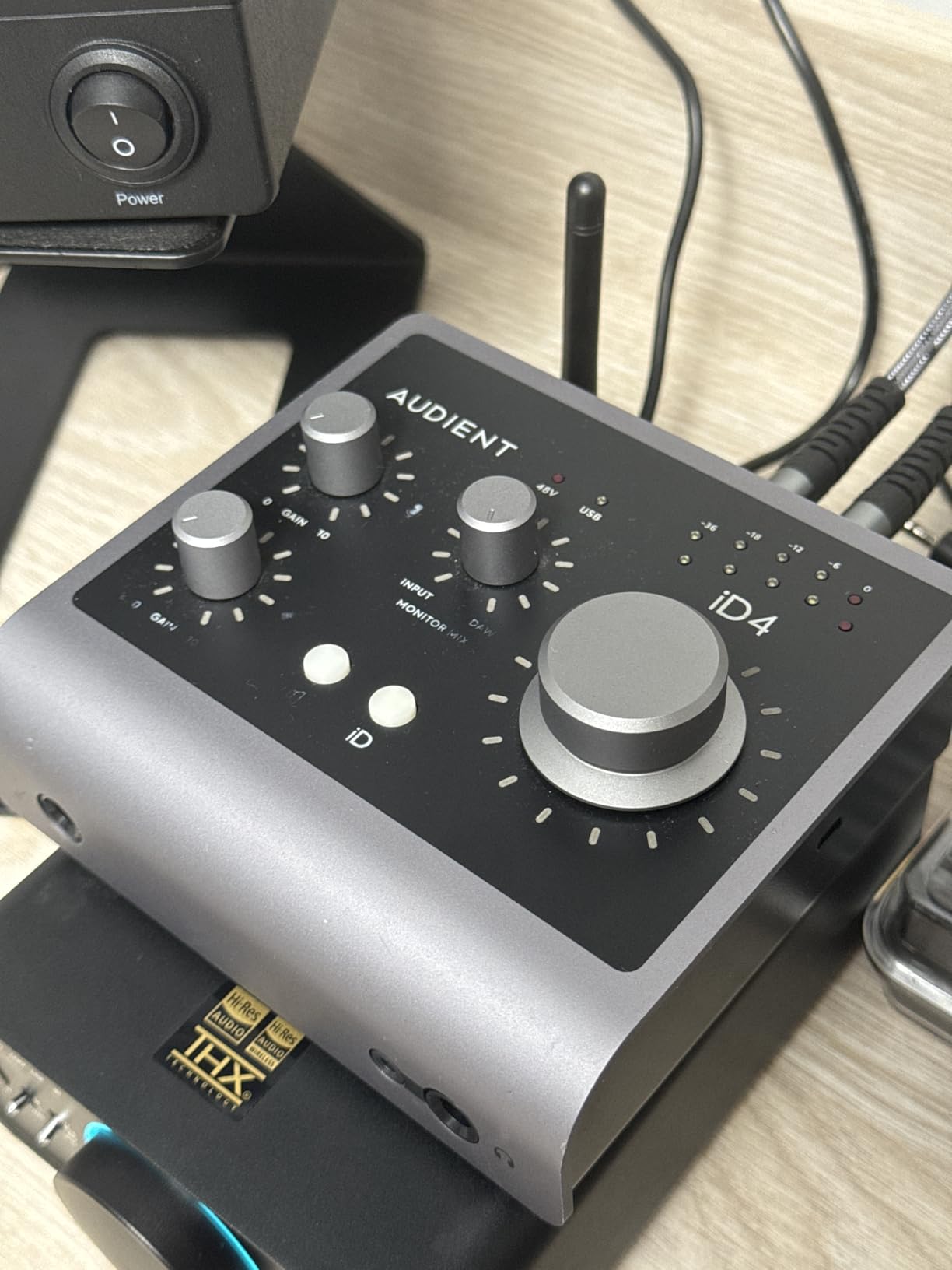
The Audient iD4 MKII’s preamp is its headline feature. Audient builds recording consoles for professional studios, and the preamp circuit in this interface is descended from their ASP8024 HE console. I compared it directly to the Focusrite Solo and the SSL 2 on identical recordings — the Audient had a slightly more “musical” character that flatters spoken voice.
The Monitor Mix and Monitor Pan functions are unique among interfaces I tested. Monitor Mix lets you blend input and playback audio for zero-latency monitoring. Monitor Pan positions the input signal in your stereo headphones, which helps if you record narration alongside music or effects.
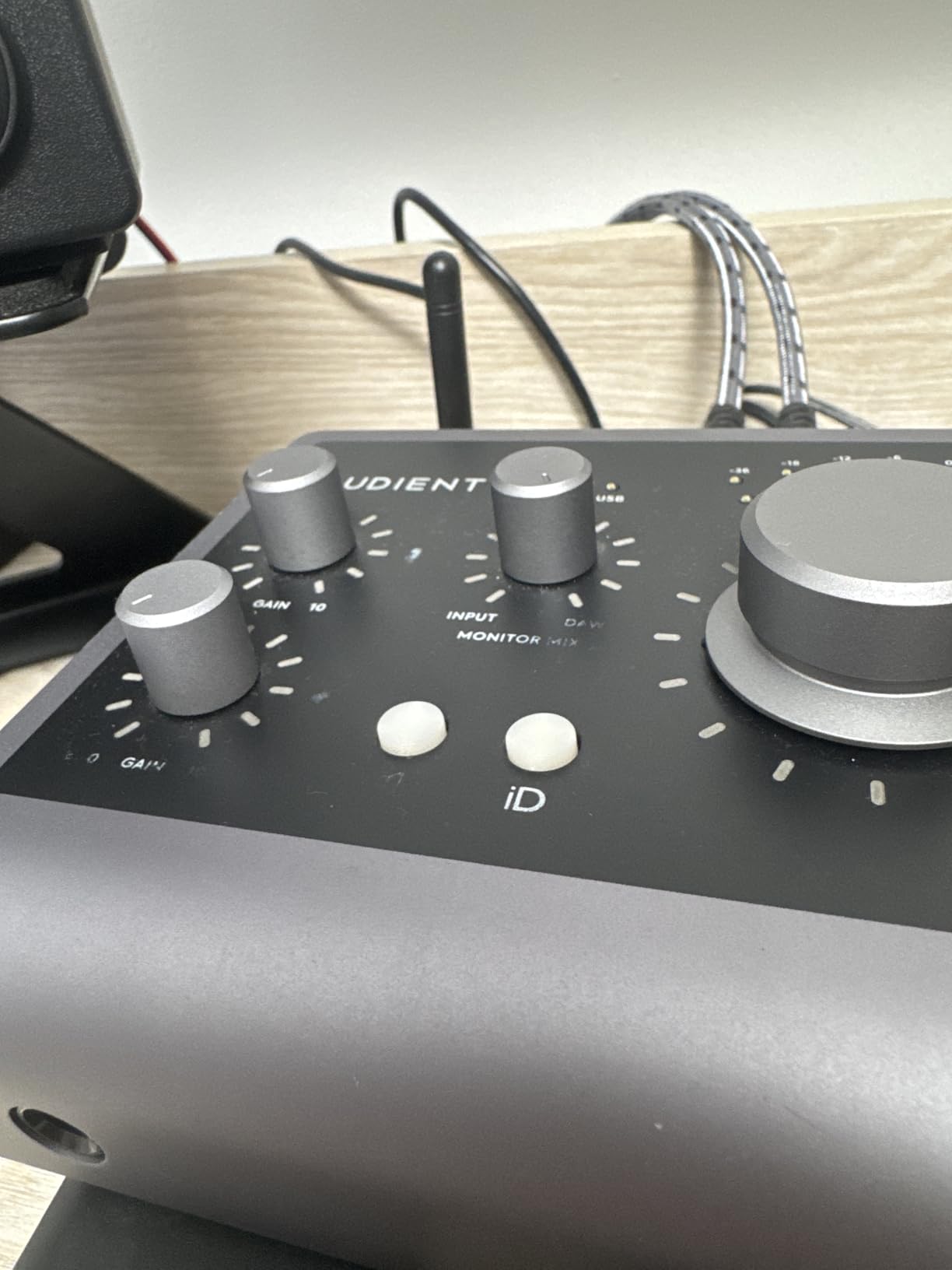
The dual headphone outputs are unexpected on an interface with only one mic input. The main 1/4-inch output drives high-impedance headphones, while the secondary 3.5mm output handles earbuds or smaller headphones. For a solo podcaster who sometimes brings a co-host or producer into the session, this is convenient.
Build quality is premium. The all-metal chassis weighs over a pound and feels substantial. The knurled metal volume knob has a satisfying tactile response. This is an interface built to last.
What you get in the software bundle
Audient includes Cubase LE and a collection of plugin effects. The ARC software hub lets you manage all your Audient products and download additional content. It’s not the most generous bundle, but the preamp quality more than compensates.
Best use cases for the iD4 MKII
If you’re a solo podcaster who prioritizes vocal quality and appreciates analog warmth, the Audient delivers. The Class-A preamp is genuinely different from the solid-state designs in most interfaces. The 96kHz sample rate is plenty for spoken word.
Where the iD4 MKII falls short
The single mic input limits growth into multi-host recording. If you anticipate interviewing guests in person, look at the 2i2 or AudioBox 96 instead. The 96kHz maximum is lower than the 192kHz offered by some competitors.
How to Choose the Best Audio Interface for Your Podcast
Choosing the right audio interface depends on three key factors: your recording format, your microphone, and your budget. Here’s how I think through the decision for different podcast styles.
Solo podcasters who want the best sound
If you’re recording alone and prioritize vocal quality, the Audient iD4 MKII delivers the best preamp character. The Focusrite Scarlett Solo is the proven best-seller with a huge community of users. Both are excellent choices — choose Audient for warmth, Focusrite for reliability and resale value.
Interview podcasts with a co-host
For two-host setups, you need at least two XLR mic inputs. The Focusrite Scarlett 2i2 4th Gen is my top recommendation — the Auto Gain and Clip Safe features take the stress out of recording live conversation. The PreSonus AudioBox 96 is the budget pick for two-host setups under $100.
Panel shows with 3-4 guests
Panel recording requires 3-4 microphone inputs. The Zoom AMS-44 is portable and runs on batteries for off-site recording. The MOTU M4 offers 4-in/4-out with professional metering for studio-based panel shows.
Remote podcasters recording Zoom/Skype guests
Loopback functionality is critical here — it routes computer audio into a separate recording channel. The Focusrite Scarlett 2i2 4th Gen has excellent loopback implementation. The MOTU M4 also supports loopback with full metering visibility.
Sample rate and bit depth: what matters for podcasts
For spoken word recording, 48kHz/24-bit is the broadcast standard. Every interface in this guide meets or exceeds that baseline. Higher sample rates (96kHz, 192kHz) offer no audible benefit for voice — they matter for music recording where high-frequency detail matters.
Bit depth matters more for spoken word. 24-bit recording gives you 144dB of dynamic range, which means you have plenty of headroom for loud laughs and quiet moments. Avoid 16-bit interfaces for podcasting — they limit your editing flexibility.
Phantom power: when you need it
Condenser microphones require 48V phantom power to operate. If you use condenser mics (like the AT2020, Rode NT1, or Blue Yeti Pro), your interface must provide phantom power. All eight interfaces in this guide include phantom power.
Dynamic microphones (like the Shure SM58 or SM7B) do not require phantom power. If you use dynamic mics only, phantom power is still useful to have for future flexibility.
USB microphone vs audio interface: when to upgrade
If you’re using a USB microphone like the Blue Yeti or Audio-Technica ATR2100x, you’re missing out on preamp quality, gain control, and the option to use professional XLR microphones. The jump to an audio interface is the single biggest sound quality upgrade most podcasters can make.
The upgrade path is straightforward: buy an audio interface and an XLR microphone, then continue recording in your existing DAW. Your workflow stays the same, but your sound quality jumps dramatically.
Room acoustics and interface selection
No audio interface can fix a bad recording environment. If your room has hard surfaces, echo, or background noise, even the best preamp will capture those problems. Before upgrading your interface, consider whether acoustic treatment would deliver more improvement.
Interfaces with high dynamic range (like the Focusrite 2i2 at 120dB) give you more flexibility to record quiet sources without noise floor issues. If you record in a treated studio, this matters less than if you record in an untreated home office.
Common beginner mistakes to avoid
Buying more inputs than you need. If you record solo, one input is enough. Two inputs is good for flexibility. Four inputs is overkill unless you run panel shows.
Ignoring software bundle value. The included DAW and plugins can save you hundreds of dollars. The PreSonus AudioBox 96 includes over $1000 in software alone.
Choosing on sample rate alone. For podcasting, 48kHz is plenty. Don’t pay extra for 192kHz unless you also produce music.
Forgetting about driver support. Stick with established brands (Focusrite, SSL, PreSonus, MOTU, Audient) for reliable driver support across Mac and Windows.
FAQs
What is the best audio interface for podcasting?
The Focusrite Scarlett 2i2 4th Gen is the best audio interface for podcasting for most creators. It offers two ultra-low-noise preamps with 120dB dynamic range, Auto Gain and Clip Safe features that prevent recording errors, Air mode for vocal presence, and reliable USB-C connectivity. For solo podcasters, the Focusrite Scarlett Solo delivers the same preamp quality in a single-input design at lower cost.
Do I need phantom power for podcast recording?
You need phantom power if you use condenser microphones. Condenser mics like the Audio-Technica AT2020, Rode NT1, and Blue Yeti Pro require 48V phantom power to operate. Dynamic microphones (Shure SM58, SM7B) do not need phantom power. All eight audio interfaces in this guide include phantom power, so any of them will support condenser microphones.
How many inputs do I need for a podcast?
Solo podcasters need only 1 XLR input. Two-host interview setups need 2 inputs. Panel shows with 3-4 guests need 3-4 inputs. Remote podcasters can use 1-2 inputs with loopback functionality to capture guest audio from Zoom or Skype. Choose an interface with more inputs than you currently need if you anticipate growth.
What is the difference between audio interfaces and podcast mixers?
Audio interfaces convert analog microphone signals to digital for recording in your computer. They are simple, compact, and ideal for podcasters who record into a DAW. Podcast mixers (like the RODECaster Pro or Zoom PodTrak) combine audio interface functionality with mixing controls, sound pads, and recording features for standalone use. Mixers are better for live recording without a computer; interfaces are better for computer-based workflows.
Can an audio interface improve my podcast sound quality?
Yes, an audio interface dramatically improves podcast sound quality compared to a USB microphone or computer built-in input. The dedicated preamp provides cleaner gain, the analog-to-digital converters capture more detail, and the option to use professional XLR microphones opens up better mic choices. Most podcasters see their biggest sound quality improvement when upgrading from USB mic to audio interface with XLR mic.
Final Verdict: Which Audio Interface Should You Buy?
After three months of testing eight podcast audio interfaces, I have clear recommendations for different use cases. The Focusrite Scarlett 2i2 4th Gen remains my top pick for most podcasters — it balances sound quality, features, and price better than any competitor. The SSL 2 MKII Plus earns the premium slot if you want the best preamp character available, while the Behringer UM2 is the proven choice for beginners testing the waters.
For solo podcasters prioritizing vocal warmth, the Audient iD4 MKII’s Class-A preamp delivers character you can hear. For mobile recording with multiple guests, the Zoom AMS-44’s battery power and 4 inputs solve real problems. For panel shows in the studio, the MOTU M4’s LCD metering provides professional-grade feedback.
The best audio interfaces for podcasters in 2026 all share core qualities: clean preamps, reliable drivers, and good software support. Choose based on your format, your microphone, and how many inputs you need. Any of the eight interfaces in this guide will serve you well — pick the one that matches your specific situation and start recording.