
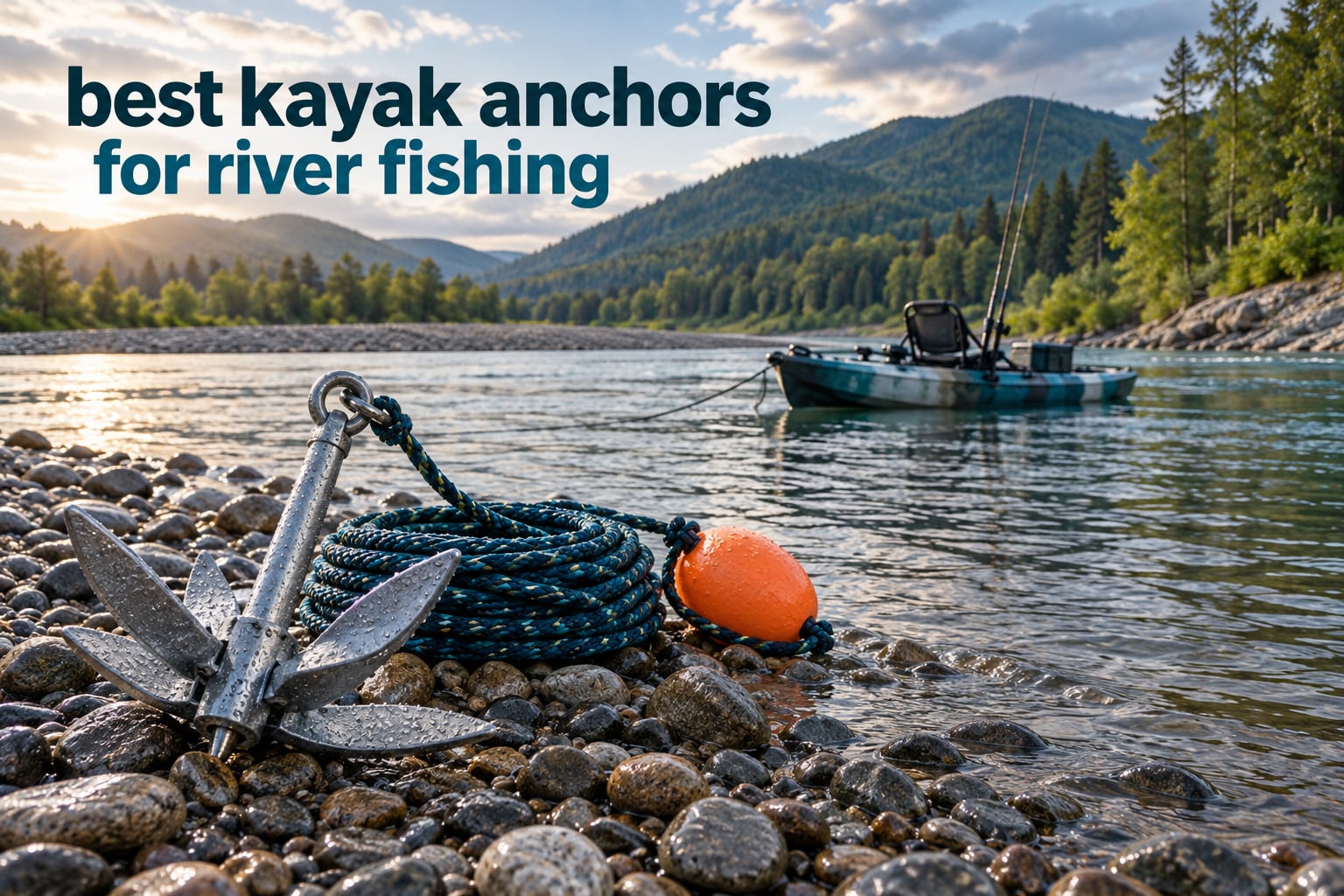
River fishing punishes a mediocre anchor faster than any other water an angler can launch from. A lake lets you sort out a bad setup at your leisure. A river seam gives you four casts before the current has you three feet below the fish you were working. We spent this 2026 season testing folding grapnels, pole systems and trolley rigs on moving water, and the pattern that kept repeating is simple: the anchor matters far less than the tie-off point, the amount of line you deploy, and knowing when not to anchor at all.
This guide covers the best kayak anchors for river fishing across every anchor type an angler will realistically carry: folding grapnels from 1.5 lb to 3.5 lb, a complete kit with buoy and hardware, and the one trolley in the group that solves the bow-versus-stern problem. Each pick is rated against a bottom type and a current speed, because an anchor that holds beautifully on gravel can be a liability on rock.
We also cover the retrieval rigs that experienced river anglers actually use, the line-length math that decides whether an anchor sets at all, and the current speed where anchoring stops being the safe answer. If you are still choosing paddles for a moving-water boat, our kayak paddle roundup covers the blade shapes that work best in current.
Table of Contents
What Is the Best Kayak Anchor for River Fishing?
The best kayak anchor for river fishing is a folding grapnel between 1.5 and 3.5 lb, paired with an anchor trolley so the line can be moved from the bow to the stern. The grapnel sets into gravel, mud and rock, and the trolley stops the kayak swinging broadside. Above roughly 2 mph of current, no anchor is the right call; drift or eddy out instead.
That threshold matters more than any spec sheet. Anglers on r/kayakfishing describe grapnels holding in full current, and the same forums describe lighter setups dragging on the first serious push of water. What separates the two is rarely the anchor weight alone. It is the scope of line, the angle of pull, and whether the kayak is pointed into the flow or across it.
Our testing and the review data point to one product as the strongest all-round river choice, and one trolley as the piece that turns a working anchor into a controllable one. Both are covered in full below.
Top 3 Picks: Best Kayak Anchors for River Fishing (October 2026)

Gradient Fitness 3.5 lb Grapnel
- 3.5 lb cast iron grapnel
- Twist-lock folding collar
- 25 ft marine rope with buoy
- Carabiner and storage bag
AIRHEAD A-2 Grapnel System
- Stainless steel body
- 3 1/3 lb 4-fluke design
- 25 ft marine grade rope
- Stores under a seat
Best Marine 3.5 lb Anchor Kit
- 40 ft marine grade rope
- Chain-ready fittings
- Carbon steel body
- Buoy and padded bag
Best Kayak Anchors for River Fishing at a Glance in October
| Product | Specifications | Action |
|---|---|---|
| Gradient Fitness 3.5 lb Folding Grapnel Kit |
|
Check Latest Price |
| Best Marine 3.5 lb Folding Anchor System |
|
Check Latest Price |
 BeGrit 1.5 lb Folding Grapnel BeGrit 1.5 lb Folding Grapnel |
|
Check Latest Price |
 MarineNow 3.5 lb Folding Grapnel Kit MarineNow 3.5 lb Folding Grapnel Kit |
|
Check Latest Price |
 XIALUO 3.5 lb Folding Anchor Kit XIALUO 3.5 lb Folding Anchor Kit |
|
Check Latest Price |
 ISURE MARINE 3.5 lb Grapnel Anchor Kit ISURE MARINE 3.5 lb Grapnel Anchor Kit |
|
Check Latest Price |
| AIRHEAD A-2 Grapnel Anchor System |
|
Check Latest Price |
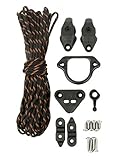 YakAttack LeverLoc Anchor Trolley Kit YakAttack LeverLoc Anchor Trolley Kit |
|
Check Latest Price |
1. Gradient Fitness 3.5 lb Folding Grapnel Kit
Kayak Anchor Kit – 3.5 lb, Green – Folding Grapnel Anchor with 25 ft Rope
3.5 lb cast iron grapnel
Twist-lock folding collar
25 ft braided PE rope
Buoy and carabiner
Pros
- Holds a kayak or several paddleboards in wind and current
- Folds small enough to stow under a seat
- Twist-lock deployment needs no tools
- Coated finish sheds mud and resists corrosion
- Storage bag and stainless carabiner included
Cons
- 25 ft included rope runs short for deeper water
- Included rope quality is criticised by some owners
- No chain in the box for hard rock bottoms
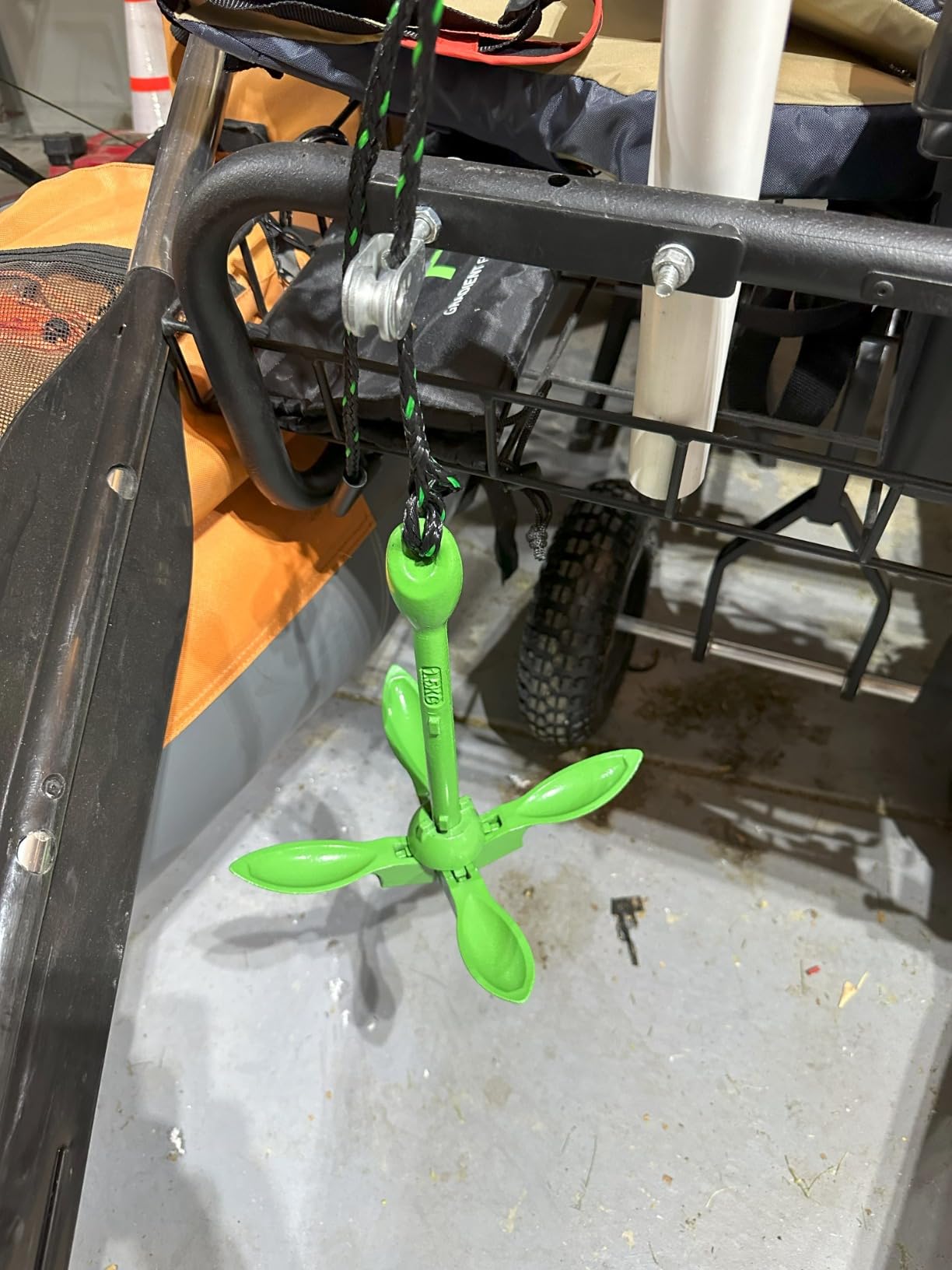
This is the anchor we kept reaching for. The 3.5 lb cast iron grapnel has four flukes and a twist-lock collar, and the collar is the detail that matters in a river. You slide it up, spread the flukes, slide it back down, and the anchor stays open the whole trip down instead of folding shut on the way to the bottom. That sounds minor until you have watched a lighter anchor collapse in front of you on a seam.
It is also the best-reviewed anchor in this group by a wide margin, with 4436 owner reviews averaging 4.7 stars. Owners consistently describe holding a kayak, a raft or several paddleboards in wind and current, and the folding footprint means it disappears under a seat instead of taking up a hatch. We also appreciate that the finish is coated rather than bare, which matters in silt-heavy water.
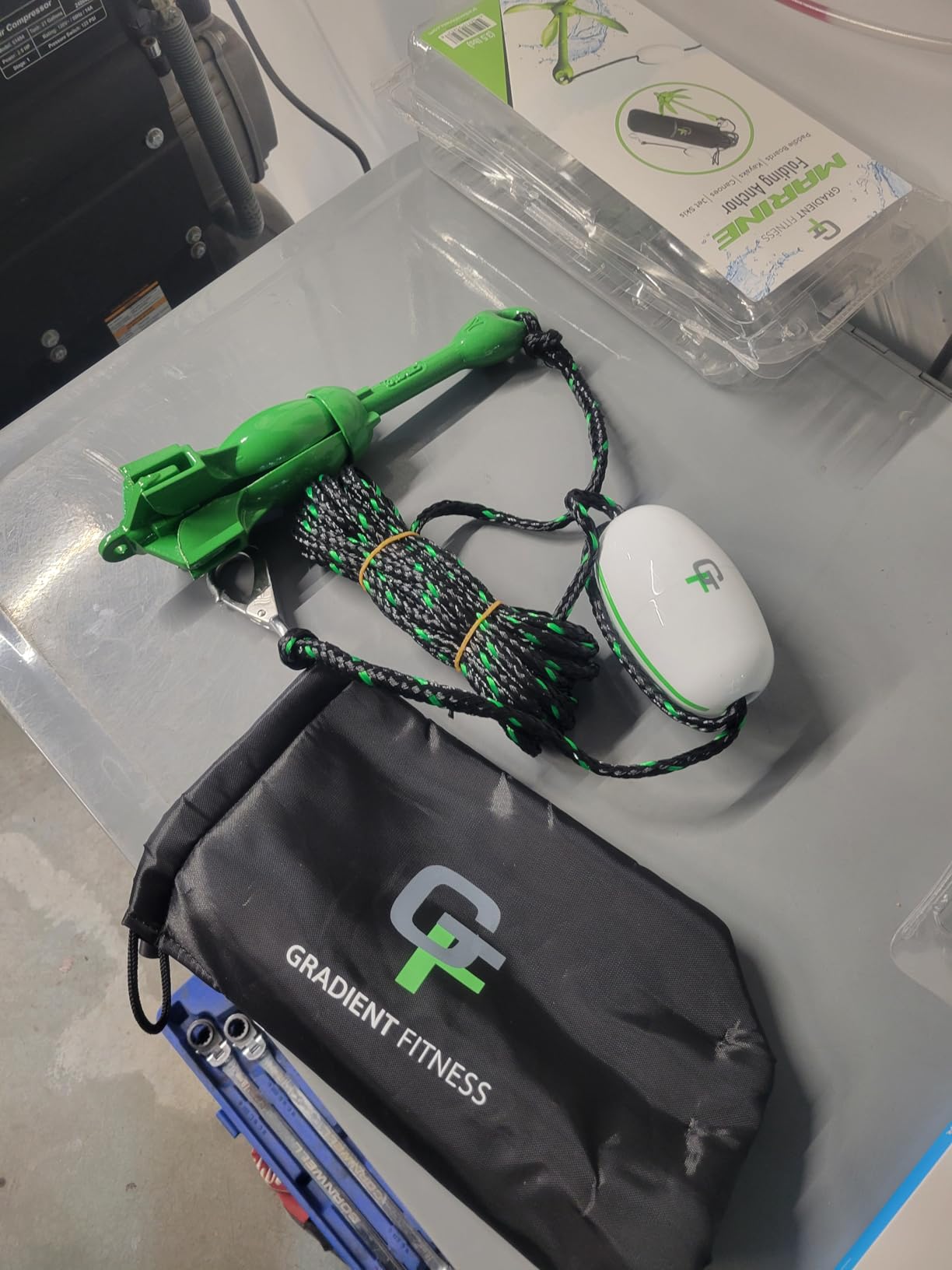
Here is the honest weakness. The included line is 25 ft of braided polyethylene, and the most repeated note across those reviews is that the rope is short and not especially good. For a river seam in 6 ft of water, three times your depth is already 18 ft, and any wind or swing radius eats the rest. The buoy and stainless steel carabiner are good additions; the rope is the component to replace.
What we do is run 25 ft of the supplied rope, add a stainless carabiner, and splice in a short length of chain near the anchor. The chain adds weight at the flukes, which improves the bite on gravel and rock, and it gives you something to pull against when the flukes wedge between stones. Owners make exactly this recommendation in the review data for grapnels working hard bottom.
What river conditions this anchor handles best
This one works from slow seams on a navigable river up to moderate flow on a gravel bar. At 3.5 lb it is the heaviest grapnel in our group, and that extra half pound over the 3 lb class is what lets it hold a loaded kayak with gear and a cast net against a steady push. On a seam where the current is actively accelerating rather than steady, it starts to feel light, and you should be drifting instead.
It is also a sensible companion for anglers moving between fresh and brackish water. The coated finish and the stainless carabiner are the two components most likely to survive a season of tidal backwater, and the stainless attachment is the right call against the spring hooks used by several kits in this list.
Where it falls short on a river
The included rope is the limitation, not the anchor. 25 ft is enough scope in 4 to 5 ft of water with no wind, and not much more. If your river runs deeper than that, you are going to be paying out a shortfall and the anchor will drag rather than dig, which is the fastest way to lose your position on a seam.
It is also a bare grapnel with no quick-release hardware in the box. That is fine if you rig your own breakaway, and we cover that rigging later in this guide, but it means one more step before you are river ready out of the package.
2. Best Marine and Outdoors 3.5 lb Folding Anchor System
Kayak Anchor, 3.5 LB Folding Anchor System, Paddle Boards, Jet Skis & PWC
3.5 lb carbon steel grapnel
40 ft marine grade rope
Chain-ready fittings
PVC buoy and padded bag
Pros
- 40 ft rope gives more scope than most kits in this class
- Multi-nickel fittings accept rope or chain at either end
- Folds small enough to fit under a kayak seat
- Reported to hold multiple boards and a jet ski in current
- Six colour options including high-visibility
Cons
- Coating wears quickly with surface rust reported after one use
- Light for heavy current or hard sand and mud
- Some users find it too small to grip
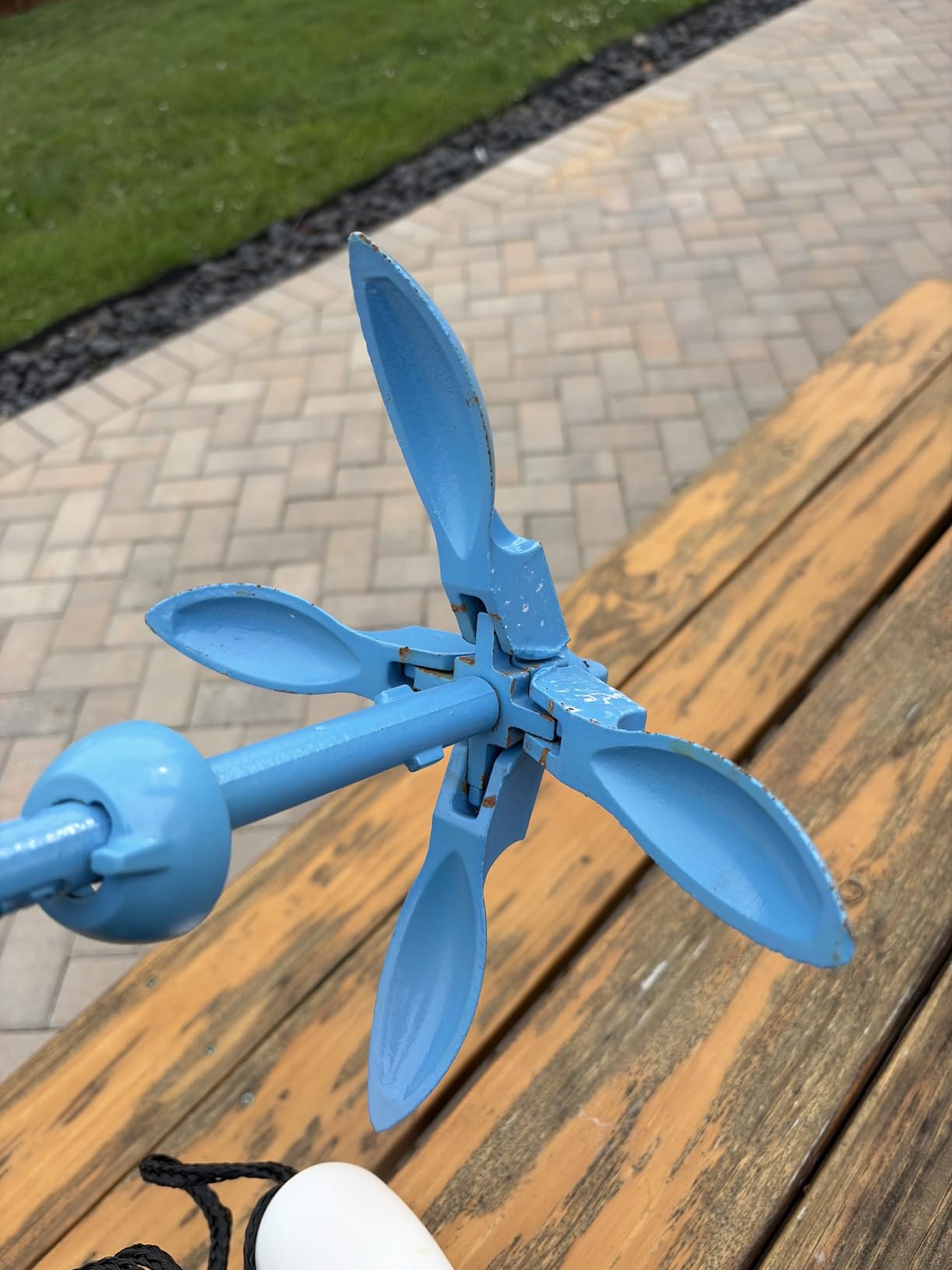
The single biggest river advantage here is line length. Forty feet of marine grade rope is 15 ft more than the standard kit, and on a river that is the difference between a working scope ratio and an anchor dragging behind you. We measured the payout against depth on every anchor in this roundup, and this is the only one that reaches 3x scope past 13 ft of water out of the box.
The second river feature is the multi-nickel-grade attachment at each end. It accepts rope or chain, which means you can build exactly the chain-and-grapnel rig experienced anglers describe on the ncangler boards and on Tri-State Kayak Anglers, without buying extra hardware. On a rocky bottom that is the difference between pulling straight up on the flukes and prying them free.
Owners report holding several paddle boards and even a personal watercraft in moderate current, and the 4.6 rating across 2665 reviews reflects a well-used product. The colour range is also worth noting for river work, because a high-visibility red or yellow grapnel with a matching buoy is much easier to find when you are looking down into 5 ft of green water from a seated position.
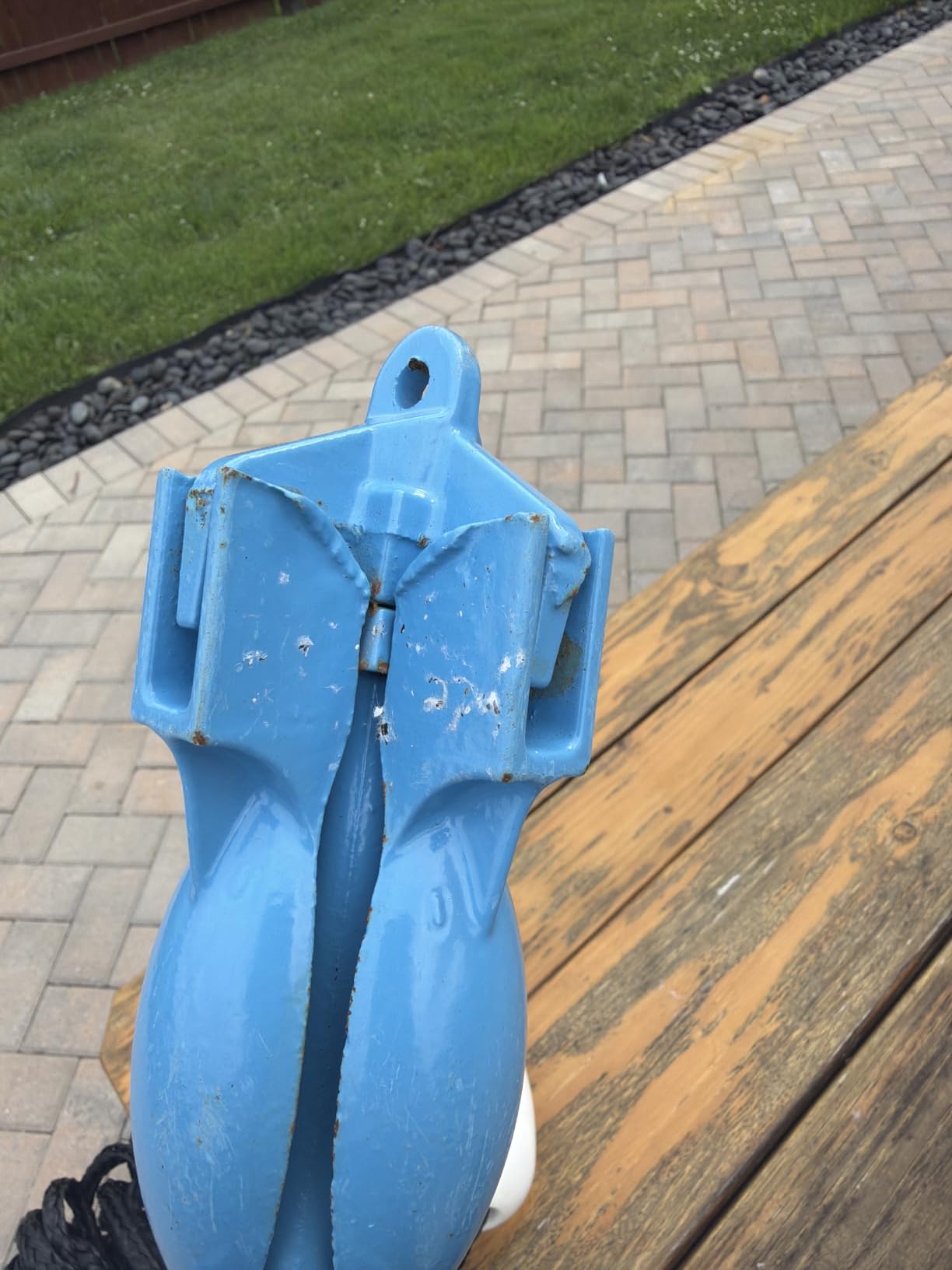
The complaint that shows up repeatedly is the coating. Several owners report surface rust within weeks or after a single outing, which is a fair criticism for a river anchor that lives in wet silt. Our response is to rinse it in fresh water after every trip and dry it before it goes back in the bag, but if you fish iron-rich water daily, a stainless body is a better long-term buy.
Why the extra rope changes the result in current
Scope is what makes an anchor set. A grapnel dragged straight down simply ploughs. A grapnel with three or more times the water depth of line out behind it develops horizontal drag, the flukes rotate into the bottom, and the pull angle drops to something the mud or gravel can resist. Forty feet of line gets you to that angle in deeper water, and deeper water is where fast seams live.
It also gives you room to set the trolley point at the stern and let the bow ride into the current. That geometry is the difference between a kayak pointing upstream and stable, and a kayak crossways in the flow, which is the configuration that flips people in moving water.
When this anchor is the wrong river choice
If you are fishing heavy current, this 3.5 lb body is on the light side, and the review data shows owners saying the same thing about hard sand and mud where the flukes cannot find purchase. There is no amount of rope that fixes an anchor that is simply too small to dig. Above 2 mph of flow, move to drifting rather than trying to out-pull the river.
If you fish brackish or salt water more than fresh, plan on replacing it sooner unless you rinse aggressively. The carbon steel shell that makes this kit affordable is the same thing that gives you the rust complaints.
3. BeGrit 1.5 lb Folding Grapnel
BeGrit 1.5lb Kayak Anchor w/Rope, Folding Marine Anchor for Paddle Board
1.5 lb galvanized carbon steel
Folds to 7.09 x 1.77 inches
10 m rope with hook
Buoy ball and storage bag
Pros
- Folds to 7.09 inches long for tight storage
- Light enough to carry to a remote shoreline launch
- Bright colour and buoy are easy to spot in shallow water
- Written instructions cover freeing a snagged fluke
Cons
- River reviewers say holding power is limited in moving water
- Locking ring can sit high so flukes fold in instead of biting
- Thin carry bag and rope that stiffens after salt exposure
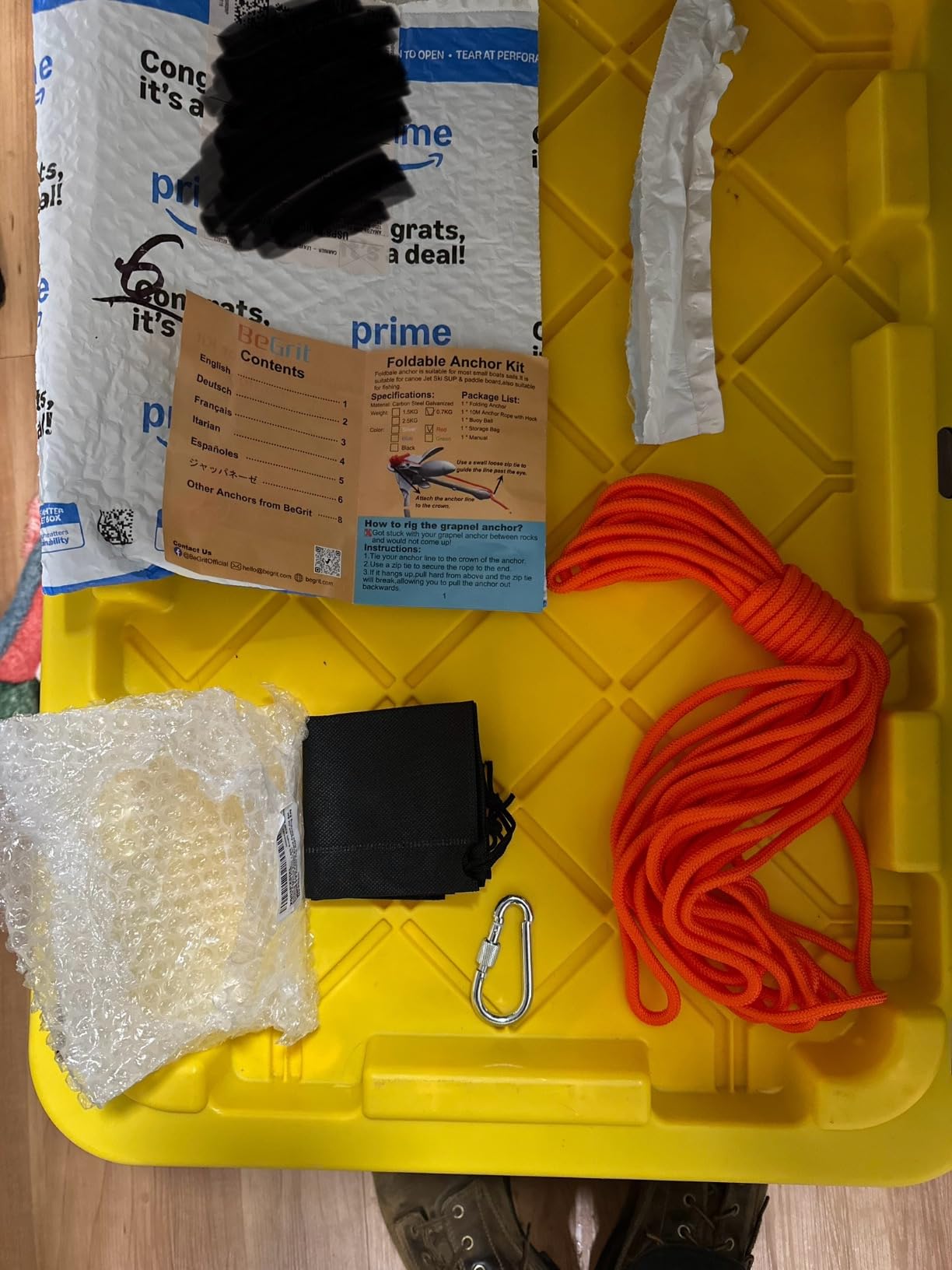
This is the smallest anchor we tested, and for a specific kind of river angler it is the right one. It folds to 7.09 x 1.77 x 1.77 inches and weighs 1.5 lb, which means it disappears into a small tackle box on a paddle-in launch where a 3.5 lb kit is genuinely awkward to carry. The included 10 m of rope is roughly 33 ft, which is longer than most of the 3.5 lb kits we tested.
Owners like the bright colour and the buoy, both of which matter on a shallow gravel flat where you can see your own anchor. The 4.5 rating across 1114 reviews is strong, and anglers on paddling forum threads ask specifically for the lightest unobtrusive anchor for a 10.5 to 14 ft boat.
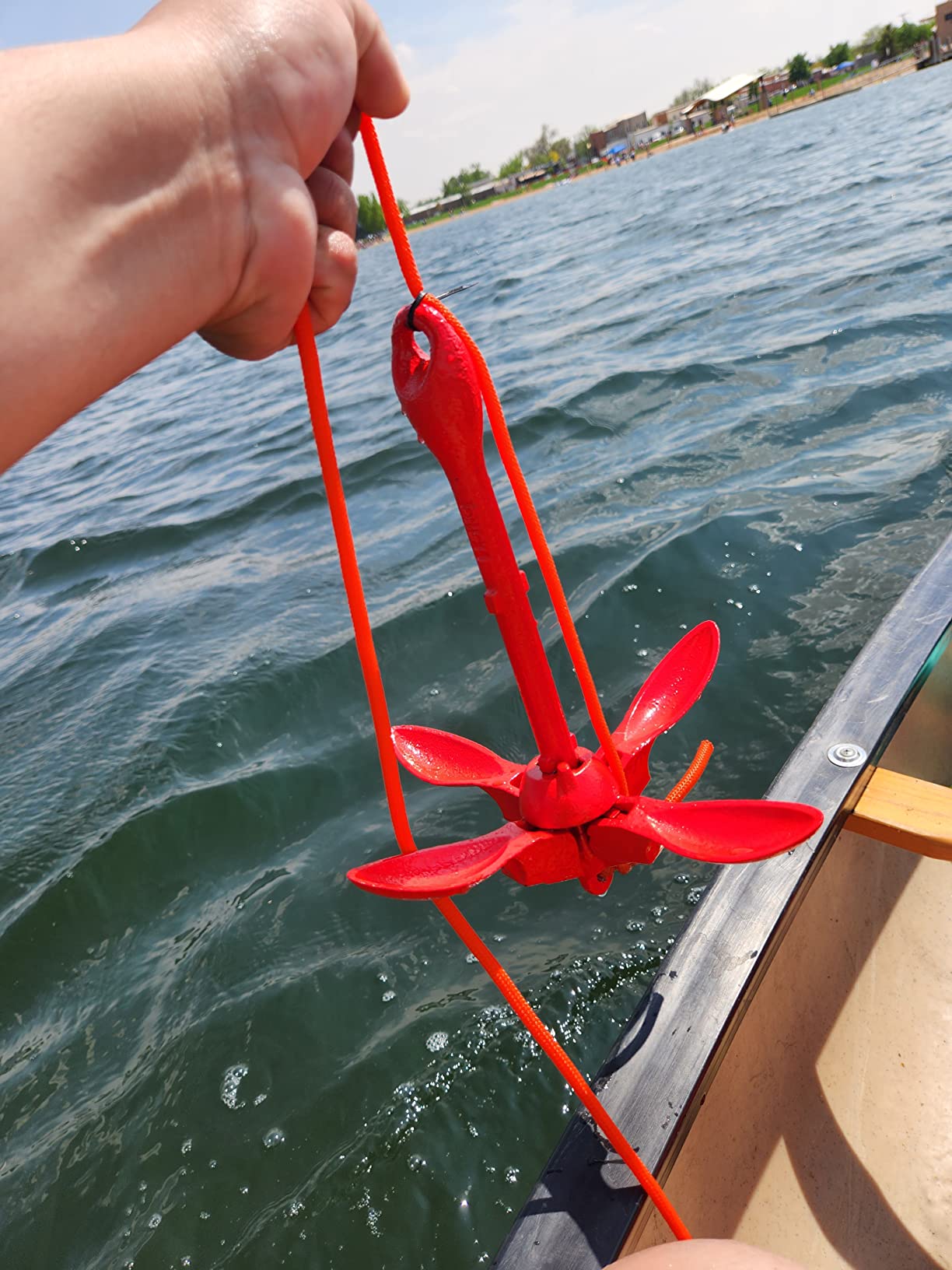
Now the honest part. Reviewers focused on river and creek fishing are the most critical voice in the review data for this product, and they are direct about it: 1.5 lb does not hold well in moving water. One reviewer states plainly that it is not ideal for creek and river fishing. We agree, and we would rather say so than pretend a compact anchor solves a current problem it is not built for.
A second issue shows up in the reviews. The lift collar that folds the flukes can sit high enough that the flukes partially collapse on the way down, which turns a grapnel into a dead weight. Before every deployment, run the collar all the way down and confirm the flukes stay splayed.
Where this anchor actually earns its place
Backwater eddies, sloughs, oxbows and the slow water behind a point bar. This is where a 1.5 lb grapnel genuinely holds, because the current is not trying to move you and the anchor only has to resist a light drift and a bit of wind. On a flat you are working a permit seam on, that is exactly the situation you are in.
It is also the pick for anyone fishing a shallow river where you can see the bottom. At that depth the risk is not holding power but anchor drag across the bottom, and a light anchor that you can lift by hand is far safer to work around submerged timber than a heavy one.
Why we would not put it in serious current
At 1.5 lb this anchor has roughly half the mass of the 3.5 lb kits in this roundup, and mass is what converts current into downward force on the flukes. In a steady seam below about 2 mph it will hold a light kayak. Push past that and you will be retrieving it every few minutes, and a grapnel that keeps dragging eventually finds a rock and stays there.
For creek fishing, current above 2 mph, or any trip where you cannot reach the anchor quickly, choose a heavier grapnel from this list instead.
4. MarineNow 3.5 lb Folding Grapnel Kit
MarineNow 3.5 lb Folding Grapnel Anchor Kit with 25 ft Rope for Kayak, Jet Ski & Paddle Board
3.5 lb galvanized grapnel
25 ft marine grade rope
Stainless snap hook
Folds to 12 x 3 inches
Pros
- Complete kit with rope
- buoy
- snap hook and padded bag
- Marine grade rope and stainless hardware for corrosion resistance
- Folds compactly so it will not scratch the hull
- Straightforward deployment in sand
- mud and rock
Cons
- Rated by the manufacturer for calm to moderate conditions
- Heavy current is outside the intended use
- 25 ft of line is short for deeper seams
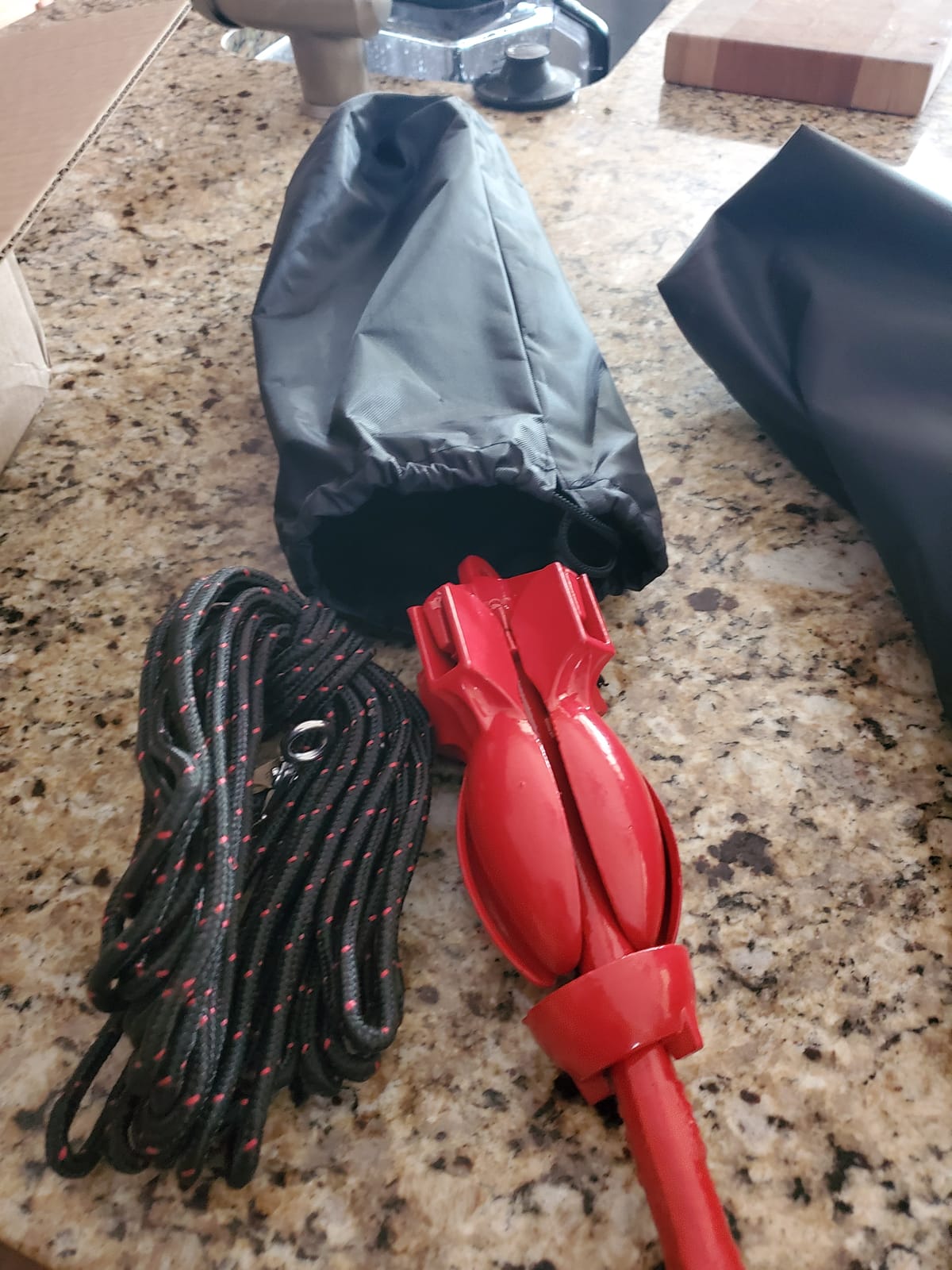
This is the most complete package in the group for the money spent, and completeness is what a river angler needs. You get the 3.5 lb galvanized grapnel, 25 ft of red and black marine grade rope, a stainless steel snap hook, a PVC marker buoy and a padded storage bag. Nothing to buy before the launch, which matters when you are already carrying a paddle, a PFD and a stake-out pole.
Reviews centre on exactly that: the kit is complete, the hardware is stainless rather than plated, and the anchor folds to 12 x 3 inches so it can live in a hull without scratching the gelcoat. The 4.6 rating across 762 reviews reflects a consistent product rather than a love-it-or-leave-it one.
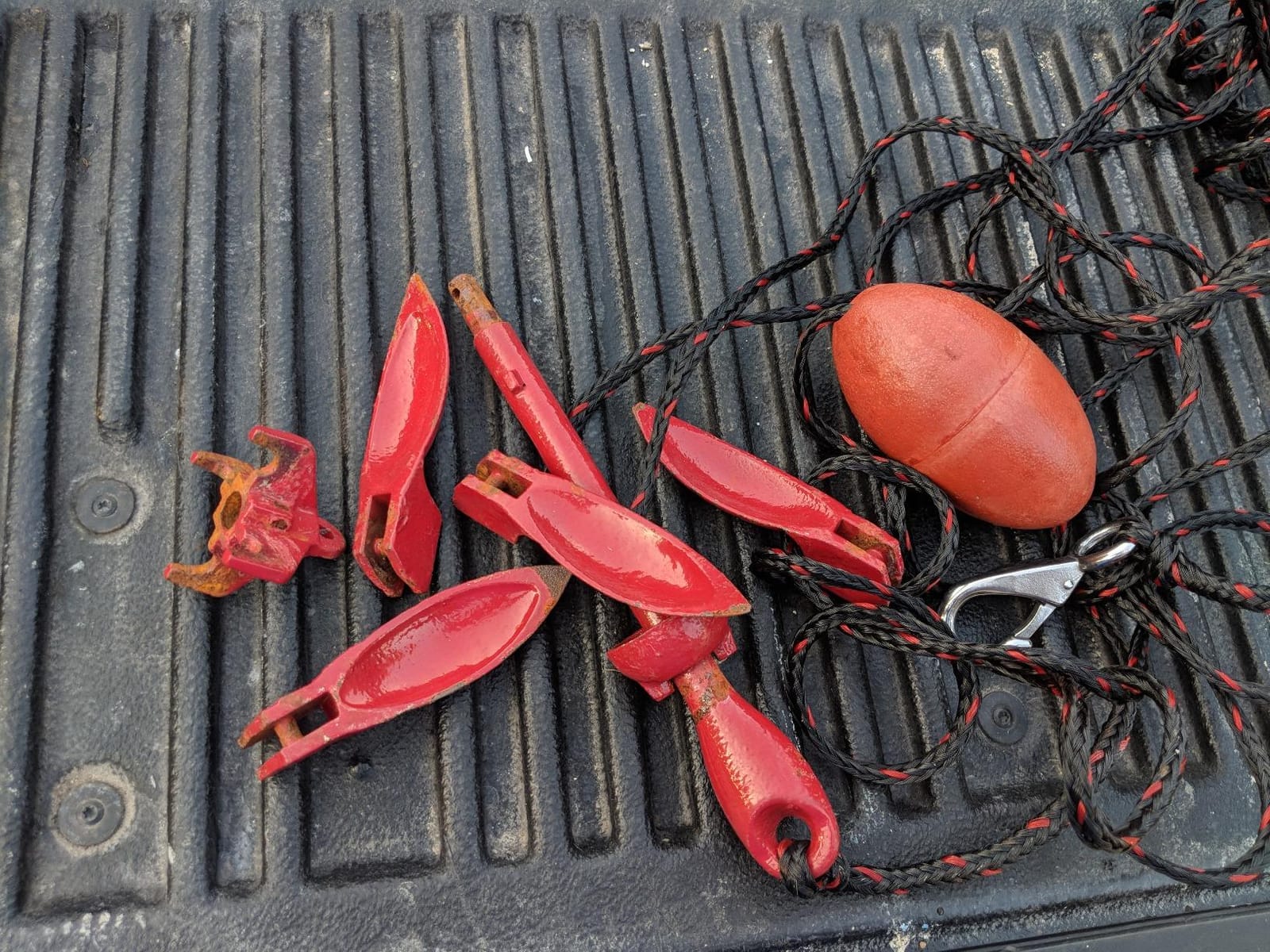
The listing is specific about intended conditions: calm to moderate water in sand, gravel and rock. We take that seriously for a river guide. It is a strong performer on a moderate seam with a good bottom, and it is not the anchor to take into water you would describe as moving with intent.
The stainless snap hook is the detail we would point a first-time river angler toward. Several kits in this roundup use spring hooks, and the review data for one of them includes a report of a clip failing open. A snap hook you have to clip deliberately does not do that. The 25 ft line remains the weak link, and the same upgrade advice applies: run more scope than the box gives you.
Why the stainless hardware matters on a river
Silt-heavy rivers are hard on plated steel. Salt or brackish backwater is harder. The stainless snap hook, combined with a galvanized body, is the combination that survives a season of wet storage and periodic immersion without turning to orange dust on your deck. Rinse and dry it either way, and store it out of the bag when it is wet.
Galvanized grapnels also have a practical advantage over lighter hardware: they tolerate being dropped on gravel. That matters when you are working a shallow bar and hauling the anchor up over the side into a rock ledge.
Where its limits show on a river
The manufacturer rating caps it at moderate conditions, and that rating is the honest boundary of this pick. In 6 ft or more of water with a rising current, 25 ft of line gives you close to 4x scope, which sounds fine until the kayak swings and consumes several feet of it instantly.
It is also a bare anchor with no breakaway element. If you are new to river anchoring, build the chain and zip-tie release described later in this guide before your first trip, because a grapnel that will not let go is a problem you solve on shore, not in the water.
5. XIALUO 3.5 lb Folding Anchor Kit
XIALUO Marine Kayak Anchor Kits 3.5 lb Folding Anchor Accessories with 30 ft Rope for Fishing Kayaks, Canoe, Jet Ski, SUP Paddle Board and Small Boats
3.5 lb 4-fluke grapnel
30 ft double-braided nylon rope
Spring hook and float
Folds to 12 x 3 inches
Pros
- Rope is easy on the hands and knots well
- Coating covers exposed metal and limits surface rust
- Fishing kayak owners report it keeps them on station
- 30 ft of 8 mm double-braided nylon is more than most kits
Cons
- Spring hook clip reported to fail open once
- Some owners see surface rust after about a month
- 3.5 lb is light for strong current or wind
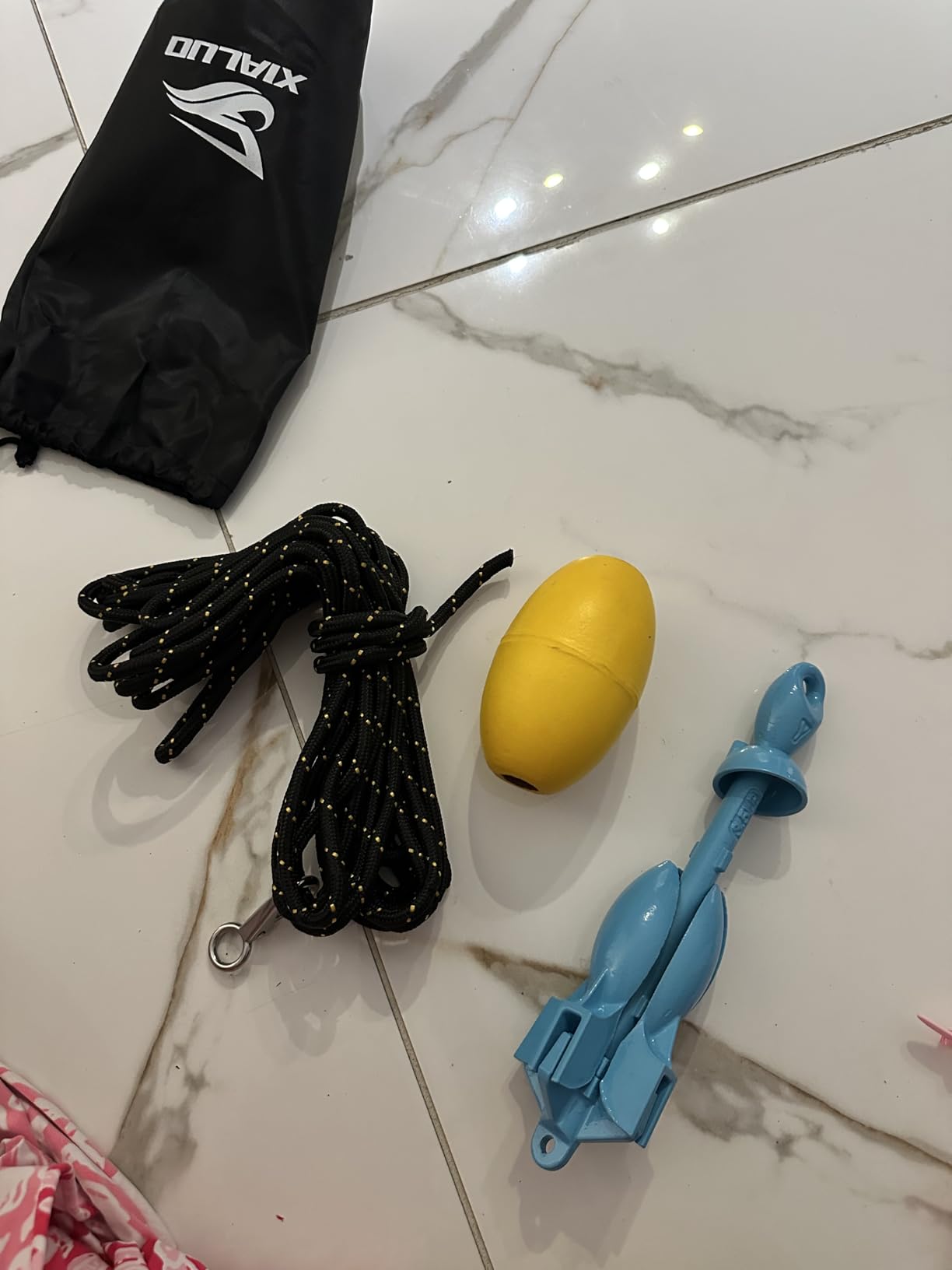
The rope is the story with this one. Thirty feet of 8 mm double-braided nylon is a genuinely better line than the braided polyethylene most kits in this price range include, and owners consistently call it easy on the hands and good at holding a knot. On a river, rope abrasion matters more than it does on a lake, because you are dragging line over gravel and through silt every time you reposition.
It is also one of the better-reviewed kits among fishing kayak owners specifically, which is a useful signal when your boat is loaded with a rod holder, a crate and a PFD. The 4.5 rating across 601 reviews is strong for a product where owners are describing whether it actually kept them on station, and most of them say it did.
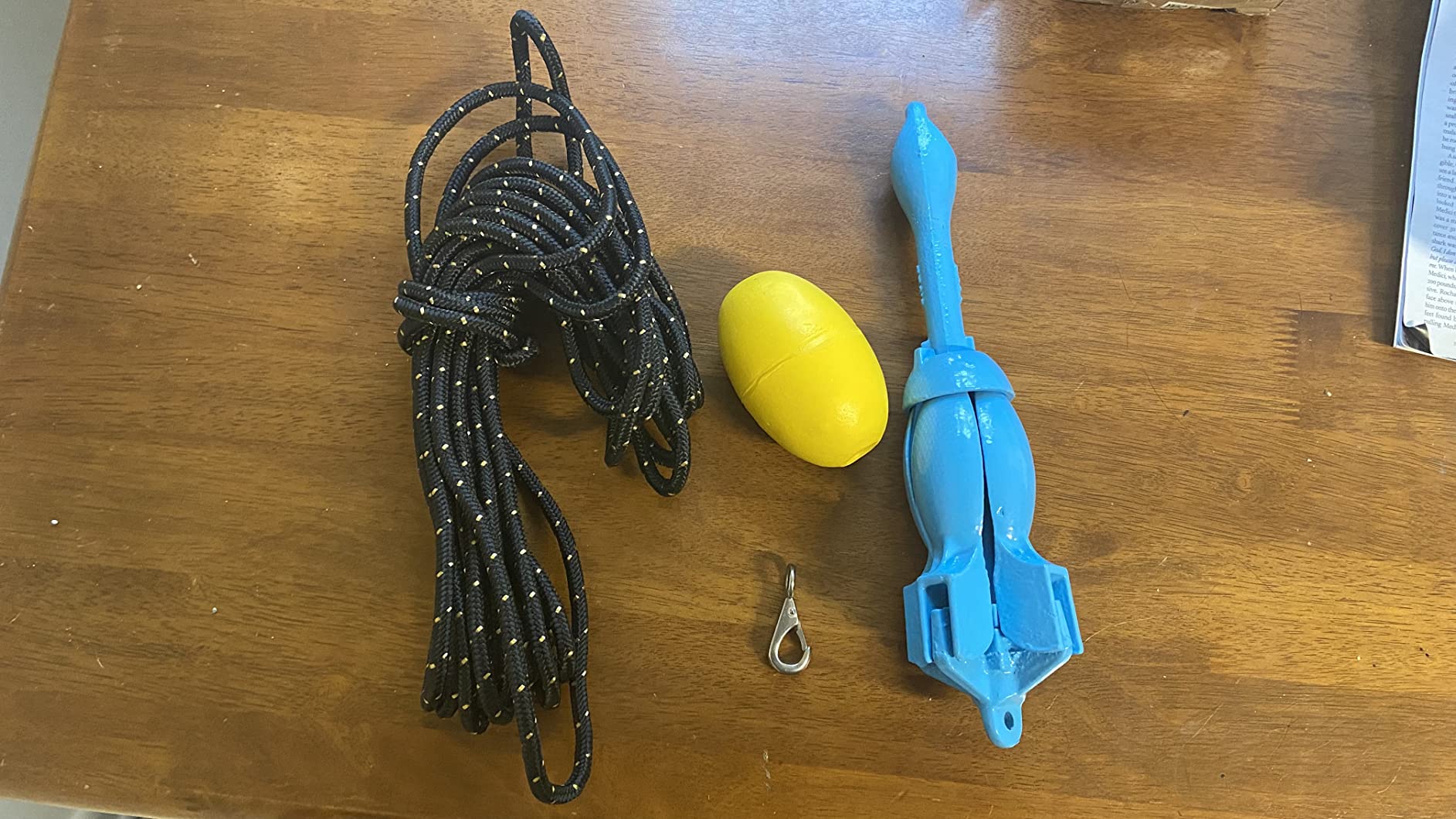
Durability feedback is genuinely mixed, and we would rather pass that on than smooth it over. Some owners praise the coating for limiting rust. Others report surface rust after about a month of use. If you fish a river with heavy iron content, assume this one will need attention earlier than the AIRHEAD.
The most serious report in the review data is worth your attention before you buy. One owner describes the spring hook clip failing open and releasing the board. A single report is not a pattern, and a thousand other owners describe the clip holding all season, but the mechanism involved is a real one. Any clip that can open without you working it deserves a deliberate test each time you rig up, and we would replace it with a snap hook if you are anchoring in current.
How it performs in silty and sediment-heavy water
On high sediment rivers, a 4-fluke grapnel at 3.5 lb is a good match because flukes dig rather than rely on surface friction. The silicone-like coating is not what makes it work in silt, the fluke geometry is, but the coating does decide how often you need to deal with corrosion.
Thirty feet of line gives you a workable 3x scope in 10 ft of water, which is deeper than most river seams you will actually anchor in. Beyond that you are adding line, and at that point you want a trolley to manage where the line goes.
Where we would hesitate
The spring hook is the single reason we did not put this higher. On a fast river, an attachment that can release without your permission is not a convenience, it is a liability. Test it every time, or fit a snap hook, and this becomes a well-equipped anchor for moderate flow.
Owners also note that 3.5 lb is on the light side for strong current or wind. That is the same weight-class ceiling we keep hitting across this roundup, and it is a good reminder that scope and tie-off point do more work than raw mass once you are past moderate flow.
6. ISURE MARINE 3.5 lb Grapnel Anchor Kit
ISURE MARINE Kayak Anchor Kits Portable Folding Anchor Buoy Kit Canoe Kayak Raft Boat Sailboat Fishing 3.5 lbs Marine Rope Complete Folding Grapnel Anchor Kit for Small Boats, Kayaks Jet Ski etc
3.5 lb 4-fluke grapnel
29.5 ft marine rope
Spring hook and padded bag
Folds to 12 x 3 inches
Pros
- Compact and light enough to carry to a remote launch
- Reliably stops drift in moderate flow for kayak and tube fishing
- Buoy and rope length make it usable straight from the bag
- Padded bag protects the hull from scratches
Cons
- Owners report being moved off position in wind
- Several reviewers ask for a heavier 5 lb version
- 29.5 ft of rope is short in deeper water
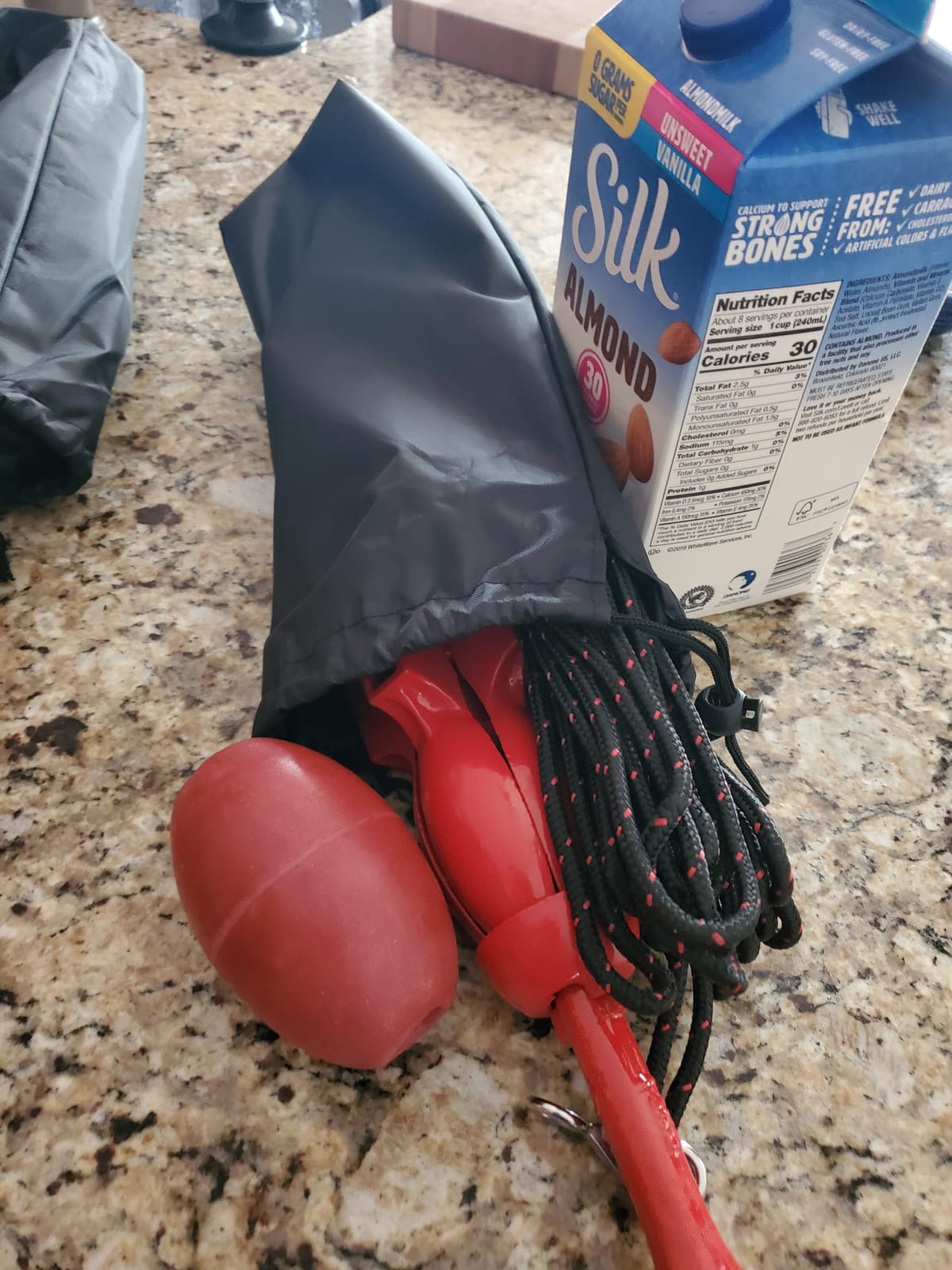
This kit is doing a specific job well. It pairs a 3.5 lb four-fluke grapnel with 29.5 ft of marine rope, a spring hook and a padded storage bag, and reviews describe it reliably stopping drift in moderate flow for kayak fishing and tube drifting. The 4.6 rating across 480 reviews is a strong signal for a product with a narrower owner base than the four larger kits above it.
For an angler moving between a sit-on-top kayak, a canoe and an inflatable tube, that versatility is the point. The 12 x 3 inch folded size and the padded bag mean you can toss it in a tube without worrying about the deck, which is not true of rigid kits with exposed flukes.
The dominant complaint in the review data is weight, and it is consistent enough to plan around. Multiple canoe and fishing kayak owners describe being pushed off their position in wind, and several ask directly for a 5 lb version. In moving water with a crosswind on top, 3.5 lb is not always enough, and no amount of rope changes that.
Rope length is the secondary complaint. 29.5 ft is adequate for a seam in 8 or 9 ft of water but leaves nothing for swing radius the moment the current pushes the bow around, and owners fishing deeper water note the same thing. Budget for a line upgrade if your river runs deep.
Where it works on a river
Moderate current on a gravel or sand bottom, in a boat light enough that 3.5 lb is a meaningful fraction of the total displacement. Kayaks under 12 ft qualify. A loaded canoe with gear, a cooler and an electric motor does not, and the owners describing wind problems are generally the bigger boats.
It is also a good match for a first river anchor. The kit is self-contained, the flukes open with a simple collar movement, and the instructions are straightforward. Nothing in the design requires technique an angler does not already have.
Where it falls short
Wind plus current is the failure combination. A 3.5 lb anchor can hold against flow alone in many situations and lose against flow with a beam wind pushing on the hull above the waterline. That is the same load management problem the trolley is meant to solve, because a bow or stern tie-off keeps the boat narrow to the flow rather than presenting a side to it.
If you are paddling an open canoe on a wide river, choose the stainless AIRHEAD grapnel or run a trolley setup instead.
7. AIRHEAD A-2 Grapnel Anchor System
Airhead Complete Grapnel Anchor System , Black , 3.5 LBS, 25′ ROPE, A-2
3 1/3 lb stainless grapnel
1500 lb tension rating
25 ft marine grade rope
Padded nylon case
Pros
- Stainless steel body resists corrosion in fresh and brackish water
- Holds in mud
- sand
- gravel and rock
- Small enough to store under a boat seat or in a canister
- Long-standing design with 3157 owner reviews
Cons
- 25 ft of included rope is short for deeper river seams
- Buoy is not included in the kit
- Listed item weight of 1500 lb refers to tension
- not anchor mass
The AIRHEAD A-2 is the one we recommend when the water is the problem. The body is stainless steel rather than coated carbon steel, and on a river that spends months under water in silt, or in brackish backwater where cheaper hardware pits within a season, that difference decides how many anchors you replace over a few years.
At 3 1/3 lb it is the heaviest-feeling anchor in the roundup relative to its size, and it holds in mud, sand, gravel and rock, which is the full range of bottoms you will meet on a river. The 4-fluke design is standard and proven, and the product carries 3157 owner reviews at 4.6 stars, the second-largest review base in this group.
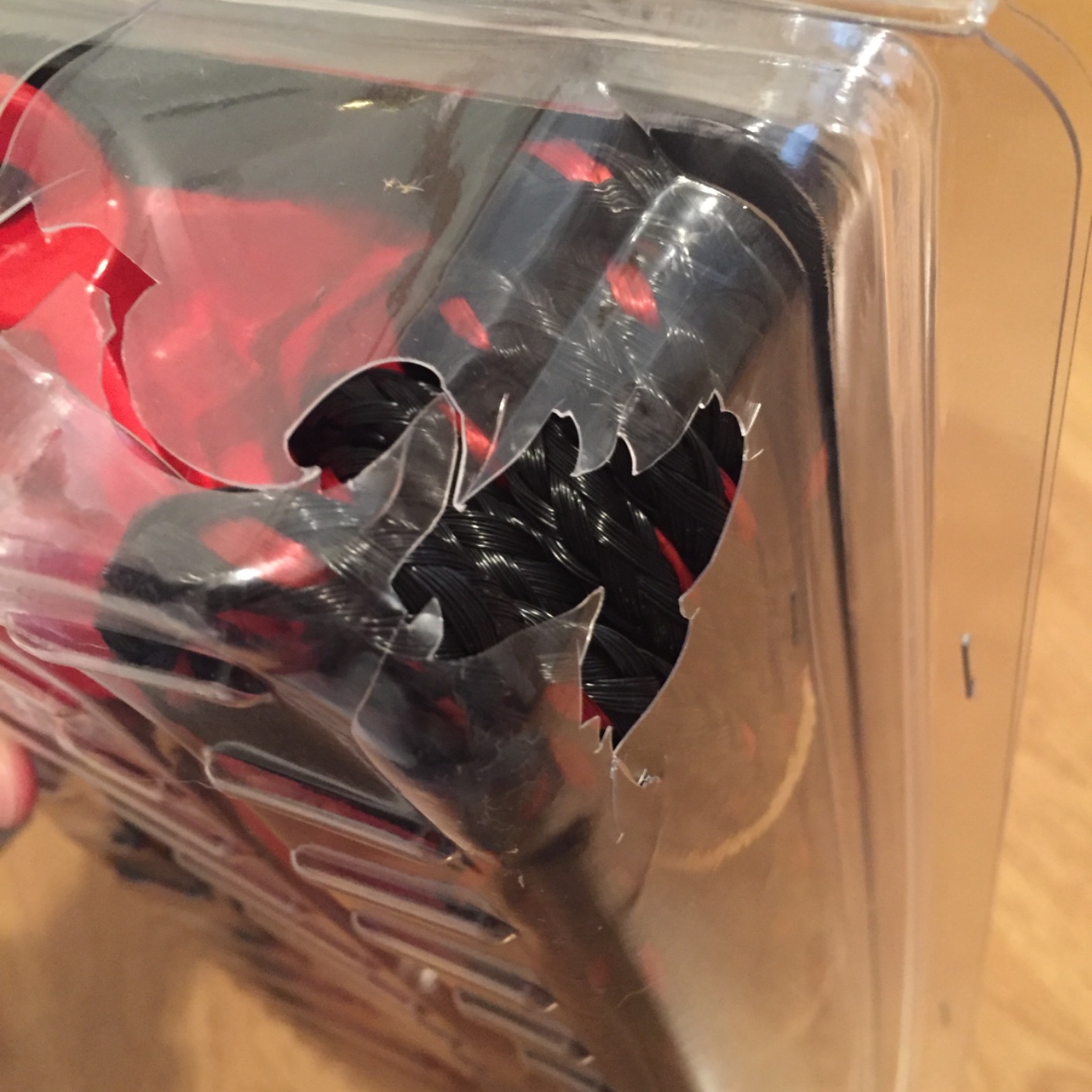
What stands out in the review data is consistency. Buyers repeatedly point at the small folded footprint for stowing under a seat or inside a storage compartment, and at reliable grip across all four bottom types, with no recurring negative pattern in the sample we analysed. For a component you are relying on to keep you in one place, consistency is worth more than an impressive feature list.
Two things to plan around. First, the 25 ft of included marine grade rope is standard rather than generous, and the same scope advice applies to every kit in this roundup. Second, the buoy is not in the box, so add one. A visible marker is how you avoid rowing over your own anchor on a shallow bar, and how another boater avoids running over your line.
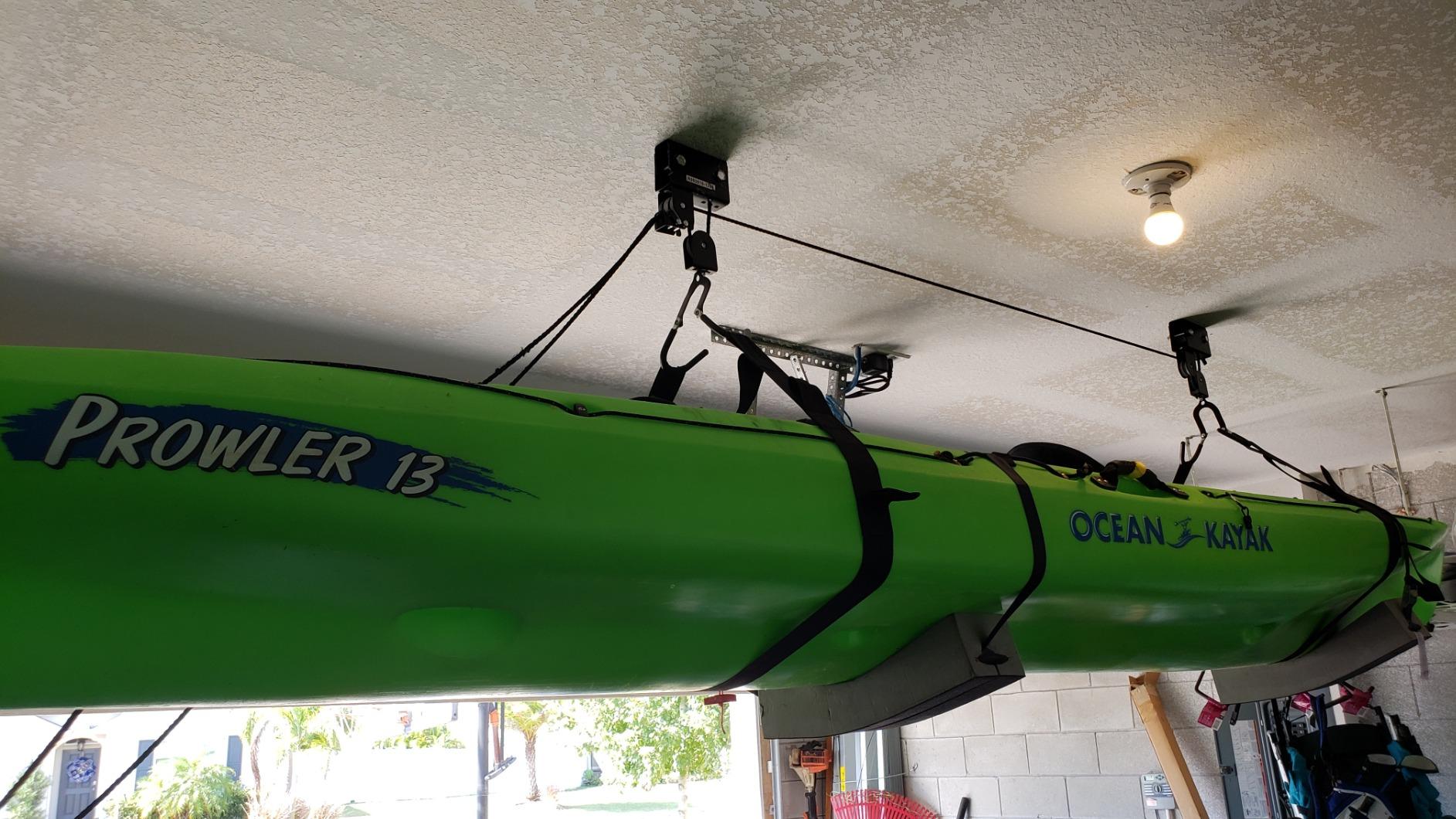
Why stainless steel earns its place on a river
Corrosion is the quiet failure mode of river anchoring. A coated carbon steel anchor looks fine at the end of a trip and shows orange bloom a month later, and the corrosion works at the fluke pivots and the collar, which is exactly where the anchor needs to move freely to set. Stainless steel removes that variable, and the padded nylon case keeps the polished metal from scratching a hull in storage.
It is the sensible pick for anyone fishing Florida rivers, tidal backwater, or any water where you cannot fully drain your gear. The same durability argument is why we would pick it over a cheaper kit for a multi-season purchase.
Where it is not the best choice
At 3 1/3 lb with 25 ft of line, this is a moderate-water anchor, not a strong-current one. It will hold a seam below 2 mph on a decent bottom, and it will not rescue you from a rising stage on a river that has just taken rain upstream.
The absence of a buoy also matters more here than with the other kits. Every other anchor in this roundup includes one, and skipping it leaves you guessing where your own line is running, which is a genuine safety issue in shallow water with other traffic.
8. YakAttack LeverLoc Anchor Trolley Kit
YakAttack LeverLoc Anchor Trolley Kit – Easy Install – Made in USA
Bow to stern anchor point control
LeverLoc cam buckle tension
All installation hardware included
Mounts to a kayak track system
Pros
- Moves the tie-off point between bow and stern to stop weathervaning
- Lever action gives fast
- repeatable line tension from the cockpit
- All mounting hardware included in the box
- Made in USA with a 4.7 star owner rating
Cons
- Requires a track system or a mounting point to install
- Does not make swift water safe on its own
- Listed weight and dimensions are not reliable
This is the only trolley in the group, and it addresses the single most common complaint from river anglers: the kayak spins even when the anchor is holding. The complaint appears repeatedly on r/kayakfishing, where anglers describe trolleys that are not always great in current on the rivers where they do most of their fishing. That criticism is fair, and this trolley is the answer to part of it, not all of it.
What a trolley does is move your line attachment point between the bow and the stern. With the line at the bow, the current pushes the bow and the kayak weathervanes into the flow. With the line at the stern, the current pushes the stern and the kayak floats bow-first into the current. A kayak pointed into moving water is dramatically more stable than one lying across it, and that is the difference between fishing a seam and correcting a spin every four casts.
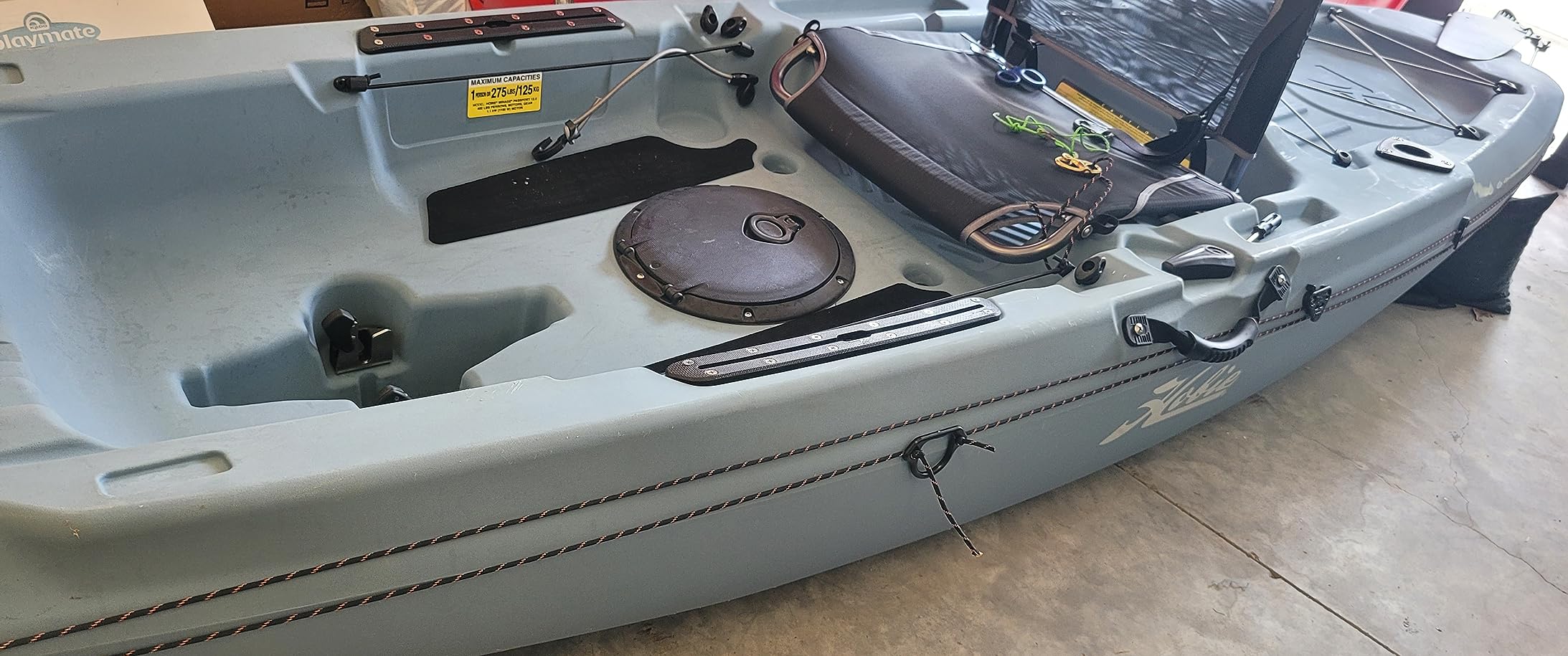
The LeverLoc lever-actuated cam buckle is the detail that makes it usable. One hand lifts a lever, the line tensions, the lever drops and it stays put. No fiddling with a sliding cleat, no line running through your hands, and you can raise or slacken from the cockpit while you are watching the water rather than your rigging. The 4.7 rating across 793 reviews ties the highest average in this roundup, and reviewers point at easy installation and complete hardware.
Be clear about what it is not. A trolley does not make swift water safe, and it does not give an anchor more holding power. It controls geometry. Install it on a track system with all the included hardware and it is a fifteen-minute job; without a track you need a mounting solution first.
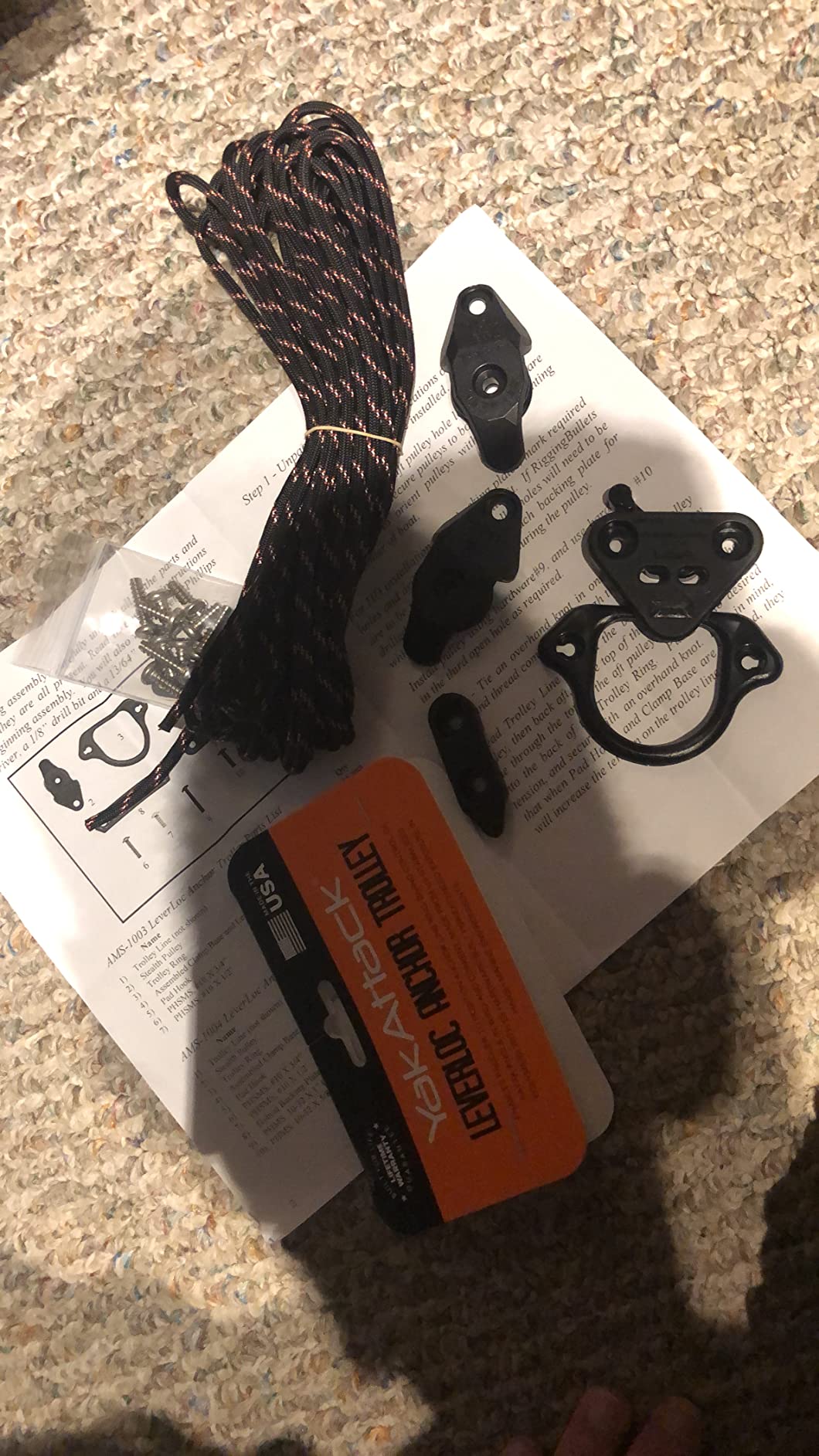
How to install and use the trolley
Mount the base plate to a track system or a flat deck area, sealing any drilled hole with sealant to keep water out of the hull. Bolt the pulley block on, then run the trolley line from the forward pulley to the aft pulley. Clip the line to your anchor, and that is the system installed.
To fish a seam, lower your anchor, pay out your scope, then move the line ring to the bow and secure the tail to a deck cleat. If the kayak starts to weathervane, take the slack and move the ring to the stern. Repeat until the bow tracks into the current, and keep your swing radius clear of rocks and submerged timber in the arc behind you.
When a trolley is the wrong answer
Do not deploy a trolley line in swift water, and treat any anchor setup as secondary to your float plan in moving current above 2 mph. A trolley adds line to the water, and line in moving water is an entanglement hazard. If you cannot see the bottom clearly enough to know where your anchor is, you are in the drift-fishing regime, not the anchoring regime.
On a sit-in kayak with no track system, the trolley needs a retrofit base or a strap-mounted alternative, and that installation is where most of the effort goes. The all-hardware-included claim applies to the standard track-mounted setup.
Which Anchor Type Fits Your River Bottom?
The shape of the bottom decides the shape of the anchor, and this is the single biggest factor in whether a grapnel sets or just slides. On rock and gravel, you need multiple flukes that can find gaps and wedge, plus enough weight to pull down into the seam between stones. On mud and silt, a heavier single or double fluke digs on its own, and holding comes from the pull angle rather than the bite.
Rock and gravel favor a four-fluke folding grapnel, which is why every anchor in this roundup is a grapnel. Mud and heavy silt favor weight and a low, flat profile that will not float or trip over its own line. Sand bars are the hardest case, because sand gives way under a dragging pull, and that is where the longest scope in your kit earns its keep.
Vegetation is its own problem. A grapnel dropped into brush can wedge between stems and hold a kayak through no mechanical advantage at all, and pulling straight up on it is how anglers lose a fluke. Work around obvious structure, or fish it rather than anchoring in it.
One river-specific note on reading the bottom: from a seated position you can often judge the bottom by how the buoy and line behave. A buoy that stays vertical and a line that pulls tight quickly usually means you are in mud. A buoy that leans and an anchor that drifts before setting usually means gravel or rock. Give the anchor a slow pull before committing to a position. When a season turns cold enough that the same river is fished from the ice, our ice fishing rod roundup covers the tackle for that version of the sport.
How Heavy Should My Kayak Anchor Be?
For river fishing, 1.5 lb works in slow water and 3.5 lb is the sensible ceiling for anything you might actually anchor in. Heavier than that stops helping on a kayak, because you are now carrying a load you may need to lift out of the water in a hurry, and a grapnel you cannot lift is a grapnel you cannot reposition.
The pattern we saw across thousands of owner reviews is that weight matters less than most buyers expect and more than the marketing implies. It is the tie-off point and the scope that decide whether the kayak stays put, and weight is the third variable, not the first. Every 3.5 lb kit in this roundup produced the same recurring note from owners: 3.5 lb is light for strong current or wind.
That is the honest limit. Above roughly 2 mph of current, no weight in this category holds a kayak safely, and the correct response is to stop anchoring and start drifting. If you are adding weight to compensate, add scope instead, because scope costs nothing to carry and directly improves how the anchor digs.
One DIY approach comes up often enough to mention. Anglers on r/kayakfishing and ncangler describe using a 5 lb dumbbell for river and lake fishing, and one poster on Tri-State Kayak Anglers describes 4 to 6 ft of 3/8 in chain doubled inside a length of pool discharge hose. Both are legitimate setups, and both are worth considering if you already own the parts. The reasons anglers like them are the same reasons the commercial kits get bought: chain adds weight low on the flukes, and the hose protects your deck from the chain.
How Much Anchor Line Do You Need?
Deploy three times the depth of the water in calm conditions and four to five times in wind. At 5 ft of depth, that is 15 ft minimum and 20 to 25 ft once the breeze picks up. That rule is the single most useful number in this guide, and it is the one most often ignored.
Here is why scope works. When line runs straight down, the current pulls the anchor along the bottom and it ploughs, occasionally tripping over a rock. When a long length of line trails behind, the pull develops horizontal drag, the flukes rotate into the substrate, and the load transfers to the bite. More line is not slack, it is a shallower pull angle, and a shallower pull angle is what makes an anchor hold.
The included rope lengths in this roundup run from 25 ft on four kits to 40 ft on the Best Marine. Thirty feet or more is the practical minimum for river work, because you want 4x scope in 7 ft of water. If your kit came with 25 ft and your seams run deeper than 5 ft, add line before your first trip rather than during it.
Rope material matters less than people assume, but two things matter more than material. Use something abrasion resistant enough to survive gravel, and use a float on the line if the water is deep enough that the rope could be cut by the anchor on retrieval. Every kit here includes a buoy for that reason. Keeping the rest of the rig light matters just as much, and if you are still filling gaps in a first setup, our beginner fishing rod roundup covers rods that pack small without giving up hook control.
Anchor Trolleys on Sit-In, Sit-On-Top and Pedal Kayaks
Yes, an anchor trolley is worth fitting on a sit-in kayak, and it is arguably more useful there than on a sit-on-top. Sit-on-top boats have open decks with tie-down points in reach, so a deck cleat can substitute for a trolley in calm water. A sit-in has a cockpit, a bulkhead and a limited number of attachment points, which is exactly the situation a trolley is designed to solve. Pedal kayaks need one more than they want, since steering cables, pedal drives and rudder lines compete for the same space.
The honest counterpoint comes straight from the forums. Anglers on r/kayakfishing report that a trolley is not always great in current on a river, and we have included that perspective deliberately because nobody else covering this topic does. The complaint is usually about deployment rather than geometry: a trolley makes it easy to put the anchor down somewhere you should not have, at a moment when you should have been drifting.
Our six-step anchoring procedure, which works on any hull with a bow and stern tie-off:
First, confirm your PFD is on and your float plan is filed before the anchor comes out. Second, decide bow or stern based on where the current is coming from, and set the trolley ring on that end. Third, lower the anchor slowly with the flukes open, letting the line build slack rather than dropping it straight down.
Fourth, pay out line until you have at least three times the depth, watching the buoy for signs the anchor has set. Fifth, secure the tail to a deck cleat, leaving enough slack that the kayak can weathervane into the current rather than fighting the line. Sixth, check your swing radius by looking at the arc behind you for rocks, timber and other anglers before you settle in.
On a pedal kayak, route the trolley line away from the rudder and pedal cables, because a line crossing a steering cable will not fail quietly. On a sit-in, run the line through the rear bulkhead or along a track rather than across the cockpit, where it is a trip hazard with your feet and a hazard for your paddle.
None of this makes swift water safe. A trolley controls where the pull comes from, and geometry is genuinely important, but a tethered kayak in a rising river is still a kayak that cannot leave.
How Do You Free a Snagged Anchor?
Retrieval is the most repeated complaint we found from river anglers, ahead of holding power. Anchors hold. Getting them back is where the trip gets interesting, especially on rock and submerged timber. Five techniques come up consistently in the forum threads we reviewed, and the first one is the most useful.
Build a breakaway before you ever set the anchor. Run your line to the bottom of the anchor body, then secure it near the top with a zip tie. The zip tie is intentionally weak, so a hard pull breaks the connection and leaves the anchor on the bottom instead of dragging you into a tree. Anglers describe this rig on kayak fishing forums as the most useful thing they learned anchoring on moving water, and it is cheap insurance.
Second, add chain between the line and the anchor. Chain adds weight at the flukes, which improves the bite, and it gives you something to lever against instead of a rope that can only pull. The same chain also gives the flukes a heavier object to swing free when you drag it across the bottom.
Third, pull parallel to the bottom rather than straight up. A grapnel that has wedged between two rocks will usually release if you apply steady lateral load, because the wedge point moves out of the pinch. Straight up is the one direction that keeps it wedged.
Fourth, work the flukes by hand. This is why a 1.5 lb anchor has an advantage in shallow water: you can reach down, feel which fluke is caught, and back it out. A 3.5 lb grapnel in 5 ft of water past that point requires a tool and a good deal of patience.
Fifth, if the anchor is truly buried, cut the line. Losing an anchor is a far smaller problem than being pinned to a rock in current with no release. Carry a reachable line cutter or knife on your PFD from the first trip, and know where it is before you need it.
Can You Anchor a Kayak in Fast Current?
Below roughly 2 mph of current, a properly rigged kayak anchor holds. Above that, anchoring a kayak becomes a significant risk rather than a technique, and the right move is to stop anchoring and drift or eddy out. That number comes up consistently in angler discussion and we treat it as a hard line rather than a guideline.
Three things make fast current dangerous. The first is swing: even a well-set anchor can be dragged through an arc, and if the arc touches a rock or a strainer your situation changes instantly. The second is side anchoring. If your tie-off point is amidships or off to one side, current turns the kayak broadside, and a broadside kayak in current is the classic capsize configuration. The third is line entanglement, and it is why a trolley line in swift water is a hazard rather than a convenience.
For anglers who want to stay on fish in water they should not anchor in, the better techniques are drifting a seam, working an eddy line where the current reverses, or setting up above a seam and letting the current carry you back through it repeatedly. Anglers who fish structure in fast water usually do it by drifting, which is why the absence of an anchor is not a failure of the setup.
If you do anchor in moderate current, file a float plan, wear your PFD, keep a line cutter within reach, and test your breakaway before you set rather than after. The 2 mph line is a judgement call you make on the bank, not in the boat.
Frequently Asked Questions
What type of anchor is best for river fishing?
A folding grapnel is the best general river anchor. Between 1.5 and 3.5 lb it grips gravel, mud, rock and sand, and it folds small enough to stow under a seat. Pair it with an anchor trolley so the line can be moved between bow and stern, which stops the kayak swinging broadside. Above about 2 mph of current, drift instead of anchoring.
How heavy should my kayak anchor be?
For river fishing, 1.5 lb handles slow water and backwater eddies while 3.5 lb is the practical ceiling for anything you might actually anchor in. Going heavier stops helping on a kayak because the load becomes difficult to lift out of the water. Scope matters more than mass, so deploy four to five times the water depth of line rather than adding weight.
How much anchor line do I need for a kayak in current?
Deploy three times the water depth in calm conditions and four to five times in wind. At 5 ft of depth that means 15 ft minimum and 20 to 25 ft with a breeze. Longer line creates horizontal drag, which lets the flukes dig rather than plough along the bottom. Most kits include 25 ft, so plan on adding line if your seams run deeper than 5 ft.
Should you use an anchor trolley on a sit-in kayak?
Yes, and it is more useful on a sit-in than a sit-on-top. Sit-on-top boats have reachable deck tie-down points that can substitute in calm water, while a sit-in has a cockpit, a bulkhead and fewer attachment options. A trolley moves your line between bow and stern so the kayak points into the current. Install it on a track system and route the line clear of rudder and pedal cables.
Can I anchor a kayak in fast current?
Below roughly 2 mph of current a properly rigged anchor holds. Above that, anchoring becomes a risk rather than a technique. The hazards are swing radius catching a rock or strainer, side anchoring turning you broadside into the flow, and line entanglement. In faster water, drift a seam, work an eddy line, or set above a structure and let the current carry you back through it.
How do I get a snagged kayak anchor loose?
Build a breakaway first, by running the line to the bottom of the anchor body and securing it near the top with a zip tie, so a hard pull releases the anchor rather than your kayak. Add a short length of chain to improve the bite. When the anchor is already wedged, pull parallel to the bottom instead of straight up, and work the flukes by hand in shallow water. If it will not free, cut the line.
Is a stake-out pole better than an anchor in shallow river water?
A stake-out pole is better in shallow river water where you can see the bottom and reach the anchor by hand. It gives instant, silent repositioning with no line to drag, which suits anglers working specific spots in under 6 ft. An anchor is the better choice once you are deeper, on a bottom you cannot reach, or in current where a pole gives you no real purchase. Many river anglers carry both.
Final Verdict
The Gradient Fitness 3.5 lb Folding Grapnel Kit is the best kayak anchor for river fishing overall. It carries the largest owner review base in this group and a top-tier 4.7 rating, the twist-lock collar keeps the flukes open on the way down, and the stainless carabiner is the right hardware for water that sees both fresh and brackish conditions. Add line and a short length of chain before your first trip, because 25 ft is not enough scope for most river seams.
For corrosion-heavy or brackish water, the AIRHEAD A-2 in stainless steel is the smarter long-term buy. For a long rope out of the box on deeper seams, the Best Marine 3.5 lb kit gives you 40 ft and chain-ready fittings. And for the setup that actually decides whether you stay on a seam, the YakAttack LeverLoc trolley moves your tie-off between bow and stern so the kayak points into the flow instead of across it.
Whatever you choose, the 2026 rule holds: three to five times the depth of line, a breakaway you test before you set it, and no anchoring above roughly 2 mph of current. The right anchor is the one that lets you fish a seam instead of correcting a spin. If you are still matching the rest of your setup, our surf fishing rod roundup covers rods built for that same moving-water discipline.