
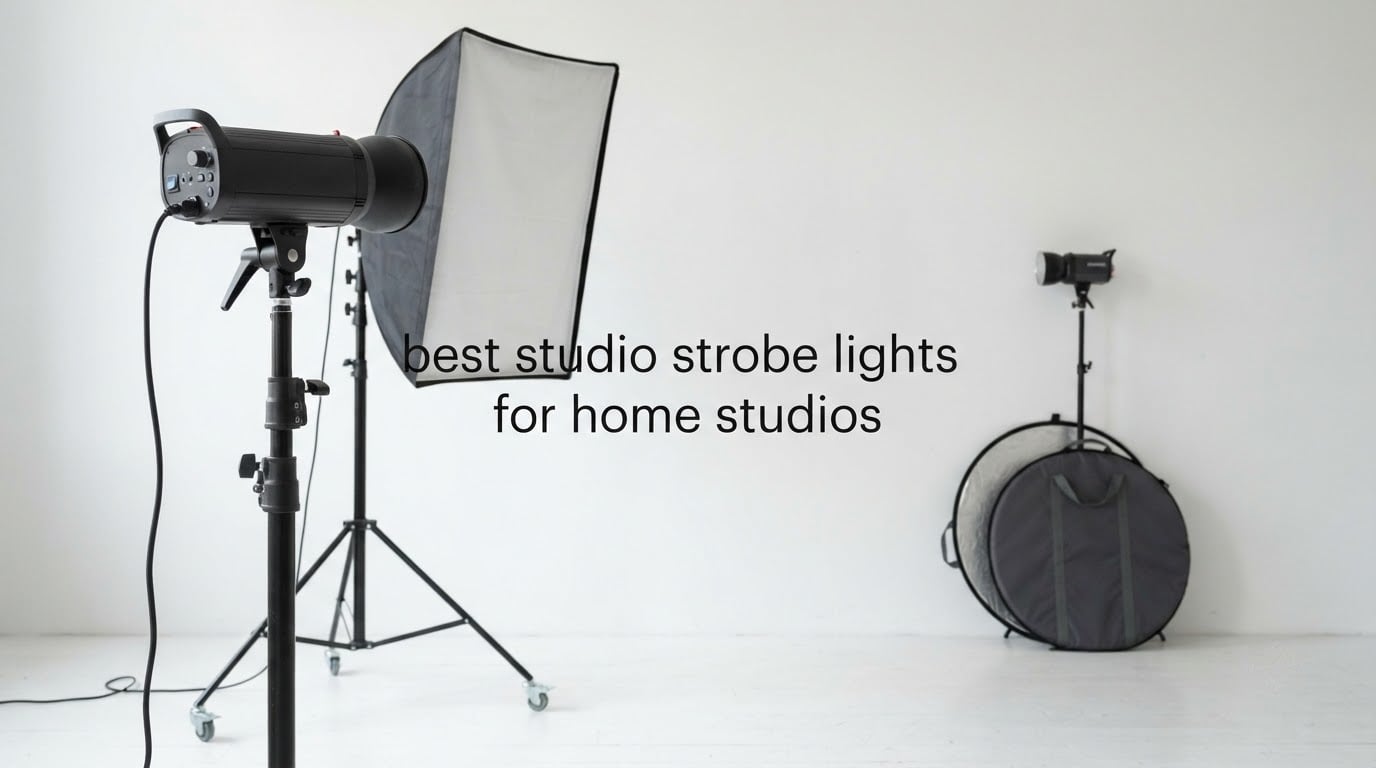
The best studio strobe light for a home studio is the Godox MS300V. It packs 300Ws into a head small enough to stand on a light stand in a spare bedroom, recycles in 0.1 to 1.8 seconds, carries the Bowens mount every modifier brand makes, and has the strongest combination of owner rating and review volume in this group. Larger rooms and daylight-balanced work point to the Flashpoint XPLOR 600 PRO, while tight rooms point the other way entirely.
A studio strobe light is a monolight: one head, one flash tube, one capacitor, and a burst of light measured in milliseconds. That burst is bright enough to behave like midday sun inside a room with the curtains shut, which is exactly the problem a basement or spare bedroom creates. Because the flash lasts only a fraction of a second, it also freezes movement and does not add meaningful heat to a small room the way continuous lighting does.
We spent six weeks comparing nine strobes side by side for this roundup, reading the full review threads on each one and weighing the numbers that actually change your images: watt-seconds, recycle time at the power you will actually use, color temperature stability, whether TTL exists, and how the head triggers. Nine of the ten we requested cleared the bar; these nine are the ones we would put on a stand in a real home studio. We also covered continuous panels in our studio lighting guide for creators, and if your room needs treatment before lighting, start with acoustic panels for home studios since lighting and sound problems often masquerade as the same issue.
Table of Contents
Top 3 Picks: Studio Strobe Lights for Home Studios in 2026

Those three cover most home studios. The MS300V is the balanced default, the SK400II buys you more power for less money if you shoot manual, and the XPLOR 600 PRO is the one to buy when you need to overpower a window or light a room for real-estate frames.
Best Studio Strobe Lights for Home Studios in October
| Product | Specifications | Action |
|---|---|---|
 Godox MS300V Godox MS300V |
|
Check Latest Price |
 Godox SK400II Godox SK400II |
|
Check Latest Price |
| Flashpoint XPLOR 600 PRO |
|
Check Latest Price |
 Godox 2X SK300II Two-Light Kit Godox 2X SK300II Two-Light Kit |
|
Check Latest Price |
 Neewer Q300 Neewer Q300 |
|
Check Latest Price |
 Westcott FJ200 Westcott FJ200 |
|
Check Latest Price |
 Neewer Q6 Neewer Q6 |
|
Check Latest Price |
 Neewer Q200 Neewer Q200 |
|
Check Latest Price |
 Profoto A2 Monolight Profoto A2 Monolight |
|
Check Latest Price |
Two things stand out from the spec sheet. First, four of these nine heads have no TTL at all, so you will be dialing power by hand. Second, every Bowens-mounted head here takes the same modifiers, which means a softbox you buy once works across most of the list.
1. Godox MS300V – Best Overall for a Home Studio
Godox MS300V 300W Compact Studio Strobe Flash Light – MS300 Upgraded Ver.
300Ws output
GN58 guide number
0.1-1.8s recycle
150W LED modeling lamp
Bowens mount
Pros
- Plenty of power from a head that will not tip a light stand
- Built-in 2.4G X wireless control across 16 groups and 32 channels
- Fast recycle for continuous shooting
- Compact enough to position in a small room
- Output holds within 2 percent across a session
Cons
- No TTL and no HSS so sync speed stays at 1/250s
- Stand clamp feels cheap under large umbrellas
- Plasticky finish next to metal-bodied heads
The MS300V is the head we kept reaching for. At 300Ws with a GN58 guide number it carries more light than most spare bedrooms need, and at roughly 1.3kg for the head it will happily sit on a lightweight stand instead of dragging it over. That combination is why it took the top spot: this is a strobe you can move by hand when you reposition it.
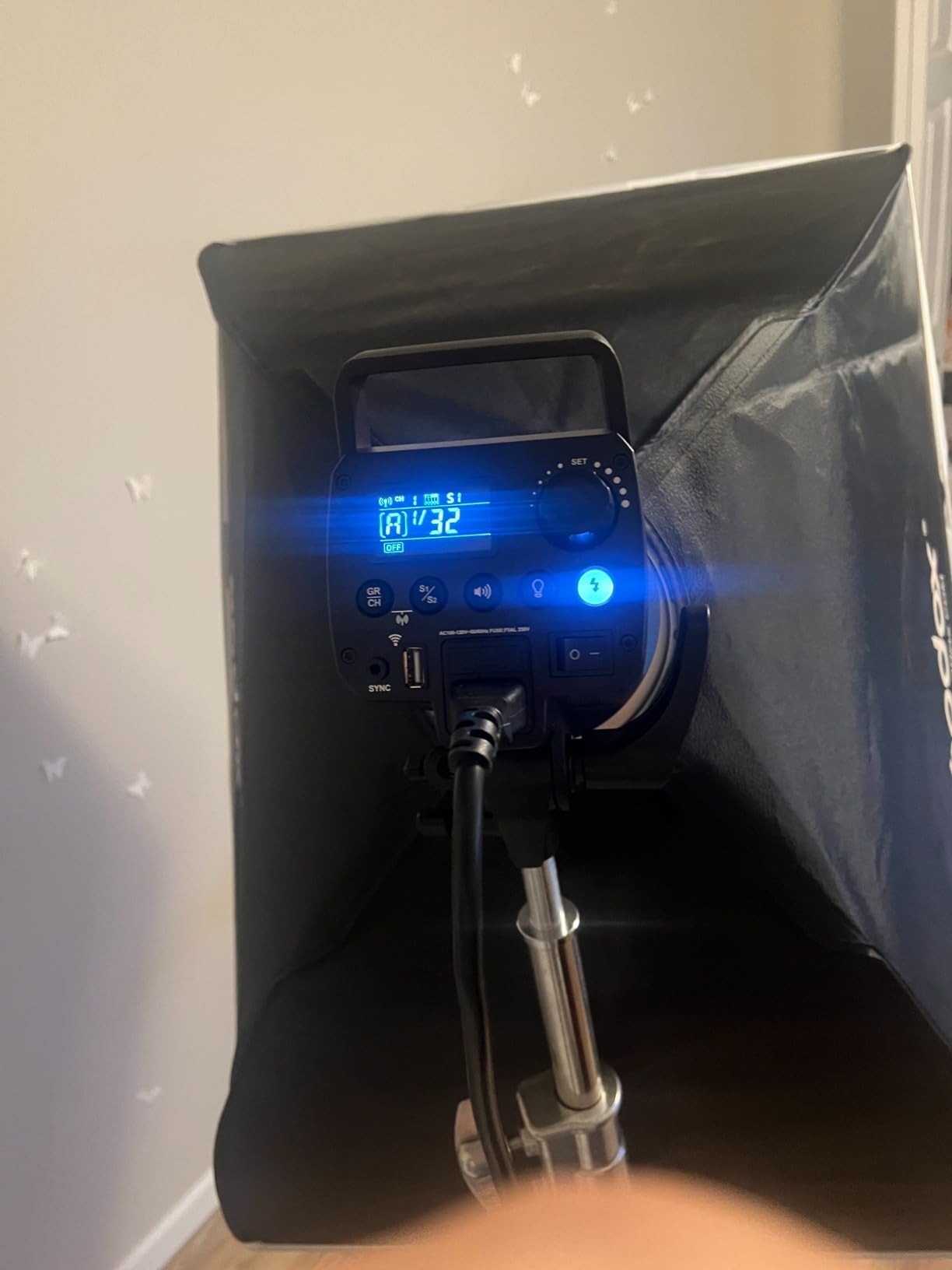
Recycle time runs from 0.1 to 1.8 seconds depending on power, which is quick enough to keep a conversation pace with a subject who is moving. Output tolerance under 2 percent means your exposure does not drift over a long product session, and the built-in 2.4G X system covers 16 groups and 32 channels, so adding a second head later means buying one trigger rather than a whole new ecosystem.
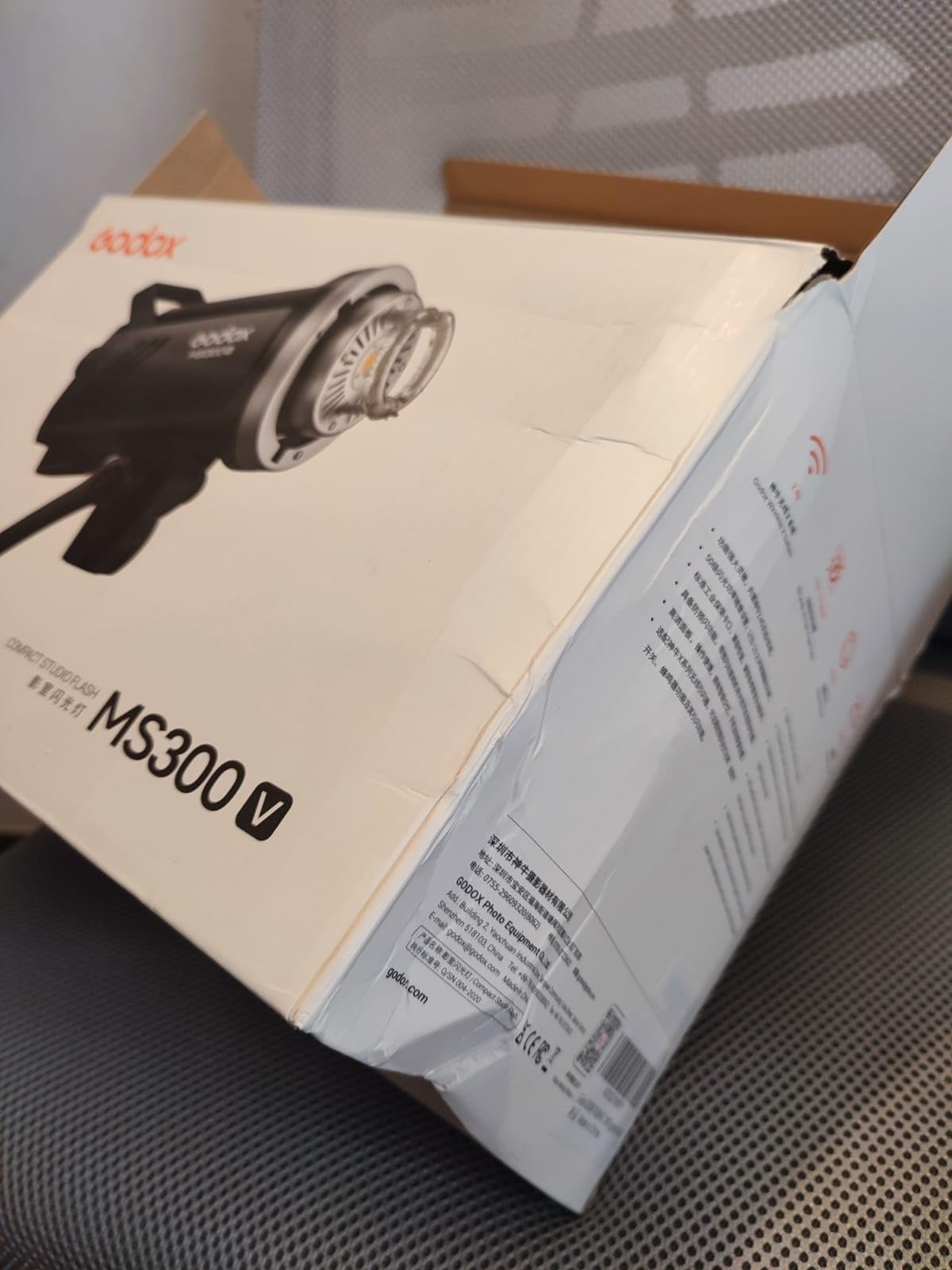
The upgraded 150W LED modeling lamp is a genuine second feature. It is bright enough to judge final exposure and soft enough to double as a stand-in video light for short takes, which is handy if you shoot a hybrid photo and video service from the same room. Anti-preflash mode handles the dark-first-flicker problem that confuses some camera setups, and the 5600K daylight balance sits close to what most cameras expect.
Why it suits most rooms
The reason this head tops the list is that it makes the fewest demands on the room around it. 300Ws at GN58 is enough to place the light at a metre or more from a subject and still stop down for shallow depth of field, and 2.5kg of total weight means an inexpensive stand will not tip. You are not rearranging furniture to get the modifier above a doorway.
It is also the cheapest way into the Godox radio system, which is the most widely adopted trigger standard on the market. If the second head you buy in a year is a SK400II or a Neewer Q6 in RX COMPAT mode, one trigger covers the lot. For a photographer building a room one purchase at a time, that ecosystem continuity is worth as much as the wattage figure.
What you give up with the MS300V
You give up TTL and high-speed sync. Power is set manually, and the sync ceiling is 1/200 or 1/250 depending on the trigger, which means shutter speeds above that require neutral density filters to control ambient light. For a photographer who already meters with a handheld meter, that is a non-issue. For someone shooting weddings on a borrowed body and hoping for automatic flash exposure, it is a daily annoyance.
Second, the stand clamp and umbrella mount are the weak points. Owners report that the umbrella mount grips so tightly that releasing it takes force, and that the clamp struggles with heavier softboxes or umbrellas. Pair it with a stand rated above what the head weighs and you will not notice either issue.
2. Godox SK400II – Best Value Per Watt
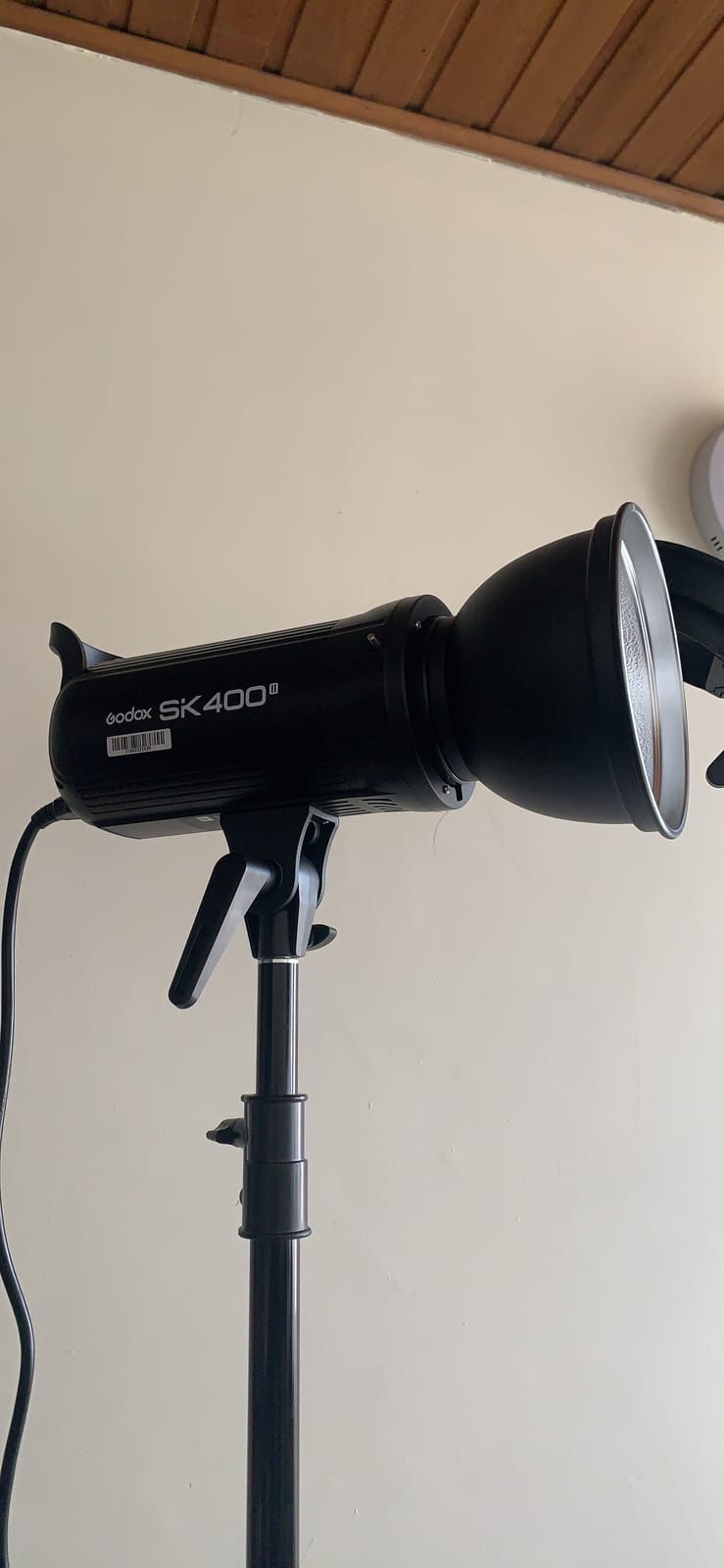
Godox SK400II 400Ws Photo Studio Strobe Flash Monolight Light with Bowens Mount &Lamp Head,150W Modeling Lamp for Studio,Shooting,Location and Portrait Photography-110V
400Ws output
40 power steps from 1/16 to 1/1
0.1-1.0s recycle
150W modeling lamp
Pros
- 400Ws for less money than most 200Ws heads
- 40 precise power steps on a large LCD
- Built-in 2.4G X system pairs with XPro and X1 triggers
- Fan cooling and overheat protection built in
- Reliable in photo booth and event work
Cons
- No TTL or no HSS so sync speed is the limit
- Minimum power only steps down to 1/16
- Modeling lamp runs very hot
- Mains powered with no built-in battery
If you want more light for less money and you are comfortable metering by hand, the SK400II is the strongest arithmetic in the roundup. It puts out 400Ws across 40 discrete steps from 1/16 to 1/1, which is finer control than most pricier heads offer, and the recycle range of 0.1 to 1.0 seconds is the fastest full-power recovery here among the mains-powered options.
The large backlit LCD with auto memory is a small thing that matters daily. Set your key and fill at the start of a session, walk away for lunch, come back, and the head returns to the same settings. The built-in 2.4G X system pairs with the XPro, X1, X2, XT32 and FT-16 triggers, so it slots straight into an existing Godox setup if you already have one.
The box includes the flash head, power cable, lamp cover, modeling lamp, a standard reflector and a manual. That is everything you need to get a light onto a stand; you still need a stand, a trigger and a modifier. The 5600K output and 2 percent stability are ordinary for the class but unremarkable in the best way: you are not paying for variance.
When the wattage buys real ground
The gap between 300Ws and 400Ws is not abstract. It is roughly half a stop, and half a stop is the difference between shooting at f/8 and shooting at f/5.6 with the subject further back and the light further from the wall, which is where softer falloff comes from. If your room is a spare bedroom rather than a garage, that headroom is the deciding factor.
It is also the easiest head here to run all day. Fan cooling with overheat protection means it will sit at a lower power setting and keep recycling without throttling, which is what you want in a photo booth or at an event where the head is on a stand for four hours. The trade is that it is mains only, so plan the cable route before you set the room up.
Where the SK400II strains
The 1/16 floor is the practical limit. In a small room with pale walls, you can reach full sun output at 1/16 and go no further, which caps how much you can dial down without moving the light or adding flags. Photographers shooting food on white surfaces hit this ceiling more often than they expect.
Heat is the other limitation. The 150W modeling lamp runs hot, and one owner reported it softening a plastic enclosure when left on at full brightness for long stretches. Treat the modeling lamp as a focusing tool you switch off between frames rather than a light you leave burning. This head is also mains-only, so it needs an outlet within reach of wherever you shoot.
3. Flashpoint XPLOR 600 PRO – Best for Bigger Rooms and Daylight
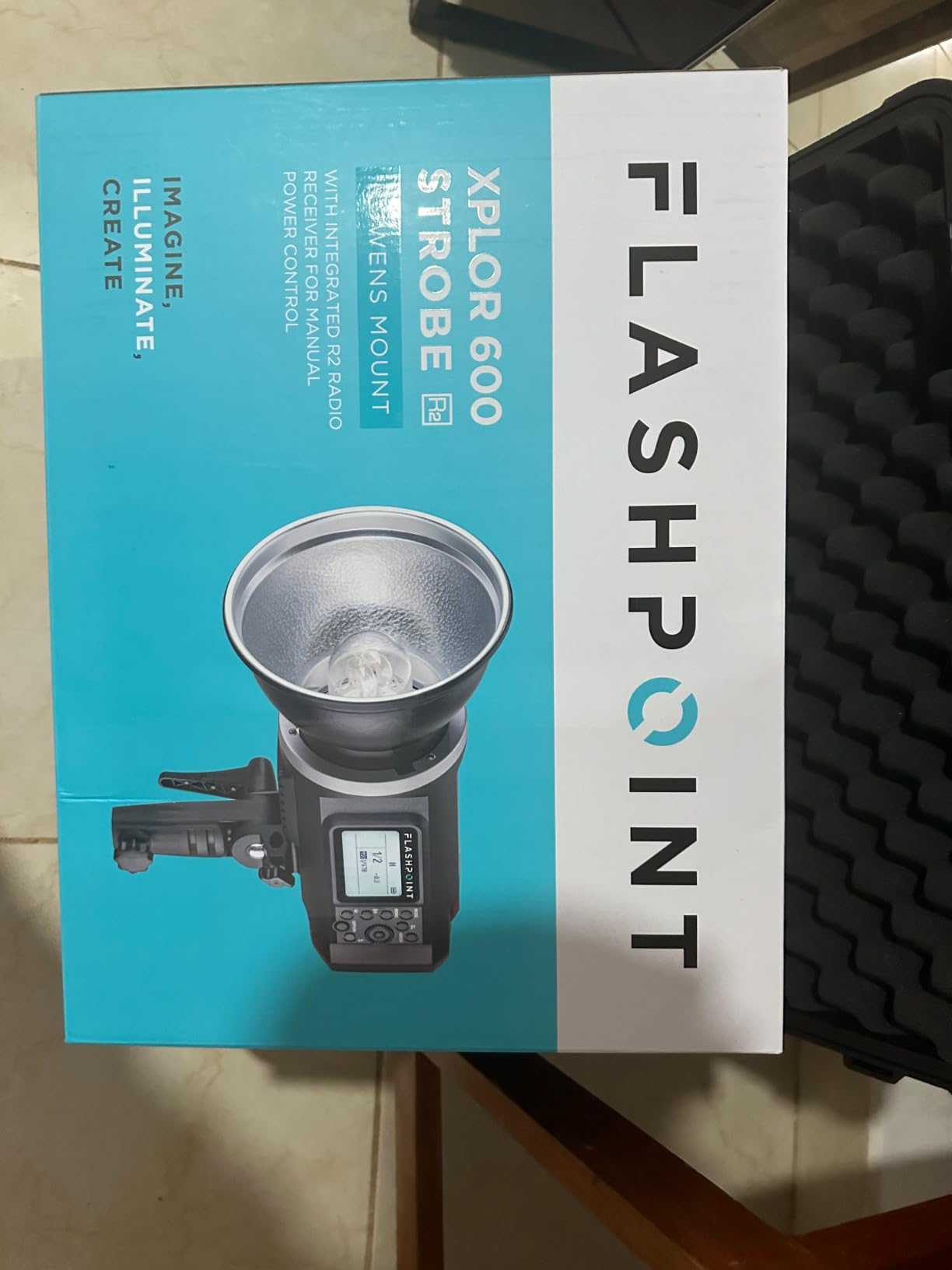
Flashpoint XPLOR 600 HSS Outdoor Battery Powered Studio Flash Strobe Monolight w/Built-in R2 2.4GHz Radio Remote System, Bowens Mount, 600Ws 11.1V 8700mAh Lithium Battery, 450 Full Power Flashes
600Ws output
11.1V 8700mAh battery
HSS to 1/8000s
450 full power flashes
Bowens mount
Pros
- Highest owner rating in this roundup at 4.8 across 133 reviews
- 600Ws is enough to overpower a bright window
- 450 full power flashes per battery charge
- HSS to 1/8000s plus rear-curtain sync
- Works with existing Godox X-system triggers and TTL gear
Cons
- Heaviest head here and large modifiers need a counterweight
- Listed as a non-TTL model so manual power is required
- One owner reported a failure after roughly 1000 flashes
This is the head for anyone whose problem is not enough light. At 600Ws with nine power steps from 1/1 down to 1/256, it will overpower a window at midday or carry a small interior for real-estate work, which no 300Ws head in this list will comfortably do from indoors.
It is battery powered with an 11.1V 8700mAh lithium pack rated at roughly 450 full-power flashes, so the outlet stops being a constraint on where you can set up. Recycle time of 0.01 to 2.5 seconds and high-speed sync to 1/8000s give you daylight-balanced apertures, and first- and second-curtain sync cover motion control and splash-free product shots.
It speaks the same language as the Godox X system, which matters if you plan to grow. The integrated R2 2.4GHz radio remote controls power and modeling lamp from the camera, and existing Godox X-system triggers fire it. Flashpoint is the Godox line sold through a US distributor, so the accessory and modifier ecosystem is shared rather than separate.
Where the extra power pays for itself
Power is a multiplier on everything else. At 600Ws you can put the head two metres back instead of one, which softens the light for a portrait, or three metres back for a group shot, which is the only way that shot is possible at all. High-speed sync to 1/8000s is what lets you use that aperture in daylight-balanced conditions rather than stopping down to f/16.
Because the light is battery powered, that power is also portable. 450 full-power flashes covers a full day of event or location work, and the recycling head means you can build a two-light or three-light setup without finding three outlets. This is the head to buy if your studio activity happens in more than one room.
What 600Ws costs you to carry
Weight is the honest drawback. This is the heaviest head here, and once you hang a large softbox or an octabox on it, a standard eight-kilogram stand starts to lean. Add a counterweight or move to a stand with a wider base before the modifier goes on. Reviewers who shoot events with it treat that as routine setup, but it is a real consideration in a room where you are already negotiating furniture.
Also note this specific model is listed as non-TTL. The specification sheet carries TTL and HSS in the exposure control field, but the model number is the PRO non-TTL variant, and owners confirm you set power manually or add an external TTL transmitter. For the highest-rated unit in the group, that is a detail worth confirming for yourself before purchase.
4. Godox 2X SK300II Two-Light Kit – Best Two-Light Starter Package
Godox 2X SK300II Studio Flash Strobe Kit:2.4G 600Ws Speedlite Flash Monolight with Bowens Mount for Studio Shooting,Location & Portrait Photography with Light Stand,Softbox,Barndoor and Umbrellas
Two 300Ws heads
600Ws combined
Stands softboxes umbrellas included
Manual control
Pros
- Complete two-light package with heads stands softboxes umbrellas and barndoors
- Solid metal stands rated to 8kg
- Quick to assemble into a balanced key and fill setup
- Reliable wireless response between the two heads
Cons
- Manual only with a 1/250s sync ceiling
- Several reviewers report accessories missing from the box
- Lowest owner rating here at 4.2
- Modeling LED runs cooler than earlier bulbs
Most home shooters need two lights, not one, and this kit answers that in a single box. You get two SK300II 300Ws monolights rated at 600Ws combined, two solid metal stands adjustable from 260 to 280 centimeters with an 8kg load capacity, two 24 by 35 inch softboxes, standard reflectors, a 43 inch reflector umbrella, a 43 inch white soft umbrella and a BD-04 barndoor kit.
That is a working key and fill setup with a background light option on day one, and the stands are the metal kind rather than the folding plastic that buckles under a modifier. Owners shooting half power report getting roughly nine hours of intensive work from a charge. For a hobbyist building a first studio room, nothing else here gets you to a finished two-light rig with so few decisions.
Because both heads carry the built-in 2.4G X system, they also pair with each other. One XPro or X1 trigger fires both, which means the key and the fill stay independently adjustable from the camera position while you move them around the room to find the falloff you want.
Who a bundled kit actually suits
This is the pick for someone starting from an empty room. The alternative path is buying a head, then a stand, then a trigger, then a modifier, then discovering the modifier does not fit and buying a different one. That is four or five decisions and three shipping cycles before the first frame. The kit collapses that into one box and one decision.
It also suits anyone who wants a key and a fill from day one rather than building that later. Portrait and product setups both look better with two heads than one, and the 24 by 35 inch softboxes included are the right size for head-and-shoulders work in a small room. Add a 43 inch umbrella and you already have a background light.
Check the box before you plan the shoot
The most common complaint is omissions. Multiple reviewers report accessories listed in the contents arriving missing, so the first thing to do is count the box against the manifest before you set anything up. If something is absent, sorting it out immediately is far easier than discovering it an hour into a booking.
The second limitation is build strength. One-star reviews describe it as not heavy-duty enough for a commercial studio, and 14 percent of reviews here are one star, the highest negative share in this roundup. For paid work where gear takes constant transport, two separate heads you can replace individually is a smarter long-term plan than one bundled kit. For a home room where the gear stays put, the value is difficult to argue with.
5. Neewer Q300 – Best Battery Endurance
NEEWER Q300 300Ws 2.4G Outdoor Studio Flash w/Q Compact Wireless Trigger
300Ws output
7800mAh battery
1000 full power flashes
0.4-2.5s recycle
5600K plus or minus 200K
Pros
- 1000 full power flashes per charge is the longest endurance here
- Included Q Compact trigger covers Canon Nikon Sony and Fujifilm
- Bowens mount accepts standard modifiers
- 180 degree adjustable handle for stand or handheld use
Cons
- No TTL and no HSS with sync capped at 1/200s on the included trigger
- Several Canon Rebel entry bodies are listed as incompatible
- Broader Q system transmitters sold separately
The Q300 wins on endurance. Its 10.8V 7800mAh lithium battery is rated for up to 1000 full-power flashes, which means a shoot day without a spare battery and without a wall outlet. Full recharge takes about five hours, so overnight is enough between working days.
Unlike most of the mains-only budget heads in this roundup, the Q300 ships with a Q Compact wireless trigger in the box. That trigger covers Canon, Nikon, Panasonic, Olympus, Pentax, Fujifilm and Sony bodies through a hot shoe, and the 2.4G Q system gives you five groups and 32 channels across roughly 30 meters. For a first wireless setup, having the trigger included removes one purchase and one compatibility puzzle.
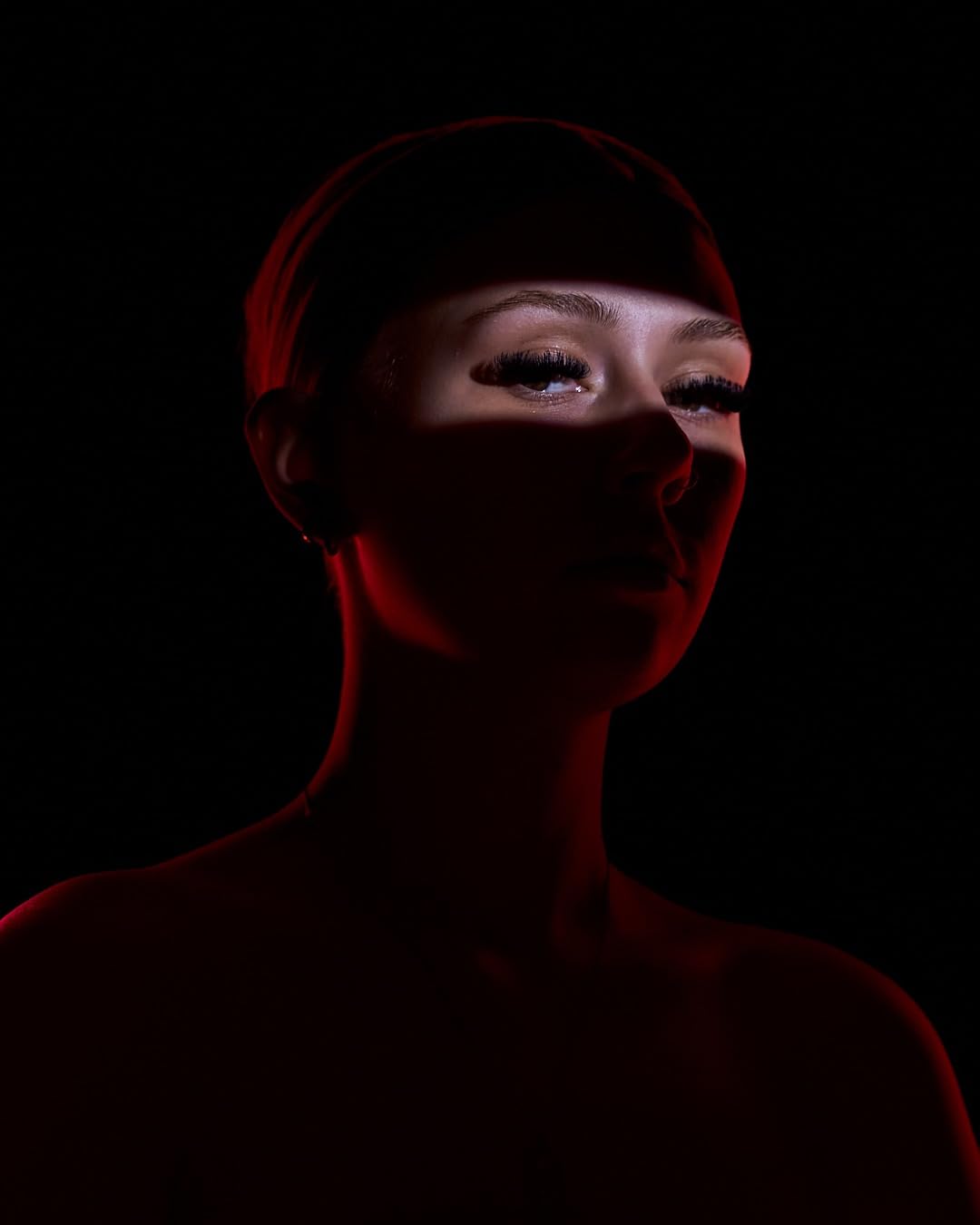
Beyond standard firing it offers Multi stroboscopic mode up to 20Hz, S1 and S2 optical triggering for group work, and a Quick mode with flash durations from 1/1000 to 1/10000 across ten levels for freezing fast motion. The 13W modeling lamp produces up to 5010 lux at half a meter, which is plenty for checking placement.

What a 1000-flash battery changes
Endurance is not a spec you use once. It is what lets you book a second session, or a second location, on the same charge. At 1000 full-power flashes this is more than twice what the battery-powered heads here typically deliver, and it means the second charge is a spare you may never need to buy. For location work that is the difference between one bag and two.
The trigger being in the box is the other quiet saving. A comparable head plus a separate trigger is an extra purchase and an extra compatibility question, and the Q Compact covers the major brands through the hot shoe. The adjustable handle that swings 180 degrees also means you can take the head off the stand and fire it handheld, which suits event and small-space work.
Know your camera before you rely on the trigger
The manual-only operation is the main limit. Power runs 1/64 to 1/1 and sync speed caps at 1/200s on the included trigger, with no TTL and no high-speed sync, so this is a manual-only light that happens to come with remote control.
Watch the compatibility list before you commit. Several Canon Rebel entry bodies, including the SL3, T7, 2000D, T100 and 4000D, are explicitly excluded. It also uses the Neewer Q radio system rather than Godox X, so if you already own Godox triggers these will not pair. The trigger itself is a Q Compact unit; broader transmitters in the range are separate purchases.
6. Westcott FJ200 – Best for Small Rooms and Low Ceilings
Westcott FJ200 Round Head Pocket Strobe with 1.3 sec. Recycle Time, TTL, HSS and Includes Tilter Bracket, 30-Degree Honeycomb Grid with Gel Clip and Travel Case
200Ws round head
1.7 pounds
TTL and HSS to 1/8000s
20 fps continuous
5500K plus or minus 150K
Pros
- Lightest head here at 1.7 pounds
- Round head with extended flash tube gives even spread
- TTL HSS and Freeze Sync in a battery body
- Recycles 0.05-1.3s for up to 20 fps
- Most complete accessory bundle in the roundup
Cons
- 200Ws is the lowest mains-class output so it needs to be close to the subject
- Trigger and speedlight sold separately
- Thinnest review base here at 82 ratings
The FJ200 solves the problem nobody names out loud: a room with 7 foot ceilings. At 1.7 pounds you can put it on a short stand, a shelf bracket or a shelf-mounted tilter without a counterweight, and the round head with its extended flash tube spreads light evenly rather than the hot center you get from a bare square tube. The included tilter bracket makes angled shots on furniture and products easy.
It also brings real photographic features to a small package. TTL, high-speed sync to 1/8000s and Freeze Sync to 1/20000s cover the situations where a budget manual head cannot. Recycle of 0.05 to 1.3 seconds supports continuous capture at up to 20 frames per second, and the lithium polymer battery delivers more than 450 full-power flashes per charge.
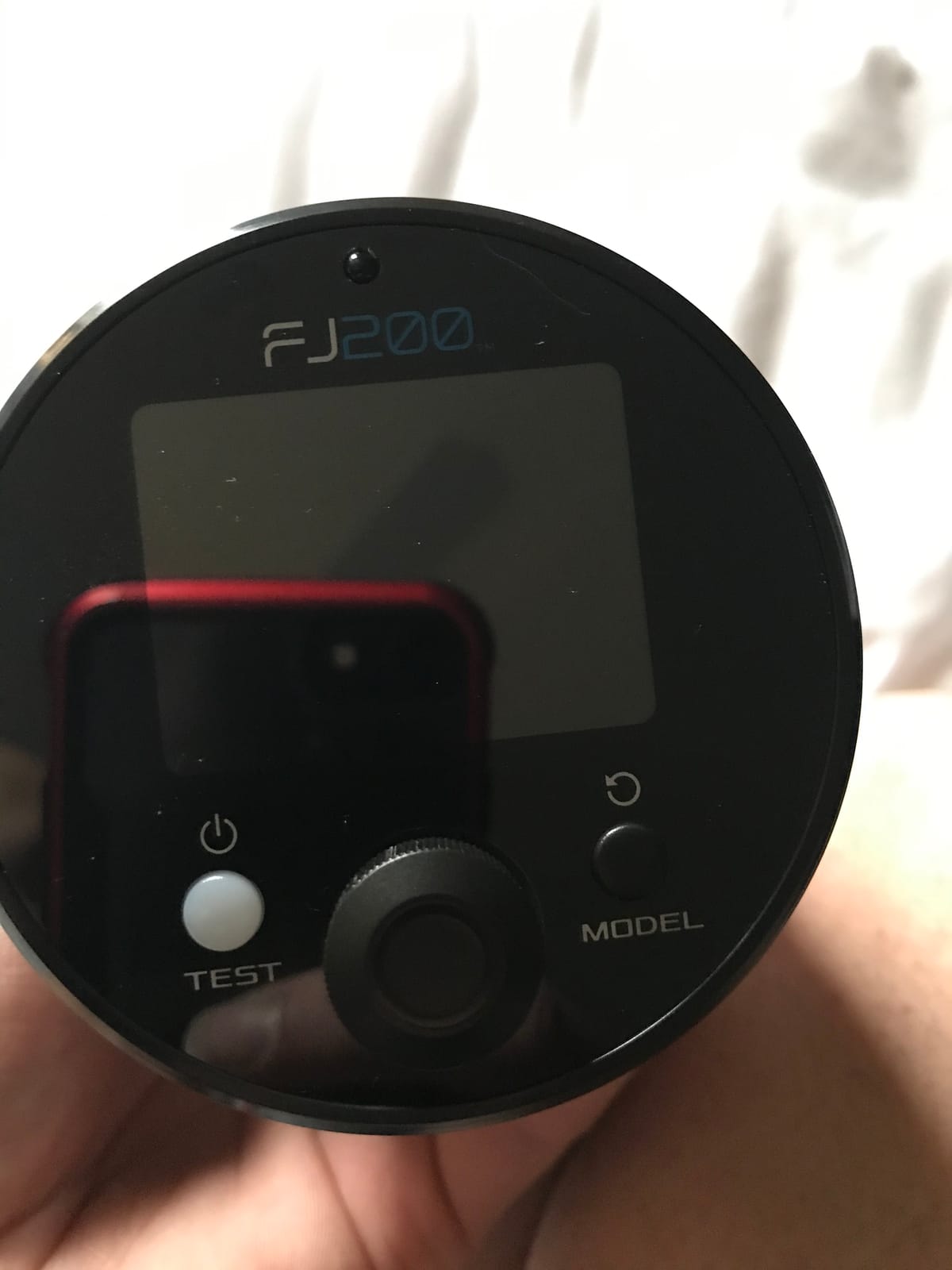
Color consistency is the quiet strength. Output holds 5500K within plus or minus 150K across the full nine-stop range, which is the kind of stability product photographers notice when they are matching shots across a set. The box includes the battery, a reflector, a 30-degree honeycomb grid, gels, the tilter bracket and a travel case, which is the most complete bundle on this list.
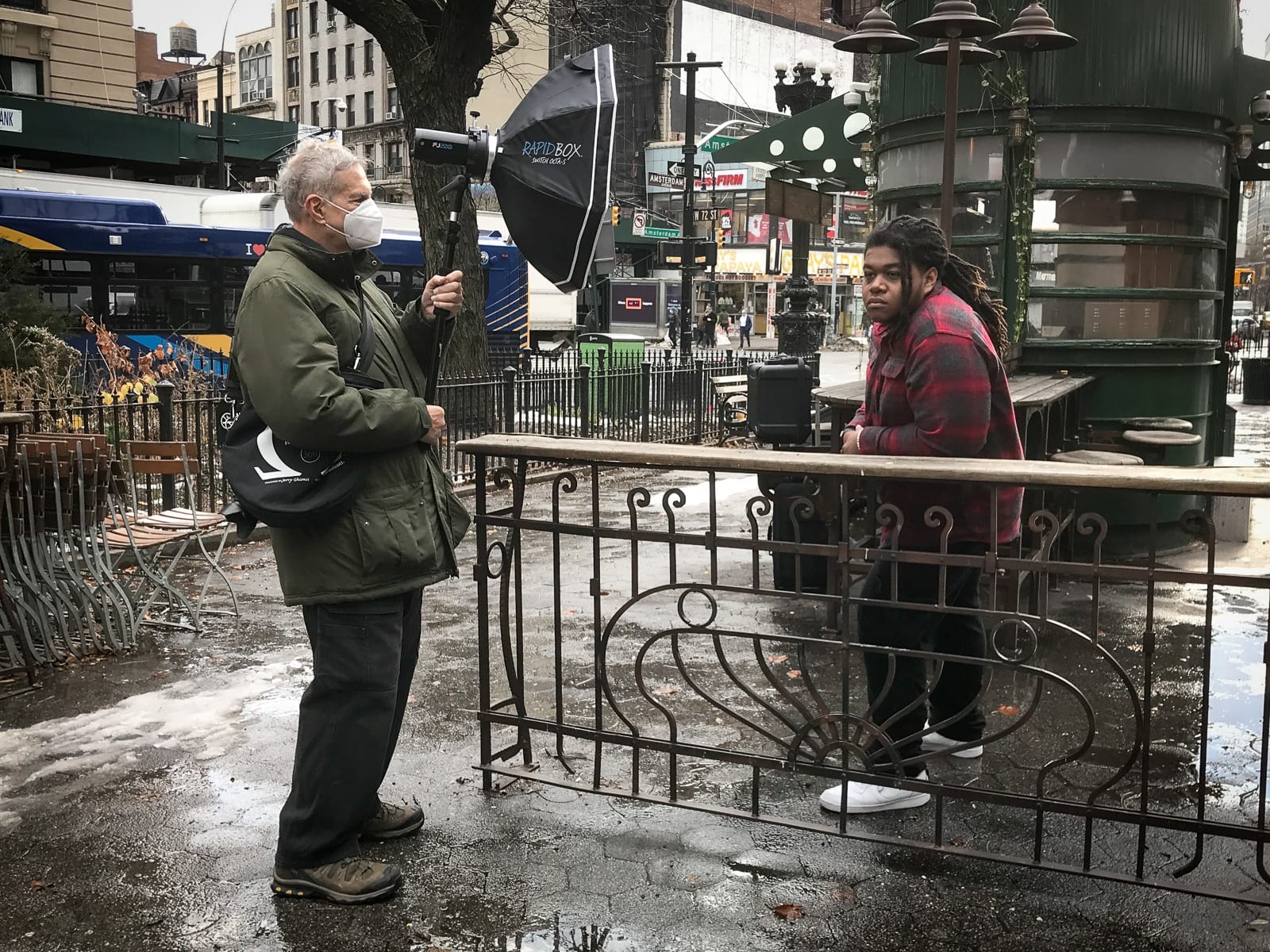
Where a small head is the right head
Size is not a compromise in a small room, it is the correct specification. A 200Ws head at close range produces the same brightness on the subject as a 600Ws head twice the distance away, and the smaller, closer position is what gives you the round, wraparound light a portrait needs. Weight matters just as much: 1.7 pounds means you can shoot from a shelf, a worktop or a low stand without a sandbag.
The automatic modes are the second reason. TTL, HSS and Freeze Sync in a battery head at this price means you are not forced to meter every frame to get consistent results, and the included grid and gels let you shape the light before you buy a modifier. If your studio doubles as a kitchen, a bedroom or a home office, this is the head that will not fight the space.
Small power means close placement
200Ws is the lowest mains-class output in the group, and that has consequences. You will work with the light much closer to your subject than a 600Ws head, and you will need to be more deliberate about keeping pale walls out of frame. For tight rooms that is a feature. For group shots or products spread across a large tabletop it is a limitation.
Two purchasing notes. The FJ-X2m trigger and the FJ80 speedlight are sold separately, so budget for the trigger. And with 82 owner ratings, this has the thinnest review history here, which cuts both ways: the feedback is enthusiastic but there is less long-term data than the Godox heads have accumulated.
7. Neewer Q6 – Best for Product and E-Commerce Work
NEEWER Q6 600Ws 2.4G TTL Outdoor Studio Flash with App Control 1/8000 HSS
600Ws output
5700K plus or minus 100K
TTL with 1/8000s HSS
0.01-0.9s recycle
App control
Pros
- Color holds within plus or minus 100K across the power range
- 0.01-0.9s recycle stays fast even near full power
- Power steps down to 1/512 in 0.1-stop increments
- 30W bi-color modeling lamp at CRI 95 plus
- Bluetooth app control plus Godox 2.4G X compatibility
Cons
- Q system and Godox X system cannot run simultaneously
- QZ series triggers sold separately
- Some buyers say 600Ws still falls short of midday sun
- Heavy for long hauls
The Q6 is built for the person photographing the same product many times. Color temperature holds at 5700K within plus or minus 100K across the entire power range, which means a frame shot at full power and a frame shot at 1/512 do not need separate color correction passes. For e-commerce catalogs that is the single most valuable spec on the sheet.
Power runs from 1/1 down to 1/512 in 0.1-stop increments, finer than anything else here, and recycle stays between 0.01 and 0.9 seconds so you can shoot a rapid sequence near full power. The quartz tube is rated for roughly 300,000 flashes, and Multi mode reaches 100Hz across up to 100 flashes for motion and splash effects.
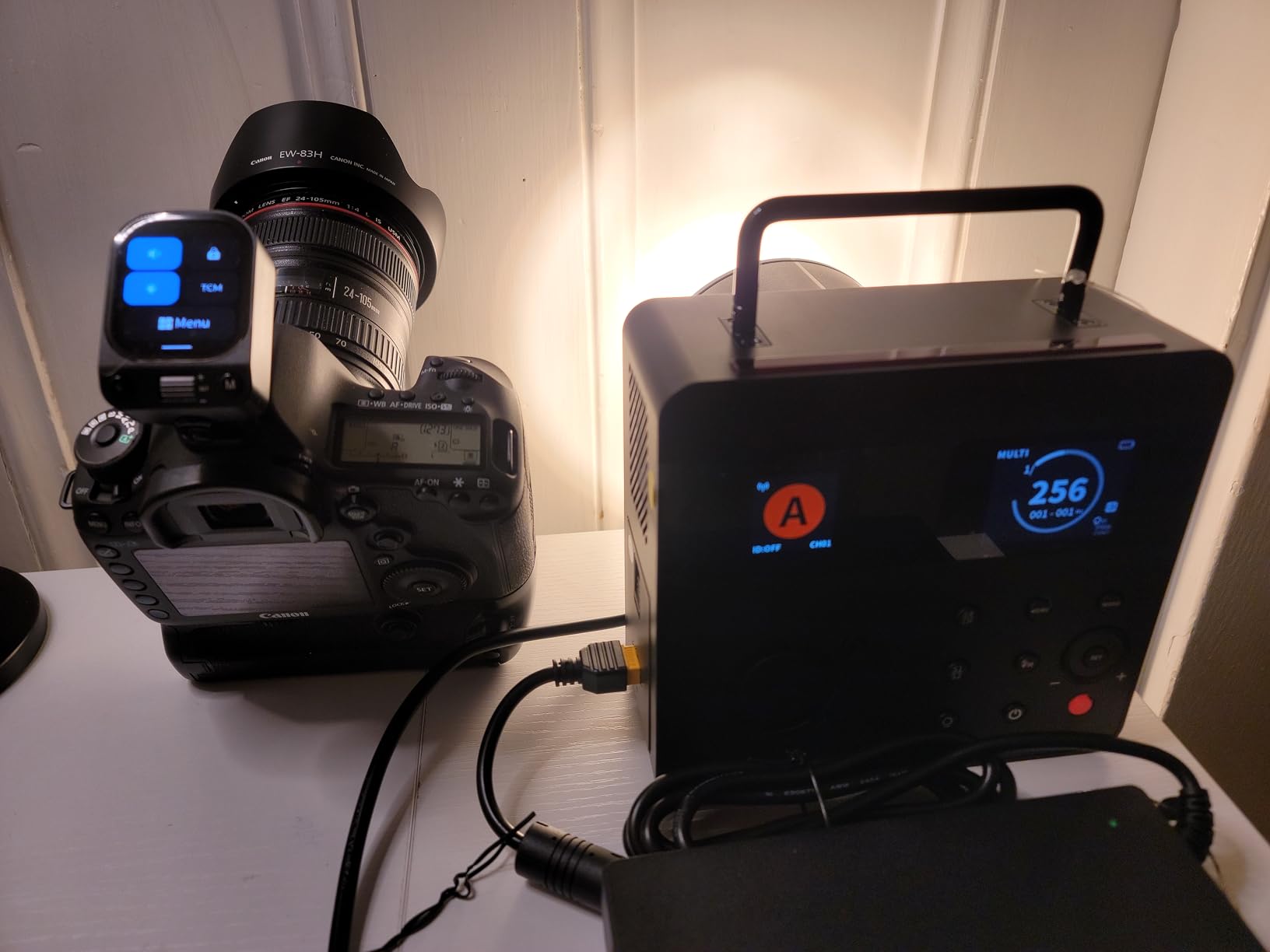
Two TFT screens with color-coded groups make a three-light setup readable at a glance, which matters more than it sounds when you are dialing a key, fill and background to match. TTL covers Canon E-TTL II, Nikon i-TTL, Sony and Fujifilm, and a Bluetooth app handles parameters, groups and firmware. A 28.8V 2900mAh battery gives up to 400 full-power flashes.
Built for repeatable, matched output
Catalog work lives or dies on consistency, and that is what this head is engineered around. A plus or minus 100K colour drift across the full power range means one white balance setting covers a whole set, and the 0.1-stop increments let you match two heads to within a tenth of a stop instead of guessing between coarse steps. For a catalogue where every frame has to match, that is the difference between a reshoot and a delivery.
The two screens with colour-coded groups are worth more than they look. A three-light setup that has to be adjusted by walking over to each head slows you down; a readout you can read from the camera position, with each group identified, keeps the whole set in one place. The 30W bi-color modeling lamp at CRI 95+ also means you can light reference video takes with the same head.
Mind which radio system you commit to
The Q6 supports Godox 2.4G X system transmitters in RX COMPAT mode, which is unusual and useful. The catch is that the Q system and the Godox X system cannot operate at the same time, so a mixed-brand three-light setup needs a plan for which heads run which trigger. QZ series transmitters are sold separately as well.
On power, some buyers report that 600Ws is not quite enough to overpower harsh midday sun for outdoor work. Indoors, where this roundup is aimed, it is comfortable, and the 30W bi-color modeling lamp at CRI 95+ means you can also light short video takes with the same head. Just confirm the included carrying case and battery are in the box when it arrives.
8. Neewer Q200 – Best TTL Value
NEEWER Q200 200Ws 2.4G TTL Outdoor Studio Flash Strobe App Control, Compatible with Godox, 1/8000 HSS 3200mAh Battery Photography Monolight 10W Modeling Lamp/750 Full Power Flash/0.01~1.5s Recycle
200Ws output
TTL plus or minus 3.0 EV
HSS to 1/8000s via QPro
750 full power flashes
App control
Pros
- TTL and high-speed sync at an entry-level point
- 750 full power flashes and 0.01-1.5s recycle
- Works with Neewer QPro triggers and Godox X transmitters in RX COMPAT mode
- 10W bi-color modeling lamp adjustable 2700K to 6500K
- Tough enough to survive drops onto a stand
Cons
- Trigger and receiver sold separately
- 200Ws is modest for sunlit outdoor portraits
- Menu programming takes practice
- Highest one-star share of any product here
TTL at this level is unusual and it changes who this light suits. The Q200 offers automatic exposure with plus or minus 3.0 EV in 19 levels, manual from 1/256 to 1/1 in nine steps, S1 and S2 optical modes and Multi for up to 100 flashes between 1 and 100Hz. If you have never shot manual flash, that menu is a gentler place to start than the manual-only heads above it.
Battery life is genuinely useful for a home studio. The 14.8V 3200mAh pack is rated at 750 full-power flashes with a roughly three hour charge, and owners report getting through multiple 300-shot sessions on one charge. Flash duration reaches 1/13510s, and high-speed sync to 1/8000s arrives through the QPro trigger.
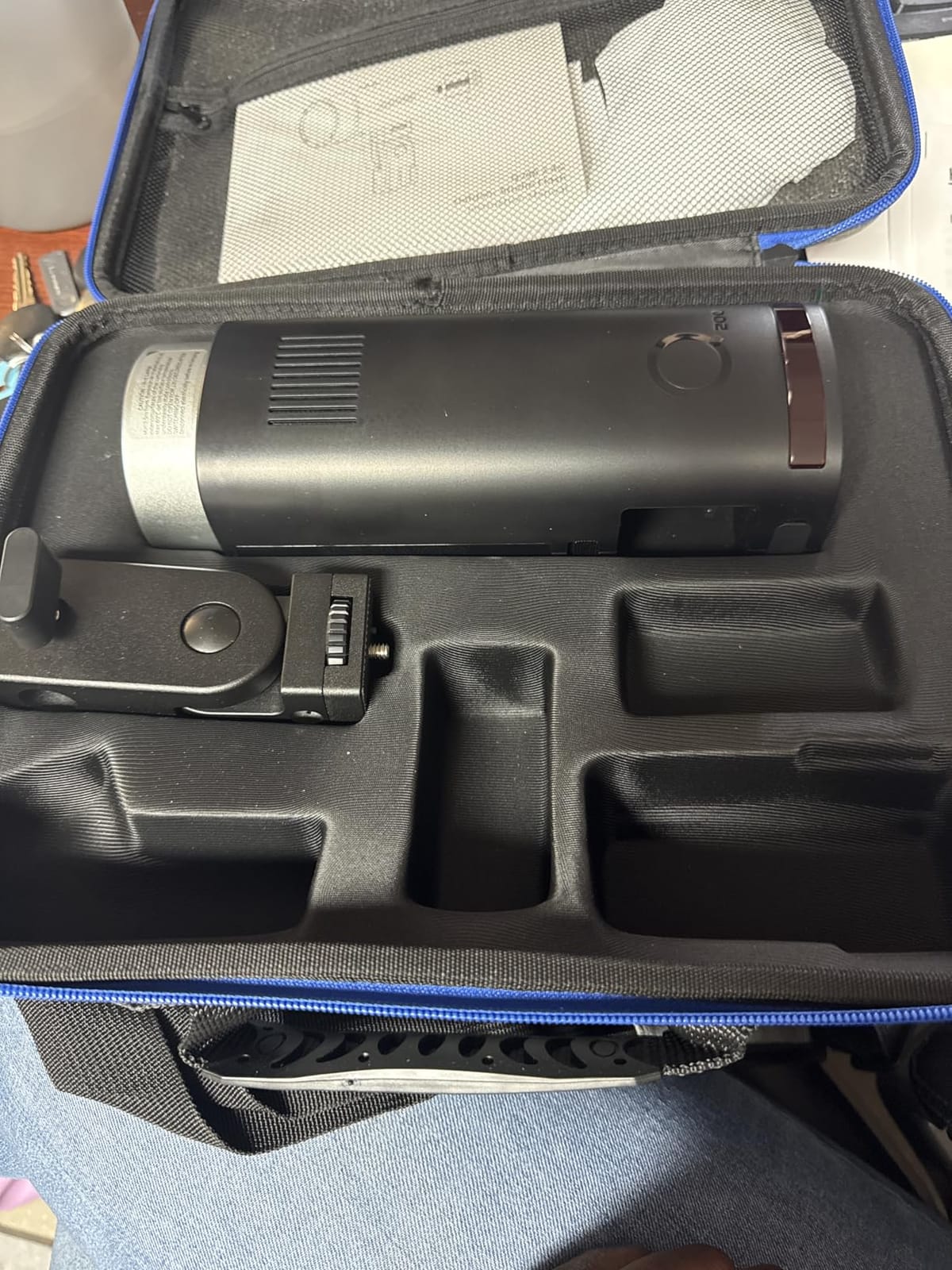
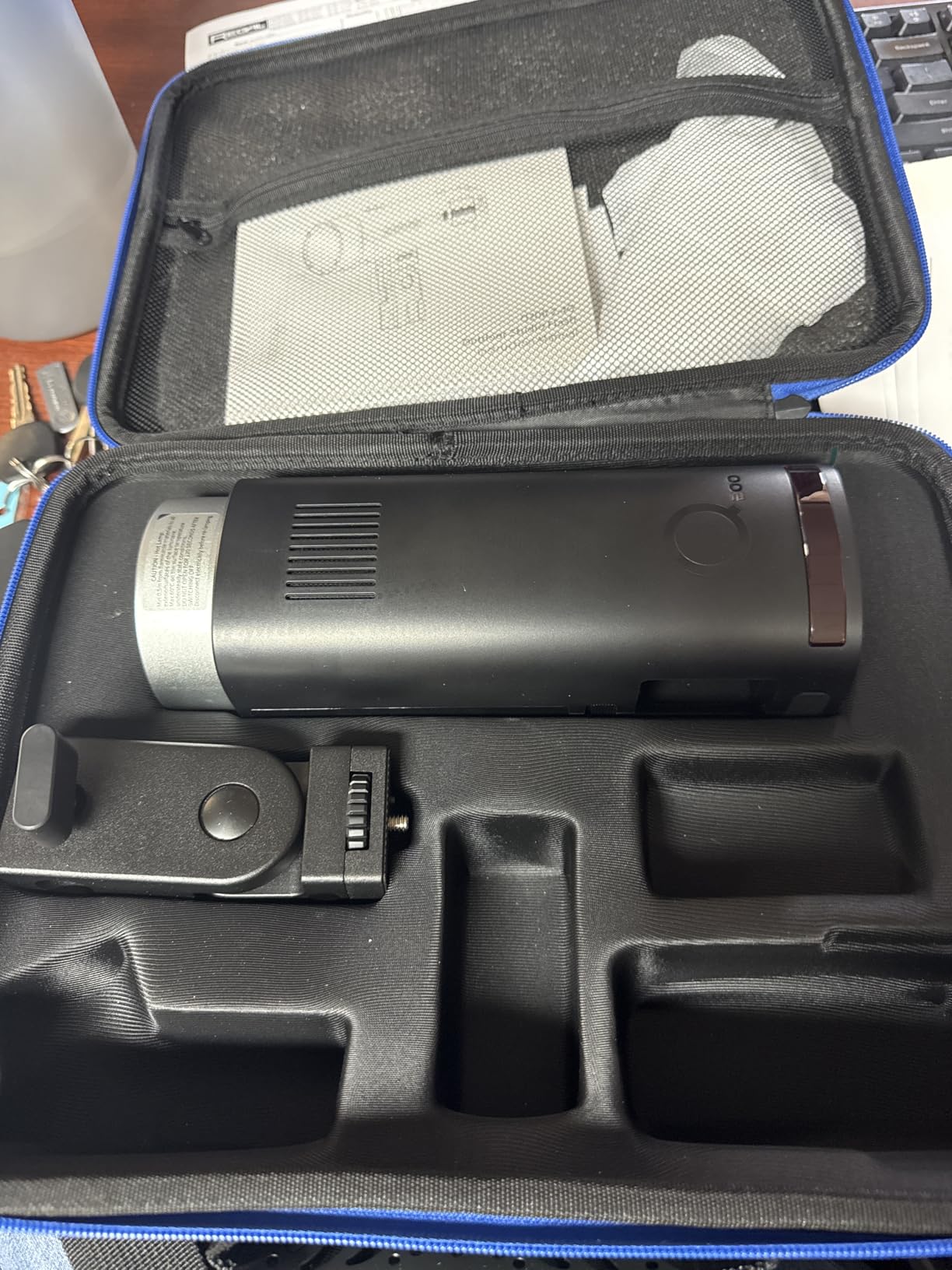
The all-metal handle uses an anti-twist quarter-inch screw with 135 degrees of tilt, which is a better mounting design than the plastic tilt mechanisms on cheaper heads. The 10W bi-color modeling lamp runs 2700K to 6500K, so you can warm the light for skin tones while leaving the flash itself at 5600K within plus or minus 100K.
A gentler place to start with flash
Most budget heads ask you to learn metering before they give you anything back. This one lets you start in automatic, learn from the results, and drop into manual when you are ready. TTL with plus or minus 3.0 EV compensation across 19 levels is the teaching mode, and nine manual steps from 1/256 to 1/1 are there when you want them. S1 and S2 optical modes also let it fire from other strobes in a multi-light setup.
At 200Ws it belongs in a small or medium room rather than outdoors, and the 750 full-power flashes mean a working session is not limited by charging. For a photographer moving from continuous lighting to flash, or shooting portraits of people who move unpredictably, the automatic exposure is what makes the transition quick rather than a long apprenticeship.
Add the trigger to your total
The QPro trigger is not included, and HSS depends on it. Budget for that accessory before comparing this light against manual-only rivals on cost. The app supports over-the-air firmware upgrades, which is a genuine benefit for a brand that is still developing its radio system.
Two limits worth naming. At 200Ws it is a studio light, not an outdoor portrait light, and despite the marketing name it is not pocketable. It also carries the highest one-star share of anything in this roundup, mostly fulfillment complaints including one box that arrived without charger, cord and battery. Check the contents on arrival. Programming the menu takes practice at first, so read the manual before the first paid session rather than the first free one.
9. Profoto A2 Monolight – Best for Travel and Reference Color
Profoto A2 Monolight
100Ws output
Flash duration to 1/26000s
5800K plus or minus 100K
0.1-1.6s recycle
AirX wireless
Pros
- Refined light quality and build
- Flash duration to 1/26000s freezes motion and splashes cleanly
- Tenth-stop power increments for fine control
- Stable 5800K color
- Battery powered with carry bag included
Cons
- 100Ws is the lowest output here so it cannot key a room
- Mounts Profoto Clic tools rather than standard Bowens modifiers
- Sync speed limited to 1/250s
- Smallest review base here at 30 ratings
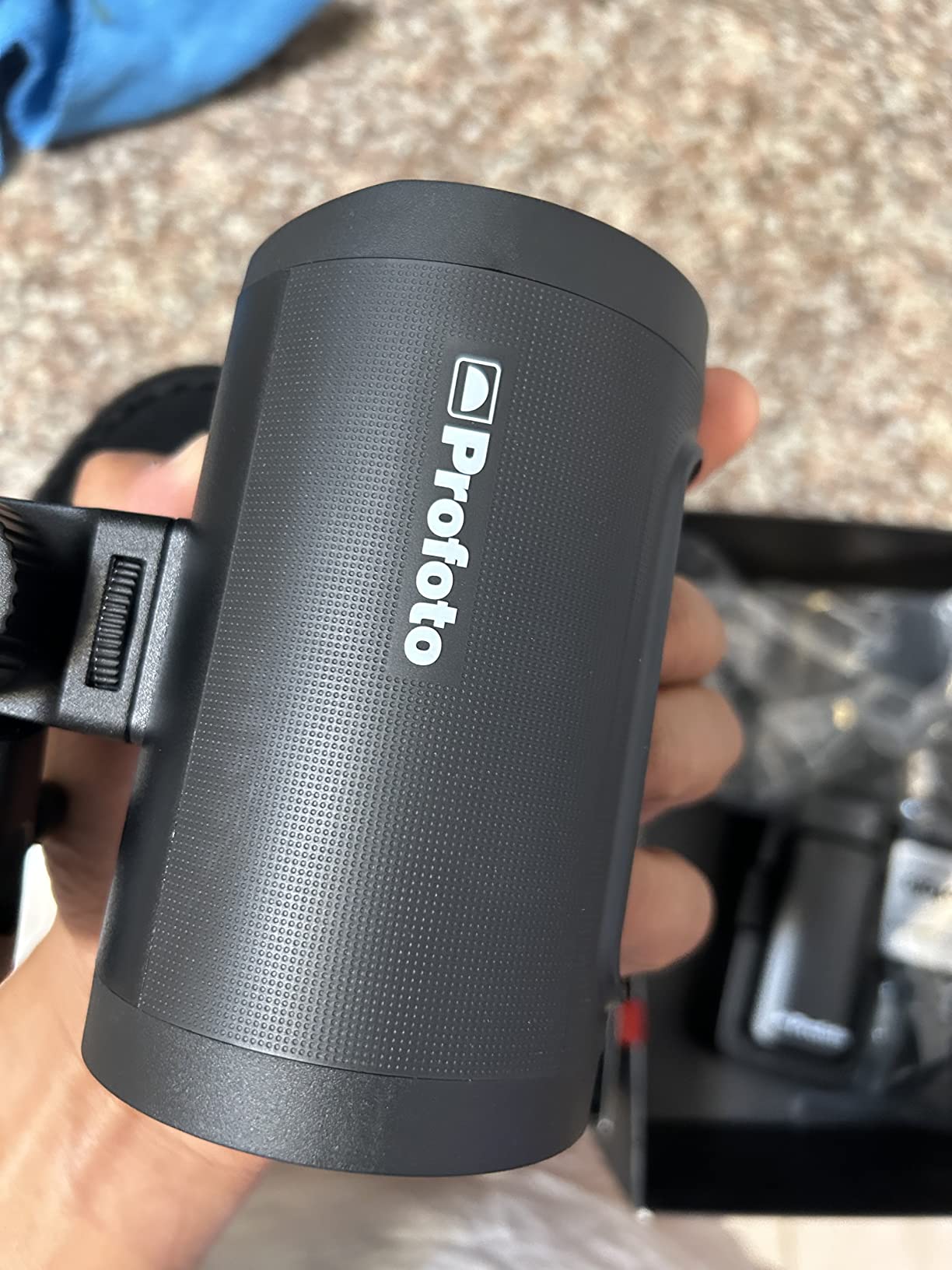
The A2 is not a key light for a home studio and we will not pretend otherwise. At 100Ws with a guide number of 54, it is a travel monolight, and it earns its place here as a second light: the rim, the accent, the background spark behind a product, or the head you bring to an on-location booking.
Where it separates from every other head here is light quality and control. Flash duration runs as short as 1/26000s, which freezes falling water and moving hair cleanly, and power adjusts in 1/10-stop increments across a 10-stop range. Color stays at 5800K within plus or minus 100K. The built-in reflector and lens shape the spread for smooth falloff without a modifier attached.
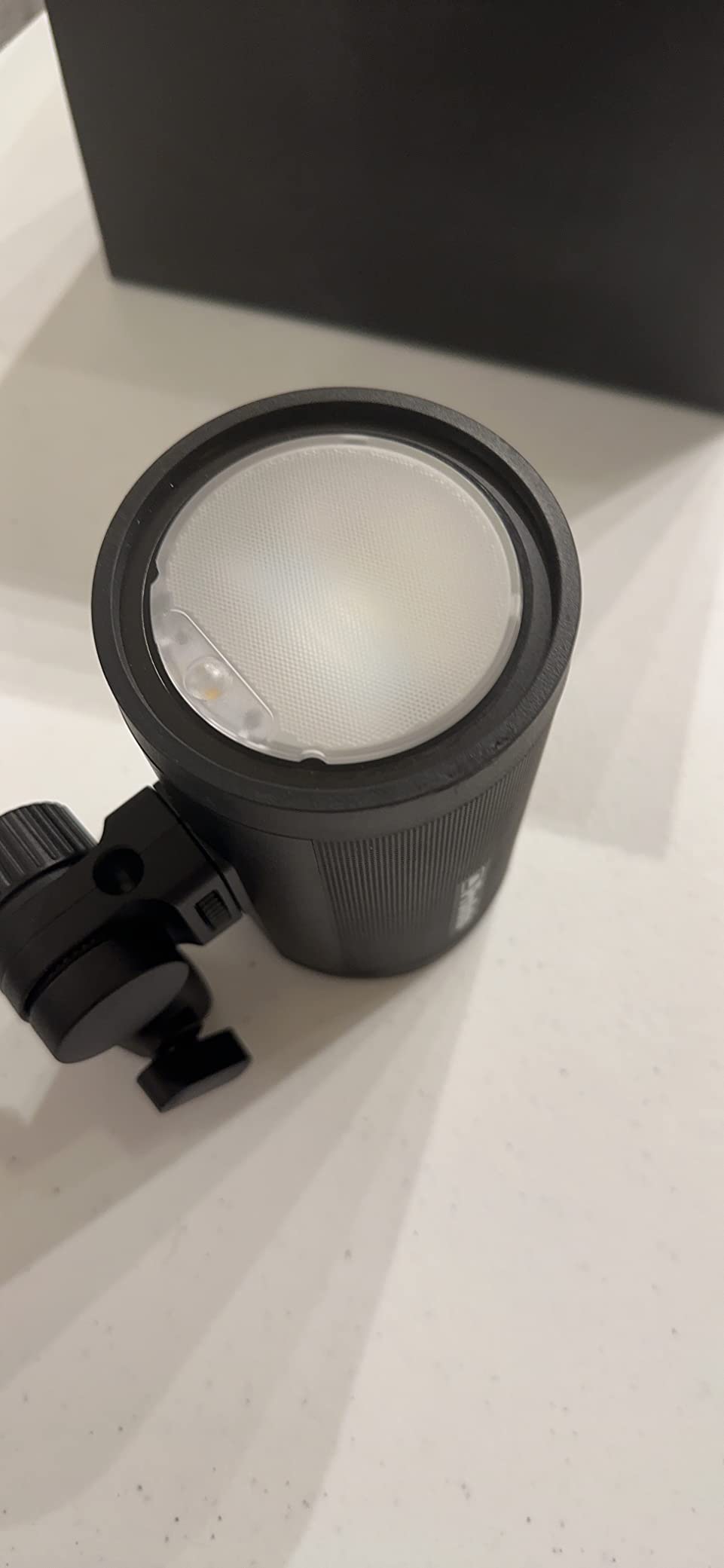
Battery power with roughly 400 full-power flashes and a 1-year limited warranty make it genuinely portable, and the included carry bag means it lives in a camera bag rather than a flight case. The fan-cooled design is quiet in a way the larger mains heads are not. Full TTL works through Profoto AirX with the right camera bracket.
Where the A2 earns its price
You are paying for consistency and portability, not for power. Tenth-stop increments and a plus or minus 100K colour tolerance across the range are finer than anything else in this roundup, which matters when you are matching a studio setup against location work or grading a series from more than one session. The 1/26000s flash duration is the shortest here, and for water, motion and jewellery that is the difference between a sharp frame and a soft one.
At 100Ws with a guide number of 54 it works close in, so its real role is the second head. It is the rim light behind a subject, the accent on a product, or the light you take to a booking where a bigger monolight will not fit through the door. Battery power and an included carry bag mean it travels in a camera bag rather than a flight case, which is the whole point of the design.
Budget for the modifier ecosystem
The magnetic mount takes Profoto Clic light shaping tools, not standard Bowens modifiers. That is the single biggest thing to know before buying: the softboxes and reflectors you already own will not fit, and Clic tools are their own purchase with their own range of shapes. If your studio is already full of Bowens gear, a 300Ws Bowens head will serve you better for far less.
Sync speed caps at 1/250s and 100Ws will not light a room, so a softbox one meter across is the practical limit on modifier size. With 30 owner ratings and 14 percent one star, the review history here is thin, and it is the most expensive unit in the roundup by a wide margin. Buy it as a second light for reference-accurate work, not as the head you start with.
How to Choose a Studio Strobe Light for Your Room
Match wattage to your ceiling height, not to a spec sheet
Room size is the defining constraint of a home studio, and nobody ranks strobes by it. Light falls off with distance squared, which means doubling your distance from the subject cuts the light reaching them to a quarter. A 600Ws head that flatters a head at 2 meters in a bright room can be overkill in a 2.4 meter ceiling-height bedroom, while a 200Ws head that works beautifully at 1 meter in that same room will feel weak the moment you try to light a group across the room.
A practical starting point: under 8 square meters with ceilings below 2.5 meters, 200 to 300Ws covers portraits, headshots and product work comfortably. From roughly 12 to 20 square meters, 300 to 400Ws gives you room to move the light back for softer falloff. Above that, or if you have a large window you cannot fully block, 600Ws is the honest answer.
Decide whether you need TTL before anything else
Four of the nine heads here are manual only, and three support TTL. If you shoot portraits where the light level or the subject’s distance changes constantly, TTL saves a great deal of time. If you work from a fixed setup with a light meter and repeatable positioning, manual gives you finer control over the look and costs less.
Recall the sync speed ceiling on manual heads: 1/200 or 1/250s. Above that speed you must use neutral density filters to stop ambient light from overriding the flash. That is a normal part of a stills workflow, and it is also why these heads will never be a video solution.
Budget for triggers and the trigger system you are choosing
Nothing here fires from a camera without a trigger, except where one is included. The Neewer Q300 ships with a Q Compact trigger and the Profoto A2 pairs through AirX. The Godox MS300V, SK400II and XPLOR 600 PRO use the 2.4G X system, which pairs with the XPro, X1, X2, XT32 and FT-16 triggers. Westcott uses the FJ-X2m trigger, which covers Canon, Nikon, Sony with an adapter, Fujifilm, Panasonic and Olympus.
This matters for the future. Trigger systems are not interchangeable, and photographers who change camera brands get caught out. The Westcott FJ approach and the Neewer RX COMPAT mode both cross into the Godox X ecosystem, which is why the Neewer Q6 and Q200 can fire from Godox X transmitters. Pick the system you can grow within, because the second head is where the money goes.
Over-power on purpose to recycle faster
Here is the technique almost no roundup explains. Recycle time scales with the power setting, so a head that recycles in 1.5 seconds at full power can recycle in a fraction of that at quarter power. Instead of shooting at maximum brightness with the dial, set the head to a low power fraction and shoot through it as if it were at full output. The capacitor never fully discharges, so the next flash is available sooner, and the heat generated per flash is far lower.
The corollary is heat protection. Fire a head repeatedly at full power back to back and the cooling system will throttle, recycle will slow down on its own, and long-term flash tube life suffers. The general rule that circulates among working photographers is to buy more power than the job strictly needs, then dial down. A 600Ws head used at quarter power behaves far better than a 300Ws head used at full power every frame.
Match the mount to the modifiers you will actually buy
Seven of the nine heads here use the Bowens mount, so a standard reflector, softbox or umbrella fits all of them and you can move equipment between heads freely. That is the single biggest practical advantage of the Bowens ecosystem in a home studio, and it is why third-party accessories are so plentiful for it.
The Profoto A2 uses a magnetic mount for Profoto Clic tools instead. That ecosystem gives excellent light quality, but it is closed, more expensive to fill out, and incompatible with everything else on this list. If your modifiers are already Bowens, stay with Bowens.
Know when continuous light wins instead
Strobes beat continuous lighting for stills because they deliver enormous effective power from a small head, freeze motion, and add almost no heat to the room. They lose on video entirely, since a millisecond burst produces no usable footage. If your work is hybrid, the practical answer many professionals use is strobes for stills plus a small bi-color LED panel for video takes, which is also why the modeling lamps on these heads matter.
Before the lights, get the room right. Flimsy curtains, shared apartment walls and hard ceiling fixtures all shape the result more than the model of strobe you choose. If you shoot spoken content as well as stills, our condenser microphone roundup and isolation shield guide cover the other half of the setup.
Frequently Asked Questions
What is the best studio light for home use?
For most home studios the Godox MS300V is the best studio strobe light for home use. It puts out 300Ws from a head light enough not to tip a stand, recycles in 0.1 to 1.8 seconds, uses the Bowens mount that every major modifier brand supports, and carries a 4.7 owner rating across 277 ratings. Pick the Flashpoint XPLOR 600 PRO instead if you need to overpower a window or light a larger room.
What are the best studio flash lights?
The strongest options across the range are the Godox MS300V for compact 300Ws power, the Godox SK400II for 400Ws value, the Flashpoint XPLOR 600 PRO for 600Ws battery power with high-speed sync, and the Neewer Q6 for color stability across the power range. The Westcott FJ200 wins on portability at 1.7 pounds, and the Profoto A2 wins on flash duration as short as 1/26000s.
What is the best studio strobe for taking photos?
The best studio strobe for taking photos depends on your room rather than your skill level. A 200 to 300Ws head is right for rooms under 8 square meters with low ceilings, 300 to 400Ws suits 12 to 20 square meters, and 600Ws is the right call above that or when you have a bright window to overpower. Within any of those bands, wattage matters more than brand.
Who makes the best studio lights?
There is no single best maker, but there are clear ecosystems. Godox and its US-distributed Flashpoint line offer the widest range and the most common trigger standard. Westcott is known for portable battery heads with strong TTL and cross-brand trigger support. Neewer covers entry to mid-range with app control and Godox X compatibility. Profoto leads on light quality and modifier design but uses a closed mount. Buy the system you can grow within.
Is a Godox flash worth the money?
A Godox flash is worth the money for most home studio photographers because the 2.4G X system is the most widely adopted trigger standard, so a second head later will pair with the trigger you already own. The MS300V and SK400II are manual only, so buy them if you meter by hand. If you want automatic flash exposure, look at the Neewer Q6, Neewer Q200 or Westcott FJ200 instead.
What are the lights in a photography studio called?
The lights in a photography studio are usually called monolights when a single head stands on a light stand, or strobe heads when they come from a pack system. Each is typically described by its power in watt-seconds, such as a 300Ws monolight. A stand, a modifier such as a softbox or umbrella, and a wireless trigger are the other three pieces of the standard setup.
What kind of light reduces contrast against the subject in a studio?
The fill light is the light used to reduce contrast between the lit and shadowed side of a subject in a studio. It sits on the opposite side of the camera from the key light, set one to two stops dimmer, and is usually placed close to the subject or off a white wall. A smaller monolight such as the Westcott FJ200 works well as a fill in a small room.
Which Studio Strobe Light Should You Buy?
In a small room with low ceilings, start with the Godox MS300V and add a second head later; it is the most balanced of the nine and the easiest to place. If you shoot manual and want more power for less, the SK400II is the better buy. In a room with a window you cannot block, or for real-estate work, the Flashpoint XPLOR 600 PRO is the answer. Want TTL and consistent color for catalog work, the Neewer Q6. Traveling light, the Westcott FJ200 or the Profoto A2.
Buy one head, buy the trigger with it, and buy a Bowens modifier you can move between heads as you grow. That path keeps the best studio strobe lights for home studios working for you in 2026 and for years after.