
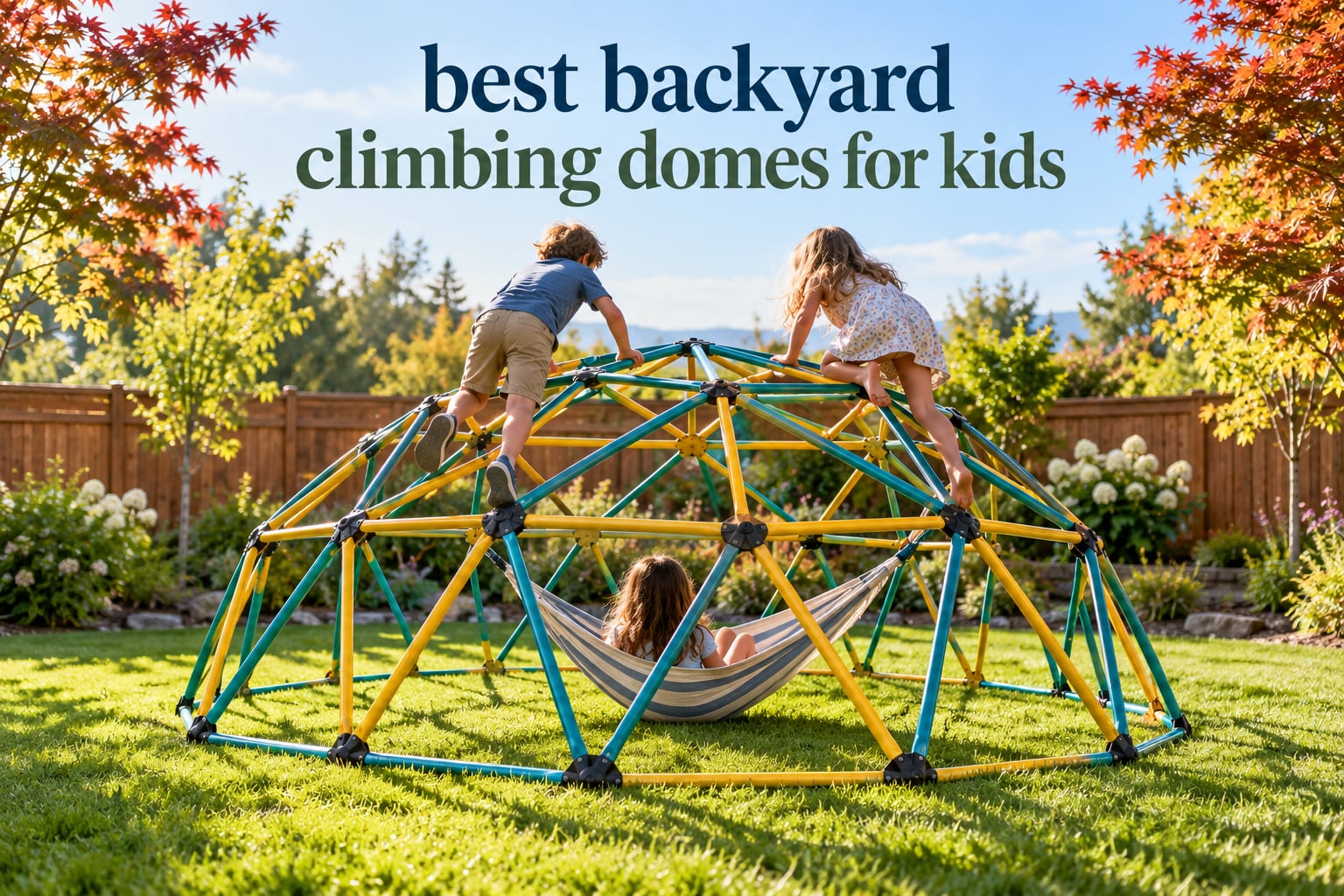
A climbing dome is the rare piece of backyard equipment that earns its square footage. Kids circle it, cross it, hang under it and invent new games on it every afternoon, and the frame still looks new years later. A geometric dome climber is also one of the few big play items that grows with a child instead of being outgrown at age five.
That is exactly why the best backyard climbing domes for kids are so hard to shortlist. Every listing says jungle gym, every photo shows a smiling kid on top, and from a distance they look interchangeable. The differences that actually matter sit three clicks deep: how wide the dome is, how tall the fall is, how much total weight the frame carries, whether the steel is galvanized or only powder coated, and how many adults it takes to build it on a Saturday.
We compared ten of the most-reviewed domes on the market for 2026, reading the specifications, the ratings and the recurring complaints on each listing. This guide covers every size band, from a 6 ft frame that fits a small yard to a 13 ft dome that behaves like a small fort. It also covers the part most roundups skip, which is the clearance zone. A 10 ft dome plus the safety space around it needs a patch of lawn roughly 22 ft across, and knowing that number before you buy saves a very expensive return.
If your child is still under three, start with our toddler climbing toy guide instead and revisit domes around the third birthday. If you are also planning open lawn play, our backyard soccer goal picks pair well with a dome in the same corner of the yard.
Table of Contents
Top 3 Picks: Backyard Climbing Domes for Kids in 2026
Three domes stood out from the field of ten. The Lifetime Geometric Dome is the strongest all-round pick thanks to a huge review base and a 10 ft span. The Zupapa 10FT is the toughest frame on the list, with hot-dip galvanizing and a 1000 lb rating. The EASY OUTDOOR GD-810 is the best value, pairing commercial-grade hardware with a two-year warranty.

Lifetime Geometric Dome
- 5 ft high by 10 ft wide
- Ages 3 to 10
- 600 lb capacity
- Powder coated steel

Best Backyard Climbing Domes Compared in 2026
This table covers every dome in the guide. Diameter sets the size of the play surface, height sets the fall, and capacity is the total load the frame is rated for rather than a per-child number. Ages come from the manufacturer listings.
| Product | Specifications | Action |
|---|---|---|
| Lifetime Geometric Dome |
|
Check Latest Price |
 Zupapa 10FT Dome Zupapa 10FT Dome |
|
Check Latest Price |
| EASY OUTDOOR GD-810 |
|
Check Latest Price |
 GIKPAL 6FT Dome GIKPAL 6FT Dome |
|
Check Latest Price |
 VEVOR 10FT with Swing VEVOR 10FT with Swing |
|
Check Latest Price |
 Hapfan 10ft with Swing Hapfan 10ft with Swing |
|
Check Latest Price |
 Amictoy 10FT with Hammock Amictoy 10FT with Hammock |
|
Check Latest Price |
 VEVOR 10FT Saucer Swing VEVOR 10FT Saucer Swing |
|
Check Latest Price |
 GVDV 10FT with Hammock GVDV 10FT with Hammock |
|
Check Latest Price |
 Merax 13FT Dome Merax 13FT Dome |
|
Check Latest Price |
1. Lifetime Geometric Dome Climber – the best all-round backyard climbing dome
Lifetime Geometric Dome Climber Play Center – Climbing Dome Jungle Gym
10 ft wide by 5 ft high
600 lb total capacity
Ages 3 to 10
Powder coated steel frame
Pros
- Holds multiple adults without flexing
- Big 10 ft footprint fits several kids
- Powder coating holds up in snow and sun
- No painting or staining needed
Cons
- Assembly runs 2 to 4 hours
- Instructions confusing at the top section
- Poles and grips get hot in direct sun
- Pole ends are not capped
With 5391 ratings averaging 4.8, this is the most proven climbing dome in the category, and the numbers explain why. It is a 10 ft wide by 5 ft high frame rated for 600 lb, aimed squarely at ages 3 to 10. The manufacturer even lists it from 24 months, though we would start closer to three.
The frame is powder coated steel and the hand and foot holds are high-density polyethylene, which is the same grip material used across this whole category. What stands out in the reviews is rigidity. Owners describe an adult or two climbing alongside the kids with no visible flex in the bars, which is the thing that makes a dome feel safe rather than wobbly.
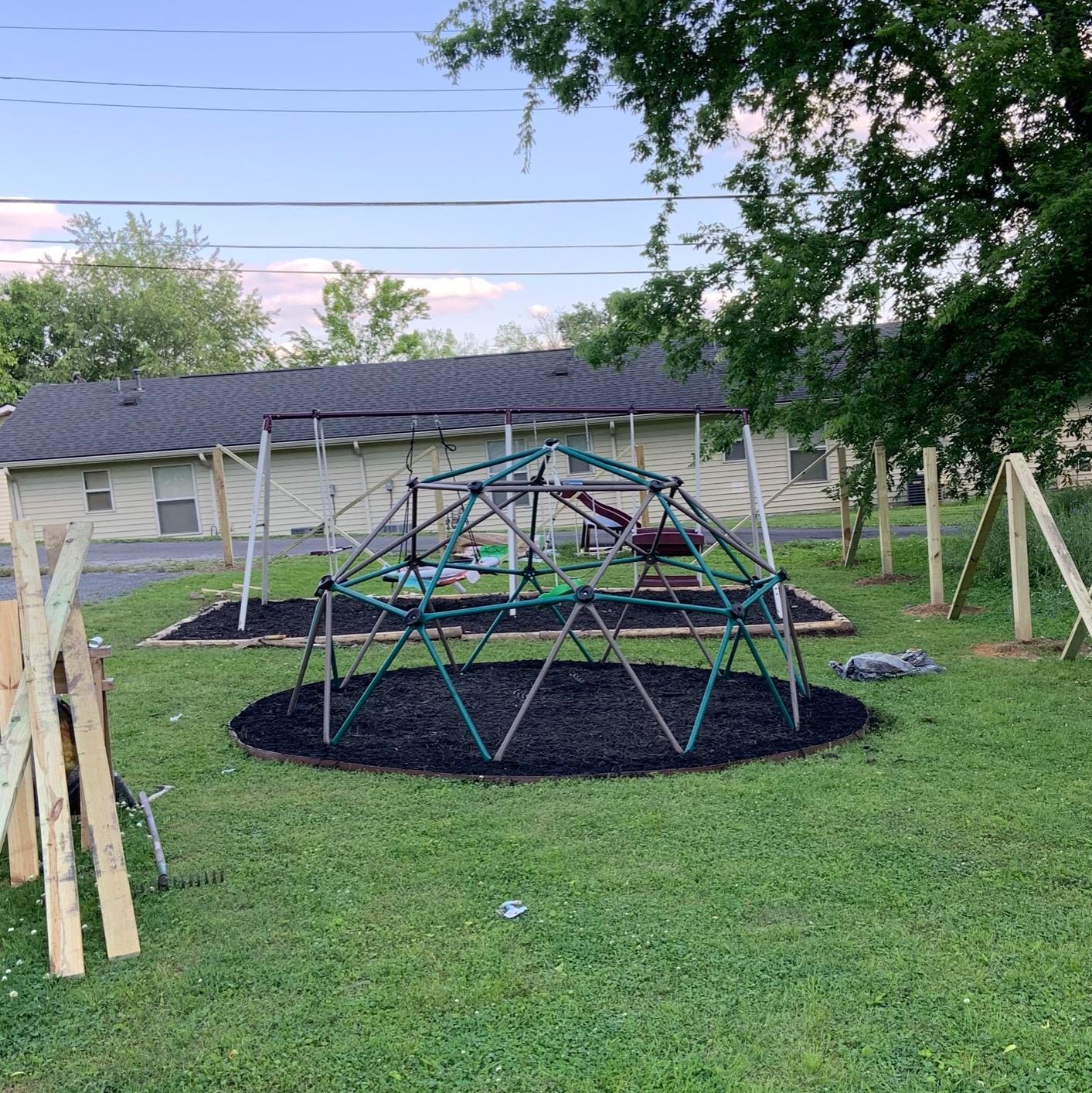
Assembly is the honest drawback. Owners consistently budget two to four hours and say it goes far faster with two adults working together. The instructions are also the most commonly criticised part of the whole package, particularly the sequence for fitting the upper section where several similar-looking poles and bolts meet.
A few buyers also report bolts breaking during the build, which usually means overtightening or cross-threading. Leave the hardware snug rather than torqued, then go back and tighten once the frame is fully seated. In direct summer sun, reviewers note the poles and grips get hot enough that parents move little kids off the top in the middle of the afternoon.
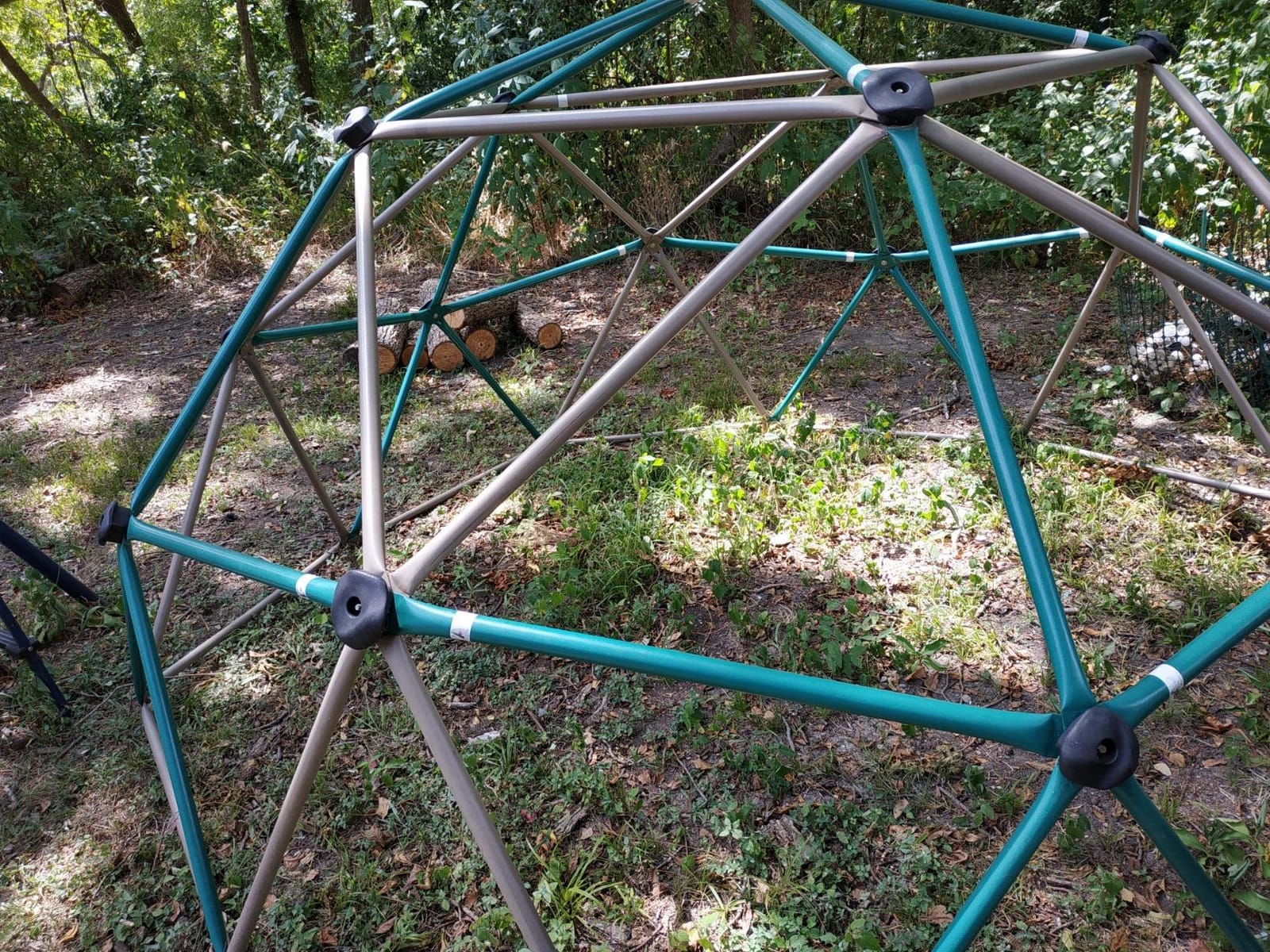
Is the Lifetime dome big enough for more than one child
Yes, and this is where it beats the mid-size options. The 10 ft span and 600 lb rating give real room for two to three children moving on different sides at once, plus room underneath for a fort, a den or a truck parked below the frame.
It is rated for six players according to the listing, though that is a play-pattern number rather than a structural one. For a family with three or four kids under ten, this is the size that avoids constant turn-taking. Families with one or two children in a modest yard should look at the 6 ft and 7 ft options further down instead.
Where the Lifetime dome disappoints
Warranty terms are not spelled out clearly on the listing, and that is worth confirming with the seller before you buy. Pole ends are not capped either, so a buyer in a wet or coastal climate who wants long-term rust protection may prefer a galvanized frame instead.
It is also the heaviest reasoning behind a repeat purchase decision: once kids pass about age ten, a 5 ft fall is short and the dome loses its challenge. Plan on this one lasting a family roughly five to six years of heavy use, which for most households means one or two children getting their full run out of it.
2. Zupapa 10FT Climbing Dome – the toughest frame with a basketball backboard
Zupapa 10FT Climbing Dome, Outdoor Jungle Gym for Kids with Climbing Grip – Geometric Dome Climber Outdoor Playset and Easy Assembly Outdoor Play Equipment for Kids (Green, 10FT)
10 ft wide
Ages 3 to 10
1000 lb capacity
Hot dip galvanized steel
69.7 lb frame
Pros
- Sturdy enough for a 165 lb adult to climb
- Hot dip galvanizing resists rust
- Backboard adds a second activity
- Service replaced missing nuts quickly
Cons
- Realistically a three person build
- Instructions choppy and uncolour coded
- Bolts must stay loose until the frame is up
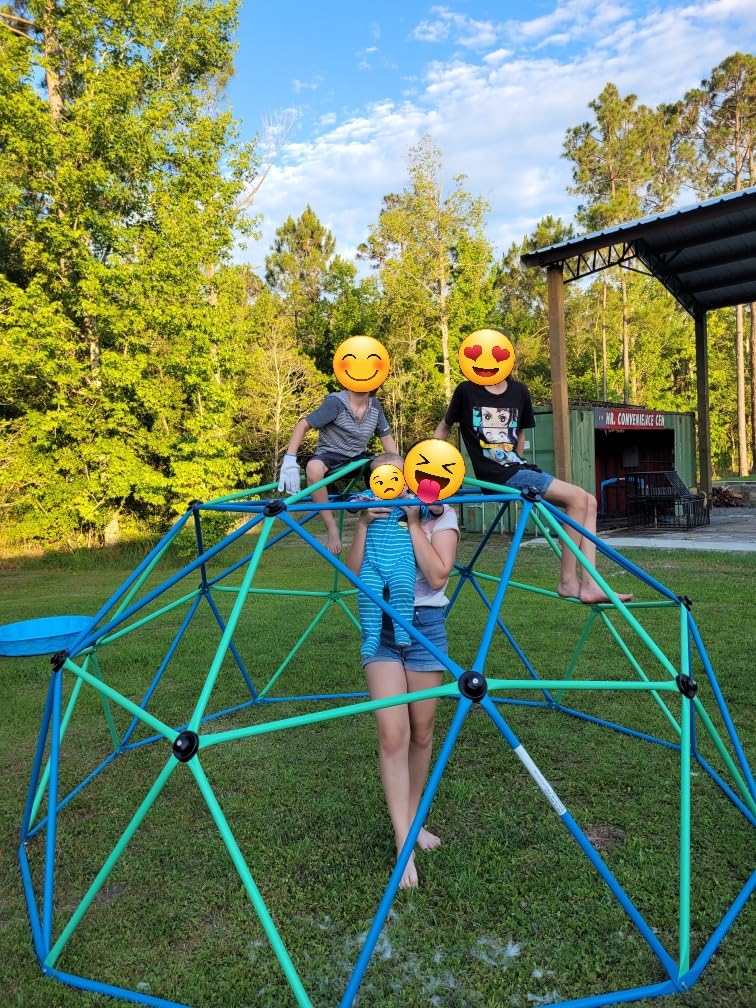
The Zupapa 10FT is the heaviest-rated dome in this group and the one with the most serious rust protection. The poles are hot dip galvanized at 450 degrees Celsius with a zinc layer of 60 micrometers or more, built on 1.2 mm alloy steel with five reinforced top beams. The 1000 lb rating sits alongside a stated age band of 3 to 10 and up to six players.
What we like most is the finish rather than the size. Hot dip galvanizing coats the steel in zinc before powder paint goes on, so a scratch in the color still leaves metal underneath that will not bleed rust the way a painted-only frame can. That is the single most useful spec on this list if you live somewhere damp or salty.
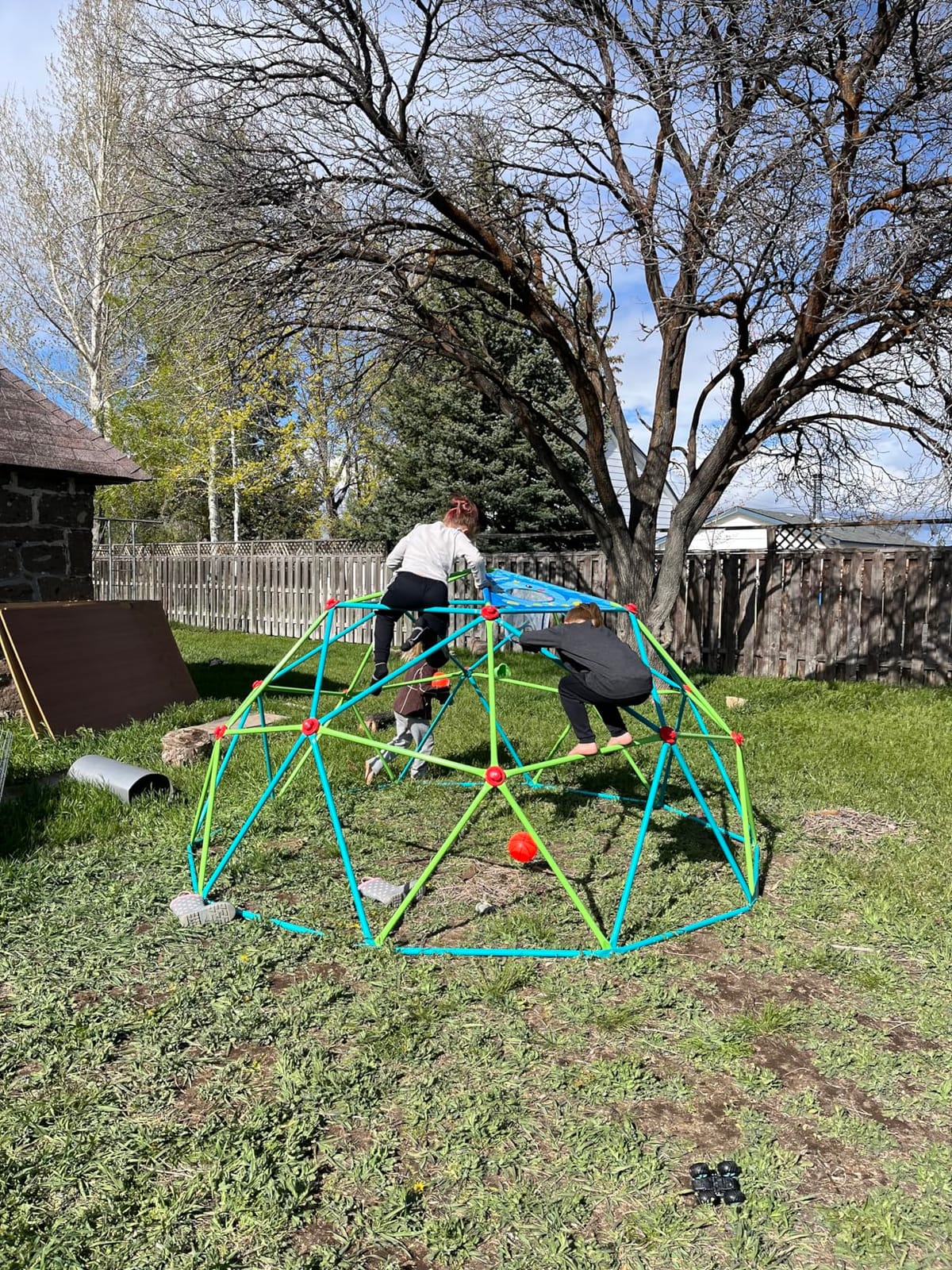
The decagonal layout and the basketball backboard turn it into more than a climbing frame. In our read of the reviews, kids who initially ignored the dome often end up using the backboard, and adults end up climbing on it with a 165 lb bodyweight without the frame complaining.
The build is the hard part. Owners call it a three person job, warn that the instructions are choppy and that the photos are not colour coded, and offer one specific tip that saves hours: leave the bolts loose until the whole frame is assembled, or the bars will not seat properly and you will have to strip and start again.
Does the Zupapa dome survive a humid or coastal yard
It is the pick we would make for that situation. The 60 micrometer zinc layer is the heaviest corrosion protection described by any dome in this roundup, and owners in wet climates report the frame staying clean through seasons of rain and sun.
Watch the bolt heads rather than the poles. Zinc-coated steel still weathers at the fastener points, so a yearly wipe-down with a damp cloth and a little oil on the threads is worth doing. That habit alone prevents most of the rust bleeding parents complain about in cheaper powder-coated frames.
Where the Zupapa dome disappoints
Assembly time and effort are the real drawbacks, and this one asks more of you than most. If you are a single parent building solo, this is the wrong dome to pick because the pole clusters need several hands at once to stay aligned while the bolts go through.
It is also a 10 ft frame, which means a large footprint. Add the clearance space and you are looking at a lawn roughly 22 ft across before you count swing extensions from neighbours or a fence line. In a small yard it will dominate everything else you have placed.
3. EASY OUTDOOR Space Dome Climber GD-810 – the best value with commercial-grade hardware
EASY OUTDOOR Space Dome Climber for Kids Backyard Jungle Gym 1000 lb GD-810
91 x 46 x 91 inches
1000 lb capacity
Ages 3 to 9, up to 5 kids
74 lb frame
Pros
- Heavy duty bolts and connector plates
- Holds 250 lb adults without flex
- Aircraft nuts cover sharp edges
- No rust or fade after years outdoors
Cons
- Several hours of assembly
- Weight makes it hard to move
- One buyer reported most hardware missing
The GD-810 measures 91 inches by 46 inches by 91 inches and carries a 1000 lb maximum weight capacity for up to five children aged 3 to 9. It is rated for five players, which is fewer than the Zupapa, and the span is smaller too, but the hardware is where it separates itself from the budget end of the market.
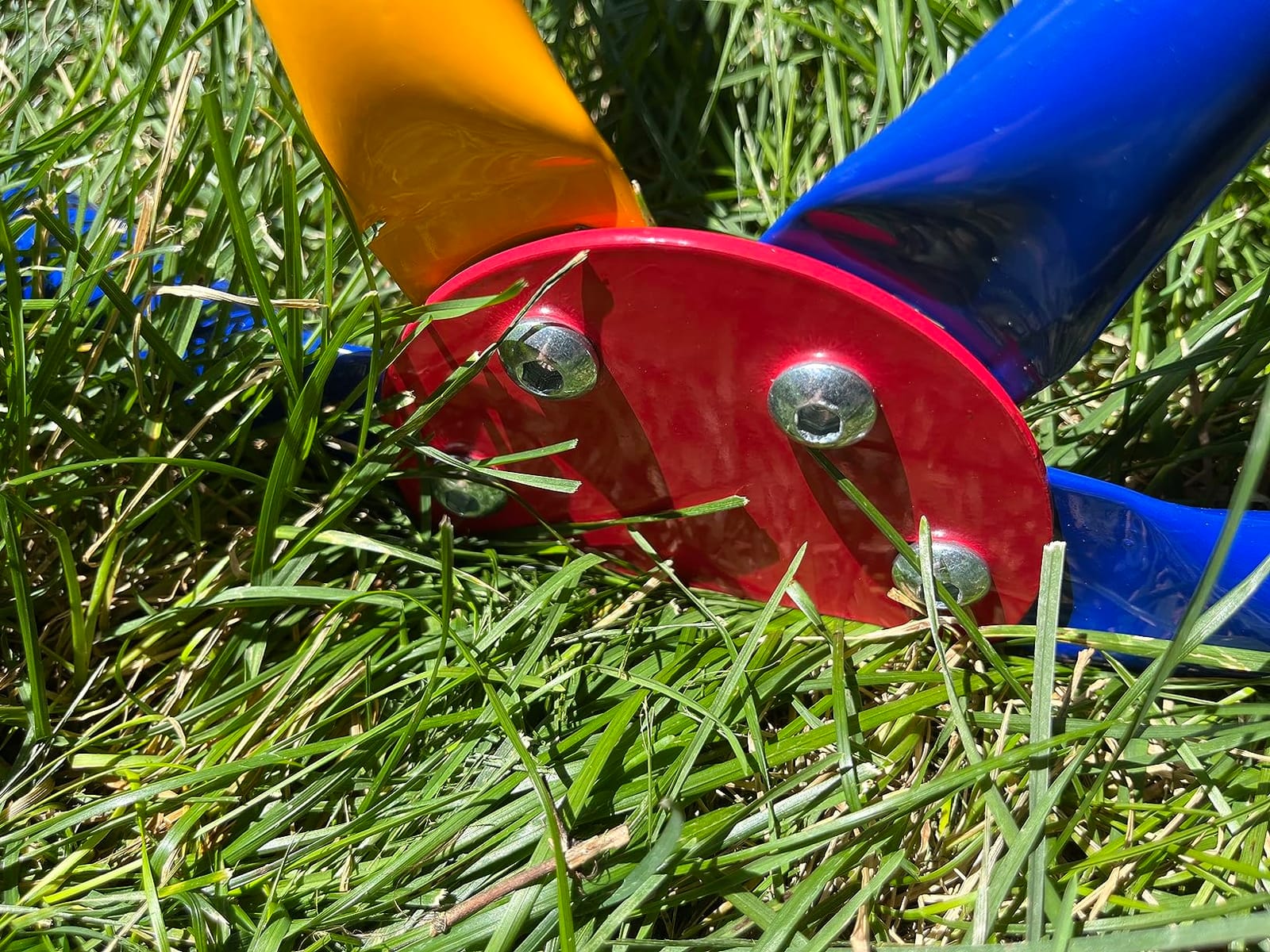
Aircraft nuts with nut covers over the sharp edges is a small detail that shows up in real use. They stop exposed threads from catching skin and they keep the bolt heads from being the first thing to rust. Reviewers describe the connector plates and washers as commercial grade, and report no rust or sun fade after years outside.
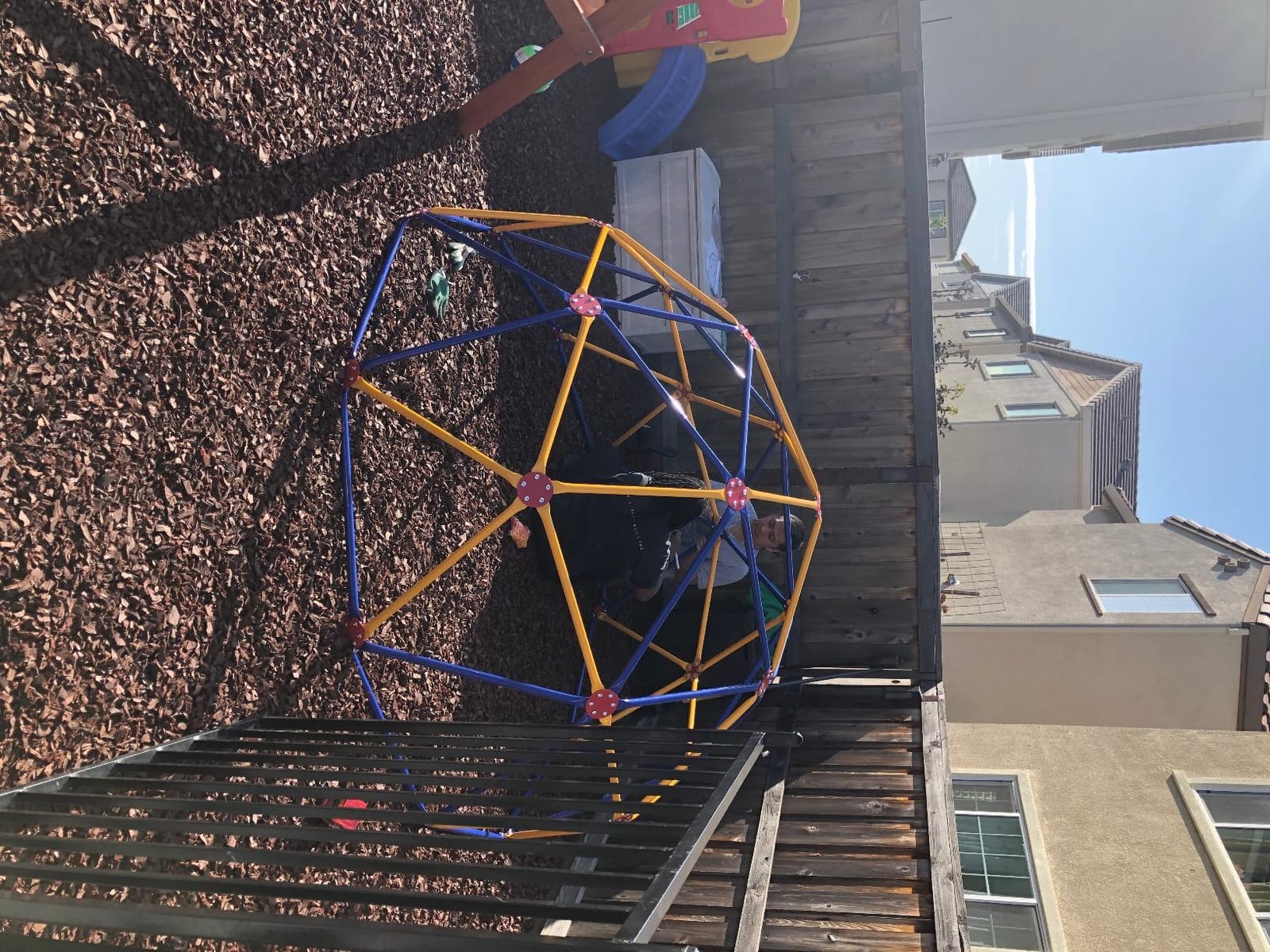
Imaginative play is the other thing owners mention. Because of the shape and the covered interior, kids turn it into a rocket ship, a lion cage and a ball hoop, and the enclosed space underneath works as a hideout. Parents also note visible gains in balance and confidence after kids use it regularly.
Two-year style warranty claims vary between sellers, so confirm the terms with the seller rather than relying on the listing wording. The practical cautions are simpler: several hours of assembly that is hard to do alone, and a 74 lb frame that is genuinely awkward to drag across grass when you want to mow underneath it.
Is the GD-810 sturdy enough for adults to climb
Yes. Reviewers report it holding 250 lb adults and multiple children at the same time without flex, and the 1000 lb rating is a true total capacity rather than a single-user number. That is unusual in this category, where many listings quote a capacity that quietly means one adult at a time.
The 91 inch span is the trade. It fits more easily in a medium yard than a 10 ft frame, and two kids can still work on separate sides, but three or four children at once will queue. For a family with a small number of children spread across different age bands, that is a good trade.
Where the GD-810 disappoints
There is one serious report of a box arriving with roughly 70 percent of the hardware missing. That is a packaging and fulfilment issue rather than a design flaw, but it is worth checking the full parts list before you start and contacting the seller early if anything is absent.
Watch the bolt tightening sequence as well. Owners report that every bolt has to be fully tightened or the frame sits unstable, which is the opposite advice to the Zupapa. Once it is complete, treat it the same way and re-check the hardware after the first month of heavy play.
4. GIKPAL 6FT Climbing Dome – the best pick for small yards and toddlers
Climbing Dome Jungle Gym 6ft Outdoor Playset Kids Playground Equipment
6 ft wide by 3 ft high
600 lb capacity
Top pole rated 240 lb
Galvanized steel
Pros
- Compact footprint suits a small yard
- Movable by one person
- Grips cover screw heads at each junction
- Gloves and video guide included
Cons
- Only 3 ft tall which buyers misread
- Diagrams mislead on hardware
- Needs several helpers for the poles
The GIKPAL dome is the small-yard answer. It is 6 ft across and 3 ft high, rated for 600 lb, and intended for two to three children aged 3 to 5. That is the toddler and preschool end of the market, and it is the least crowded corner of the category even though most listings push 7 ft to 13 ft frames.
Read the dimensions carefully before ordering. Several buyers report assuming a 6 ft dome was 6 ft tall, when the figure refers to the span across the base. The 3 ft height is a genuine toddler climbing height and also the reason the age rating stops where it does.
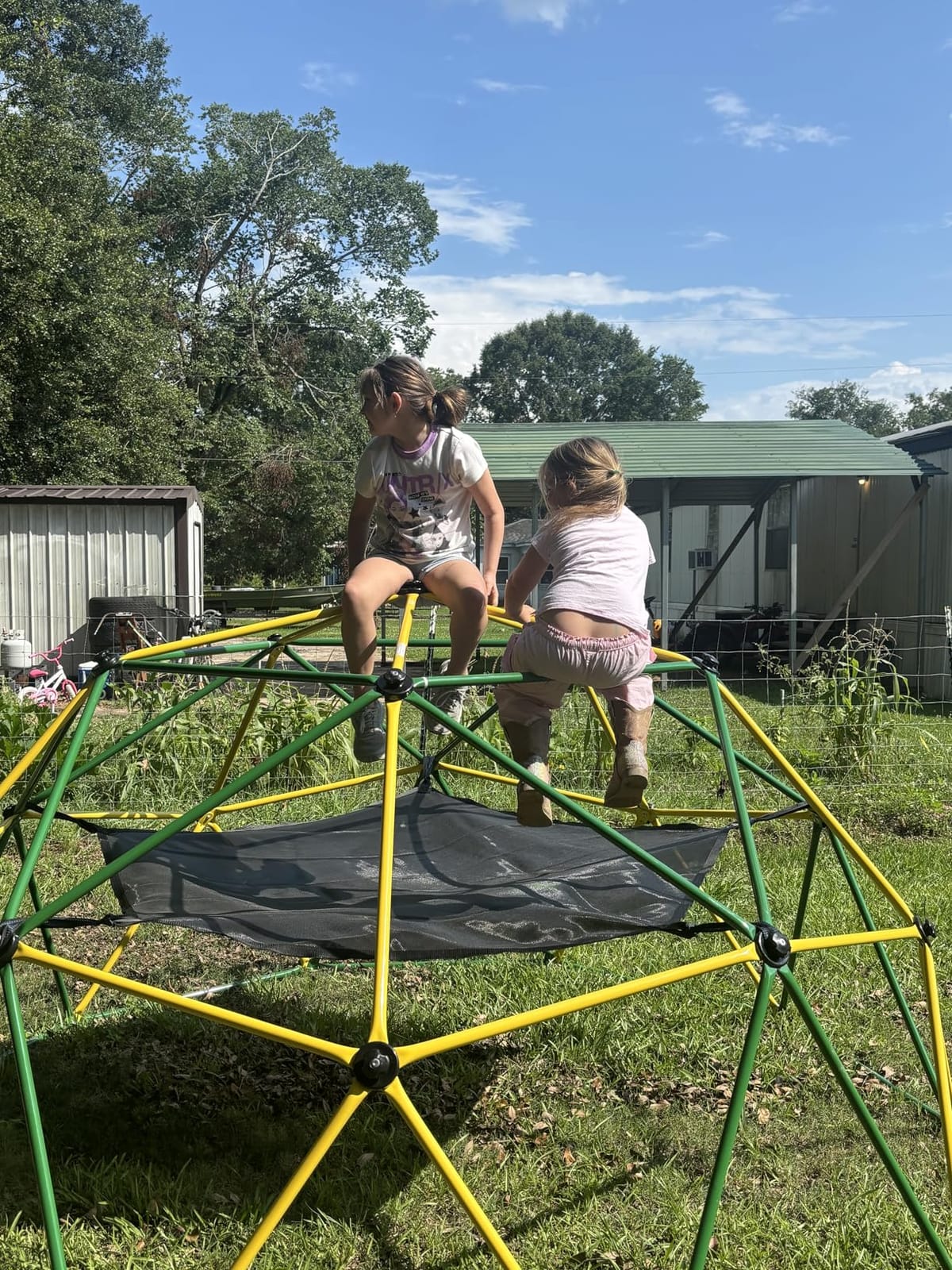
The centre top pole is the feature that earns its place. It is rated at 240 lb and doubles as a gymnastic bar, which gives a preschooler something to hang from and swing over that a bare dome does not offer. Grips sit at each bar junction and cover the screws, so there are no exposed fastener heads under a hand.
Owners also like what comes in the box: assembly gloves, a printed manual and a video. Galvanized steel is specified for rust and weather resistance. Buyers who are skeptical about the 600 lb figure still report the frame does not flex when an adult hangs off it, and the 6 ft footprint is light enough for one adult to move for mowing.
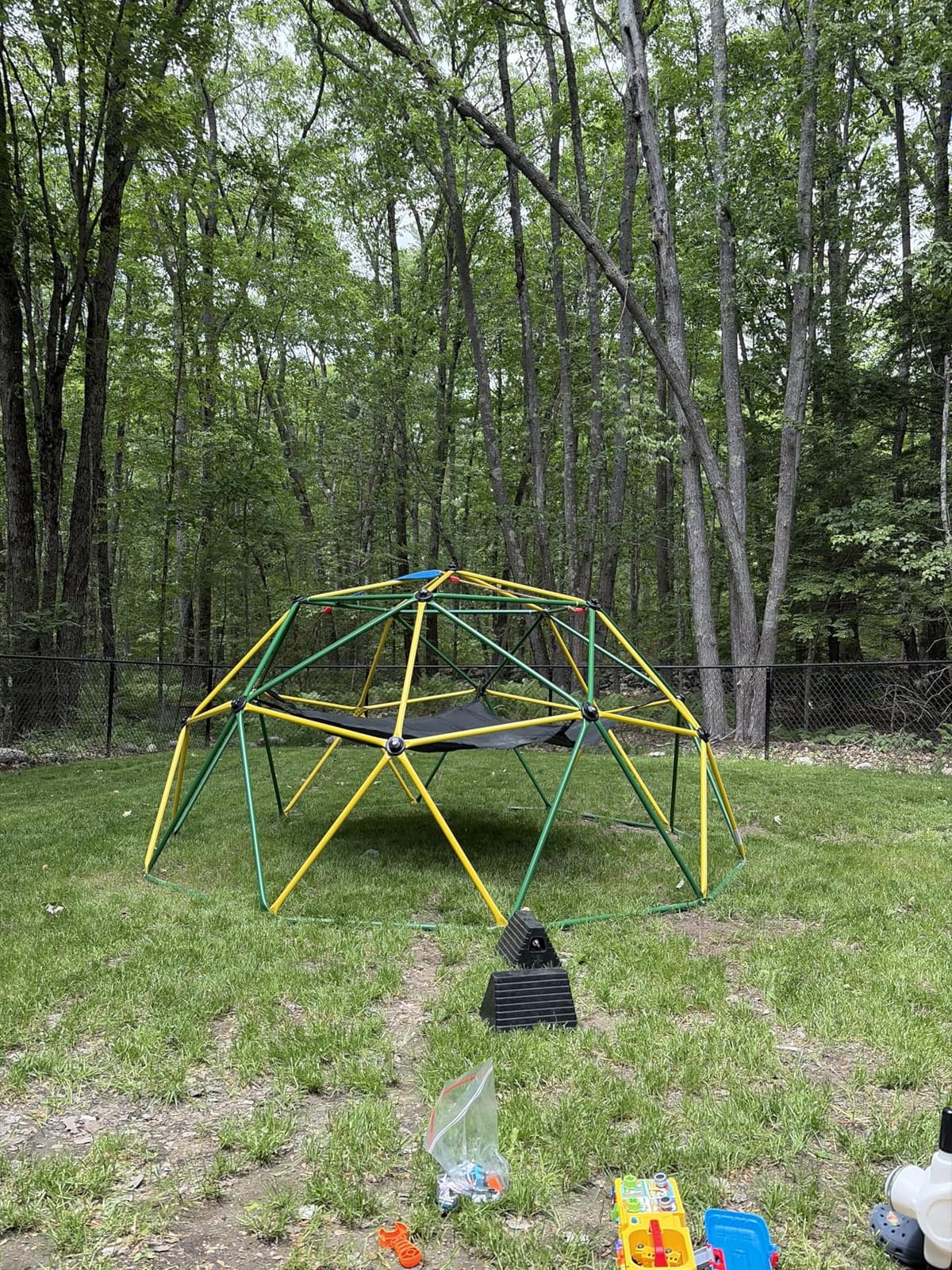
Is a 6 ft dome enough play value for a preschooler
Yes, if you have one or two children in the 3 to 5 band. The dome gives real over-and-under climbing rather than a slide, and the top bar adds hanging and swinging that a plastic climber cannot. Most families use it as a first dome and then move up to a 7 ft or 10 ft frame around age six.
The honest limit is duration. At 3 ft high, a six or seven year old will master it in a week and be bored by summer’s end. If your youngest is already five or six, skip this and go straight to a larger span, which is exactly the mistake the size confusion in the reviews describes.
Where the GIKPAL dome disappoints
Assembly needs more people than the size suggests. Up to six poles have to be held in position at once, so even a 6 ft frame is a multi-person job, and the diagrams are reported to mislead about washer and bolt placement. Count the hardware into small groups before you start.
The 6 ft span is also the frame’s ceiling, not a limitation you can grow out of by adding parts. Treat it as a first dome for the preschool years, and plan the move up to a 10 ft frame around the time children start asking for a bigger challenge.
5. VEVOR 10FT with Swing and Detachable Cushion – the most play per footprint
VEVOR Climbing Dome for Kids 3 to 10 Years Old 10FT Geometric Dome Climber
120 x 120 x 60 inches
750 lb capacity
Swing plus detachable cushion
80 lb frame
Pros
- Three activities in one footprint
- Cushion converts to a ground pad or hammock
- Galvanized and coated against UV and rust
- New handle design avoids cuts
Cons
- 80 lb frame is awkward to move
- Many identical poles slow the build
This VEVOR is 120 inches by 120 inches by 60 inches with a 750 lb load capacity for four to five children aged 3 to 10. Where most 10 ft domes are just a climbing surface, this one ships with a swing and a detachable cushion that can be used three different ways.
The cushion is the clever part. It hangs as a hammock, it can be laid on the ground as a soft pad for falls off the frame, and it gives you a place to sit inside the dome. Owners consistently pick this as the multi-activity option, which matters when the same 10 ft of lawn is competing with a swing set for space.
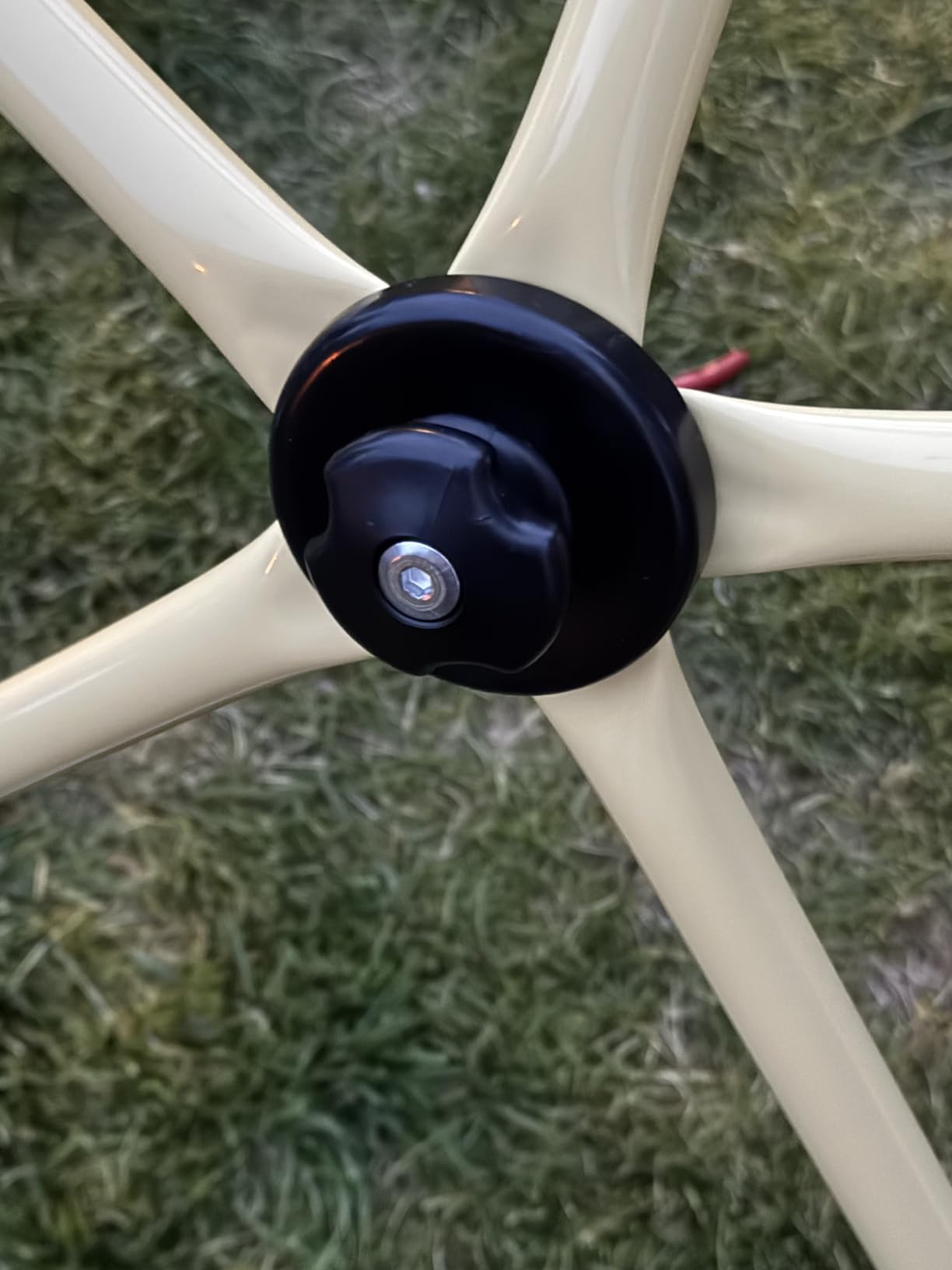
Materials are handled well. The steel is thickened and hot dip galvanized with a coating for UV, rust and corrosion resistance, and a revised handle design removes the cut risk that older dome models had. Installation tools, a manual and video guides are included in the box.
Two downsides stand out. At 80 lb the frame is heavy to shift, and a large number of identical poles and joints make assembly slow and prone to error. Plan the build for a full afternoon with at least two adults and sort the poles by length before you bolt anything together.
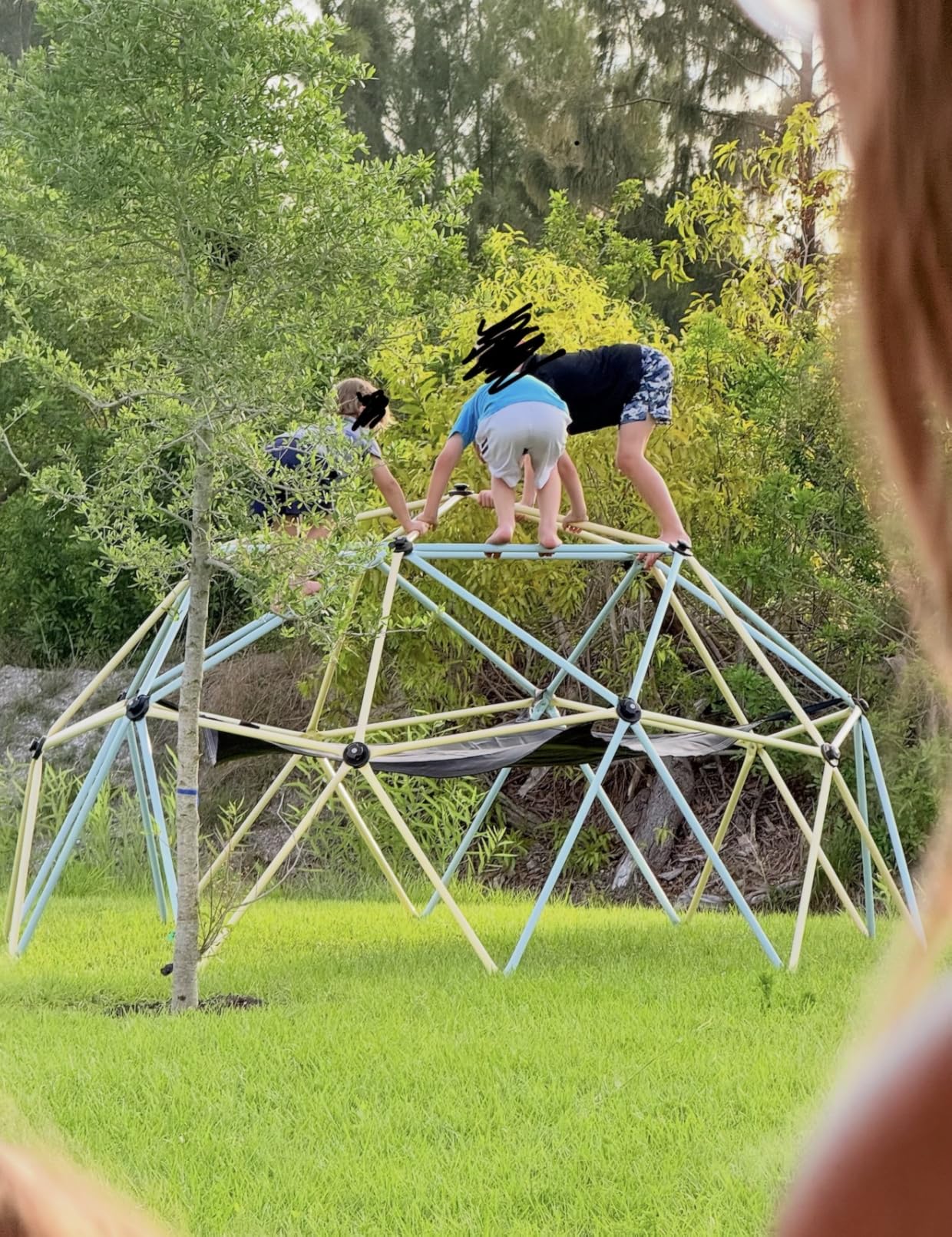
Is the detachable cushion worth the extra complexity
For families with limited yard space, yes. You get a swing and a soft landing surface out of the same frame, which is the arrangement most parents end up wanting when they realise a bare dome leaves them wanting a swing too. For larger yards, a standalone swing set is more comfortable long term.
Note that the cushion is a comfort and play item rather than certified impact surfacing. If you want a true fall surface under the frame, lay engineered wood chips, rubber mulch or playground tiles over the ground beneath the dome as well.
Where the VEVOR cushion dome disappoints
Nothing here is a design fault, but the 750 lb capacity is lower than the 1000 lb figure on several rivals in this roundup, and the 80 lb weight is the heaviest frame here alongside the VEVOR saucer model. Moving it to mow the grass underneath is a genuine two-person job.
Assembly friction is the other issue. The number of near-identical pieces means an error early in the build can only be discovered late, and reviews specifically call the build slow. Lay the parts out sorted and photograph each completed joint before moving on.
6. Hapfan 10 ft Climbing Dome with Saucer-Style Tree Swing – built for ages 3 to 12
Hapfan 10 ft Climbing Dome Swing Set with Saucer Swing for Kids 3-12
10 ft by 10 ft by 5 ft
800 lb total capacity
133 lb per single tube
Swing rated to 400 lb
Pros
- Climb
- hang and swing in one frame
- Thicker tubes on the top five poles
- No extra tools needed to build
- Easy to hang and remove the swing
Cons
- Per tube limit rules out adult climbing
- Bolt direction changes between layers
The Hapfan is 10 ft by 10 ft by 5 ft and lists 65 rust resistant steel tubes with an 800 lb total capacity. It is the only dome here with a stated band running to age 12, which is why we flagged it separately for families with older children still climbing alongside younger ones.
Two details set it apart. The top five blue poles use thicker tubing where the frame carries the most load, and the hanging tree swing is rated to 400 lb on a PP jumping mat and Oxford fabric attachment, which is more than a lot of dome-mounted swings manage.
Buyers like that no additional tools are required and that a setup video is provided, and several note the swing hangs and removes easily, which matters when you want the frame purely for climbing. It is also described as movable for mowing, so the weight is manageable in practice.
The two things to know before you buy relate to the structure rather than the play. Because the rating is 133 lb per single tube, this is a children-only frame despite the 800 lb headline number, and bolt direction changes between the bottom layer and the upper layers, which is the single detail most likely to trip up a first-time builder.
Does the Hapfan hold up for mixed age siblings
It does, and the per tube limit is the honest caveat. A pair of children aged 3 and 10 climbing on opposite sides is well within the 133 lb per tube allowance, whereas a full-grown adult on one section is not what the frame was engineered for. Supervise accordingly and the age range holds up well.
The 800 lb total is still a real number for a group of children. Five kids spread across the frame, one on the swing and one under the dome, is the configuration it was designed for, and the thicker top poles are exactly where that load concentrates.
Where the Hapfan disappoints
The bolt direction rule is a genuine assembly trap. Owners who follow it call the build clean, and owners who miss it end up with a frame that has to be partly stripped and rebuilt. Read that page of the manual before you start rather than after.
It also has the smallest review base among the larger domes here, so long term durability data is thinner than the Lifetime or Zupapa listings. That is a reasonable reason to favour a better-documented frame if you expect to keep it more than a few years.
7. Amictoy 10FT Climbing Dome with Hammock and Swing – works indoors and out
Amictoy Climbing Dome with Hammock and Swing, 10FT Backyard Jungle Gym
120 x 120 x 60 inches
Built for 5 to 6 children
Ages 3 to 8 up to 3 to 10
Weather resistant steel
Pros
- Hammock and swing add real value
- Frame sized for a whole sibling group
- Ergonomic grips for small hands
- Listed for indoor and outdoor use
Cons
- Softer ratings than the leaders
- Advertised assembly time is optimistic
The Amictoy is 120 inches by 120 inches by 60 inches, built for five to six children on a weather resistant steel frame. The listing puts the age band at 3 to 8 for standard climbing and up to 3 to 10 depending on the activity, which is a sensible way to describe a dome with a hammock hanging off it.
Three zones in one footprint is the pitch, and reviewers back it up. Climbing is the obvious draw, but the hammock and swing give kids somewhere to go when they need a break, which is what turns a climbing frame into something a sibling group uses at the same time instead of taking turns on.
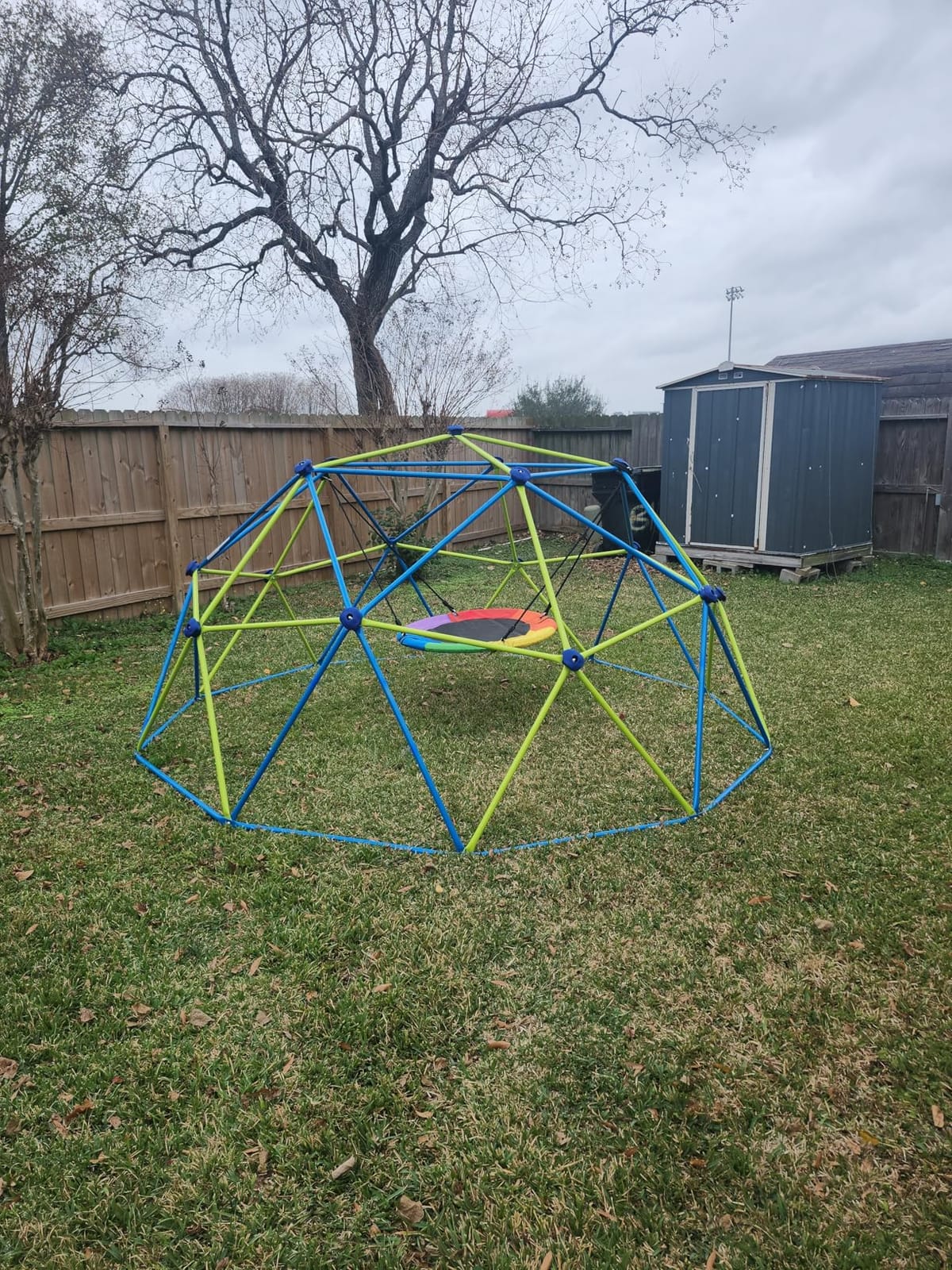
Ergonomic grips designed with child development in mind matter more than the wording suggests, since smaller hands need bigger, rounder holds than adult-scale knobs. The listing also notes no batteries are required, which is quietly important for a toy that lives in the yard.
Set expectations on the reviews. At 4.4 across 198 ratings this is the lowest-rated dome in our set, and the gap shows up in a higher share of three-star reviews. The recurring theme in those is the advertised quick assembly, which buyers handling a 10 ft frame consistently find unrealistic. Budget a proper afternoon and a second pair of hands.
Can a 10 ft dome really be used indoors
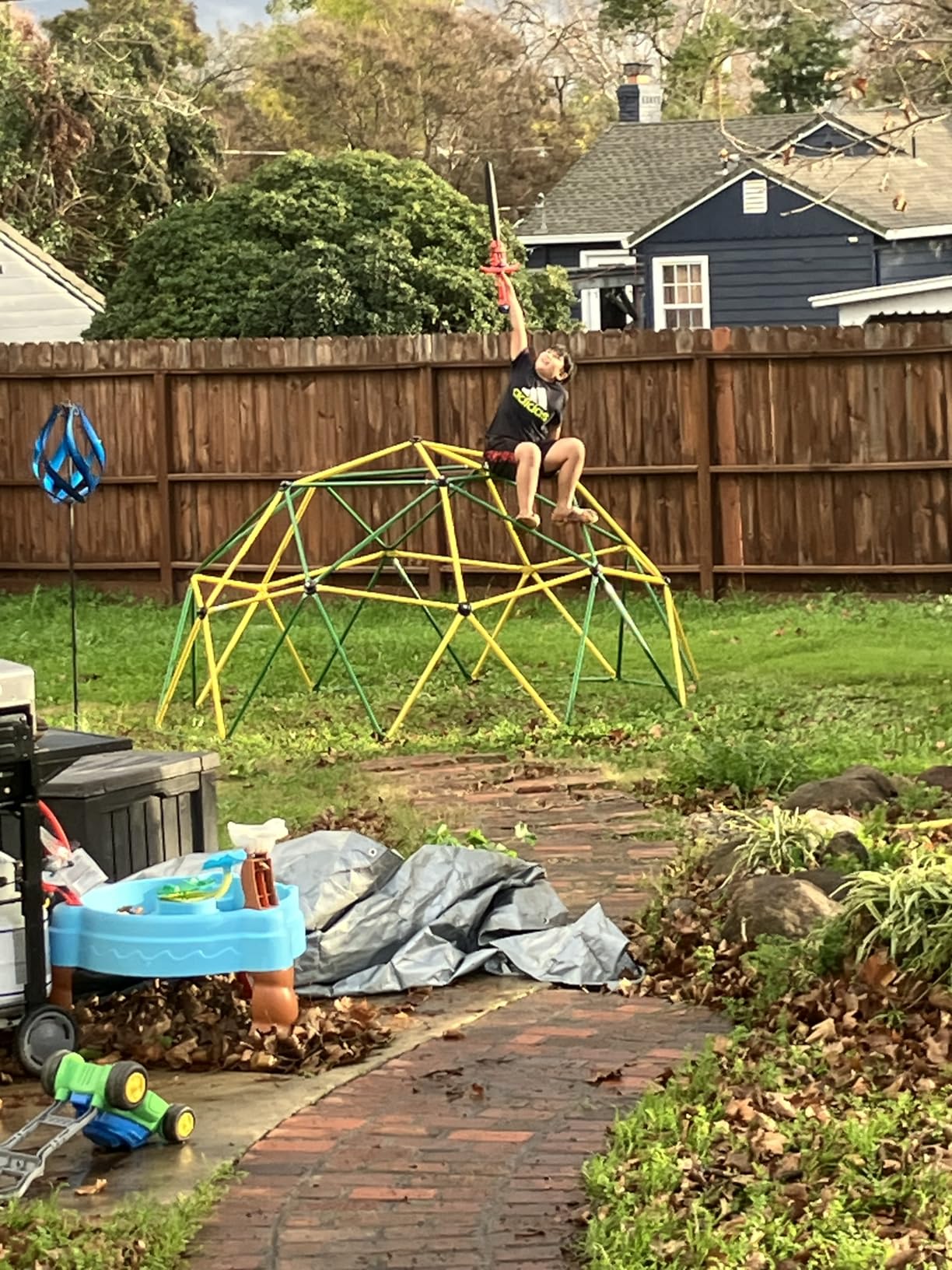
Only if you have the ceiling height. The frame stands 60 inches tall, so a standard 8 ft ceiling clears it comfortably, but the 120 inch base needs a genuinely large room. A converted garage, a finished basement or a double-height living space works; an ordinary playroom does not.
Indoor use also changes the surfacing question. A dome on carpet or a hard floor needs a proper mat underneath, and you should check the ceiling for hanging lights and ceiling fans before the frame goes up. One of the smaller domes in this roundup is the far more realistic indoor choice.
Where the Amictoy dome disappoints
The rating gap is the main reason it does not rank higher. The frame and the three-zone layout get good marks, but the volume of neutral reviews suggests a few buyers did not get the experience the listing implied, most often on build time and hardware fit.
It also ships as one combined structure rather than modular add-ons, so the hammock and swing are fixed in place. That is fine for most families, but the swing zone claims footprint even if you never use it, and the listing does not publish a tested capacity figure for the frame itself.
8. VEVOR 10FT Geometric Dome with Saucer Swing – the most adult-tested frame here
VEVOR Climbing Dome, 10FT Geometric Dome Climber with Saucer Swing, 1000LBS Loading Kid’s Jungle Gym Playground, Easy-Assembly Outdoor Backyard Climbing Equipment for Boys Girls 3 to 10 Years Old
120.08 x 120.08 x 60.04 inches
1000 lb capacity
Ages 3 to 10
77.1 lb frame
Pros
- Held four adults climbing at once
- Easy to move across the yard
- Saucer swing adds a second activity
- Handles rain with no issues
Cons
- Assembly needs three or four people
- Instructions unclear on bolt direction
- Heavy box needs two people to move
This VEVOR measures just over 120 inches square and stands 60 inches high, with a 1000 lb total capacity for four to five children aged 3 to 10. It is galvanized steel with thickened tubes in a triangular structure, and it ships with a saucer swing attachment.
What stands out in the reviews is adult load. One owner reports holding four adults climbing simultaneously during testing, and others mention lying on the dome or hanging a swing inside it. The triangular tube structure and the non-slip, burr free handles are the reasons, and the zinc coating handles rain without complaint.
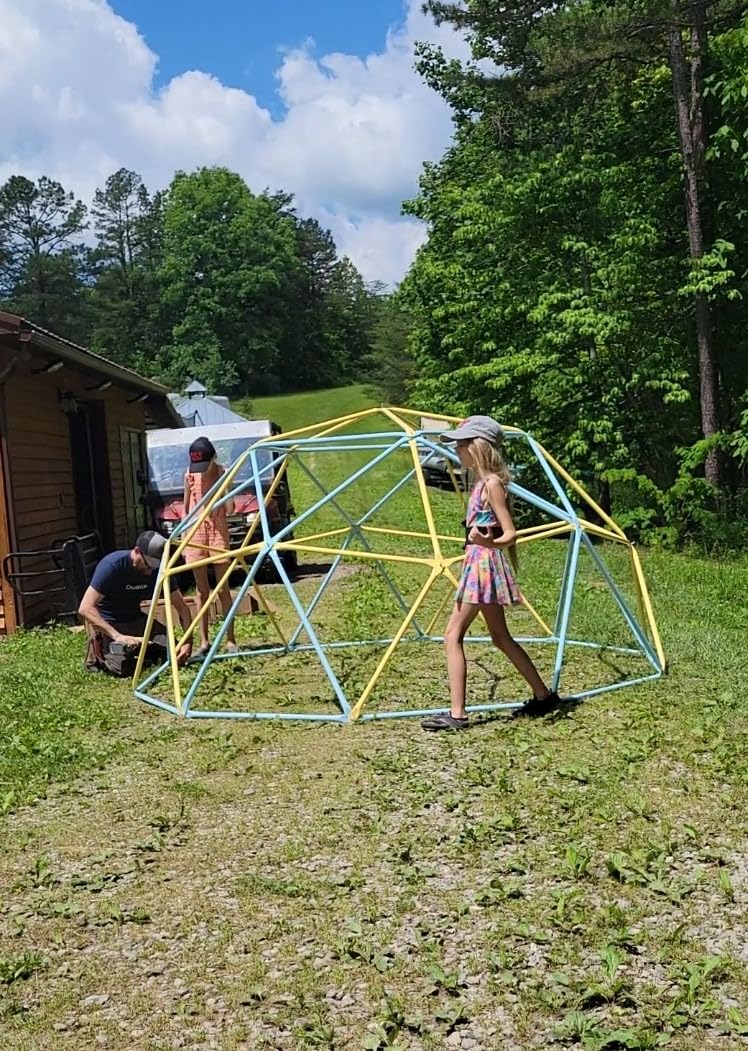
It is also described as easy to move across the yard, a genuine practical benefit for mowing even at 77.1 lb. Gloves and wrenches are included, so you are not hunting for tools, and ASTM plus CPC certification is stated on the listing.
The assembly complaint here is the sharpest in the roundup. Despite the stated two person recommendation, most buyers describe it as a three or four person job, and the instructions are confusing about bolt direction for long and short poles. The heavy box also needs two people to get it across the lawn.
Is the 1000 lb capacity realistic on this dome
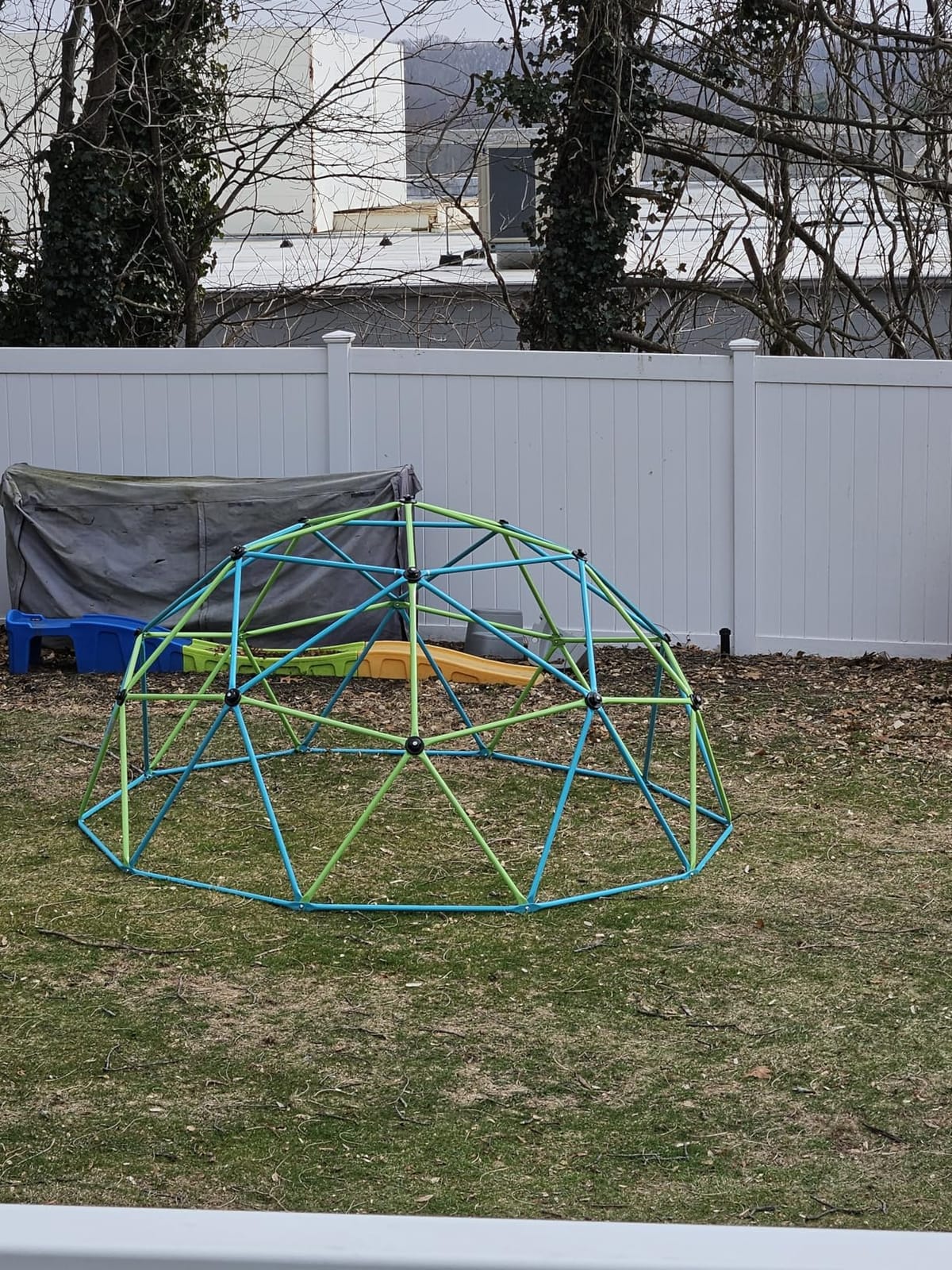
For children, comfortably. Four to five kids spread over the frame sits well within 1000 lb, and the adult testing on this model suggests the frame itself is not the weak link. Treat it as a total structural number rather than a per-child limit, and it covers a large sibling group easily.
Capacity is not the same as approval for unsupervised adult use. Any dome that kids share should still have an adult nearby, and climbing surfaces this size are meant for children under about ten regardless of what the frame will physically hold.
Where the VEVOR saucer dome disappoints
Assembly difficulty and the unclear bolt-direction instructions are the honest drawbacks, significant enough that we would not call this a first build. The other VEVOR model in this roundup carries the same complaint, so it is a documentation issue across the range rather than a fault in this one.
At 1000 lb and 120 inch square, this is a big frame for a small yard. Add 6 ft of clearance on every side and you need a lot of lawn, so measure before ordering rather than after. Reviewers rate the frame quality very highly once it is standing.
9. GVDV 10FT Climbing Dome with Hammock – a rest spot built into the frame
GVDV 10 FT Climbing Dome with Hammock, Certified Jungle Gym for Kids 3-12
120 x 119.99 x 60 inches
5 ft frame height
1000 lb capacity
Hammock to 256 lb
Pros
- Adults can climb the frame
- Hammock gives kids a place to rest
- Light enough to shift while mowing
- Service replaced a faulty hammock
Cons
- Instructions are out of order and confusing
- Long build needing extra helpers
- Hammock eyebolts are fiddly to fit
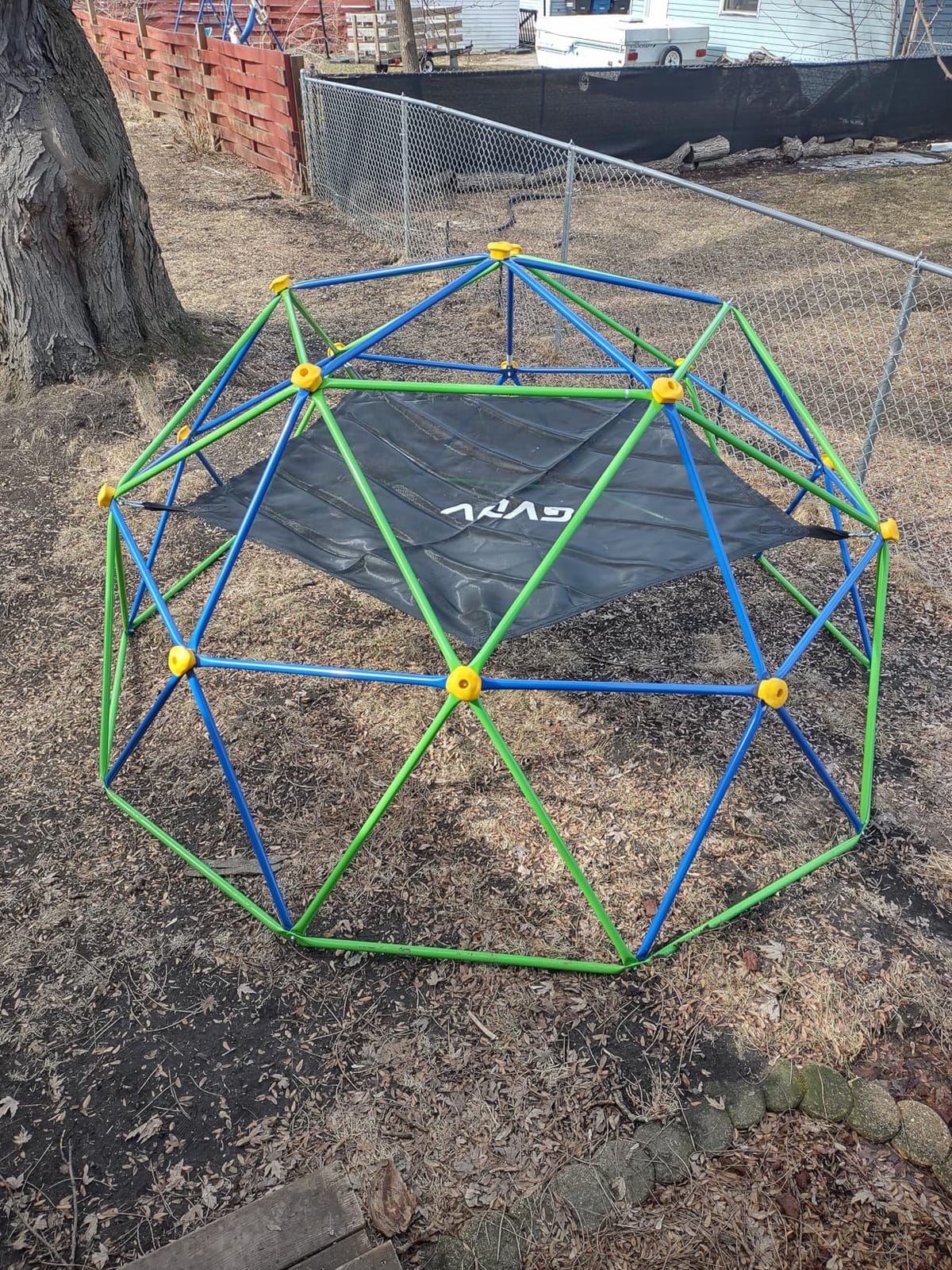
The GVDV is 120 by 120 by 60 inches on a 5 ft frame, with a 1000 lb total capacity and a 150 lb rating per tube. The hammock is rated to 256 lb and fits two to three children, which is a meaningfully different proposition from the smaller dome-mounted swings in this roundup.
Material specification is strong for the segment. The frame is hot dip galvanized steel with a textured UV and corrosion resistant coating, ASTM certified, and described as having a smooth, skin-friendly surface with no sharp edges. A manufacturer recommended age of 36 months to 10 years and a four player rating complete the spec.
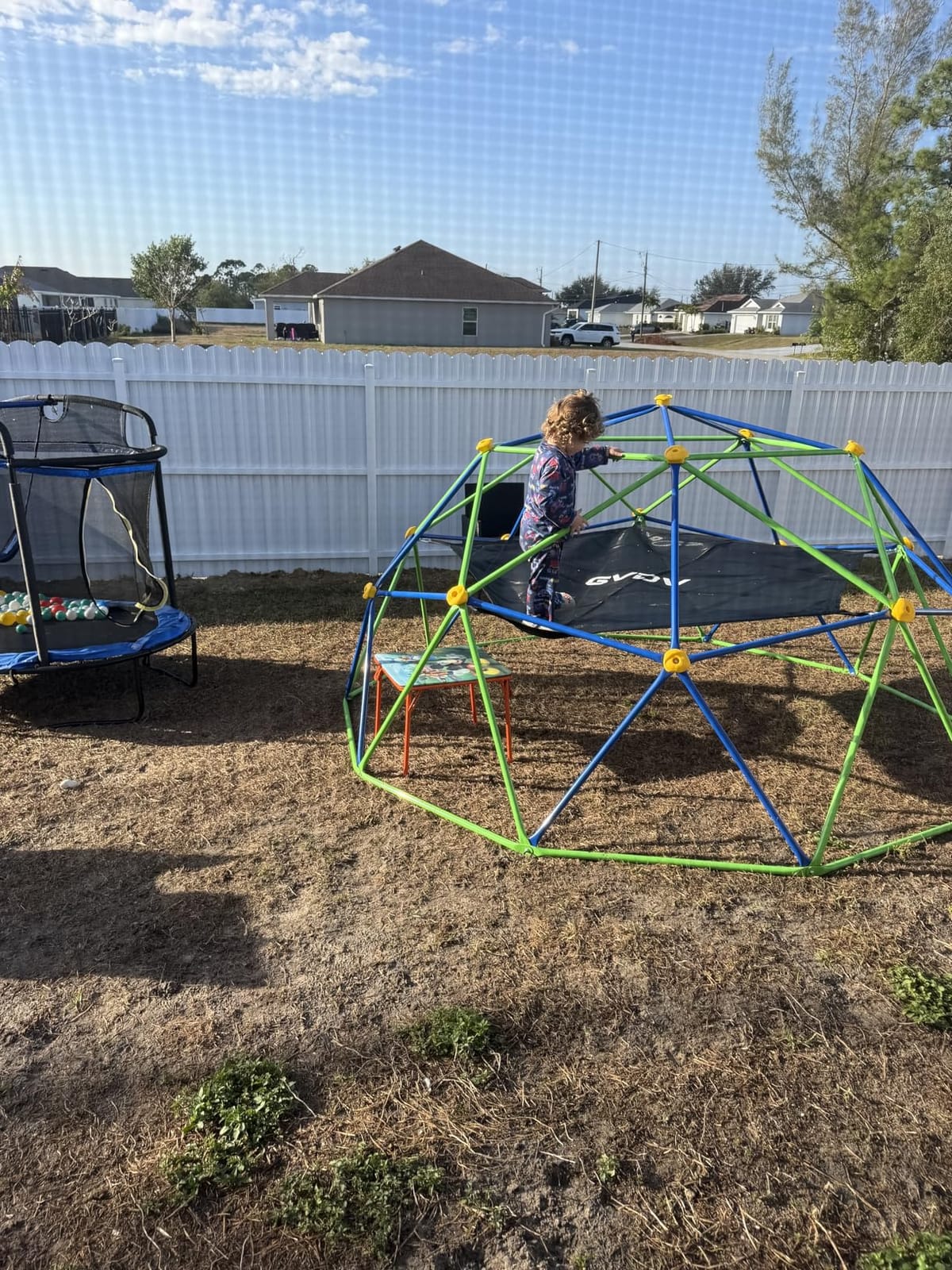
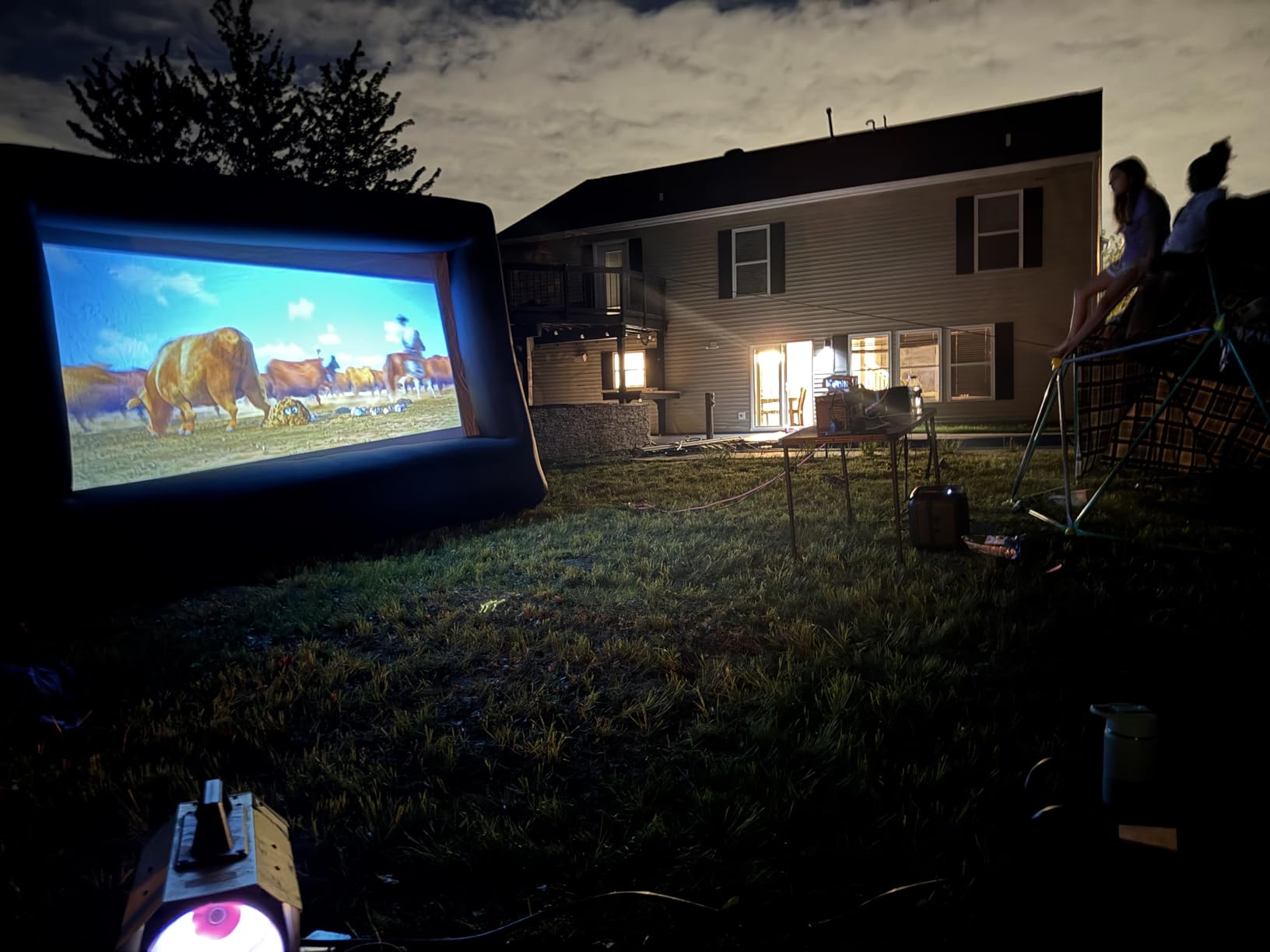
Owners treat the hammock as the reason to pick this one. It is a genuine rest and reading spot, and several reviewers note it also works as a soft visual cushion above the climbing surface. The frame itself is sturdy enough for adults to climb, and it is light enough to move across the yard for mowing.
Customer service deserves a specific mention. One buyer had a damaged hammock and reported both a replacement and a refund of the hardware cost, which is the kind of after-sales response that separates a brand from a listing. The build is the weak point, with instructions reported as out of order and several buyers needing two to three helpers.
Is a hammock dome better than a swing dome
For younger children, usually. A hammock holds a small body in a semi-reclined position, which feels safer and calmer to a four or five year old than a disc or belt swing they have to grip and pump. It also accepts two or three children at once instead of one.
For older kids who want to pump for height, a saucer or tree swing wins. The GVDV also lists indoor use if space allows, and one owner notes it converts to a tent with a tarp, which makes it a reasonable fit for a large finished basement.
Where the GVDV dome disappoints
Assembly is the consistent complaint. Instructions that are out of order turn a two hour job into an all afternoon one, and the bolt rule is the same across this category: keep bolts loose until the frame is complete, then tighten. Two people are the stated minimum, and most owners used more.
It also carries the highest share of three-star reviews among the well reviewed domes here, at ten percent, and those reviews are almost entirely about the build rather than the finished product. The hammock eyebolts are fiddly to attach, so allow time and read that step twice.
10. Merax 13FT Climbing Dome with Play Mat – the biggest backyard presence
Merax 13FT Climbing Dome with Hammock, Outdoor Geometric Dome Climber
13 ft diameter by 6.7 ft high
1000 lb total capacity
100 lb max per user
Pentagon play mat
Pros
- Largest span in the roundup
- Play mat for resting and games
- Galvanized steel with powder coating
- Two person assembly with colour manual
Cons
- Adult use limited by the 100 lb per user cap
- Thin long term durability data
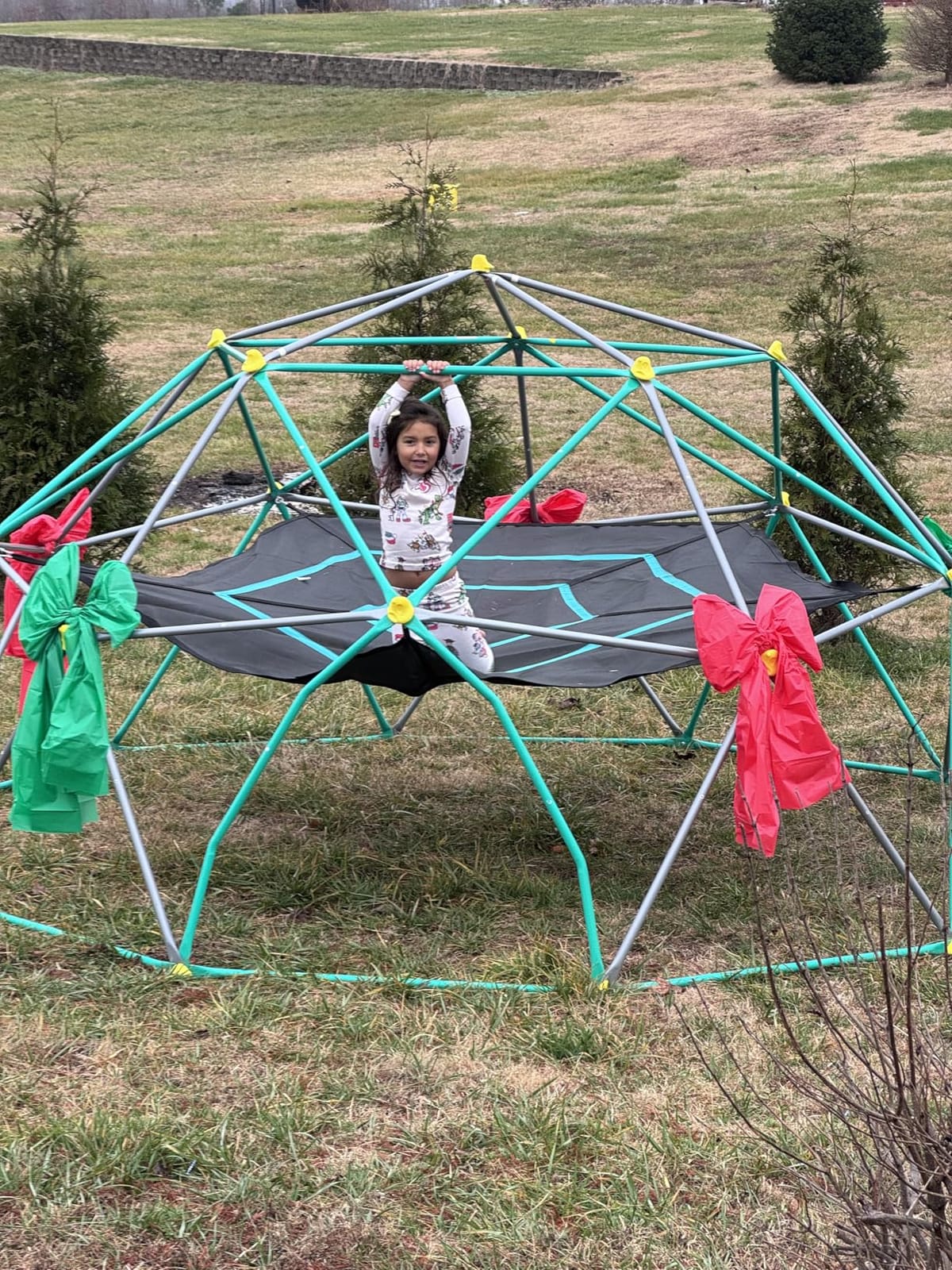
The Merax is 13 ft in diameter and 6.7 ft high, making it the largest frame in this roundup and the tallest fall. It carries a 1000 lb total capacity with a 100 lb maximum per user, and the frame is galvanized steel with a colourful powder coating for weather and rust protection.
At that size the dome stops being a climbing toy and becomes a structure. There is room for several children on the surface and a whole separate area underneath, which is where the pentagon play mat comes in. The mat is secured to the frame and gives kids somewhere to lie down, read or run games without leaving the structure.
Assembly is described as a two person job with a colour user manual, which is a better documented build than most of the 10 ft domes here. Reviewers also note it is light enough to move around the yard or a playground, which matters more than usual at 13 ft because you will want it positioned for sun and shade across the day.
Be realistic about two things. Adult supervision is recommended and the 100 lb per user cap means this is a children-only frame despite the 1000 lb headline. And with 59 ratings, the long term durability record is thinner than the Lifetime or Zupapa, so you are buying on specification rather than on years of owner feedback.
How much yard does a 13 ft dome really need
More than most people expect. The frame alone is 13 ft across, and adding the 6 ft clearance zone on every side puts you close to a 25 ft square of usable space. That is a genuinely large lawn, and it is the reason this model suits big backyards rather than average suburban lots.
Also plan for the sun. A 6.7 ft high frame with powder coated steel will be hot to the touch in direct afternoon sun, so if the dome is the main thing in your yard, pick a spot that gets morning light and afternoon shade. That single placement decision solves the most common summer complaint about domes.
Where the Merax 13FT dome disappoints
The 100 lb per user limit is the main constraint. Plenty of parents buy a big dome expecting to climb it alongside their child, and this one will not support that without a warning. If shared adult climbing matters to your family, choose a frame rated for it instead.
It is also the least proven pick here, with 59 ratings against several thousand for the leaders. The galvanized frame and powder coating are genuine positives, but you have less real world longevity data to lean on, which is worth weighing if this is a purchase you expect to last a decade.
How to Choose a Climbing Dome for Kids in 2026
The gap between a good dome and a disappointing one is rarely the brand name. It is diameter, clearance, surface finish and honest expectations about assembly. Here is what actually decides the outcome.
Match the diameter to the age
Diameter is the number parents ask about most and the one listings explain least. A 6 ft dome is 3 ft tall and works for ages 3 to 5 with two or three children. A 10 ft dome is 5 ft tall and suits ages 3 to 10 with room for several kids. A 13 ft dome is 6.7 ft tall and becomes a full backyard structure.
For a 7 year old, aim for the 7 ft to 10 ft range. Below that the fall is too short to feel like real climbing, and the child will be climbing it inside a minute. That single jump from a 6 ft to a 10 ft frame is the most common upgrade parents make, and it is usually the right one.
Work out your use zone before you buy
This is where most yards fail, and it has nothing to do with the dome. Playground guidance calls for 6 ft of clear space on every side of climbing equipment, over and above the equipment footprint itself.
Run the numbers on the two frames most people consider. A 10 ft dome plus 6 ft on each side needs roughly 22 ft of clear span across the middle. A 13 ft dome plus the same clearance pushes you toward 25 ft. A 6 ft dome needs closer to 18 ft, which is why it is the only one of these that suits a genuinely small backyard.
Measure the open lawn, not the property. A fence, a shed wall or a swing set extension all eat into the clearance. If your usable span is under 20 ft, a 6 ft frame is the honest ceiling on what will work safely.
Read weight capacity correctly
Capacity is the total structural load on the frame, not the limit for one child. A dome rated 600 lb holds two or three kids comfortably, not six at once. The 1000 lb figures on several models in this roundup are genuine totals, but they are still spread across the whole structure.
Look for a per-user or per-tube limit alongside the total. The GVDV publishes 150 lb per tube and the Merax caps a single user at 100 lb, which tells you immediately whether the frame is meant for children only or whether an adult can join in. That matters more than the headline number.
Galvanized or powder coated steel
Powder coating is paint baked onto steel. Hot dip galvanizing is a zinc layer fused to the metal before paint goes on. The difference shows up in year three, when a scratch in the color on a powder coated frame exposes bare steel and rust starts bleeding down the pole.
If you live somewhere damp, coastal or simply somewhere with four real seasons, galvanized is worth paying for. The Zupapa specifies a zinc layer of 60 micrometers or more and is our pick for wet climates. In a dry yard, powder coating holds up fine, and owners of the Lifetime report no rust through snow, rain and sun.
When a dome is the wrong purchase
A dome does one thing exceptionally well and it is climbing. If your family mainly wants swings and a slide, a full playset serves more of the day for a similar footprint, and you will not be disappointed by a dome for not being a slide.
Skip the dome entirely if the child is under three, if the clearance will not fit, or if you want a year-round structure with shade. For indoor climbing in an apartment, our tall cat tree climbing picks cover vertical climbing for small spaces in a way a 10 ft steel frame never will.
Setting Up a Dome Safely in Your Yard
Four decisions matter more than the model you choose. Start with the surface, because grass alone softens falls unevenly and bare soil becomes mud or hardpack within a season.
Engineered wood chips, rubber mulch or playground tiles under the frame give predictable cushioning. Leave enough material depth that a fall lands in loose material rather than on compacted ground, and keep the area raked so it does not wash out. Keep the ground level, because domes rock on uneven ground and that is what loosens bolts over time.
Anchor the frame. Most domes include a ground anchor kit, and owners report that anchoring is what keeps the frame from shifting or lifting in wind. Without anchors, a light frame can rock enough over a season to work its own bolts loose, which is the most common cause of the instability complaints in reviews.
Watch the metal in summer. Powder coated and galvanized steel both get hot enough in direct sun that parents move small children off the upper surface in the middle of the afternoon, and this is a recurring and legitimate complaint. Positioning the dome where it gets morning sun and afternoon shade solves it more effectively than any product choice.
Supervise younger children, keep the area clear of hard objects, and do not let kids climb the frame when it is wet. Steel grips become slippery with water or frost, and that is the one rule in this list that is not negotiable.
Frequently Asked Questions
Are climbing domes good for kids?
Yes, and they are one of the most durable pieces of outdoor play equipment you can buy. A geometric dome climber builds grip strength, core stability, balance and hand-eye coordination because kids move over the curved frame on all fours, working arms, legs and trunk at once. Unlike a slide or a swing, a dome also grows with the child and can hold several children at once, which is why it stays in use for years rather than seasons.
What age are climbing domes for?
Most are rated from about age 3 to 10, with fall height driving the ceiling. A 6 ft dome is 3 ft tall and suits ages 3 to 5, while a 10 ft dome at 5 ft high is the standard choice for ages 3 to 10. The 13 ft model here is 6.7 ft high, which is a taller fall for older and more confident climbers. Below age 3, a toddler toy is a better fit.
What is the best outdoor climber for toddlers?
For ages 3 to 5, a 6 ft dome such as the GIKPAL is the right size. It stands only 3 ft high, fits a 6 ft footprint that works in a modest yard, and its centre top pole doubles as a gymnastic bar rated to 240 lb, which gives a preschooler something to hang from. Avoid larger frames at this age, since the extra height adds fall distance without adding useful challenge.
What is the best climbing frame for a 7-year-old?
A 7 year old needs a 7 ft to 10 ft frame, so a 5 ft tall dome is the target height. In this roundup the Lifetime Geometric Dome at 10 ft wide by 5 ft high is the strongest all-round pick, with the most reviews of any dome covered. For a wet or coastal yard, the Zupapa 10FT is the stronger frame because of its hot dip galvanizing.
How much space do you need for a climbing dome?
Allow 6 ft of clearance on every side in addition to the dome itself. A 6 ft dome needs roughly 18 ft of span, a 10 ft dome needs about 22 ft, and a 13 ft dome needs close to 25 ft. That space must be open lawn, not the whole property, so fences, sheds and swing extensions all count against it.
The Best Backyard Climbing Dome for Your Family in 2026
After working through ten domes, the Lifetime Geometric Dome is the best backyard climbing dome for most families. It is a 10 ft wide by 5 ft high frame with 600 lb of capacity, it fits several children at once, and 5391 ratings at 4.8 make it the most proven option in a category where most listings have a few hundred reviews.
Buy the Zupapa 10FT instead if you live somewhere wet or coastal and want a frame that will not bleed rust. Buy the EASY OUTDOOR GD-810 if you want commercial grade hardware and a lower entry point. Buy the GIKPAL 6FT if your yard is small, and the Merax 13FT only if you genuinely have the space.
Whichever you choose, measure the clearance before you order, buy the anchors, and line up two adults for the build. Those three steps prevent nearly every complaint we found in the reviews.