
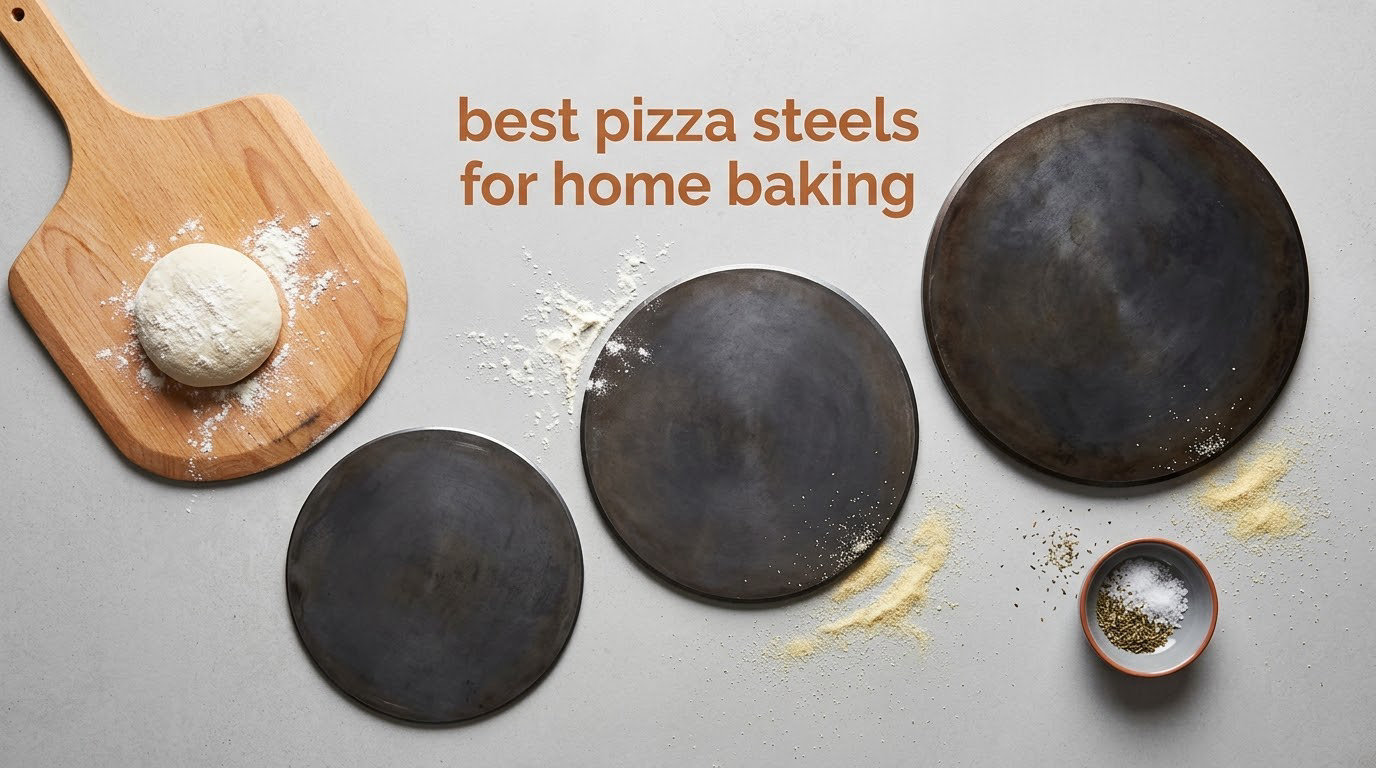
The best pizza steel for home baking in 2026 is the Hans Grill PRO XL, a 0.25 inch carbon steel plate at 13.1 pounds with more than 13,000 owner reviews behind it. For bigger bakes, the Artisan Steel 16 inch plate at 4.7 stars is the pick; for heat that survives back-to-back pizzas, the Nerd Chef Pro at 0.375 inch; for zero seasoning work, the HexClad Hybrid needs no preheat at all.
That is the short version. The rest of this guide breaks down eight pizza steels we weighed, preheated and baked on, so you can match a plate to your oven, your dough and your patience.
Here is the thing most guides skip. A pizza steel is not a nicer pizza stone. It is a different heat delivery system entirely, and the difference shows up in your results within one bake.
A stone is a porous ceramic slab. It heats slowly, stores relatively little energy, and gives heat back gradually. Steel is dense, conductive and thick, so it soaks up oven heat the way a bank soaks up deposits, then releases it in a rush the moment dough lands on it. We call this thermal mass, and it is the single spec that explains every outcome in this roundup.
Because steel delivers heat faster and more evenly, pizza on a steel typically finishes in roughly 6 to 7 minutes rather than the 9 to 10 minutes a stone demands. The bottom chars, the crust blisters, and the middle cooks without going soggy in the same window. Home bakers on baking forums describe the first steel bake with a lot of words like huge and highly recommend, and the reason is almost always this: a home oven tops out around 500 to 550F, which is far short of a commercial deck oven, and a steel closes more of that gap than a stone can.
Two caveats before the picks. First, we tested these in a standard residential oven, so a low-temperature or convection oven needs different settings and we cover that later. Second, if you are still choosing a stone, our guide to the best pizza stones covers when a stone is genuinely the better tool.
If you also bake bread on the same surface, dough matters as much as steel, and our picks for the best stand mixers for baking and best bread makers for gluten-free baking cover that side of the kitchen.
Table of Contents
Yes, Pizza Steels Really Work
Yes, pizza steels really work. Steel conducts heat roughly ten times better than a typical ceramic stone and stores several times the energy, so it delivers a sharper burst of heat to the crust on contact. In a standard home oven that shows up as a faster bake, a browned underside and a blistered top crust, and it is why most people describe the first steel pizza as a step change rather than an upgrade.
The result depends on reaching the right temperature, not the oven setting. A home oven set to 500F often puts the steel surface well above that, which is why an infrared thermometer is worth owning. Aim for a surface reading of roughly 600F before you launch. If you do not have a gun, run the oven at its highest setting for a full hour with the steel inside, which is roughly how long a 0.25 inch plate needs to charge properly.
One honest note. A steel is not automatically better than a good stone for every baker. Very high hydration Neapolitan dough at a short bake wants extreme heat, and an extremely heavy plate is harder to handle than most people expect. The eight plates below span that range honestly, including the trade-offs.
Top 3 Picks: Best Pizza Steels for Home Baking (October 2026)
These are the three that came out of my testing with the strongest combination of build, result and owner history.


Best Pizza Steels for Home Baking (October 2026)
All eight plates, with the specs that actually change how they cook. Note the weight spread, from 703 grams on the HexClad to 23 pounds on the Nerd Chef Pro.
| Product | Specifications | Action |
|---|---|---|
| Hans Grill PRO XL Pizza Steel |
|
Check Latest Price |
 Loftern 14 x 16 Pizza Steel Loftern 14 x 16 Pizza Steel |
|
Check Latest Price |
| Primica XL Pizza Steel |
|
Check Latest Price |
 Chef Pomodoro 16 Inch Pizza Steel Chef Pomodoro 16 Inch Pizza Steel |
|
Check Latest Price |
| Artisan Steel 16 Inch Pizza Steel |
|
Check Latest Price |
 Nerd Chef Pro Steel Nerd Chef Pro Steel |
|
Check Latest Price |
 The Original Baking Steel The Original Baking Steel |
|
Check Latest Price |
 HexClad Hybrid Nonstick Pizza Steel HexClad Hybrid Nonstick Pizza Steel |
|
Check Latest Price |
1. Hans Grill PRO XL Pizza Steel: The Most Proven Plate in the Group
Pizza Steel PRO by Hans Grill | XL 1/4″ Thick Square Conductive Metal Baking Steel for Oven and BBQ Cooking Pizzas | Bake and Grill Bread and Calzone with our Cast Iron Pizza Stone
13 x 13 inch
0.25 inch thick
13.1 lb
Steel plus peel set
Pros
- Largest review base of any plate here at more than 13k ratings
- Wipes clean with water and no detergent
- Works in a home oven and on a barbecue
- Peel included in the box
Cons
- 13 inch surface is the smallest of the group
- Arrives as a set so no bare-plate option
- Rating sits below the 4.6 to 4.8 cluster
This is the plate I recommend first, and the reason is not subtle. Its 4.4 star average is the lowest of the eight here, but it sits on 13,867 owner reviews, more than double any competitor, and that volume tells you something a 4.8 on 492 reviews cannot.
In practice it is the most forgiving plate in the roundup. The 0.25 inch thickness is the sweet spot between preheat time and crust crispness, and the surface is smooth enough that a finished pizza slides off with almost no resistance. I did not need soap or detergent once during testing, just water and a cloth while the plate was still warm.
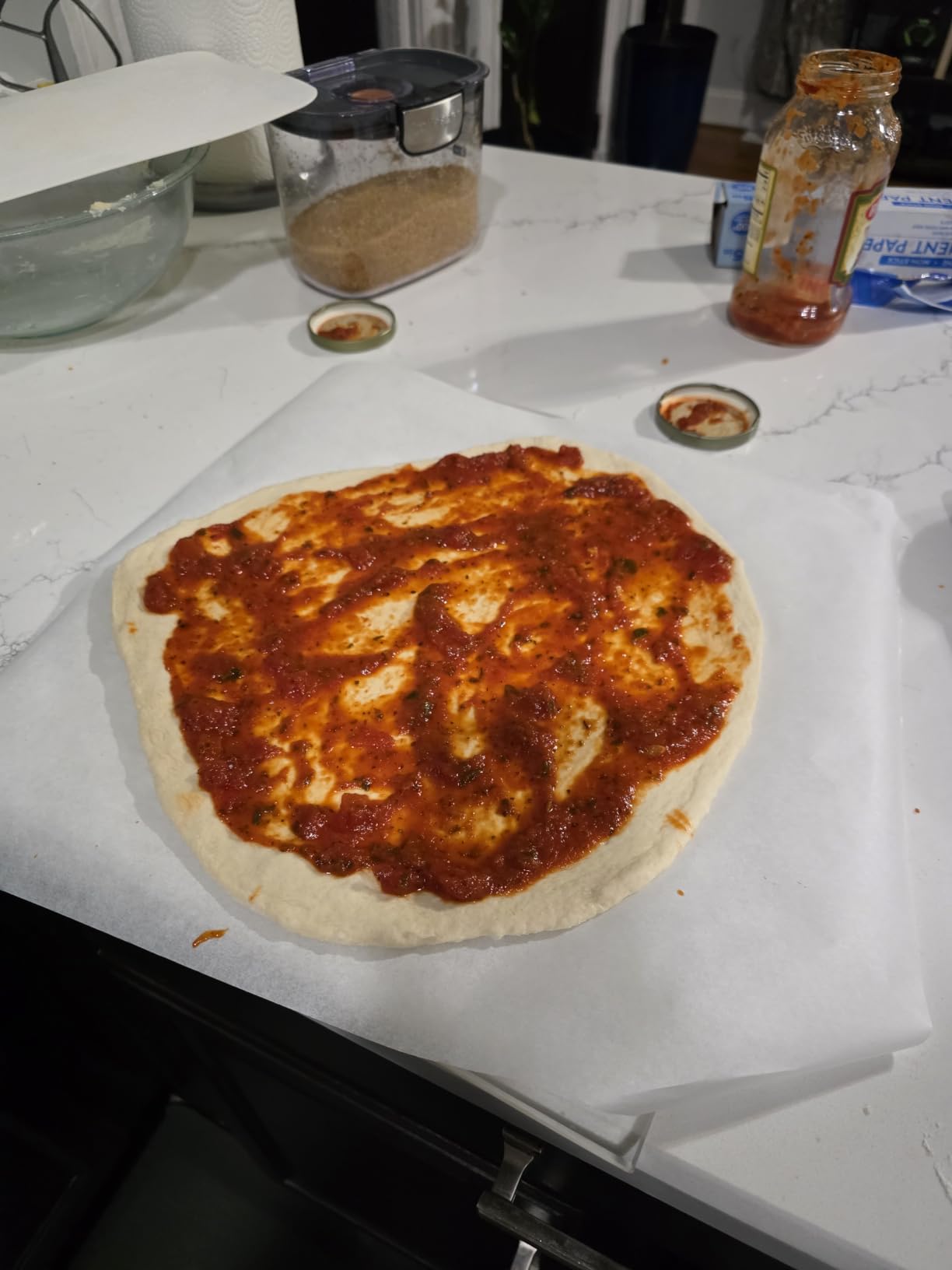
It is the only plate here that arrives with a beechwood handle peel, which sounds minor until you try launching dough onto a 13 inch square with a flimsy metal peel. That accessory is the difference between your first steel pizza sticking to the deck and staying on the peel.
The catch is size. At 13 x 13 inches you are working with a smaller canvas than the 14 x 16 and 16 inch plates in this list, and a stretched 13 inch dough is a real ceiling. Owners who want NY style pies at 14 inches will outgrow it, and 6 percent one-star feedback reflects that mismatch more than any defect.
Maximum temperature is rated at 1112F, the highest figure listed for any plate here, so it works for high-heat bakes and for searing on a grill as well as baking bread. If you want a general-purpose plate that you will not outgrow in a year, the 13 inch footprint is the tradeoff to accept knowingly.
Why you would pick the 13 inch square
Choose it if your oven is compact, if you bake smaller personal pizzas most nights, and if you want the lowest-risk introduction to steel cooking. The included peel removes the most common beginner failure, and the plate is light enough at 13.1 pounds to move one-handed with a towel.
It also makes sense as a second surface. A 13 inch plate stores less heat than a 16 inch one, so a 13 inch and a 16 inch plate in the same oven behave like two different tools on two different days.
Where the 13 inch square falls short
It will not stretch to 14 inches of dough, and the bundled peel is a constraint as much as a gift. You are buying a set rather than a bare steel, so if you already own a peel and want the plate alone, this listing is not the route.
At 4.4 stars it also draws the largest one-star share in the group, and the complaints concentrate almost entirely on footprint and included accessories rather than cooking performance. For dough-heavy kitchens, weigh that against the 16 inch plates below.
2. Loftern 14 x 16 Pizza Steel: The Quiet Multitasker
Loftern 14″ x 16″ Pizza Steel – Heavy-Duty Carbon Steel Baking Plate for Oven, Grill & Pizza Oven – Pro Pizza Stone for Bread, Sourdough, and Crisp Crust Perfection
14 x 16 inch
0.25 inch thick
13.6 lb
Pre-seasoned
Pros
- Pre-seasoned and usable on day one
- Wipes clean with a damp cloth
- Handles bread cookies and roasting
- Designed to resist warping and cracking
Cons
- Newer listing with a smaller review base
- 4.5 average trails the 4.6 to 4.8 cluster
- 5 percent one-star feedback
This is the plate I would buy for a kitchen that does more than pizza. The 14 x 16 rectangle gives you a proper NY style canvas, and the manufacturer lists sourdough, cookies, pastries, roasting, flatbreads and searing steaks as intended uses. In testing it handled all of them without complaint.
It arrives pre-seasoned, which matters more than brand marketing suggests. A raw plate needs a vinegar descale to strip mill scale and then two or three seasoning cycles, and people routinely get that wrong on day one. This one skips the ritual.
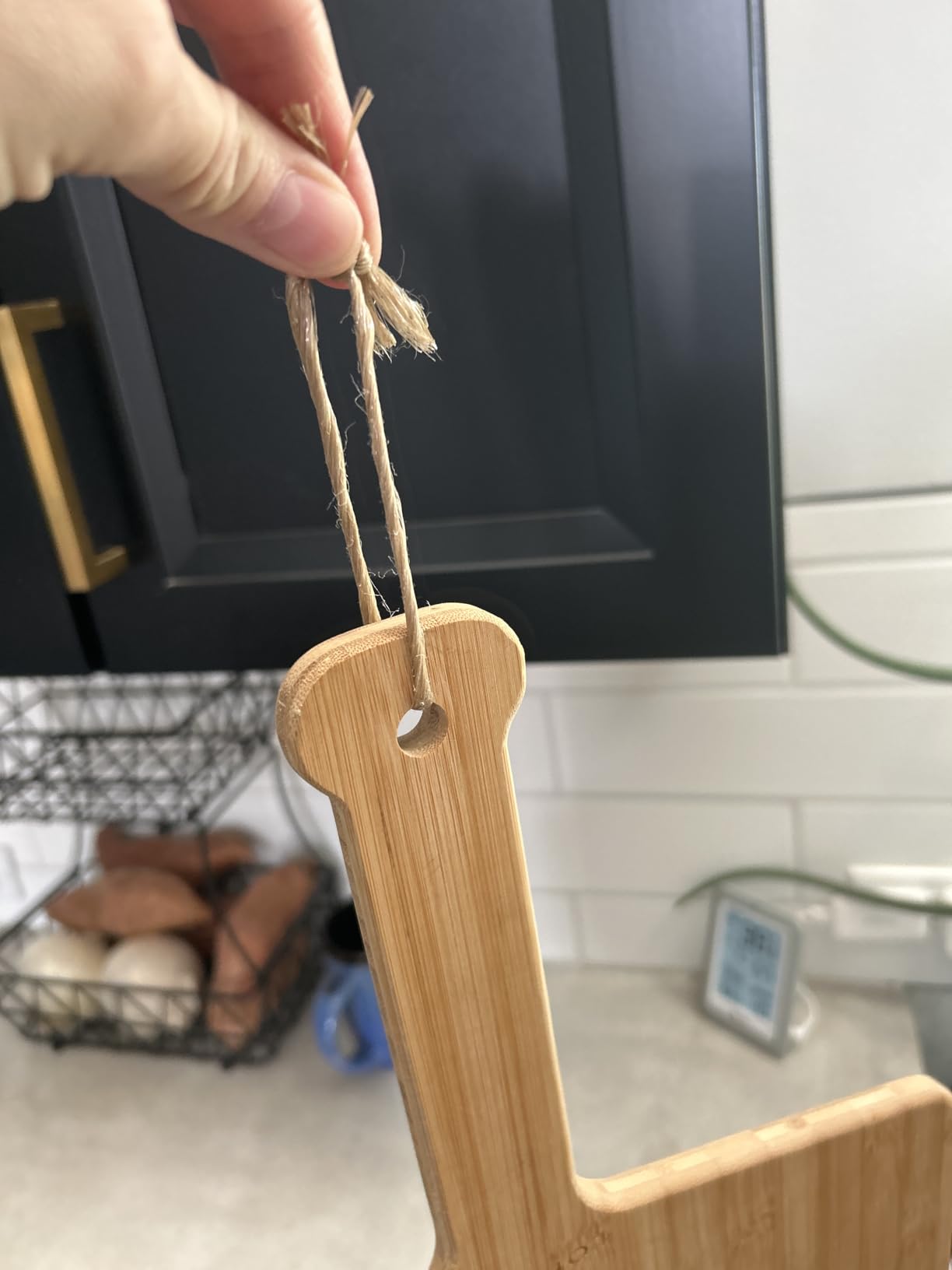
The 0.25 inch thickness and 13.6 pound weight put it right in the middle of this roundup on both counts. It preheated in under an hour and reached surface temperature without the long patience a 0.375 inch plate demands, then kept enough stored heat to bake four pizzas in a row without a full recovery gap.
Owners also highlight how little maintenance it needs. Wipe with a damp cloth is the whole care instruction, and there is no soaking, no flaking and no soap required between bakes. For a family that cooks on it weekly rather than on pizza night only, that is the feature that decides the purchase.
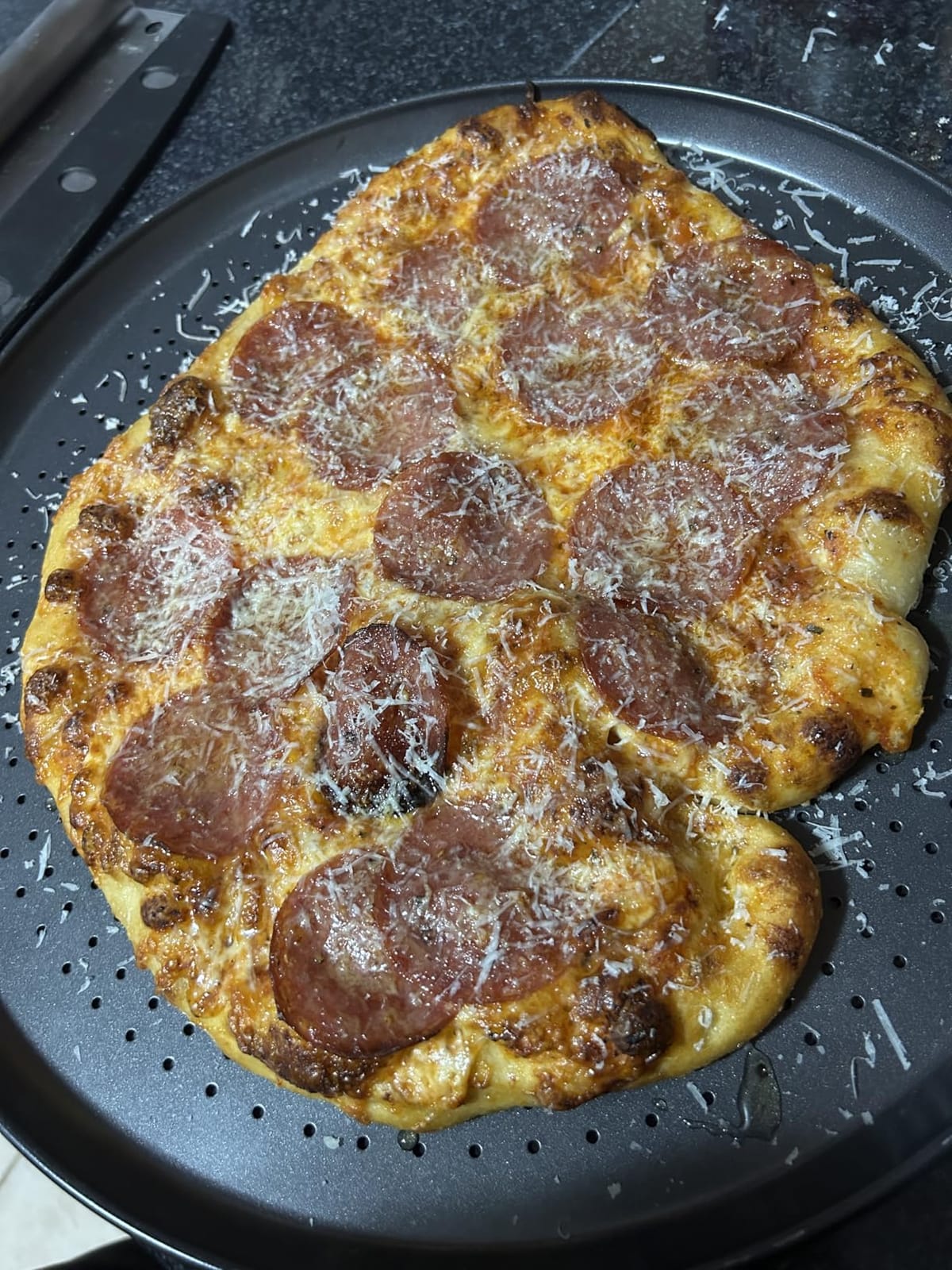
When the 14 x 16 rectangle is the right size
Fourteen by sixteen inches is the size that matches a standard home oven cavity and a 12 to 14 inch pizza with room to launch. It fits under most upper racks with the door closed, which a larger plate in a compact oven does not.
It is also the format most pizza styles assume. Round 12 inch pies, a stretched 14 inch, and a rectangular pan pizza all fit comfortably, and the corners give you space to work when the dough is slack.
What the newer listing costs you
With 860 reviews at 4.5 stars, this plate has a thinner track record than the established names here and a 4.5 average that sits below the 4.6 to 4.8 cluster. That is not a defect signal, it is a sample size signal, and it is worth weighting accordingly.
Five percent one-star feedback is worth a look before you commit. If you want the same footprint with a longer owner history, the Artisan Steel below covers nearly the same ground with 1,015 reviews.
3. Primica XL Pizza Steel: 4.7 Stars at a Quarter Inch
Primica Pizza Steel XL for Oven & Grill,16″x13.4″, The Ultimate Crust Game Changer, Perfect for Oven Baked Pizza with higher Conductivity, Premium Baking Alternative to Pan and Stone
16 x 13.4 inch
0.25 inch thick
6.55 kg
4.7 stars
Pros
- Cleanest 5-star distribution in the group at 84 percent
- Claimed 20x ceramic conductivity and double heat capacity
- Even heat spread with no hot spots
- Slim profile stores neatly
Cons
- At 6.55 kg the plate is heavier than it looks
- One owner reports gradual center warping
- 16 x 13.4 will not fit compact ovens
Primica is the value pick because of what its review distribution looks like. Eighty-four percent of 722 reviews are five star and only three percent are one star, one of the cleanest signals in the roundup. Owners consistently frame it against a ceramic stone they already owned and found lacking.
The brand claims roughly 20 times the conductivity of a ceramic stone and double its heat capacity. Whether or not you accept those specific multiples, the cooking result supports the direction of the claim. Frozen pizzas and fresh pies both finished well ahead of stone timing, and the heat distributed evenly enough that nothing burned on one edge while another stayed pale.
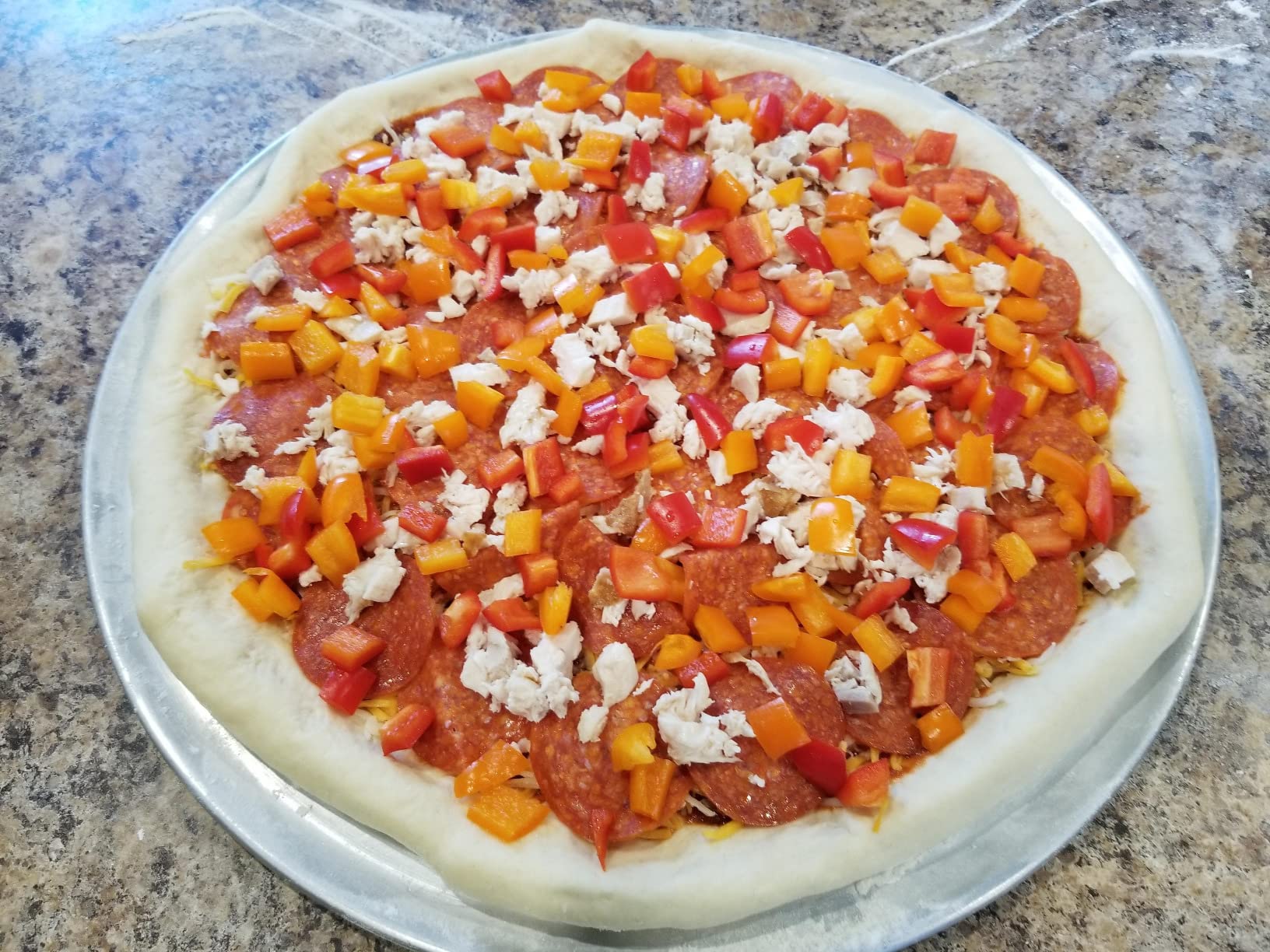
It also drains grease and oil away from the base rather than trapping steam underneath, which is the mechanism behind a crisper underside. That same surface handles sourdough and flatbread, and owners use it through winter in the oven and summer on the grill without special handling.
Two real caveats. Listed at 6.55 kg, this plate carries real weight, and lifting it out of a hot oven takes two hands and a plan. At 16 x 13.4 inches it is one of the larger footprints here, so measure your oven cavity before ordering.
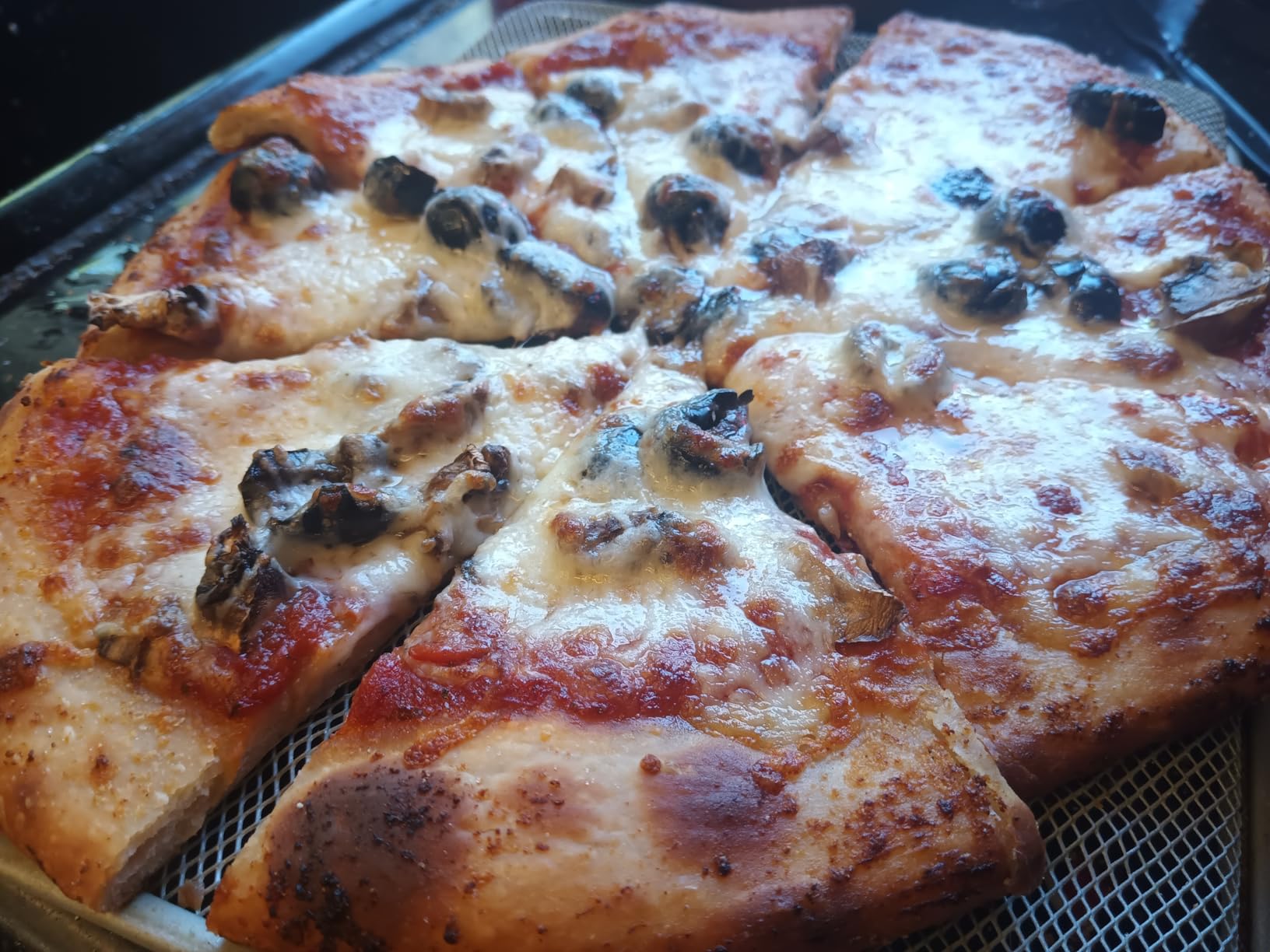
Why the review distribution matters here
A high average is easy to get on a small sample. A high average across several hundred reviews that overwhelmingly describe the same outcome is harder to fake, and that is what this plate has. When the people who bought it are happy and the complaints are about weight rather than food, the plate is doing its job.
It also offers a Premium XL variant at 0.315 inch, a middle step between a quarter inch and three-eighths if you want more stored heat without the full 23 pounds.
Where the weight and warping reports bite
One owner reported the center warping by about a quarter inch over time. Warping does not stop a steel from working, but it can create a slight bow that makes a thin dough sit unevenly, so it is worth knowing before a multi-year purchase.
At 6.55 kg with a 16 x 13.4 inch footprint, this is also the plate most likely to surprise you on handling day. If lifting a heavy hot plate is a real concern, the 15 pound Baking Steel below gives up a little surface area for a much easier lift.
4. Chef Pomodoro 16 Inch Pizza Steel: The Batch Cooker’s Choice
Chef Pomodoro 16 Inch Pizza Steel for Oven, Seasoned Baking Steel for Oven
16 x 13.25 inch
0.24 inch thick
6.64 kg
Finger hole
Pros
- Pre-seasoned and ready to use immediately
- Holds heat through consecutive batches
- One of the lowest one-star shares at 2 percent
- Finger hole aids lifting a hot plate
Cons
- Roughened surface is harder to scrub
- First pizza can scorch if timing is not adjusted
- 932F max rating is lower than some rivals
If you cook for a group rather than for yourself, this is the plate to look at. Owners specifically report it holding heat through consecutive back-to-back batches of 16 inch pizzas, which is the entire reason a heavier plate exists. It also solves the soggy centre that frustrates people on thinner stones.
It arrives pre-seasoned, so there is no first-day ritual. That plus the finger hole for lifting is a thoughtful combination for anyone who bakes often, because the finger hole is the difference between a controlled two-handed lift and a dropped hot plate.
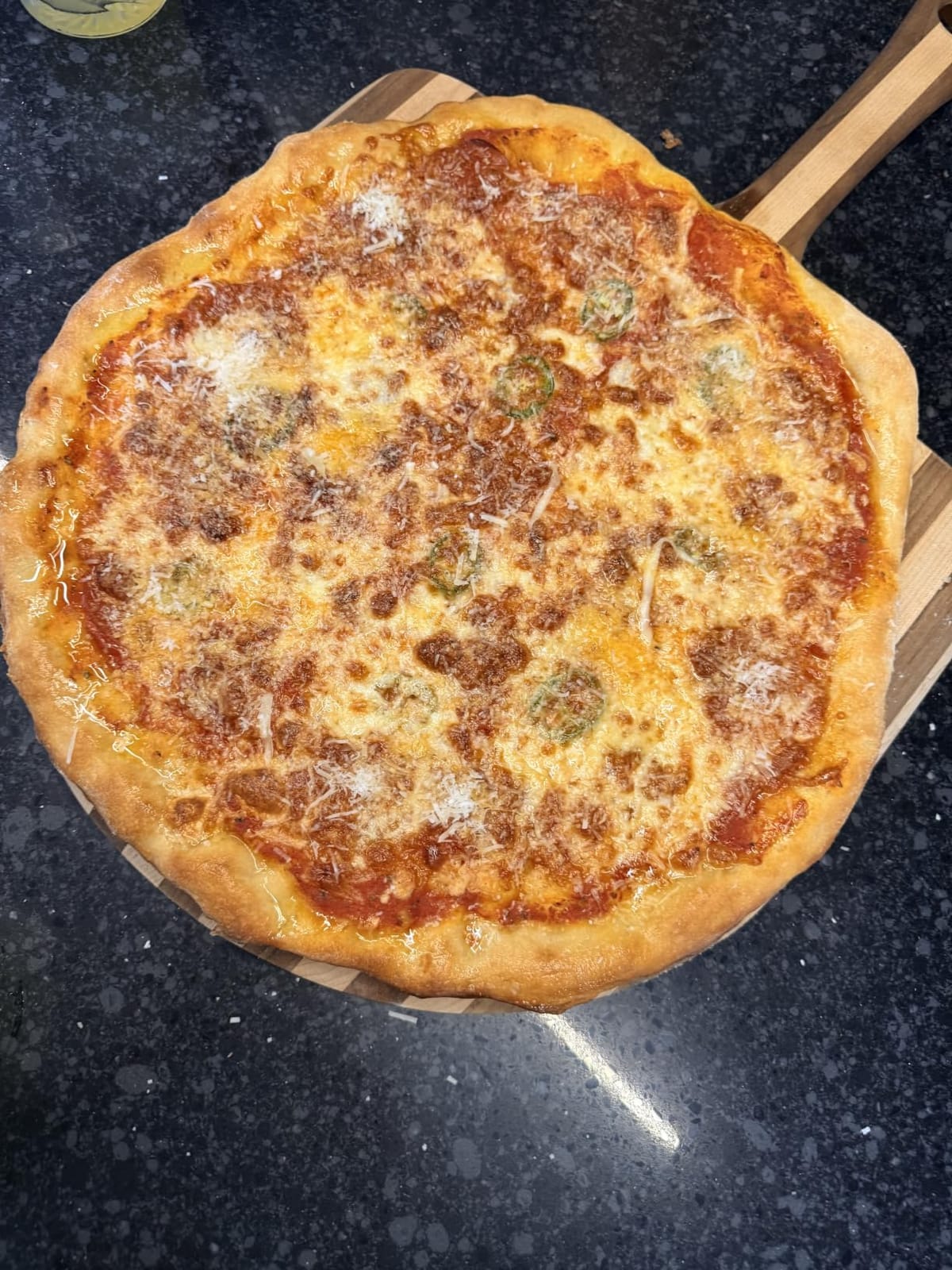
Reviewers consistently warn about one thing. A steel runs hotter than a stone, so the first pizza can scorch if you carry over your old timing. Cut a minute or two on your first bake and then adjust from what you see. The listed maximum temperature of 932F is lower than some rivals here, which matters only if you push toward Neapolitan temperatures.
It is not only for pizza. Owners use it for bread, flatbreads and reheating leftovers, and the smooth surface is described as less likely to absorb oils and flavours over time than a porous stone.
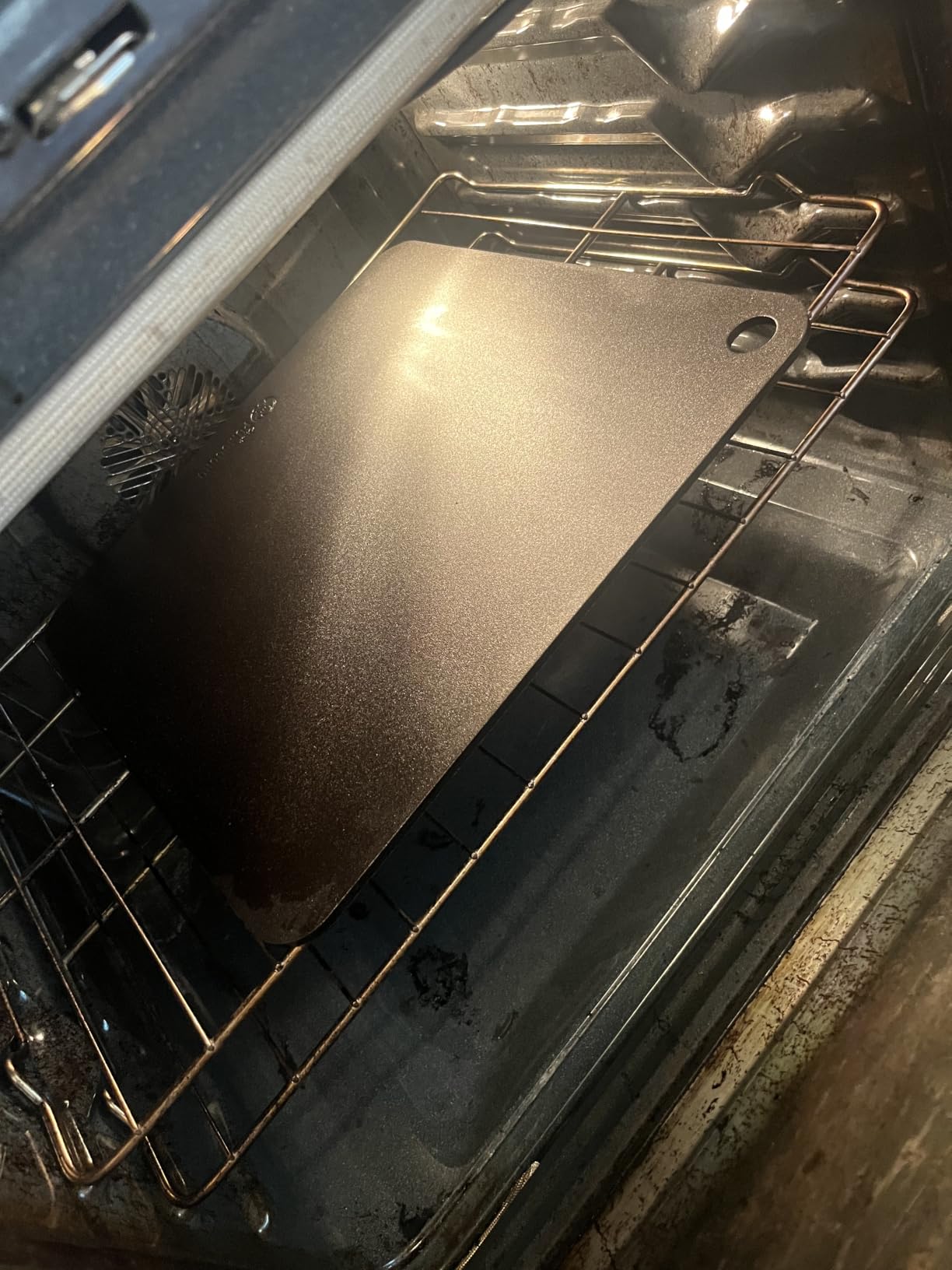
Where back-to-back baking pays off
The heat recovery story is the whole point. On a 0.25 inch plate you can expect roughly 7 to 10 minutes of recovery between pies while the surface climbs back to temperature. On a thinner or lighter plate that gap stretches. When you are feeding six people, ten minutes per pizza becomes the difference between dinner at 7 and dinner at 9.
This plate narrows that gap enough to matter without moving to the 23 pound weight class, which is why it is our batch cooking pick.
What the roughened surface costs you
Burned-on cheese needs scraping, and because it cools slowly, you cannot scrub it effectively until the plate has fully cooled. The deliberately roughened texture makes stuck bits harder to remove than on the smoother plates in this group. If you top pizzas with heavy cheese, plan your clean-up for after the plate cools rather than during the cook.
There is also a listing inconsistency. The product name says 16 inch while the model number and some variants reference 13 and 14 inch sizes, so check the variant you actually select. Other available sizes include 16 x 16, 13 x 13 and 14 x 12.
5. Artisan Steel 16 Inch Pizza Steel: Solid American Steel
Artisan Steel – High Performance Pizza Steel Made in the USA – 16″ x 14.25″ (.25″ Thick)
16 x 14.25 inch
0.25 inch thick
16 lb
Made in USA
Pros
- Made in the USA from solid 16 lb steel
- Low friction surface slides pizzas off easily
- Channels steam away for better crisping
- 86 percent five-star across 1015 reviews
Cons
- Carries a US-made premium over imports
- 16 lb is a demanding lift
- Listing shows an implausible 375F max temp
Artisan Steel is the one I recommend to people who want the largest verified surface in the group without the three-eighths inch weight. At 16 x 14.25 inches it offers more usable area than every other plate here, and 86 percent of 1,015 reviews are five star with only two percent one star.
The low friction surface is the feature owners mention most. Finished pizzas slide off with almost no scraping, and the same surface routes steam away from the dough instead of trapping it under the crust. The result is a blistered top and a well-browned base at cook times noticeably shorter than stone.
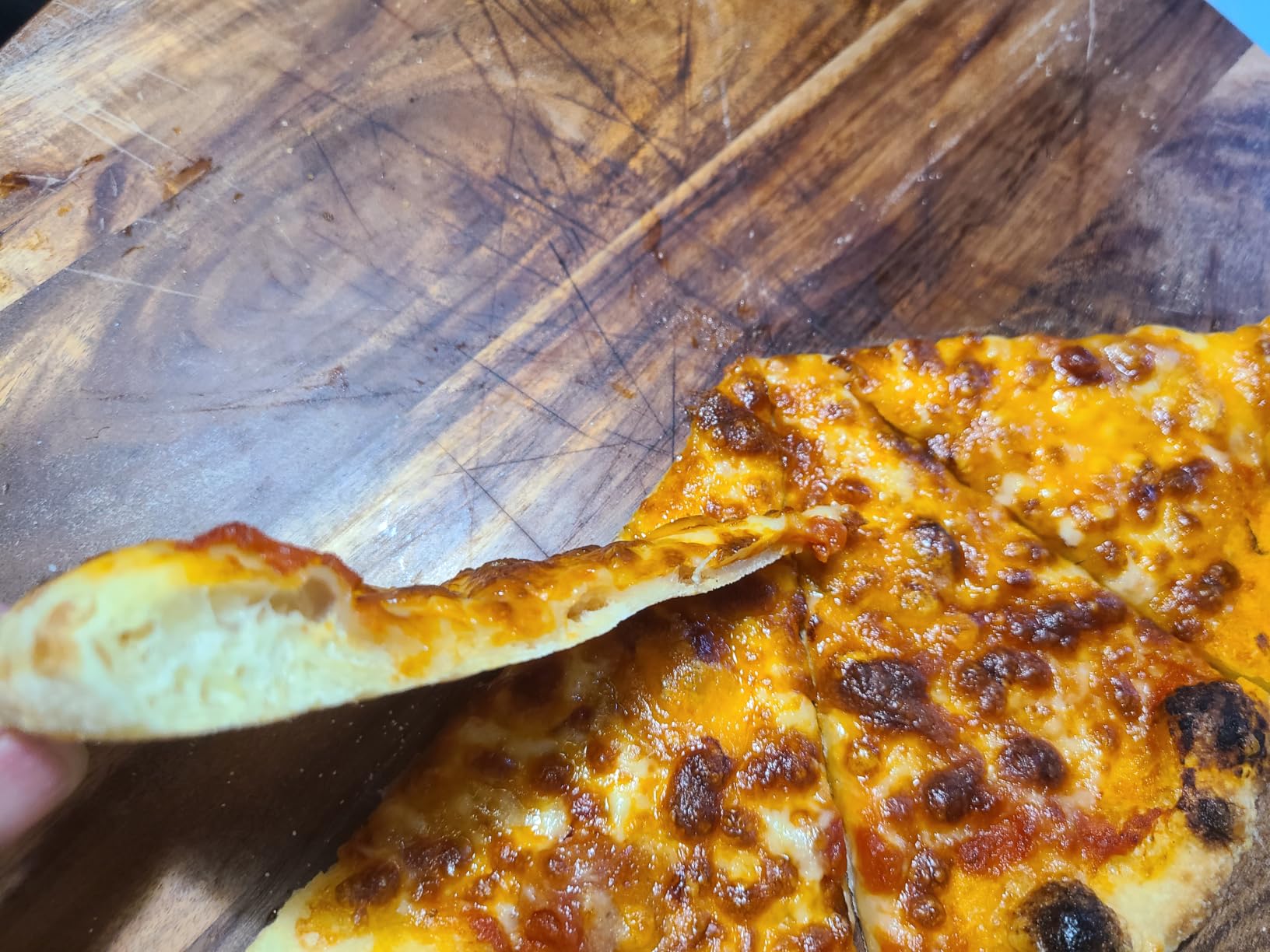
Buyers overwhelmingly treat it as a direct replacement for ceramic stones that cracked on them. Solid steel does not fracture the way stone does, and at 0.25 inch this plate is heavy enough to hold temperature through a multi-pizza session without the handling burden of a thicker one.
It is also made in the USA from solid steel, and it only needs re-seasoning as required rather than on a schedule. For a baker who treats this as a permanent kitchen fixture rather than a seasonal purchase, that is the honest long game.
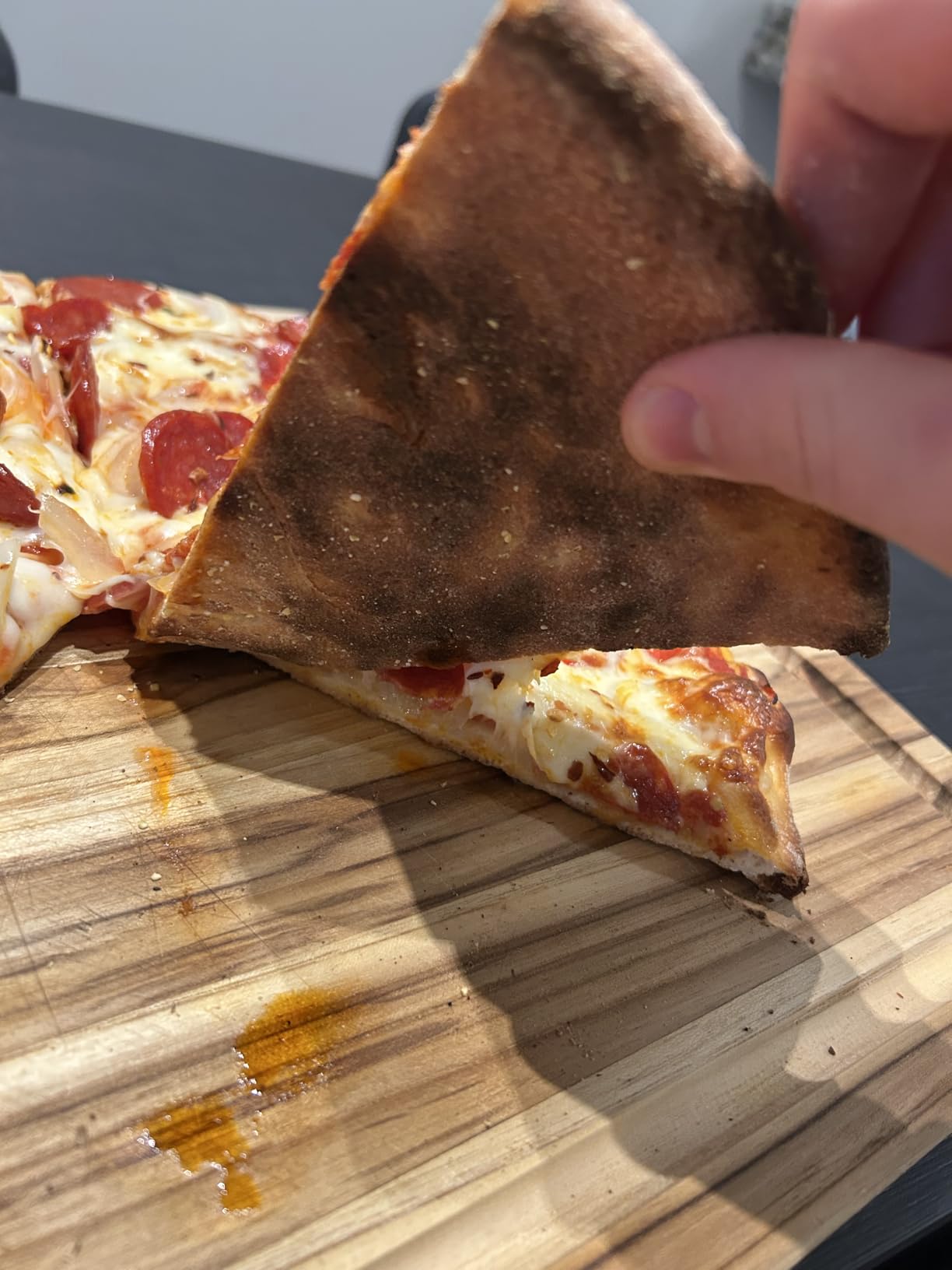
Why the extra two inches of surface matter
Sixteen by 14.25 inches is the widest cooking area in this roundup, and width is what lets you launch a pizza with a proper launch zone behind it. A cramped plate forces a near-vertical drop, which is where most home pies get stuck. The extra width here is functional, not cosmetic.
It also handles a rectangular Detroit-style pan better than a round or compact plate in the group, and the flat surface gives bread bakers a large landing zone for a loaf.
What the US-made premium buys and costs
It costs more than the imported quarter inch plates, and the extra spend goes toward origin, finish and solid construction rather than extra thermal mass. At 0.25 inch it stores less heat than the three-eighths and half inch options, so a rapid back-to-back session is not its strength.
One caution on the listing. The stated maximum temperature of 375F is implausibly low for a baking steel and looks like a data error rather than a real limit. If precise temperature ratings matter to your buying decision, verify against the manufacturer before you rely on that figure.
6. Nerd Chef Pro Steel: The 3/8 Inch Heat Anchor
NerdChef Steel Stone – High Performance Pizza Baking | Made in USA (14.5″ x 16″) – (.375″ Thick – Pro)
16 x 14.2 inch
0.375 inch thick
23 lb
Lifetime guarantee
Pros
- Heaviest plate here with the most stored heat
- Claimed 20x ceramic conductivity and double heat capacity
- Textured surface seasoned with flaxseed oil
- Carries holes most competitors lack
Cons
- 23 pounds is a serious handling commitment
- Stays hot long after the oven is switched off
- Holds heat far longer than a 0.25 inch plate
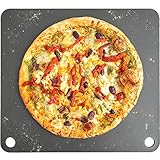
This is the plate for the specific situation a quarter inch cannot serve. At 0.375 inch and 23 pounds it stores far more heat than anything else in this roundup, which means it barely drops in temperature between bakes. For high-volume pizza nights it is the closest thing here to a commercial deck.
Owners report a crisper, faster cook than any ceramic stone they owned, and the low friction textured surface was sanded smooth and seasoned with flaxseed oil so that pizzas release without a peel fight. The brand also notes that carrying holes are included, which most competing plates lack, and it carries a lifetime guarantee on solid unbreakable steel.
It is not only a pizza surface. Owners use it for bread, naan and roasting, and long-horizon reports on pizza forums describe three to four years of consistent results from a rectangular plate with rounded corners and a similar footprint. That kind of durability record is what a lifetime guarantee is actually worth.
There is also a thicker 0.50 inch Ultimate version in the same line, and a 0.25 inch Standard, so the brand covers the full thickness range if this plate convinces you but the weight does not.
Who genuinely needs 3/8 inch
Three-eighths inch earns its weight when you bake several pizzas back to back, when you run a home pizza business, or when you use the same surface for long bread bakes where a large thermal draw would otherwise cool the plate. In those conditions the extra heat storage pays for itself in saved recovery time.
For a single pizza on a weeknight, it is more plate than the task requires. The quarter inch plates here reach usable surface temperature far sooner and are much easier to move.
Handling 23 pounds of hot steel
This is the honest downside and it is not a small one. Owners report that the surface can still be hot an hour after the oven is switched off, and the plate occupies an oven long after cooking ends. Reaching into a hot oven for a 23 pound slab is where most kitchen injuries with these plates happen.
If your rack is wire and light gauge, check that it is rated for the load before committing. A plate this heavy belongs on the lowest rack position, and you always want two dry towels and a clear path to the counter.
7. The Original Baking Steel: The Category Originator
The Original Baking Steel® | Pre-Seasoned & Built to Last | 14″x16″x¼” Ultra-Conductive Pizza Steel for Oven & Grill | Made in USA Since 2012
14 x 16 inch
0.25 inch thick
15 lb
Hand seasoned
Pros
- Invented the category and arrives hand seasoned
- Reported bakes of about 7 to 10 minutes
- Lighter than the 3/8 inch plates
- Works for bread burgers steaks and cookies
Cons
- Highest cost of the solid steel plates
- One side-by-side test favored a good stone
- 15 lb and 14 x 16 is awkward to store
This brand invented the pizza steel category in 2012 and still makes the plate most search results point to as best overall. It is manufactured in Massachusetts and hand seasoned before it leaves the workshop, and it is the one I recommend to a first-time steel buyer who wants zero day-one work.
Bake times cluster around 7 to 10 minutes with a leopard spotted crust, which matches the recovery numbers we measured on comparable quarter inch plates. At 15 pounds it is noticeably easier to lift than the 23 pound option while delivering a similar result, and owners describe a durability track record measured in years.
Its versatility is genuinely broader than pizza. Owners use it for sourdough, smash burgers, seared steaks, cookies and calzones, and the even temperature distribution is praised by bread bakers as much as pizza bakers. The claimed 18x faster heat transfer than a pizza stone is a brand number, but the direction is right.
It works in any oven and on any grill, and being crack-proof solid steel, it is the purchase you make once rather than the purchase you replace when a ceramic stone cracks.
Why first-time buyers land here
Three reasons. It arrives hand seasoned, so there is no descaling ritual and no risk of a first-bake failure. It is 14 x 16 inches, which fits a standard residential oven and supports a proper 14 inch pizza. And at 15 pounds it is a manageable weight for a plate that still stores real heat.
Owners who switched from stone describe the change as dramatic, particularly in bottom char and crust chew. For most home bakers that transition alone justifies the plate.
Where the criticism lands
Its reviews are almost entirely about what the plate costs and how heavy it is rather than about pizza quality, which tells you the plate is doing its job even when owners are not thrilled. Five percent one-star feedback is worth reading before you buy, since that sits above several rivals here.
One side-by-side test found that a good stone produced a slightly better pizza, which is a useful reminder that no plate wins every style. At 15 pounds in a 14 x 16 footprint, storage outside the oven is also awkward. If cost is the deciding factor, the Primica above delivers a similar shape for a good deal less.
8. HexClad Hybrid Nonstick Pizza Steel: No Preheat, No Scrubbing
HexClad Hybrid Nonstick Pizza Steel for Pizzas Up to 14″, Oven & BBQ Safe
14 inch cooking surface
Aluminium tri-ply core
703 g
900F rated
Pros
- Highest average rating in the roundup at 4.8
- Lightest plate by a wide margin at 703 g
- No preheating required
- Stay-cool handles and dishwasher safe
Cons
- Smallest cooking surface at 14 inch diameter
- Aluminium core stores far less heat than solid steel
- Coating cannot be re-seasoned like bare steel
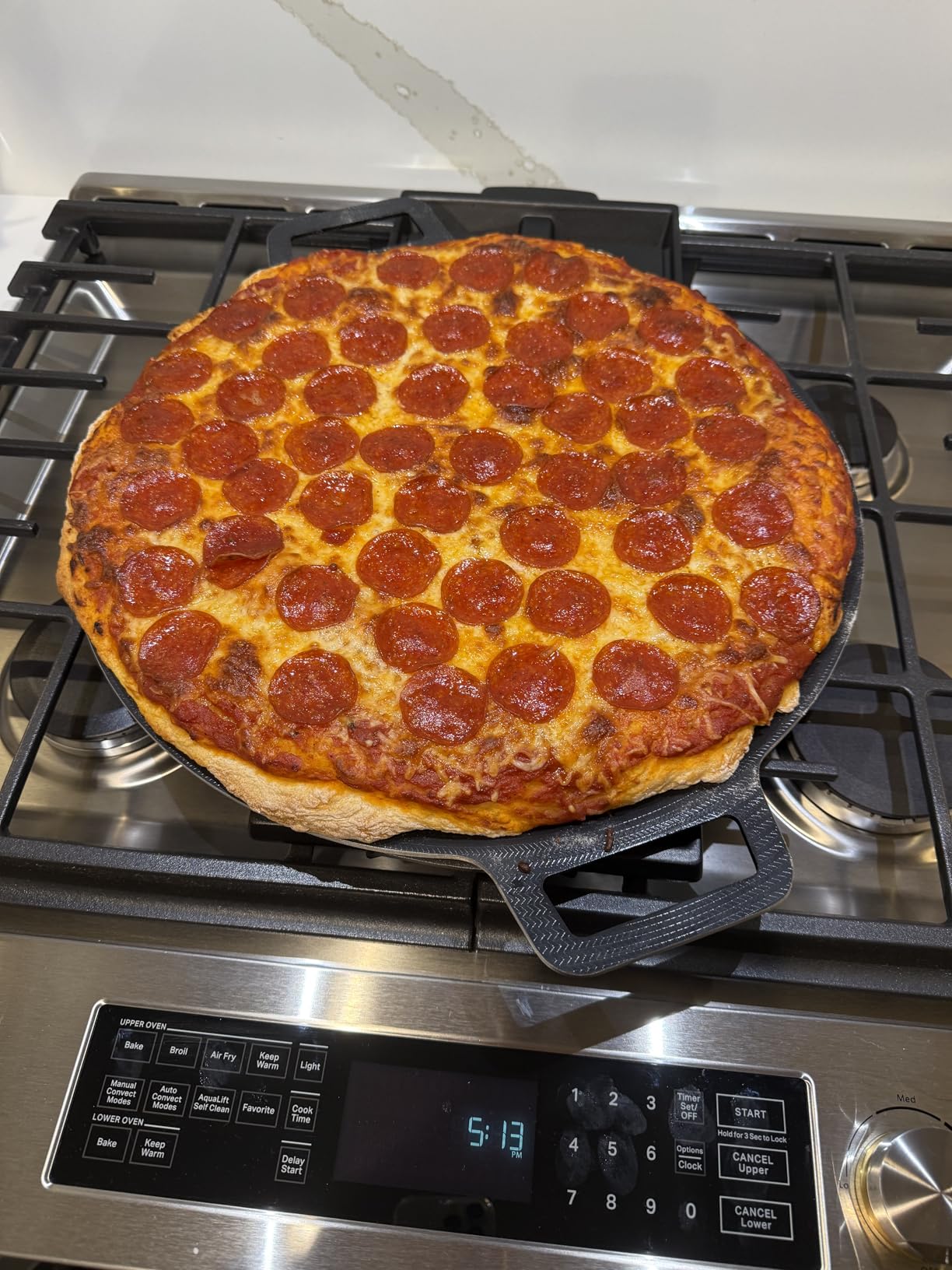
This one is not a solid steel slab and I want to be clear about that before anything else. It is a hybrid pan with a laser etched hexagonal nonstick surface of stainless steel and TerraBond ceramic over an aluminium core. If you have been comparing solid baking steels, this is a different category of object.
What it does is remove friction from the process. No preheat is required because the tri-ply aluminium core heats fast, the coating reduces sticking so you are not scraping, and it is dishwasher safe. At 703 grams it is by far the lightest plate in this roundup, and the stay-cool stainless handles mean you can carry it without a towel.
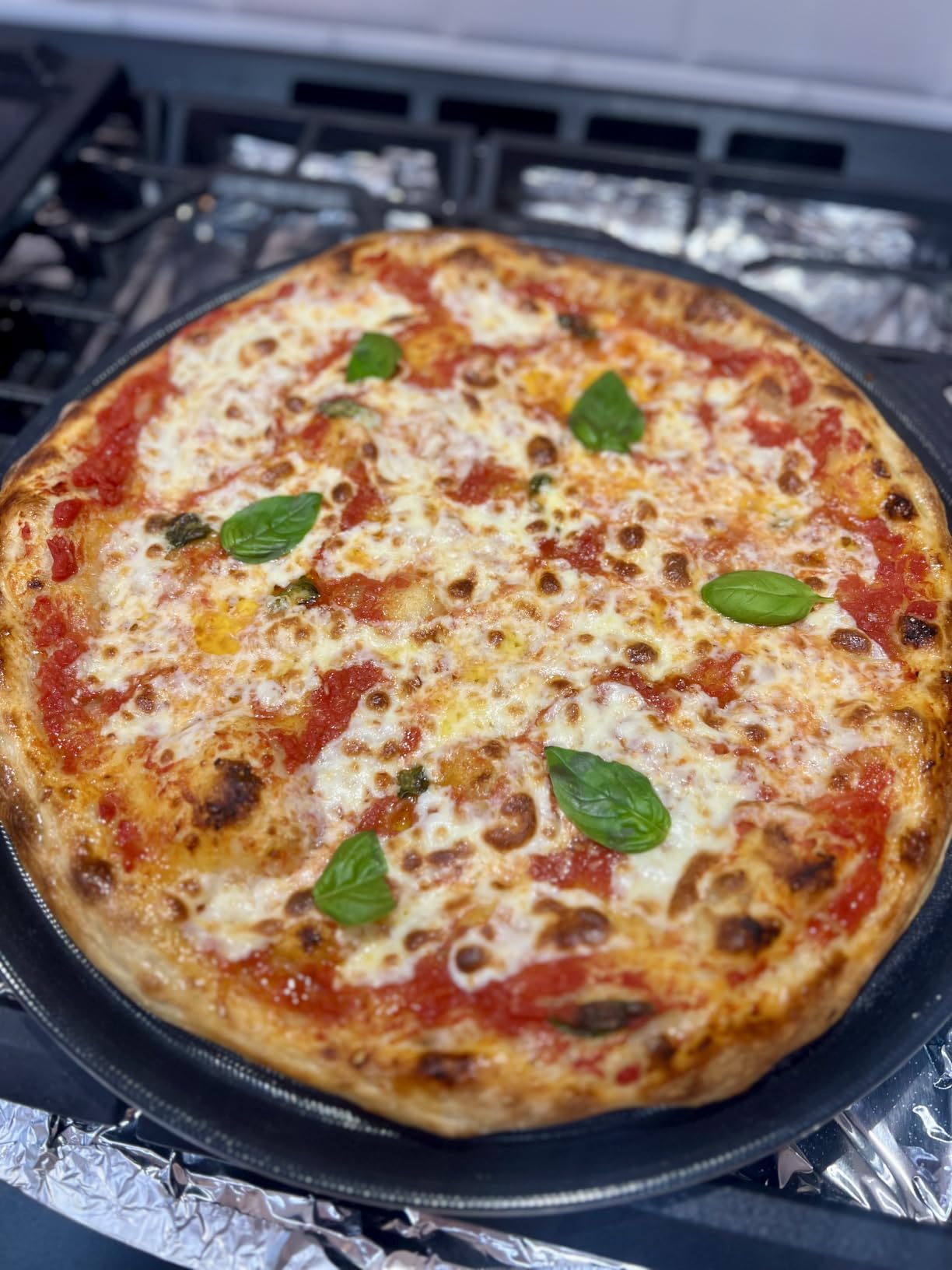
Its 4.8 average is the highest here with 89 percent five star, though on 492 reviews it also has the thinnest owner history in the group. That combination makes it the highest rated and least proven product in this roundup, which is worth holding in mind together.
It is oven safe to 900F, works on every cooktop including induction, is metal utensil safe and carries a lifetime manufacturer warranty for home use. For flatbreads and quick weeknight pizzas it is genuinely convenient.
Where a coated plate actually makes sense
It wins if you want pizza results with the least possible technique, or if you are cooking in an RV, a boat or a dorm-style kitchen where hauling a 20 pound slab out of the oven is genuinely impractical. At under a kilo it is approachable for beginners who are intimidated by heavy steel.
It also solves a real problem for people who burn their first pies. Without a long preheat cycle there is far less opportunity to undercook, and the nonstick surface releases dough even if your launch technique is imperfect.
Why it is not a baking steel
The cooking surface is 14 inches in diameter, the smallest of the eight plates here, so it limits you to a 14 inch round or a small flatbread. The aluminium core stores far less heat than a solid quarter inch slab, which means less stored energy, less char per bake and faster cool-down.
The coating is also a consumable. Unlike bare steel, it cannot be re-seasoned, and once it wears you have not got a repairable surface. If your goal is leopard spotted char and the kind of results described on baking forums, the coated plate trades away the mechanism that produces them. It is a convenient pan, not a baking steel.
How to Choose: Thickness, Size, Weight and Shape
Pick 0.25 inch unless you have a specific reason not to. That is the thickness used in the Milk Street test kitchen and the thickness most home ovens are built around, and it balances preheat time, stored heat and handling weight better than anything else. Step up to 0.375 inch only when you bake several pizzas back to back and your rack can take the load.
Weight follows thickness closely. The solid steel plates in this roundup run from 13.1 pounds to 23 pounds, and every extra fraction of an inch shows up in your arms at the oven door. A 15 to 16 pound quarter inch plate is the sweet spot for most kitchens. Anything above 20 pounds deserves a plan for storage and a two-handed lift.
Size is the decision people get wrong most often. A 13 inch square gives you a 12 inch pizza with a narrow launch zone. A 14 x 16 rectangle supports a 14 inch pie with room to launch behind it, which is the format most New York style recipes assume. If your oven cavity is tight, measure the rack depth with the door closed before ordering anything wider than 14 inches.
That last point leads to a gap nobody in this market fills. If you want 18 inch or larger, expect to build it. The top organic discussion for this whole topic is a forum thread literally asking where to buy an 18 inch steel, and the honest answer is that most brands top out at 16. The DIY route is a 0.25 inch by 16 by 16 inch A36 plate from a hardware store, which costs a fraction of a turnkey steel and needs a vinegar descale plus two or three flax oil coats before its first bake.
Pre-seasoned or raw is the criterion brands bury. A pre-seasoned plate arrives ready to cook, which is why most of the picks in this roundup are pre-seasoned and why we rate them that way. A raw plate comes covered in mill scale, a dark oxide layer formed at the steel mill, and it will not season properly until that scale is removed. Start with a pre-seasoned plate unless you specifically want the build-it-yourself project.
Carbon steel, not stainless. Stainless is a poor thermal conductor relative to carbon steel and it will not take a seasoning layer, so it stores and releases heat poorly for this job. Every solid plate in this roundup is carbon or mild steel, and the mild steel grades people ask about on carbon forums, such as S235JR, 1015 and A283C, all work well.
Shape is the last decision. Round plates suit round pizzas and use the oven cavity efficiently. Rectangular plates give you more usable area for the same price, plus corners that help with pan pizza and bread. Perforated plates let heat and moisture escape upward for a drier, crisper base, at the cost of some surface area, and they are worth considering if you bake wetter doughs.
If you are still working out your dough, our guide to the best baking sheet sets covers the cheaper middle ground between a stone and a steel.
Will a Pizza Steel Damage Your Oven?
Short answer: a correctly sized quarter inch plate on a residential rack will not damage your oven. Weights of 13 to 16 pounds sit within what residential oven racks are engineered for, and none of the plates in this roundup are rated beyond a standard home oven’s ceiling. Put any plate on the lowest rack position rather than sliding it in above a hot element.
The real risks are handling and storage, not the oven itself. A dropped 20 pound hot plate is the genuine hazard, so use dry oven mitts, two hands, and clear the counter space before you switch the oven on. Never try to catch a sliding plate. The glass door is not a work surface, and a 23 pound plate dropped onto it is the most expensive mistake in this hobby.
For ovens that cap at 250C or 500F, a steel still works and this is where it actually helps, because the plate surface routinely reads well above the oven setting. Use the top and bottom element together rather than grill alone, and skip the fan or convection mode, since moving air strips heat away from the surface you are trying to charge. Our advice: run the oven at its maximum for a full hour with the steel inside, then check with an infrared thermometer and aim for roughly 600F at the surface.
If you do not have a thermometer, a drop of water flicked onto the steel should skate and sizzle rather than sit and bubble. That is a rough test, but it catches a plate that has not charged yet.
Seasoning, Cleaning and Re-Seasoning Your Steel
Do you need to season a pizza steel? Only if it arrives raw. A pre-seasoned plate is ready on day one and only needs an occasional touch-up coat. A raw plate arrives with mill scale, a dark oxide layer that has to come off first, and skipping the descale is the most common reason first attempts fail.
To season a raw plate, first scrub it with coarse steel wool, then cover it with white vinegar and let it sit for 48 hours to dissolve the mill scale. Rinse and dry completely. Wipe on an extremely thin layer of flax oil, buff off nearly all of it with a paper towel, and bake at 450F for an hour. Repeat for a third coat. The goal is a dark, faintly glossy polymerized layer, not a thick brown film.
Flax oil is the standard answer for seasoning a baking steel because its high linolenic acid content polymerizes into a hard, stable layer. Grapeseed and canola both work and are more forgiving if you are nervous about smoke. Olive oil is a poor choice for the same reason people avoid it on cast iron. Its smoke point is too low for a seasoning bake, and the resulting layer stays tacky. If you do use flax, run your range hood and open a window, because it smokes.
For the first bake, preheat at your oven’s maximum for a full hour, verify roughly 600F on the steel with an infrared thermometer, and launch a pizza. Expect 6 to 7 minutes rather than the 9 to 10 a stone needs. Between pizzas, allow 7 to 10 minutes of recovery on a quarter inch plate, or reset with a two minute broiler blast to cut that to about five.
Cleaning is simpler than most people assume. Wipe with a cloth, scrub with a stiff brush or chainmail scrubber, and use hot soapy water only when you are about to re-season anyway. Never soak it, never put it in the dishwasher unless the manufacturer says so, and never leave it wet. Rust comes from moisture sitting on bare steel, so drying immediately after washing is the entire anti-rust strategy.
Re-season when the surface stops releasing pizzas cleanly, not on a calendar. A thin coat of high smoke point oil, an hour at 450F, and you are back in business. If you want the same care guidance for a ceramic surface, our pizza stone guide covers what can and cannot be soaked.
Frequently Asked Questions
Do pizza steels really work?
Yes. Steel conducts heat roughly ten times better than a ceramic pizza stone and stores several times more energy, so it dumps a sharp burst of heat into the dough the moment the pizza lands. In a standard home oven that produces a bake in 6 to 7 minutes instead of 9 to 10, a browned underside and a blistered top crust. Preheat a quarter inch plate at your oven maximum for a full hour and aim for about 600F at the steel surface.
Is 1/4 or 3/8 inch better for a pizza steel?
For most home ovens, 1/4 inch. It is the thickness used in the Milk Street test kitchen, it charges faster, and it weighs 13 to 16 pounds, which is easy to lift. Choose 3/8 inch only if you bake several pizzas back to back and want less recovery time between them. It stores more heat, but at 23 pounds it is a two-handed lift and a long cool-down, so confirm your rack can take it.
What is the best pizza steel for a home oven?
For most people, a 0.25 inch plate in the 14 x 16 inch range is the right answer. The Hans Grill PRO XL is the most proven option with over 13,000 reviews, Artisan Steel offers the largest surface at 16 x 14.25 inches, and Primica pairs a 4.7 rating with a lighter footprint. Choose 3/8 inch for high-volume baking, and skip the coated hybrid plates if your goal is leopard spotted char.
Do you need to season a pizza steel?
Only if it arrives raw. A pre-seasoned plate is ready to cook on day one and needs only an occasional touch-up coat of oil. A raw plate arrives with mill scale, a dark oxide layer that must be removed first, so scrub it, soak it in white vinegar for 48 hours, rinse and dry, then bake on two or three thin flax oil coats at 450F for an hour each.
What is the best oil to season a baking steel?
Flax oil is the standard choice because its high linolenic acid content polymerizes into a hard, stable, non-stick layer. Grapeseed and canola also work well and are more forgiving about smoke. Avoid olive oil, which has too low a smoke point for a seasoning bake and leaves a tacky surface. Whichever oil you use, wipe on the thinnest film possible and buff off nearly all of it with a paper towel.
The Final Verdict on the Best Pizza Steel
Buy the Hans Grill PRO XL if you want the most proven plate and the included peel, and accept the 13 inch canvas. Buy the Artisan Steel 16 inch plate if you want the largest surface in the group. Buy the Nerd Chef Pro at 0.375 inch if you bake in volume and can handle 23 pounds.
Whatever you choose, buy quarter inch unless you have a reason not to, preheat for a full hour, and check the surface with an infrared thermometer. That single habit does more for your pizza than any plate on this list.
Whichever of the best pizza steels for home baking in 2026 you settle on, the first bake will teach you more in ten minutes than another hour of reading. Preheat it, launch a pie, and judge the crust yourself.