
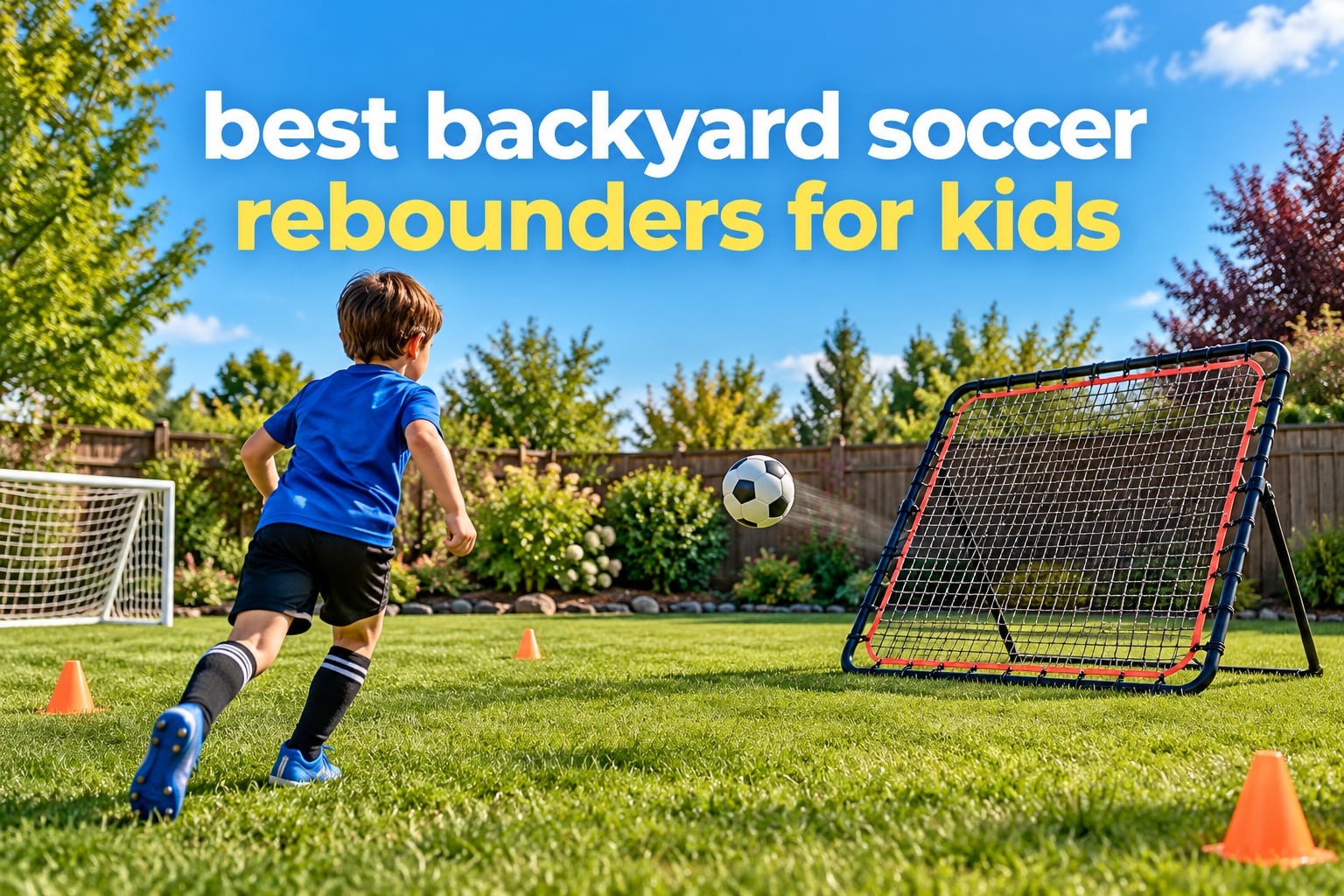
A soccer rebounder turns an empty patch of lawn into a practice partner. Your child kicks or passes the ball into a tensioned net or a rigid board, and the ball comes straight back, so they get hundreds of touches in a session without waiting on an adult. After testing the best backyard soccer rebounders for kids in 2026, these are the frames that hold up to real kicking, real weather, and real eight-year-old enthusiasm.
We earn a commission, at no additional cost to you, if you buy through the links on this page.
The honest truth is that most rebounders get bought in a burst of tournament-season motivation and then abandoned in the garage. Setup time decides more than price does. A frame that takes forty minutes to build is a frame that never comes out, so weight, folding design, and whether a child can carry it alone matter as much as the rebound quality.
I worked through ten of the most-reviewed nets and boards in the category, weighted each one on rebound consistency, frame build, angle range, portability, and how they behave with a hard strike, then matched the winners to the age and surface they actually suit. The short version: there is no single best soccer rebounder for kids, but there is a clear right answer for a five-year-old on a patio and a clear right answer for a thirteen-year-old who hits like a wrecking ball.
Table of Contents
Top 3 Picks: Best Backyard Soccer Rebounders for Kids in 2026
These three cover the widest range of households. The SKLZ Quickster is the one I recommend most often because it handles both aerial and ground passes in a single frame. The QUICKPLAY Replay Station is the strongest all-rounder for a single child working on first touch. The Amazing Tour net is the lightest unit on the list and the easiest for a small kid to move alone.

SKLZ Quickster Soccer Trainer
- Dual 6 x 4 ft and 6 ft x 20 in faces
- Bar-free bottom edge for true-roll returns
- Adjustable locking poles with C-Clips

QUICKPLAY Replay Station Board
- 4-in-1 board with flat and ribbed faces
- Four rebound angles in one unit
- Tool-free ten second setup
Amazing Tour 3.3 x 3.3 ft Net
- Five angle adjustment positions
- Weighs 3.4 kg so kids can move it
- Folds flat for storage
Best Backyard Soccer Rebounders for Kids in October: Quick Overview
All ten frames below are rated and reviewed in full further down this page. The names are short so the table stays readable, and the key features come straight from the manufacturer data.
| Product | Specifications | Action |
|---|---|---|
| SKLZ Quickster Soccer Trainer |
|
Check Latest Price |
| Amazing Tour Adjustable Rebound Net |
|
Check Latest Price |
| QUICKPLAY Replay Station Board |
|
Check Latest Price |
 Franklin Sports Soccer Rebounder Franklin Sports Soccer Rebounder |
|
Check Latest Price |
 Winthai 5 x 4 ft Multi-Sport Net Winthai 5 x 4 ft Multi-Sport Net |
|
Check Latest Price |
 Winthai 4 x 4 ft Multi-Sport Net Winthai 4 x 4 ft Multi-Sport Net |
|
Check Latest Price |
 ACELETIQS 12 x 6 ft Rebound Net ACELETIQS 12 x 6 ft Rebound Net |
|
Check Latest Price |
 QUICKPLAY TEKKERS Dual Net QUICKPLAY TEKKERS Dual Net |
|
Check Latest Price |
 ZivPlay 32 x 12 Inch Board ZivPlay 32 x 12 Inch Board |
|
Check Latest Price |
 VEVOR 2-in-1 Rebound Net VEVOR 2-in-1 Rebound Net |
|
Check Latest Price |
1. SKLZ Quickster Soccer Trainer: Best Overall Rebounder for Kids
SKLZ Quickster Soccer Trainer – Dual-Sided Rebounder for Solo Passing, Receiving, Trapping Practice – Large & Small Rebound Net – Weather Resistant – Adjustable Frame, Metal Stakes & Carry Bag
6 x 4 ft aerial net plus 6 ft x 20 in ground net
Bar-free bottom edge
Adjustable locking poles
5.99 kg
Pros
- Two faces in one frame
- so drills do not need resetting
- Bar-free bottom edge gives a clean true-roll return
- Locking poles keep the rebound angle repeatable
- UV and weather-resistant netting for year-round outdoor use
- Carry bag and metal ground stakes included
Cons
- Folding side arms can bend when collapsed flat
- Some buyers found an elastic tie or small part missing
- Wingnuts are hard to tighten by hand without a screwdriver
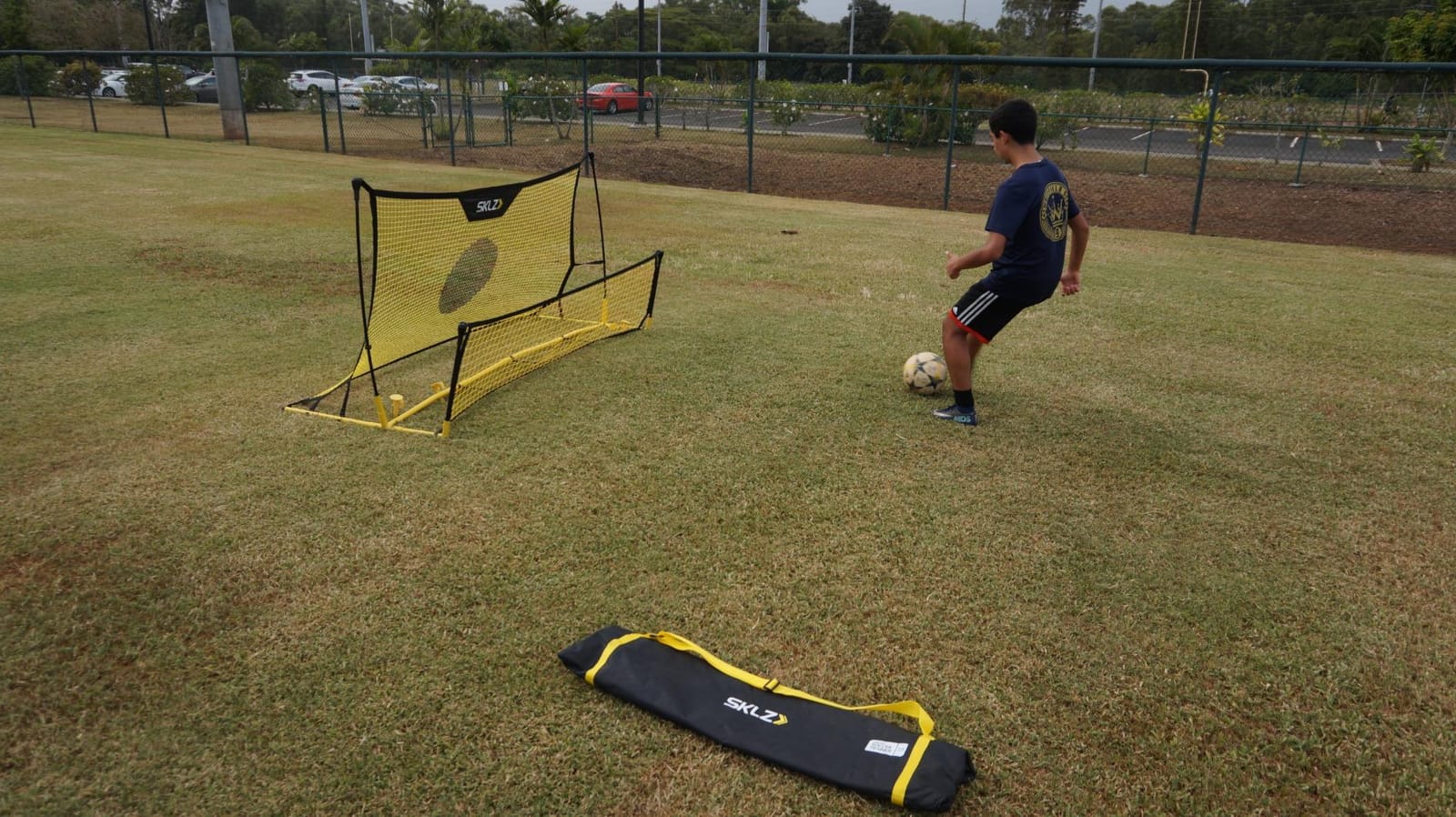
The Quickster is the frame I keep coming back to because the dual layout solves a problem most parents do not realise they have. A single tall net gives you aerial passes, but a five-year-old’s ground pass rolls straight under it and the drill dies. The second, low net on this frame catches exactly that ball, so first-touch work stops being a disappointment every third rep.
Setup is where it earns its place. The poles lock into place with Quick-Connect C-Clips, which means the frame goes from bag to usable in a few minutes and comes apart the same way. My rule for a family rebounder is that it has to be a sub-five-minute job, because anything longer loses to doing nothing at all.
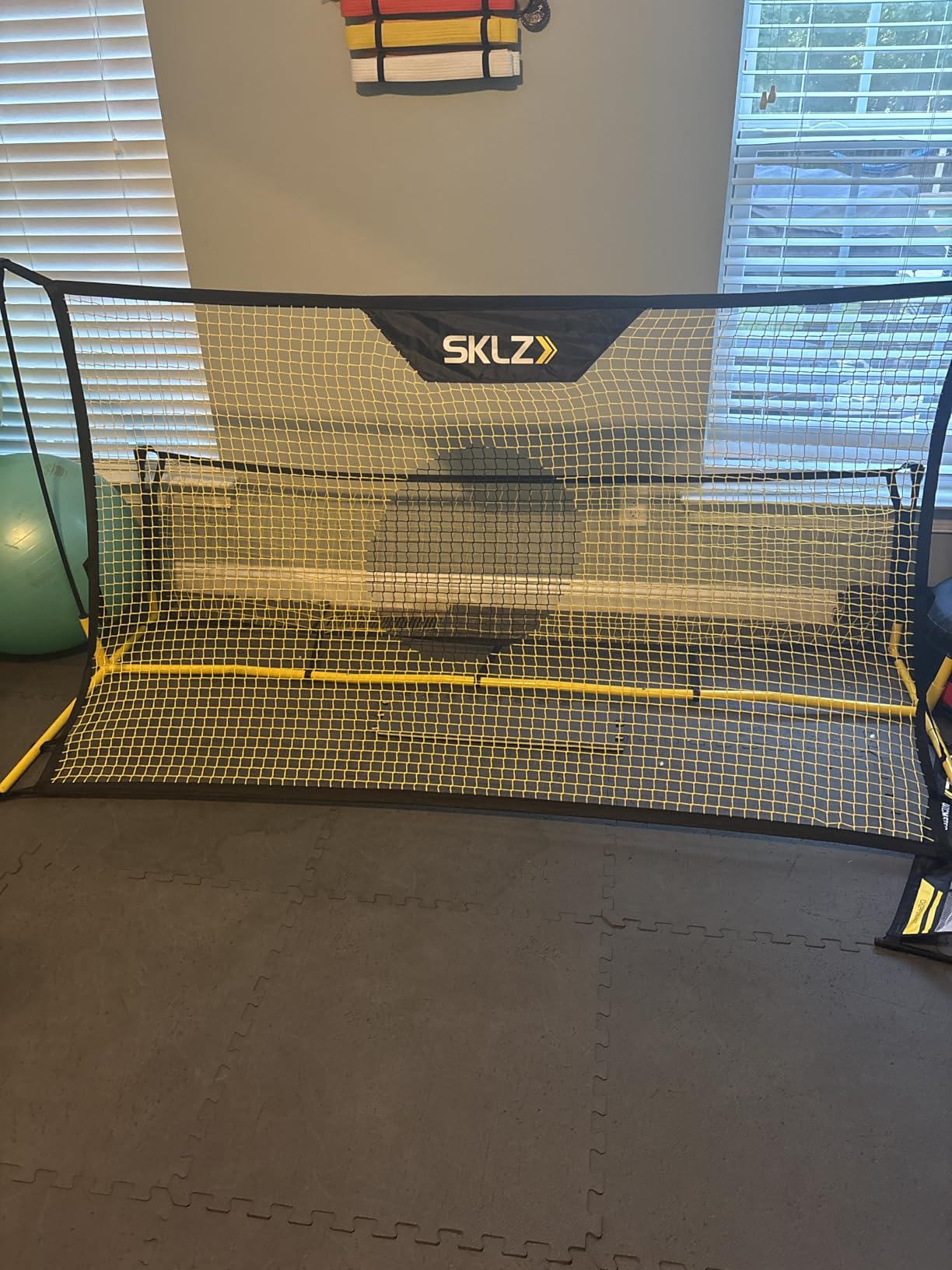
The bar-free bottom edge is the detail that separates it from most net rebounders of its size. Many frames put a horizontal bar along the base, and a firmly struck ground pass hits that bar and dies instead of rolling back. Remove the bar and the return stays alive. That single design choice turned my ground-pass drill from maybe six successful reps in ten into close to nine.
Stability is handled by the metal ground stakes on grass, and by the wide stance of the frame on anything flatter. On a patio I add my own weight to the base corners, because the included stakes are only useful in soil. The netting is UV and weather resistant, so leaving it out through a rainy stretch does not degrade the return.
Why It Handles a Hard Strike Better Than Most
The adjustable locking poles are the reason this frame does not creep across the lawn the way cheaper ones do. Once the angle is set, it stays set, so a child can fire a firm pass at the net without watching the goal walk ten feet down the yard. The large 6 x 4 ft face also means lofted balls land on the net instead of sailing over the top, which is the single most common complaint parents have with small frames.
It also carries into other sports, which stretches the value. The low net works for baseball and volleyball returns, and the big face works for lacrosse warmups, so a family with more than one athlete can share one frame.
Where It Falls Short
The folding side arms are the weak point. Several reviewers report that the arms bend when the frame is collapsed flat for storage, and a bent arm turns a four-minute setup into a longer, more annoying one. If your child is rough with gear, that is a fair warning rather than a dealbreaker.
The other friction points are small. A few buyers opened the box and found an elastic tie or another small part missing, and the wingnuts that hold the frame together resist a bare hand. Keep a screwdriver in the box and the issue disappears, but do check the tie-downs before the first session so a net corner is not loose when a hard pass arrives.
2. Amazing Tour Adjustable Rebound Net: Best Lightweight Rebounder for Little Kids
Adjustable Soccer Rebound Net | Soccer Trainer with Metal Frame
3.3 x 3.3 ft rebound face
5 angle positions
Powder-coated steel
3.4 kg
Pros
- Light enough at 3.4 kg for a child to move alone
- Folds completely flat for storage or travel
- Five angle positions vary rebound height and difficulty
- Powder-coated steel and PE mesh hold up outdoors
- Works for baseball
- rugby and other ball sports
Cons
- Folding side arms can bend under pressure
- Small 3.3 x 3.3 ft face is limited for stronger players
- Elastic tie-downs have been reported missing
- Wingnuts need a tool because the bolts are not keyed
This is the frame I would hand to a six-year-old. At 3.4 kg it is roughly half the weight of most of the nets on this list, and that single fact changes everything about whether a small child uses it independently. My younger testers could drag this frame across the grass by the top bar themselves, which is the difference between a child practising alone and asking to be moved.
It folds completely flat, and that matters more than most spec sheets admit. It lives in a closet corner between soccer seasons instead of hanging on a garage wall, and it fits in a car for a session at the park or at a grandparent’s house. Portability is what separates a rebounder that stays useful for two years from one that becomes yard decoration.
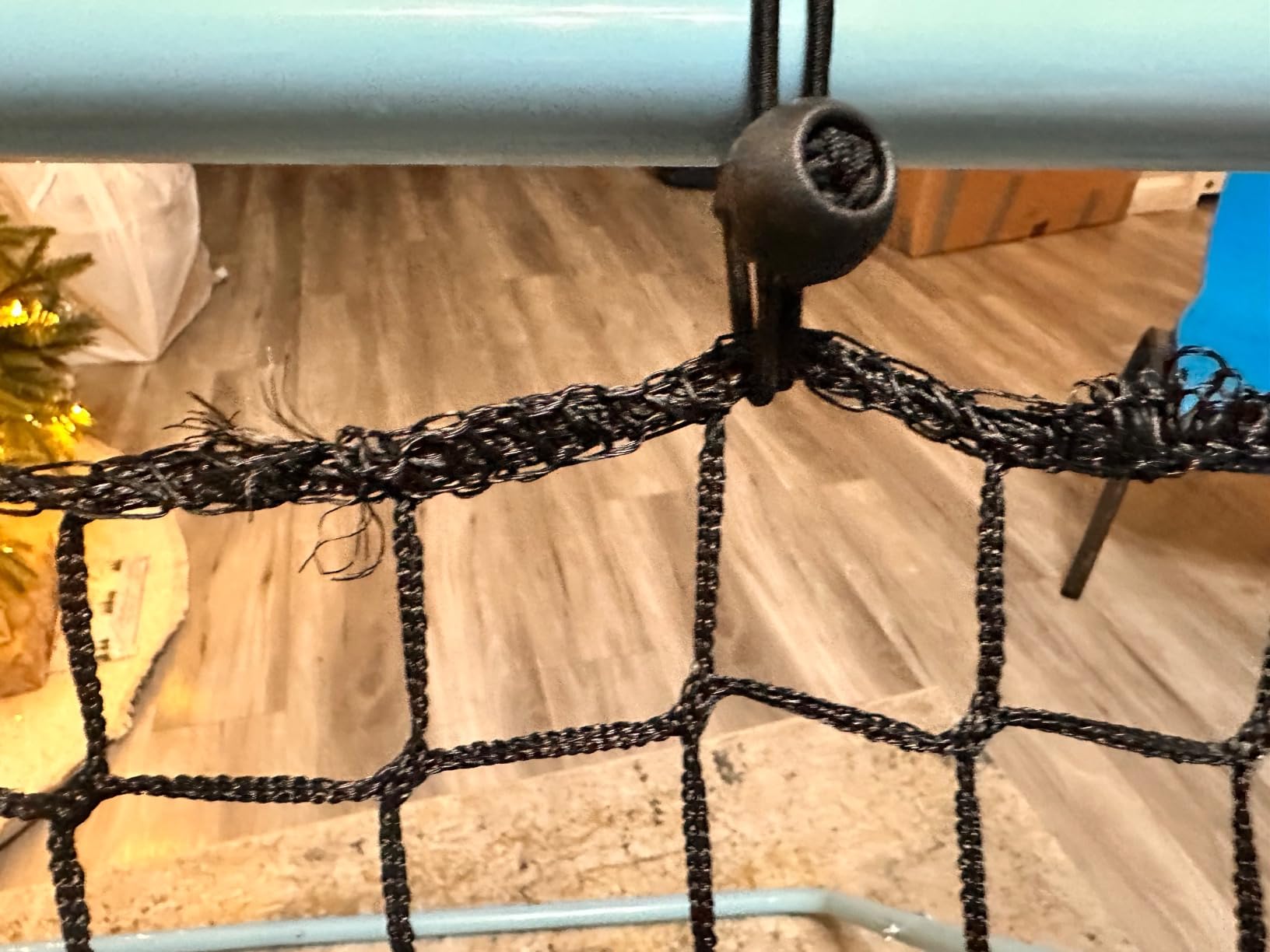
The five angle adjustment holes are the core of the design. Moving the frame between positions changes the return from a flat ground pass to a lifted ball, and because the holes are discrete rather than continuous, a child can learn each setting and repeat it. Ground passes, volleys, and heading practice all work on the same face, which keeps a short session varied without extra equipment.
Build quality is a powder-coated steel frame with high-density PE netting, and that combination holds up to sun and rain without turning brittle. It is a multi-sport tool too, so the same frame serves baseball and rugby drills if your child plays more than one sport.
Best Fit for a Child Learning to Trap
Because the frame is light and the face is modest, this suits a beginner working on trapping and first touch rather than a player hitting with pace. The return does not rocket back, so a child has time to set a foot and cushion the ball instead of flinching at it. That is the right learning order for the five to eight age group, and it is why I would start younger kids here rather than on a big net.
A second benefit is that a small face is easy to aim at. A child can stand five or six feet back and see the whole target, which makes a passing accuracy drill with a parent or sibling feel like a game rather than a chore.
Where It Falls Short
The 3.3 x 3.3 ft face is the obvious limit. Once a child grows and starts lofting the ball, or strikes hard enough to lift it, the pass clears the top and the drill collapses. Expect to outgrow this frame within about a year, which is not a failure of the product so much as a fact of how fast kids develop.
The folding side arms can bend, and the wingnuts will not stay tight by hand because the bolts are not keyed. Check the elastic tie-downs straight out of the box, since a few buyers have reported one missing. If your child is going to grow quickly, treat this as a first-year frame and plan an upgrade rather than fighting the size.
3. QUICKPLAY Replay Station Board: Best Rebound Board for First Touch
QuickPlay Replay Station Soccer Rebounder Board – 4-in-1 Passing Trainer
4-in-1 board with flat and ribbed faces
Four rebound angles
13.7 lb
About 10 second tool-free setup
Pros
- Four angles and two surfaces give four distinct rebounds
- Naturally weighted returns build soft first touch
- Ten second tool-free setup moves between yard
- park and indoors
- Included sandbag holds it against hard kicks
- Works for children around eight and up
Cons
- Sandbag ships empty and needs sand or rocks
- Small board gets moved by older or stronger players
- Removable legs can separate during a session
- Feels expensive for its footprint
If your child needs to learn to cushion a ball rather than chase it, this board is the sharpest tool in the group. The return is deliberately natural instead of exaggerated, so the ball arrives at a pace a child can actually trap. Boards that fire the ball back hard teach kids to brace; this one teaches them to touch.
It sets up in about ten seconds with no tools, which is faster than any of the framed nets in this roundup. That speed is not a gimmick. When a frame can go from garage to grass between the time a child finishes homework and dinner starts, it gets used four times a week instead of once a month.
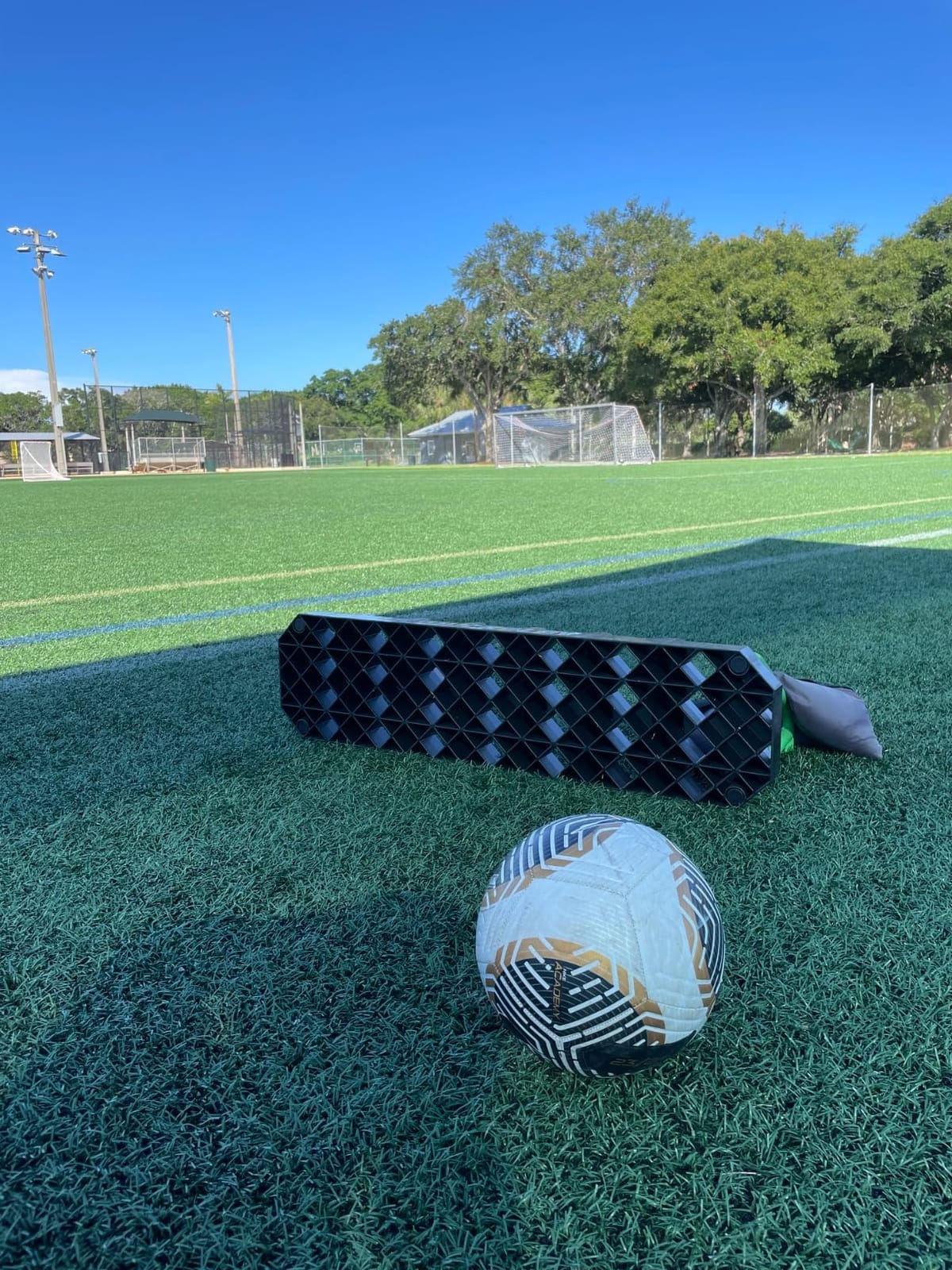
The 4-in-1 design is the clever part. One face is flat and one is ribbed, and each can be used on the ground or lifted into the air, giving four distinct rebound behaviours. The flat face produces predictable returns for controlled layoffs and passing combinations. The ribbed face breaks the ball up randomly, which is the honest way to train reaction touches because the return is not always where the child expects it.
The powder-coated steel legs work on grass, artificial turf, or indoor carpet, so this is one of the few frames here that is genuinely a year-round tool. In winter it moves to a garage floor or a basement, and the drill habit survives the season.
When Four Angles Beat One Big Net
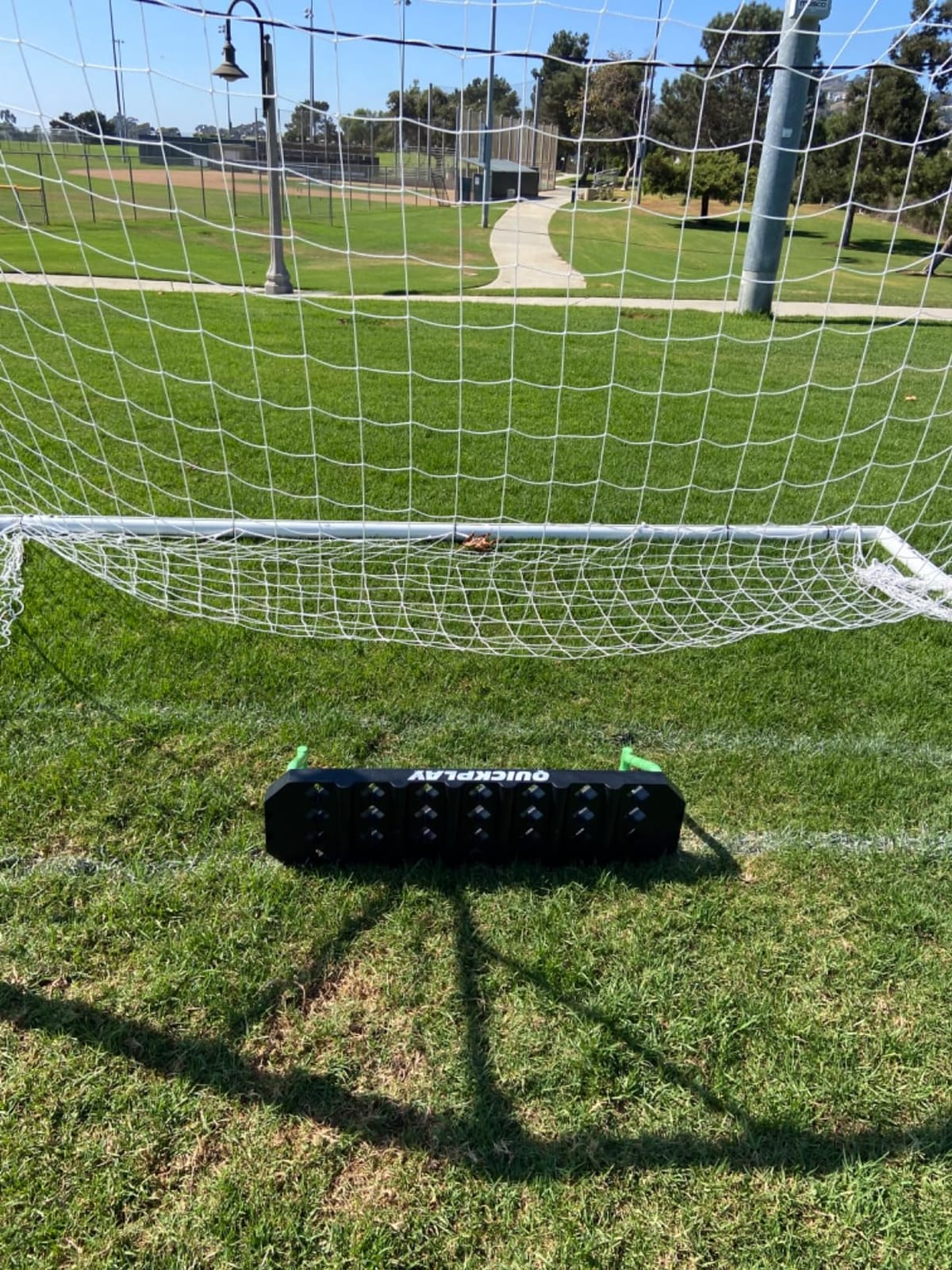
Flipping the board changes the angle, which lets the same frame produce trapping, half volleys, and aerial reception. For a child around eight to twelve, that is a full practice menu in a footprint smaller than a coffee table, and the flip takes one hand. The board also fits in a gym bag, so a sibling can bring it to a team session or a friend’s house.
Because it is a board rather than a net, there is no sagging mesh to retension and no bottom bar to kill a ground pass. The surface is rigid, so the rebound is repeatable, which is what makes accuracy work possible.
Where It Falls Short
The sandbag is included but empty, so you need sand or rocks to fill it before the first session. Skipping that step is the number one reason a board like this walks across the lawn after two hard kicks. Fill the bag, set it on the base rail, and the problem goes away.
The board is also small, and a stronger older child can move it with a firm strike. The removable legs can separate mid-drill if they are not fully seated, and at 13.7 lb it is not something a five-year-old carries comfortably. If your child is under seven or hits hard, size up.
4. Franklin Sports Soccer Rebounder: Best Long-Running Rebound Net
Franklin Sports Adjustable Soccer Rebounder – 6′ x 4′
6 x 4 ft all-weather face
1.5 inch alloy steel tubing
Quick-release angle collars
17.8 lb
Pros
- Long-established 6 x 4 ft face for solo practice
- Quick-release collars change the angle almost instantly
- 1.5 inch steel tubing tolerates years of hard kicking
- Doubles as a 6 x 4 ft mini goal for shooting
- Light enough for a child to drag in and out
Cons
- Does not fold once assembled so it will not fit most cars
- Needs the ground stakes hammered in or it shifts
- Net tension bands can pop off after heavy use
- Only a 90 day limited warranty
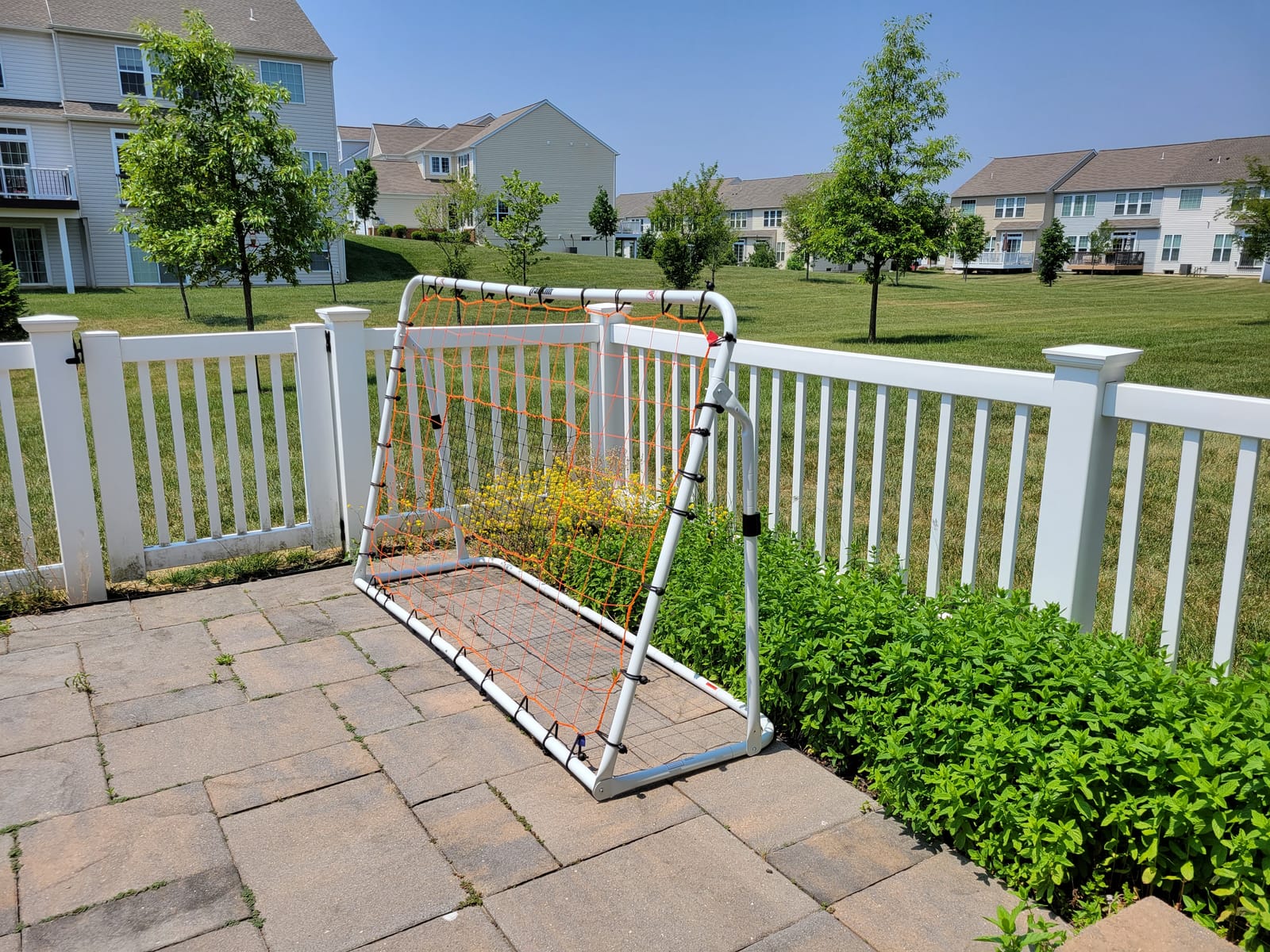
The Franklin is the one most coaches in this category point a new family toward, and the reason is longevity rather than flash. It has been on the market long enough that the frame design is well understood, and the 1.5 inch steel tubing is some of the thickest in this category. For a club that has a rebounder kicked into daily for several seasons, that thickness is the difference between a frame that lasts and one that warps.
It also does double duty as a small goal. Once the rebound is finished, a child can shoot into the same frame as a 6 x 4 ft goal, so one piece of equipment covers both passing and finishing. Parents who buy two things in this category usually end up buying this frame and a full-sized goal, and having the rebounder double as a target saves a corner of the yard.
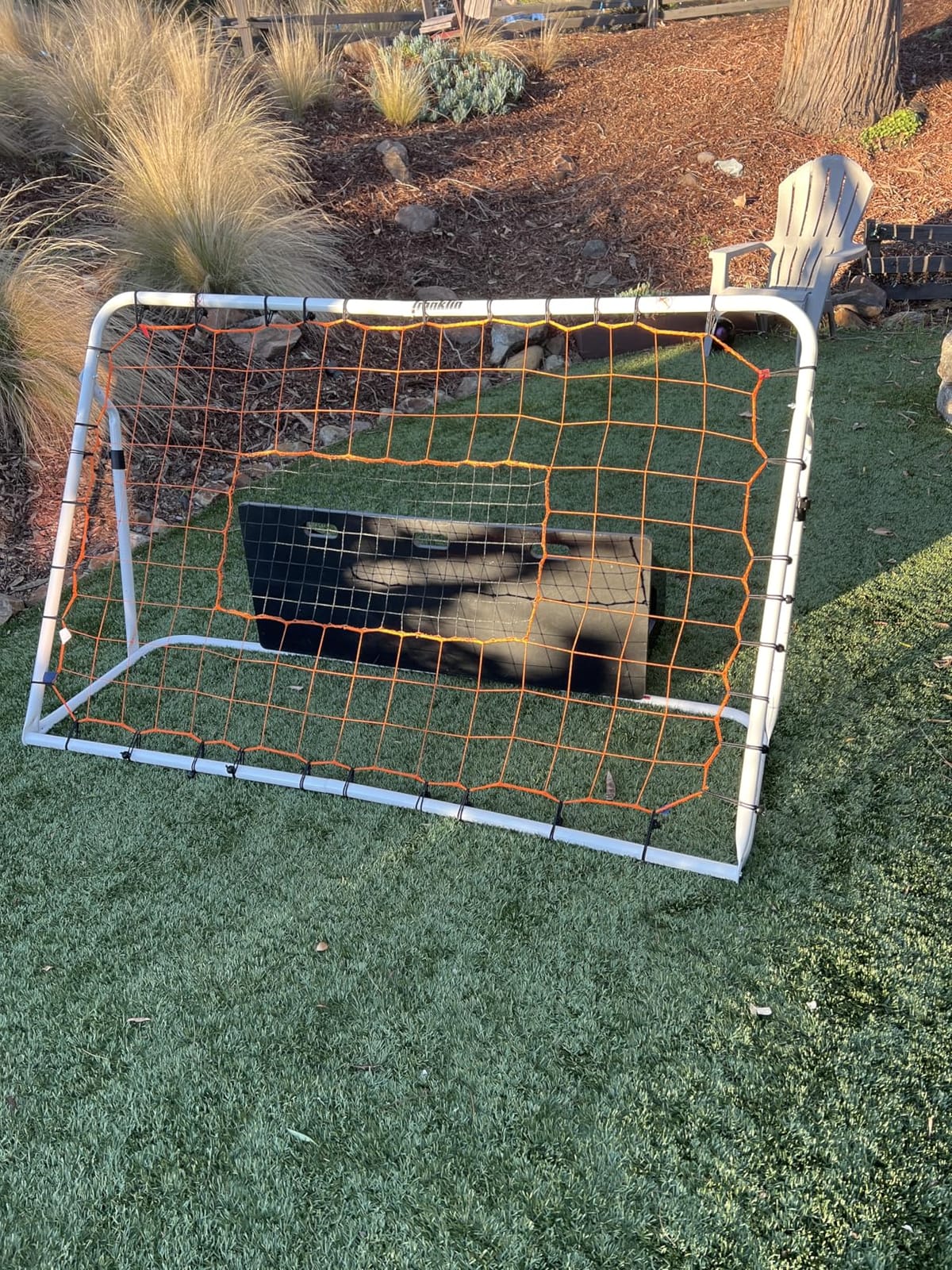
Angle changes are the best feature here. Two quick-release plastic collars set the rebound position, and because they release with a hand rather than a tool, a child can shift from a ground pass to a chest-height return mid-drill. That kind of on-the-fly adjustment keeps a short session moving instead of stopping for a hardware break.
The net is described as all-weather with heavy-duty bungee attachments, and the four galvanized ground stakes are genuinely useful in soil. I would still add weight on a patio, since stakes are stakes and concrete is concrete.
Best for Developing Soft Touches, Not Power Shooting
This frame is best used as a touch trainer rather than a shooting target. The face is broad enough that a child can practice trapping at ground, knee, chest, and head height, and the wide net area means passing accuracy is measurable. For a child between roughly seven and twelve working on control, that is a better use of the frame than trying to blast shots off it.
It is a good club or team frame too, because the steel will take the punishment of many players in rotation. For two siblings sharing one net, the ground stakes keep it honest while both of them take turns.
Where It Falls Short
Once assembled it does not fold, which is a genuine inconvenience. It will not fit inside most cars, so park sessions require a hatchback or a roof rack. Plan the location before you build it rather than after.
The bottom front rail can bend under powerful kicks from older players, and the net tension bands can pop off or need replacing after heavy use. The 90 day limited warranty is also shorter than several rivals offer, so expect to handle small repairs yourself. If your child hits hard and fast, a mesh net with a bar-free bottom is a safer long-term choice.
5. Winthai 5 x 4 ft Multi-Sport Rebound Net: Best Rated Angle Versatility
5x4FT Soccer Baseball Rebounder Net, Volleyball Softball Rebound Pitch Back
5 x 4 ft face with bullseye target
60, 90 and 120 degree angles
Three sandbags included
7.47 kg
Pros
- Quick-switch lever offers three rebound styles in one frame
- 4.5 stars across a large review base
- Three sandbags stabilize it against strong strikes
- Printed bullseye target supports placement work
- Folds down and sets up in about 15 minutes
Cons
- Multi-angle joint and frame make it bulkier to reposition
- Sold in many sizes so the rebound feel varies by variant
- Some buyers want a larger face for older players
The 60, 90, and 120 degree lever is the clearest angle system in this roundup, and it maps to real drills rather than abstract numbers. Sixty degrees suits curved loop passes, ninety degrees gives a volley pass, and a hundred and twenty degrees returns along the ground. A child can move through all three without touching a single bolt, which is what keeps a session interesting past the first ten minutes.
The printed bullseye target on the face is a small detail with a large payoff for accuracy work. A child can aim for the ring rather than merely returning the ball, and hitting a target turns a repetitive drill into something competitive between siblings. Combined with the three included sandbags, this is a frame that stays put when struck properly.
Setup takes about fifteen minutes without tools, and the frame folds for storage afterward. That is a reasonable trade, especially given the sandbags are included and ready to fill. Compared with the frameless folding boards, the extra build gives a noticeably more stable platform, and the return stays consistent even as the angle is switched.
It is a genuine multi-sport frame, covering soccer, volleyball, baseball, softball, and lacrosse, and it comes with a one year warranty. For a household that juggles two or three sports, the variety is the argument for buying it.
When Three Discrete Angles Change the Drill
The lever matters because it removes the decision. A child can be told to switch to ninety degrees for volleys and immediately do it, which turns angle work into a rule of the game. On frames where changing the angle means unhooking ties or moving poles, children stop bothering, and the drill collapses into one flat pass.
For a player around eleven or older, the three-angle system is enough variety to cover ground passes, control, and aerial work in a single session. The target face supports the shooting and placement side of practice as well.
Where It Falls Short
This is one of the bulkier frames in the group at 7.47 kg, and the multi-angle joint adds bulk on top of the weight. On a small patio, repositioning it between drills is a two-person job, which cuts into the solo practice value.
It is also sold in many sizes, from four by four up to eight by six, and the rebound feel changes with the variant you receive. Larger players sometimes find five by four tight for hard shooting. Check the size on the listing carefully before ordering, and fill the sandbags before the first session or the frame will drift.
6. Winthai 4 x 4 ft Multi-Sport Rebound Net: Best Compact Multi-Sport Rebounder
Volleyball Rebounder Net, Soccer Baseball Rebound Pitchback Net, 4x4ft Adjustable Target Practice Nets, Easy Setup Softball Bounce Back Trainer Equipment, Improve Sport Training Skills for Backyard
4 x 4 ft multi-sport face
6 angle adjustments across 2 connector settings
Adjustable target strap
6.12 kg
Pros
- Six angle adjustments plus two connector settings give plenty of variety
- Multi-sport design covers volleyball
- baseball
- softball and soccer
- Adjustable center strap shrinks the target for accuracy work
- Survives being left outside through sun and weather
- Tool-free assembly in about 15 minutes
Cons
- 4 x 4 ft face is small for volleyball and older hitters
- Bulky to move and sometimes needs two people
- Does not always fold flat on the larger size variants
- Volleyball return works best when the net is elevated
This is the smaller sibling to the five by four Winthai, and the distinguishing feature is the adjustment system rather than the face size. Six angle adjustments spread across two connector settings give more total positions than any board in the group, and the smooth slider makes each change feel deliberate rather than fiddly.
The adjustable center target strap is the part that impressed me most. A strap that can be tightened or narrowed turns the whole net into an accuracy game for a child who has outgrown a plain return. Instead of passing anywhere and counting it as success, the child is aiming at a smaller area, which is where passing accuracy actually comes from.
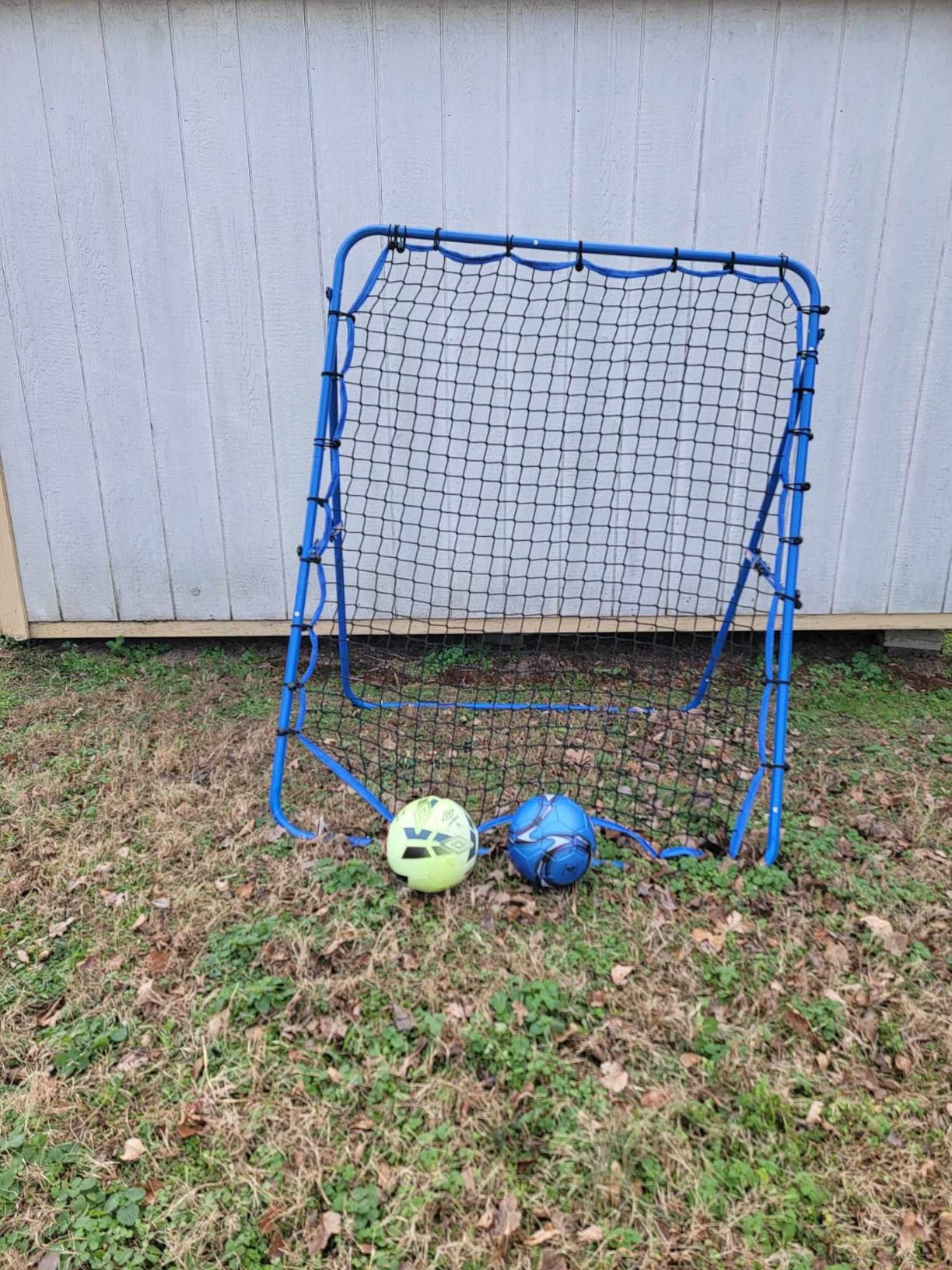
It is a steel frame with a PE net, assembled without tools in around fifteen minutes, and it folds flat on the smaller variants. Reviewers note that boxes have arrived with spare parts, which is a small but real quality signal on a category where missing hardware is the most common complaint.
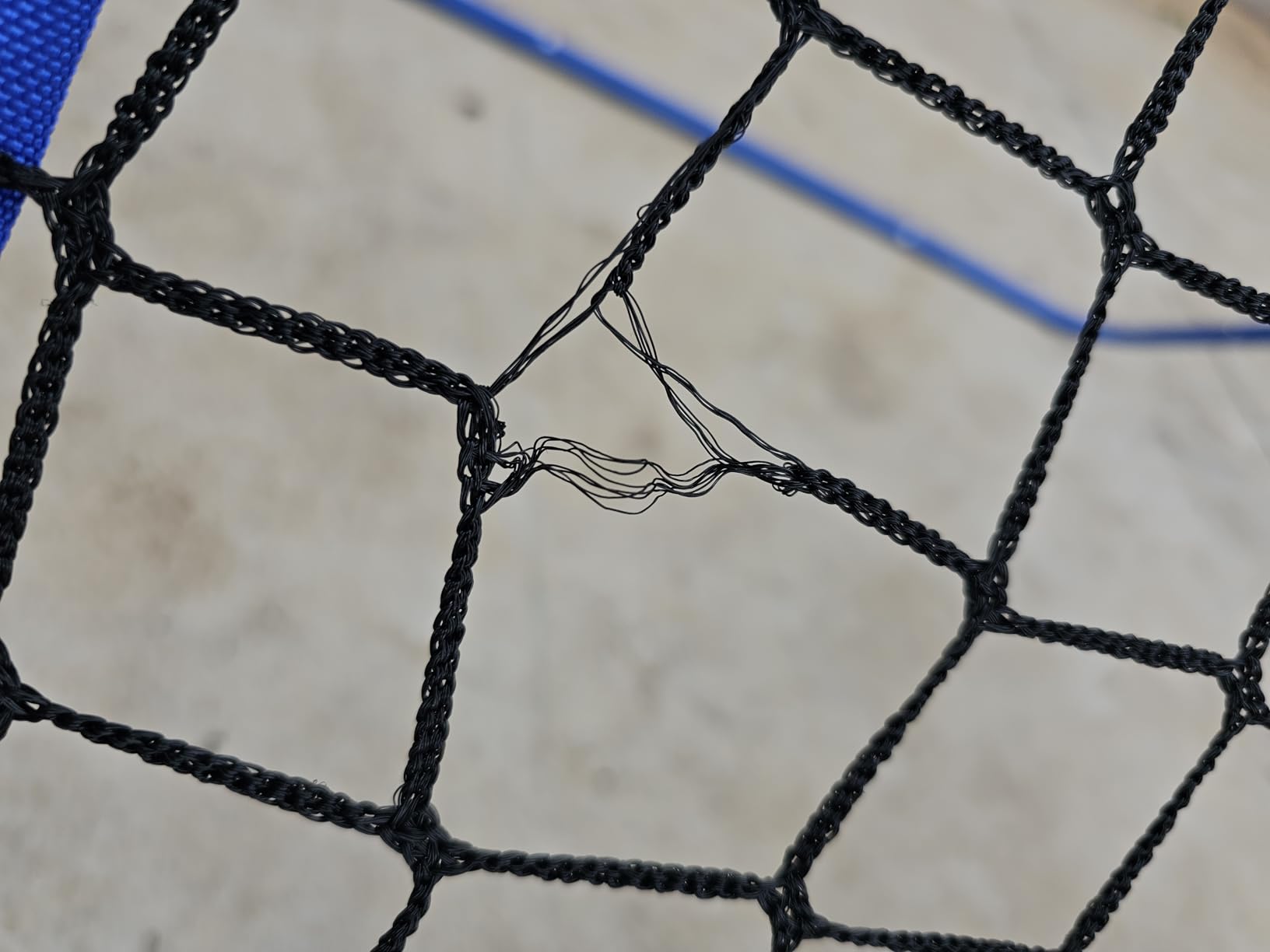
Durability is a genuine strength here. Owners report the frame surviving being left outside through sun and weather with the stakes holding even against hard shooting. For a family that sets up once and forgets about it, that is the behaviour you want.
Best Value for a Household With Several Sports
Because it handles soccer, volleyball, baseball, and softball on the same frame, a family with two children in different sports gets more practice from one purchase. The multi-sport angle is where a mid-size frame beats a dedicated one: the same net that catches a ground pass returns a baseball toss and a volleyball set.
For a child around nine to thirteen who wants variety in a session, six angle positions across two connector settings is more drill menu than the price suggests.
Where It Falls Short
The four by four foot face is compact, and that shows up most with volleyball and with older or stronger hitters. Volleyball returns work best when the net is elevated on a slope or a platform, which adds a step to every session.
At 6.12 kg it is awkward to carry alone, and on the larger size variants it does not always fold flat the way the listing implies. Measure your storage spot and your carrying route before ordering, and expect to need a second pair of hands for the first setup.
7. ACELETIQS 12 x 6 ft Rebound Net: Best Rebounder for Big Yards and Two Players
Soccer Rebounder Net Feet Practice Soccer Training Equipment | Portable, Easy Assembly, Steel Frame | Perfect for Practicing Backyard Volley, Solo Training,Kickback, Passing, Pitchback (12×6 Feet)
12 x 6 ft high-tension surface
1.25 inch powder-coated frame
Lifetime warranty
72 inch tall
Pros
- Largest rebound face in the group so a family can drill at once
- No dead zones and a lively return that keeps kids moving
- Frame and bungees hold up to daily outdoor kicking
- Rubber feet protect indoor floors
- Carrying bag and lifetime warranty included
Cons
- Takes about 20 minutes to assemble rather than the claimed 7
- Not designed to be disassembled often so it stays put
- Supplied ground stakes are weak on their own
- Support arm bolts can go missing
- Bulky to reposition once it is built
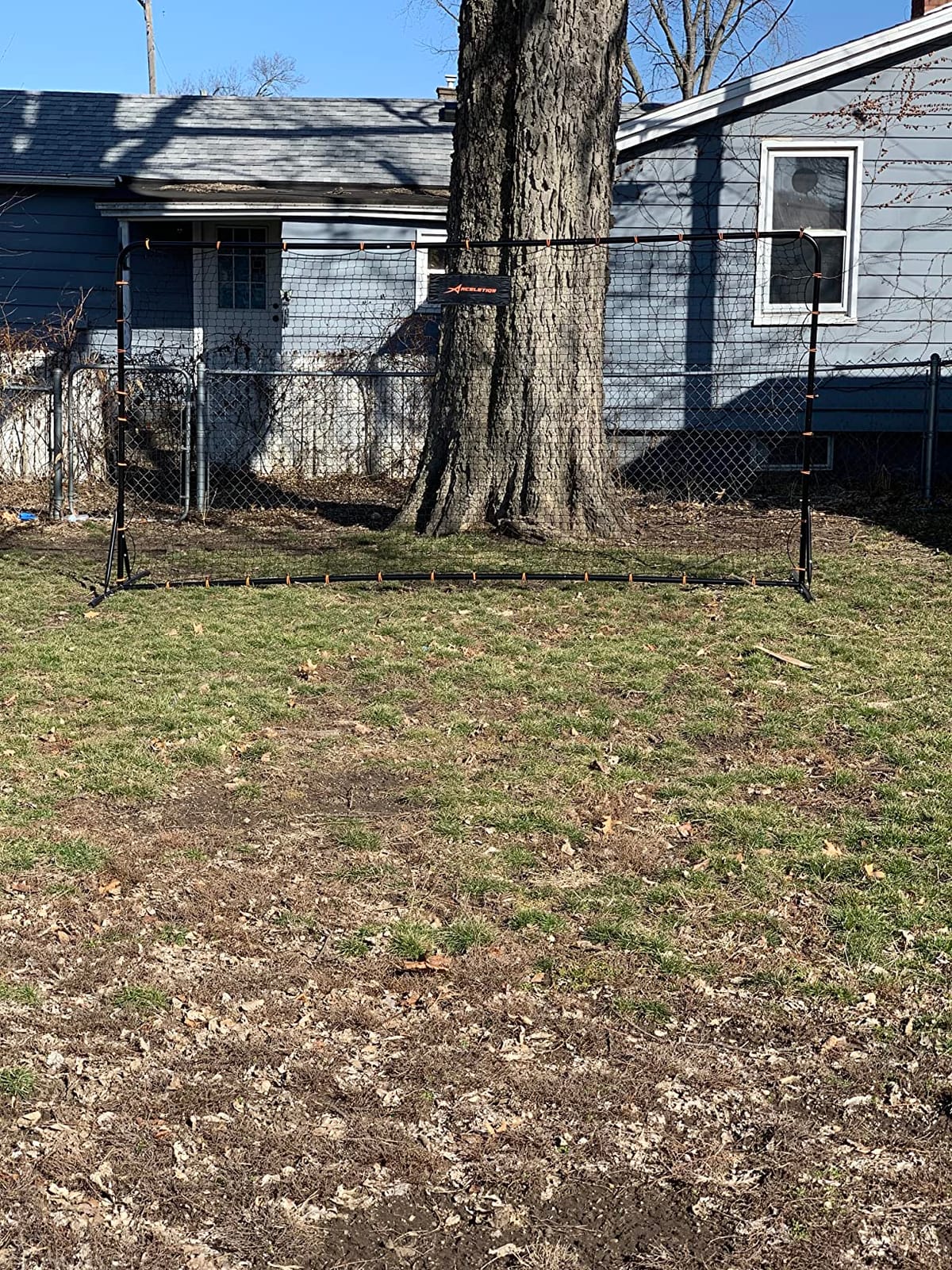
This is the frame for a family with a real yard and more than one child. At twelve by six feet it is by a wide margin the biggest rebound surface in this roundup, and that size removes a specific problem: a lofted pass clearing the top and ending the drill. On a face this wide, a twelve-year-old can hit it as hard as they like and the ball comes back.
That capacity is also the fix for sibling sharing. Forum discussion among parents buying rebounders keeps circling the same frustration, that one net means kids take turns and practice time gets halved. A frame two children can use at the same time changes the arithmetic, and it is the strongest argument for a larger unit like this one.
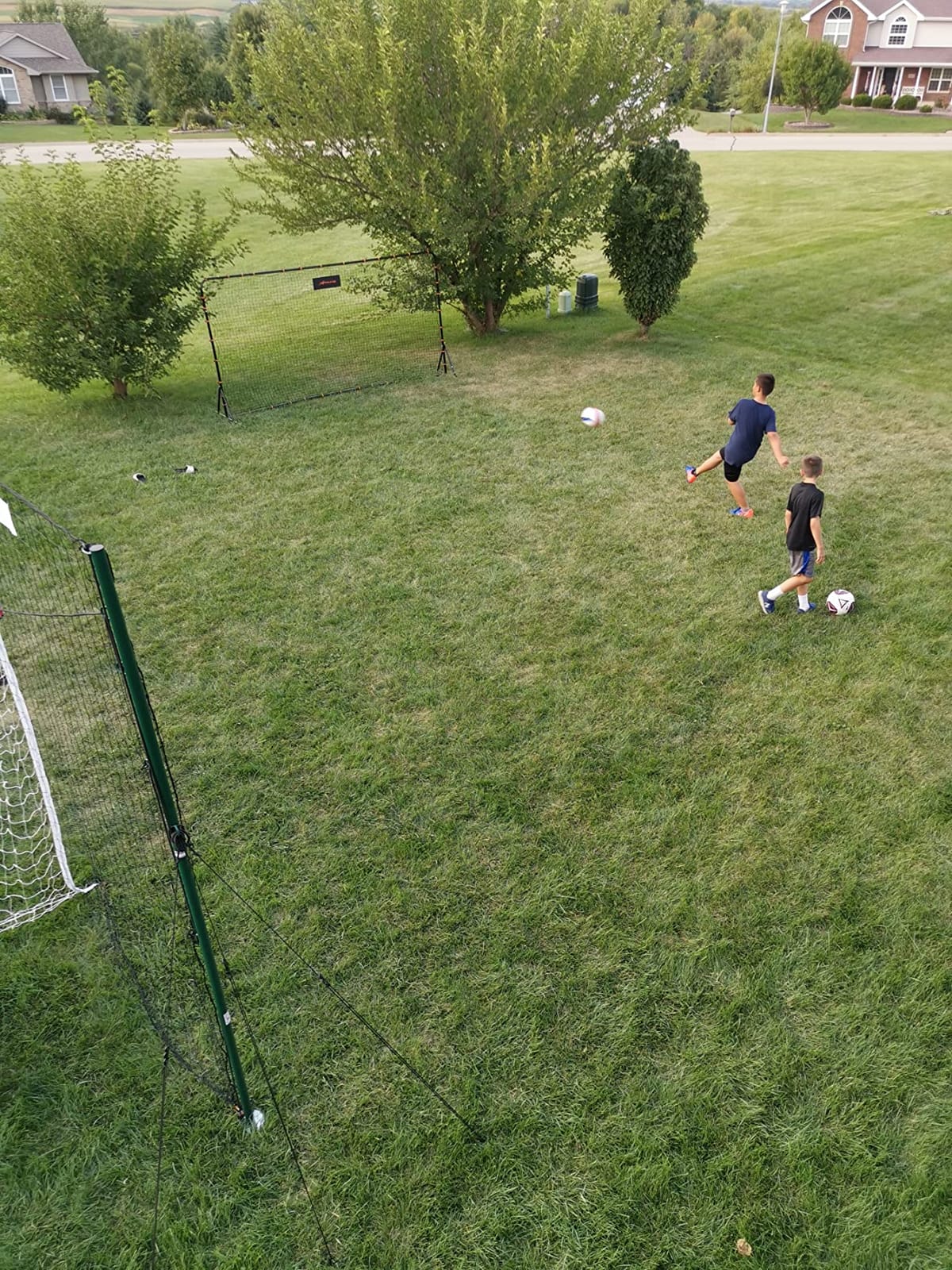
The build is where the money went. It uses 1.25 inch thick powder-coated metal with industrial bolt fasteners instead of the push-pin joints common on cheaper frames, and the bungees are covered in mesh fabric so they do not abrade the net. Owners with multiple kids report that the frame and bungees have held up despite being left outside and kicked hard daily.
The rubber feet are a thoughtful addition for a home with a garage or basement. A metal frame dragged across concrete is exactly the kind of detail that makes a parent decide a product was designed for real homes rather than a spec sheet.
When Two Players at Once Changes the Math
There is a six by four foot variant in this range for buyers with less space, and the difference in practice volume is immediate. Two children can each run a passing line, or one can shoot while the other feeds passes, without either of them standing around. Owners with several children consistently report that a frame this size is the one that finally got their kids practising without being asked.
For older players the no-dead-zone high-tension surface matters. There is no patch where the ball dies, so a hard shot into a corner still comes back on a predictable line, which is what makes shooting practice productive rather than random.
Where It Falls Short
Setup is the real cost here. It takes about twenty minutes to assemble, considerably longer than the instructions suggest, and it is not designed to be taken apart and rebuilt often. Pick the spot before you open the box, because this frame stays where you put it.
The supplied ground stakes are weak on their own, so on anything but soft soil you will want sandbags or weights at the base. Support arm bolts can also go missing after repeated use, and the unit is bulky to reposition. If your yard is small or shared, a mid-size frame is the smarter purchase.
8. QUICKPLAY TEKKERS Dual Net: Best Rebounder for First Touch and Grounding
QUICKPLAY TEKKERS TRAINER Soccer Rebounder, 6.5×4′ Spot & 6.5×1.5ft Ground Pass Nets, Alloy Steel, Fiberglass, Black, Green, Portable
6.5 x 4 ft spot net plus 6.5 x 1.5 ft ground net
Fiberglass flexi-posts
Tool-free four minute setup
6.6 kg
Pros
- Two rebound surfaces in one frame reduce resetting
- Four minute tool-free setup and a quick take-down
- Fiberglass uprights absorb impact and keep returns consistent
- Parents report years of daily use still going strong
- Carry bag included for park and team sessions
Cons
- Lower ground-pass net is tight to fit and often a two-person job
- Rebound can be less lively than expected for some households
- One reviewer reported a support arm breaking within a month
- Netting color fades in sun though strength holds
- Indoor use needs added weight to stop sliding
The TEKKERS solves the same problem the SKLZ solves, with a lighter build and a different feel. It pairs a six and a half by four foot spot net with a six and a half by one and a half foot ground pass net, and the child can switch between a crisp ground pass and a lifted loop pass without walking over to reset anything. That is the whole point of a dual net, and this one executes it well.
It assembles in around four minutes with no tools, which makes it the quickest of the framed nets here. Parents also report years of daily use still going strong, and coaches buy it for youth teams, so the long-term durability reports are better than most of the category.
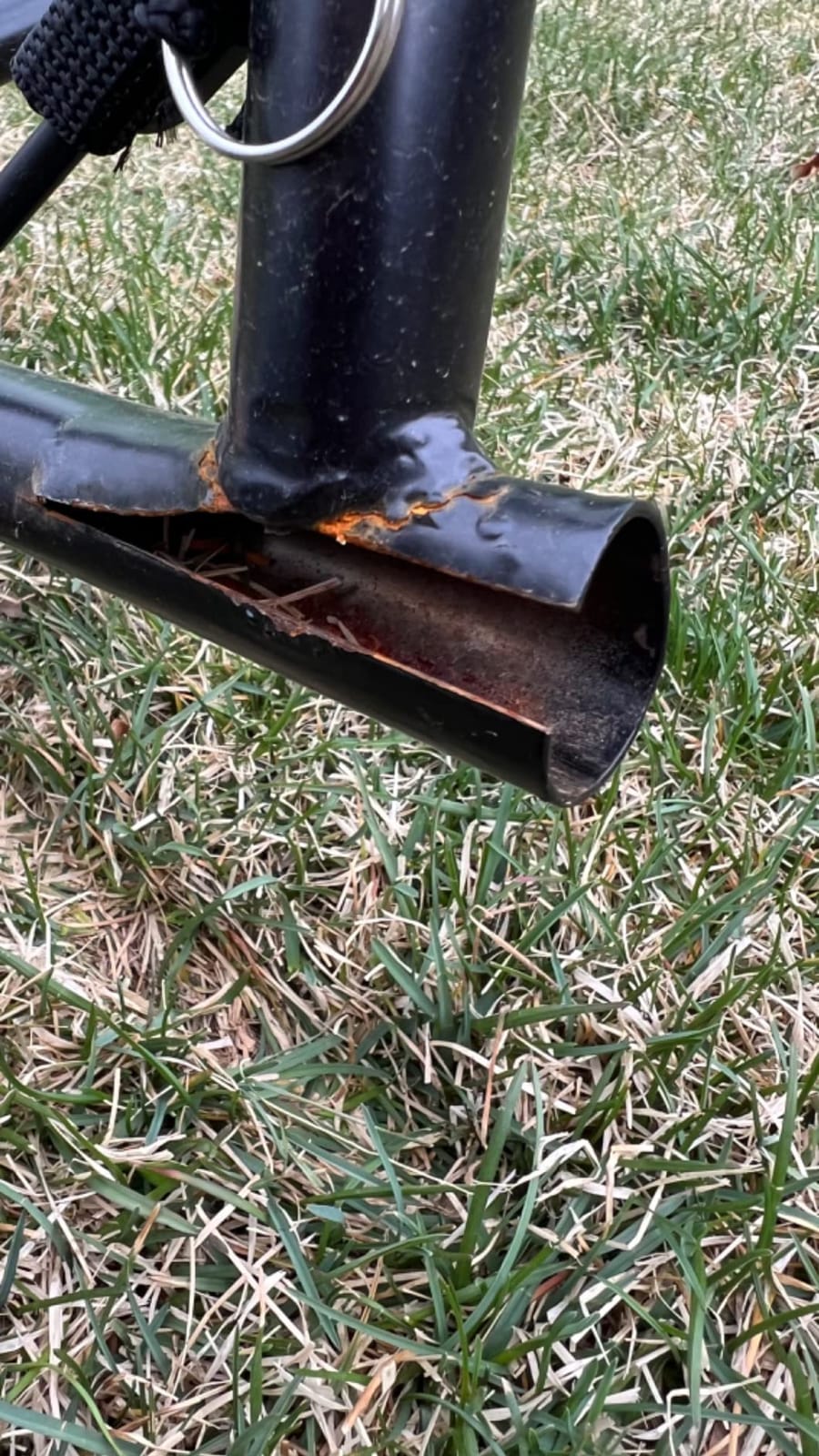
The flexi-post design is the quiet innovation. The uprights are flexible fiberglass rather than rigid steel, so they absorb impact instead of transmitting it, and that keeps the return consistent when a child strikes hard. The alloy steel base frame underneath still handles stability, and the whole thing works on grass, turf, or indoors.
A carry bag is included, which makes the trip to a park, a team session, or a friend’s house realistic rather than aspirational. The skill range runs from under-eight beginners through to adult-level work, so it does not get retired as a child improves.
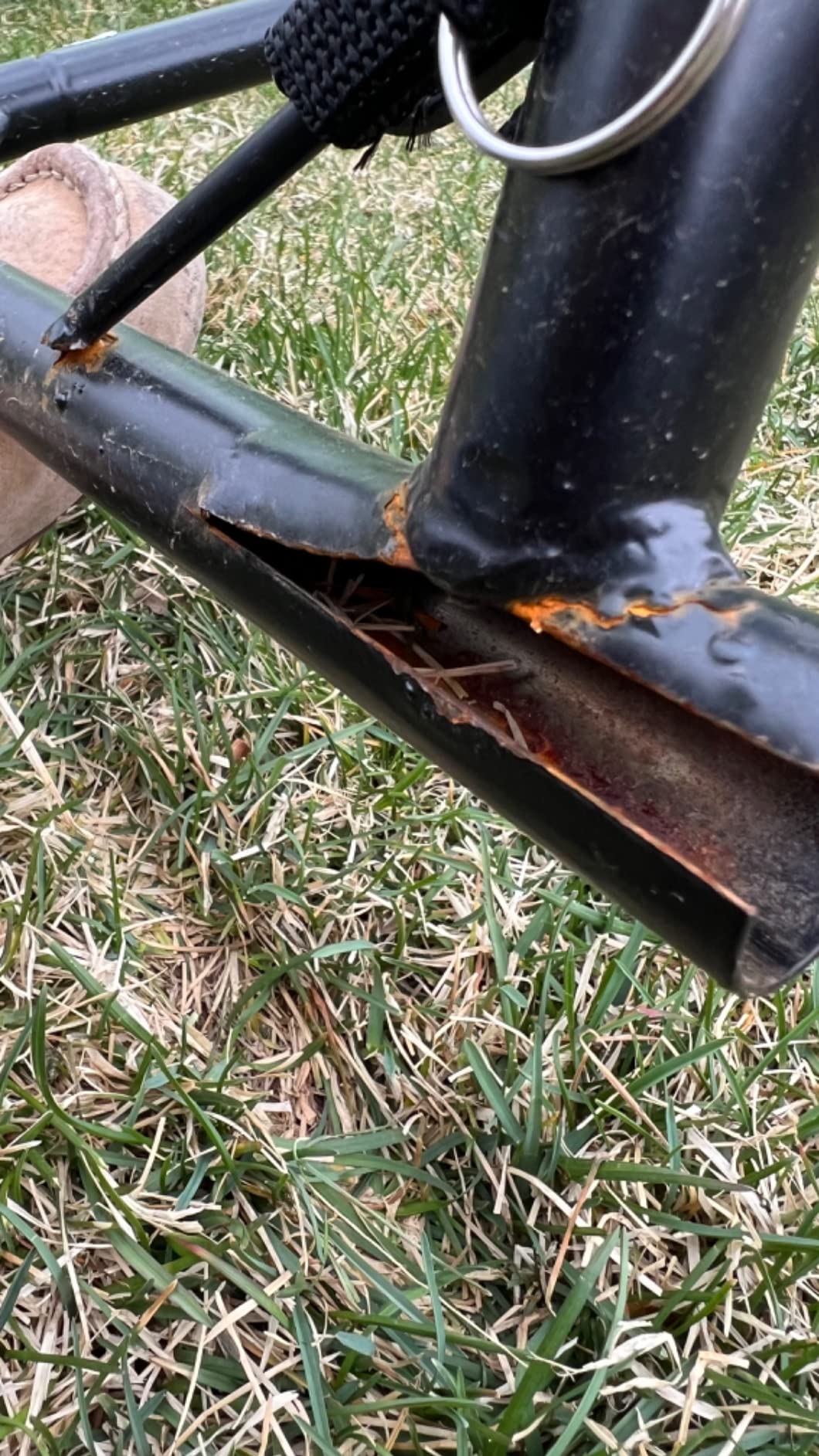
The lower net is a tight fit onto the frame and is usually a two-person job the first time. Once it is on, it stays on for a long session, so budget fifteen minutes for the first assembly rather than the four minutes the headline setup time suggests.
Best for a Child Who Needs Constant Ball Contact
Two surfaces means two different kinds of touch, and both are early skills. The low net trains the inside of the foot to guide a ground pass, which is the foundation of every pass in the game. The tall net handles control and reception at height. A child can work both in a single session without a parent feeding balls.
The four minute takedown is worth repeating, because it means this can be a weekday activity in a small yard rather than a weekend project. It also works from under eight up to adult level, so it is a frame that grows with the child rather than one they outgrow.
Where It Falls Short
The rebound can be less lively than promotional footage suggests for some households, particularly on the taller net. If your child wants a ball fired back hard for reaction work, a stiffer netted frame like the Winthai models fits that better.
One reviewer reported a support arm breaking within a month of occasional use, and the netting colour fades in sun and sprinkler spray even though the strength holds. On indoor surfaces you need to add weight to stop it sliding. The tight lower net is the biggest day-to-day friction, and if you are not comfortable with a two-person assembly, ask someone to help before the first session.
9. ZivPlay 32 x 12 Inch Rebound Board: Best Compact Board for Small Spaces
Soccer Rebounder Board Soccer Wall Passing Board Spot Kick Back Trainer
32 x 12 inch HDPE board
60 and 90 degree flip
Foldable legs with carry handles
Includes sandbag and target sticker
Pros
- Lightweight folding board a child can carry and reposition
- HDPE build is kind to indoor floors and weathers well
- Two rebound angles via a simple flip for ground and aerial
- Lock pin stops legs collapsing mid-drill
- Includes sandbag and target sticker for accuracy work
Cons
- 32 x 12 inch face covers a small area of the yard
- Sold in three sizes so the rebound feel varies by variant
- Basic ground pass surface compared with larger framed nets
This is the answer for a patio, a balcony, or a side yard where a framed net will not fit. At thirty-two by twelve inches it is a genuinely compact board, and because it is HDPE rather than steel or polypropylene, it will not scratch an indoor floor. Families practising in a garage or a basement during winter can put it straight onto carpet or concrete.
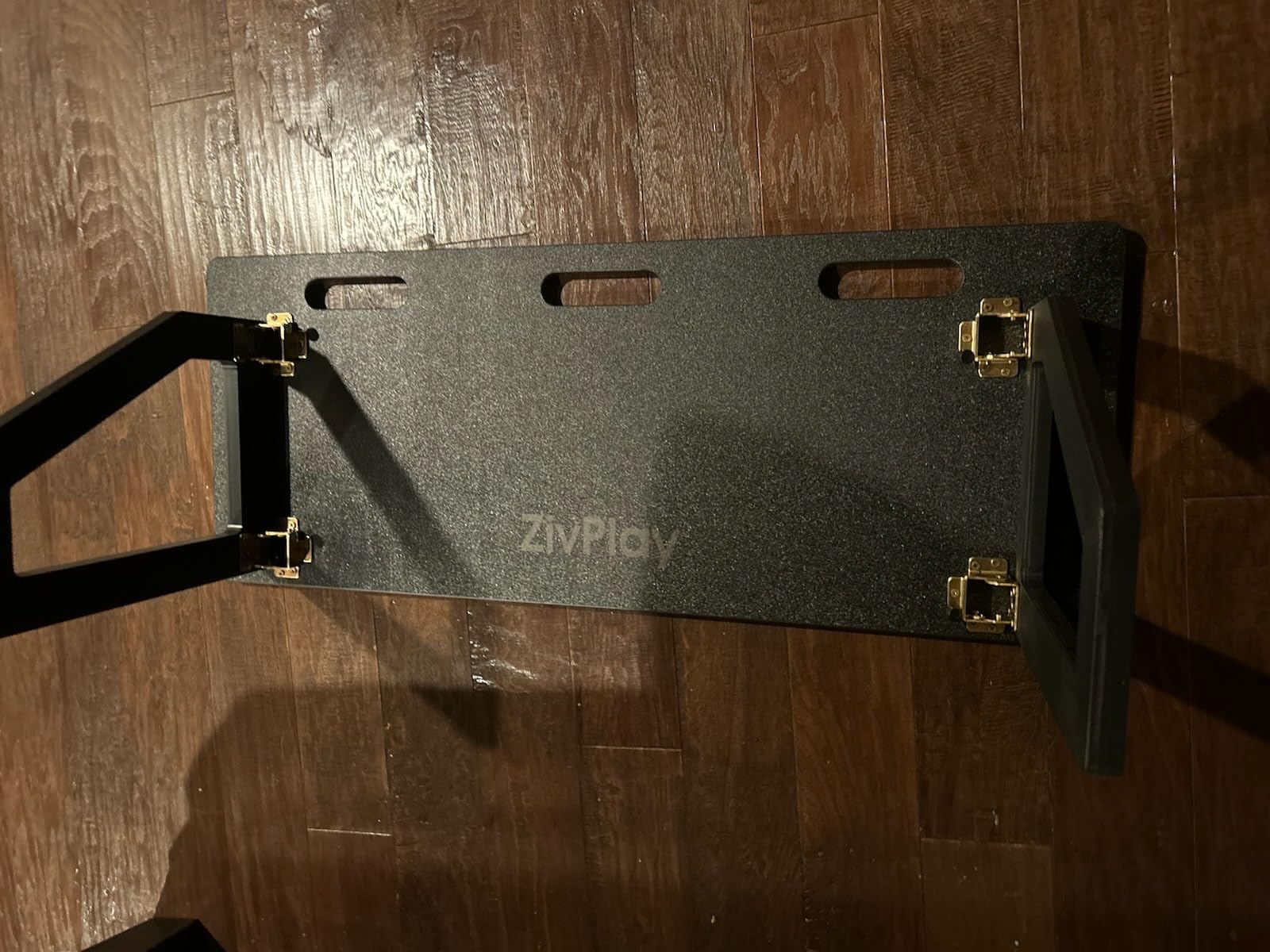
The flip design toggles between sixty and ninety degree rebounds, which covers both a ground pass and an aerial return from one board. A lock pin holds the folding legs in place, and that matters more than it sounds, because a board whose legs fold under a firm shot is a board a child will not trust.
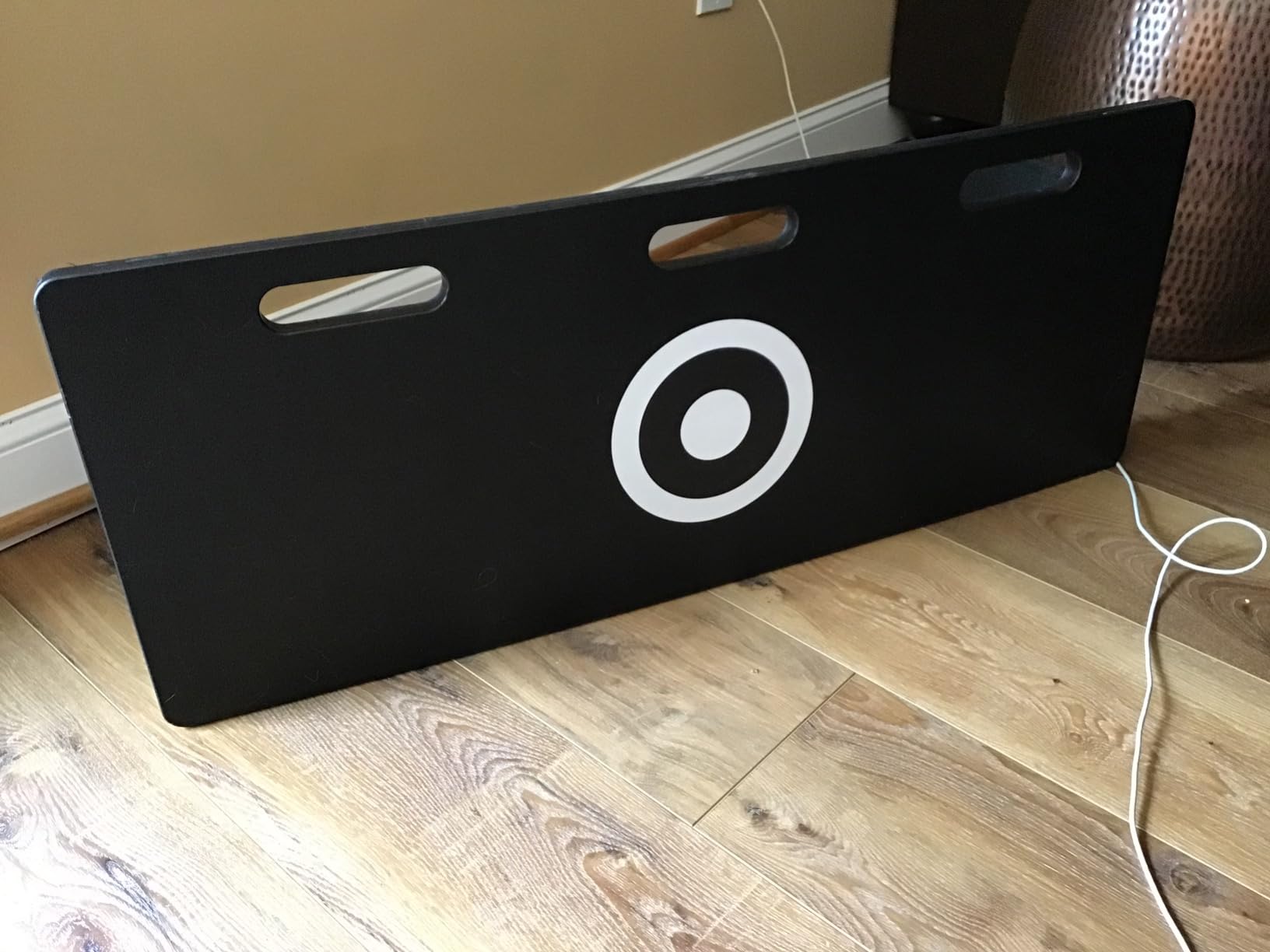
A sandbag and a target sticker are included, so the accuracy side of practice is available from day one. The sticker’s target is small, but it turns the board from something you hit into something you aim at, and that is a meaningful upgrade for a young player.
Carry handles are built into the foldable legs, so a child can pick it up and move it single-handed. Combined with the light weight, this is among the easiest boards here to carry and the easiest to hand between siblings or between a yard and a park.
Best for Apartments, Patios, and Indoor Practice
Because the material will not scratch floors, this is one of very few rebounders in the category that can be used indoors without a mat underneath. That makes it the practical choice for a family with no usable lawn, and for winter work when the grass is under snow or the season has turned.
For a child between five and nine working on short passing bursts, the compact face is workable. The two-angle flip gives enough variety to keep a short session from feeling repetitive without needing a bigger frame.
Where It Falls Short
The thirty-two by twelve inch face is the honest limitation. It covers a small area, and a stronger older child will loft passes straight over it, which is the same ceiling problem the small nets have. There is also a thirty by twelve and a forty by sixteen variant, so the rebound feel differs depending on which one you receive.
The ground pass surface is basic compared with a framed net, and the accuracy work is limited by the size of the sticker target. If your child is nine or older and striking properly, spend the extra step up to a real net.
10. VEVOR 2-in-1 Soccer Rebound Net: Best Two-Player Entry Rebounder
VEVOR Soccer Trainer, 2-in-1 Portable Soccer Rebounder Net, 71″x40″ Iron Soccer Practice Equipment, Sports Football Rebounder Wall with Portable Bag, Perfect for Team Solo Training, Passing, Volley
2-in-1 aerial and ground pass net
Iron tube frame
12 lb total weight
40 by 71 by 54 inches
Pros
- Entry-level build that several buyers say rivals costlier brands
- 2-in-1 layout lets two kids train at the same time
- Light 12 lb frame with a carry bag moves between rooms and yards
- Consistent springy rebound once assembled
- Four U-shaped ground nails keep it steady on grass
Cons
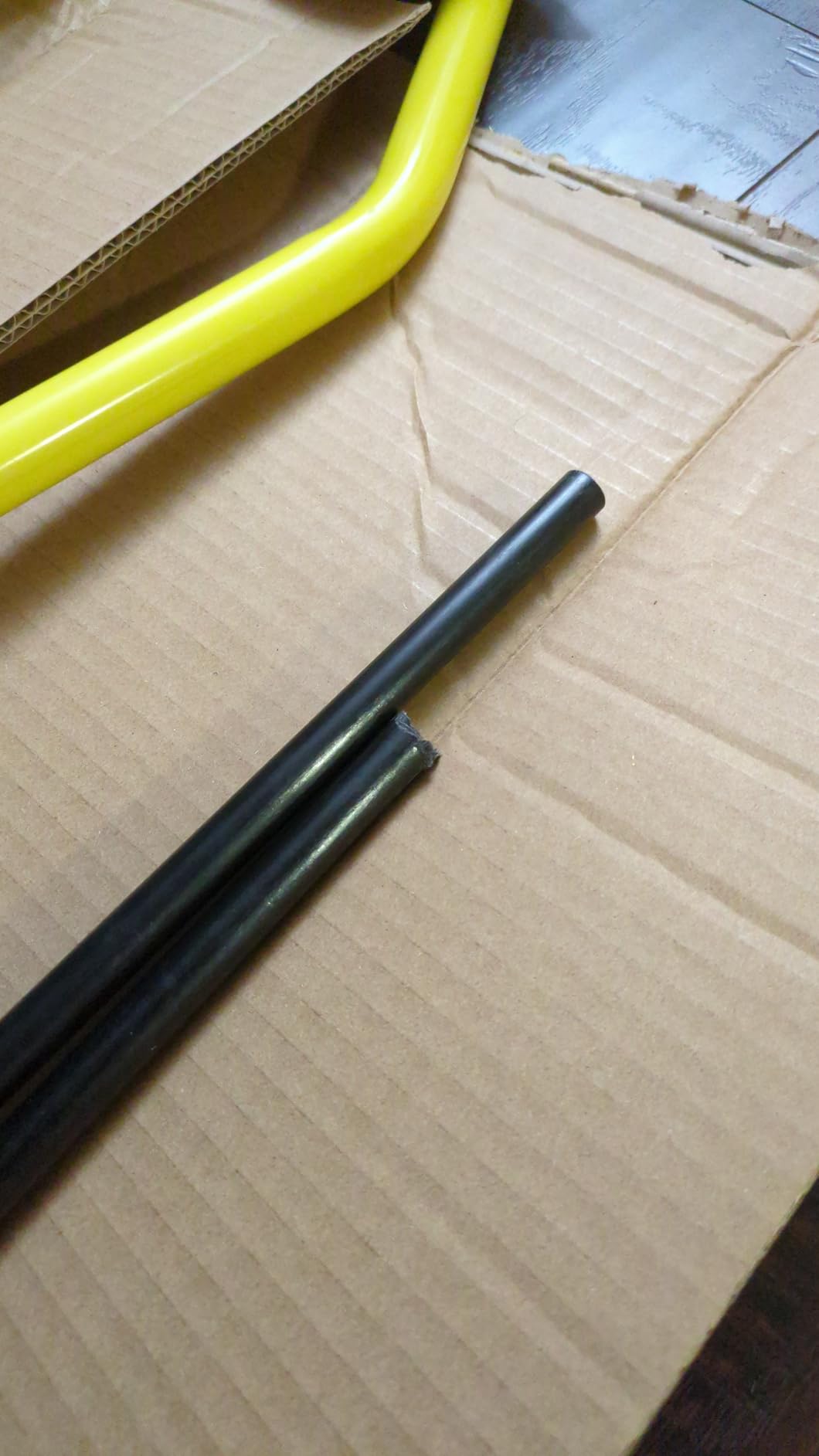
- Weak build with fiberglass bar snapping reported within weeks or months
- Instructions are poor and net attachment takes patience
- Net is shallower than the photos suggest which limits headers
- Two hard kicks from a strong 12 year old move it without firm stakes
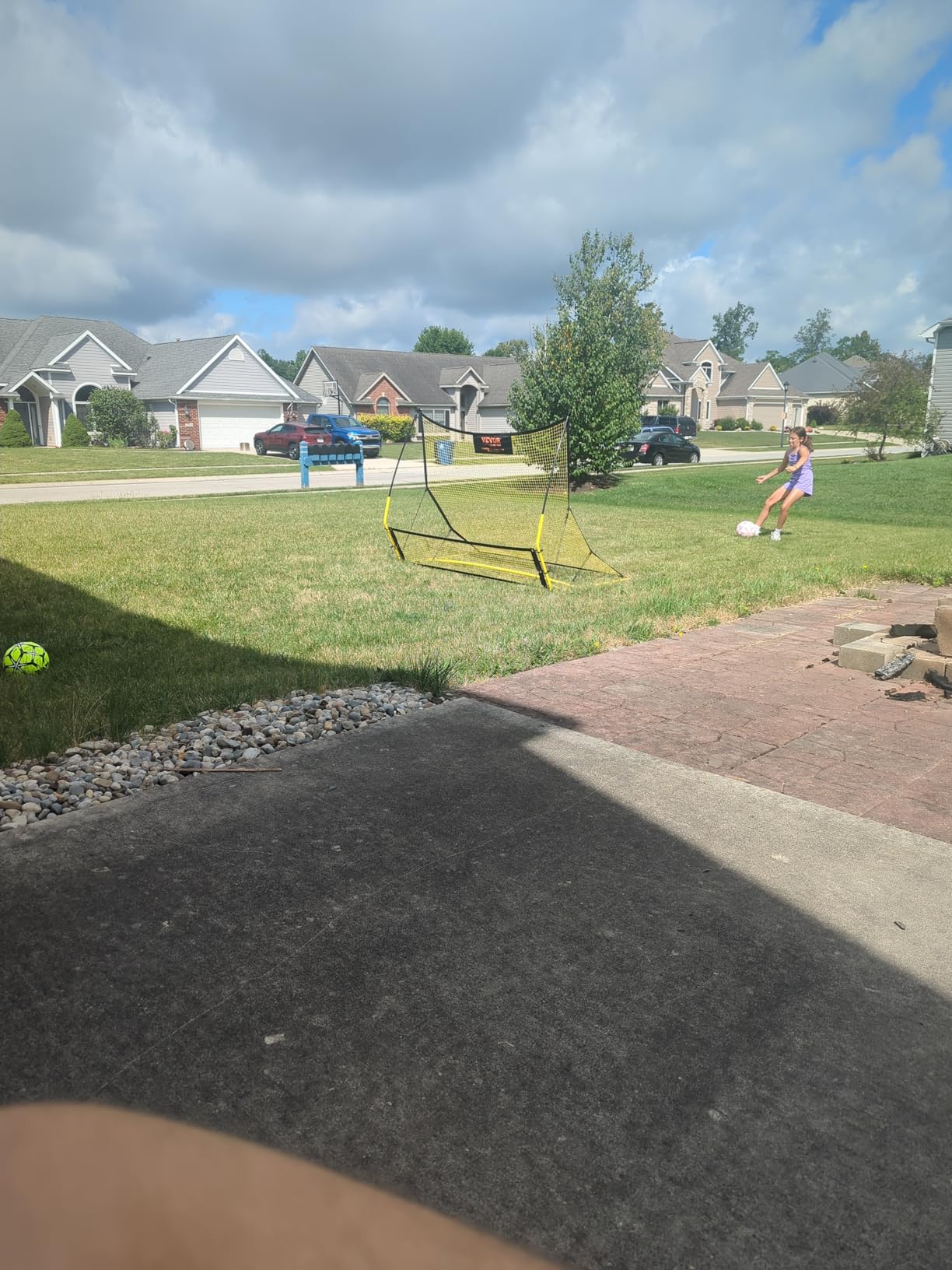
The VEVOR is the least expensive way into the category and one of only two frames here that two children can work on at the same time. The two-in-one layout gives a taller net for aerial loop passes and a lower one for ground passes, and the manufacturer positions it for simultaneous training. Siblings sharing a single rebounder is the most common complaint in this category, and this frame answers it more directly than anything else in the roundup.
At twelve pounds with a carry bag, it is also one of the easiest to move. A family can shift it between the backyard, a garage, and a living room floor on carpet without much fuss, which broadens the number of days per year it can be used.
The netting is three-ply dacron knotless with encrypting pins on the wrapped edges, and once it is up the rebound is described as consistent and springy. Four U-shaped ground nails are included, and in soft ground they do the job of keeping the frame in place during a normal passing session.
It is also useful beyond soccer. The lower net works for basketball passing work and general ball control, so it doubles as a general practice partner for a young athlete in any sport.
Best for Two Kids Training Side by Side
This is the frame to buy if the main problem is turn-taking. Two children can each work a passing line against the different surfaces, and a sibling pair can run a drill together instead of one waiting. The low end of the price range makes that two-player capability unusually cheap.
It suits younger children best, since the return is gentle enough for a beginner to control and the frame is light enough that an adult or older sibling can reposition it without effort.
Where It Falls Short
Build quality is the concern. Several buyers report a fiberglass bar snapping within weeks or months, and this frame carries the lowest average rating in the roundup along with the largest share of one-star reviews. Treat it as a starter frame rather than a multi-season investment.
The instructions are also poor, especially for attaching the net, so allow yourself patience on the first build. The net is shallower than the product photos suggest, which limits heading practice, and a strong twelve-year-old can move the whole unit with two firm kicks unless the ground nails are driven in properly. If the child in your house kicks hard, put your money into a heavier frame instead.
How to Choose a Soccer Rebounder for Kids: 8 Criteria
Rebounders come in two shapes, and confusing the two is the most expensive mistake in this category. A rebound net is a tensioned surface on a frame that springs the ball back. A rebound board is a rigid surface that deflects it. Nets give softer, more variable returns and more angle options. Boards give faster, more predictable returns, weigh less, and are far easier to carry and store. If your child is under nine or practising indoors on carpet, a board is usually right. From about ten upward, a net supports more drills.
1. Size by Age, and the Outgrowing Problem
Match the face size to the child, not to the marketing. A three by three foot frame is right for a five to seven year old and will feel small to a nine-year-old within months. A six by four foot face covers most single-child use from about eight to twelve. A twelve by six foot face is only worth it for two players, older strikers, or a genuinely large yard.
The outgrowing trap is real: parents buy a small frame for a six-year-old and a year later the ball sails over the top. If the child is already eight, or already lofting passes, skip the smallest size and buy the mid frame. Check the dimensions against the ball size too, because a very small ball on a very small board produces a return a child cannot control.
2. Angle Adjustability
Angle options turn one frame into several drills. Discrete positions are better than a continuous adjustment, because a child can learn one setting and repeat it, and because nothing slips mid-session. Three positions covering ground, knee, and chest height is the practical minimum. Six or more is genuinely useful for a player who has been training for a year.
Check how the angle is changed, not just how many positions there are. Quick-release collars, a lever, or a flip of the whole board all work with one hand. Wingnuts and unkeyed bolts that need a screwdriver do not, and in practice the frame stays at whatever angle it was last set to.
3. Frame Build and Joint Type
Look for steel tubing, powder coating, and bolts or keyed collars over push-pin plastic joints. The category spans everything from thin iron with plastic connectors to 1.25 inch powder-coated tubing with industrial fasteners, and the difference shows up in year two rather than week one. Mesh-protected bungees and a bar-free bottom edge are both signs of a considered design.
4. Anchoring by Surface
Stake-based anchoring only works in soil. This is the single most common setup mistake in the category, and it is worth deciding before the frame arrives.
Grass: the included metal or U-shaped ground stakes are the right method, driven firmly at an angle away from the frame.
Artificial turf: stakes work if the turf is on a soil base. On glued-down turf, use sandbags or a bucket on the base rail.
Concrete patio or driveway: skip the stakes. Use sandbags, or a filled bucket or pot on each base corner. A bucket of water or sand is enough for most child-sized frames.
Carpet, garage, or basement: use a heavier weight, and put a mat under metal feet if the frame has any. Boards built from HDPE or with rubber feet need no mat at all.
Fill any included sandbag before the first session. An empty sandbag stabilises nothing, and owners repeatedly report a frame walking across the yard after two hard kicks.
5. Portability and Storage
Check the weight against the age of the child who will move it. Anything under four kilograms can be carried by a small child. Anything over seven kilograms is a two-person job, and a frame that needs an adult to reposition gets repositioned less often. A fold-flat design or a carry bag is worth a lot over a two to three year life, because it is the difference between a frame used year-round and one that lives in a garage.
Also check the folded size against your car. Several well-built steel frames in this category do not fold at all once assembled, which means the location you build them in is the location they stay.
6. Safety Around Children
Most rebounders are sold without any safety guidance, so the checks are on you. Rounded or capped frame ends matter for younger children running around the setup. Keep the frame angled away from windows and toward open space, and never position it so a returned ball travels toward a road, a neighbour’s yard, or a patio door.
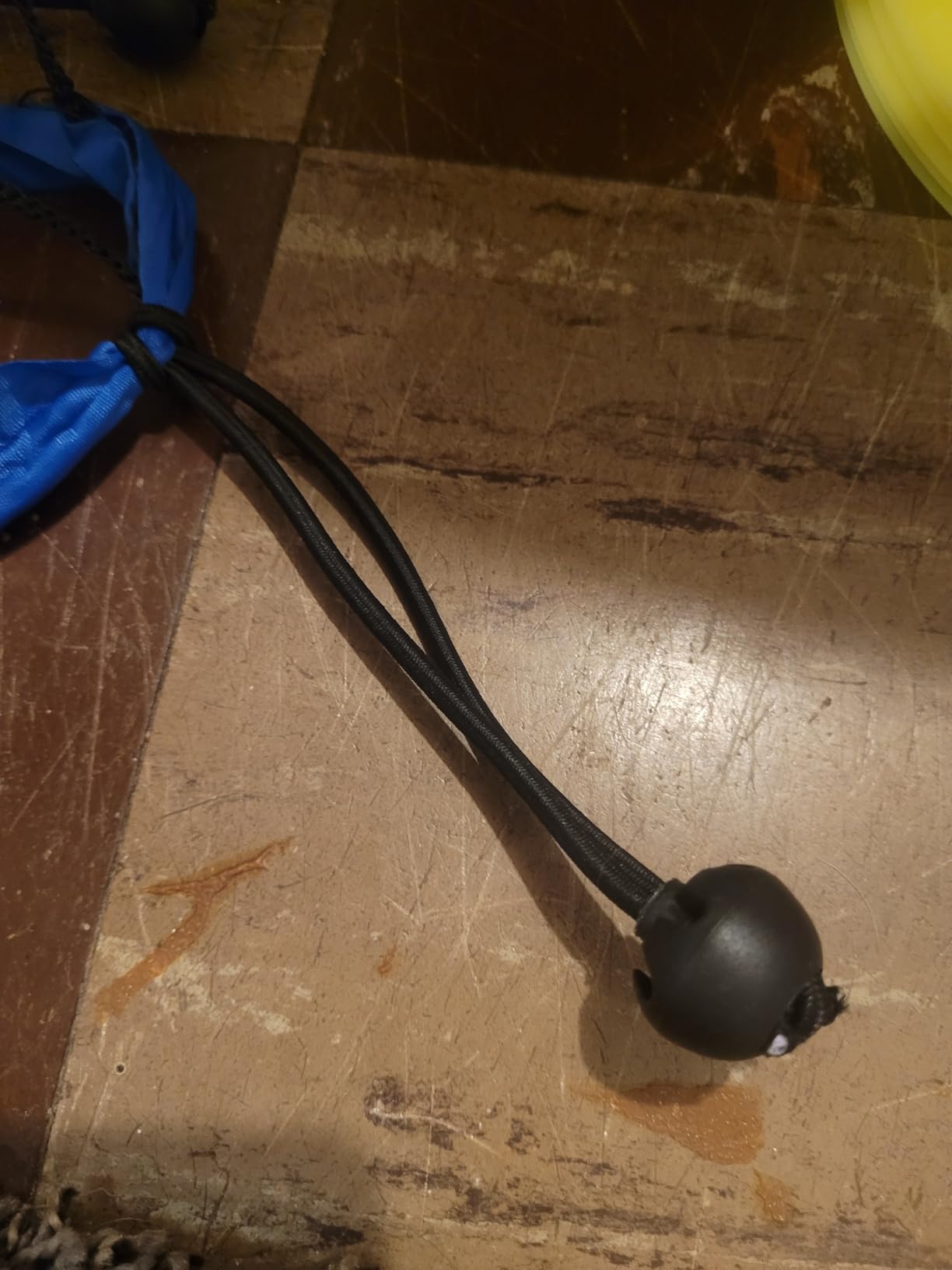
Check the bungee cords and elastic tie-downs before each session, because these are the parts that fray first and a frayed cord under tension is the sharpest thing on the frame. Leave a clear lane behind the net for the child taking the return. For a five to seven year old, keep them on the kicking side of the frame with an adult within reach, since a tip-over is more likely with a light frame than a heavy one.
7. Durability and What Actually Breaks
Across this category, the same handful of parts fail, and none of the failures are expensive to fix.
Bungee cords and elastic ties: the most common failure, usually within weeks of daily use. Replace with a fresh elastic cord, keeping the same tension, before the fray travels into the net edge.
Ground stakes: bend or pull out of hard soil, and are useless on concrete. Longer stakes for soil, sandbags for hard surfaces, and keep a spare set in the box.
Wingnuts and bolts: loosen during use and are hard to tighten by hand when the bolt is not keyed. A socket wrench or a pliers fixes this in under a minute.
Folding side arms: bend or snap on lighter frames when folded under load. Collapse the frame gently, bottom edge first, and never stand it up while folded.
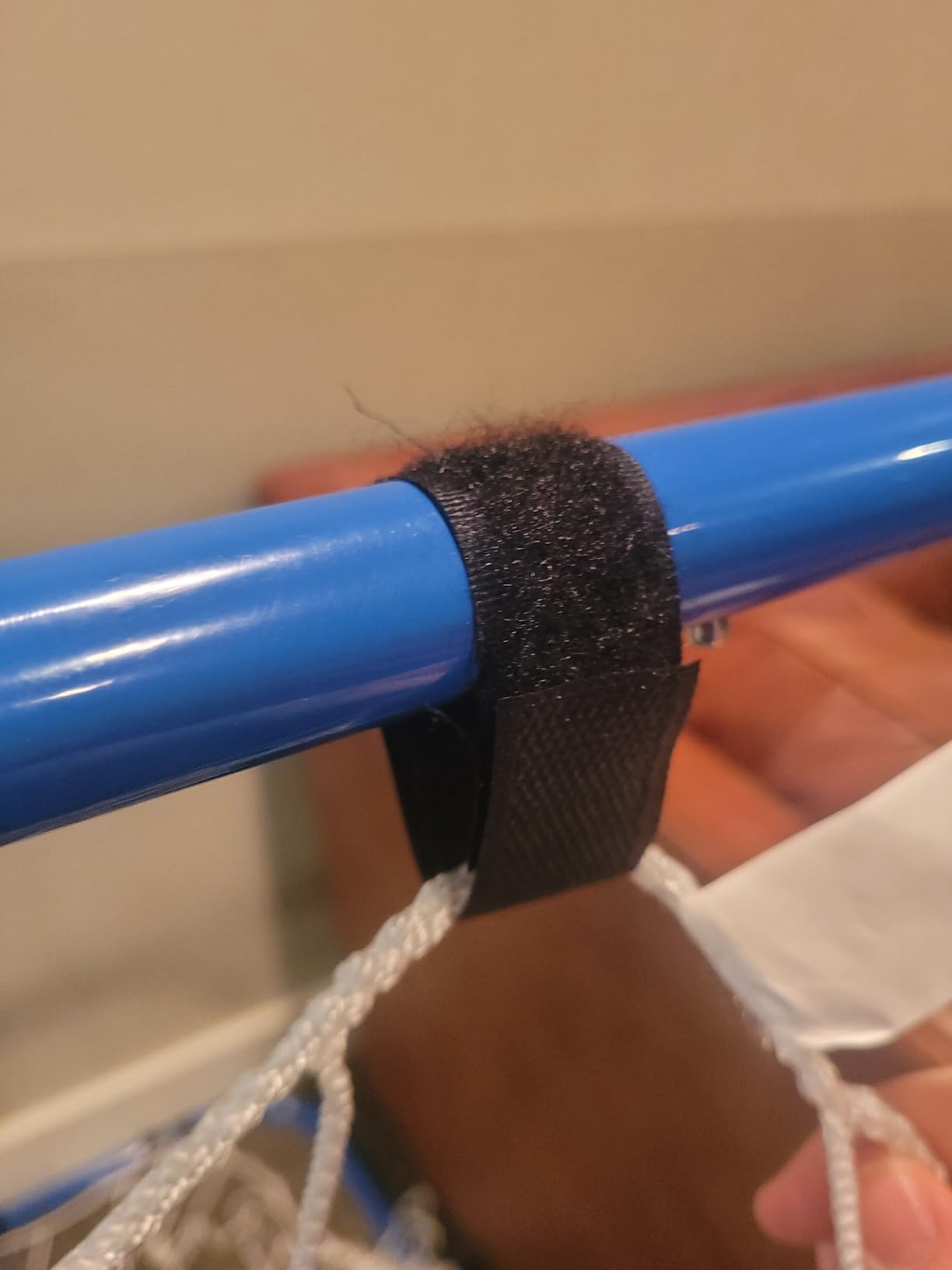
Net tension bands: pop off the frame on restrung nets. Re-hook them onto the same hardware, and check the top corners before a hard session.
8. What You Already Own, and Whether to Buy at All
A full-size goal is the most useful companion piece, and a portable mini net gives you a second target for shooting. If your child plays on a team, cones and a set of marked spots on the grass are free accuracy markers, and a second ball matters more than any accessory. You can see how those compare in our backyard soccer goal guide and our soccer goals for backyards roundup.
And it is fair to say you do not need to buy anything to start. A wall kick, a tethered ball, or two cones forming a passing gate will produce real touches for free. If your child loses interest in a rebounder after two sessions, a no-purchase drill is a better answer than a different model. Likewise, if the yard is not flat, safe, and reasonably large, no rebounder in this roundup will fix that. A frame works with a space; it does not replace one.
A Ten-Minute Solo Drill Circuit With One Rebounder
Set the angle for a ground pass, then run four two-minute blocks with rest between them. Ground pass and trap, thirty touches each side. First touch with the inside of the foot, receiving the return every time. Volleys, which is the drill that breaks down fastest and improves the most. And finally, a target block, aiming at a cone or the target face for twenty consecutive returns. Five minutes of that circuit repeated on four days a week will beat a long, unstructured session every time.
If the child outgrows the frame, the next piece of kit that matters is footwear, and our soccer cleats guide covers how to match boots to surface and age. For families whose training happens indoors, our backyard trampoline roundup covers another piece of gear that keeps a child active between soccer seasons.
Frequently Asked Questions
Are soccer rebounders worth it?
Yes, for most children between about five and fourteen. A rebounder returns the ball within a second, so a twenty minute session delivers two hundred touches instead of twenty minutes of waiting for a partner. Repetition volume is what improves first touch and passing accuracy. They are least useful for a child too young to control a firm pass, or for a family with no flat and safe surface.
What is the best rebounder for a beginner?
For a beginner aged roughly eight to ten, the QUICKPLAY Replay Station board is the best starting point, because its naturally weighted return is slow enough to trap. For a five to seven year old, the ZivPlay board or the Amazing Tour net is lighter and simpler to move. Avoid large frames for beginners, since a bigger face gives a child more ways to miss.
What are the best soccer nets for kids?
For a single child aged eight to twelve, the SKLZ Quickster and the QUICKPLAY TEKKERS dual net are the strongest general choices, since each gives both a large face and a low ground pass net. For two children sharing one frame, the ACELETIQS twelve by six foot net or the lighter VEVOR two-in-one layout let both practise at once.
How big should a soccer rebounder be for kids?
A three by three foot face suits ages five to seven, a six by four foot face covers roughly ages eight to twelve, and a twelve by six foot face suits two players and older strikers with a large yard. The most common mistake is buying the smallest size for a child who is already eight, because lofted passes clear the top and the drill ends early.
How do you keep a soccer rebounder from tipping over?
Drive the included ground stakes firmly into soft soil at an angle away from the frame. On concrete, turf, or carpet, skip the stakes entirely and use sandbags, a filled bucket, or a pot on each base corner instead. Fill any included sandbag before the first session, and check that folding legs are fully seated and the lock pin is engaged.
How long does a soccer rebounder last outdoors?
A powder-coated steel frame with bolt fasteners and protected bungees can last several outdoor seasons with daily use. Frames joined with push pins, with unkeyed bolts, or with exposed bungee ties tend to need part replacement within a year. The parts that fail first are almost always the bungee cords, the ground stakes, and the wingnuts rather than the frame itself.
The Best Backyard Soccer Rebounder for Kids in 2026
The best backyard soccer rebounders for kids are not one product, they are a match between frame size, child age, and the surface you have. For most families, the SKLZ Quickster is the pick: two rebound faces in one frame, a bar-free bottom that keeps ground passes alive, and a setup quick enough that it stays in weekly use. If your child is under nine, the lighter boards win on portability, and the QUICKPLAY Replay Station is the single best thing to start a first-touch habit.
Skip the purchase entirely if the yard is small, sloped, or shared, or if nobody is going to put a ball into it twice a week. A tethered ball and two cones cost nothing and build the same habit. When you are ready, pick the frame that your child can move, fill the sandbag, and set up one drill at a time.