
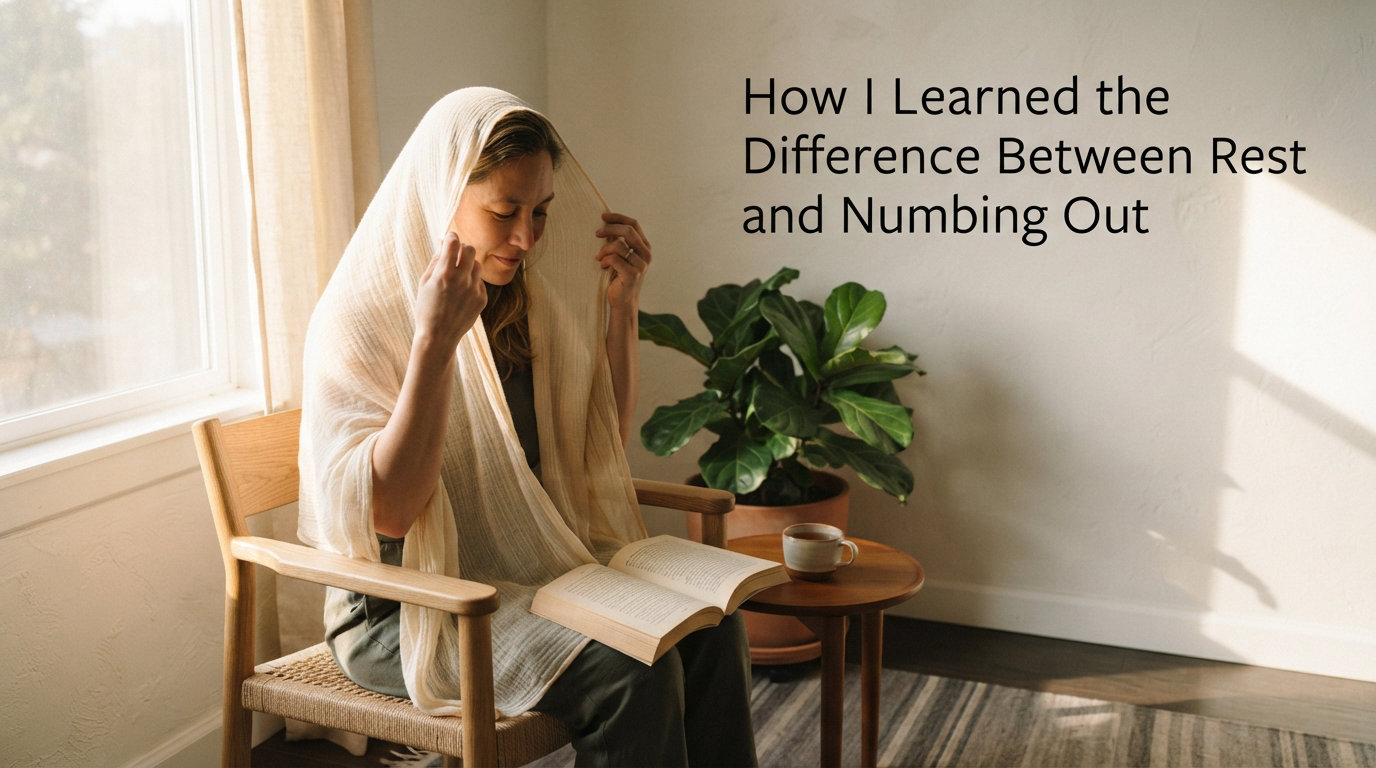
I spent two years calling Netflix and ice cream “self-care.” I posted about it. I defended it. I genuinely believed I was resting. Then one Sunday, after a 14-hour scroll-and-show binge, I sat on my couch and felt worse than I had before the “rest” started. That was the day I had to face the difference between rest and numbing out.
If you have ever wondered why a “lazy day” leaves you anxious, guilty, or hollow, this piece is for you. I will share what I learned, the body-based signals that finally made it click, and the small shifts that turned my rest into something that actually restored me. These are the patterns I now help my clients see in their own lives.
Table of Contents
The Sunday That Changed Everything for Me
I remember the exact moment. I was sitting on the couch, crumbs on the blanket, phone in one hand, the remote in the other. I had been “off” for six hours. My shoulders were higher than when I started. My jaw was tight. I felt foggy and strangely lonely.
I had done nothing. And I felt like I had failed at doing nothing.
That was the contradiction that cracked something open for me. I had confused two very different things for most of my adult life. Rest was supposed to refill me. This left me emptier. A mentor said the sentence that reframed everything: “Honey, you weren’t resting. You were numbing out.”
I started tracking what happened in my body before and after each “rest” activity. Within a month the pattern was obvious. Some rest brought me back to myself. Other rest made me disappear. The difference was not the activity. The difference was what was happening inside me while I did it.
What Rest Actually Is (and What Numbing Out Actually Is)
Rest is anything that returns you to yourself. You start tired, distracted, or wired, and you end up softer, clearer, and more present in your body. Your nervous system shifts from the gas pedal of stress into the parasympathetic “rest and digest” mode.
Numbing out is anything that helps you disappear. You start overwhelmed, and you end up more disconnected. Time slips by. You feel groggy, foggy, or oddly guilty. The feeling you wanted to avoid is still there when you come back, often louder.
What is genuine rest?
Genuine rest is restorative. It can be a nap, a walk, a slow meal, a hot shower, or five minutes of staring at the sky. The defining feature is that you stay present with yourself. You feel your breath. You might feel a bit bored, which is a sign your nervous system is finally safe enough to stand down.
What is numbing out?
Numbing is a protective response. When emotions feel too big, too loud, or too confusing, your system looks for a fast exit. Scrolling, binging shows, drinking, overeating, overworking, even zoning out in front of a window can all become numbing. The activity itself is not the problem. The problem is the disconnection underneath it.
The nervous system connection
Here is the science I wish someone had explained to me years ago. Your parasympathetic nervous system is what allows your body to actually recover. When you rest mindfully, you activate it. When you numb, you stay stuck in a low-grade survival mode, even while lying on the couch. That is why you can sleep eight hours and wake up tired. Sleep was not the issue. Safety was.
Why Smart, Capable People Slide Into Numbing
I work mostly with high-achieving women. They run households, businesses, and entire family systems. When I first started asking my clients about their rest, almost everyone admitted the same thing. Their “rest” often looked more like escape.
This is not a willpower problem. It is a nervous system problem.
When your body has been in fight-or-flight for too long, it starts looking for the path of least resistance to relief. Numbing feels easier than feeling. A two-hour scroll session does not require you to name a feeling, sit with it, or risk being seen. Avoidance becomes self-care in your mind because it is the only thing that lowers the alarm in the moment.
The other reason is guilt. Many of my clients were raised with the belief that rest must be earned. So they multitask during rest. They scroll while watching TV. They eat while answering email. Their brain never fully clocks out. That is not rest. That is a treadmill in disguise.
7 Signs You Are Numbing Out Instead of Resting
Here is the simple checklist I now walk every new client through. If you answer yes to two or more of these, you are probably numbing out, not resting.
You lose hours without noticing. The alarm was supposed to wake you an hour ago.
You feel groggy, foggy, or “off” when you stop.
Guilt follows your rest within minutes of standing up.
The original feeling you were avoiding is still there, and it feels bigger now.
Your body holds tension. Shoulders up, jaw tight, shallow breath.
You reach for your phone within ten seconds of closing your eyes.
You cannot remember what you just watched, scrolled, or ate.
If those signs sound familiar, take a breath. There is nothing wrong with you. Your nervous system is doing exactly what it was designed to do. It is protecting you. The work is gently teaching it that you are safe enough to feel.
Activities That Can Be Either Rest or Numbing
This is the part that surprised me most. The same activity can be genuine rest one day and numbing out the next. It depends on what is happening inside you.
Watching Netflix. Rest when you chose one show, watched it, and felt more yourself. Numbing when you auto-played four seasons to avoid a feeling.
Scrolling social media. Rest when you caught up with a friend and put the phone down. Numbing when you opened the app to escape and could not stop.
Walking. Rest when you noticed your breath and the trees. Numbing when you wore headphones and a podcast to avoid your own thoughts.
Exercise. Rest when your body felt loose and tired in a good way. Numbing when you pushed past injury or used it to punish yourself for eating.
Sleeping. Rest when you woke up clear. Numbing when you slept to disappear and woke up disoriented.
The activity is neutral. The intention and the body response are what matter.
How I Now Cultivate Real Rest (and How You Can Too)
Once I understood the difference between rest and numbing out, I rebuilt my downtime from scratch. These are the five shifts that made the biggest difference for me, and for my clients.
1. Start with a body check-in
Before you rest, ask your body what it actually needs. Tired? Anxious? Lonely? Bored? Each one asks for something different. Tired wants stillness. Anxious wants movement. Lonely wants connection. Bored wants creation.
2. Set a clear start and end
Numbing loves an open loop. Rest loves a container. Decide when your rest begins and when it ends. A kitchen timer, a playlist with ten songs, or a sunset is a beautiful boundary.
3. Keep your hands busy on purpose
When your hands are doing something gentle and repetitive, your nervous system calms. Knitting, folding laundry, watering plants, washing dishes, or holding a warm mug all work. This is why cozy rituals feel restful. They give your body a task small enough to release control.
4. Leave one window of boredom
Boredom is where rest actually lives. Your phone, the TV, the snack, these are all numbing devices. Give yourself five unscheduled minutes a day. That is where your parasympathetic system finally turns back on.
5. Re-evaluate after, not during
When your rest time ends, ask yourself one question: “Do I feel more like me?” If yes, you rested. If not, you numbed. There is no judgment in the answer. The answer is just data.
FAQs
What does numbing out feel like?
Numbing out feels like disappearing on purpose. You lose track of time, your body goes tense, and you feel foggy, groggy, or strangely guilty when you stop. The feeling you were avoiding is usually still there, just louder.
Is numbing a form of dissociation?
Numbing and dissociation live on the same spectrum. Both are protective responses from your nervous system when emotions feel too big. Numbing is often milder and tied to distraction, while dissociation is a deeper disconnect from your body, emotions, or sense of self.
How do you cope without numbing?
Start with a slow body check-in. Name what you feel without fixing it. Try a five-minute walk, a warm shower, a slow meal, or ten minutes of quiet. Stay with yourself instead of escaping yourself. Over time, the urge to numb softens.
What are examples of numbing behaviors?
Common numbing behaviors include doomscrolling social media, binge-watching shows past the point of enjoyment, overeating, drinking more than you intended, overworking, excessive sleeping, zoning out in front of a screen, or constantly keeping your hands and mind busy so you do not have to feel.
You Are Allowed to Rest, For Real
Learning the difference between rest and numbing out changed my life. It can change yours too. You do not need to earn rest. You do not need to fix yourself first. You only need to notice what your body is telling you, and choose one small thing that returns you to yourself instead of helping you disappear.
Start with one check-in today. That is enough. The rest will follow.